Table of Contents
Introduction
I’ve lost plants to mold, watched spider mites turn healthy leaves into stippled paper, and dealt with root problems that looked like “nutrient issues” until I pulled the plant and saw the damage. That’s why I treat Common Cannabis Diseases and Pests like a system problem, not a single emergency. When growers wait until cannabis, marijuana, or weed plants look sick, the options shrink fast. When they build prevention into the grow from day one, most issues stay small, slow, and manageable.
This article is written as a fresh, hands-on field guide dated today. It’s not a list of miracle sprays or internet shortcuts. It’s the routine I use: environmental control, early detection, disciplined sanitation, and careful interventions that respect the reality of flowering buds and inhalation safety.
How I think about Common Cannabis Diseases and Pests
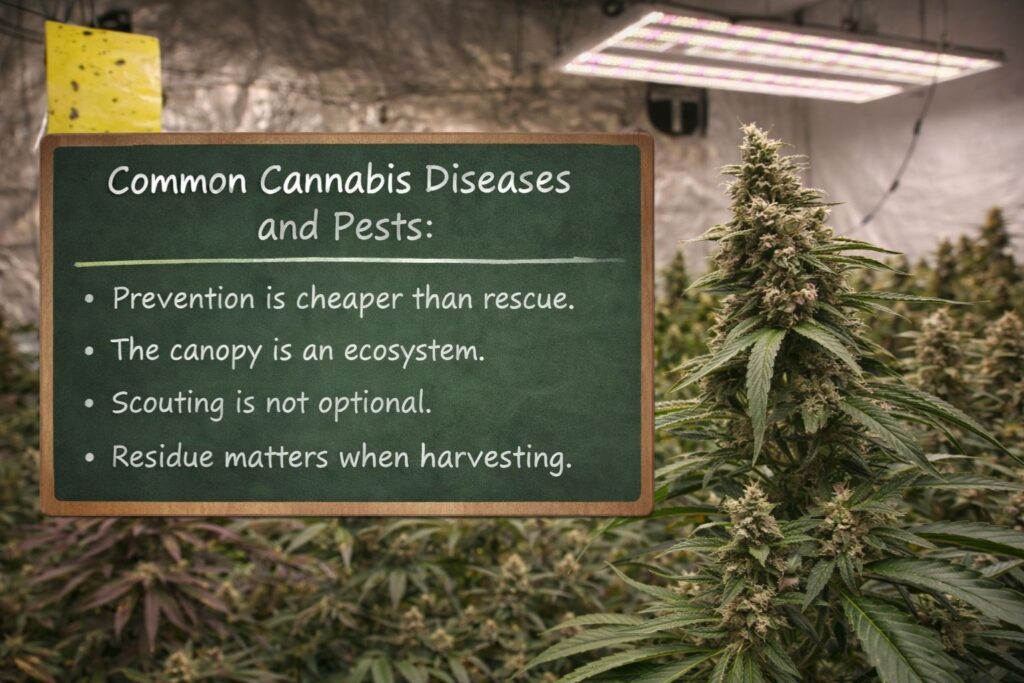
Common Cannabis Diseases and Pests fall into two big buckets in my grow notes: pathogens (molds, mildews, viruses) and insects (mites, gnats, aphids). The reason they get traction is almost always the same: the plant is stressed or the room has a weakness. I’ve seen the same pattern repeat in cannabis tents, commercial rooms, and outdoor gardens.
Here’s the mindset that keeps me out of trouble:
- Prevention is cheaper than rescue.
- The canopy is an ecosystem; airflow and humidity decide what thrives.
- Scouting is not optional.
- In flower, residue matters. If it can stick to buds, it can end up in smoke or vapor.
If someone wants a single takeaway: Common Cannabis Diseases and Pests are easiest to manage when the room is stable and the grower is paying attention.
Environmental targets that reduce disease pressure
When people ask me why they keep getting bud problems, the answer is usually the environment. I rely on VPD-based humidity control because it links temperature and relative humidity into a useful framework. Instead of chasing a random RH number, I aim for a steady leaf-drying environment that still supports plant transpiration.
Typical indoor targets that have kept my cannabis rooms cleaner:
- Vegetative stage: 24–28°C (75–82°F), 55–70% RH, VPD around 0.8–1.2 kPa
- Early flower: 24–27°C (75–81°F), 45–55% RH, VPD around 1.2–1.4 kPa
- Late flower: 22–26°C (72–79°F), 38–50% RH, VPD around 1.3–1.6 kPa
This doesn’t guarantee immunity. But in my experience, stable VPD-based humidity control dramatically lowers the odds that Common Cannabis Diseases and Pests take hold, especially molds and mildews.
My inspection routine: catching problems while they’re still small
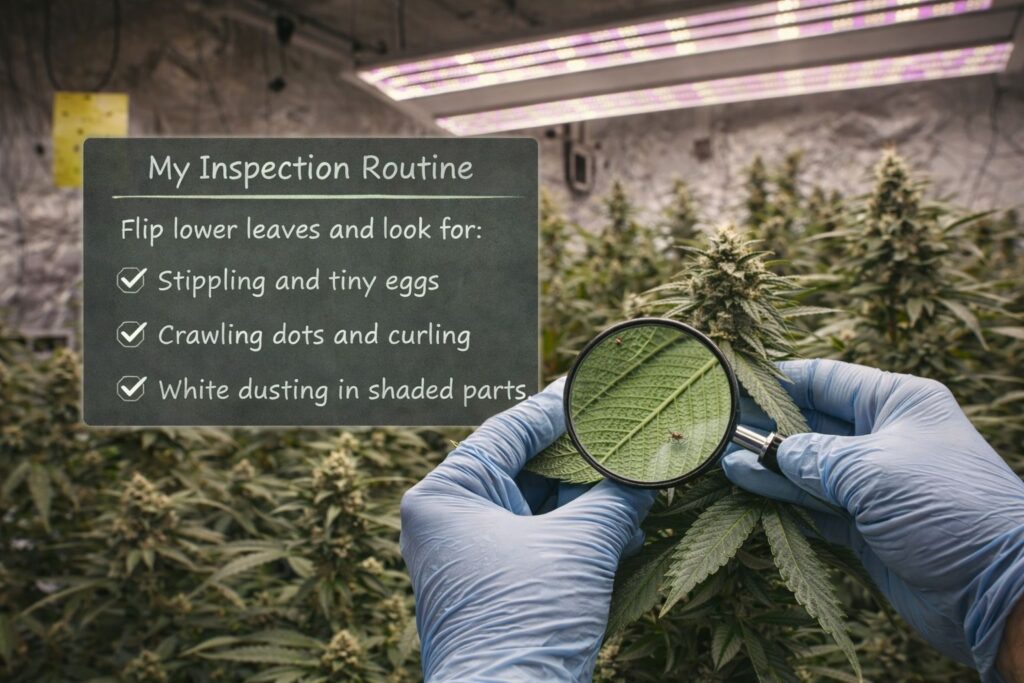
I treat scouting like watering: if I skip it, I pay later. A leaf underside scouting routine is the fastest way to spot mites, aphids, and early mildew before they spread. I do this twice weekly in veg and at least weekly in flower, more often if the room had a stress event (heat spike, overwatering, aggressive training).
My checklist is simple:
- Flip leaves, especially lower and interior ones.
- Look for stippling, tiny eggs, crawling dots, and leaf-edge curling.
- Check petioles and stems for sap-feeders.
- Look for white dusting in shaded leaf junctions.
- Smell the canopy for damp, sour notes that can precede rot.
I also use yellow sticky trap monitoring near the soil surface and by intake points. Traps won’t fix infestations, but they tell me what’s flying around, whether populations are trending up, and whether my controls are working.
Bud rot: what I’ve learned the hard way
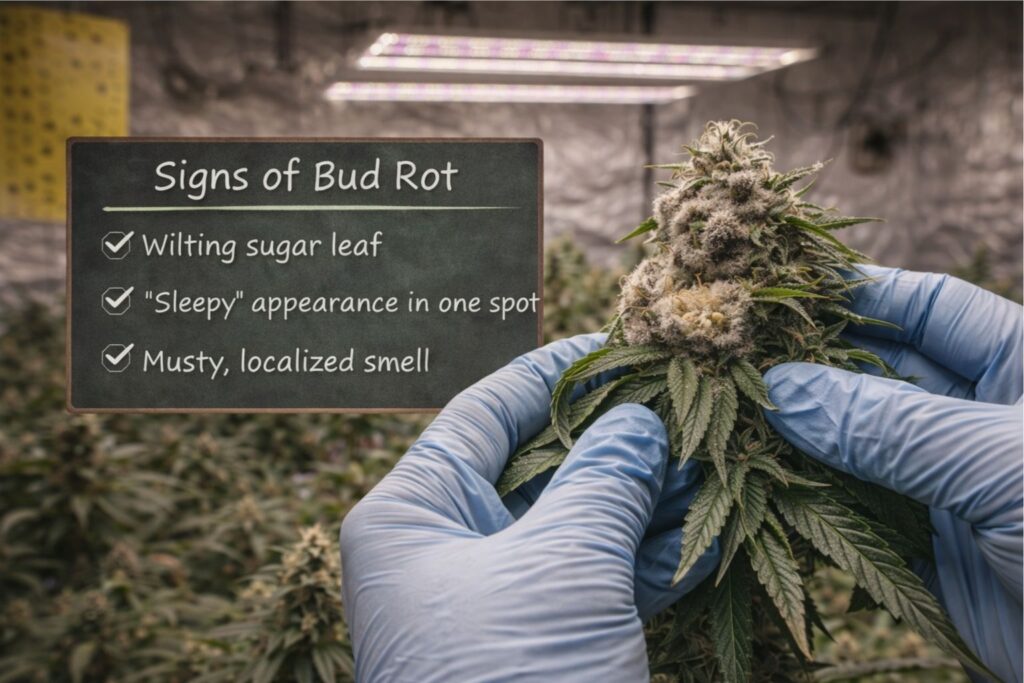
Bud rot (often called gray mold) is one of the fastest-moving problems in cannabis flowers. I’ve seen it ruin colas in days when humidity stayed high during cooler periods or when airflow couldn’t penetrate dense tops. Outdoors, late summer storms and dew-heavy mornings are classic triggers. Indoors, it’s usually a combination of wet air, cold nights, and crowded buds.
Early signs I look for:
- A single sugar leaf at a bud site wilting early
- A dull, “sleepy” look to one section of the cola
- A musty smell localized to one flower
What I do immediately:
- Isolate the plant or at least the infected branch.
- Cut out infected bud material plus about an inch of clean buffer.
- Bag and remove it carefully; don’t shake spores through the canopy.
- Increase airflow and reduce humidity fast.
This is a place where a flower room airflow map matters. If air doesn’t move through the canopy, mold will find the stale pockets. Bud rot is a core example of why Common Cannabis Diseases and Pests are often environment-driven.
Root rot: why it’s common in hydro and overwatered soil
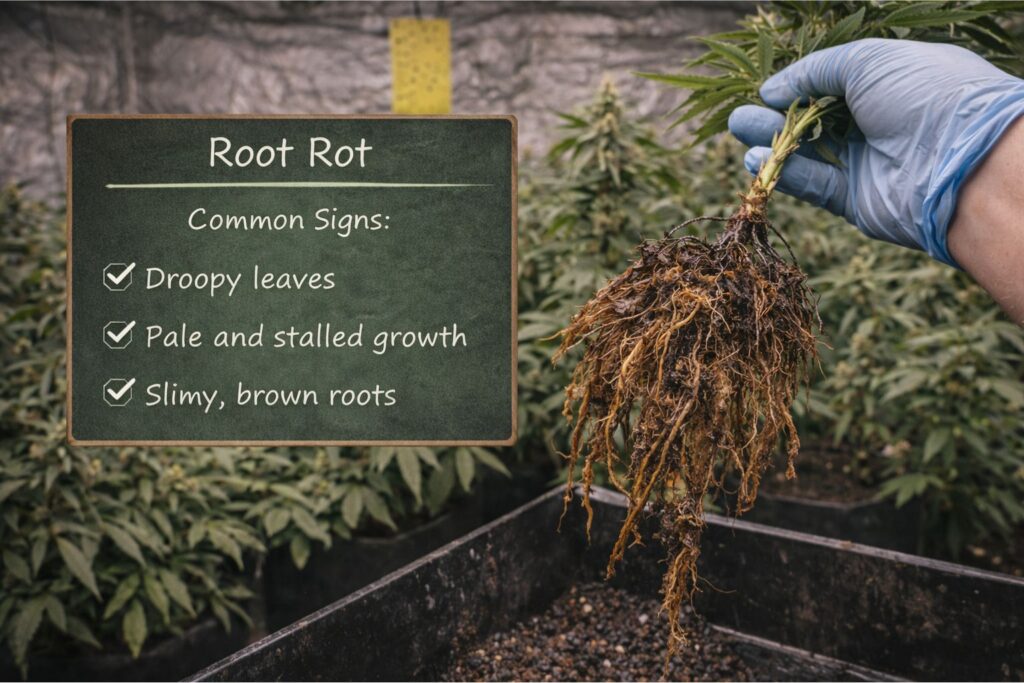
Root rot shows up when roots lose oxygen, typically from warm nutrient solution, insufficient aeration, or soggy media. In deep water culture, I’ve seen root problems start after water temps climbed or an airstone failed. In soil, I usually see it after heavy watering in a dense mix that doesn’t drain.
Signs that tip me off:
- Droopy leaves that don’t perk up after lights-on
- Slow growth and pale color that mimics nutrient deficiency
- Funky smell from the reservoir or run-off
- Roots that are brown, slimy, and fragile
Prevention is mostly a root-zone oxygenation strategy:
- Keep media airy and avoid constant saturation.
- In hydro, keep strong aeration and avoid overly warm water.
- Don’t crowd root zones with oversized plants in small containers.
Treatments vary. I’ve used sanitation and quarantine steps to prevent spread between systems, and I’ve tried mild oxidizers cautiously in hydro, but the real fix is restoring oxygen and preventing conditions that let pathogens thrive. For me, root rot is another “system problem” inside the larger category of Common Cannabis Diseases and Pests.
Tobacco mosaic virus: a risk many growers underestimate
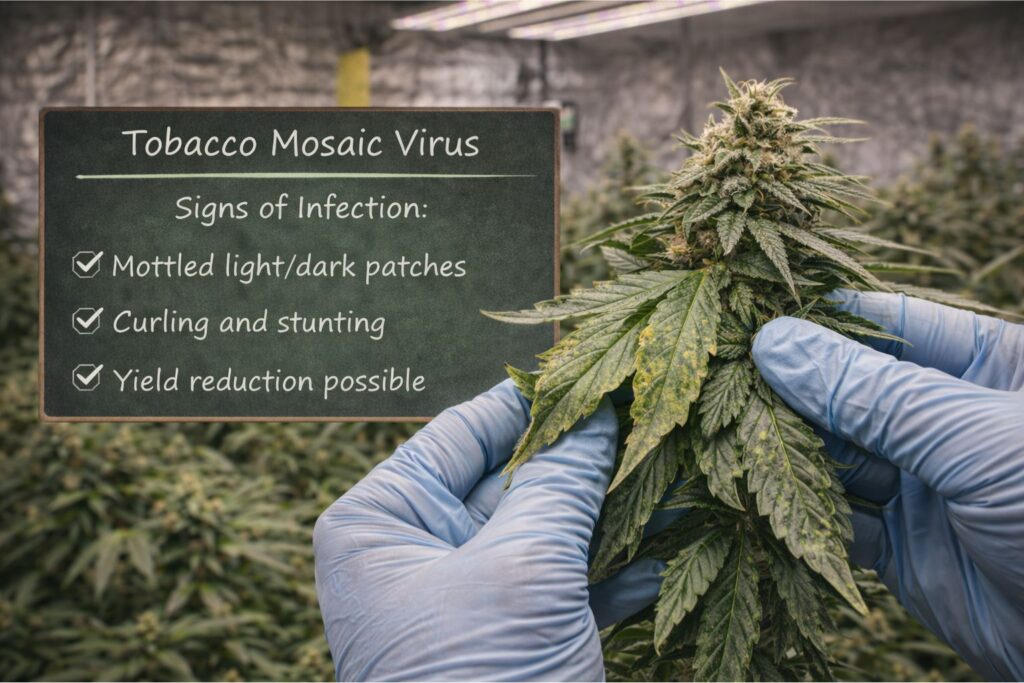
Tobacco mosaic virus can affect multiple plant families and can show as mottled light/dark green patches, curling, and stunting. The frustrating part is that it’s not something you “spray away.” If I suspect a viral issue, I isolate, confirm symptoms over time, and err on the side of protecting the rest of the garden.
The preventative habits I keep:
- No tobacco products in the grow area.
- Wash hands before plant work, especially after handling anything suspect.
- Strict sanitation and quarantine steps for new clones and mothers.
Yield reduction is common with viral stress. I treat this as a reminder: not all Common Cannabis Diseases and Pests are manageable once established, so prevention practices matter.
Powdery mildew: the slow creep that becomes a disaster
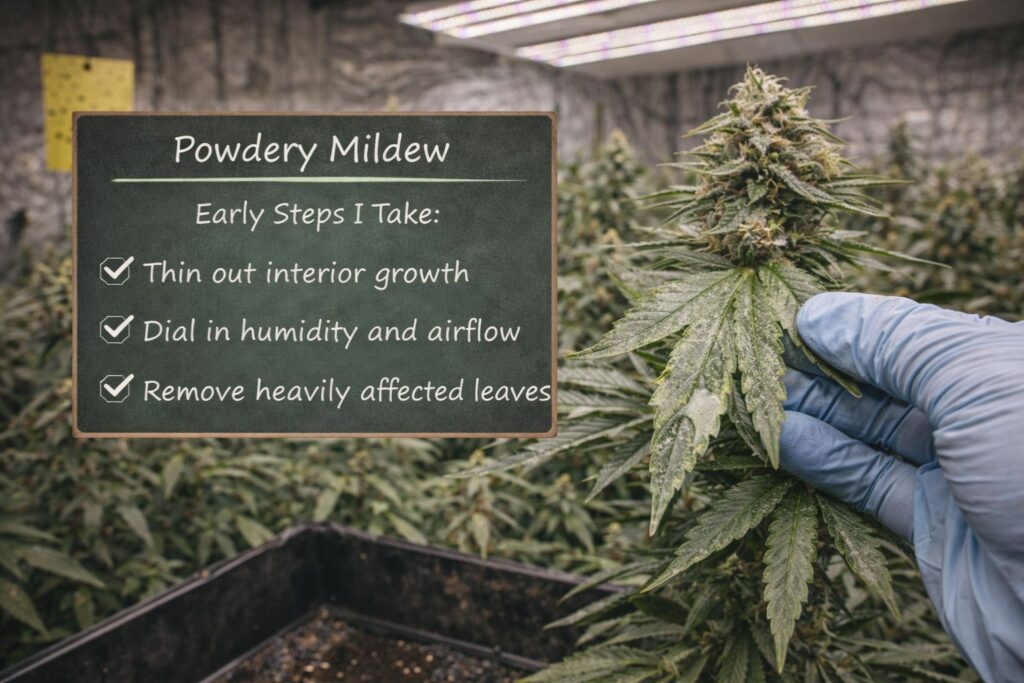
Powdery mildew loves shaded, stagnant, humid leaf surfaces. Indoors, it often starts where leaves overlap and airflow is weak. Outdoors, it can appear after cool nights and still mornings, especially in thick bushes.
What I do when I see it early:
- Improve airflow immediately and thin the interior canopy.
- Re-check VPD-based humidity control, especially during lights-off.
- Spot clean or remove heavily affected leaves.
I’m careful with any foliar strategy in flower. A pre-flower foliar wash plan can be useful in veg and early transition, but once buds are forming, I focus on environmental correction and leaf removal rather than coating flowers with products that can leave residue.
Spider mites: my approach from detection to control
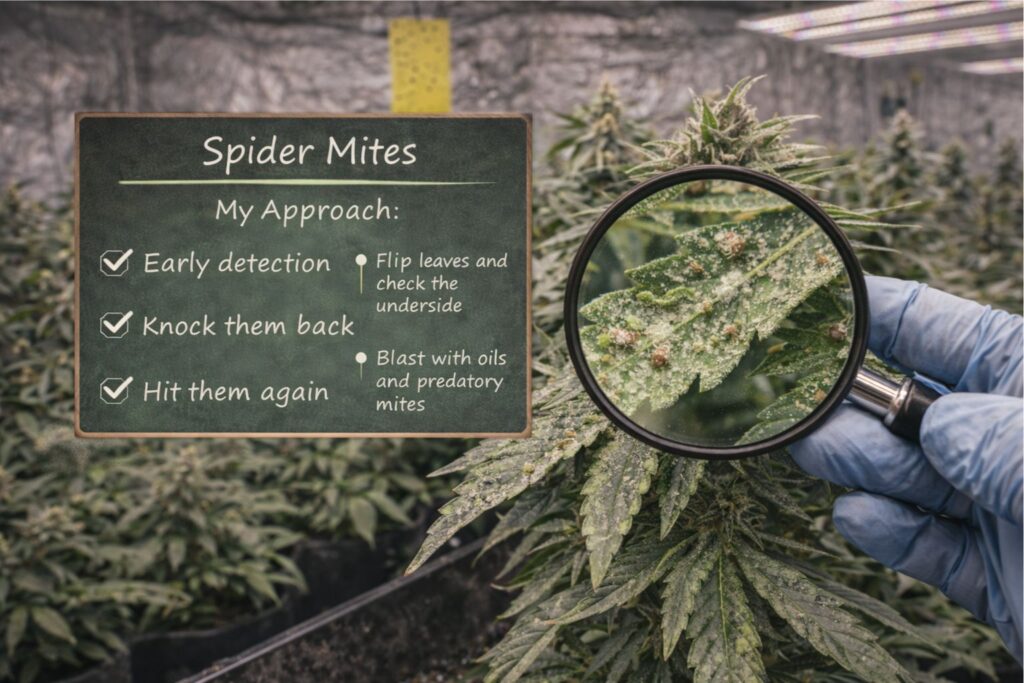
Spider mites are classic in warm, dry rooms. They spread fast, and by the time webbing appears, the infestation is already advanced. My first line of defense is the leaf underside scouting routine, because mites show up there first.
What works best for me is an integrated approach:
- Lower leaf-surface dryness by stabilizing the room (without raising humidity into mold territory).
- Use yellow sticky trap monitoring as a general early warning, even though mites themselves aren’t the main thing caught.
- Implement a predatory mite release schedule in veg or early flower when appropriate.
- Avoid bringing in contaminated clones by using sanitation and quarantine steps.
I’ve had good results with biological controls when introduced early. Waiting until there’s webbing is a losing game, especially in a room full of cannabis buds close to harvest.
Fungus gnats: the “watering problem” with wings
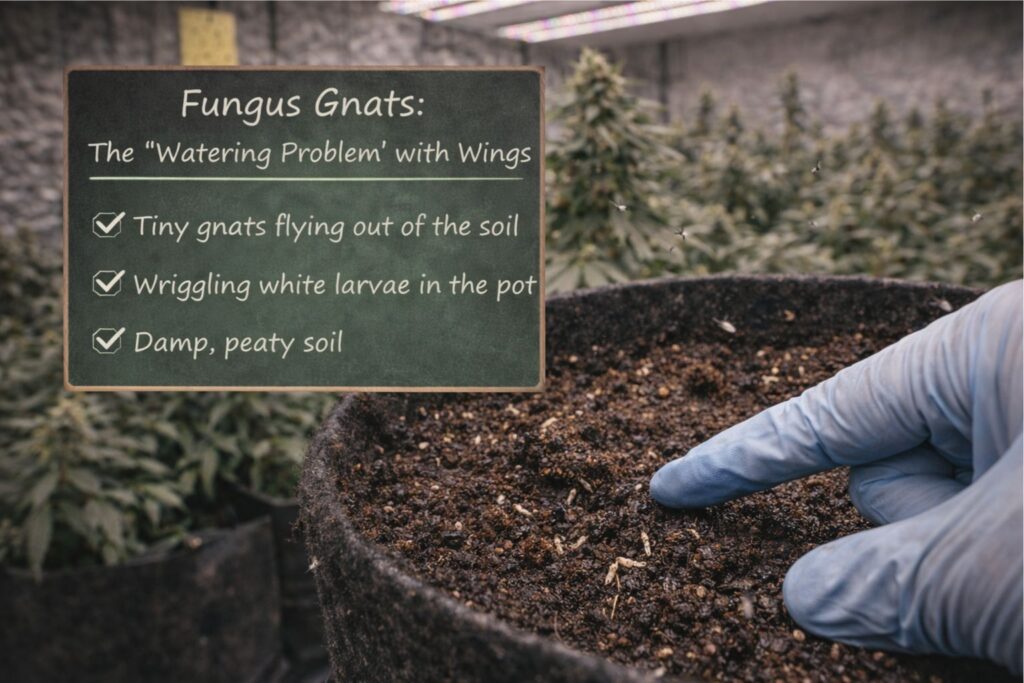
Fungus gnats show up when the top layer of media stays wet and air movement is low. Adults are annoying, but the larvae are the real issue: they feed on root hairs and can stunt weed plants, especially seedlings.
My control routine:
- Let the top inch of media dry between irrigations.
- Improve airflow across the pot surface.
- Use yellow sticky trap monitoring near soil level to track adults.
- Consider biological options and adjust the root-zone oxygenation strategy if the mix is too dense.
In my experience, gnats are usually fixed by changing watering behavior and improving the media structure. They’re a perfect example of how Common Cannabis Diseases and Pests often trace back to environment and routine.
Aphids: sap-feeders that invite secondary problems
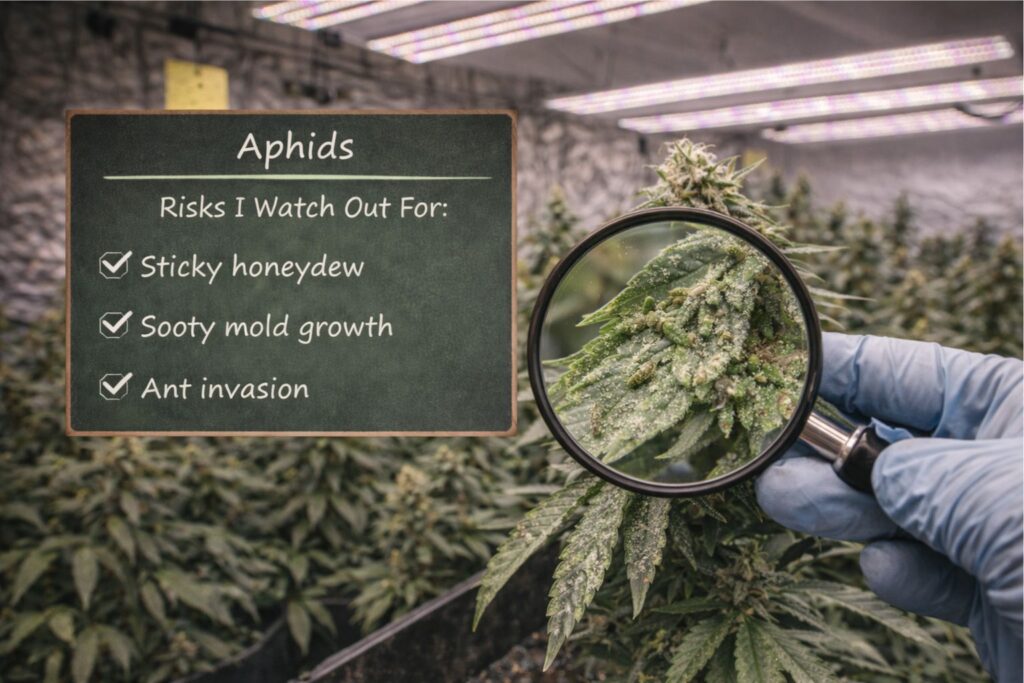
Aphids often gather on lower leaf surfaces and stems. They weaken marijuana plants by draining sap, and their waste can encourage sooty mold. I look for sticky residue and clusters near soft new growth.
My approach:
- Catch them early with a leaf underside scouting routine.
- Remove heavily infested leaves.
- Use targeted controls in veg, then re-check frequently.
Aphids can explode in population quickly, so I treat them as a “respond fast” pest in any cannabis garden.
My IPM toolkit: what I rely on every run
When people hear “IPM,” they sometimes think it means constant spraying. My IPM is mostly routine and planning:
- sanitation and quarantine steps for incoming plants
- a clean room changeover protocol between cycles
- VPD-based humidity control to reduce fungal pressure
- a flower room airflow map to eliminate dead zones
- yellow sticky trap monitoring to catch trends early
- beneficial insect rotation when the situation fits
- a predatory mite release schedule in veg/early bloom if risk is high
- a pre-flower foliar wash plan only when it makes sense
The combination is what works. No single tactic solves Common Cannabis Diseases and Pests across every room and every strain.
Clean room changeover protocol: the reset that prevents repeat infestations
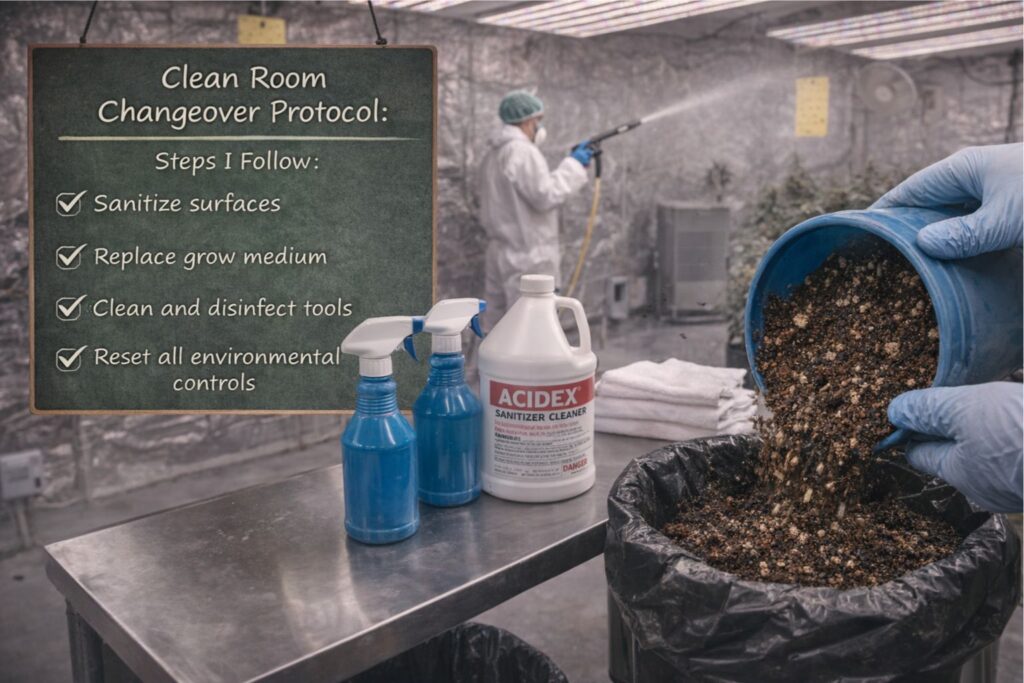
Between harvest and the next cycle, I treat the room like it’s contaminated, even if everything looked fine. A clean room changeover protocol saves me from “mystery carryover” infestations.
My basic reset:
- Remove all plant material and media.
- Vacuum or sweep floors, corners, and fan guards.
- Wash surfaces and tools; pay attention to sticky residue and dust.
- Replace or clean filters as needed.
- Run the room empty for a short period to confirm climate stability and airflow patterns.
It’s not glamorous, but it’s one of the best investments a grower can make.
Nutrients, stress, and why healthy plants resist problems better
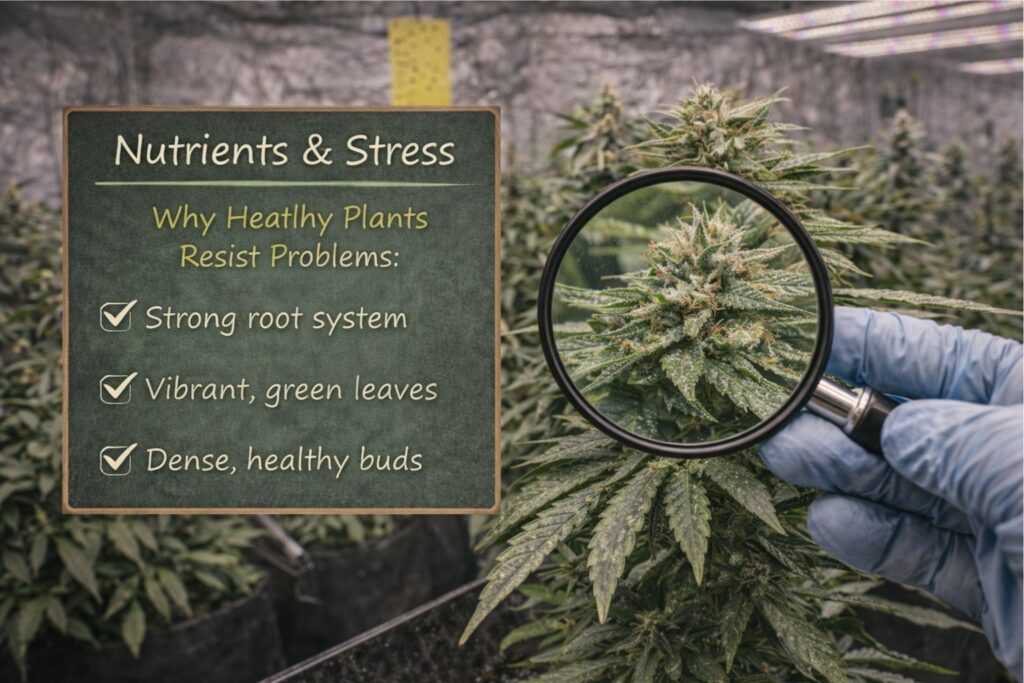
This isn’t a nutrient article, but it matters: stressed plants invite trouble. When EC is too high, leaves burn and pests get a foothold. When roots are oxygen-starved, pathogens move in. I aim for steady, conservative feeding rather than peak numbers, and I adjust based on cultivar response.
My rule of thumb:
- If the plant looks “edgy” (clawing, burnt tips, stalled growth), I fix stress first before I chase pests with treatments.
- A solid root-zone oxygenation strategy prevents more problems than extra additives.
This applies across cannabis, marijuana, and weed grows in soil, coco, or hydro.
Drying and curing: where mold can still strike after harvest
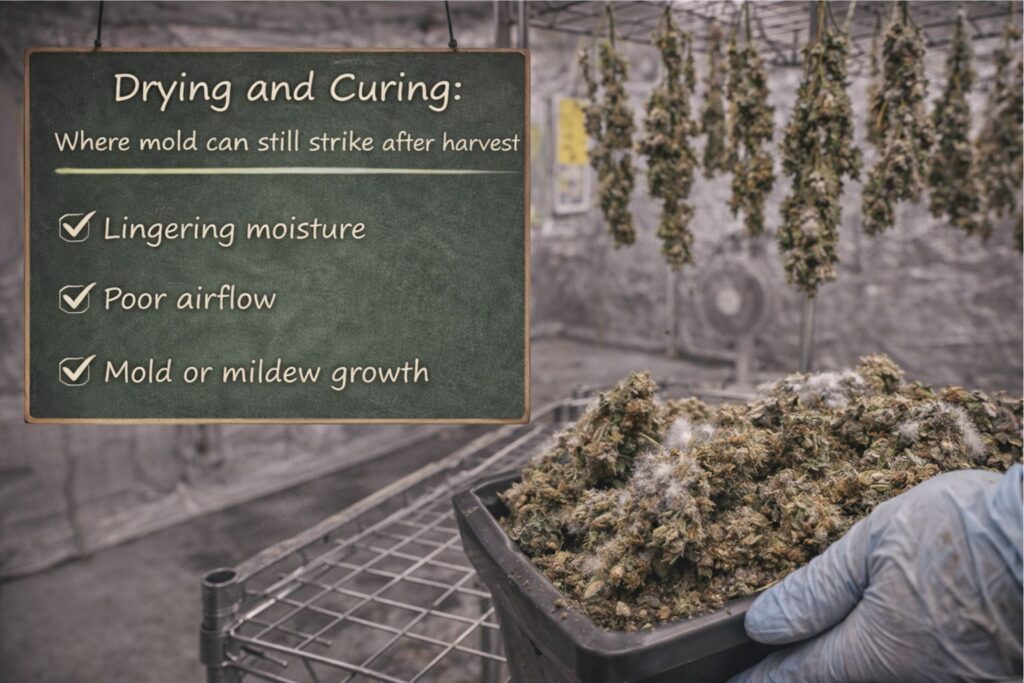
A lot of growers focus on the plant and forget the post-harvest environment. Mold pressure doesn’t end at chop. If drying conditions are too humid or air is stagnant, flower can develop issues that look like bud rot or general spoilage.
My drying basics:
- Keep temperature moderate and stable.
- Maintain gentle air exchange without blasting buds.
- Avoid stacking wet branches too close together.
- Monitor humidity so flowers dry slowly but safely.
Post-harvest mistakes are a quiet contributor to the broader topic of Common Cannabis Diseases and Pests, especially when people confuse poor drying with “problems from the grow.”
FAQ: common long-tail questions growers search
How do I stop mold in cannabis buds without ruining flavor?
Start with VPD-based humidity control and a flower room airflow map. Reduce humidity in late flower, thin the canopy, and avoid wet leaf surfaces. If mold appears, remove affected material carefully and improve airflow immediately.
What’s the fastest way to check for spider mites on weed plants?
Use a leaf underside scouting routine with a bright light. Look for stippling, tiny eggs, and moving specks. If webbing is present, the infestation is advanced and requires a stronger integrated response.
Are sticky traps enough for fungus gnats in a marijuana grow?
Yellow sticky trap monitoring helps track adults, but larvae control comes from changing watering practices, drying the surface layer, and improving the root-zone oxygenation strategy so the media isn’t constantly wet.
How do I quarantine new clones from a seed bank or local source?
Use sanitation and quarantine steps: isolate for 10–14 days, inspect multiple times with a leaf underside scouting routine, and avoid sharing tools between areas. Only move plants into the main room once they’re consistently clean.
Should I spray fungicide in flowering cannabis?
In general, be cautious. Residue on buds can be unsafe to inhale. Focus on environment, airflow, leaf removal, and prevention. If using any product, research safety and timing carefully and follow label guidance.
Closing thoughts
If a grower wants fewer problems, the answer usually isn’t a stronger bottle. It’s a stronger routine. Common Cannabis Diseases and Pests become manageable when the room is stable, the plants are healthy, and inspections happen before symptoms turn obvious. With VPD-based humidity control, a consistent scouting habit, and disciplined sanitation and quarantine steps, most cannabis, marijuana, and weed gardens can stay clean enough that harvest quality depends more on skill than on luck.
