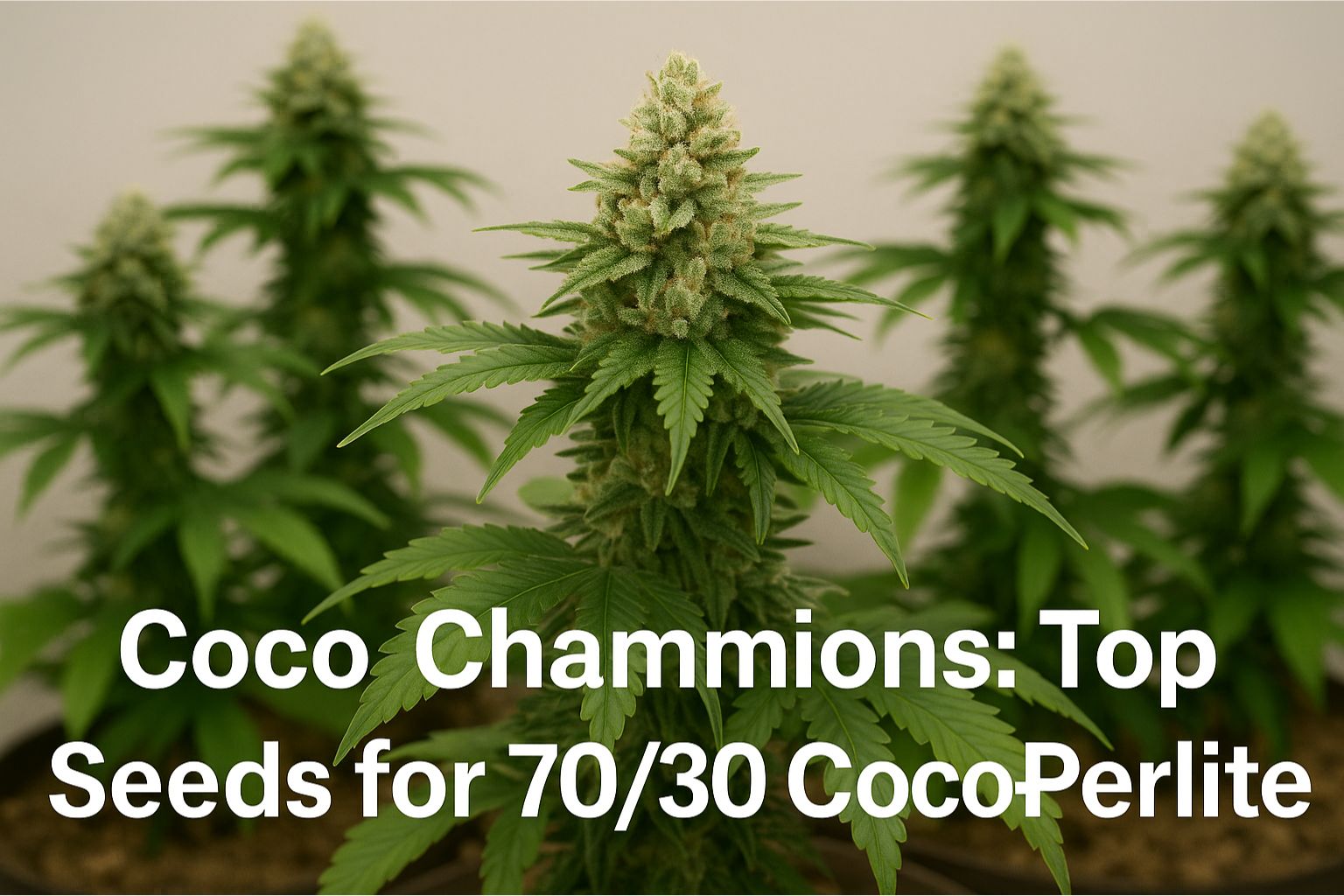
When I switched from soil to a 70/30 coco perlite mix, my garden changed faster than I expected. Plants finished sooner, drank more, and put on weight that I simply could not get in heavy pots of dirt. The big surprise was that some genetics loved 70/30 coco perlite while others sulked, even when everything on paper looked dialed.
Over the last several years I have tested dozens of coco cannabis seeds in this medium. Some turned into true coco champions; others clearly preferred soil or rockwool. In this guide I want to share what actually worked in my rooms, so you can pair the right seeds with your 70/30 coco perlite beds instead of learning the hard way like I did.
I will walk through how I run my indoor weed coco setup, how I manage cannabis EC and pH, what I feed, and which types of feminized coco strains and autos have been the most forgiving and productive in this style of grow.
Why 70/30 coco perlite changes how your plants behave
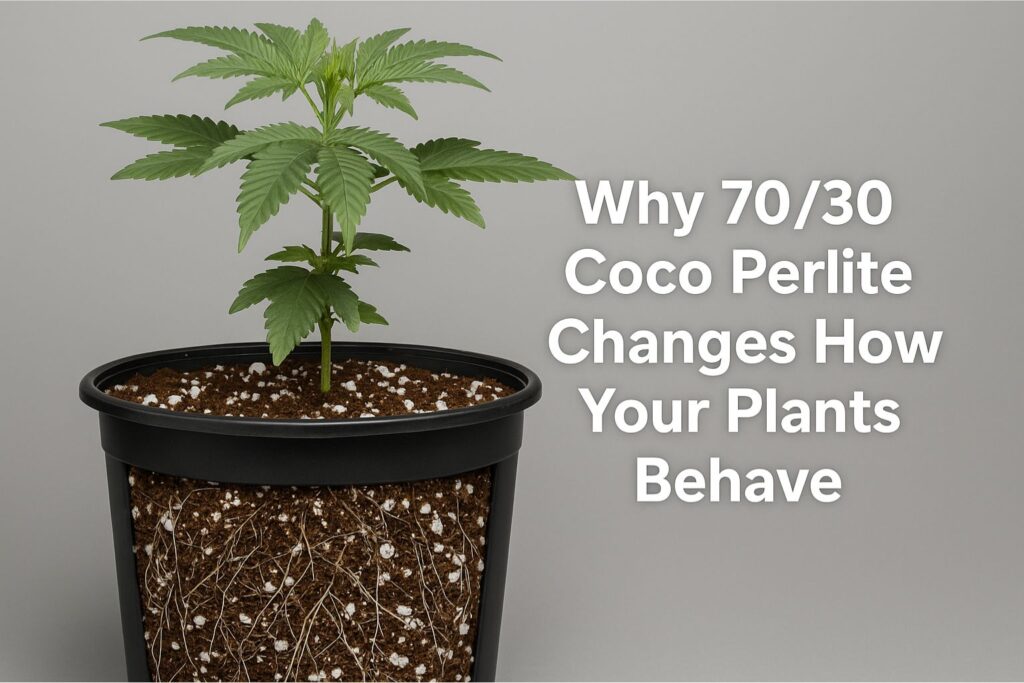
Coco is not just “lighter soil.” A 70/30 coco perlite mix is essentially a hydroponic medium that behaves like a sponge. Roots get plenty of oxygen, but they also dry faster, which means more frequent irrigation and much tighter control over nutrients.
In my rooms, plants in 70/30 coco perlite:
- Grow faster than the same clones in soil
- Need more frequent feeds instead of heavy occasional drenches
- React quickly to mistakes with cannabis EC and pH
When I first started growing marijuana in coco, I tried to water once every few days like I did in soil. The plants stalled. Once I began feeding one to three times per day with lower EC, they responded with thick white roots and explosive growth. That was the moment I realized that 70/30 coco perlite needed its own playbook.
If you treat coco like soil, even the best coco cannabis seeds will only give you average results.
What I look for in coco cannabis seeds
After many side-by-sides, I have a checklist I use when I am hunting for new coco cannabis seeds.
- Strong root vigor
- Medium internode spacing (not too stretchy, not too squat)
- Good appetite for nutrients
- Stable phenotypes that do not throw odd mutations in hydro-like media
Most indica sativa hybrid cannabis lines fit the bill better than fragile, finicky cuts. A good indica sativa hybrid cannabis strain usually has enough stretch to fill trellis squares, but it keeps flower sites tight and efficient under strong light.
I test every new pack of coco cannabis seeds right next to a “control” strain I already know performs well in 70/30 coco perlite. That way, if something goes sideways, I can see whether it is the genetics or my environment.
Feminized coco strains that act like workhorses
Feminized coco strains make my life easier because I can completely fill a table without wasting time sexing plants. Over several cycles, a pattern has emerged.
The feminized coco strains that consistently deliver for me share three traits:
- They build dense, golf-ball-style buds instead of long, loose spears.
- They handle an aggressive coco nutrient schedule without leaf burn.
- They keep their structure when I push PPFD into the 800–950 µmol/m²/s range.
Most seed descriptions never mention whether a variety was tested in coco. That is where hands-on experience matters. I keep detailed notes every run, and the feminized coco strains that hit the mark in 70/30 coco perlite go on a short list that I reach for whenever a production run is on the line.
If I am planning a large harvest, I will usually build a canopy mostly from proven feminized coco strains and then tuck a few experimental plants into the corners.
Where autoflowers fit: building an autoflower coco grow

I was skeptical of autos in coco for a long time. Then I ran a single tray as an experiment, set up as a dedicated autoflower coco grow, and watched them finish with surprisingly respectable yields.
The keys to a successful autoflower coco grow in my experience:
- Transplant early, or better yet, start seeds directly in final coco pots.
- Maintain gentle but constant feedings; autos hate drybacks in 70/30 coco perlite.
- Keep light intensity moderate at first and ramp up as plants mature.
I now use an autoflower coco grow as a way to test new genetics quickly. Because autos finish in roughly 70–90 days from seed, I can see how a line behaves in coco before I commit to a big run. Some autos have become true coco champions and happily share tables with photoperiods in mixed gardens.
Why indica sativa hybrid cannabis stands out in coco
Over and over, my best results in 70/30 coco perlite have come from indica sativa hybrid cannabis lines. Pure indicas often stay too compact and can be prone to overfeeding; pure sativas can stretch wildly and take too long to finish.
Indica sativa hybrid cannabis varieties usually:
- Stretch just enough to fill a net without getting out of control
- Respond well to topping and low-stress training
- Pack on weight quickly under a well-built coco nutrient schedule
When I browse new releases, I look for breeders describing their work as “balanced hybrids” or “indoor-friendly” and then run those in coco first. Over time, I keep only the hybrids that handle high-frequency feeding and coco-style irrigation without constant babysitting.
Dialing in your coco nutrient schedule
Seeds alone will not save a bad feed plan. A smart coco nutrient schedule is what allows 70/30 coco perlite to outperform other media.
Here is what works for me in flower:
- Week 1–2: 1.4–1.6 EC, pH 5.7–5.9
- Week 3–5: 1.7–2.0 EC, pH 5.8–6.0
- Week 6–7: taper back to 1.4–1.6 EC as plants ripen
- Final week: begin a gentle flush before harvest
Those ranges are not rigid rules but starting points. I constantly watch leaf color, runoff, and overall vigor. If cannabis EC and pH drift too far from target, I correct them slowly instead of making wild swings.
A few habits that have saved more than one crop:
- Mix nutrients completely, then let the solution rest for a few minutes before checking cannabis EC and pH.
- Use the same meter to measure both feed and runoff so I can see how the medium is behaving.
- Avoid letting coco dry out completely; that can spike salts and hurt roots even if the coco nutrient schedule looks perfect on paper.
When cannabis EC and pH stay within range, plants in 70/30 coco perlite take on a glossy, almost waxy look that tells me they are pulling everything they need from the solution.
Environmental targets for an indoor weed coco setup
A good indoor weed coco setup relies on stable environment as much as good nutrients. Coco roots love oxygen and warmth, but the canopy still needs reasonable VPD and airflow.
In my main indoor weed coco setup I run:
- Veg: 24–26 °C, 65–70% RH, 400–600 µmol/m²/s PPFD
- Early flower: 25–27 °C, 60–65% RH, 650–800 µmol/m²/s PPFD
- Late flower: 24–26 °C, 50–55% RH, 800–950 µmol/m²/s PPFD
Those conditions keep VPD between about 0.9 and 1.2 kPa, which is a sweet spot for vigorous transpiration. In 70/30 coco perlite, plants will drink aggressively at those settings, so I match irrigation frequency to evapotranspiration.
Fans keep air moving across the canopy, and I do not hesitate to remove a few large leaves if they create dead zones. Good airflow not only keeps mold away but also encourages stronger stems that can hold the heavy buds that coco champions often produce.
Buying the right seeds and navigating cannabis seed bank shipping
None of this matters without good seed stock. I buy most of my coco cannabis seeds online, which makes cannabis seed bank shipping an important piece of the puzzle.
Over time I have learned to look for:
- Clear descriptions of flowering time and structure
- Evidence that the breeder or testers have grown the line indoors
- Consistent, discreet cannabis seed bank shipping that arrives when promised
When I test a new vendor, I usually start with a small order. If the cannabis seed bank shipping is reliable and the genetics check out in my 70/30 coco perlite rooms, I order more and add those lines to my long-term rotation.
Always follow your local laws when buying and growing marijuana in coco or any other medium. Regulations vary widely, and it is every grower’s responsibility to know what is allowed in their region.
Harvest timing, runoff, and why I still flush before harvest
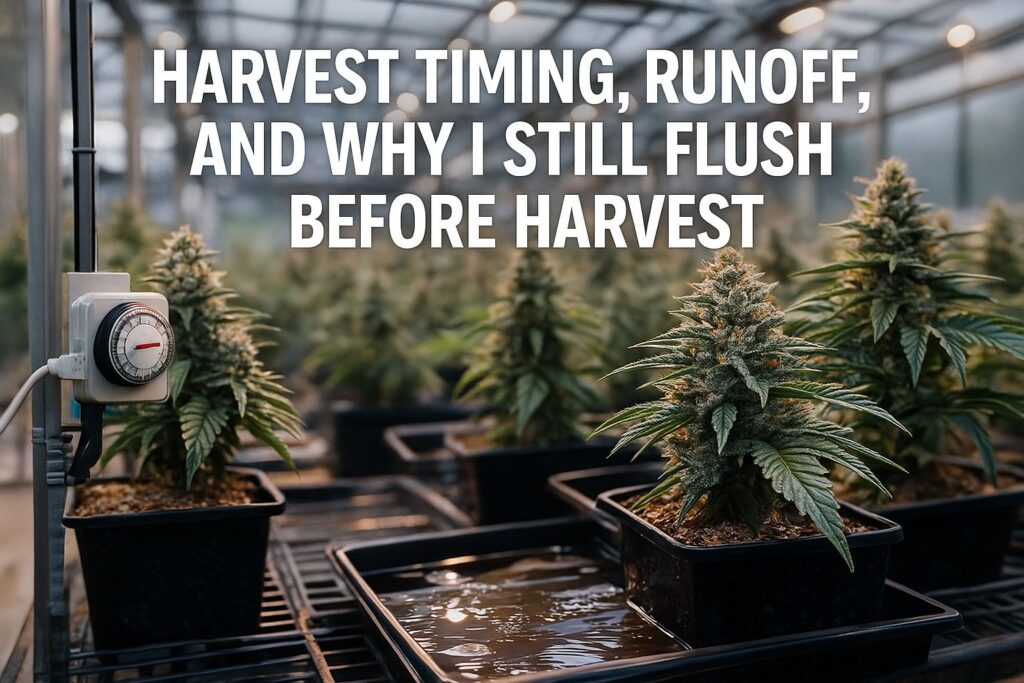
Coco tends to accumulate nutrients near the end of a run, especially if you push EC hard in mid-flower. That is why I still perform a controlled flush before harvest, even though opinions on this topic are divided.
My approach in 70/30 coco perlite:
- About 10 days from chop, I reduce EC to around 1.0 while keeping pH steady.
- Seven days from chop, I run plain water or very light solution and monitor runoff.
- I continue until runoff EC is close to my source water, which usually takes several irrigations.
For me, a flush before harvest is less about removing “nutrients from the buds” and more about balancing the root zone so plants can finish cleanly. Every time I skip a flush before harvest in coco, I notice harsher smoke and more ash in the joint, even when curing is the same.
The best coco cannabis seeds will still taste good without a perfect finish, but a thoughtful flush before harvest lets their full terpene potential shine.
Example week-by-week plan for a first 70/30 coco perlite run
To make this more concrete, here is a simplified outline that has worked well with vigorous feminized coco strains or a solid indica sativa hybrid cannabis line.
Week 1–2 (seedling and early veg)
- Germinate in small coco plugs with very light nutrients.
- Keep cannabis EC and pH around 0.8–1.0 and 5.8.
- Light at 250–350 µmol/m²/s; focus on root development.
Week 3–4 (veg)
- Transplant into final 70/30 coco perlite pots.
- Raise EC to 1.4–1.6 and water once or twice per day.
- Introduce topping and basic training in your indoor weed coco setup.
Week 5–6 (transition to flower)
- Flip to 12/12 for photoperiods or increase light for autos.
- Increase light intensity; keep coco nutrient schedule around 1.6–1.8 EC.
- Watch stretch and use trellis to control indica sativa hybrid cannabis plants.
Week 7–9 (peak flower)
- Hold EC between 1.8 and 2.0 depending on strain response.
- Irrigate 2–3 times daily as needed; track runoff to manage cannabis EC and pH.
- Thin leaves lightly to maintain airflow and avoid microclimates.
Week 10–11 (ripening and flush before harvest)
- Drop EC gradually and begin a flush before harvest.
- Monitor trichomes and pistils; harvest when the cultivar reaches your desired maturity.
- Dry and cure slowly to let your coco champions show off their true character.
FAQ: Seeds and strategy for 70/30 coco perlite
Do I need special seeds for 70/30 coco perlite?
You do not need seeds labeled specifically for coco, but some genetics are much easier to run in this medium. I look for vigorous coco cannabis seeds, especially feminized coco strains and robust indica sativa hybrid cannabis lines that can handle frequent irrigation and a consistent coco nutrient schedule.
What EC and pH should I run when growing marijuana in coco?
For most cultivars, I keep cannabis EC and pH around 1.4–1.6 EC in veg, 1.7–2.0 EC in mid-flower, and by the end of the cycle I taper down while maintaining pH between 5.7 and 6.0. Growing marijuana in coco is forgiving as long as you avoid big swings and monitor runoff.
Can I mix autos and photos in the same indoor weed coco setup?
Yes, but it works best if you plan a dedicated autoflower coco grow area or at least keep autos in the brightest part of the tent. They have fixed life cycles, so any stress early on in 70/30 coco perlite will show up as reduced size later.
How important is a flush before harvest in coco?
In my experience, a controlled flush before harvest improves flavor and ash quality in coco-grown weed. It does not need to be dramatic, but gradually lowering EC and finishing with cleaner runoff helps even the best coco cannabis seeds express their terpenes more clearly.
When you match the right genetics with 70/30 coco perlite and a well-thought-out nutrient and environment plan, cannabis moves from “good enough” to “serious production.” For me, coco has become the most efficient way to grow marijuana indoors, and the seeds that thrive in it have earned the title of true coco champions.
