Table of Contents
Chronic Thunder is an indica-dominant hybrid cannabis strain created by Barney’s Farm, a well-known breeder recognized for producing high-quality strains. Chronic Thunder is a cross between Chronic and Alaskan Thunder Fuck (ATF), two potent and well-established cannabis varieties. It boasts a balanced cannabinoid and terpene profile that makes it a favorite among both medical and recreational users.
Genetic Background
- Parent Strains: Chronic x Alaskan Thunder Fuck (ATF)
- Dominance: Indica-dominant hybrid (~80% Indica / 20% Sativa)
- Breeder: Barney’s Farm
- THC Content: 18-22%
- CBD Content: ~1-2%
- Terpene Profile: Myrcene, Limonene, Caryophyllene, Humulene
- Flowering Time: 8-9 weeks
- Yield: High
Appearance, Aroma, and Flavor
Appearance
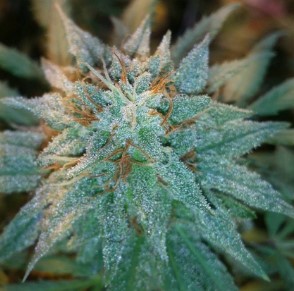
Chronic Thunder features dense, resinous buds with a compact indica structure. The flowers are often deep green with hints of purple, covered in a thick layer of trichomes, signifying their potency. The orange pistils contrast beautifully with the frostiness of the resinous coating.
Aroma
Chronic Thunder emits a pungent, earthy aroma with hints of spice, citrus, and pine. The dominant terpenes contribute to a rich fragrance that includes elements of:
- Earthy musk (Myrcene)
- Citrus and sweet lemon (Limonene)
- Peppery spice (Caryophyllene)
- Woody and herbal undertones (Humulene)
Flavor Profile
The flavor is just as complex as its aroma. Upon inhalation, spicy, sweet, and earthy notes dominate, followed by a creamy, slightly skunky finish. The citrus elements add a refreshing contrast, making it a well-rounded experience for connoisseurs.
Effects and Benefits
Recreational Uses
Chronic Thunder delivers a deeply relaxing high that is characteristic of indica-dominant strains. However, due to its slight sativa influence (20%), users may also experience mild euphoria and upliftment.
- Onset: Effects begin within 5-10 minutes after inhalation.
- Duration: Lasts 2-3 hours, with a lingering calming effect.
- Peak Effects: 30-60 minutes after consumption.
Recreational Benefits:
- Relaxation – Produces a full-body calming effect, making it ideal for winding down.
- Mild Euphoria – A gentle, uplifting sensation that can improve mood without being overwhelming.
- Creativity Boost – While not a high-energy strain, Chronic Thunder encourages introspective and artistic thinking.
- Socialization – Some users find it enjoyable in small, relaxed social settings.
- Evening Use – Best suited for nighttime consumption due to its sedative properties.
Medical Applications
Chronic Thunder has gained popularity in the medical cannabis community for its ability to alleviate symptoms of several health conditions. The synergy between its cannabinoids and terpenes enhances its therapeutic potential.

Pain Management
- Chronic pain (e.g., arthritis, fibromyalgia, migraines)
- Muscle spasms
- Neuropathic pain
- Inflammation relief (due to Caryophyllene, a known anti-inflammatory agent)
Mental Health Disorders
- Anxiety & Stress – The high myrcene and limonene content promote relaxation and mood stability.
- Depression – Its uplifting effects can combat mild to moderate depression.
- PTSD – Helps regulate mood and stress response by modulating the endocannabinoid system.
Insomnia
- Due to its sedative effects, Chronic Thunder is an excellent choice for people struggling with sleep disorders.
- Enhances deep sleep cycles, reducing nighttime awakenings.
Appetite Stimulation
- Patients suffering from appetite loss, nausea, or digestive disorders (such as Crohn’s disease or chemotherapy-induced nausea) may benefit from its hunger-inducing properties.
Neurological Disorders
- Some reports suggest Chronic Thunder may assist in managing seizure disorders, thanks to its CBD content (though it’s not high-CBD strain).
Scientific Composition
Cannabinoid Profile
- THC: 18-22%
- CBD: 1-2%
- CBG: ~0.5%
- CBN: <0.5%
- THCV: Trace amounts
Terpene Profile & Medical Properties
| Terpene | Aroma/Flavor | Potential Benefits |
|---|---|---|
| Myrcene | Earthy, Musky | Sedative, pain relief, anti-inflammatory |
| Limonene | Citrus, Lemon | Mood enhancement, anti-anxiety, stress relief |
| Caryophyllene | Spicy, Peppery | Anti-inflammatory, analgesic, may aid with addiction recovery |
| Humulene | Woody, Herbal | Appetite suppressant, anti-bacterial, anti-inflammatory |
Cultivation Information
Chronic Thunder, being an indica-dominant hybrid, requires specific cultivation techniques to optimize yield, potency, and terpene expression. Below are the scientific methods used to enhance its growth and production.

1. Germination and Seedling Stage
Optimal Germination Conditions
- Temperature: 22-26°C (71-79°F)
- Humidity: 70-80%
- Light: Low-intensity LED or CFL at 18-6 light cycle
- Method:
- Use paper towel germination with RO (reverse osmosis) water.
- Once Chronic Thunder has sprouted (~24-72 hrs), transfer into seedling-friendly soil or hydroponic medium.
- Use a rooting hormone (e.g., Indole-3-butyric acid) for faster root development.
2. Vegetative Growth Strategies
Environmental Parameters for Maximum Growth
- Light Cycle: 18/6 (18 hours light, 6 hours dark)
- Light Intensity: 300-600 µmol/m²/s PPFD
- Humidity: 55-65%
- Temperature: 24-28°C (75-82°F)
- CO₂ Enhancement: 900-1,200 ppm (boosts photosynthesis)
Medium Selection
- Soil: Rich in organic matter, pH 6.0-6.5. Ideal additives:
- Mycorrhizal fungi (enhances root uptake)
- Bat guano, kelp meal, worm castings (organic nutrients)
- Hydroponics:
- Deep Water Culture (DWC) for rapid growth.
- Nutrient Film Technique (NFT) for controlled feeding.
- Aeroponics for maximizing oxygen absorption.
Training Techniques for Canopy Optimization
- Low-Stress Training (LST) – Gently bend Chronic Thunder stems to expose lower branches to light.
- Screen of Green (SCROG) – Uses a net to spread out plant growth for uniform light penetration.
- Topping & Fimming – Increases the number of colas for Chronic Thunder higher yield.
- Defoliation – Removes unnecessary fan leaves to improve airflow and light penetration.
3. Flowering Stage: Maximizing Resin and Terpenes
Flowering Conditions
- Light Cycle: 12/12 (12 hours light, 12 hours dark)
- Light Intensity: 700-900 µmol/m²/s PPFD
- Humidity: 40-50% (prevents mold)
- Temperature: 20-26°C (68-78°F)
Advanced Flowering Enhancements
- UV-B Light Exposure (280-315nm) – Increases trichome and terpene production.
- Cold Shock Method (Last 2 weeks) – Lower temperature to 18°C (64°F) at night to enhance anthocyanin (purple hues) and resin production.
- Flushing (Final 7-10 days) – Use pH-balanced water (6.0-6.5) to remove excess nutrients and improve taste.
4. Nutrient Management & Feeding Schedule
Vegetative Stage (Weeks 1-4)
- Macronutrients: N-P-K Ratio 4:2:3
- Supplements: Calcium, Magnesium, Humic Acid, Fulvic Acid
- EC (Electrical Conductivity): 1.0-1.4 mS/cm
Flowering Stage (Weeks 5-9)
- Early Flowering (Weeks 5-7): N-P-K 2:4:6
- Late Flowering (Weeks 8-9): N-P-K 0:3:8
- EC: 1.6-2.0 mS/cm
Organic Feeding Options
- Compost Tea – Enhances microbial activity and soil health for Chronic Thunder.
- Molasses – Feeds beneficial microbes and boosts terpene production.
- Kelp Extract & Alfalfa Meal – Increases plant resilience and vigor.
5. Harvesting & Post-Harvest Processing
When to Harvest
- Trichome Color Indicator:
- Clear – Not ready
- Milky – Peak THC potency (ideal for balanced high)
- Amber – High CBN levels (strong sedation effect)
Curing Process (Enhancing Flavor & Potency)
- Drying Stage – 7-14 days at 18-22°C (64-72°F), 50-55% humidity.
- Curing Stage – Store buds in glass jars at 60-65% RH for 4-8 weeks.
- Burping Process – Open jars daily for 5-10 minutes in the first 2 weeks to remove excess moisture and improve terpene preservation.
Ingestion Methods, Onset, and Duration of Effects
Chronic Thunder, being an indica-dominant hybrid, provides a varied pharmacokinetic response based on the ingestion method used. Below is a scientific breakdown of its absorption, metabolism, onset time, peak effects, and duration across different consumption methods.
1. Ingestion Methods and Their Pharmacokinetics
The bioavailability (amount of active THC absorbed into the bloodstream) varies based on the method of ingestion. Here’s a scientific comparison of different methods.

A. Inhalation (Smoking/Vaporization)
Process: THC is absorbed through the alveoli in the lungs and enters the bloodstream rapidly.
- Onset: 1-5 minutes
- Peak Effects: 30-60 minutes
- Duration: 2-4 hours
- Bioavailability: ~30% (higher with vaporization)
- Metabolism: First-pass metabolism bypassed, THC converted to 11-OH-THC minimally
- Best Use: Immediate relief from pain, anxiety, stress, and insomnia
- Considerations: Higher carcinogen exposure with smoking, vaporization recommended for lung health
Scientific Vaporization Benefits
- Optimal Temperature: 180-210°C (356-410°F)
- Lower Toxins: Produces fewer combustion-related toxins (carbon monoxide, tar)
- Higher Cannabinoid Preservation: Better retention of THC, CBD, and terpenes
B. Oral Ingestion (Edibles, Capsules, Tinctures)
Process: THC is metabolized in the liver, transforming into 11-hydroxy-THC, a more potent and longer-lasting metabolite.
- Onset: 30-120 minutes (longer for edibles, shorter for tinctures)
- Peak Effects: 2-4 hours
- Duration: 6-12 hours
- Bioavailability: ~4-12% (low, but more potent due to 11-OH-THC)
- Metabolism: The liver’s extensive first-pass metabolism
- Best Use: Chronic pain, extended insomnia relief, appetite stimulation
- Considerations: Slower onset can lead to overconsumption risk
Optimizing Oral Consumption
- Fat-based edibles increase absorption (cannabinoids are lipophilic)
- Sublingual Tinctures (alcohol-based or lipid-based) are absorbed directly into the bloodstream, reducing first-pass metabolism
- Microdosing (2.5-5mg THC) for controlled effects
C. Sublingual Administration (Tinctures, Sprays)
Process: Absorption occurs through oral mucosa, partially bypassing liver metabolism.
- Onset: 15-30 minutes
- Peak Effects: 60-90 minutes
- Duration: 4-6 hours
- Bioavailability: ~15-35% (higher than edibles, lower than inhalation)
- Metabolism: Partial first-pass metabolism
- Best Use: Fast relief without inhalation risks (anxiety, sleep, chronic pain)
- Considerations: Alcohol-based tinctures may cause a burning sensation
Sublingual Efficiency Factors
- Hold tincture under the tongue for 60-90 seconds before swallowing
- Lipid-based tinctures (MCT oil, coconut oil) enhance THC absorption
D. Topical and Transdermal Absorption
Process: Localized absorption through the skin, except for transdermal patches that allow cannabinoids to enter systemic circulation.
- Onset: 15-60 minutes
- Peak Effects: 1-2 hours (for patches, 4-6 hours)
- Duration: 6-12 hours (longer for transdermal)
- Bioavailability: Low for regular topicals, high for transdermal patches
- Metabolism: Bypasses first-pass metabolism
- Best Use: Localized pain, arthritis, inflammation, muscle recovery
- Considerations: Does not produce a psychoactive effect unless using transdermal THC patches
Differences Between Topicals & Transdermal Patches
| Method | Psychoactivity | Systemic Absorption | Best For |
|---|---|---|---|
| Topicals (creams, balms) | No | No | Local pain & inflammation |
| Transdermal Patches | Yes | Yes | Chronic pain, long-lasting effects |
2. Onset Time, Peak Effects, and Duration of Chronic Thunder
The duration and intensity of effects depend on dosage, metabolism, tolerance, and method of consumption.
| Method | Onset Time | Peak Effects | Duration | Best Use |
|---|---|---|---|---|
| Smoking/Vaping | 1-5 min | 30-60 min | 2-4 hours | Immediate relief, recreational use |
| Edibles | 30-120 min | 2-4 hours | 6-12 hours | Chronic pain, long-lasting effects |
| Sublingual | 15-30 min | 60-90 min | 4-6 hours | Fast-acting alternative to smoking |
| Topicals | 15-60 min | 1-2 hours | 6-12 hours | Localized pain relief |
| Transdermal Patches | 30-60 min | 4-6 hours | 8-12+ hours | Long-lasting therapeutic use |
3. Factors Affecting THC Absorption & Effects
A. Metabolism and Individual Tolerance
- Faster metabolism → Quicker onset, shorter duration
- Higher body fat → THC stored longer in fat cells, prolonging effects
- Frequent users → Increased tolerance, requiring higher doses
B. Terpenes and the Entourage Effect
Chronic Thunder’s terpene profile can alter the onset and duration of effects:
- Myrcene – Enhances sedation and body relaxation (increases THC permeability in the brain)
- Limonene – Increases bioavailability by aiding digestion in edibles
- Caryophyllene – Acts as a cannabinoid receptor agonist, influencing pain relief
C. Food Intake and Absorption
- Consuming edibles on an empty stomach → Faster onset, more intense effects
- High-fat meals (e.g., avocado, nuts, dairy) → Increased absorption of THC
Possible Side Effects
- Dry Mouth & Eyes – Common in most cannabis strains.
- Dizziness – Can occur with high doses.
- Mild Paranoia – Uncommon but possible in THC-sensitive individuals.
- Lethargy/Sedation – Strong indica effects may cause heavy drowsiness.
Final Thoughts
Chronic Thunder is a powerful indica-dominant strain that offers a balanced mix of therapeutic and recreational benefits. It provides deep relaxation, making it a go-to strain for evening use. Its rich terpene and cannabinoid profile make it effective for treating pain, anxiety, stress, and sleep disorders, while its smooth yet potent high makes it an enjoyable choice for cannabis enthusiasts.
Whether you’re looking for a potent medicinal strain or a relaxing recreational experience, Chronic Thunder stands out as a top contender in the cannabis world.
For a complete directory of cultivars, visit our Cannabis Strain Reviews.
