Table of Contents
Chocolate Orange is an intriguing hybrid cannabis strain known for its citrusy, chocolatey aroma, balanced effects, and diverse therapeutic benefits. Chocolate Orange is a popular choice among medical and recreational users due to its ability to provide relaxation, pain relief, and euphoria without excessive sedation.
Genetics & Lineage
Chocolate Orange is a hybrid strain with a well-balanced blend of indica and sativa genetics. It is bred by crossing Chocolate Kush and Agent Orange, both of which contribute to its unique flavor, aroma, and effects.
- Chocolate Kush (Indica-dominant): A rich, earthy strain known for its relaxing and euphoric effects.
- Agent Orange (Sativa-dominant): A citrusy strain with uplifting and energizing properties.
This genetic pairing results in a well-balanced hybrid that exhibits traits from both parent strains, making it suitable for daytime and evening use.
Appearance, Aroma, and Flavor
Appearance
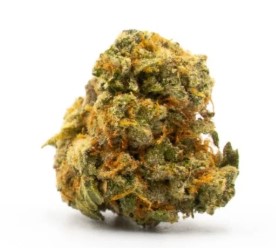
- Dense, medium to large-sized buds with a conical or rounded shape.
- Deep green leaves with hints of purple and orange pistils.
- A thick trichome layer, making the buds appear frosty and sticky.
Aroma
- Dominant citrus and chocolate notes.
- Underlying hints of earthiness and spice.
- A pungent, sweet scent with subtle skunky undertones.
Flavor Profile

- A sweet, creamy chocolate taste on the inhale.
- A tangy citrus-orange zest on the exhale.
- Some phenotypes may exhibit spicy and herbal undertones.
Cannabinoid and Terpene Profile
Cannabinoid Content
- THC: 18-25% (Moderate to High)
- CBD: 0.1-1% (Low)
- CBG: 0.5-1% (Moderate)
- Other cannabinoids: Minimal levels of CBC, CBN, and THCV
Primary Terpenes
- Myrcene – Promotes relaxation and sedation.
- Limonene – Provides mood-enhancing, anti-depressant, and stress-relief effects.
- Caryophyllene – Contributes to anti-inflammatory and pain-relieving properties.
- Linalool – Aids in stress relief, relaxation, and anti-anxiety effects.
- Pinene – Enhances focus, alertness, and may help with respiratory function.
This terpene profile contributes to Chocolate Orange’s balanced effects, combining uplifting cerebral stimulation with full-body relaxation.
Effects: What to Expect
Chocolate Orange is known for producing a well-rounded high, suitable for a variety of users.

Recreational Effects
- Euphoria – Immediate onset of happiness and mental uplift.
- Relaxation – A gradual body high that soothes muscles and tension.
- Creativity Boost – Enhances artistic expression, problem-solving, and brainstorming.
- Social Stimulation – Ideal for social gatherings and conversations.
- Mild Sedation (At Higher Doses) – Can lead to deep relaxation and couch-lock in larger doses.
Medical Applications
Due to its balanced nature, Chocolate Orange is a versatile strain for medical cannabis patients. Below are its primary medical uses:
1. Pain Management
- Effective for chronic pain, migraines, muscle spasms, and arthritis.
- The caryophyllene and myrcene content helps reduce inflammation and muscle tension.
2. Anxiety & Depression
- The limonene and linalool terpenes contribute to stress relief and mood enhancement.
- Helps reduce symptoms of social anxiety and panic attacks without excessive sedation.
3. Insomnia & Sleep Disorders
- Moderate to high doses induce deep relaxation and drowsiness.
- Advantageous for people who have trouble falling or staying asleep.
4. Appetite Stimulation
- Increases hunger, making it useful for individuals with eating disorders, chemotherapy patients, or those experiencing appetite loss.
5. PTSD & Emotional Disorders
- Provides emotional stability and stress reduction.
- Can be used as part of a holistic approach to PTSD treatment.
6. Nausea and Gastrointestinal Disorders
- May help with nausea, vomiting, and indigestion.
- Commonly used by cancer patients undergoing chemotherapy.
Scientific Insights: How Chocolate Orange Affects the Brain and Body
Interaction with the Endocannabinoid System
- THC (Δ9-tetrahydrocannabinol) binds to CB1 receptors in the brain, causing euphoria, pain relief, and relaxation.
- CBD (Cannabidiol) modulates the effects of THC, reducing anxiety and paranoia.
- Caryophyllene interacts with CB2 receptors, contributing to anti-inflammatory and analgesic effects.
Neurological Effects
- Boosts dopamine release, enhancing mood, motivation, and focus.
- Increases serotonin activity, contributing to stress relief and improved emotional balance.
- Regulates GABA levels, leading to muscle relaxation and reduced anxiety.
Metabolic and Digestive Impact
- Enhances gastrointestinal motility, making it useful for IBS and Crohn’s disease.
- Stimulates appetite and digestion.
Cultivation Information
Growing the Chocolate Orange cannabis strain requires a balanced approach to nutrient management, light cycles, and environmental conditions to achieve high potency, flavor, and yield. Below, we explore advanced scientific methods for optimal cultivation.
1. Growth Stages & Environmental Requirements
Each stage of growth requires precise temperature, humidity, and nutrient levels to optimize plant health.
| Growth Stage | Duration | Temperature | Humidity | Light Cycle |
|---|---|---|---|---|
| Germination | 3-10 Days | 20-25°C (68-77°F) | 70-80% | 18/6 or 24/0 |
| Seedling | 2-3 Weeks | 22-26°C (72-79°F) | 65-75% | 18/6 |
| Vegetative | 4-8 Weeks | 22-28°C (72-82°F) | 50-70% | 18/6 |
| Flowering | 8-10 Weeks | 20-26°C (68-79°F) | 40-50% | 12/12 |
| Late Flowering/Ripening | Last 2 Weeks | 18-24°C (64-75°F) | 35-45% | 12/12 |
2. Lighting Techniques
Indoor Cultivation
- Optimal Light Type: Full-spectrum LED grow lights (6500K for vegetative, 2700K for flowering).
- PPFD (Photosynthetic Photon Flux Density): Aim for 500-700 μmol/m²/s during vegetative and 800-1000 μmol/m²/s during flowering.
- DLI (Daily Light Integral): Maintain 20-40 mol/m²/day.
Outdoor Cultivation
- Needs six to eight hours of direct sunlight every day at the very least.
- Supplemental lighting (e.g., greenhouse LEDs) may be necessary in areas with low light exposure.
3. Growing Medium Selection
Chocolate Orange performs well in different mediums, each having unique benefits:
| Medium | Pros | Cons |
|---|---|---|
| Soil (Organic Living Soil) | Rich in microbes, enhances terpene profile | Slower growth, risk of pests |
| Coco Coir | Faster growth, better aeration | Requires more frequent feeding |
| Hydroponics (DWC, NFT, Ebb & Flow) | Maximizes yield, faster nutrient uptake | Requires strict pH monitoring |
| Aeroponics | Most efficient nutrient delivery, rapid growth | High-tech setup, costly |
pH Levels for Nutrient Absorption
| Medium | Optimal pH Range |
|---|---|
| Soil | 6.0 – 6.8 |
| Hydroponics/Coco Coir | 5.5 – 6.2 |
4. Nutrient Management & Deficiency Prevention
Chocolate Orange requires a balanced mix of macronutrients (N-P-K) and micronutrients to maximize yield and potency.
Nutrient Needs by Growth Stage
| Growth Stage | N-P-K Ratio | Key Micronutrients |
|---|---|---|
| Seedling | 2-1-2 | Calcium (Ca), Magnesium (Mg) |
| Vegetative | 3-1-2 or 4-2-3 | Iron (Fe), Zinc (Zn), Boron (B) |
| Early Flowering | 1-3-2 | Phosphorus (P), Potassium (K) |
| Late Flowering | 0-3-3 or 1-4-4 | Sulfur (S), Magnesium (Mg) |
Deficiency Symptoms & Solutions
| Deficiency | Symptoms | Correction |
|---|---|---|
| Nitrogen (N) | Yellowing leaves, slow growth | Increase N-based nutrients |
| Phosphorus (P) | Purple/red stems, slow bud growth | Adjust pH to 6.2-6.5 |
| Potassium (K) | Brown leaf tips, weak stems | Supplement with K-rich fertilizers |
| Magnesium (Mg) | Interveinal yellowing, weak plants | Add Epsom salt (MgSO₄) |
5. Watering & Irrigation
- Ideal Watering Frequency: Every 2-3 days in soil, daily in coco/hydroponics.
- Water Quality: pH-balanced (6.0-6.5), filtered or reverse osmosis (RO) water.
- EC (Electrical Conductivity) Levels:
- Vegetative: 1.2 – 1.8 mS/cm
- Flowering: 1.8 – 2.4 mS/cm
Advanced Method:
- Drip Irrigation – Ensures consistent watering and nutrient uptake.
- Deep Water Culture (DWC) – Increases oxygen availability to roots.
6. CO₂ Enrichment for Higher Yields
Increasing CO₂ levels enhances growth rate and bud production.
| CO₂ PPM | Effect |
|---|---|
| 400-600 ppm | Normal air levels |
| 800-1000 ppm | Boosts growth in vegetative stage |
| 1000-1500 ppm | Maximizes flowering yield |
| >1500 ppm | Toxic, reduces efficiency |
Best Methods for CO₂ Supplementation:
- CO₂ tanks with regulators.
- Fermentation or dry ice (small-scale grows).
- CO₂ burners (large-scale operations).
7. Plant Training for Maximum Yield
Low-Stress Training (LST)
- Bending branches to increase light penetration.
- Helps develop multiple colas for higher yields.
Screen of Green (ScrOG)
- Uses a mesh net to control plant growth.
- Encourages even canopy development.
Super Cropping
- High-stress technique that thickens stems and boosts yield.
- Requires precise stem bending without breaking.
Defoliation & Pruning
- Remove lower fan leaves to improve airflow.
- Eliminate small underdeveloped buds (“lollipopping”).
8. Pest & Disease Control
Chocolate Orange is moderately resistant but susceptible to pests and mold.
Common Pests & Prevention
| Pest | Symptoms | Solution |
|---|---|---|
| Spider Mites | Yellow spots, webbing | Neem oil, predatory insects |
| Fungus Gnats | Wilting, root rot | Dry topsoil, sticky traps |
| Aphids | Curling leaves, sticky residue | Insecticidal soap, ladybugs |
Mold Prevention
- Maintain humidity below 50% in flowering stage.
- Increase airflow with oscillating fans.
- Use silica supplements to strengthen plant structure.
9. Harvesting & Curing for Optimal Potency
Harvest Timing
- Trichome Check: Use a jewelers loupe (40x) or digital microscope.
- Ideal Trichome Color:
- Milky White: Peak THC potency.
- Amber: More sedative effects.
Curing Process
- Trim buds and dry at 60°F (15°C) and 50% humidity for 7-10 days.
- Jar curing: Store in glass jars at 60-65% humidity.
- Burp jars daily for the first 2 weeks to prevent mold.
End Result: Maximized terpene preservation, potency, and smoothness.
Consumption Methods
The Chocolate Orange cannabis strain can be consumed in multiple ways, each influencing the bioavailability, onset time, duration, and intensity of its effects. The method of ingestion significantly impacts how cannabinoids like THC and CBD interact with the endocannabinoid system (ECS). Below is a comprehensive scientific breakdown of ingestion methods, onset of effects, and their durations.

1. Methods of Ingestion and Their Scientific Impact
1.1 Smoking (Combustion)
Method: Inhalation of Chocolate Orange via a joint, pipe, or bong.
Bioavailability: 25-30 percent (THC is rapidly absorbed through the lungs).
Onset and Duration
| Factor | Data |
|---|---|
| Onset | 1-5 minutes |
| Peak Effects | 15-30 minutes |
| Duration | 2-4 hours |
Scientific Process
- THC and other cannabinoids in Chocolate Orange are converted into active delta-9-THC upon combustion at approximately 315°F or 157°C.
- Delta-9-THC enters the lungs, rapidly diffusing into the bloodstream via alveoli.
- First-pass metabolism is bypassed, leading to faster and more intense psychoactive effects.
Advantages
- Immediate effects, Chocolate Orange is ideal for acute pain relief.
- Easy dose control, allowing gradual intake.
- Full terpene profile is preserved compared to edibles.
Disadvantages
- Combustion releases harmful byproducts such as tar and benzene.
- Shorter duration compared to edibles.
1.2 Vaping (Volatilization)
Method: Using a dry herb vaporizer or vape cartridge to heat cannabis without combustion.
Bioavailability: 35-45 percent, higher than smoking due to improved absorption.
Onset and Duration
| Factor | Data |
|---|---|
| Onset | 1-3 minutes |
| Peak Effects | 15-30 minutes |
| Duration | 3-5 hours |
Scientific Process
- THC vaporizes at 315-392°F or 157-200°C, preserving terpenes and cannabinoids.
- Unlike combustion, fewer toxic byproducts are produced.
- Higher cannabinoid retention leads to longer and stronger effects than smoking.
Advantages
- Healthier alternative to smoking with fewer carcinogens.
- More efficient THC delivery.
- Stronger terpene and flavor profile.
Disadvantages
- Requires specialized equipment.
- Expensive initial investment.
1.3 Edibles (Oral Ingestion)
Method: Consuming infused food, gummies, or capsules.
Bioavailability: 4-20 percent, varies due to extensive first-pass metabolism.
Onset and Duration
| Factor | Data |
|---|---|
| Onset | 30-120 minutes |
| Peak Effects | 2-4 hours |
| Duration | 6-12 hours |
Scientific Process
- THC in Chocolate Orange is metabolized by the liver, converting delta-9-THC into 11-hydroxy-THC, which is more potent and longer-lasting.
- Chocolate Orange lower bioavailability because digestive enzymes break down some cannabinoids before absorption.
- Fat-soluble THC absorption increases when consumed with dietary fats.
Advantages
- Long-lasting effects, ideal for chronic conditions.
- Discreet consumption.
- No lung irritation.
Disadvantages
- Slow onset, making Chocolate Orange dosing difficult.
- Overconsumption risk because to delayed effects.
1.4 Sublingual (Tinctures and Sprays)
Method: Placing cannabis-infused tinctures under the tongue.
Bioavailability: 40-50 percent, absorbed via the mucous membranes.
Onset and Duration
| Factor | Data |
|---|---|
| Onset | 15-30 minutes |
| Peak Effects | 1-2 hours |
| Duration | 4-6 hours |
Scientific Process
- Cannabinoids bypass the digestive system and enter the bloodstream directly via sublingual absorption.
- More efficient than edibles but slightly slower than inhalation.
Advantages
- Faster onset than edibles.
- Precise dosing with dropper.
- More bioavailable than edibles.
Disadvantages
- Taste may be unpleasant.
- Compared to smoking or vaping, the effects take longer to manifest.
1.5 Topicals (Transdermal Absorption)
Method: Cannabis-infused lotions, balms, or transdermal patches applied to the skin.
Bioavailability: 5-10 percent for localized application, 40 percent or higher for transdermal patches.
Onset and Duration
| Factor | Data |
|---|---|
| Onset | 15-45 minutes |
| Peak Effects | 1-2 hours |
| Duration | 4-8 hours |
Scientific Process
- THC does not enter the bloodstream when applied topically, making topicals non-psychoactive.
- Transdermal patches contain permeation enhancers such as ethanol that allow THC to enter the bloodstream, causing systemic effects.
Advantages
- Localized pain relief without psychoactive effects.
- Effective for muscle and joint pain, arthritis, and inflammation.
- Long-lasting relief with minimal side effects.
Disadvantages
- Topicals do not produce a high.
- Transdermal patches can be expensive.
2. Comparison of Ingestion Methods: Onset, Duration, and Potency
| Method | Onset Time | Peak Effects | Duration | Bioavailability |
|---|---|---|---|---|
| Smoking | 1-5 minutes | 15-30 minutes | 2-4 hours | 25-30% |
| Vaping | 1-3 minutes | 15-30 minutes | 3-5 hours | 35-45% |
| Edibles | 30-120 minutes | 2-4 hours | 6-12 hours | 4-20% |
| Sublingual | 15-30 minutes | 1-2 hours | 4-6 hours | 40-50% |
| Topicals | 15-45 minutes | 1-2 hours | 4-8 hours | 5-40% |
3. Factors Influencing Onset and Duration
Several biological and external factors impact how fast and long Chocolate Orange takes to work:
Biological Factors
- Metabolism – Faster metabolism results in quicker onset but shorter duration.
- Body Fat Percentage – THC binds to fat, increasing storage and extending effects.
- Tolerance Level – Frequent users experience shorter effects.
- Empty vs. Full Stomach – Edibles absorb faster on an empty stomach.
External Factors
- Method of Consumption – Inhalation provides rapid effects, while digestion results in delayed but prolonged effects.
- Dosage – Higher doses prolong effects.
- THC vs. CBD Ratio – More CBD leads to less intense psychoactive effects.
Potential Side Effects
While Chocolate Orange is well-tolerated, some users may experience:
- Dry Mouth & Dry Eyes – Common and easily managed with hydration.
- Dizziness & Lightheadedness – Can occur at high doses.
- Paranoia or Anxiety – More likely in individuals sensitive to THC.
- Increased Appetite (Munchies) – Beneficial for some but may lead to overeating.
Who Should Use Chocolate Orange?
Best for:
- Users seeking relaxation with mental clarity.
- Those with chronic pain, anxiety, and stress-related disorders.
- People looking for creative and social enhancement.
- Individuals struggling with appetite loss and nausea.
Not ideal for:
- Beginners who are THC-sensitive (may experience anxiety).
- Individuals prone to paranoia.
- Those looking for a pure indica or sativa experience.
Conclusion
Chocolate Orange is a delicious and versatile hybrid that delivers a balance of cerebral stimulation and physical relaxation. Its rich terpene profile, moderate-high THC content, and wide range of medical benefits make it a well-liked option for both medical and recreational users. Whether you’re looking to relieve pain, boost creativity, or simply enjoy a flavorful smoke, Chocolate Orange offers a unique and well-rounded cannabis experience.
For a complete directory of cultivars, visit our Cannabis Strain Reviews.
