Why I keep a spot for Cherry Pie in my rotation

I’ve grown a lot of cannabis, marijuana, and weed over the years, and I’m picky about what earns repeat space in my room. Cherry Pie Cannabis Strains are a repeat for me because they hit a sweet spot between flavor potential and manageable structure. They are not a “set it and forget it” plant, but they also do not demand exotic gear. What they do demand is consistency: stable light intensity, a predictable root-zone routine, and enough training to keep the canopy flat.
When growers ask me for a simple answer on Cherry Pie Cannabis Strains, I usually say this: Cherry Pie rewards steady fundamentals more than fancy additives. If your temperature, humidity, and irrigation rhythm are stable, you can steer this plant toward clean, resinous flowers that cure well. If those basics drift, the plant will tell on you with leaf tips, airy edges, or late-flower moisture problems.
In this guide I’m sharing the hands-on details I rely on: environment numbers, how I plan feeding, how I choose seeds, and what I watch for in different cherry pie phenotypes. I’ll also include my repeatable checklists for germination, training, harvest, and curing, plus a short FAQ with the kinds of natural-language questions people type into Google.
I’ve noticed these Cherry Pie marijuana plants stay happiest when I treat them like a high-quality weed crop: steady inputs, no sudden swings, and plenty of fresh air.
What I mean by Cherry Pie, and why names matter less than behavior
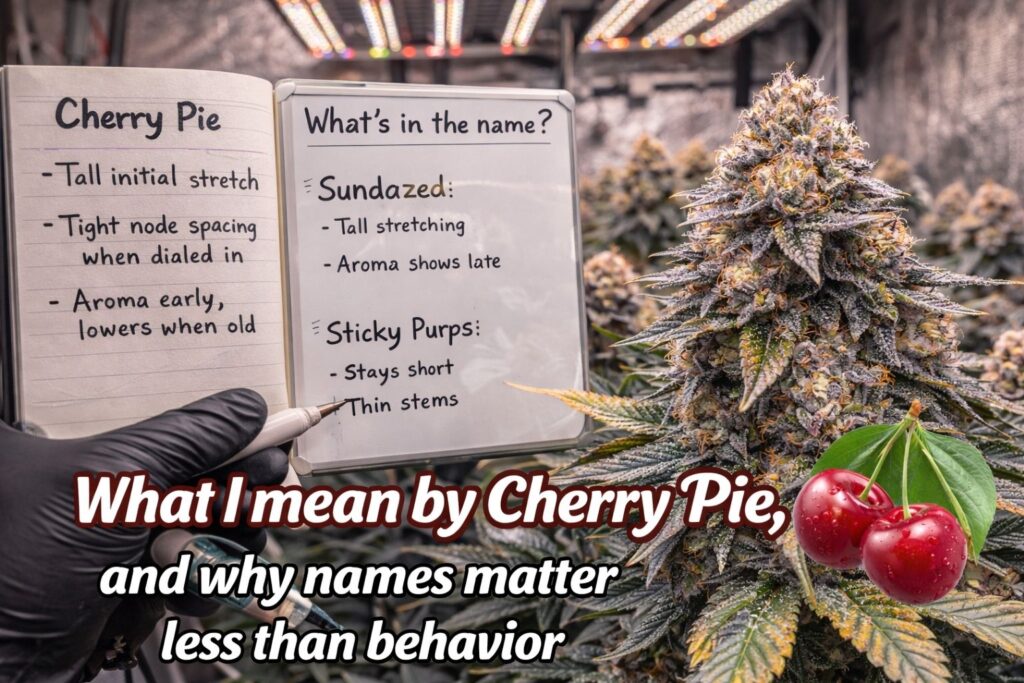
Depending on the breeder or seed line, Cherry Pie is often discussed as a balanced hybrid that can lean relaxing without knocking you flat. In the grow room, I care less about the label and more about the observable traits: stretch pattern, node spacing, how quickly it sets pistils, and how it responds to training.
I keep a small section in my grow journal called cherry pie cultivar notes. In my cherry pie cultivar notes, I track:
- How tall the plant gets in the first 21 days of flower
- Whether it stacks tight nodes or longer node spacing
- How early the aroma shows up
- How it handles higher EC in mid flower
Those cherry pie cultivar notes make the next run smoother because Cherry Pie can vary even within the same pack.
Seed-shopping decisions that actually change the grow
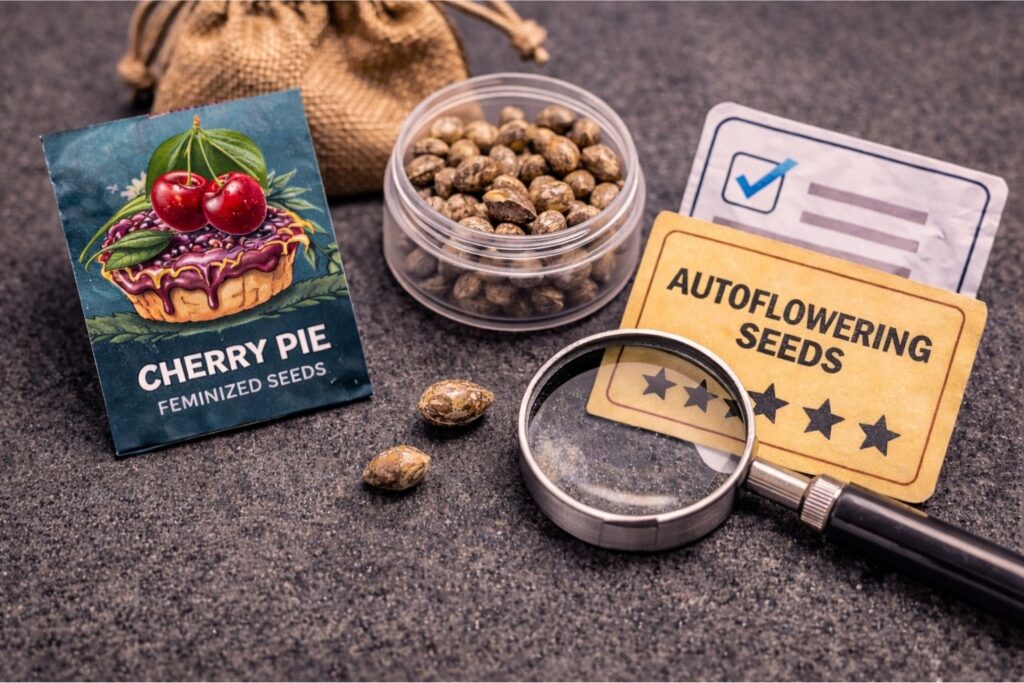
I’m not going to pretend there is only one “true” Cherry Pie. If you are buying seeds online, your goal is to reduce surprises, not chase a perfect photo. The internet is full of marijuana and weed hype, so I lean on repeatable grow behavior instead of claims.
Feminized seeds, autos, and what I’d pick for Cherry Pie
If your priority is a straightforward, photoperiod grow, I’d pick feminized seeds so you are not spending time sexing plants. Autos can be fun, but the window for correcting mistakes is shorter. For Cherry Pie Cannabis Strains, I prefer photoperiod feminized seeds because I can extend veg if a plant is slower, and I can train more aggressively without racing the clock.
If you do choose autos, treat your environment as non-negotiable from day one. Autos don’t forgive early stress the way a photoperiod plant can. Either way, don’t buy based on strain name alone. Look for lines that provide clear grow info, realistic flowering estimates, and a history of stable runs.
Phenotypes: what I’ve seen in real rooms
Across several cycles, I’ve run into a few recurring cherry pie phenotypes:
- Dessert-leaning plants: sweeter aroma, tighter buds, slightly less stretch
- Spice-leaning plants: more herbal edge, taller plants, slightly looser flowers
- Color-leaning plants: easier to bring out purple with cooler nights, sometimes a slower finish
I keep a separate page in my journal titled cherry pie cultivar notes for each plant so I can compare these cherry pie phenotypes honestly. Those cherry pie cultivar notes are also how I decide which plant deserves cloning next time.
The environment numbers I aim for
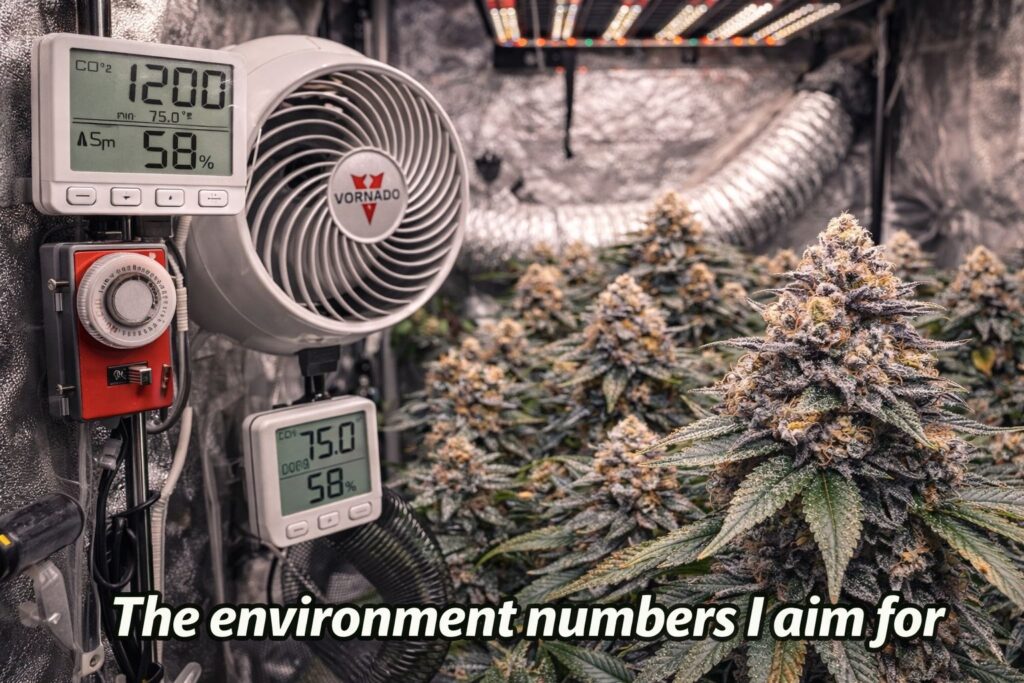
Most growers get in trouble with Cherry Pie by treating environment as a vibe instead of a set of targets. I write my cherry pie grow room targets on a whiteboard so I’m not guessing.
Here are my baseline cherry pie grow room targets for a typical indoor tent:
- Veg temperature: 24–27°C lights on, 20–23°C lights off
- Flower temperature: 23–26°C lights on, 19–22°C lights off
- Relative humidity: 60–70% early veg, 50–60% late veg, 45–55% early flower, 40–50% late flower
- VPD: roughly 0.9–1.2 kPa in veg, 1.2–1.5 kPa in flower (adjust for your leaf temps)
- Air movement: constant gentle leaf flutter, never dead pockets
- CO2: optional, but only if light and nutrition are already dialed
I revisit those cherry pie grow room targets daily during late flower. If I miss the target humidity range, I increase airflow and dehumidification before I add anything else. Cherry Pie can finish dense, and dense flowers plus humidity is where problems start.
Light intensity and photoperiod: what I actually run

For photoperiod plants, my standard schedule is 18/6 in veg and 12/12 in flower. For Cherry Pie Cannabis Strains, the big mistake I see is running too much light too early, then trying to “fix” stressed plants with more feed.
PPFD ranges that have treated me well
These are realistic PPFD ranges I use as a starting point:
- Seedling: 150–250 PPFD
- Early veg: 300–450 PPFD
- Late veg: 450–600 PPFD
- Early flower (weeks 1–3): 600–750 PPFD
- Mid flower (weeks 4–6): 750–900 PPFD
- Late flower (weeks 7+): 700–850 PPFD, depending on plant response
If you are not measuring PPFD, at least be consistent with light distance and dimmer settings. Cherry Pie responds well to strong light, but only when the root zone is healthy and your cherry pie irrigation strategy is stable.
Medium choice: soil vs coco vs hydro (my honest trade-offs)
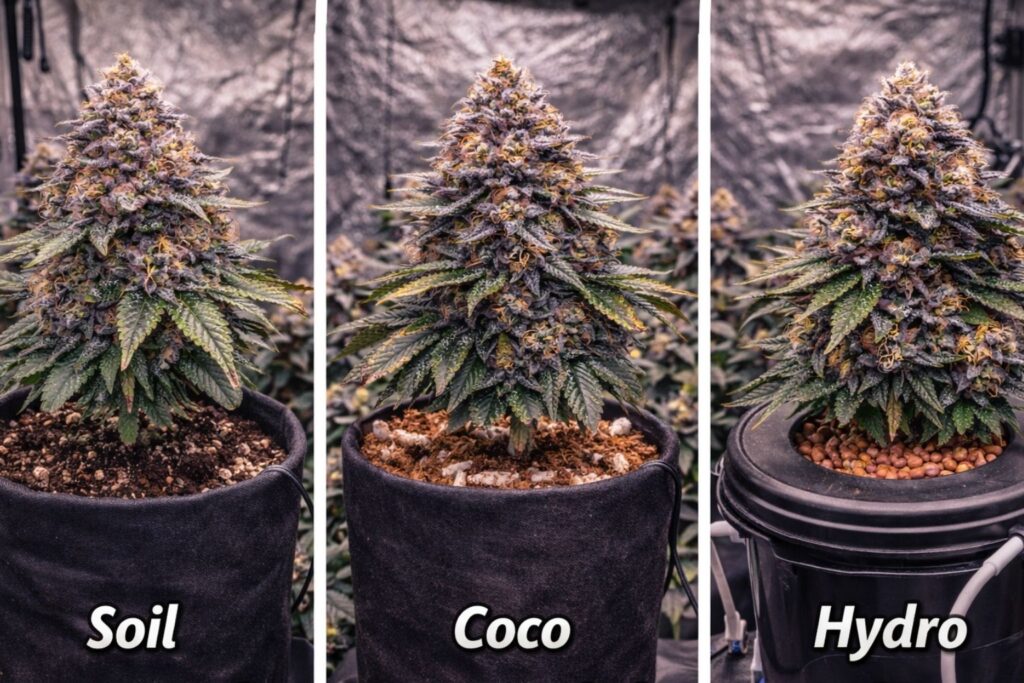
I’ve done a cherry pie soil run and a cherry pie coco run side by side. I’ve also flowered Cherry Pie in a simple recirculating hydro setup. The plant can succeed in all three, but the workload changes.
What I learned from a cherry pie soil run
A cherry pie soil run is forgiving if your mix drains well and you don’t overwater. I like soil when I want a slower, more buffered nutrient curve and I’m willing to accept a little less speed. In my cherry pie soil run notes, the biggest wins came from:
- Keeping pots light before re-watering
- Avoiding heavy nitrogen late in veg
- Using top-dress or mild liquid feeds instead of constant high EC
If you’re newer, a cherry pie soil run can make it easier to avoid wild swings in EC. But you still need a plan for humidity and airflow late in bloom, because soil-grown plants can still pack dense buds.
What I learned from a cherry pie coco run
A cherry pie coco run is faster and more controllable, but it punishes inconsistency. Coco is my favorite for dialing Cherry Pie Cannabis Strains because I can steer growth with feed strength and irrigation frequency.
In a cherry pie coco run, I pay attention to runoff EC and pH more than in soil. I also take my cherry pie irrigation strategy seriously. When coco is done right, growth is vigorous and training is easier because the plant recovers quickly.
Feeding basics: a practical nutrient approach
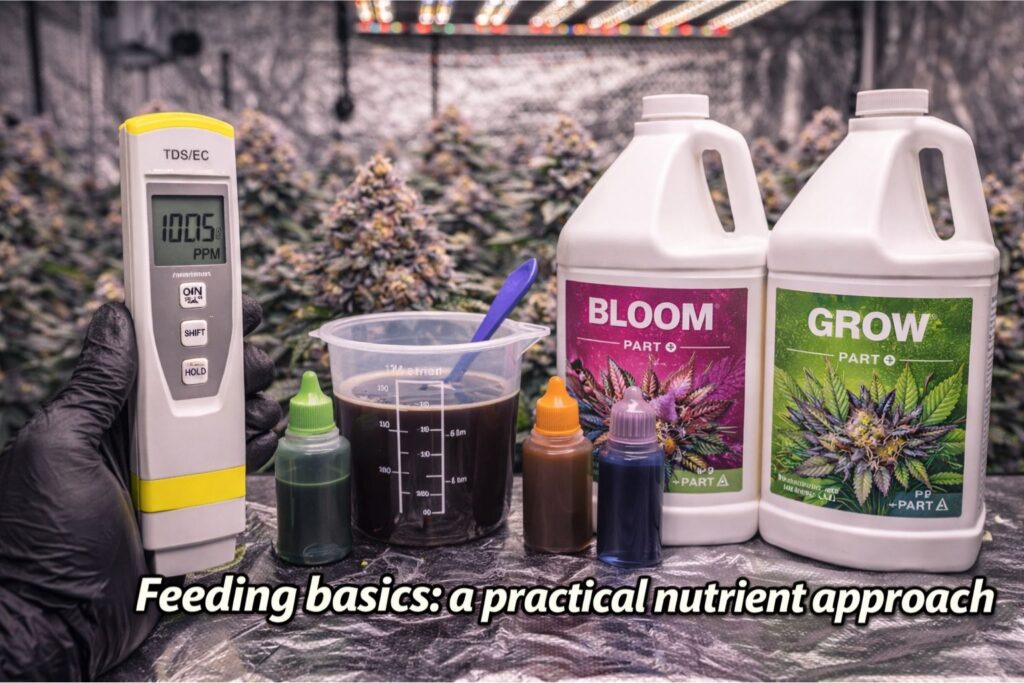
I’m not going to give you a brand-specific chart, because every nutrient line labels differently. Instead, I’ll share the ranges and checkpoints I use.
EC/PPM ranges I aim for
These are general targets, not a promise:
- Seedling: EC 0.4–0.8
- Early veg: EC 0.8–1.2
- Late veg: EC 1.2–1.6
- Early flower: EC 1.4–1.8
- Mid flower: EC 1.6–2.0
- Late flower: EC 1.2–1.6, tapering down as the plant finishes
Cherry Pie can take food, but it hates sudden jumps. If you’ve fed other marijuana cultivars hard, slow down a touch here and let the weed tell you what it can handle. If I raise EC, I do it slowly, and I watch leaf tips for burn. I also keep my cherry pie irrigation strategy consistent so the plant isn’t cycling between wet and dry extremes.
A simple, repeatable cherry pie irrigation strategy
This is the cherry pie irrigation strategy I use in coco:
- Small, frequent irrigations once roots fill the pot
- Aim for 10–20% runoff to prevent salt buildup
- Keep feed pH stable (commonly 5.8–6.2 in coco)
- Track runoff EC weekly to catch drift early
I write “cherry pie irrigation strategy” at the top of my run sheet because most problems I see are really watering problems wearing a nutrition mask. The same cherry pie irrigation strategy also helps keep plants resilient under higher light.
Training: how I shape Cherry Pie for even, dense flowers
If you want predictable results with Cherry Pie Cannabis Strains, training is not optional. This weed can throw uneven tops if you let it, and uneven tops turn into uneven marijuana flower at harvest. That means some buds get too much light and others stay shaded.
My go-to cherry pie canopy management routine
My cherry pie canopy management is built around three moves:
- Topping once or twice in veg to create multiple main tops
- Low stress training (LST) to spread branches horizontally
- Light defoliation to open airflow and reduce shade
I start cherry pie canopy management early. If I wait until flower, the plant is already deciding where it wants to put energy. When I do cherry pie canopy management consistently, the canopy stays flat, PPFD is even, and buds finish more uniformly.
Advanced training methods I use sometimes
If the plant is stretchy, I’ll add:
- Scrog net to hold tops in place
- Supercropping in late veg (gentle stem bending) to control height
- Lower-branch cleanup before flower to clean lower growth
All of these are still part of training, but I only use them if the plant structure calls for it. The goal is always the same: stable cherry pie canopy management and good airflow.
Flowering timeline: what to expect week by week
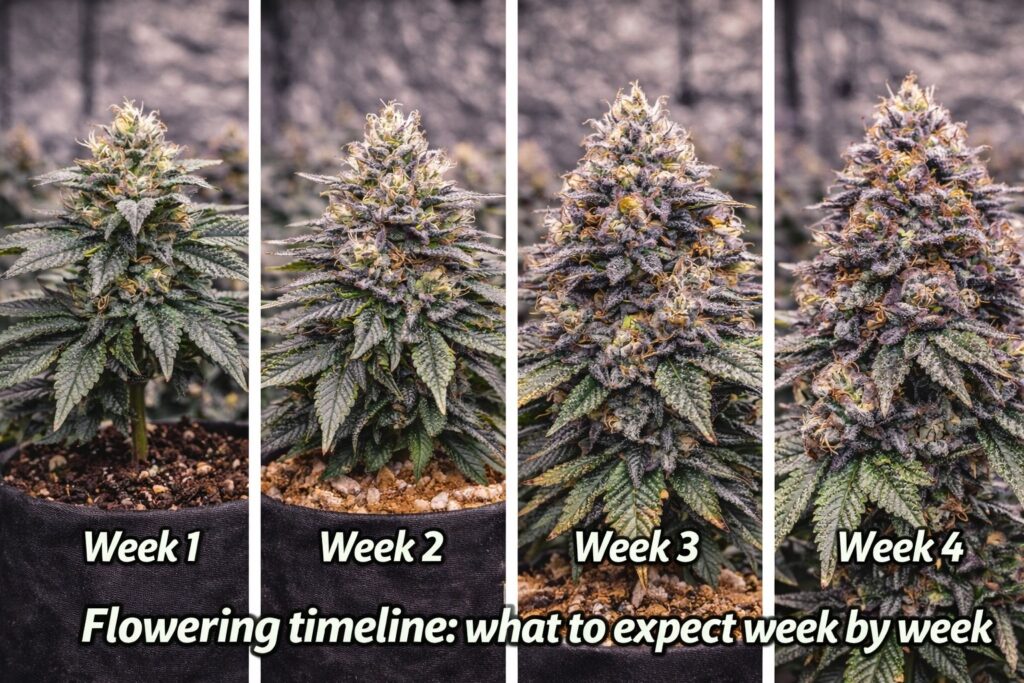
I keep a simple cherry pie week by week timeline so I’m not relying on memory. This also helps when comparing cherry pie phenotypes.
My typical cherry pie week by week timeline (photoperiod)
Week 1–2:
- Stretch begins, keep nitrogen moderate
- Keep humidity under control
- Keep training gentle, guide tops into an even plane
Week 3:
- Bud sites set, aroma starts to show
- Begin to tighten humidity targets
- Light defoliation if leaves are blocking airflow
Week 4–5:
- Flower stacking accelerates
- Watch for calcium and magnesium needs
- Keep the cherry pie irrigation strategy consistent to avoid swings
Week 6:
- Resin increases, aroma gets louder
- Lower humidity toward late-flower targets
- Reduce leaf clutter, but don’t strip plants bare
Week 7–9:
- Finish depends on phenotype and environment
- Taper feed if the plant signals it
- Stay strict with cherry pie bud rot prevention
I refer back to this cherry pie week by week timeline every run. The cherry pie week by week timeline keeps me from making late changes that stress the plant.
Aroma and resin: how I protect the terpene profile
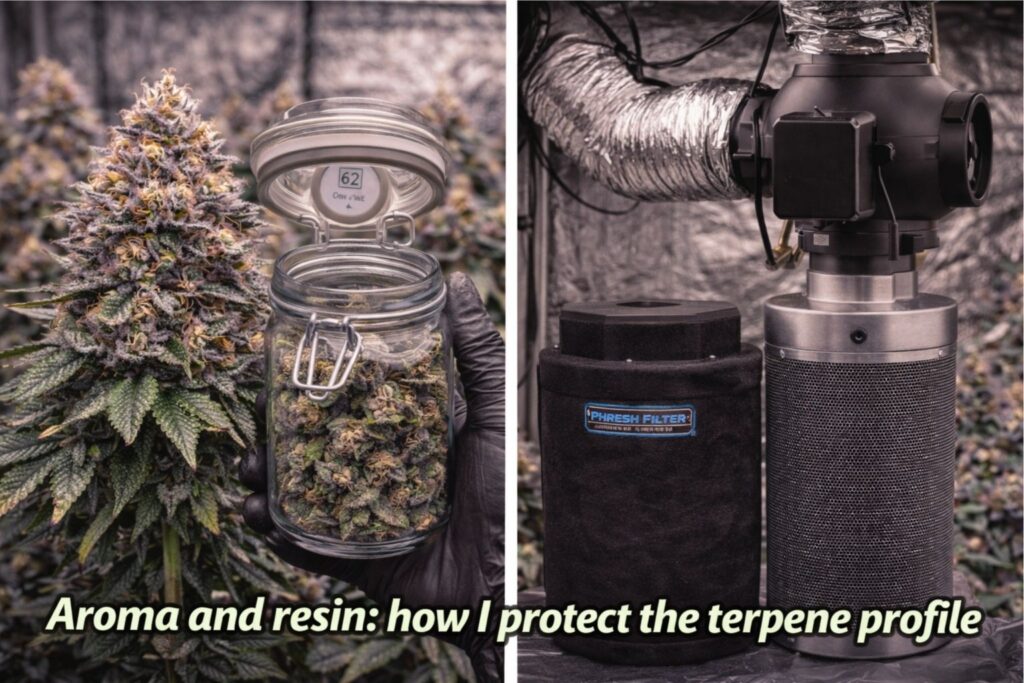
Most growers talk about the “terpene profile” like it’s guaranteed. It isn’t. You can grow the right genetics and still dull the aroma with poor drying or heat stress late in flower.
What helps cherry pie aroma development in my rooms
For cherry pie aroma development, I focus on:
- Keeping late-flower temps stable (avoid hot spikes)
- Avoiding overfeeding near the finish
- Keeping airflow moving through the canopy
- Not blasting buds with a fan directly
I also note cherry pie aroma development in my journal alongside cherry pie cultivar notes. Some phenotypes are naturally louder, but good cherry pie aroma development habits help every plant finish better.
Late flower risks: mold, moisture, and prevention
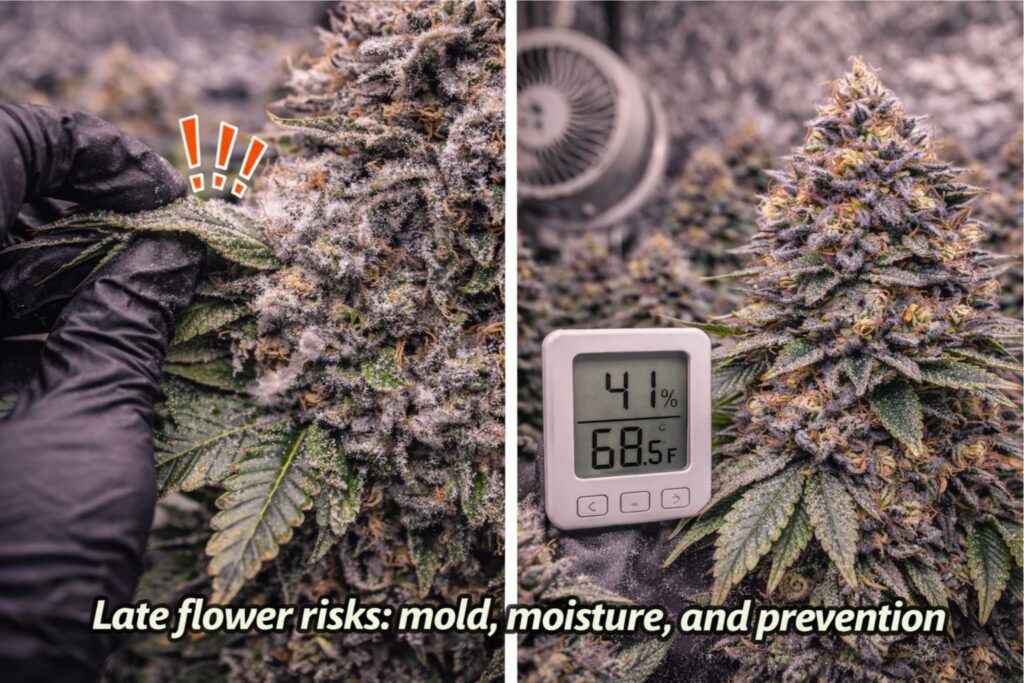
Dense flowers are great until they trap moisture. Cherry Pie can finish chunky, so cherry pie bud rot prevention becomes a real part of the job, not a theory.
My cherry pie bud rot prevention checklist
- Keep late-flower RH in the 40–50% range
- Increase air exchange and canopy circulation
- Remove crowded interior leaves that trap moisture
- Avoid watering right before lights out in humid rooms
- Inspect buds with a flashlight, especially the largest colas
I’ve learned that cherry pie bud rot prevention starts long before you see a problem. If you follow a clean cherry pie irrigation strategy and maintain cherry pie canopy management, you reduce the risk. Still, I treat cherry pie bud rot prevention like a daily task in the last few weeks.
Harvest timing: reading the plant, not the calendar
Cherry Pie flowering time can vary by phenotype and environment. I’ve had plants that looked ready earlier, and others that needed extra days to finish properly.
When deciding harvest, I combine:
- Trichome maturity (using a loupe)
- Pistil change and bud swelling
- Aroma intensity and stability
- The plant’s overall fade pattern
If you chase speed, you can cut too early and end up with a flatter jar. I’ve done that once and the marijuana aroma never fully came back in cure, even though the weed looked fine. I’d rather give Cherry Pie Cannabis Strains the time it needs than rush the finish.
Drying and curing: where great grows get ruined
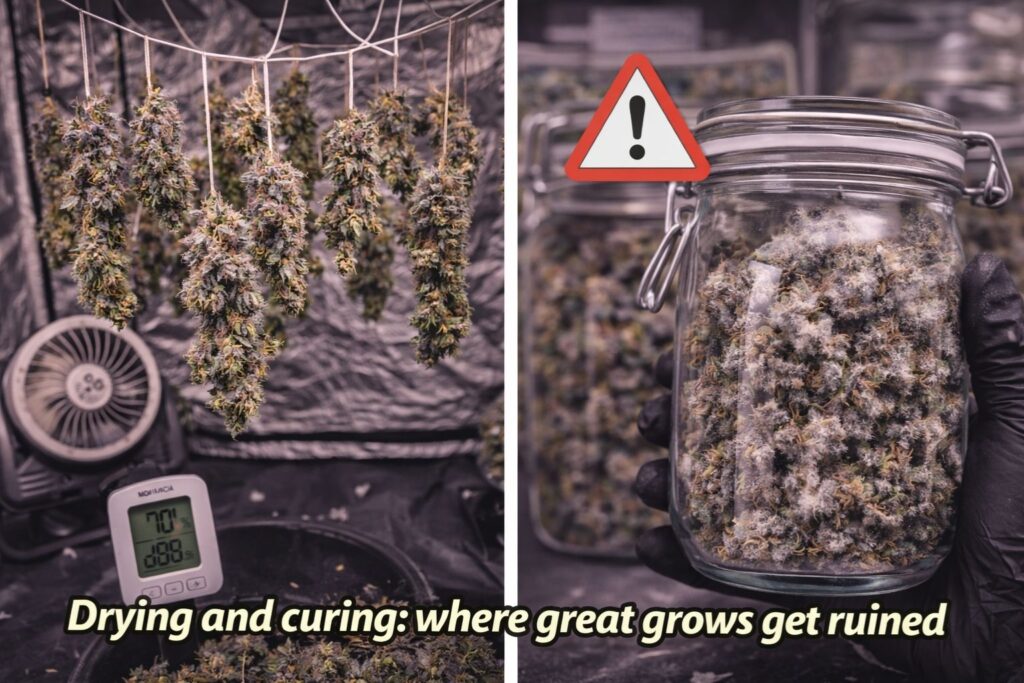
Drying and curing is where you either lock in quality or lose it. This is where a lot of marijuana gets its reputation made or broken, and where good-looking weed can still end up bland. I follow the same cherry pie drying and curing steps every cycle.
My cherry pie drying and curing steps
- Trim style: I usually do a light wet trim, then finish after drying
- Dry environment: 18–20°C and 55–60% RH with gentle airflow
- Dry duration: usually 10–14 days, depending on bud size
- Jar test: stems snap, but smaller stems still bend slightly
- Cure: 2–4 weeks minimum, longer for best results
- Burping: daily early on, then less often as moisture stabilizes
Those cherry pie drying and curing steps protect aroma better than any additive. I also keep notes on cherry pie drying and curing steps in my cherry pie cultivar notes so I can compare how each phenotype cures.
Indoor vs outdoor: what changes, what stays the same
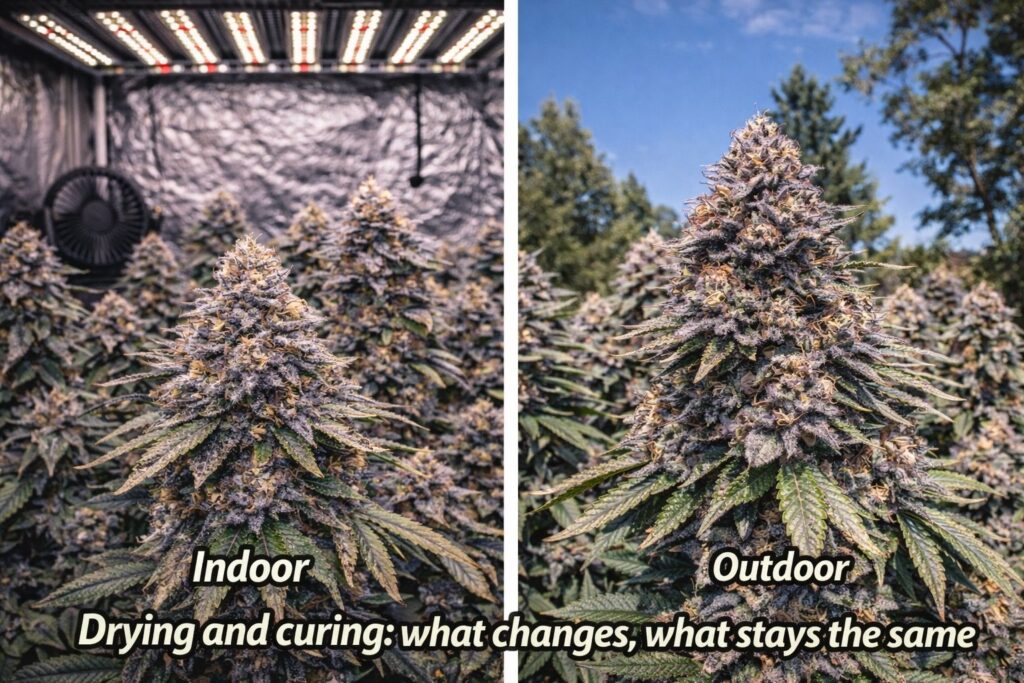
I run most of my plants indoors, but I’ve helped friends with outdoor grows. Outdoor weed has its own rhythm, and outdoor marijuana can be amazing if you plan for humidity swings. Outdoor cherry pie cultivation can be excellent, but humidity and rain timing become bigger variables.
Indoor tips that have improved my results
- Keep the canopy even with cherry pie canopy management
- Measure or estimate PPFD so you don’t over-light early
- Stay consistent with the cherry pie irrigation strategy
- Control RH aggressively late in flower for cherry pie bud rot prevention
Outdoor considerations worth taking seriously
For outdoor cherry pie cultivation, pay attention to:
- Your local climate in late summer and early fall
- Plant spacing and airflow in the garden
- Pest scouting, especially caterpillars and mites
- A realistic plan for rain protection during late flower
I’m also careful about regional grow laws. I’m not giving legal advice, but I always tell growers to check local rules before planting, especially for outdoor cherry pie cultivation where visibility can be an issue.
A practical checklist for a smoother Cherry Pie run
Here’s the checklist I’d hand to a friend running Cherry Pie Cannabis Strains for the first time.
Setup checklist
- Write your cherry pie grow room targets where you can see them
- Verify you have airflow, a hygrometer, and a way to reduce humidity
- Decide your medium and plan your cherry pie irrigation strategy
- Plan training early: topping, LST, and canopy leveling
Weekly habit checklist
- Log cherry pie cultivar notes for each plant
- Follow the cherry pie week by week timeline without sudden changes
- Inspect for pests and stress
- Adjust environment before adjusting feed
- Keep cherry pie bud rot prevention in mind after week 5
FAQ: common Google-style questions I hear all the time
Are Cherry Pie Cannabis Strains indica or sativa?
Most growers describe Cherry Pie Cannabis Strains as a hybrid. In practice, the plant can show traits in both directions, depending on cherry pie phenotypes and how you feed and train it.
What is the best medium for Cherry Pie Cannabis Strains?
I’ve had success in soil, coco, and hydro. A cherry pie soil run is more forgiving for beginners. A cherry pie coco run gives more control and faster growth if you can stay consistent with irrigation.
How long is the flowering time for Cherry Pie Cannabis Strains?
Cherry Pie flowering time commonly lands in the 7–9 week range for many phenotypes, but I always confirm with trichomes and bud swelling instead of a calendar.
How do I keep the aroma strong during harvest?
Strong aroma comes down to cherry pie aroma development in late flower and careful drying. Stick to steady temperatures, keep humidity controlled, and follow repeatable cherry pie drying and curing steps.
What should I look for when ordering seeds online?
Look for clear breeder information, stable line notes, and realistic grow expectations. If you can, choose feminized seeds to simplify the run. If ordering from seed banks, pay attention to shipping details and storage advice so seeds arrive viable.
Final thought from my grow room
If you want a clean, flavorful jar and you’re willing to respect the basics, Cherry Pie Cannabis Strains can be a rewarding project. Keep your cherry pie grow room targets visible, build disciplined cherry pie canopy management, and treat cherry pie bud rot prevention and cherry pie drying and curing steps as part of the grow, not an afterthought. Do that, and the plant usually gives back what you put in.
