Table of Contents
Chem Valley Kush is a potent and well-balanced hybrid cannabis strain known for its intense effects, high THC content, and complex terpene profile. A cross between Chemdawg and SFV OG Kush, Chem Valley Kush embodies the best characteristics of both parent strains, offering a mix of cerebral stimulation and deep relaxation.
Genetic Lineage and Background
Chem Valley Kush is the result of an expert genetic cross between:
- Chemdawg – A legendary strain known for its pungent diesel aroma, strong cerebral effects, and powerful euphoria.
- San Fernando Valley OG Kush (SFV OG Kush) – A phenotype of OG Kush renowned for its heavy body high, earthy pine aroma, and pain-relieving properties.
Chem Valley Kush leans slightly towards the sativa side, with a genetic split of approximately 60% sativa and 40% indica. This combination results in a strain with an uplifting, energetic onset that transitions into a deeply relaxing body high.
Cannabinoid Profile
- THC: Typically ranges from 22% to 28%, making Chem Valley Kusha highly potent strain.
- CBD: Generally low, around 0.1% to 0.5%.
- CBG: Can be present in small amounts (~1%).
- Other Cannabinoids: Trace amounts of CBC, CBN, and THCV may be found.
Terpene Profile and Aromatic Characteristics
Chem Valley Kush is rich in terpenes, contributing to its distinct aroma, flavor, and therapeutic effects. The primary terpenes include:
- Myrcene – Provides a musky, earthy aroma and contributes to sedative effects.
- Limonene – Delivers a citrusy scent and offers mood-enhancing and anti-anxiety properties.
- Caryophyllene – Adds spicy, peppery notes and acts as a potential anti-inflammatory agent.
- Pinene – Brings a fresh pine aroma and can enhance alertness while counteracting THC-induced memory impairment.
- Humulene – Known for its herbal, woody scent and appetite-suppressant properties.
The combination of these terpenes gives Chem Valley Kush a pungent, diesel-like aroma with citrus, pine, and earthy undertones.
Cannabis can be consumed in various forms, each with different onset times, durations, bioavailability levels, and physiological effects. Below is a scientific breakdown of the most common ingestion methods, their pharmacokinetics, and their impact on the body.
Inhalation Methods (Smoking & Vaping)
A. Smoking (Joints, Pipes, Bongs, Blunts)
- Onset: 1-5 minutes
- Duration: 2-4 hours
- Bioavailability: 10-35%
- Mechanism:
- When cannabis is inhaled, cannabinoids like THC and CBD reach the alveoli in the lungs.
- Rapid absorption into the bloodstream allows for fast-acting effects.
- THC crosses the blood-brain barrier within minutes, binding to CB1 receptors in the central nervous system (CNS).
- Advantages:
- Fast onset (ideal for acute symptom relief).
- Easy dose titration (users can control intake).
- Disadvantages:
- Combustion releases harmful byproducts (tar, benzene, and carbon monoxide).
- Shorter duration compared to edibles.
B. Vaporization (Dry Herb Vaporizers & Vape Pens)
- Onset: 1-5 minutes
- Duration: 2-4 hours
- Bioavailability: 40-60% (higher than smoking due to efficient THC absorption)
- Mechanism:
- Instead of burning cannabis, vaporizers heat cannabinoids to 315-450°F, releasing active compounds without combustion.
- Advantages:
- Fewer harmful toxins compared to smoking.
- Higher bioavailability (more cannabinoids absorbed).
- More flavor preservation (terpenes remain intact).
- Disadvantages:
- Requires specialized devices.
- Potential inhalation of carrier oils in vape pens (some may contain harmful additives like Vitamin E acetate).
Oral Ingestion Methods (Edibles, Capsules, Tinctures, Beverages)
A. Edibles (Gummies, Chocolates, Baked Goods, Infused Foods)
- Onset: 30-90 minutes
- Duration: 6-12 hours
- Bioavailability: 4-20% (low due to first-pass metabolism)
- Mechanism:
- The liver is where THC undergoes first-pass metabolism.
- It converts into 11-hydroxy-THC, a metabolite that is more potent and longer-lasting than Delta-9-THC.
- Advantages:
- Long-lasting effects (suitable for chronic pain and sleep disorders).
- No respiratory risks.
- Disadvantages:
- Slow onset (risk of overconsumption).
- Low bioavailability (due to digestive degradation).

B. Capsules & Pills
- Onset: 30-90 minutes
- Duration: 6-12 hours
- Bioavailability: 5-15%
- Mechanism:
- Similar to edibles, but often with precise dosing.
- Used in medical cannabis formulations for consistency and controlled absorption.
- Advantages:
- Discreet and accurate dosing.
- Long-lasting effects.
- Disadvantages:
- Slow onset (not ideal for acute relief).
C. Sublingual (Tinctures, Oils, Sprays, Lozenges)
- Onset: 15-45 minutes
- Duration: 4-6 hours
- Bioavailability: 20-35% (higher than edibles)
- Mechanism:
- Cannabinoids bypass first-pass metabolism by absorbing through the mucous membranes under the tongue.
- Directly enters the bloodstream via the sublingual vein, providing faster effects than edibles.
- Advantages:
- Faster onset than edibles.
- Higher bioavailability than oral ingestion.
- Disadvantages:
- Shorter duration than edibles.
- Taste may be unpleasant.

Topical & Transdermal Applications
A. Topicals (Lotions, Balms, Creams, Salves)
- Onset: 10-30 minutes
- Duration: 2-6 hours
- Bioavailability: Minimal systemic absorption (localized effects only)
- Mechanism:
- Cannabinoids interact with CB2 receptors in the skin but do not reach the bloodstream.
- Used for pain relief, inflammation, and skin conditions (e.g., eczema, psoriasis).
- Advantages:
- No psychoactive effects (THC does not enter the bloodstream).
- Targeted relief for pain and inflammation.
- Disadvantages:
- Limited penetration (does not work for deep-seated pain or systemic issues).
B. Transdermal Patches
- Onset: 30 minutes – 2 hours
- Duration: 8-24 hours
- Bioavailability: High (systemic absorption via skin)
- Mechanism:
- Penetrates skin layers and enters the bloodstream over time.
- Allows for steady, controlled cannabinoid release.
- Advantages:
- Long-lasting, consistent effects.
- Non-invasive and discreet.
- Disadvantages:
- Expensive compared to other methods.
- Not as fast-acting as inhalation.
Suppositories (Rectal & Vaginal Absorption)
- Onset: 15-30 minutes
- Duration: 4-8 hours
- Bioavailability: 50-70% (higher than oral ingestion)
- Mechanism:
- Avoided first-pass metabolism by being absorbed through the vaginal or rectal mucosa.
- Can provide systemic effects without intoxication (some THC suppositories do not cause a high).
- Advantages:
- Fast absorption and high bioavailability.
- Beneficial for patients who cannot swallow pills (e.g., those with nausea, IBS, or cancer).
- Disadvantages:
- Social stigma and discomfort in administration.
- Limited availability of commercial products.
Comparison of Cannabis Ingestion Methods
| Method | Onset Time | Duration | Bioavailability | Best For |
|---|---|---|---|---|
| Smoking | 1-5 min | 2-4 hrs | 10-35% | Fast relief, recreational use |
| Vaping | 1-5 min | 2-4 hrs | 40-60% | Higher potency, fewer toxins |
| Edibles | 30-90 min | 6-12 hrs | 4-20% | Long-lasting effects, medical use |
| Capsules | 30-90 min | 6-12 hrs | 5-15% | Precise dosing, extended relief |
| Sublingual | 15-45 min | 4-6 hrs | 20-35% | Faster onset than edibles |
| Topicals | 10-30 min | 2-6 hrs | Minimal | Localized pain relief |
| Transdermal | 30 min – 2 hrs | 8-24 hrs | High | Consistent delivery |
| Suppositories | 15-30 min | 4-8 hrs | 50-70% | High absorption, non-intoxicating |
Medical Applications of Chem Valley Kush
The balanced effects of Chem Valley Kush make it an excellent strain for medicinal use. Below are the most common therapeutic benefits:
Pain Management
Due to its high THC content and caryophyllene presence, Chem Valley Kush is effective in treating:
- Chronic pain (arthritis, fibromyalgia, migraines, muscle spasms)
- Inflammation-related pain
- Neuropathic pain (nerve damage, sciatica)
Mental Health Benefits
The limonene and pinene terpenes contribute to mood enhancement and stress relief. It may be beneficial for:
- Anxiety – Provides an uplifting effect that reduces anxious thoughts.
- Depression – Euphoria and motivation can help combat depressive symptoms.
- PTSD – Helps alleviate negative thought patterns and promotes relaxation.
- ADHD – Enhances focus and motivation, potentially improving concentration.
Insomnia Relief
While it starts with an energetic effect, the eventual indica-heavy relaxation helps with insomnia and sleep disorders.
Appetite Stimulation
Chem Valley Kush may help individuals with appetite loss due to chemotherapy or eating disorders, as myrcene and caryophyllene can trigger hunger.
Nausea and Gastrointestinal Disorders
Chem Valley Kush’s antiemetic properties make it helpful for patients undergoing chemotherapy or those suffering from conditions like Crohn’s disease and IBS.
Scientific Research and Pharmacological Insights
Cannabis research has increasingly focused on high-THC strains like Chem Valley Kush. Several studies highlight the potential benefits of its primary cannabinoids and terpenes:
- THC’s role in neuroprotection – Studies suggest that THC in Chem Valley Kush can help in conditions like Alzheimer’s by reducing neuroinflammation.
- Caryophyllene as an anti-inflammatory agent – It binds to CB2 receptors, modulating pain and immune response.
- Limonene’s anxiolytic effects – Research indicates that limonene in Chem Valley Kush can reduce stress and enhance mood.
- Myrcene’s sedative properties – In Chem Valley Kush supports sleep and muscle relaxation.
Cultivation Information
Cultivating Chem Valley Kush requires a deep understanding of plant physiology, nutrient management, environmental controls, and pest resistance. Below is a scientific breakdown of optimal cultivation techniques for maximizing yield and potency.
1. Genetic Considerations
- Genetic Stability: Due to its hybrid nature (Chemdawg x SFV OG Kush), selecting high-quality, stable genetics ensures plants express consistent THC levels, terpene profiles, and disease resistance.
- Cloning vs. Seeds:
- Clones: Preferred for genetic consistency, faster growth, and uniform cannabinoid expression of Chem Valley Kush.
- Seeds: Ideal for genetic variation but require phenotype hunting to select the best plant traits.
2. Ideal Growth Environment
A. Climate & Temperature Control
- Optimal Temperature:
- Vegetative stage: 70-78°F (21-25°C)
- Flowering stage: 65-75°F (18-24°C)
- Night temperatures should be 5-10°F lower to mimic natural temperature fluctuations.
- Humidity Control:
- Seedling stage: 65-70% RH
- Vegetative stage: 55-65% RH
- Flowering stage: 40-50% RH to prevent mold and bud rot.
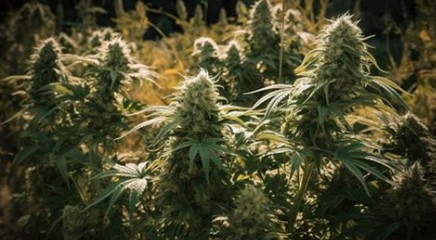
B. Lighting Requirements
- Indoor Cultivation:
- Vegetative phase: 18/6 light cycle, using full-spectrum LED or MH (Metal Halide) lamps.
- Flowering phase: 12/12 light cycle, switching to HPS (High-Pressure Sodium) or LED with high red-spectrum output to enhance bud development.
- Outdoor Cultivation:
- Requires a Mediterranean climate with full sunlight exposure (8+ hours per day).
- Should be planted in early spring and harvested by late September to October, depending on local climate.
3. Growing Medium and Nutrient Management
A. Soil vs. Hydroponics
- Soil Cultivation:
- Preferred organic soil with a well-balanced pH (6.0-6.5).
- Enriched with worm castings, bat guano, mycorrhizae fungi, and compost tea for slow nutrient release.
- Improves terpene production due to enhanced microbial activity.
- Hydroponic Cultivation:
- Uses an inert medium (Rockwool, Coco Coir, or DWC – Deep Water Culture).
- Allows precise nutrient control, leading to faster growth and higher cannabinoid production.
- Requires pH 5.5-6.0 for optimal nutrient uptake.
B. Nutrient Requirements
- Nutrient Schedule:
- Vegetative Stage: High Nitrogen (N) (N-P-K ratio: 3-1-2) for strong leaf and root development.
- Flowering Stage: Increase Phosphorus (P) and Potassium (K) (N-P-K ratio: 1-3-3) to promote bud density and resin production.
- Flush with pure water for 10-14 days before harvest to remove nutrient buildup.
- Micronutrients:
- Magnesium (Mg) – Necessary for the synthesis of chlorophyll.
- Calcium (Ca) – Strengthens cell walls, preventing bud rot.
- Silicon (Si) – Increases resistance to heat stress and pests.
4. Plant Training Techniques for Higher Yield
A. Low-Stress Training (LST)
- Involves bending and tying branches to expose lower nodes to light, increasing cannabinoid and terpene production.
- Avoids plant stress and encourages horizontal growth.
B. High-Stress Training (HST)
- Includes topping (cutting the main cola) and super cropping (bending without breaking stems).
- Stimulates auxin redistribution, creating multiple bud sites instead of a single cola.
C. SCROG (Screen of Green) & SOG (Sea of Green)
- SCROG: Uses a net to spread branches, maximizing light penetration in Chem Valley Kush.
- SOG: Cultivates many small plants closely together, reducing vegetative time and increasing yield per square foot.
5. Pest and Disease Management
A. Common Pests
- Spider Mites – Can be treated with Neem oil and predatory mites (Phytoseiulus persimilis).
- Aphids & Thrips – Controlled with beneficial insects (ladybugs) or insecticidal soaps.
- Fungus Gnats – Use yellow sticky traps and soil drenches with Bacillus thuringiensis (BTi).
B. Disease Prevention
- Powdery Mildew & Botrytis (Bud Rot) – Prevented with good airflow, pruning, and humidity control.
- Root Rot – Avoid overwatering; use well-draining soil and hydroponic aeration (air stones in DWC systems).
6. Harvesting & Curing Techniques for Maximum Potency
A. Harvest Timing Based on Trichome Maturity
- Clear trichomes: Too early, THC not fully developed.
- Milky white trichomes: Peak THC potency.
- Amber trichomes: More CBN (sedative effects), suitable for nighttime use.
Ideal Harvest Time: 70% milky, 30% amber trichomes for a balanced high.
B. Drying & Curing Process
- Drying: Hang buds in a dark room at 60-70°F with 50-60% humidity for 7-10 days.
- Curing: Store dried buds in glass jars, burping daily for 2-4 weeks to enhance terpene preservation and smoothness.
7. Enhancing Cannabinoid & Terpene Production Scientifically
A. UV-B Light Exposure
- UV-B (280-315 nm) light exposure during flowering increases THC and resin production.
B. Cold Shock in Late Flowering
- Lowering nighttime temperatures by 10-15°F before harvest increases anthocyanins, enhancing purple hues and terpene retention.
C. Organic Nutrient Boosting
- Adding Molasses (rich in carbohydrates) enhances microbial activity, leading to increased resin production.
Side Effects and Precautions
As with any potent cannabis strain, Chem Valley Kush has potential side effects:
- Dry mouth and dry eyes – Common; staying hydrated helps.
- Paranoia and anxiety – Can occur in users sensitive to THC.
- Dizziness – Possible in those with low tolerance.
- Couch-lock – High doses may induce heavy sedation.
Conclusion
Chem Valley Kush is a well-rounded hybrid offering a perfect balance between uplifting cerebral effects and soothing body relaxation. Its potent THC levels, diverse terpene profile, and wide-ranging medical benefits makes it a excellent option for both medicinal and recreational consumers. Whether used for creativity, pain relief, or relaxation, Chem Valley Kush is a strain that continues to impress cannabis connoisseurs worldwide.
For a complete directory of cultivars, visit our Cannabis Strain Reviews.
