Table of Contents
Chem Crush is a hybrid cannabis strain that has gained popularity for its balanced effects, combining cerebral stimulation with physical relaxation. This strain is believed to be a cross between Chemdawg and Orange Crush, two well-known cultivars with distinct chemical profiles. Chem Crush exhibits a diverse range of phytocannabinoids, terpenes, and flavonoids, contributing to its therapeutic and recreational effects.
This document provides an in-depth scientific exploration of Chem Crush, focusing on its phytochemistry, pharmacology, medical applications, neurophysiological effects, cultivation characteristics, and potential adverse reactions.
Phytochemical Profile of Chem Crush
Cannabinoid Composition
Cannabinoids are the primary bioactive compounds in cannabis, interacting with the endocannabinoid system (ECS) to produce psychoactive and physiological effects. Chem Crush is rich in tetrahydrocannabinol (THC) while containing minimal levels of cannabidiol (CBD).
Major Cannabinoids in Chem Crush
- Δ9-Tetrahydrocannabinol (THC): ~20-25%
- Effects: Euphoria, altered perception, increased dopamine release, appetite stimulation.
- Mechanism: Partial agonist of CB1 receptors in the central nervous system (CNS).
- Cannabidiol (CBD): ~0.5-1.2%
- Effects: Anxiolytic, neuroprotective, anti-inflammatory.
- Mechanism: Modulates CB1 and CB2 receptors indirectly, inhibits FAAH enzyme to enhance anandamide levels.
- Cannabigerol (CBG): ~0.1-0.5%
- Effects: Antibacterial, neuroprotective, appetite stimulant.
- Mechanism: Partial agonist of CB1 and CB2 receptors.
- Cannabinol (CBN): ~0.1-0.3%
- Effects: Mildly sedative, may enhance THC’s effects.
- Mechanism: Weak CB1 receptor interaction.
Terpene Profile
Terpenes play a vital role in the aroma, flavor, and entourage effect of cannabis strains. Chem Crush exhibits a terpene profile that enhances its psychoactive effects and contributes to its therapeutic potential.
Dominant Terpenes in Chem Crush
- Myrcene (~0.5-1.2%)
- Sedative, analgesic, enhances THC uptake.
- Found in mango, lemongrass, and thyme.
- Limonene (~0.4-1.0%)
- Antidepressant, stress relief, enhances serotonin and dopamine function.
- Found in citrus fruits.
- Caryophyllene (~0.3-0.8%)
- Anti-inflammatory, interacts with CB2 receptors.
- Found in black pepper and cloves.
- Pinene (~0.1-0.5%)
- Bronchodilator, cognitive enhancer, promotes alertness.
- Found in pine trees and rosemary.
- Linalool (~0.1-0.3%)
- Sedative, anti-anxiety, muscle relaxant.
- Found in lavender.
Pharmacodynamics and Mechanism of Action
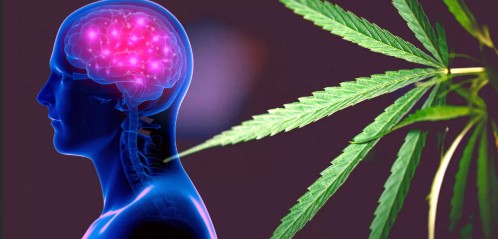
Chem Crush primarily interacts with the endocannabinoid system (ECS), a complex signaling system responsible for mood regulation, pain perception, memory, and homeostasis.
CB1 and CB2 Receptor Activation
- CB1 Receptors (CNS, Peripheral Nervous System)
- THC binds as a partial agonist, modulating dopamine and GABA neurotransmission.
- Effects: Euphoria, altered sensory perception, appetite stimulation.
- CB2 Receptors (Immune System, Peripheral Tissues)
- CBD and caryophyllene bind to CB2 receptors, reducing inflammation and modulating immune response.
- Effects: Anti-inflammatory, neuroprotective.
Dopaminergic and Serotonergic Pathways
- THC increases dopamine release in the nucleus accumbens, associated with reward and pleasure.
- Limonene enhances serotonin signaling, improving mood and reducing stress.
- Myrcene exhibits GABAergic activity, producing muscle relaxation and sedation.
Medical Applications of Chem Crush
Due to its complex phytochemistry, Chem Crush offers a variety of therapeutic benefits across multiple medical conditions.
Neurological and Psychiatric Disorders
- Chronic Stress and Anxiety
- Limonene enhances serotonin function, reducing anxiety.
- CBD modulates CB1 receptors, preventing excessive overactivation.
- Depression
- THC-induced dopamine release helps regulate mood.
- Caryophyllene interacts with CB2 receptors, reducing neuroinflammation.
- Insomnia
- Myrcene and linalool promote sedation and increase sleep quality.
- PTSD (Post-Traumatic Stress Disorder)
- THC reduces hyperarousal and improves emotional regulation.
- CBD dampens overactive fear responses.
Pain Management and Inflammation
- Neuropathic Pain
- THC binds to CB1 receptors, altering pain perception.
- Caryophyllene reduces inflammatory cytokine production.
- Arthritis and Joint Pain
- Anti-inflammatory effects of CBD and caryophyllene help reduce joint inflammation.
- Migraines and Headaches
- THC inhibits trigeminal nerve activation, reducing pain perception.
Metabolic and Gastrointestinal Disorders
- Appetite Stimulation
- THC interacts with hypothalamic receptors, increasing hunger (useful in cachexia, chemotherapy patients).
- Gastrointestinal Relief
- CBD reduces intestinal inflammation, aiding conditions like IBS and Crohn’s disease.
Recreational Use and Psychoactive Effects
Chem Crush is known for producing an elevated mental state, ideal for both creative activities and social interactions.
Onset and Duration
- Onset: 5-15 minutes (inhalation), 45-90 minutes (edibles).
- Peak Effects: 30-90 minutes post-consumption.
- Total Duration: 2-5 hours, depending on dose and route of administration.
Subjective Experience
- Phase 1: Euphoria & Energy Boost
- Initial cerebral rush, increased creativity, enhanced sensory perception.
- Phase 2: Relaxation & Body High
- Gradual onset of muscle relaxation, reduced anxiety, mild sedation.
- Phase 3: Mellow Come-down
- Lingering relaxation, potential appetite stimulation.
Cultivation Characteristics
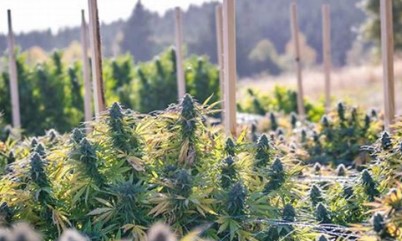
Cultivating Chem Crush requires a precise approach to maximize its yield, potency, and terpene expression. Given its hybrid nature with dominant sativa characteristics, this strain tends to grow tall with elongated branches, making training techniques essential. Below is a scientific breakdown of optimal cultivation practices, including light schedules, nutrient requirements, environmental conditions, and pest management.
1. Growth Stages and Environmental Requirements
Chem Crush follows a four-stage growth cycle:
- Germination (1-7 days)
- Seedling (1-3 weeks)
- Vegetative (4-8 weeks)
- Flowering (8-9 weeks)
Each phase demands specific temperature, humidity, and light intensity for optimal cannabinoid biosynthesis.
| Growth Stage | Temperature (°C) | Humidity (%) | Light Schedule | PPFD (μmol/m²/s) |
|---|---|---|---|---|
| Germination | 22-25 | 70-80 | 18/6 (Vegetative) | 200-400 |
| Seedling | 22-26 | 60-70 | 18/6 | 400-600 |
| Vegetative | 24-28 | 50-60 | 18/6 | 600-800 |
| Flowering | 20-26 | 40-50 | 12/12 | 800-1000 |
Key Considerations:
- Lower humidity in flowering stage to prevent bud rot and powdery mildew.
- Higher PPFD (Photosynthetic Photon Flux Density) during vegetative and flowering stages enhances trichome production.
2. Light Requirements
Chem Crush is a light-hungry strain, benefiting from high-intensity full-spectrum LED or HPS lighting.
Best Grow Lights for Chem Crush
- LED (Light-Emitting Diodes)
- Spectrum: Full spectrum (400-700 nm)
- Pros: Higher efficiency, better cannabinoid production, less heat.
- HPS (High-Pressure Sodium)
- Spectrum: Red-heavy, promotes flowering.
- Cons: High heat output, requires cooling.
- Metal Halide (MH)
- Spectrum: Blue-heavy, ideal for vegetative stage.
Light Cycles
- Vegetative Stage: 18/6 (18 hours light, 6 hours dark) to maximize photosynthesis.
- Flowering Stage: 12/12 (12 hours light, 12 hours dark) to induce flowering.
3. Nutrient Requirements
Cannabis requires a balance of macronutrients (N-P-K) and micronutrients (Mg, Ca, Fe, Zn).
Nutrient Schedule for Chem Crush
| Growth Stage | Nitrogen (N) | Phosphorus (P) | Potassium (K) | Other |
|---|---|---|---|---|
| Seedling | Low | Medium | Medium | Mg, Ca |
| Vegetative | High | Medium | Medium | Si, Fe |
| Flowering | Low | High | High | S, Mn |
Key Nutrients & Their Functions:
- Nitrogen (N): Critical for vegetative growth.
- Phosphorus (P): Essential for root development and bud formation.
- Potassium (K): Boosts resin and trichome production.
- Silicon (Si): Strengthens plant structure against heat stress.
- Calcium (Ca): Prevents deficiencies like blossom end rot.
- Magnesium (Mg): Vital for chlorophyll synthesis.
Best Fertilizers
- Organic: Bat guano, fish hydrolysate, worm castings.
- Synthetic: General Hydroponics Flora Series, FoxFarm Big Bloom.
pH Control
- Soil pH: 6.0-6.5
- Hydroponic pH: 5.5-6.0
- EC (Electrical Conductivity): 1.2-2.5 mS/cm (increasing in flowering).
4. Growth Mediums & Hydroponics
Soil vs. Hydroponics
| Medium | Pros | Cons |
|---|---|---|
| Soil (Organic Living Soil) | Enhances terpene profile, retains nutrients well. | Slower growth, requires microbe-rich amendments. |
| Coco Coir | High oxygen retention, better water management. | Needs regular fertilization. |
| Deep Water Culture (DWC) | Fastest growth, optimized nutrient uptake. | Higher risk of root rot (requires oxygenation). |
5. High-Yield Training Techniques
Best Training Methods for Chem Crush
- Low-Stress Training (LST)
- Bending and tying down branches to increase canopy light exposure.
- Prevents stretching, improving bud size.
- Topping (Apical Pruning)
- Cutting off the main shoot to encourage bushier growth.
- Results in multiple colas instead of a single main cola.
- Screen of Green (SCROG)
- Uses a net (trellis) to train branches horizontally.
- Maximizes light penetration and airflow.
- Defoliation
- Removes excess fan leaves to boost airflow and light exposure.
- Prevents mold and mildew in dense canopies.
6. Pest and Disease Management
Chem Crush is moderately resistant to pests but susceptible to powdery mildew, spider mites, and aphids.
Common Threats & Solutions
| Pest/Disease | Symptoms | Prevention/Treatment |
|---|---|---|
| Powdery Mildew | White powdery spots on leaves | Reduce humidity (<50%), use neem oil. |
| Spider Mites | Yellow spots, webbing on leaves | Predatory mites, insecticidal soap. |
| Fungus Gnats | Root rot, stunted growth | Dry topsoil, use BTI (Bacillus thuringiensis israelensis). |
| Nutrient Burn | Leaf tips turn brown/yellow | Reduce EC levels, flush with pH-balanced water. |
7. Curing and Harvesting for Optimal Potency
Harvest timing affects cannabinoid content and terpene retention.
Optimal Harvest Time
- Trichome Color Check (Using a 60x Microscope)
- Clear Trichomes → Not Ready (low potency).
- Milky Trichomes → Peak THC Levels (energizing high).
- Amber Trichomes → More CBN (sedative effects).
- Pistil Method
- When 70-80% of pistils turn brown/red, it’s harvest time.
Drying & Curing Process
- Drying Phase (7-14 days)
- Temp: 18-22°C, Humidity: 50-60%.
- In a well-ventilated, dark area, hang buds upside down.
- Curing Phase (2-8 weeks)
- Humidity: 55-62%.
- Store buds in glass jars, burping daily to prevent mold.
Chem Crush Cannabis Ingestion Methods, Duration, and Onset
The method of cannabis ingestion significantly impacts bioavailability, onset time, peak effects, and duration of action. Chem Crush, with its high THC (20-25%) and distinct terpene profile, produces different psychoactive and physiological effects depending on the route of administration. This guide provides a comprehensive breakdown of inhalation, oral, sublingual, and topical administration, discussing their pharmacokinetics, onset, peak effects, and duration.
1. Inhalation Methods (Smoking, Vaporization)
Inhalation is the most common method of consuming Chem Crush, providing a rapid onset and high bioavailability due to direct absorption through the alveoli in the lungs.
1.1 Smoking (Combustion)
Methods:
- Joints (Hand-Rolled Cannabis Cigarettes)
- Pipes (Glass, Metal, Wood)
- Bongs (Water Pipes for Filtration)
Pharmacokinetics:
- Absorption: THC enters the pulmonary capillaries, bypassing first-pass metabolism.
- Onset: 1-5 minutes
- Peak Effects: 10-30 minutes
- Duration: 1.5-3 hours (varies by dose)
- Bioavailability: ~30%
Disadvantages:
- Combustion generates harmful byproducts (polycyclic aromatic hydrocarbons, benzene).
- Loss of cannabinoids due to incomplete combustion.
1.2 Vaporization (Vaping)
Methods:
- Dry Herb Vaporizers (Convection or Conduction Heating)
- Concentrate Vaporizers (Dab Pens, E-Rigs)
- Cartridges (Pre-Filled CO₂ Extracts, Distillates)
Pharmacokinetics:
- Onset: 1-3 minutes
- Peak Effects: 10-20 minutes
- Duration: 2-4 hours
- Bioavailability: 50-60% (higher than smoking)
Advantages:
- Preserves terpenes and cannabinoids (no combustion).
- More efficient THC delivery.
2. Oral Ingestion (Edibles, Capsules, Tinctures in Food)
Oral consumption leads to delayed onset but prolonged effects due to hepatic (liver) metabolism, where the more potent metabolite 11-hydroxy-THC is produced from THC.
Methods:
- Edibles (Gummies, Baked Goods, Infused Beverages)
- Capsules (THC and CBD Softgels)
- Cannabis-Infused Oils and Butters
Pharmacokinetics:
- Absorption: Occurs in the gastrointestinal (GI) tract, then metabolized in the liver.
- Onset: 30-90 minutes
- Peak Effects: 2-4 hours
- Duration: 6-8 hours (up to 12 in high doses)
- Bioavailability: 4-20% (lower than inhalation)
Advantages:
- Longer-lasting effects.
- No respiratory irritation.
Disadvantages:
- Delayed onset can lead to overconsumption.
- Lower bioavailability due to first-pass metabolism.
3. Sublingual Administration (Tinctures, Sprays)
Sublingual ingestion allows for direct absorption into the bloodstream via the oral mucosa, bypassing first-pass metabolism.
Methods:
- Alcohol-Based Tinctures
- Oil-Based Sprays
- Dissolvable Cannabis Strips
Pharmacokinetics:
- Absorption: Occurs via mucous membranes under the tongue.
- Onset: 15-45 minutes
- Peak Effects: 1-2 hours
- Duration: 4-6 hours
- Bioavailability: 15-35%
Advantages:
- Faster onset than edibles.
- Avoids lung irritation.
- More controlled dosing.
Disadvantages:
- Shorter duration than edibles.
- Alcohol-based tinctures can cause burning sensation.
4. Topical Application (Transdermal Patches, Creams)
Topical cannabis formulations do not induce psychoactive effects, except for transdermal patches, which allow THC to enter systemic circulation.
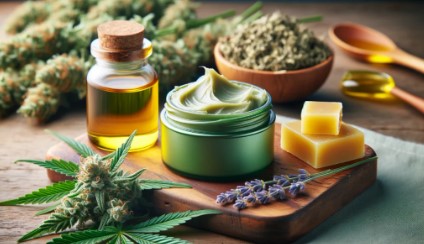
Methods:
- THC and CBD Creams, Lotions, Balms
- Transdermal Patches
Pharmacokinetics:
- Absorption: Occurs through the skin but does not reach the bloodstream unless formulated as a transdermal patch.
- Onset: 20-60 minutes
- Peak Effects: 1-2 hours
- Duration: 4-12 hours (depending on formulation)
- Bioavailability: Varies (low for creams, high for transdermal patches)
Advantages:
- Localized pain relief.
- Unless utilizing transdermal patches, there are no psychotropic effects.
Disadvantages:
- Slower absorption.
- Limited effects compared to inhalation and oral ingestion.
5. Comparison of Ingestion Methods
| Ingestion Method | Onset | Peak Effects | Duration | Bioavailability |
|---|---|---|---|---|
| Smoking | 1-5 min | 10-30 min | 1.5-3 hrs | ~30% |
| Vaping | 1-3 min | 10-20 min | 2-4 hrs | 50-60% |
| Edibles | 30-90 min | 2-4 hrs | 6-12 hrs | 4-20% |
| Sublingual | 15-45 min | 1-2 hrs | 4-6 hrs | 15-35% |
| Topical (Creams) | 20-60 min | 1-2 hrs | 4-12 hrs | Low |
| Transdermal | 20-60 min | 1-2 hrs | 4-12 hrs | High |
Potential Side Effects
While Chem Crush is generally well-tolerated, high doses of THC may cause unwanted effects.
Short-Term Side Effects
- Dry Mouth and Dry Eyes: Common, easily managed with hydration.
- Paranoia & Anxiety: More likely in THC-sensitive individuals.
- Dizziness: Can occur with sudden blood pressure drops.
- Short-term Memory Impairment: Temporary effect due to CB1 receptor activity.
Long-Term Considerations
- Tolerance Development: Chronic use may require higher doses over time.
- Psychological Dependence: More likely in high-THC users.
- Potential Impact on Cognition: Long-term use in adolescents may affect memory and learning.
Conclusion
Chem Crush is a versatile hybrid strain with a well-rounded chemical profile. It offers euphoria, creativity, and relaxation, making it suitable for both medical and recreational use. With high THC content, it is potent and best suited for experienced users. However, careful dosing is recommended to minimize side effects and optimize therapeutic benefits.
For a complete directory of cultivars, visit our Cannabis Strain Reviews.
