As a cultivator, one of the most common questions friends ask is not about yield or plant size. It is about sleep. People want something that helps them unwind without feeling knocked out, foggy, or “too high.” Over the last few years, that curiosity has increasingly landed on cannabinol, better known as CBN. This post is a practical, experience-driven look at CBN and Its Effects as they show up in real life, in lab reports, and in the way cannabis flower changes over time.
This is not medical advice. Sleep problems can have many causes, and anyone managing a health condition or taking medications should speak with a qualified clinician. What follows is a careful summary of what research suggests, what product labels can and cannot tell you, and what I have personally observed from handling cured cannabis, marijuana, and weed across many harvest cycles.
What CBN Is and Why It Matters to Sleep Conversations
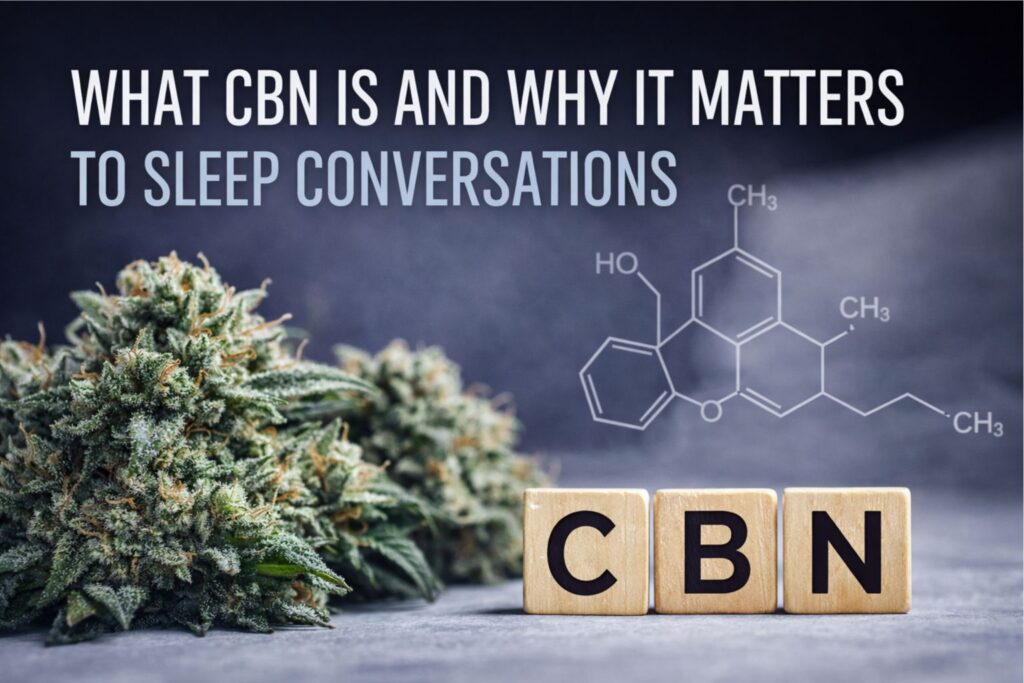
CBN is a minor cannabinoid that typically appears in much smaller amounts than THC or CBD. It is widely described as only mildly intoxicating, and it interacts with the endocannabinoid system differently than THC. Overviews of cannabinoid pharmacology summarize how cannabinoids can act through CB1 and CB2 receptors, with different strengths and patterns of activity depending on the compound.
From a sleep standpoint, people care about two things: whether CBN feels calming, and whether it changes next-day alertness. The current picture is still emerging. Protocol papers and trials reflect interest in CBN for insomnia symptoms, but they also highlight a need for more high-quality evidence before anyone can speak with confidence across different people and use-cases.
When I talk with customers and other growers, I frame CBN as promising, but not fully mapped, especially when products combine multiple cannabinoids.
How CBN Shows Up in Flower and Extracts
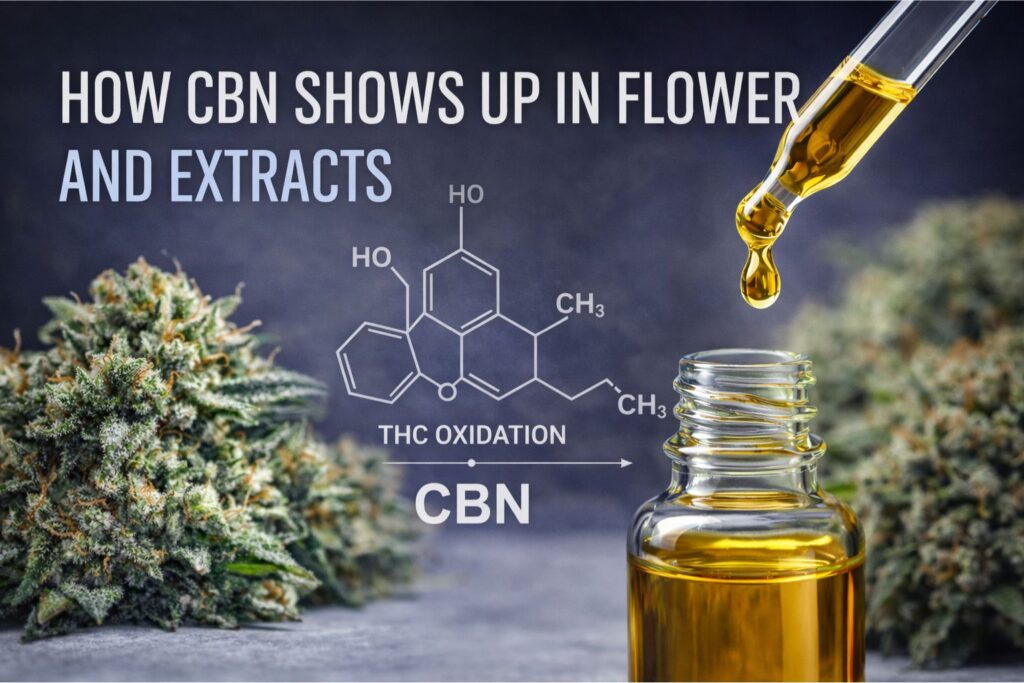
The most practical grower point is this: the plant does not usually “make” large CBN the way it makes THCA. CBN rises as THC ages and degrades. In other words, CBN is often a marker of time, light, heat, and oxygen exposure.
This is where the phrase THC oxidation to CBN becomes more than theory. If a jar of marijuana flower sits too warm or too bright for months, the terpene sparkle fades and the chemistry shifts. I have seen this in my own stash: older weed can feel heavier, and the aroma becomes flatter, even when the buds still look fine. That does not mean older cannabis is “bad,” but it is different. The conversion is not something anyone should try to force at home; it is simply the reason CBN is usually low in fresh flower and more likely to show up in aged material or in formulated products built around measured cannabinoids.
What the Evidence Says About CBN and Sleep
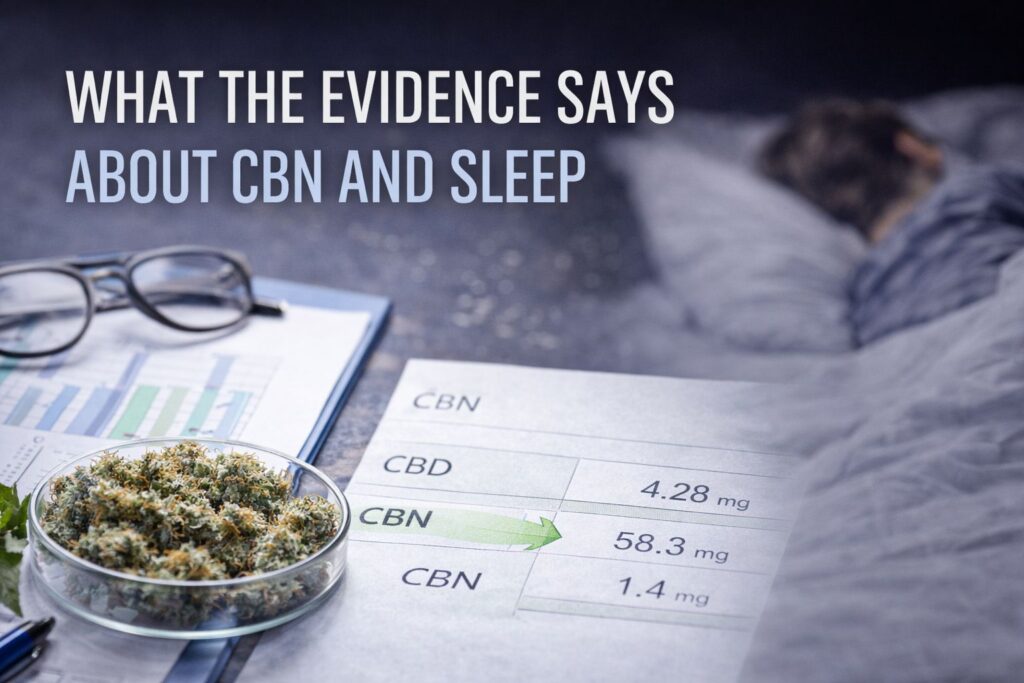
If you only read marketing copy, you will think CBN is a guaranteed knockout. Real cannabinol sleep research is more cautious.
There are animal studies and early clinical work suggesting CBN may influence sleep, but translating that into predictable human outcomes is hard. Researchers at the University of Sydney’s Lambert Initiative reported rodent findings suggesting CBN increased both REM and non-REM sleep, while noting that human research was ongoing.
Human trials have also been designed to measure sleep architecture and next-day functioning, including a proof-of-concept crossover study described through both ClinicalTrials.gov and a BMJ Open protocol paper.
A separate randomized, double-blind, placebo-controlled study evaluated a hemp-derived CBN sleep formulation using patient-reported sleep disturbance measures, comparing several CBN doses with placebo and melatonin. The authors describe the limited prior evidence and position the work as part of building a stronger clinical base.
Here is how I translate this for readers. First, cannabinol sleep research exists, but it is not yet the kind of deep, multi-year dataset that lets anyone promise results. Second, many products combine cannabinoids, so what people feel may not be “CBN alone.” Third, sleep architecture cannabis research overall shows mixed outcomes across cannabinoids, doses, and populations, which is a good reminder that sleep is not one simple switch.
What I Notice in Real-World Use and Why It Varies

In my circle, the strongest pattern is that CBN-focused products are often described as more settling than stimulating. People report a smoother glide into bed, especially when their mind is busy. But there is also a second pattern: results vary dramatically depending on whether THC is in the mix.
That matches what I have seen with cannabis and marijuana in general. THC can reduce sleep latency for some people, yet it can also affect dreaming and next-day alertness depending on the person, the product, and the amount used.
This is where minor cannabinoid wellness becomes a useful concept. Instead of treating one compound as magic, it is more realistic to view sleep as a multi-factor outcome: stress, light exposure, caffeine timing, alcohol, exercise, and the specific cannabinoid blend all matter. In practice, I suggest people keep notes, just like growers keep notes on phenotypes. A simple journal can reveal whether a product helps, does nothing, or causes unwanted grogginess.
The Most Important Label Skill: Reading COAs Like a Grower

The fastest way to get misled in the weed wellness space is to rely on front-label promises. I recommend focusing on lab tested cannabinoid products and checking a certificate of analysis (COA) for three things.
1) Cannabinoid breakdown
Look for the actual milligrams of cannabinoids per serving, not just a big “CBN” badge. If THC is present, note the amount and whether it is delta-9 THC or another form.
2) Testing scope
A trustworthy COA should include potency and contaminant screening, especially for heavy metals, pesticides, and residual solvents for concentrates.
3) Batch and date
Cannabinoids can shift over time. A COA tied to a batch number and production date gives you traceability. It also supports weed storage best practices by reminding you that storage is part of quality.
Where Cultivation and CBN Intersect Without Turning Into a How-To
People often ask whether they can “grow for CBN.” In my experience, the better question is how to preserve what the plant already produced. Fresh cannabis is rich in acids like THCA, and post-harvest handling shapes what survives into the jar.
From a practical standpoint, weed storage best practices are one of the biggest levers for keeping quality consistent. Cool, dark, and stable storage helps slow oxidation. Warm, bright, and oxygen-rich storage accelerates change.
The phrase sleep architecture cannabis also matters here, because consumption method changes onset and duration. Inhaled cannabis tends to hit faster and fade sooner, while oral products can last longer and feel heavier.
Seed Shopping, Genetics, and Why CBN Is Not a Strain Shortcut
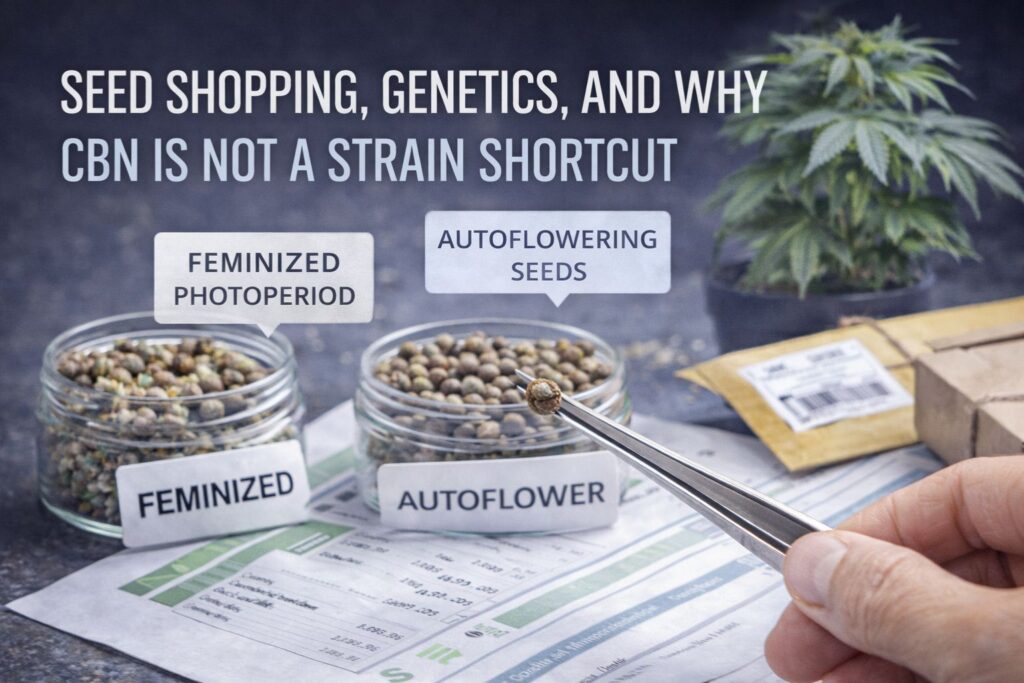
Even though this post is about CBN, many readers find it while also researching seeds. That makes sense: people want to understand what they are growing, what they are buying, and what they might feel.
Feminized vs. regular seeds
Feminized photoperiod genetics are popular with growers who want to reduce the chance of pollen in a legal home garden. That said, genetics do not guarantee a specific CBN level in final flower, because CBN is typically a downstream product of aging.
Autoflowers vs. photoperiods
Autoflower seed selection is often about speed and simplicity. Some growers prefer autos for a quicker timeline, while others prefer photoperiods for training flexibility.
Buying and delivery basics
A seed bank shipping checklist helps reduce frustration and surprises. Confirm legality in your region, check payment options, read the delivery policy, and understand what is guaranteed and what is not.
Natural search queries people use:
- what is cbn and why do people use it for sleep
- does cbn make you drowsy the next day
- how to read a coa for cbn products
- does older weed contain more cbn
- what should i check before buying seeds online
- should i choose autoflowers or photoperiod for my first run
A Practical Night Routine That Respects the Science

If someone is exploring CBN and Its Effects for sleep support, I encourage a routine that does not depend on one product doing all the work.
- Cut light exposure early
- Keep the room cool and consistent
- Keep a consistent schedule
- If using cannabinoids, keep notes
This is also the place to use a CBN tincture guide mindset: treat tinctures as measured products, not mystery drops. Check the label, confirm potency via the COA, and evaluate calmly over time.
FAQ
Does CBN make you sleepy?
Some people report sedation, and some studies are investigating sleep outcomes, but results are not universal. The best approach is to rely on cannabinol sleep research, check product testing, and track your personal response.
Is CBN the same as CBD?
No. CBN and CBD are different cannabinoids with different pharmacology and typical effects.
Can I find high-CBN cannabis flower at a dispensary?
Sometimes, but it is uncommon in fresh flower. Ask for lab results and look at the COA.
What is the safest way to shop for CBN products online?
Prioritize transparent brands that provide third-party testing, clear ingredient lists, and customer support. Avoid products that promise to cure insomnia.
Does storage really change cannabinoids?
Yes. Storage conditions can influence cannabinoid stability, including the gradual formation of CBN from THC over time.
Closing Thoughts From a Grower
When people ask me about CBN and Its Effects, I keep the conversation honest. CBN is interesting, and the sleep conversation is worth having, but it is not a substitute for good sleep habits or professional care when needed. The most credible path forward is to treat CBN as one option in a broader toolkit, to follow the emerging evidence, and to buy products with transparency.
For growers, the lesson is simple: post-harvest handling and weed storage best practices influence chemistry more than most people realize. For consumers, the lesson is also simple: lab tested cannabinoid products and good record-keeping beat hype every time.
