Table of Contents
CBD Lemon Potion is a cannabis strain renowned for its therapeutic properties, primarily due to its high cannabidiol (CBD) content. Developed collaboratively by Barney’s Farm and CBD Crew, this hybrid strain is a cross between Lemon Kush and a high-CBD variety. With a CBD-to-THC ratio of approximately 2:1, CBD Lemon Potion has been extensively studied for its potential medical applications and mild psychoactive effects. Its unique chemical composition and interaction with the human endocannabinoid system (ECS) make it a significant focus in cannabinoid research.
Genetic Composition and Cannabinoid Profile
Genetic Lineage
CBD Lemon Potion is derived from:
- Lemon Kush: Known for its uplifting effects and citrusy terpene profile.
- High-CBD Strain: Engineered to boost CBD content while minimizing THC concentration.
Cannabinoid Content
CBD Lemon Potion exhibits a balanced cannabinoid profile characterized by:
- CBD Levels: Typically ranging between 7% and 15%.
- THC Levels: A lower range of 5% to 8%, ensuring minimal psychoactive effects.
The high CBD content influences a range of therapeutic mechanisms, particularly by interacting with CB2 receptors to control the immune system and inflammation.
Terpene Composition
The therapeutic potential of CBD Lemon Potion is further enhanced by its diverse terpene profile. Key terpenes include:
- Limonene: Exhibits anxiolytic and anti-inflammatory properties.
- Myrcene: Known for its sedative effects and potential to enhance cannabinoid permeability through the blood-brain barrier.
- Beta-Caryophyllene: A special terpene that binds to CB2 receptors to function as a cannabinoid, influencing pain and inflammation.
- Pinene: Promotes alertness and acts as an anti-inflammatory agent.
Medical Applications and Mechanisms of Action
Interaction with the Endocannabinoid System
CBD Lemon Potion’s medical efficacy stems from its interaction with the ECS, a regulatory system involved in maintaining homeostasis. The primary mechanisms include:
- Modulation of CB1 and CB2 Receptors: While CBD does not bind directly to these receptors, it modulates their activity, influencing pain perception, mood regulation, and inflammation.
- Inhibition of FAAH Enzyme: CBD inhibits the breakdown of anandamide, an endogenous cannabinoid, enhancing its availability and effects on mood and pain relief.
- Activation of TRPV1 Receptors: These receptors mediate pain, inflammation, and body temperature regulation.
Clinical Applications
Pain Management
CBD Lemon Potion is effective in managing various types of pain due to its dual action on CB2 receptors and TRPV1 channels. Applications include:
- Chronic Pain: Conditions such as osteoarthritis and neuropathic pain.
- Inflammatory Pain: Rheumatoid arthritis and inflammatory bowel diseases.
- Post-Surgical Pain: Assists in reducing opioid dependency.
Neurological Disorders
CBD Lemon Potion’s neuroprotective properties are supported by preclinical and clinical studies. Specific applications include:
- Epilepsy: Reduction in seizure frequency and severity, especially in treatment-resistant epilepsy.
- Parkinson’s Disease: Mitigation of tremors and improvement in motor functions.
- Multiple Sclerosis (MS): Reduction in spasticity and neuropathic pain.
Anxiety and Mood Disorders
CBD’s anxiolytic effects are mediated by:
- 5-HT1A Serotonin Receptor Agonism: Influences serotonin pathways to alleviate anxiety and depression.
- Amygdala Activity Regulation: Reduces hyperactivity in the amygdala, associated with anxiety.
Anti-inflammatory and Immune-Modulating Effects
Beta-caryophyllene and CBD work synergistically to suppress pro-inflammatory cytokines and promote immune homeostasis. This makes CBD Lemon Potion effective for:
- Autoimmune Diseases: Lupus and Crohn’s disease.
- Chronic Inflammation: Conditions such as psoriasis and IBS.
Sleep Disorders
The presence of myrcene, combined with CBD’s anxiolytic properties, supports its use in managing:
- Insomnia: Improves sleep latency and quality.
- Circadian Rhythm Disorders: Regulates sleep-wake cycles through ECS modulation.
Research Highlights
- Pain and Inflammation: Studies show CBD’s efficacy in reducing prostaglandin production and modulating nociceptive pathways.
- Neurological Health: Research highlights CBD’s role in enhancing neurogenesis and protecting against oxidative stress.
- Anxiety and PTSD: Clinical trials demonstrate significant reductions in cortisol levels and subjective anxiety scores.
Recreational Applications and Scientific Basis
Subtle Psychoactive Effects
CBD Lemon Potion’s low THC content ensures a mild psychoactive experience. This is mediated by:
- THC’s Partial Agonism at CB1 Receptors: Leading to a light euphoria.
- CBD’s Modulatory Effects: Mitigates THC-induced anxiety or paranoia.
Enhancement of Cognitive Function
Pinene and limonene contribute to improved focus and creativity by:
- Reducing Acetylcholinesterase Activity: Prolongs the availability of acetylcholine, enhancing memory and cognitive clarity.
- Antioxidant Effects: Protects neurons from oxidative damage.
Post-Workout Recovery

CBD Lemon Potion aids in muscle recovery by reducing inflammation and oxidative stress. Its effects are supported by:
- Downregulation of NF-kB Pathway: Suppresses inflammatory responses.
- Activation of PPAR-gamma: Promotes metabolic recovery.
Pharmacokinetics and Delivery Methods
Absorption and Metabolism
- Inhalation: Offers rapid onset (within minutes) due to alveolar absorption.
- Oral Administration: Slower onset (30-90 minutes) but prolonged duration due to hepatic metabolism.
- Sublingual: Intermediate onset with higher bioavailability compared to oral ingestion.
Dosage Considerations
- Therapeutic Range: Typically 5-50 mg of CBD per dose, depending on the condition.
- Tolerance: CBD does not induce tolerance, making it suitable for long-term use.
Delivery Systems
- Inhalation (Smoking/Vaping): Provides immediate relief for acute symptoms.
- Edibles: Ideal for sustained effects.
- Tinctures/Oils: Versatile and allow precise dosing.
- Topicals: Beneficial for localized inflammation and pain.
Methods of Cultivating CBD Lemon Potion
1. Environmental Requirements
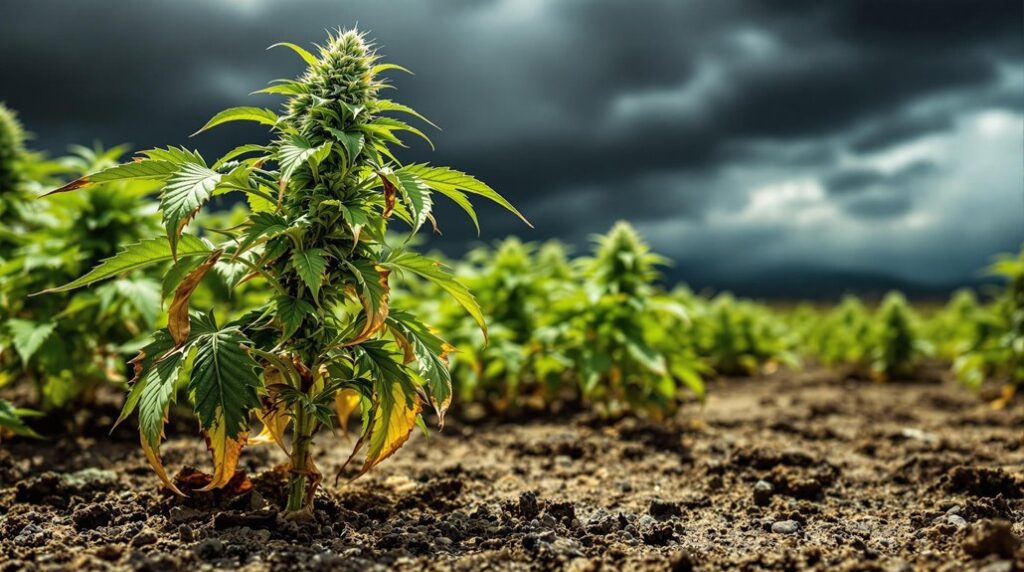
To ensure optimal growth and cannabinoid production, CBD Lemon Potion requires carefully controlled environmental conditions:
- Temperature Range: The ideal daytime temperature is between 70°F and 85°F (21°C to 29°C). During the flowering phase, maintaining slightly cooler nighttime temperatures (around 65°F or 18°C) can enhance terpene production.
- Humidity Levels:
- Vegetative Stage: Maintain humidity at 50-70% to encourage robust vegetative growth.
- Flowering Stage: In order to avoid mold and mildew, lower the humidity to 40–50%.
- Light Requirements:
- Photoperiod: As a photoperiod-sensitive strain, indoor cultivation typically requires an 18/6 light cycle during the vegetative stage and 12/12 during flowering.
- Light Intensity: Full-spectrum LED or high-pressure sodium (HPS) lights are ideal for mimicking natural sunlight.
- Spectrum Balance: A blue-light-rich spectrum promotes vegetative growth, while red-light-dominant wavelengths encourage flowering.
2. Soil and Mediums
- Soil Composition: A nutrient-rich, well-draining soil is essential. The optimal composition includes a mix of organic matter, perlite, and coco coir for aeration.
- pH Levels: Maintain a pH of 6.0 to 7.0 for your soil. Use pH-adjusting solutions to correct deviations.
- Hydroponics: For advanced growers, hydroponic systems (e.g., Deep Water Culture or Nutrient Film Technique) can accelerate growth rates and improve cannabinoid profiles by delivering precise nutrient mixes.
3. Nutrient Management
CBD Lemon Potion thrives when provided with a balanced supply of macronutrients and micronutrients:
- Macronutrients:
- Nitrogen (N): Crucial during the vegetative stage for lush, green foliage.
- Phosphorus (P): Encourages the growth of roots and flowers.
- Potassium (K): Improves the general health and resistance to disease of plants.
- Micronutrients: Calcium, magnesium, and sulfur are essential for enzymatic functions and cell wall integrity.
- Organic Additives: Compost teas and worm castings can improve soil health and microbial activity.
4. Watering Practices
Proper hydration is critical for healthy growth:
- Frequency: Water only when the topsoil is dry to the touch. While underwatering stresses the plant, overwatering can cause root rot.
- Quality: Use filtered or pH-balanced water to avoid introducing chlorine or excessive minerals.
5. Training Techniques
- Low-Stress Training (LST): Bending and tying branches to create an even canopy improves light penetration and increases yield.
- Topping: Removing the apical bud encourages lateral growth and creates multiple colas.
- Screen of Green (SCROG): Using a screen to guide plant growth maximizes space utilization and ensures uniform light distribution.
6. Pest and Disease Management
- Common Pests: Aphids, spider mites, and whiteflies are the most frequent culprits. Use organic insecticides like neem oil or predatory insects like ladybugs for control.
- Disease Prevention:
- Ensure proper airflow to prevent fungal infections such as powdery mildew.
- Monitor for root diseases like Pythium by maintaining appropriate soil moisture and avoiding stagnant water.
7. Harvesting and Post-Harvest Care
- Harvest Timing: Monitor trichome development under a magnifying glass:
- Clear trichomes indicate immaturity.
- Cloudy trichomes indicate peak cannabinoid content.
- Amber trichomes signal that THC is degrading, which may increase the sedative effects.
- Drying: Hang buds upside down in a dark, well-ventilated room at 60°F-70°F (15°C-21°C) and 50-60% humidity for 7-14 days.
- Curing: Store dried buds in airtight containers, opening them daily for the first two weeks to release moisture. This improves smoothness, flavor, and potency.
8. Scientific Optimization Through Genetics
Advances in breeding techniques allow growers to optimize CBD Lemon Potion cannabinoid and terpene profiles:
Genomic Analysis: Identifies genetic markers associated with desired traits, enabling precision breeding for improved outcomes.
Selective Breeding: Focuses on stabilizing high CBD-to-THC ratios while enhancing specific terpene production.
Tissue Culture: A sterile propagation method that produces genetically identical clones, reducing variability and disease risk.
Safety and Adverse Effects
Common Side Effects
While CBD Lemon Potion is generally well-tolerated, potential side effects include:
- Dry Mouth: Due to reduced salivary secretion.
- Dizziness: Often dose-dependent and transient.
- Drug Interactions: CBD can inhibit cytochrome P450 enzymes, affecting the metabolism of certain medications.
Toxicology
Studies confirm that CBD is non-toxic and does not pose a risk of dependency or overdose. However, the low THC content necessitates cautious use in THC-sensitive individuals.
Conclusion
CBD Lemon Potion represents a scientifically validated option for therapeutic and recreational use. Its high CBD content, coupled with a complementary terpene profile, supports a range of medical applications, from pain management to neurological health. Research underscores its safety and efficacy, positioning it as a valuable tool in cannabinoid-based therapies.
For a complete directory of cultivars, visit our Cannabis Strain Reviews.
