Table of Contents
CBD Fast Eddy is a hybrid strain developed for its high cannabidiol (CBD) content and relatively low tetrahydrocannabinol (THC) levels. It is a strain known for its rapid growth cycle and balanced effects, making it popular among medicinal users and those seeking mild psychoactive experiences.
Fast Eddy is a cross between Cheese, Juanita la Lagrimosa, and Ruderalis, combining genetics that provide a rich terpene profile, high CBD concentration, and autoflowering characteristics. With a CBD-to-THC ratio that leans heavily towards therapeutic benefits, this strain is particularly appealing to medical cannabis users.
This guide explores CBD Fast Eddy’s genetics, cannabinoid and terpene profile, cultivation details, medical applications, recreational effects, and scientific research supporting its benefits.
Genetic Lineage and Strain Overview
CBD Fast Eddy is a result of careful breeding that integrates powerful cannabis genetics:
Parent Strains
- Cheese (Skunk #1 phenotype)
- Origin: UK
- Characteristics: Pungent, cheesy aroma, relaxing effects
- Influence: Provides a distinct flavor and moderate THC content
- Juanita la Lagrimosa
- Origin: Spain
- Characteristics: High CBD levels, uplifting and therapeutic effects
- Influence: Dominates the CBD profile in Fast Eddy, ensuring medicinal properties
- Ruderalis
- Origin: Central Asia, Russia, and Eastern Europe
- Characteristics: Autoflowering genetics, short growth cycle
- Influence: Allows CBD Fast Eddy to flower automatically without needing light cycle changes
Strain Type
- Type: Autoflowering Hybrid
- Dominance: Sativa-dominant (50% Sativa / 40% Indica / 10% Ruderalis)
- Flowering Time: 8–10 weeks
- Yield: 450–500g/m² indoors, 120g per plant outdoors
- THC Content: ~9%
- CBD Content: ~15%
- CBD:THC Ratio: ~1.5:1
CBD Fast Eddy’s low THC and high CBD make it suitable for medical patients and those looking for functional relaxation without strong psychoactive effects.
Cannabinoid and Terpene Profile
The effects of CBD Fast Eddy are driven by its unique cannabinoid and terpene composition.
Cannabinoids
- CBD (~15%)
- Non-intoxicating, counteracts THC-induced psychoactivity
- Anti-inflammatory, neuroprotective, and anxiolytic properties
- THC (~9%)
- Mild psychoactive effects
- Supports pain relief and relaxation
- CBG (~1-2%)
- Known for antibacterial and anti-inflammatory effects
- CBC (~0.5-1%)
- Potential mood-enhancing properties
Terpenes and Their Effects
CBD Fast Eddy features a unique terpene profile that contributes to its effects, aroma, and flavor:
- Myrcene (Herbal, Musky)
- Sedative, muscle relaxant, and analgesic properties
- Limonene (Citrus, Fruity)
- Uplifting, anti-anxiety, and antidepressant effects
- Caryophyllene (Peppery, Spicy)
- Anti-inflammatory and potential pain relief effects
- Pinene (Pine, Earthy)
- Bronchodilator, memory-enhancer, and anti-inflammatory
- Linalool (Floral, Lavender-like)
- Anxiolytic and sedative effects, potential for treating epilepsy
The terpene profile enhances CBD Fast Eddy’s therapeutic potential, making it a well-rounded strain for various medicinal uses.
Medical Uses of CBD Fast Eddy
CBD Fast Eddy has a wide range of therapeutic applications due to its high CBD concentration. Below is a breakdown of its effectiveness in treating various medical conditions:

Pain Management
- CBD Fast Eddy has analgesic properties that help alleviate chronic pain, arthritis, migraines, and neuropathic pain.
- The interaction between CBD and CB1/CB2 receptors in the endocannabinoid system (ECS) helps modulate pain signals.
Inflammation and Autoimmune Disorders
- The anti-inflammatory properties of CBD make it beneficial for conditions like:
- Rheumatoid arthritis
- Multiple sclerosis (MS)
- Fibromyalgia
- Lupus
- CBD suppresses pro-inflammatory cytokines, reducing immune system overactivation.
Anxiety and Depression
- The strain’s limonene and linalool content supports serotonin and dopamine regulation, helping with:
- Generalized Anxiety Disorder (GAD)
- Panic Attacks
- Social Anxiety
- Post-Traumatic Stress Disorder (PTSD)
- CBD modulates the GABA system, promoting relaxation without sedation.
Neurological Disorders and Epilepsy
- CBD’s neuroprotective effects make it a potential treatment for:
- Epilepsy (Dravet Syndrome, Lennox-Gastaut Syndrome)
- Alzheimer’s disease
- Parkinson’s disease
- Studies show CBD reduces seizure frequency by modulating calcium channels in neurons.
Sleep Disorders
- CBD and myrcene work together to induce sleep and combat insomnia without the sedative effects of high-THC strains.
Gastrointestinal Disorders
- CBD Fast Eddy can help with digestion and gut health, particularly for:
- Irritable Bowel Syndrome (IBS)
- Crohn’s Disease
- Ulcerative Colitis
- Nausea and appetite stimulation
Cancer and Chemotherapy Support
- CBD Fast Eddy helps cancer patients by:
- Reducing nausea and vomiting
- Alleviating pain from chemotherapy
- Enhancing appetite
- Providing anti-tumor properties (as shown in preclinical studies)
Cardiovascular Health
- CBD reduces blood pressure, inflammation, and oxidative stress, lowering risks of hypertension, heart disease, and strokes.
Recreational Effects of CBD Fast Eddy
Although CBD Fast Eddy has a low THC content (~9%), it still provides mild psychoactive effects, making it suitable for users looking for a gentle, clear-headed high.
Primary Effects
- Mild euphoria and uplifted mood
- Relaxed yet functional state
- Increased focus and alertness
- Slight body relaxation without sedation
Ideal Recreational Use Cases
- Morning and daytime use: Enhances focus without impairing function.
- Social settings: Provides relaxation and mild mood enhancement without intoxication.
- Creative work: Helps with mental clarity and reduces stress-induced blocks.
Potential Side Effects
- Dry mouth and eyes (mild dehydration)
- Mild dizziness in low-tolerance users
- Rare cases of slight headaches
- Minimal risk of anxiety or paranoia due to low THC content
Cultivation Guide
CBD Fast Eddy is an autoflowering hybrid, meaning it transitions to flowering automatically regardless of the light cycle. This characteristic makes its cultivation different from photoperiod cannabis strains. Below, we explore scientific approaches to optimizing its growth through various cultivation techniques.
Understanding the Growth Cycle
Since CBD Fast Eddy is an autoflowering strain, its growth stages are shorter than those of traditional photoperiod strains.
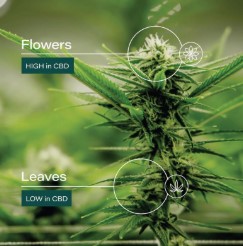
Growth Timeline:
- Seedling Stage: 1-2 weeks
- Vegetative Stage: 2-3 weeks
- Flowering Stage: 5-7 weeks
- Total Time to Harvest: ~8-10 weeks
Because autoflowers have a short life cycle, they require optimized conditions from the start.
Scientific Aspects of Indoor Cultivation
For indoor growing, controlled environments maximize yield and cannabinoid content. Below are key factors:
Light Spectrum and Intensity
- Autoflowers thrive under a full-spectrum LED light (~400-700nm).
- 18/6 or 20/4 light cycle throughout growth (autoflowers do not need a 12/12 flowering cycle).
- Recommended PPFD (Photosynthetic Photon Flux Density): 500-700 µmol/m²/s for optimal growth.
- UVB light exposure during late flowering enhances CBD and terpene production.
Temperature and Humidity Control
- Seedling stage: 22-26°C, 60-70% RH (Relative Humidity)
- Vegetative stage: 22-28°C, 50-60% RH
- Flowering stage: 20-25°C, 40-50% RH
- Late flowering: 18-22°C, 35-45% RH to prevent mold
Maintaining low humidity in late flowering prevents bud rot and mold (a common issue with autoflowers).
CO₂ Enrichment
- Increasing CO₂ to 1200-1500 PPM improves photosynthesis efficiency.
- Requires proper ventilation and CO₂ dispersion (e.g., inline CO₂ burners or tanks).
- Works best in a sealed grow room with strong LED lighting.
Soil vs. Hydroponics
- Soil (Organic Super Soil)
- Provides natural nutrients, enhances terpene profile.
- Recommended pH: 6.0-6.5.
- Ideal for medicinal users avoiding synthetic nutrients.
- Hydroponics (Deep Water Culture, NFT, Coco-Coir)
- Increases growth rate and yield by ~20-30%.
- Requires pH adjustment (5.5-6.0) and controlled nutrient dosing.
- Higher oxygenation in root zone speeds up cannabinoid production.
Nutrient Science and Fertilization
Macronutrients (NPK)
- Seedling Stage: Light feeding (EC 0.4-0.6)
- Root stimulators (humic/fulvic acids) help early root development.
- Vegetative Stage: High Nitrogen (N), moderate Phosphorus (P) and Potassium (K) (EC 1.0-1.4).
- Flowering Stage: Higher Phosphorus (P) and Potassium (K) for bud formation, reduced Nitrogen (N) (EC 1.6-2.0).
Micronutrients and Bio-Stimulants
- Calcium & Magnesium (Ca/Mg): Essential for cell wall structure and nutrient uptake.
- Silica (Si): Strengthens plant structure, prevents pests.
- Amino Acids & Enzymes: Improve nutrient absorption and stress resistance.
- Mycorrhizae & Beneficial Bacteria: Enhance root function and CBD production.
Outdoor Cultivation: Best Practices
Climate Requirements
- CBD Fast Eddy prefers a warm, Mediterranean-like climate (21-26°C).
- Can handle colder temperatures (~15°C), but growth slows.
- Requires more than six hours of sunlight per day.
Soil Optimization
- pH: 6.0-6.5 (measured using a soil pH meter).
- Best Soil Composition:
- 40% Loamy soil (balanced nutrients, good aeration).
- 30% Coco-coir (improves water retention and oxygenation).
- 20% Perlite (drainage and root oxygenation).
- 10% Worm castings & compost (organic nutrients).
Pest and Disease Prevention
- Common Threats: Powdery mildew, bud rot, aphids, spider mites.
- Natural Defense Strategies:
- Neem oil & diatomaceous earth (prevents pests).
- Companion plants (e.g., basil, marigold) to repel insects.
- Trichoderma fungi (biological control for root diseases).
Advanced Techniques for Higher CBD Yield
To increase CBD production in Fast Eddy, growers use specific stress-training methods:
Low-Stress Training (LST)
- Involves bending stems and tying them down to increase light exposure.
- Works well for autoflowers since high-stress techniques can stunt growth.
Defoliation (Selective Leaf Removal)
- Eliminating extra fan leaves enhances light penetration and airflow.
- Helps prevent mold and bud rot.
Flushing Before Harvest
- 1-2 weeks before harvest, use pure water (~pH 6.0-6.5) to remove excess salts and fertilizers.
- Scientific reason: Enhances flavor and removes harsh chemical buildup.
Post-Harvest Optimization
CBD preservation depends on proper drying and curing techniques.
Drying Process
- Temperature: 18-22°C
- Humidity: 50-60%
- Drying Time: 7-10 days in a dark, ventilated area
- Air Circulation: Prevents mold formation.
Curing Process
- Store buds in glass jars at 62% humidity.
- Open jars once a day for 2 weeks to release excess moisture.
- Scientific Benefit: Enhances terpene retention and CBD stability.
Methods of Ingestion & Bioavailability
Different consumption methods influence CBD absorption, onset speed, and duration of effects. The bioavailability (percentage of cannabinoids reaching the bloodstream) varies based on the method.
| Method | Onset Time | Peak Effects | Duration | Bioavailability (%) |
|---|---|---|---|---|
| Inhalation (Smoking/Vaping) | 1-5 minutes | 15-30 minutes | 2-4 hours | 31-56% |
| Sublingual (Tinctures/Oils) | 15-45 minutes | 60-90 minutes | 4-6 hours | 13-35% |
| Oral (Edibles, Capsules) | 30-90 minutes | 2-3 hours | 6-8 hours | 6-20% |
| Topical (Creams, Patches) | 20-45 minutes | 1-2 hours | 4-12 hours | ~5% (localized) |
| Rectal Suppositories | 10-30 minutes | 1-2 hours | 6-8 hours | 50-70% |
Inhalation: Smoking vs. Vaping
Inhalation is the fastest way to feel the effects of CBD Fast Eddy due to rapid alveolar absorption in the lungs.
Mechanism of Absorption
- CBD & THC enter the bloodstream via the alveoli in the lungs.
- Effects onset within 1-5 minutes due to quick blood-brain barrier penetration.
- Peak concentration occurs within 15-30 minutes.
- Effects dissipate after 2-4 hours as CBD is metabolized by the liver.

Smoking (Combustion)
- Bioavailability: ~31-50%
- High temperature (400-900°F) destroys some cannabinoids.
- Produces combustion byproducts (e.g., tar, benzene), which can irritate the lungs.
Vaping (Convection or Conduction)
- Bioavailability: ~50-56% (more efficient than smoking).
- Lower temperatures (300-450°F) preserve cannabinoids and terpenes.
- Safer than combustion, but long-term effects of vaporized oil carriers are under study.
Best For:
- Fast relief from pain, anxiety, and nausea.
- Patients needing immediate onset effects.
Sublingual (Tinctures & Oils)
Mechanism of Absorption
- CBD is absorbed through the sublingual mucosa (under the tongue) into the bloodstream.
- Avoids first-pass metabolism in the liver.
- Effects begin within 15-45 minutes, peak in 60-90 minutes, and last 4-6 hours.
Scientific Bioavailability Factors
- CBD bioavailability (13-35%) is higher than edibles but lower than inhalation.
- Carrier oils (MCT oil, hemp seed oil) enhance absorption.
- Holding oil under the tongue for 60-90 seconds increases absorption efficiency.
Best For:
- Patients needing longer-lasting relief than smoking but faster effects than edibles.
- Managing chronic pain, inflammation, and neurological disorders.
Oral Ingestion (Edibles & Capsules)
Mechanism of Absorption
- CBD is metabolized through the digestive system and liver (first-pass metabolism).
- Onset takes 30-90 minutes, with peak effects at 2-3 hours.
- Effects last 6-8 hours but have lower bioavailability (~6-20%).
First-Pass Metabolism & Bioavailability
- CBD undergoes hepatic metabolism (CYP450 enzymes), reducing bioavailability.
- Fat-soluble CBD absorbs better with high-fat foods, increasing effects.
- Liposomal and nanoemulsion CBD formulations improve absorption 2-4x.
Best For:
- Long-lasting symptom relief (pain, insomnia, anxiety).
- Patients who prefer a discreet method.
Topical Application (Creams, Balms, Patches)
Mechanism of Absorption
- CBD binds to CB2 receptors in the skin but does not enter the bloodstream.
- Onset: 20-45 minutes, lasting 4-12 hours.
- CBD patches allow slow systemic absorption, increasing duration.
Bioavailability & Effectiveness
- Low systemic bioavailability (~5%), but effective for localized pain and inflammation.
- Lipophilic nature of CBD allows deeper penetration when combined with carrier oils.
Best For:
- Localized pain, inflammation, arthritis, and skin conditions.
- Athletes and chronic pain patients.
Rectal Administration (Suppositories)
Mechanism of Absorption
- CBD is absorbed via the rectal mucosa, bypassing the liver.
- Onset within 10-30 minutes, peak in 1-2 hours, lasting 6-8 hours.
- High bioavailability (~50-70%) as it avoids first-pass metabolism.
Scientific Effectiveness
- Faster absorption than edibles with a longer duration than inhalation.
- Used in medical cases where oral intake is not feasible (e.g., nausea, gastrointestinal disorders).
Best For:
- Severe pain, inflammation, and patients unable to ingest or inhale CBD.
Metabolism & Elimination of CBD Fast Eddy
- Metabolized primarily in the liver (CYP450 enzymes: CYP3A4, CYP2C19, CYP2C9).
- Eliminated via urine and feces.
- Half-life varies:
- 2-5 hours (inhalation)
- 6-24 hours (oral)
- 24-48 hours (chronic use).
Choosing the Best Ingestion Method Based on Medical Need
| Condition | Best Ingestion Method |
|---|---|
| Acute pain, anxiety, nausea | Inhalation (vaping/smoking) |
| Chronic pain, epilepsy, inflammation | Sublingual or Oral (capsules, edibles) |
| Arthritis, localized pain | Topical (creams, balms) |
| Gastrointestinal disorders | Rectal suppositories |
| Long-lasting effects | Edibles, tinctures, patches |
Scientific Research and Studies
CBD has been extensively studied for its therapeutic potential. Some key research includes:
- Pain Relief: A study in the Journal of Pain Research (2021) confirmed CBD’s effectiveness in reducing chronic pain and inflammation.
- Anxiety Reduction: A 2019 study in The Permanente Journal found CBD reduced anxiety in 79% of patients.
- Epilepsy Treatment: The FDA-approved Epidiolex (CBD-based medication) for seizure control in epilepsy.
- Neuroprotection: Research in Frontiers in Aging Neuroscience (2020) suggests CBD may slow Alzheimer’s progression.
Conclusion
CBD Fast Eddy is an excellent strain for medical and wellness use, providing pain relief, anti-inflammatory benefits, anxiety reduction, and neuroprotection with minimal psychoactivity. Its fast-growing nature and autoflowering genetics make it an attractive option for cultivators.
Whether you’re a medical cannabis patient or a casual user seeking relaxation, CBD Fast Eddy offers a mild, uplifting experience with powerful therapeutic benefits.
For a complete directory of cultivars, visit our Cannabis Strain Reviews.
