I have been growing cannabis long enough to remember when most people only talked about chasing the strongest high. These days, many of the questions I get are about CBD and cannabis for anxiety relief and how to grow plants that feel calmer and more manageable instead of racy or overwhelming.
I am not a doctor or therapist, and nothing in this article is medical advice. What I can share is years of hands-on cultivation, experimenting with high CBD strains, adjusting my grow room to preserve gentle terpenes, and paying close attention to how different plants make real people in my life feel. I will also touch on what current research and regulators say so that anyone interested in CBD for anxiety can have a grounded starting point rather than hype.
What we actually know about CBD for anxiety
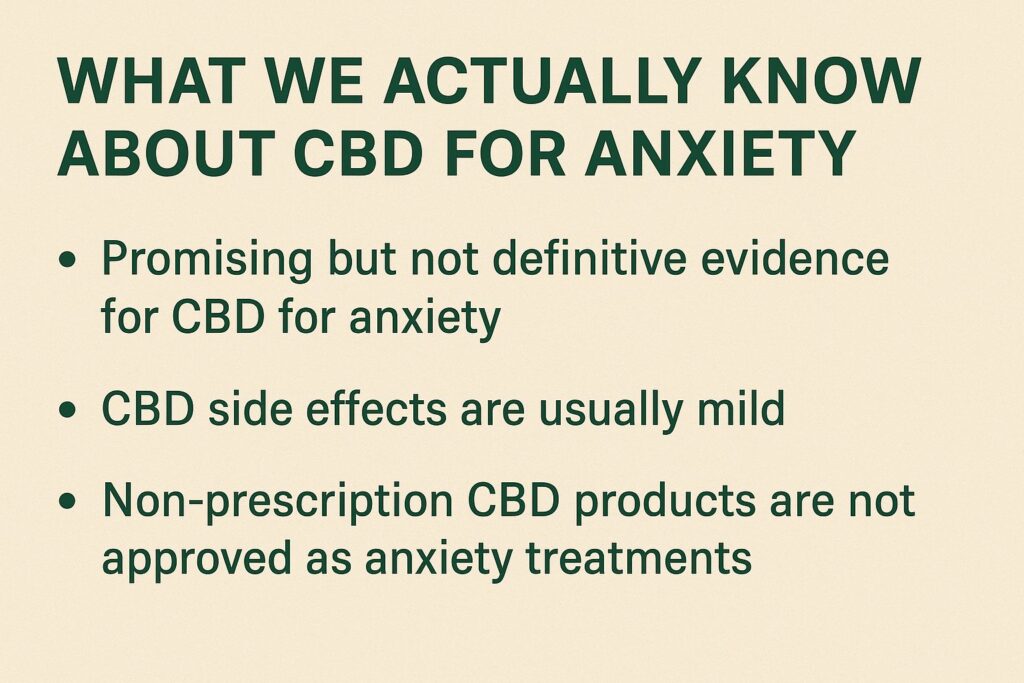
Before we get into tents, lights, and seeds, it is worth grounding CBD and cannabis for anxiety relief in real evidence.
Several small clinical trials and reviews suggest that CBD for anxiety has potential, particularly for social anxiety and other anxiety-related concerns, but the research is still early and often based on limited sample sizes. Some studies have looked at simulated public speaking, where a single dose of CBD reduced measured anxiety compared to placebo.
Health authorities generally describe CBD as having a good safety profile, although side effects and interactions can occur, especially at higher doses or when combined with certain medications.
At the same time, regulators remind us that non-prescription CBD products are not approved as treatments for anxiety, and companies are not allowed to market CBD for the prevention, treatment, or cure of human disease. When I talk about marijuana for anxiety relief, I am describing personal experience and the experience of other growers and consumers, not promising outcomes.
In short:
- There is promising but not definitive evidence for CBD for anxiety.
- THC and anxiety are more complicated; THC can both relieve and worsen anxiety depending on dose, tolerance, and individual biology.
- CBD side effects are usually mild but still worth respecting, especially if someone is taking other medications.
That context shapes how I choose genetics and how I grow.
How I choose genetics for calmer effects
Over the years I have learned that CBD and cannabis for anxiety relief start with the seed. You cannot fix an anxiety-provoking chemovar with nutrients alone. The genetics set the ceiling.
High CBD strains vs balanced strains
For most people asking about cannabis and anxiety, I steer them toward high CBD strains or balanced CBD:THC cultivars.
I have had the best long-term feedback from friends using:
- CBD-dominant plants (around 10–20 percent CBD with minimal THC)
- Balanced types around 1:1 CBD:THC
- Aromatic profiles rich in linalool, myrcene, and beta-caryophyllene
High CBD strains consistently produce gentler experiences. Even when friends combust or vaporize larger amounts, they report clarity and body calm rather than getting stuck in their heads. This fits well with the idea that CBD may buffer some of THC’s negative effects on anxiety.
When I evaluate high CBD strains for the garden, I look at:
- Lab tests showing cannabinoid ratios
- Terpene profiles that have historically paired well with cannabis and anxiety management in my circle
- Stable feminized seed lines, so I am not wasting space on males
This is where buying cannabis seeds online can be both a blessing and a curse. You get access to a wide range of CBD-dominant genetics, but you must filter hard for reputable breeders and real lab reports. Whenever I am buying cannabis seeds online, I double-check COAs (Certificates of Analysis) and stick with banks known for stable, tested high CBD strains.
I mention CBD and cannabis for anxiety relief repeatedly during selection because clarity about your goal keeps you from drifting back toward ultra-high THC novelty strains that might not serve you or your readers well.
Indica vs sativa for anxiety
One of the most common questions I hear is about indica vs sativa for anxiety. Old-school strain labeling is imprecise, but there are still patterns.
In my garden:
- Heavier, broad-leaf indica-leaning varieties with earthy, herbal terpenes often produce more body-heavy relaxation.
- Narrow-leaf sativa-leaning cultivars, especially those high in limonene and pinene with strong THC, are the ones most likely to stir up racing thoughts.
So when I am thinking about indica vs sativa for anxiety relief, I look beyond the label and into:
- Actual cannabinoid content (is it one of the high CBD strains or THC-dominant)
- Terpene profile
- Anecdotal feedback from previous grows
Over time I have built a short list of the best cannabis strains for anxiety in my specific environment. For me, that list is dominated by CBD-rich hybrids that lean indica but are not sedating. For other growers, the best cannabis strains for anxiety might be more daytime oriented, especially if they are pairing mild THC with CBD for anxiety in low doses.
Seeds, feminized options, and autoflowers
When the goal is marijuana for anxiety relief, I prefer to start from seed rather than clones. Seeds let me hunt phenotypes and find plants with ideal cannabinoid and terpene profiles. Feminized seeds simplify the process by removing males from the equation, and autoflowers allow harvests in tighter spaces or shorter outdoor seasons.
Key lessons from my own experience:
- Feminized high CBD strains are worth the investment; culling males from regular CBD lines can be time-consuming.
- Autoflower CBD cultivars are excellent for beginners who want CBD and cannabis for anxiety relief without a complicated light schedule.
- When buying cannabis seeds online, treat descriptions as starting points, not guaranteed outcomes. Always verify with your own observations.
How I grow CBD-rich plants for calmer effects
Once genetics are in place, the next piece of CBD and cannabis for anxiety relief is how you grow. Plants can test very differently depending on stress, nutrition, and environment.
Germination and early veg
For germination I keep it simple:
- Room temperature around 22–24°C
- Root zone moderately moist, not soaked
- Gentle LED lighting at 150–250 PPFD for seedlings
Healthy seedlings become resilient adults. Early stress can stunt high CBD strains and shift the plant’s overall vigor. I prefer a light, aerated medium, such as coco or a high-quality soilless mix, with a mild nutrient solution at EC 0.6–0.8 in the first couple of weeks.
Lighting, environment, and VPD
Once plants hit veg, I ramp intensity to 400–600 PPFD and maintain:
- Daytime temperature: 24–27°C
- Night temperature: 20–22°C
- Relative humidity: 55–65 percent in veg, 45–55 percent in flower
- VPD in the 0.8–1.2 kPa range, depending on stage
Keeping VPD dialed in reduces stress and helps plants express their full genetic potential. Stressed plants are more prone to hermaphroditism, nutrient imbalances, and harsh smoke, none of which are helpful when the final goal is marijuana for anxiety relief that feels smooth and predictable.
Nutrients and EC management
For CBD-focused grows, I run slightly lighter nutrient levels than I do with heavy-feeding THC production leads:
- Veg: EC 1.0–1.4
- Early flower: EC 1.5–1.8
- Late flower: taper back toward EC 1.2–1.4 and finish with a gentle flush
I use a balanced NPK base nutrient plus calcium and magnesium, then tweak with small amounts of sulfur and micronutrients. The idea is to feed enough for strong yields without pushing plants into dark, nitrogen-loaded foliage that burns harshly.
Training and plant shape
Anxiety-focused grows benefit from even canopies. I prefer:
- Topping once or twice in veg
- Low-stress training to spread branches
- Light defoliation to maintain airflow
This keeps flower size consistent across the plant, making dosing more predictable when someone is exploring CBD for anxiety in flower or hash form.
Pest and disease control
Nothing ruins the experience like mildew-tainted buds. I stay ahead of problems by:
- Using sticky traps and regular leaf inspections
- Maintaining airflow and avoiding wild humidity swings
- Favoring beneficial insects and biological controls over harsh synthetic sprays whenever possible
Healthy, clean buds are a big part of trust. When someone is already nervous about cannabis and anxiety, the last thing they need is worrying about residues.
Harvest and curing for anxiety-friendly effects
Timing harvest is where CBD and cannabis for anxiety relief really comes together.
I personally harvest high CBD strains when:
- Most trichomes are cloudy with only a small percentage turning amber
- Aromas are bright but not overly sharp
- Pistils are mostly turned but not fully shriveled
Harvesting too early can lead to jittery, unfinished effects; too late and some cultivars become overly sedating. After cutting:
- I dry at 18–20°C with 55–60 percent RH and gentle air movement for 10–14 days
- Then cure in jars at 58–62 percent RH, burping daily for the first 10 days, then weekly
Proper curing preserves terpenes that many users associate with calmer experiences, which supports the role of the best cannabis strains for anxiety in a real-world setting.
From garden to use: how I approach CBD and cannabis for anxiety relief
Once the jars are resting on the shelf, the next question is how to actually use the harvest. Again, I am not giving medical instructions here, just explaining how I personally handle CBD and cannabis for anxiety relief.
Flower, vapor, and extracts
Most of the people around me start with vaporized flower or low-dose edibles. Common patterns include:
- Vaporizing CBD-dominant flower at low temperatures for daytime calm
- Using a balanced CBD:THC strain in the evening when anxiety is mixed with difficulty winding down
- Pressing rosin from high CBD strains for sublingual use
Balanced strains are where marijuana for anxiety relief becomes highly individual. Some people feel best with almost zero THC; others do well with small amounts. This is where the conversation about THC and anxiety matters: as THC percentage climbs, the margin for error gets narrower.
CBD oil dosage and careful experimentation
The most common question I hear is: What CBD oil dosage should I start with There is no single answer, but there are patterns we can borrow from available research without turning them into hard rules.
Some studies that saw benefits used relatively high oral doses of CBD for anxiety, often higher than many over-the-counter products provide. At the same time, those studies were supervised and involved screened participants.
Because of that, my personal approach when friends ask about CBD oil dosage looks like this:
- Encourage them to talk with a healthcare professional, especially if they take other medications.
- Suggest starting low and going slow, for example 10–20 mg CBD once or twice a day from a trusted product, and tracking effects.
- Increase gradually only if needed, watching not just anxiety but overall mood, sleep, and any CBD side effects such as digestive upset, fatigue, or interactions with other meds.
I repeat the phrase CBD oil dosage throughout this process because respectful dosing is just as important as strain choice. CBD oil dosage also affects how quickly CBD side effects or drug interactions might surface.
When cannabis makes anxiety worse
In a conversation about cannabis and anxiety, it is important to admit that sometimes weed makes things worse. High THC, especially when consumed quickly or in unfamiliar settings, can spike heart rate, trigger paranoia, or intensify racing thoughts.
In my own grower notes, the batches most associated with negative experiences share a few traits:
- Very high THC, minimal CBD
- Strong limonene and pinene without balancing terpenes
- Over-dried flower leading to harsh smoke
Recognizing these patterns is essential when selecting the best cannabis strains for anxiety in your own environment. For some individuals, avoiding THC altogether and focusing entirely on CBD for anxiety is the safer choice.
Risks, side effects, and realistic expectations
No discussion of CBD and cannabis for anxiety relief is complete without talking openly about risks.
Commonly reported CBD side effects include:
- Fatigue or drowsiness at higher doses
- Digestive upset
- Potential interactions with medications metabolized by the liver
From the cannabis side, THC and anxiety remain closely linked in both directions. Some people find small amounts of THC relaxing, while others experience more anxiety even at low doses. It is also worth remembering that CBD and cannabis products are not consistently regulated; quality and potency can vary widely.
Regulators in multiple countries have emphasized that any CBD product marketed with claims to treat or cure anxiety is likely crossing a legal line. As growers and consumers, the most trustworthy stance is to treat CBD and cannabis as tools that may help some people manage anxiety, not as guaranteed solutions.
Practical checklist for anxiety-focused growers
For anyone planning a garden aimed at CBD and cannabis for anxiety relief, here is the checklist I use myself:
- Clarify your goal: CBD for anxiety, balanced effects, or occasional THC exploration.
- Prioritize genetics: high CBD strains or balanced CBD:THC chemovars with lab data.
- When buying cannabis seeds online, choose reputable seed banks with real certificates of analysis.
- Consider indica vs sativa for anxiety by looking past labels to cannabinoid and terpene profiles.
- Keep environment stable: proper VPD, smooth temperature swings, and good airflow.
- Feed moderately; avoid excess nitrogen and harsh, salty buds.
- Train plants for even canopies and predictable potency.
- Harvest when trichomes are mostly cloudy; cure slowly to preserve terpenes.
- Start with conservative CBD oil dosage or low-dose inhalation; respect CBD side effects.
- Keep honest records of which batches truly feel like the best cannabis strains for anxiety in your circle.
FAQ: CBD and cannabis for anxiety relief
Is CBD enough on its own for anxiety
For some people, CBD for anxiety is all they want to explore, especially if they are sensitive to THC and anxiety spikes easily. Evidence so far is promising but not definitive, and many clinical doses are higher than what typical wellness products deliver. It is wise to treat CBD as one possible tool among many and to involve a healthcare professional in the conversation.
Is indica or sativa better for anxiety
In my experience, the indica vs sativa for anxiety debate simplifies something more complex. What matters more is whether a strain is THC-heavy or part of the high CBD strains group and which terpenes dominate. Many of the best cannabis strains for anxiety in my garden are CBD-rich hybrids that lean indica but stay functional, rather than pure heavy indicas or racy sativas.
What is a good starting CBD oil dosage for anxiety
There is no universal CBD oil dosage, but I encourage people to start low, for example 10–20 mg once or twice per day, and adjust slowly while monitoring effects and CBD side effects. Because most clinical studies on CBD and anxiety used higher doses and medical supervision, any self-experimentation should be cautious and, ideally, done with professional guidance.
Can cannabis make anxiety worse instead of better
Yes. Cannabis and anxiety have a two-way relationship. High THC, unfamiliar settings, or overconsumption can trigger or worsen anxiety, especially in people already prone to it. Paying attention to THC and anxiety, choosing balanced or CBD-dominant cultivars, and controlling dose can reduce these risks but not eliminate them.
How do I pick seeds if my main goal is calmer effects
When buying cannabis seeds online with anxiety in mind, I filter hard for high CBD strains or balanced CBD:THC ratios, verified lab reports, and breeder reputation. I focus on feminized seeds for reliability and consider autoflowers when I want a quicker turnaround. Above all, I keep notes from each run so I can refine my personal list of the best cannabis strains for anxiety in my environment.
As a grower, I have seen CBD and cannabis for anxiety relief help some people feel more grounded, and I have also seen poorly chosen or poorly grown cannabis make anxiety worse. The difference usually comes down to genetics, cultivation practices, and honest self-assessment. If you approach the plant with respect, patience, and real-world data instead of hype, your garden can become a thoughtful part of the broader conversation around anxiety support.
