Table of Contents
Cat Piss is a well-known but polarizing cannabis strain, famous for its pungent ammonia-like aroma that resembles feline urine. Despite its off-putting name and scent, Cat Piss is highly regarded for its potent effects, unique terpene profile, and broad range of medical and recreational benefits. This document explores Cat Piss in depth, providing comprehensive information on its genetics, chemical composition, medicinal uses, recreational effects, and scientific insights.
Origins and Genetics
The origins of Cat Piss are somewhat debated, but it is most commonly associated with phenotypic variations of Super Silver Haze, a legendary sativa-dominant strain. Some growers and users speculate that Cat Piss is a distinct phenotype of Skunk #1, Trainwreck, or even Neville’s Haze. Due to its rarity, Cat Piss is often hard to find in dispensaries, but its unique characteristics make it a sought-after strain among cannabis connoisseurs.
Genetic Lineage:
- Parent Strains: Likely linked to Super Silver Haze or Skunk #1
- Dominance: Sativa-dominant hybrid (70% Sativa / 30% Indica)
- THC Content: Ranges from 18% to 24%
- CBD Content: Generally below 1%
Terpene Profile and Aroma
One of the defining features of Cat Piss is its pungent, ammonia-like aroma. While this may be off-putting to some, experienced users appreciate the strain’s distinctiveness. The dominant terpenes in Cat Piss contribute to both its smell and effects.
Primary Terpenes:
- Myrcene – Provides a musky, earthy scent and contributes to sedative effects.
- Limonene – Adds citrus notes and enhances mood elevation.
- Caryophyllene – Offers a spicy, peppery aroma and acts as an anti-inflammatory.
- Pinene – Produces a piney scent and improves focus.
- Terpinolene – Adds floral and herbal hints while providing relaxing properties.
The combination of these terpenes results in a complex aroma, described as a mix of ammonia, skunk, pine, and citrus, with a slightly sweet undertone.
Recreational Effects
As a sativa-dominant strain, Cat Piss delivers an uplifting and energetic high that makes it ideal for daytime use. Its psychoactive effects are powerful, making it popular among those looking for a stimulating cannabis experience.
Common Effects:
- Euphoria – Users often experience a fast onset of happiness and mental clarity.
- Energy Boost – Enhances motivation and creativity, making it great for artistic and social activities.
- Cerebral Stimulation – Increases focus and cognitive function.
- Mood Enhancement – Alleviates stress, anxiety, and depression, leading to a positive outlook.
- Mild Relaxation – While it provides an energetic high, it also offers subtle physical relaxation without sedation.
Methods of Ingestion, Onset, and Duration of Effects
The Cat Piss cannabis strain, known for its high THC content (18-24 percent) and sativa-dominant effects, exhibits varied pharmacokinetics based on the method of ingestion. Understanding how the body processes the cannabinoids and terpenes in different consumption methods is crucial for both recreational and medical users.
1. Methods of Ingestion
The effects of Cat Piss can be significantly altered depending on how it is consumed. Below is a breakdown of the most common methods.

A. Inhalation (Smoking and Vaping)
1. Smoking (Combustion)
- Method: Burning dried cannabis flower and inhaling the smoke.
- Bioavailability: 20-37 percent THC absorption rate due to combustion loss.
- Temperature: Combustion reaches 600-900 degrees Celsius, degrading some cannabinoids and terpenes.
- Common Devices: Joints, blunts, bongs, pipes.
Pros:
- Rapid onset of effects within one to five minutes
- High efficiency in cannabinoid absorption
- Easily accessible method
Cons:
- Some cannabinoids and terpenes degrade due to high temperatures
- Irritation of lungs and throat due to tar and combustion byproducts
2. Vaporization (Vaping)
- Method: Heating cannabis flower or concentrates to 180-230 degrees Celsius without combustion.
- Bioavailability: 40-60 percent THC absorption rate, higher than smoking.
- Common Devices: Dry herb vaporizers, concentrate vaporizers.
Pros:
- Higher cannabinoid and terpene preservation due to lower temperatures
- Cleaner inhalation with fewer harmful byproducts
- More efficient THC absorption compared to smoking
Cons:
- Requires a vaporizer device
- Some solvents in vape cartridges may cause health concerns
B. Oral Consumption (Edibles, Tinctures, Capsules)
1. Edibles (Cannabis-Infused Food or Drinks)
- Method: THC is metabolized in the liver (first-pass metabolism) into 11-hydroxy-THC, which is significantly more potent than regular THC.
- Bioavailability: 4-20 percent THC absorption rate due to digestive breakdown.
- Onset: 30 to 90 minutes, varies based on metabolism and stomach contents.
- Duration: 4 to 8 hours, with peak effects at 2 to 3 hours.
Pros:
- Longer-lasting effects compared to inhalation
- More body-focused, sedative high due to 11-hydroxy-THC
- Discreet and smoke-free consumption
Cons:
- Unpredictable onset time
- Easy to overconsume due to delayed effects
2. Tinctures (Sublingual Absorption)
- Method: Cannabis extract dissolved in alcohol or oil, placed under the tongue for direct absorption.
- Bioavailability: 15-35 percent THC absorption rate, better than edibles but lower than vaping.
- Onset: 15 to 45 minutes.
- Duration: 4 to 6 hours.
Pros:
- Faster onset than edibles due to sublingual absorption
- Discreet and easy dosing
- Avoids lung irritation
Cons:
- Some alcohol-based tinctures can cause irritation
3. Capsules (Cannabis Oil in Gel Caps)
- Method: Similar to edibles but encapsulated for delayed, controlled release.
- Bioavailability: 4-20 percent THC absorption rate.
- Onset: 45 to 90 minutes.
- Duration: 6 to 10 hours.
Pros:
- Precise dosing
- Longer-lasting effects
Cons:
- Slow onset like edibles
C. Topical and Transdermal Methods
1. Cannabis Topicals (Creams, Lotions, Balms)
- Method: Applied to the skin but does not enter the bloodstream.
- Effect: Localized pain relief and inflammation reduction.
- Onset: 5 to 30 minutes.
- Duration: 2 to 4 hours.
Pros:
- No psychoactive effects
- Ideal for localized pain relief
Cons:
- Ineffective for systemic effects
2. Transdermal Patches (THC-Infused Patches)
- Method: THC passes through the skin into the bloodstream.
- Onset: 20 to 60 minutes.
- Duration: 6 to 12 hours.
Pros:
- Steady, long-lasting effects
- Discreet and non-smokable option
Cons:
- Expensive compared to other methods
2. Onset and Duration of Effects by Consumption Method
| Method | Onset Time | Peak Effects | Total Duration | Potency and Intensity |
|---|---|---|---|---|
| Smoking (Joint, Bong, Pipe) | 1 to 5 minutes | 30 to 60 minutes | 2 to 4 hours | Moderate to high |
| Vaporization (Dry Herb, Concentrates) | 1 to 3 minutes | 30 to 60 minutes | 2 to 4 hours | High |
| Edibles (THC-Infused Food, Drinks) | 30 to 90 minutes | 2 to 3 hours | 4 to 8 hours | Very high |
| Tinctures (Sublingual) | 15 to 45 minutes | 1 to 2 hours | 4 to 6 hours | Moderate to high |
| Capsules (THC Pills) | 45 to 90 minutes | 2 to 4 hours | 6 to 10 hours | High |
| Topicals (Creams, Lotions) | 5 to 30 minutes | Not applicable | 2 to 4 hours | Local effects only |
| Transdermal Patches | 20 to 60 minutes | 2 to 4 hours | 6 to 12 hours | Moderate |
3. Pharmacokinetics of Cat Piss THC Absorption
The pharmacokinetics of THC absorption and metabolism depend on enzymatic activity, mainly CYP2C9 and CYP3A4 in the liver.
Key Metabolic Pathways of THC in Cat Piss
- Inhalation: THC enters the bloodstream via the lungs, leading to rapid effects due to direct systemic absorption.
- Oral Consumption (Edibles, Capsules): THC is processed by the liver into 11-hydroxy-THC, which is four to six times stronger than THC.
- Sublingual/Tinctures: Absorbed via oral mucosa, bypassing liver metabolism for faster onset.
- Transdermal Patches: Provides steady cannabinoid release into the bloodstream over time.
Potential Side Effects:
- Dry Mouth and Dry Eyes – A common side effect in many cannabis strains.
- Paranoia or Anxiety – Due to its high THC content, some users may experience mild anxiety or paranoia.
- Dizziness – Inexperienced users or those sensitive to THC might feel lightheaded.
Medical Uses
Cat Piss is valued for its medical benefits, especially for patients dealing with mental and neurological disorders. The strain’s uplifting effects make it effective in treating various mood-related conditions, while its anti-inflammatory properties offer relief from physical ailments.
Mental Health Benefits:
- Depression – The euphoric and uplifting effects help combat symptoms of depression by promoting positive thinking.
- Anxiety and Stress – Cat Piss’s mood-enhancing properties make it an excellent choice for reducing stress and anxiety.
- ADHD/ADD – The cerebral stimulation and focus-enhancing effects can aid individuals with attention disorders.
Physical Health Benefits:
- Chronic Fatigue – Provides an energy boost that helps combat exhaustion and lethargy.
- Pain Management – Though not as effective as indica-dominant strains, Cat Piss can help with mild pain and headaches.
- Appetite Stimulation – May help those struggling with appetite loss due to medical conditions.
Scientific Insights: Cannabinoid Composition
A detailed look at Cat Piss’s chemical composition highlights why it is effective for both recreational and medical use.
Major Cannabinoids:
- THC (18-24%) – The primary psychoactive compound responsible for the euphoric and energetic high.
- CBD (<1%) – Provides minimal therapeutic effects due to low concentration.
- CBG (~1%) – Offers anti-inflammatory and neuroprotective properties.
- CBC (~0.5-1%) – May contribute to mood stabilization and pain relief.
Potential Entourage Effect:
The combination of cannabinoids and terpenes in Cat Piss enhances its therapeutic effects. The entourage effect suggests that these compounds work synergistically to amplify the strain’s medical benefits.
Growing Information
Cultivating the Cat Piss strain requires specific environmental conditions and techniques to maximize its yield, potency, and terpene expression. Below is a scientifically detailed breakdown of the optimal methods used for growing Cat Piss cannabis.
1. Environmental Requirements
Cat Piss thrives in controlled environments where temperature, humidity, and lighting are precisely managed.
Ideal Conditions for Growth:
- Temperature: 70-80°F (21-27°C) during the day, with a slight drop at night.
- Humidity:
- Seedling Stage: 65-70% RH (Relative Humidity)
- Vegetative Stage: 50-60% RH
- Flowering Stage: 40-50% RH to prevent mold and bud rot.
- Air Circulation: Strong ventilation is necessary due to the pungent aroma.
- CO₂ Levels: Maintaining 1200-1500 ppm CO₂ enhances photosynthesis and yields.
2. Cultivation Medium
Cat Piss can be grown in various mediums, but some are more effective than others.
Best Growing Mediums:
- Soil – Organic super soil enriched with amendments such as bat guano, worm castings, and mycorrhizal fungi enhances terpene production.
- Coco Coir – A hydroponic-style medium that allows for faster nutrient uptake while retaining moisture.
- Hydroponics – Provides accelerated growth rates and higher yields but requires precise nutrient management.
3. Lighting and Photoperiod Management
Since Cat Piss is a sativa-dominant strain, it requires high-intensity lighting and a controlled photoperiod.
Recommended Lighting Setup:
- Vegetative Stage:
- Light Cycle: 18/6 (18 hours light / 6 hours dark)
- Preferred Lights: LED (Full Spectrum) or MH (Metal Halide)
- Light Intensity: 400-600 PPFD (Photosynthetic Photon Flux Density)
- Flowering Stage:
- Light Cycle: 12/12 (12 hours light / 12 hours dark)
- Preferred Lights: HPS (High-Pressure Sodium) or Full Spectrum LED
- Light Intensity: 800-1000 PPFD
- Far-Red Light (730 nm) supplementation can enhance flowering response.
4. Nutrient Requirements
Essential Macronutrients:
- Nitrogen (N): Needed for vegetative growth; should be reduced in flowering.
- Phosphorus (P): Boosts root development and bud formation.
- Potassium (K): Increases plant resilience and trichome production.
Secondary Nutrients & Micronutrients:
- Calcium & Magnesium (Ca & Mg): Prevents nutrient deficiencies that can lead to leaf curling.
- Silica (Si): Strengthens cell walls, making plants resistant to stress.
- Sulfur (S), Boron (B), Manganese (Mn): Enhance metabolic functions and terpene synthesis.
Nutrient Feeding Schedule (Hydroponics Example)
| Growth Stage | Nitrogen (ppm) | Phosphorus (ppm) | Potassium (ppm) | Calcium & Magnesium |
|---|---|---|---|---|
| Seedling | 100-150 | 50-75 | 100-150 | 50-75 |
| Vegetative | 200-300 | 100-150 | 200-300 | 100-150 |
| Flowering | 100-150 | 200-300 | 300-400 | 150-200 |
5. Pruning and Training Techniques
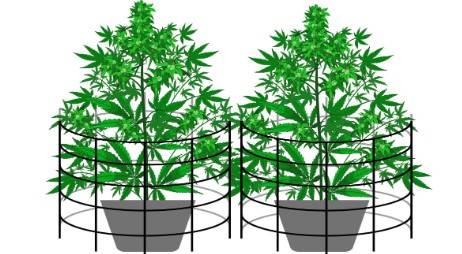
To maximize yield and control the structure of Cat Piss plants, growers use High-Stress Training (HST) and Low-Stress Training (LST) methods.
Recommended Techniques:
- Topping – Removing the main growing tip to encourage multiple colas.
- LST (Low-Stress Training) – Bending branches to increase light exposure and airflow.
- SCROG (Screen of Green) – Using a net to train plants for an even canopy.
- Defoliation – Removing excessive fan leaves to improve airflow and light penetration.
6. Pest and Disease Management
Cat Piss is moderately resistant to pests but requires preventive measures.
Common Pests:
- Spider Mites – Controlled with neem oil, beneficial insects (ladybugs).
- Aphids – Managed using insecticidal soap or predatory mites.
- Fungus Gnats – Avoid overwatering; use sticky traps and Bacillus thuringiensis (BT).
Common Diseases:
- Powdery Mildew – Prevented with proper air circulation and sulfur treatments.
- Bud Rot (Botrytis) – Controlled by maintaining humidity below 50% in flowering.
7. Harvesting and Curing
Harvesting at the right time ensures optimal potency and terpene retention.
Harvest Timing Based on Trichomes:
- Milky trichomes: Peak THC levels (Ideal for energetic high).
- Amber trichomes: More sedative effects due to CBN conversion.
- Clear trichomes: Premature; wait for maturation.
Drying and Curing Process:
Curing: Store in airtight glass jars at 60-65% RH, burping them daily for 2-4 weeks to enhance terpene preservation.
Drying: Hang buds in a dark room at 60-70°F (15-21°C) and 50-60% RH for 7-14 days.
Comparisons with Similar Strains
Cat Piss is often compared to other sativa-heavy strains that produce energetic and cerebral effects. Here’s how it stacks up against some similar strains:
| Strain | Sativa % | THC % | Notable Effects | Aroma & Flavor |
|---|---|---|---|---|
| Cat Piss | 70% | 18-24% | Uplifting, energetic, cerebral | Ammonia, skunk, citrus |
| Super Silver Haze | 80% | 18-23% | Euphoria, creativity, focus | Citrus, pepper, earthy |
| Sour Diesel | 90% | 19-25% | Energizing, mental clarity | Diesel, citrus, pungent |
| Trainwreck | 65% | 18-22% | Euphoria, pain relief | Pine, lemon, spicy |
Conclusion
Cat Piss is a unique and powerful sativa-dominant strain known for its unusual aroma, uplifting effects, and medical benefits. While its pungent scent may not appeal to everyone, those who can overlook the smell will find a highly effective strain for enhancing mood, boosting energy, and providing mental clarity.
Key Takeaways:
- Potency: High THC content makes it effective for mood enhancement and mental stimulation.
- Medical Use: Useful for treating depression, fatigue, stress, and mild pain.
- Recreational Use: Great for socializing, creative projects, and daytime activities.
- Growing Difficulty: Requires moderate skill and proper ventilation due to strong aroma.
Overall, Cat Piss remains a cult favorite among cannabis enthusiasts looking for an energizing and euphoric high, proving that sometimes, the most unconventional strains offer the most rewarding experiences.
