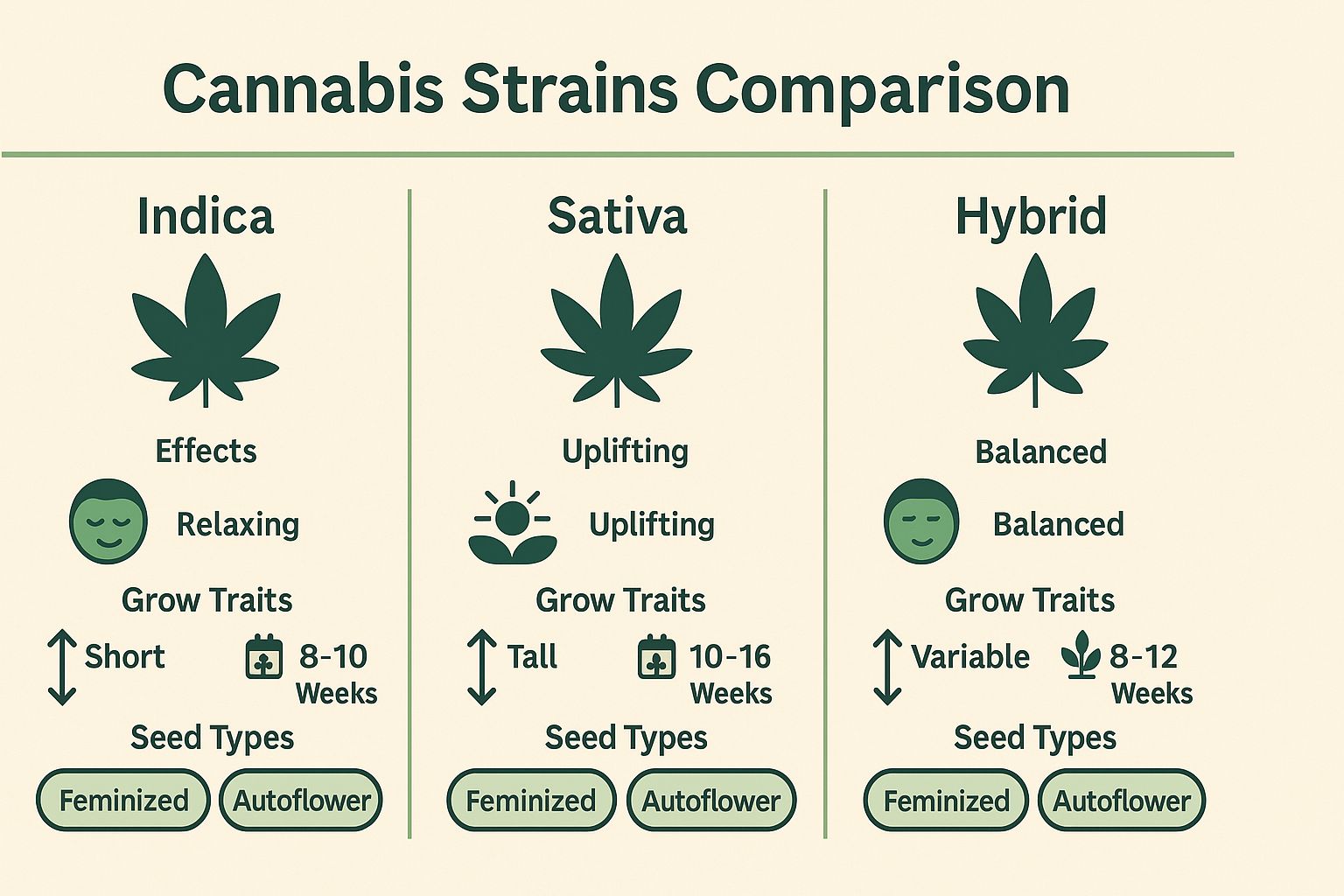
Why I Wrote This Cannabis Strains Comparison
I keep tight notes for every cycle: medium, lighting PPFD, nutrient schedule, temperature swings, and aroma at each stage. This Cannabis Strains Comparison distills the last three years of side-by-side runs where I flowered cultivars under identical conditions to make the differences obvious. I grew feminized seeds and autoflower seeds in separate tents so the timelines stayed fair. I also logged observations for indica vs sativa types and several hybrid cannabis strains to see how they behaved under stress, in different media, and across seasons. If you want a practical germination guide, a clear view of indoor vs outdoor growing, and a no-nonsense look at soil vs hydro trade-offs, you should find something useful here.
Nothing here is medical advice or a legal claim; it’s simply what happened in my rooms and gardens. Use these results to plan your own Cannabis Strains Comparison and adapt to your space.
Test Environment and Methods
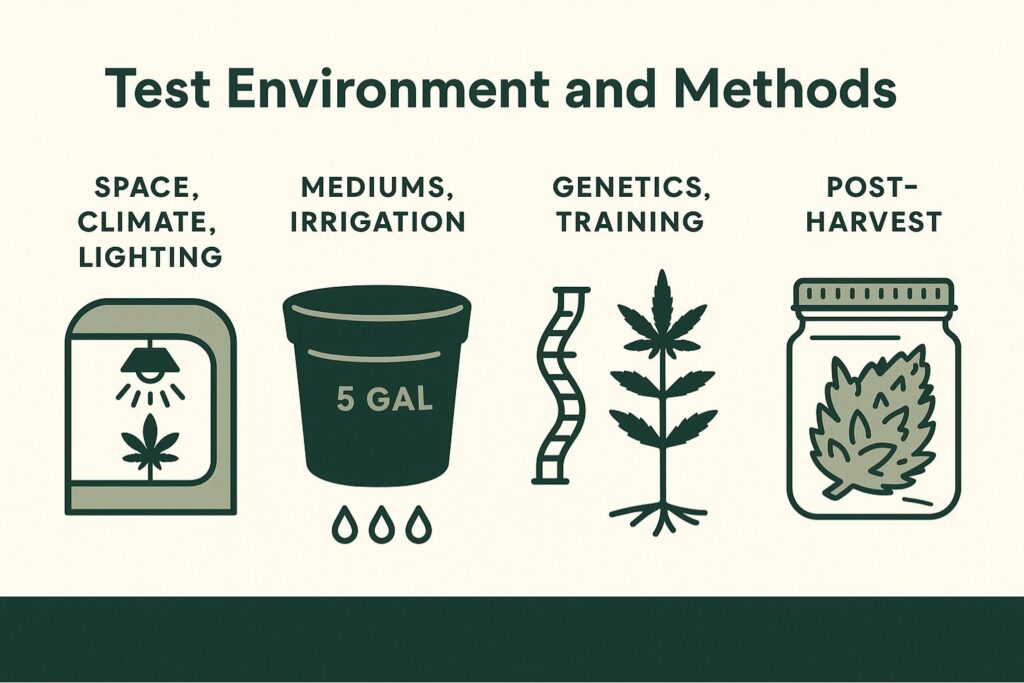
Space, climate, and lighting
I used two identical 4×4 tents and a small outdoor plot for reference. In the tents, I ran full-spectrum LEDs set to target the following lighting PPFD ranges:
- Veg: 350–500 µmol/m²/s lighting PPFD at 18/6
- Early flower: 650–750 µmol/m²/s lighting PPFD at 12/12
- Peak swell: 800–900 µmol/m²/s lighting PPFD with cautious CO₂ at 900–1,000 ppm
Canopy temps averaged 24–26°C in veg and 24–25°C in flower with a VPD of 0.9–1.1 kPa early and 1.2–1.4 kPa late. Dehumidification kept night RH below 50% to prevent botrytis. Outdoor plants experienced natural swings; I tracked those to discuss indoor vs outdoor growing in a later section.
Mediums and irrigation
To compare soil vs hydro, I used:
- Organic soil in 5-gallon fabric pots with regular top-dress
- Buffered coco in 2-gallon pots on automated drip (technically soilless hydro)
- A compact recirculating deep water culture bucket for one trial
I matched EC and pH targets across systems. The nutrient schedule in coco and DWC peaked at 1.9–2.1 EC in mid flower with runoff checks; soil received lighter bottled feedings plus amendments. The soil vs hydro differences show up clearly in vigor, internodal spacing, and finishing time.
Genetics and plant training
I ran feminized seeds and autoflower seeds from reputable seed banks and confirmed uniformity with small phenotype hunts. Most photoperiods were topped twice and trained with LST and netting; autos got gentle LST only. Comparing indica vs sativa expressions and hybrid cannabis strains required even training so structure didn’t bias yield.
Post-harvest
All plants dried at 18–20°C and 55–60% RH for 10–14 days, then cured in glass with weekly burps for a month. Final quality notes—especially each terpene profile—were taken after cure. Keeping the post-harvest identical matters in any Cannabis Strains Comparison because a rushed dry can erase all your careful work.
Germination, Early Growth, and Uniformity
If there’s one lesson I repeat in every germination guide I write for friends, it’s this: control temperature and moisture in the first 72 hours and you avoid most problems. I soak until the seed just barely cracks, then move to moist paper towel in a vented clamshell at 24–25°C. By hour 36–48, most taproots are 0.5–1 cm and ready for media. This simple germination guide method gave me 98% success with feminized seeds and 96% with autoflower seeds this year.
In soil vs hydro comparisons, coco/DWC seedlings accelerated faster by day 10, but organic soil caught up by week 3. For indica vs sativa differences, the sativa-leaning plants stretched immediately under the same lighting PPFD, so I dimmed the panel 10% for them the first week to reduce legginess. Hybrid cannabis strains showed the most uniformity and were easiest to steer.
I repeat this section’s keywords by design because early steps set the tone: a reliable germination guide, wise selection of feminized seeds or autoflower seeds, and awareness of indica vs sativa traits will save weeks of headaches later.
Vegetative Behavior: Soil vs Hydro and Media Choice
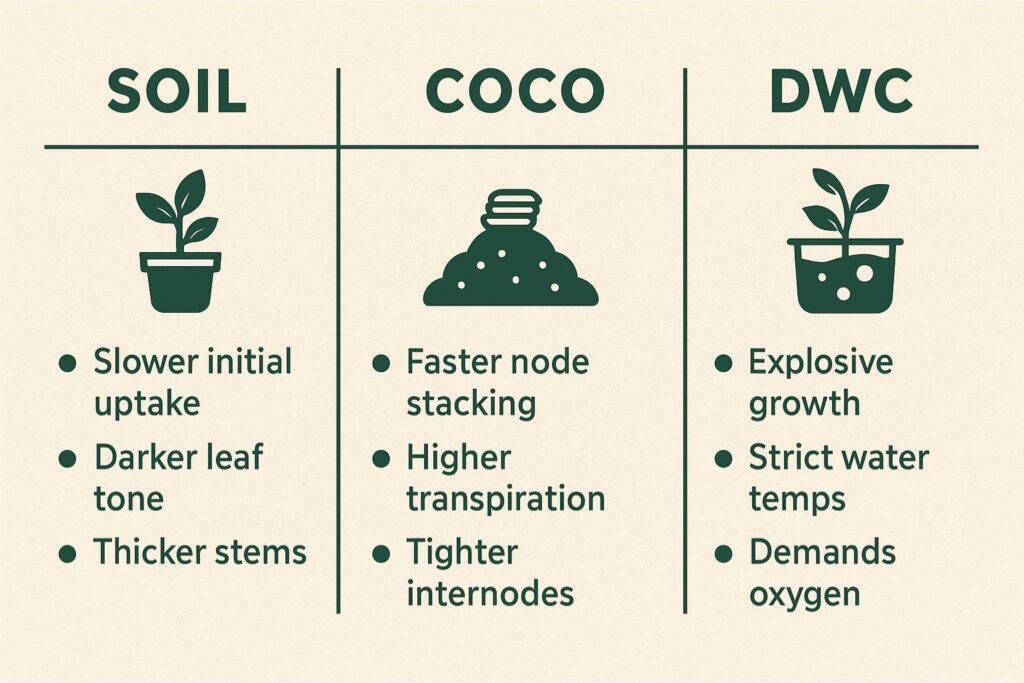
Running soil vs hydro side by side made the contrasts clear:
- Soil: Slower initial uptake, darker leaf tone, thicker stems. Terpene profile often richer after cure. Easier to buffer mistakes in the nutrient schedule.
- Coco (hydro): Faster node stacking, higher transpiration, tighter internodes at the same lighting PPFD. Requires disciplined nutrient schedule and daily irrigation.
- DWC (hydro): Explosive growth once roots hit solution. Demands strict water temps and oxygen—phenomenal for hybrid cannabis strains with vigorous genetics.
In practical terms, coco won the yield race in my Cannabis Strains Comparison, soil won on flavor density and smoothness, and DWC won on sheer speed and size when nothing went wrong. If you’re still deciding between soil vs hydro, let your lifestyle pick for you: soil forgives, hydro rewards precision.
Flowering: Indica vs Sativa and Hybrids Under Pressure
Under 12/12, indica vs sativa differences deepen. Indica-dominant plants bulk early and prefer slightly lower nitrogen by week 3 of flower. Sativa-leaners stretch for two weeks and request more magnesium and sulfur for terpene profile development. Hybrid cannabis strains did what I hoped: they accepted higher lighting PPFD (850–900 µmol/m²/s) without fox-tailing and responded well to moderate defoliation.
I noticed feminized seeds tended to be more uniform across the canopy than regulars I’ve run in the past, which simplified my nutrient schedule. Autoflower seeds in their own tent flowered at day 28–32 regardless of training, and while yield per plant was lower than photoperiods, the grams per day were competitive. In a production mindset, autoflower seeds let me stack harvests to fit life events, while feminized seeds gave me headline colas for photos and contests.
Yield and Potency Notes by Type
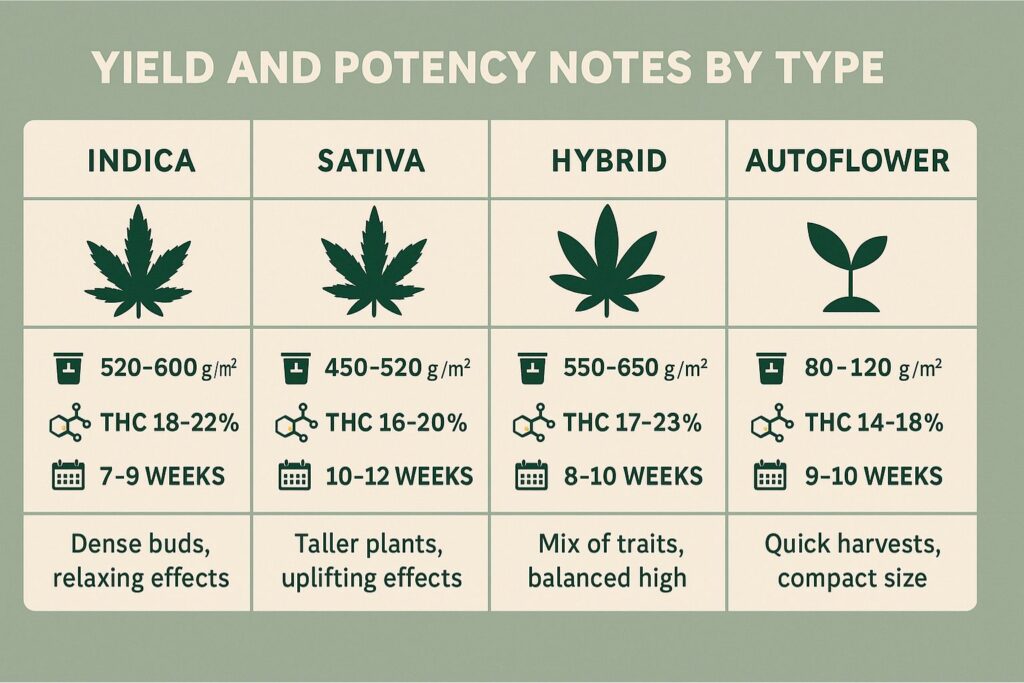
This isn’t a strain-specific review; it’s a Cannabis Strains Comparison by category to guide purchasing:
- Indica-leaning feminized seeds in coco averaged 520–600 g/m² with dense buds, short internodes, and calm evening effects. Terpene profile trends: earthy, hashy, and berry.
- Sativa-leaning feminized seeds in coco averaged 450–520 g/m² but stretched taller; I trellised earlier. Terpene profile leaned citrus, haze, and floral; dry/cure time a bit longer.
- Hybrid cannabis strains hit the sweet spot: 550–650 g/m², sturdy branching, and balanced effects. Terpene profile mixed fruit and gas; these were friendliest for new growers.
- Autoflower seeds harvested in 70–90 days seed to jar. In 2-gallon coco, 80–120 g per plant was normal; running four autos in a 4×4 kept jars full between photoperiods.
Across all types, well-calibrated lighting PPFD increased mass without sacrificing resin. When I pushed beyond 900 µmol/m²/s without CO₂ and proper temps, quality dipped; lesson learned.
How I Build a Nutrient Schedule You Can Trust
A nutrient schedule should be a framework, not a cage. I start with manufacturer baselines and then steer by EC and plant feedback:
- Veg target: 1.2–1.6 EC, pH 5.8–6.2 in coco/DWC; 6.2–6.6 in soil
- Early flower: 1.6–1.8 EC with calcium/magnesium support
- Peak weeks: 1.9–2.1 EC if leaves are praying and runoff EC stays within 0.2–0.3 of input
- Finish: taper to 1.2 EC the last 10 days while monitoring color fade
This flexible nutrient schedule let indica vs sativa plants in mixed runs stay happy without constant rescue. Hybrid cannabis strains tolerated the highest EC, while some pure sativas preferred 1.7 EC tops. If your lighting PPFD is high, watch potassium and magnesium; both support resin and the final terpene profile.
Indoor vs Outdoor Growing: What Changed in This Comparison
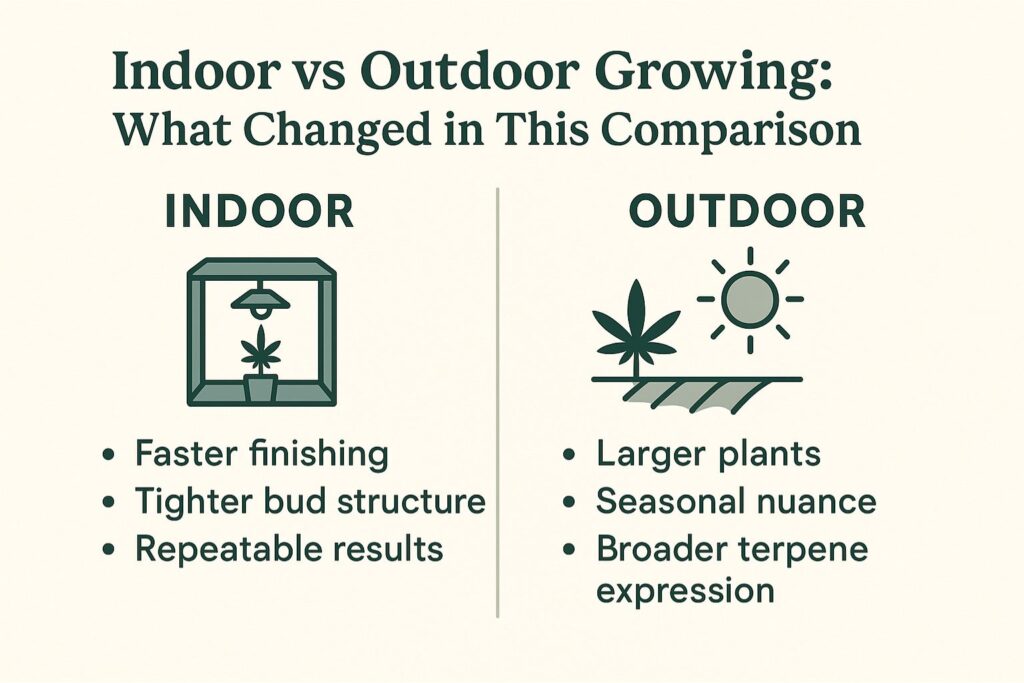
Indoor vs outdoor growing is less about philosophy and more about control. Indoors, I hit exact lighting PPFD targets, control VPD, and keep pests at bay with HEPA intake and sticky cards. Outdoors, sunlight is free and powerful, but rain timing and regional pressures decide your IPM plan.
For this Cannabis Strains Comparison:
- Indoor: Faster finishing, tighter bud structure, and repeatable results. Great for feminized seeds and hybrid cannabis strains where you want phenotype consistency.
- Outdoor: Larger plants with broader terpene profile expression and seasonal nuance. Autoflower seeds outdoors can finish before autumn rains, which mattered in my climate.
If you are choosing indoor vs outdoor growing for the first time, think about local mold pressure, privacy, and your ability to monitor plants daily.
Seed Selection Strategy: Feminized Seeds vs Autoflower Seeds
When new growers ask what to buy from seed banks, I use this checklist:
- Choose feminized seeds if you can commit to a light-tight space and want maximum yield potential. They simplify canopy management and phenotype selection.
- Choose autoflower seeds if you want a fast turnaround, limited veg management, or you’re running stealth outdoors. They fit tricky schedules.
- For indica vs sativa flavor and effect preferences, consider hybrid cannabis strains that blend both worlds. Balanced hybrids are forgiving during training and feeding.
Ordering from reputable seed banks protects your time. I’ve had mislabeled freebies in the past; they can skew a careful Cannabis Strains Comparison. Reputable seed banks also ship discreetly and provide germination support that complements any homegrown germination guide you follow.
Troubleshooting Notes from the Grow Log
- Light stress at high lighting PPFD shows up first at leaf serrations and top colas. Dim 5–10% and raise the fixture 5 cm; watch response in 48 hours.
- Calcium deficiency in coco during high transpiration mimics burn. Check runoff EC before adding more feed; adjust nutrient schedule rather than panic.
- Sativa clawing at the same EC that indicas love? Lower nitrogen and bump magnesium; the terpene profile will thank you.
- Autoflower seeds stalling after early LST means you bent too hard or too late. Keep it gentle before day 21.
- Soil vs hydro pH swings look different. In soil, correct slowly; in hydro, correct immediately and oxygenate.
Post-Harvest Practices That Preserve Terpenes
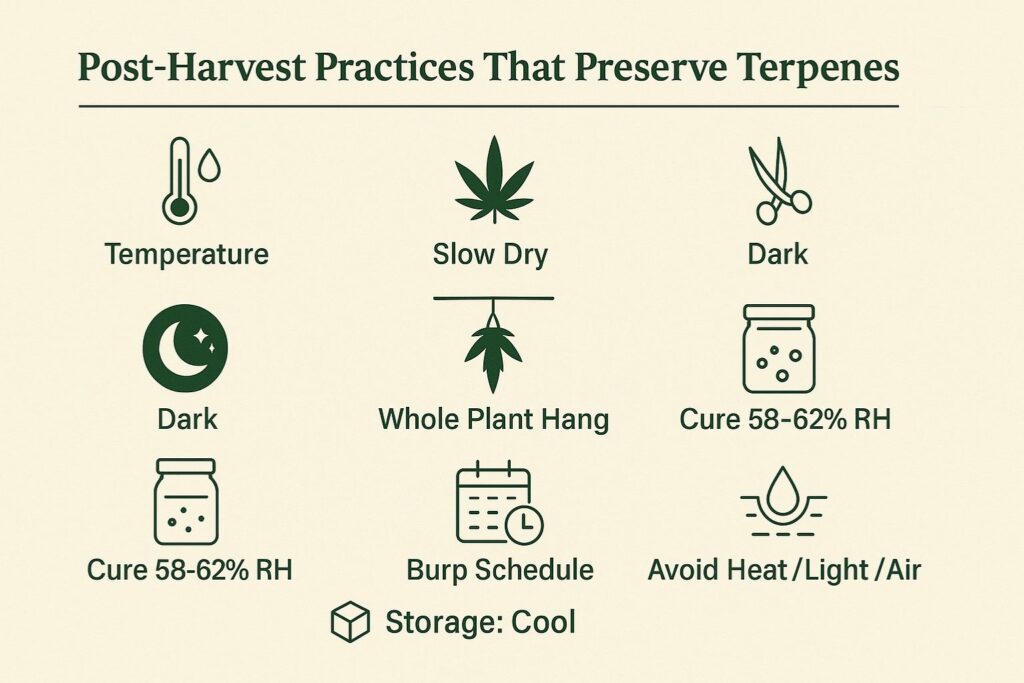
No Cannabis Strains Comparison is valid if the dry is sloppy. I stabilized the cure at 58–62% RH with calibrated mini hygrometers. Burps were short after week one—just enough to exchange air. When I tracked terpene profile intensity over time, jars kept at 19°C and 60% RH held aroma longer than warmer rooms. If you chase top-shelf flavor, respect the cure.
Buying Questions Growers Actually Ask
These natural-language queries show up in my messages every week, and they shaped the structure of this Cannabis Strains Comparison:
- What’s the easiest path for a first grower, feminized seeds or autoflower seeds?
- Which wins indoors, soil vs hydro, if I only have weekends to work?
- How do I set lighting PPFD without a meter?
- Can one nutrient schedule feed both indica vs sativa plants in the same tent?
- How do I pick a terpene profile that suits evenings without couch-lock?
- Is there a simple germination guide that works year-round?
- For small balconies, what’s better in indoor vs outdoor growing terms?
Short answers appear throughout this article and in the FAQ below.
Quick Buyer’s Guide: Matching Seeds to Your Space
- If your tent height is limited, avoid tall sativas; choose indica-leaning feminized seeds or compact hybrid cannabis strains.
- If time is tight, run autoflower seeds every 80 days for steady jars.
- If flavor is the goal, soil wins the soil vs hydro debate more often than not, especially when you cure well.
- If yield is the goal, coco with consistent lighting PPFD and a disciplined nutrient schedule pulls ahead.
- If you’re still unsure, start with a balanced hybrid; it smooths out indica vs sativa extremes and still delivers a rich terpene profile.
FAQ
What’s the simplest germination guide for success?
Keep seeds at 24–25°C with stable moisture, move to media when the taproot is 0.5–1 cm, and avoid over-watering. This germination guide works for feminized seeds and autoflower seeds equally well.
Which is better for a first indoor run, soil vs hydro?
Soil is more forgiving and fits a relaxed nutrient schedule, though coco can outperform if you enjoy precision. Start with soil, learn plant signals, then try hydro.
How high should I set lighting PPFD without a meter?
Begin at manufacturer percentages and watch leaf posture. Leaves praying gently suggest your lighting PPFD is close. Many growers borrow a meter for a weekend and log numbers at several heights.
Are hybrid cannabis strains really easier?
In my rooms, yes. They handle variable EC, shrug off training, and maintain a balanced terpene profile even when temps swing.
Should I choose feminized seeds or autoflower seeds for balconies?
Autoflower seeds are great outdoors where you can’t light-proof. Feminized seeds shine when you control the photoperiod.
Does indoor vs outdoor growing change terpene profile?
Yes. Outdoor sunlight and swings often broaden the terpene profile, while indoor control sharpens specific notes. Try one season of each to decide.
Can one nutrient schedule work across indica vs sativa plants?
Use a base plan and adjust nitrogen and magnesium by plant response. Hybrids tolerate the widest range.
Final Takeaways from This Cannabis Strains Comparison
If I had to summarize seasons of logs into a single decision tree, it would be this:
- Choose feminized seeds when consistency and yield matter most; choose autoflower seeds when schedule and stealth rule.
- Decide soil vs hydro by your temperament: patience vs precision.
- Calibrate lighting PPFD to the plant, not a chart, and tune your nutrient schedule to runoff data and posture.
- Blend indica vs sativa traits with hybrid cannabis strains unless you love the extremes.
- Let your terpene profile preferences guide you as much as THC percentages; aroma points you toward satisfaction.
Use this Cannabis Strains Comparison as a starting map, then write your own notes. Your garden will tell you what it wants if you watch and listen.
