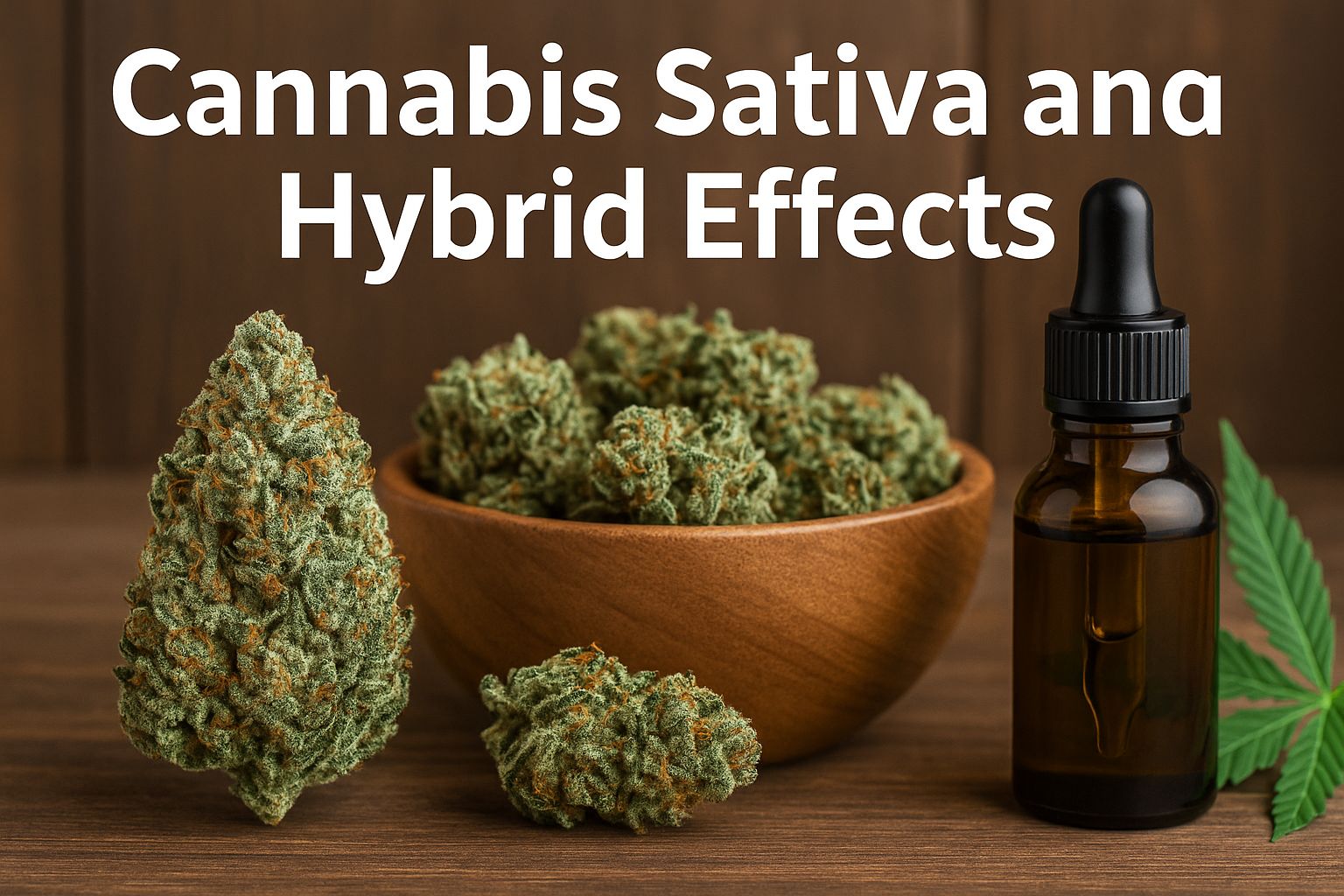
Why Cannabis Sativa And Hybrid Effects Matter To Me As A Grower
When I first started growing, I picked seeds based on name and hype. If the jar photo looked frosty and the THC number was high, I was sold. I did not really understand cannabis sativa and hybrid effects beyond “this one is strong” and “this one is stronger.”
After a few years of running very different sativa vs hybrid strains side by side, I realized I was missing the real power of growing my own. I could tailor the garden toward specific experiences: clear-headed daytime cannabis strains, easygoing evening hybrid strains, social weed, “get stuff done” weed, or “put the phone down and relax” weed.
That is when I got serious about studying cannabis sativa and hybrid effects from a grower’s angle. Instead of treating everything as just “good weed,” I started paying attention to:
- Sativa vs hybrid strains and how they grow
- How terpene profiles in sativa made certain jars perfect for daytime
- Which hybrids consistently produced a balanced hybrid high that felt versatile
- How environment, harvest timing, and curing changed the final feel of a strain
Now, every time I pop feminized sativa seeds or autoflower hybrid seeds, I already have a plan for where that plant will fit into my personal lineup.
Sativa Vs Hybrid Strains: What I Actually Notice In The Garden
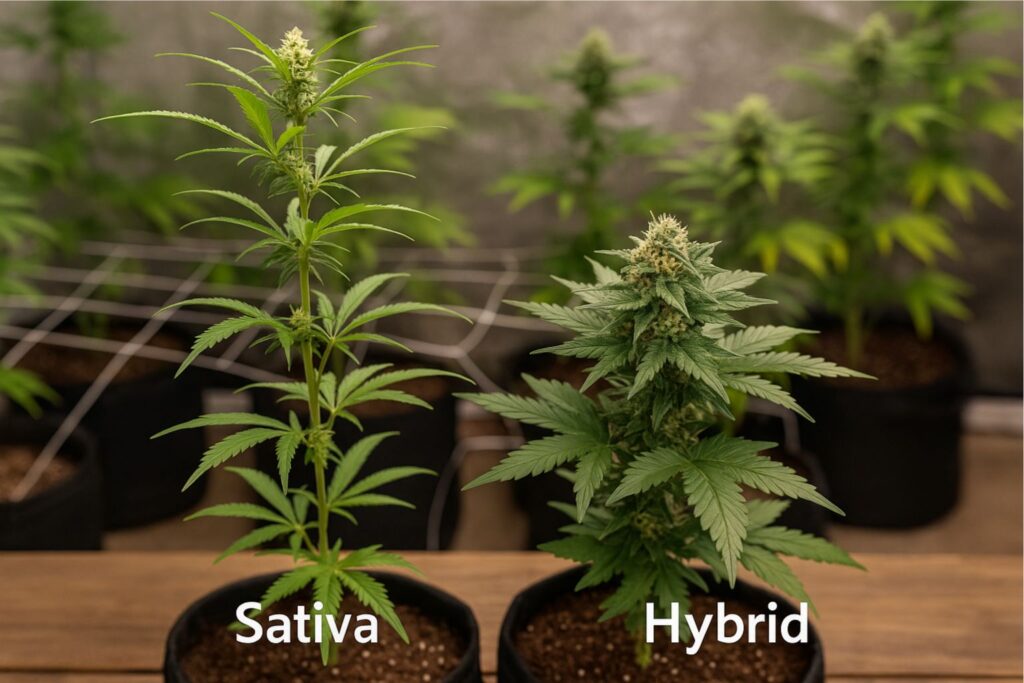
You can talk about sativa vs hybrid strains purely in terms of effects, but in the grow room they also behave differently. Understanding that helps me target cannabis sativa and hybrid effects more precisely.
In my tents, classic sativa vs hybrid strains usually look like this:
- Sativa-leaning plants stretch more, with longer internodes and narrower leaves.
- Hybrids vary, but most stay a bit shorter and bushier, with thicker stems.
- Sativa vs hybrid strains often differ in flowering time by one to three weeks.
If I want jars that give me uplifting sativa effects, I do not just pick a label that says “sativa.” I look for proven daytime cannabis strains with a track record of staying relatively clear in feedback from friends. At the same time, I pay attention to how the plant grows so I can plan my indoor sativa grow around the stretch and height.
On the hybrid side, I look for cultivars that tend to produce a balanced hybrid high. These are the plants I reach for on days when I do not want intensity in either direction. The best sativa vs hybrid strains pair I have run so far was a spicy, hazy sativa next to a dessert-style hybrid. Together they gave me two very different, very intentional options from the same harvest.
How Terpene Profiles In Sativa Shape The Experience
THC percentage gets all the attention, but I have learned that terpene profiles in sativa play a huge role in how a strain feels when I actually smoke or vape it. When people ask me why some sativas feel more upbeat while others feel more racy, I usually point to terpene profiles in sativa rather than just cannabinoids.
In my own jars, I see patterns like this:
- Citrus-forward terpene profiles in sativa often show up in what I consider my most classic uplifting sativa effects.
- Herbal and pine terpene profiles in sativa can feel more grounded and “clear,” still good for daytime cannabis strains.
- Very sharp, fuel-heavy terpene profiles in sativa sometimes feel more intense and best in smaller doses for me.
When I am planning an indoor sativa grow, I read breeder notes and grower reports looking for information about terpene profiles in sativa cultivars I am considering. Even if descriptions are a bit poetic, consistent mentions of lemon, lime, or berry vs gas and spice tell me a lot about where a plant might land on the uplifting sativa effects spectrum.
From a cultivation standpoint, protecting terpene profiles in sativa means:
- Keeping canopy temperatures under control in late flower
- Drying and curing slowly instead of blasting everything dry in four days
- Avoiding overripe harvests that dull bright aromas and shift cannabis sativa and hybrid effects toward heavier territory
Daytime Cannabis Strains: Growing For Uplifting Sativa Effects
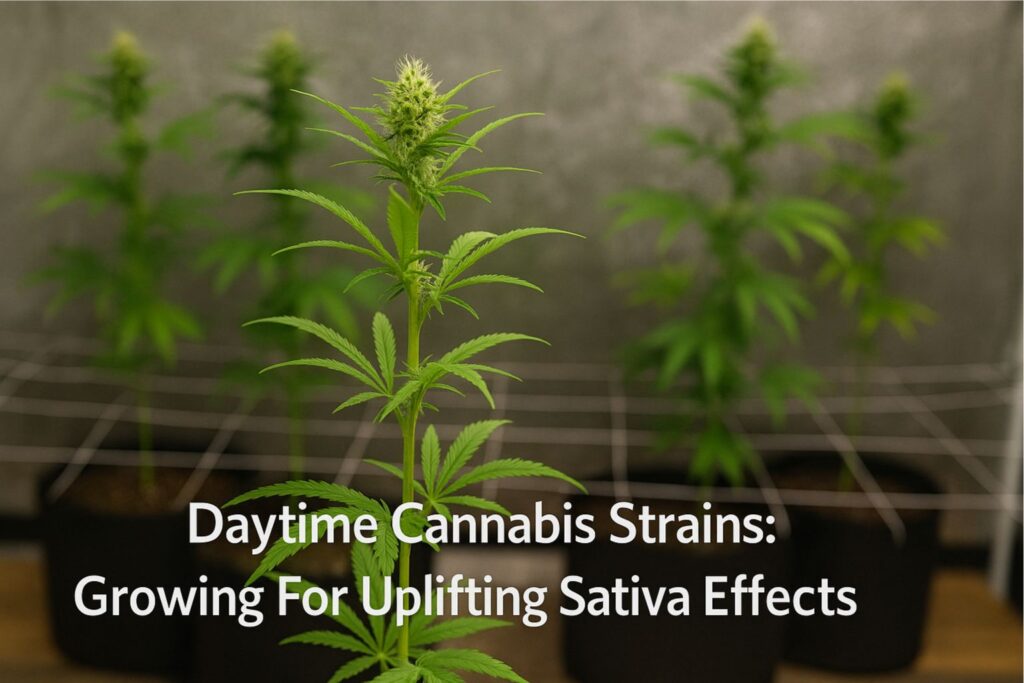
For my daytime cannabis strains, I look for cuts and seeds that tend to deliver clean, uplifting sativa effects without making me feel scattered. Over time I have built a short list of “workday” cultivars that consistently behave that way.
When I grow daytime cannabis strains, I lean toward:
- Sativa vs hybrid strains that are clearly on the sativa-dominant side
- Genetics with citrus, tropical fruit, or light floral terpene profiles in sativa
- Medium potency on paper, because the uplifting sativa effects often feel stronger than the THC number suggests
On the cultivation side, the indoor sativa grow needs to be planned to keep plants happy without letting them take over the room. My approach for daytime cannabis strains in the tent:
- Top early and train horizontally to build a flat canopy.
- Keep PPFD in the 700–900 µmol/m²/s range during peak flower.
- Avoid heavy nitrogen late in flower, which can muddle the uplift.
When I nail environment and harvest timing, cannabis sativa and hybrid effects line up with my goals: daytime cannabis strains feel light and productive, and the uplifting sativa effects keep me moving without pinning me down.
Evening Hybrid Strains: Growing For Wind-Down Sessions
Just like I have jars dedicated to daytime use, I also grow for evenings. That is where evening hybrid strains come in. The best evening hybrid strains in my stash deliver a balanced hybrid high that helps me put the day down without knocking me out on the spot.
When I am hunting or selecting evening hybrid strains, I look for:
- Hybrids that reliably give a balanced hybrid high rather than extreme sedation
- Dessert, cookie, or creamy terpene profiles that feel comforting in the evening
- Breeder notes or personal experience that point toward relaxing but not overwhelming effects
Growing evening hybrid strains is usually easier on height than an indoor sativa grow. Many of these cultivars stay shorter and stack fairly dense colas. My job as a grower is to keep them healthy, manage humidity to prevent mold, and time harvest so that the balanced hybrid high stays, well, balanced.
If I let evening hybrid strains go too far into amber trichomes, the balanced hybrid high can tilt toward heavy couch time faster than I want. If I chop too early, they can feel more like energizing sativa vs hybrid strains, which is not what I am after late at night.
Seeds And Genetics: Feminized Sativa Seeds And Autoflower Hybrid Seeds
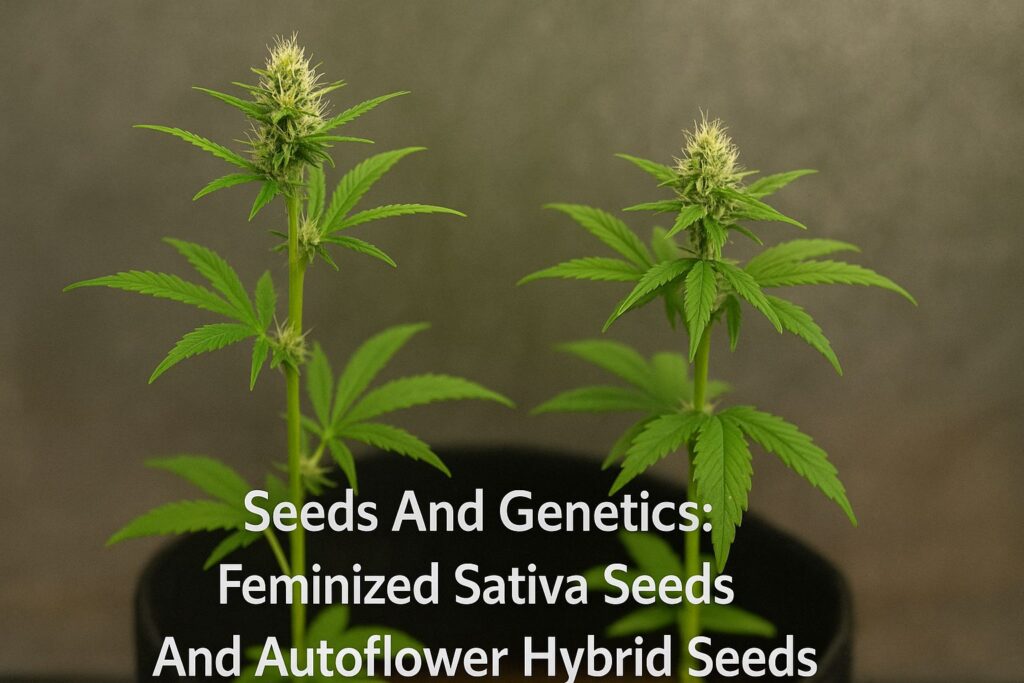
The real foundation of cannabis sativa and hybrid effects is genetics. No amount of environment tuning can turn a sleepy indica-leaning plant into a bright daytime sativa. That is why choosing cannabis genetics is one of the most important decisions I make before each run.
For my sativa slots, I usually reach for feminized sativa seeds. Running feminized sativa seeds saves space, because every plant is a potential keeper. I can focus on:
- Phenotypes with the most reliable uplifting sativa effects
- Plants that handle topping and training gracefully in an indoor sativa grow
- Individuals with terpene profiles in sativa that I actually enjoy smelling and tasting
On the hybrid side, I like experimenting with autoflower hybrid seeds as well as photoperiods. Autoflower hybrid seeds give me a quick way to test new balanced hybrid high contenders without committing months of veg time.
When I choose autoflower hybrid seeds, I pay attention to:
- Reported structure (compact vs tall)
- Typical evening hybrid strains vs daytime hybrid effects
- Whether growers mention a balanced hybrid high that does not lean too heavy one way or another
Using both feminized sativa seeds and autoflower hybrid seeds across the year lets me keep jars full of very different cannabis sativa and hybrid effects without needing a massive space.
Environment And Indoor Sativa Grow Considerations
Running an indoor sativa grow is a little different than running a room full of squat indica-leaning hybrids. Sativas can stretch hard, and if you do not plan ahead, light distance, airflow, and even nutrient needs can get out of hand.
Things I do differently in an indoor sativa grow:
- Flip to flower earlier, since sativa vs hybrid strains can double or even triple in height.
- Use more horizontal training and SCROG nets to keep tops even.
- Watch VPD carefully, keeping veg a bit more humid and flower gradually drier to protect terpenes and avoid mold.
If my goal is to draw out the best cannabis sativa and hybrid effects in these plants, I avoid stress that can push them to herm or stunt. An indoor sativa grow that is constantly dealing with light burn, swinging temperatures, or extreme EC will not show off uplifting sativa effects as cleanly.
On the hybrid side, I can usually push light and nutrients a bit harder without as much chaos. That is one of the practical differences I see when I compare how I manage an indoor sativa grow versus a hybrid-heavy room.
Training, Flowering, And Harvest For Targeted Effects
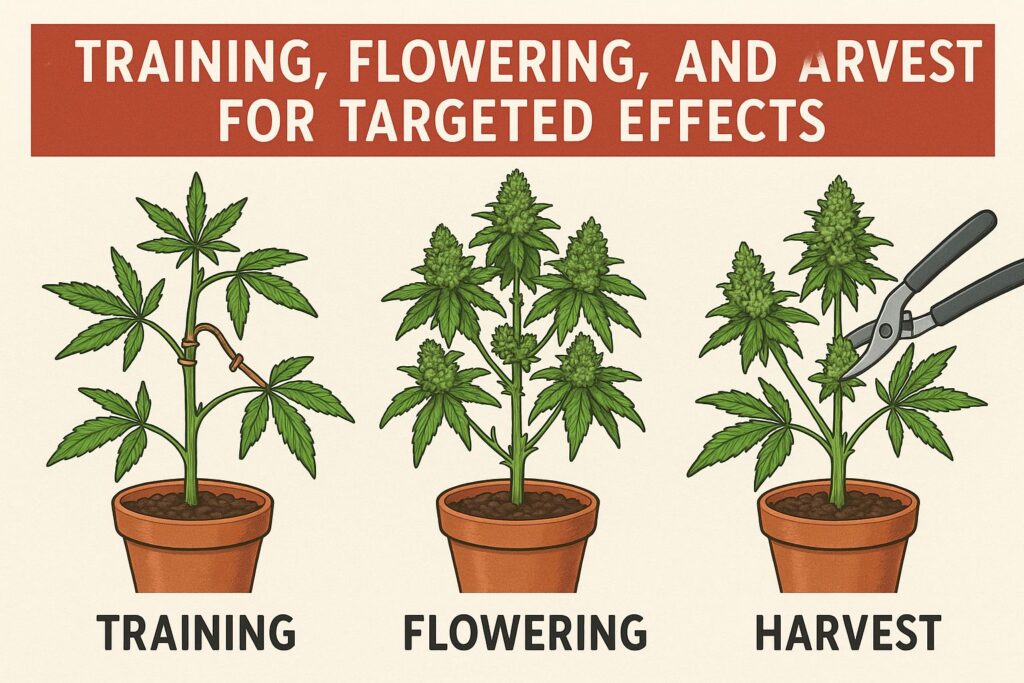
Training and harvest timing are big levers in how cannabis sativa and hybrid effects play out. I cannot rewrite a plant’s genetic script, but I can nudge it in certain directions.
For sativa vs hybrid strains that I want to keep on the brighter side:
- I harvest when trichomes are mostly cloudy with just a small percentage of amber.
- I avoid letting daytime cannabis strains sit too long past their window, which can mute uplifting sativa effects.
- I keep drying temps moderate and curing slow to preserve terpene profiles in sativa jars.
For evening hybrid strains where I want a slightly deeper, more relaxing balanced hybrid high:
- I let them go a little further into amber, while still avoiding over-ripeness.
- I accept a small increase in body heaviness as long as the headspace stays clear enough for conversation.
- I still handle post-harvest gently, since rough drying can flatten hybrid character quickly.
Over many cycles, I have learned that small changes in harvest day can noticeably shift cannabis sativa and hybrid effects. Every time I find a sweet spot, I write it down for that particular cut or line.
Choosing Cannabis Genetics Based On Your Real-Life Needs
Choosing cannabis genetics is where everything comes together. Instead of randomly grabbing “hot” seeds, I plan my buys around gaps in my current lineup.
Questions I ask when choosing cannabis genetics:
- Do I need more daytime cannabis strains with strong uplifting sativa effects?
- Am I low on evening hybrid strains that give a cozy balanced hybrid high?
- Do I have enough low-stress cultivars for friends who are sensitive to stronger weed?
- Do I want to try more feminized sativa seeds or see what autoflower hybrid seeds can do in my off-cycle tent?
When choosing cannabis genetics, I also think about the realities of my space. If my ceilings are low and my light is intense, I have to be more selective about which sativa vs hybrid strains I bring in for the next indoor sativa grow. If I am running more modest gear, I might lean slightly more hybrid to keep height under control.
I try to keep a mix:
- One or two proven daytime cannabis strains
- One or two reliable evening hybrid strains
- A couple of experimental sativa vs hybrid strains in small numbers to test
This variety means I can always pull a jar that matches how I want to feel, whether I am heading into a busy afternoon or winding down for the night.
FAQ: Cannabis Sativa And Hybrid Effects
How big is the difference between sativa vs hybrid strains?
From my experience, the difference between sativa vs hybrid strains is noticeable but not absolute. Many hybrids behave like sativas in terms of uplifting sativa effects, and some sativas can feel surprisingly steady. Growing and curing them well, and choosing cannabis genetics carefully, often matters as much as the label on the pack.
Are feminized sativa seeds harder to grow than hybrids?
Feminized sativa seeds are not necessarily harder, but they demand more planning. They stretch more, flower longer, and can require more careful indoor sativa grow management. Many hybrid lines are a bit more forgiving in small tents, but the payoff from a well-run sativa is worth the extra work if you value classic cannabis sativa and hybrid effects tilted toward the uplifted side.
Are autoflower hybrid seeds good for testing effects?
Yes. Autoflower hybrid seeds are one of my favorite ways to explore new balanced hybrid high options without committing long veg time. They are great for filling gaps between bigger runs or adding variety. Just remember they move fast through their life cycle, so you have less time to correct mistakes—but when you hit a good one, it is a quick route to fresh evening hybrid strains or versatile daytime jars.
For me, growing is no longer just about yield or looks. It is about building a personal menu of cannabis sativa and hybrid effects that match real life. By understanding sativa vs hybrid strains in the garden, paying attention to terpene profiles in sativa and hybrid jars, choosing cannabis genetics with intention, and using tools like feminized sativa seeds and autoflower hybrid seeds wisely, I can open a jar and know what kind of session I am likely to step into—before I ever light up.
