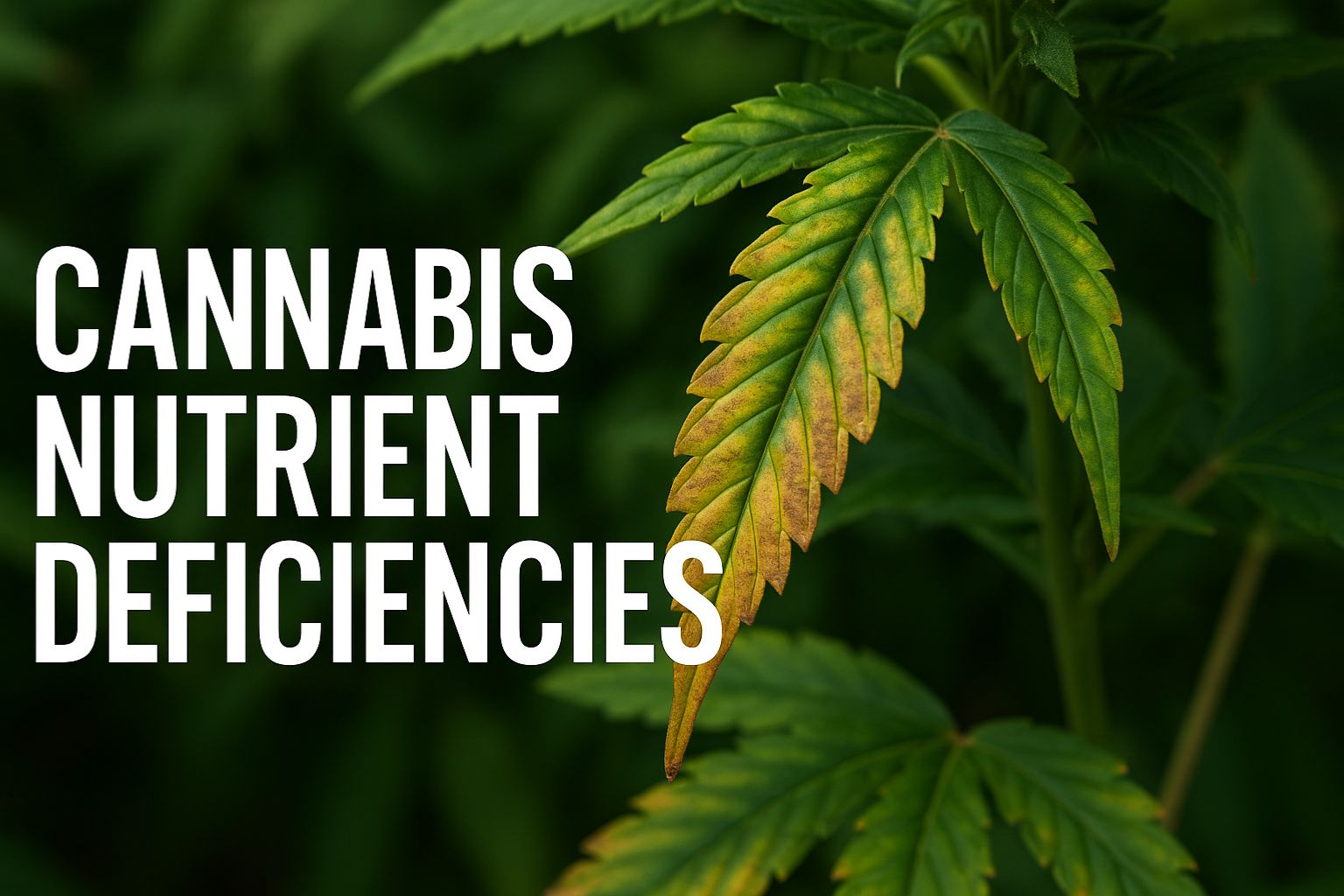
When I first started growing marijuana indoors, I thought good lighting and decent genetics were all I needed. Within a few runs, I learned the hard way that cannabis nutrient deficiencies can make or break a harvest. From fixing yellow cannabis leaves at week three of flower to tracking down subtle trace-element issues in a hydro setup, learning to spot and correct cannabis nutrient deficiencies has been one of the most valuable skills I’ve built as a grower.
In this cannabis nutrient deficiency guide, I’m sharing the exact process I use today to keep my weed healthy from seedling to harvest while preventing cannabis nutrient deficiencies before they spiral. I’ll walk through identifying cannabis leaf symptoms, dialing in a balanced NPK for cannabis across different media, and building an organic cannabis feeding schedule that keeps problems rare instead of constant. My goal is to give you a practical, experience-based framework you can actually use in your own room or garden.
Why Nutrient Deficiencies Matter So Much
Modern cannabis is pushed hard. Strong lighting, tight spaces, and heavy feeding schedules mean plants are always on the edge of stress. Underfeeding cuts yields, but overfeeding can be even worse. I have lost entire runs to an aggressive nutrient line and poor monitoring.
Nutrient problems do more than change leaf color. They slow photosynthesis, weaken stems, reduce terpene expression, and make buds airy instead of dense. In extreme cases they cause nutrient lockout, where a plant is sitting in food but cannot actually absorb it. That is why I focus heavily on preventing cannabis nutrient stress instead of just reacting to problems later.
Over the years, my harvests became more consistent once I stopped guessing and started treating this like a system. Today, troubleshooting nutrient issues feels less like panic and more like following a clear checklist.
How I Approach Identifying Cannabis Leaf Symptoms

When I am identifying cannabis leaf symptoms, I never jump straight to “this is a magnesium issue” or “that is nitrogen.” I start with context.
Step 1 – Look at the Whole Plant and the Whole Room
I stand back and check:
- Which leaves are affected first (old vs new).
- Whether symptoms are on one plant or across the canopy.
- Light intensity in that area.
- Airflow and temperature patterns.
Many times, what looks like cannabis calcium magnesium deficiency is actually light stress from a hot spot or a fan blasting one side of the plant.
I also check my environment logs. If temperature or humidity has been swinging, that alone can trigger cannabis nutrient burn vs deficiency confusion. A plant stressed by high heat or low humidity drinks more water, pulling more salts, and can show burnt tips even though the formula itself is reasonable.
Step 2 – Check pH, EC, and Runoff
Before I assume any specific nutrient is missing, I test:
- Input pH and EC/PPM.
- Runoff pH and EC for container grows.
- Reservoir pH and EC for hydro or coco.
If runoff EC is much higher than what I pour in, I know I need cannabis nutrient lockout solutions rather than just adding more feed. In those cases, I start planning a gentle flush schedule for cannabis plants in that zone to get them back to a baseline.
I always keep the ideal EC for flowering cannabis within a band that works for my genetics and medium. In coco, that usually means staying around a stable range rather than chasing numbers daily. Keeping EC consistent is one of the main ways I am preventing cannabis nutrient stress over the long term.
Common Nutrient Issues I See in Cannabis
Every grower’s environment and water are different, but a handful of issues keep showing up in my room and in other growers’ photos.
Nitrogen – The Classic Early Veg Problem
In early veg, especially in soil, the most common thing I see is a mild nitrogen deficiency:
- Lower leaves fade from green to pale light green.
- The yellowing starts at the tips and moves inward.
- Stems can become slightly reddish.
A lot of growers overreact here. Instead of dumping extra food, I look at my organic cannabis feeding schedule and ask if I simply let the soil run too lean. A light top-dress or slightly stronger vegetative mix usually fixes this without causing cannabis nutrient burn vs deficiency confusion down the road.
Phosphorus and Potassium – Bud Development Issues
In early and mid-flower, phosphorus and potassium shape bud density and resilience.
When they are off, I have seen:
- Slow bud development.
- Dull, dark green foliage and stiff leaves.
- Purpling on stems and sometimes leaf petioles in true deficiency.
Again, I do not immediately assume a lack of nutrients. If EC is already high, the right move might be exploring cannabis nutrient lockout solutions instead of throwing more P and K at the problem. This is where sticking close to a balanced NPK for cannabis does most of the heavy lifting.
Cannabis Calcium Magnesium Deficiency – The One I See Most
Cannabis calcium magnesium deficiency is the number one issue I have repeatedly faced, especially under intense LED lighting and in coco-based media.
The symptoms I look for are:
- Rust-colored spots on mid to upper leaves (calcium).
- Interveinal yellowing on older leaves (magnesium).
- Crispy edges that look almost burnt.
Whenever I suspect cannabis calcium magnesium deficiency, I still follow the same basic process:
- Confirm pH is within range for the medium.
- Check EC – if it is too high, lockout might be causing the symptoms.
- Only then add a cal-mag supplement or adjust my organic cannabis feeding schedule to include more calcium sources.
After making adjustments, I do not expect instant recovery on damaged leaves. Instead, I watch new growth. If new leaves come in clean and green, my cannabis nutrient deficiency guide did its job.
Micronutrient Imbalances
True micronutrient shortages are rare when using modern nutrient lines, but they can still happen:
- Zinc, iron, and manganese issues usually show up as yellowing in the newest growth.
- Leaves can become twisted or distorted, especially at the top of the plant.
In most of these cases, the real cure is still addressing pH and overall salinity, then letting a balanced NPK for cannabis plus trace elements do its work. I rarely chase individual micros unless I have ruled out every other variable.
Differentiating Cannabis Nutrient Burn vs Deficiency
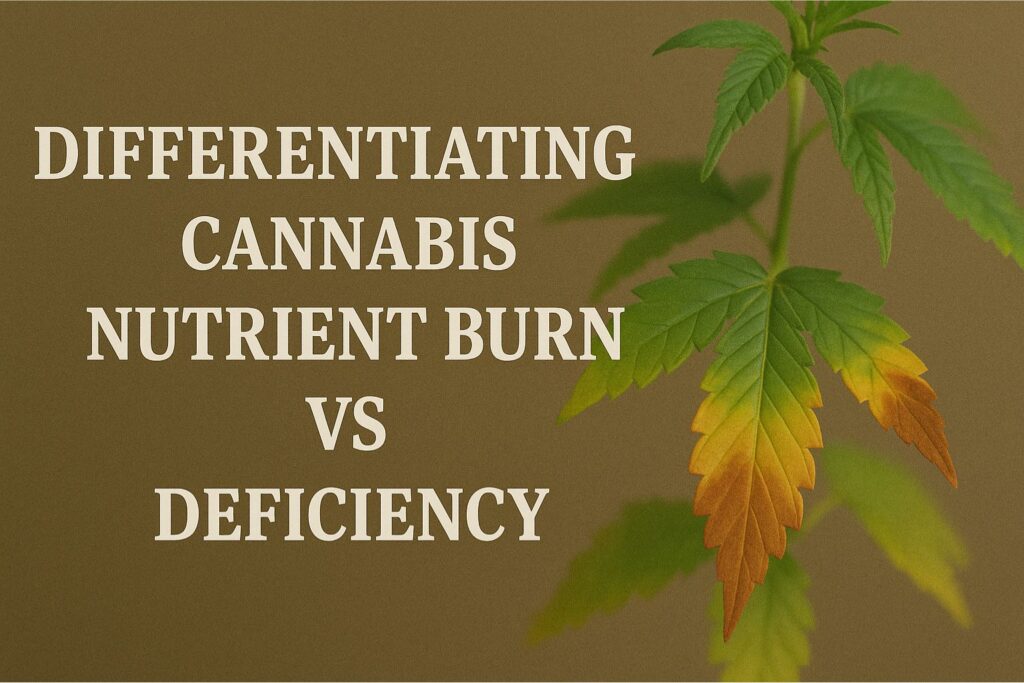
One of the biggest mistakes I made as a newer grower was misreading Cannabis Nutrient Deficiencies and nutrient burn as the same problem.
Burn usually shows up as:
- Crispy, brown tips on leaves across the plant.
- Dark, clawed leaves that feel thick.
- High runoff EC compared to input.
Deficiencies, on the other hand, often begin as soft yellowing or specific spotting patterns like those in cannabis calcium magnesium deficiency.
When in doubt, I lower feed strength slightly and watch. If the problem worsens across the canopy, it is more likely a shortage; if it stabilizes or improves as salts clear, burn and lockout were the culprits. This approach has given me practical cannabis nutrient lockout solutions without chasing bottled additives.
My Organic Cannabis Feeding Schedule Basics
Over time, I have shifted more of my weed runs toward organic and living-soil-style grows.
An organic cannabis feeding schedule looks very different from bottle feeding, but the principles are similar:
- Start with a soil that has enough nutrition for the first few weeks.
- Add slow-release amendments (compost, dry blends) before flip.
- Use light liquid supplements during heavy flower instead of major spikes.
When I design an organic cannabis feeding schedule, I still think in terms of a balanced NPK for cannabis over the full cycle rather than week-by-week miracles. I also keep an eye on the ideal EC for flowering cannabis, even in semi-organic setups, by measuring runoff as a reference. It is not perfect, but it gives me trends that help with preventing cannabis nutrient stress.
Ideal EC for Flowering Cannabis in Different Media

The ideal EC for flowering cannabis depends on:
- Medium (soil, coco, hydro).
- Cultivar genetics (heavy feeders vs light feeders).
- Lighting intensity and CO2 availability.
In coco or hydro, I keep the ideal EC for flowering cannabis in a moderate range instead of the high values some charts recommend. With strong modern LEDs, plants can still uptake plenty of nutrients at slightly lower EC, and stress is lower. I have found that slightly underfeeding is easier to correct than the fallout from overfeeding and needing complex cannabis nutrient lockout solutions later.
Flush Schedule for Cannabis Plants – When and Why I Flush
Flushing is one of those topics that starts debates, but I can only share what has worked in my room.
I maintain a simple flush schedule for cannabis plants:
- In coco or hydro, I do small corrective flushes whenever runoff EC climbs far above input.
- At the end of flower, I reduce nutrient strength gradually rather than a single harsh flush.
This flush schedule for cannabis plants keeps flavors clean and avoids harsh smoke without starving plants too early. It also helps with preventing cannabis nutrient stress by keeping salt buildup in check throughout the cycle.
In organic soil, I almost never do a traditional flush because the system works differently. Instead, I taper off high-nitrogen inputs and let the soil finish out on what is already available.
Preventing Cannabis Nutrient Stress From Day One

Fixing yellow cannabis leaves over and over wastes time. My aim is preventing cannabis nutrient stress before it ever shows up.
Here is what that looks like in practice:
- Start from quality genetics so plants are vigorous from the beginning.
- Germinate seeds properly and avoid overwatering seedlings.
- Match container size to plant size to avoid staying in soggy media.
- Keep environmental ranges within reasonable targets for VPD.
By following these steps, I avoid many of the problems that send growers racing back to their cannabis nutrient deficiency guide. Prevention, not correction, is where the big yield improvements come from.
I also treat my room as an evolving experiment. If I notice that one cultivar seems prone to cannabis calcium magnesium deficiency, I note that in my log. Next round, I adjust my organic cannabis feeding schedule and the way I handle that specific line. Over time, this kind of record-keeping is a major way of preventing cannabis nutrient stress across multiple runs.
How Seeds, Genetics, and Grow Style Tie Into Nutrient Health
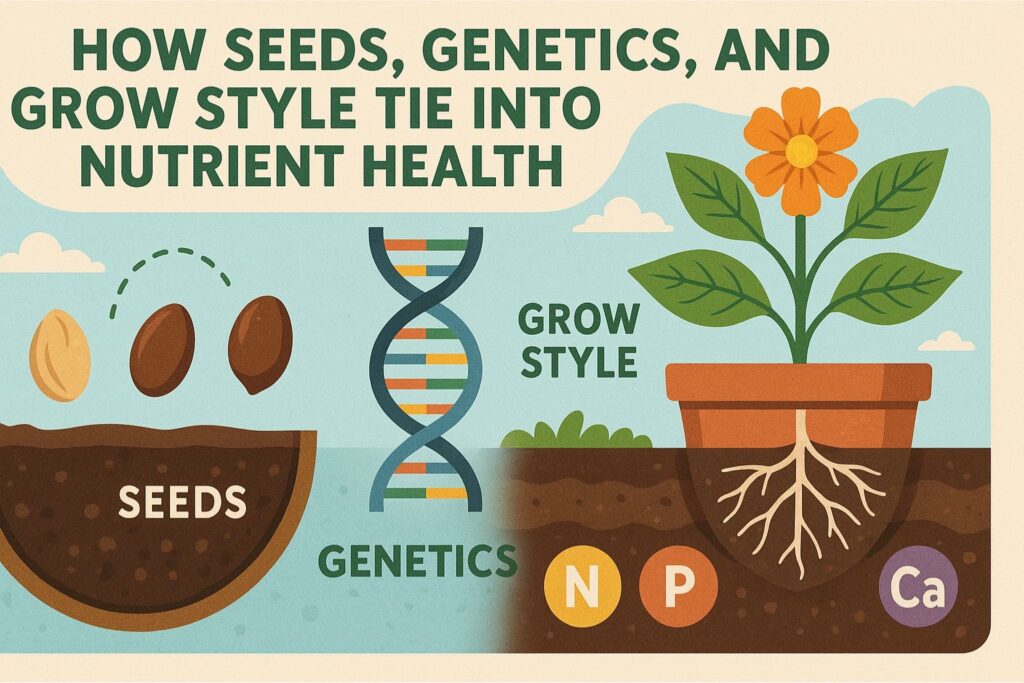
Nutrient management is not just about bottles and charts. Your seed choices, grow style, and medium shape how your plants use food.
- Feminized photoperiod varieties give me more consistency in how they feed and respond to training.
- Autoflowering lines tend to be more sensitive to overfeeding early, especially if I push them too hard before they build root mass.
- Indica-leaning hybrids often tolerate denser feeds, while some narrow-leaf, sativa-leaning lines prefer lighter EC and more gradual ramping.
When I order new genetics from a reputable supplier, I plan ahead.
I think about:
- Whether they will go into organic soil, coco, or a recirculating system.
- How strong my lighting is and what PPFD levels I want to run.
- How early I will start training and topping, which also affects nutrient demands.
All of that planning makes my cannabis nutrient deficiency guide something I use as backup, not as a constant crutch.
Step-By-Step Checklist I Use to Fix Yellow Cannabis Leaves
When I am fixing yellow cannabis leaves, especially on plants already in early flower, I run the same checklist every time:
- Confirm environment
- Check temperature and humidity throughout the day.
- Make sure there are no drastic swings between lights on and off.
- Adjust fans if any plant is being blasted directly.
- Verify pH and EC
- Measure what I am feeding.
- Capture runoff or reservoir readings.
- Compare against my target and ideal EC for flowering cannabis.
- Decide if it is burn, deficiency, or lockout
- Look at tip burn and leaf posture for cannabis nutrient burn vs deficiency clues.
- If EC is high, I lean toward salt buildup and plan cannabis nutrient lockout solutions.
- If EC is low and leaves are pale without burnt tips, I consider a mild bump in feed.
- Adjust the feed or flush
- Follow my established flush schedule for cannabis plants if salts are the issue.
- Or slightly increase nutrition, paying attention to a balanced NPK for cannabis.
- Monitor new growth
- Use fresh leaves, not damaged ones, as the indicator of whether my fix worked.
- Keep notes so I can refine my approach on the next run.
This process keeps me grounded and reduces guesswork. Even when things go wrong, I am not reacting blindly.
FAQ – Practical Answers From My Grow Room
How do I start identifying cannabis leaf symptoms as a new grower?
When you are just starting, focus on patterns. Identifying cannabis leaf symptoms becomes easier when you note where issues begin (old vs new leaves), how fast they spread, and what changed recently in your room. Compare your observations with a trustworthy cannabis nutrient deficiency guide and adjust one variable at a time instead of changing everything at once.
What is the best way to avoid cannabis calcium magnesium deficiency under LEDs?
Under strong LED fixtures, plants often demand more magnesium and calcium. I prevent cannabis calcium magnesium deficiency by:
- Making sure pH is in the ideal range for my medium.
- Keeping EC moderate instead of excessive.
- Including a cal-mag source early in veg, especially in coco.
Combined with a steady, organic cannabis feeding schedule or a well-designed mineral program, this drastically cuts down on cal-mag related problems.
How do I know if I have nutrient burn or a shortage?
The quickest way to separate cannabis nutrient burn vs deficiency is to look at tip condition and EC. Burn often includes crispy tips and high runoff EC. A shortage looks more like general fading without crispy tips, often at lower EC. If you are unsure, gently lower feed strength and track how new growth responds instead of making drastic changes.
Do I need to flush my weed plants at the end of flower?
I base this on medium and feeding style. In coco or hydro, a planned flush schedule for cannabis plants is helpful to keep flavors clean, but I still avoid extreme, sudden changes. In richer organic soil, I usually just taper off strong inputs. The goal is to avoid shocking the plant while still letting it consume what is stored in the tissues naturally.
Can I follow one feeding chart for all strains?
I use feeding charts as a starting point, not a rulebook. Different cultivars, even from the same seed pack, can feed differently. That is why preventing cannabis nutrient stress always comes back to observation. I adjust my balanced NPK for cannabis by watching how each cultivar responds rather than assuming every chart is perfect out of the box.
Final Thoughts
After years of running both small personal projects and more dialed-in rooms, I have learned that consistency matters more than perfection. This cannabis nutrient deficiency guide is not about chasing magic bottles; it is about building a repeatable process for identifying cannabis leaf symptoms, acting thoughtfully, and preventing cannabis nutrient stress round after round.
If you approach every run as an opportunity to refine your organic cannabis feeding schedule, dial in the ideal EC for flowering cannabis, and understand cannabis nutrient burn vs deficiency more clearly, you will find that each harvest gets a little better. The plants reward steady, patient growers, and nutrient management is one of the most powerful ways to earn that reward.
