Cannabis Cultivation and Supercropping: A Comprehensive Guide
Introduction
Cannabis cultivation has evolved significantly over the years, with modern techniques ensuring higher yields, better potency, and more efficient growth processes. Among these techniques, supercropping has gained popularity for its ability to enhance plant productivity. This comprehensive guide delves into the intricacies of cannabis cultivation and the specific technique of supercropping, providing detailed insights for both novice and experienced growers.
Cannabis Cultivation Basics
Understanding Cannabis Plant Types
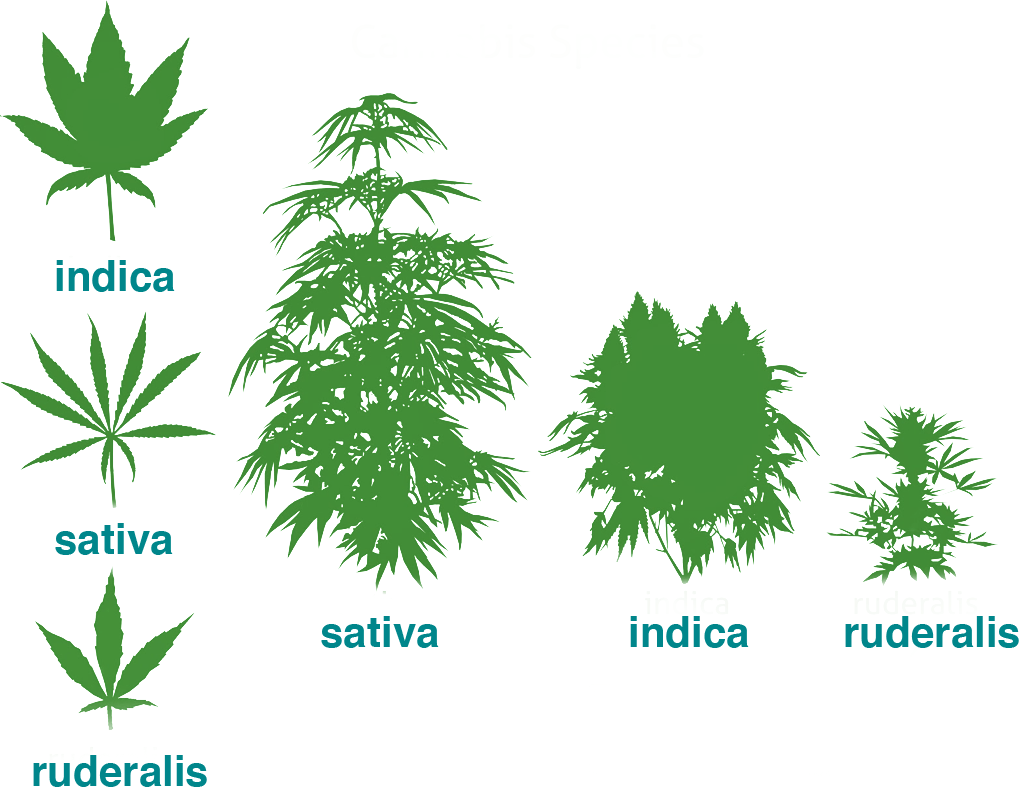
Cannabis plants are generally classified into three primary species: Cannabis sativa, Cannabis indica, and Cannabis ruderalis. Each species has distinct characteristics:
- Cannabis Sativa: Known for its tall and thin structure, sativa plants thrive in warm climates and have longer flowering periods. They are often associated with uplifting and energetic effects.
- Cannabis Indica: These plants are shorter and bushier, making them suitable for indoor cultivation. Indicas are known for their relaxing and sedative effects.
- Cannabis Ruderalis: Native to harsher climates, ruderalis plants are smaller and have a shorter life cycle. They are often used in breeding autoflowering strains due to their ability to flower based on age rather than light cycles.
Growing Conditions for Cannabis Cultivation
1. Climate and Environment
Temperature
Cannabis plants thrive within a specific temperature range that varies slightly between the vegetative and flowering stages. Here’s a detailed look at the temperature requirements:
- Vegetative Stage: Ideal temperatures range between 70-85°F (20-30°C) during the day. Night temperatures can drop slightly but should remain above 60°F (15°C).
- Flowering Stage: During this stage, slightly cooler temperatures are preferable. Aim for 65-80°F (18-26°C) during the day. Night temperatures should not fall below 55°F (13°C).
Temperature fluctuations outside these ranges can stress the plants, affecting growth, yield, and potency. Using fans, air conditioning, or heaters can help maintain optimal temperatures.
Humidity
Humidity levels are crucial for cannabis growth and should be adjusted according to the plant’s life stage:
- Seedling Stage: High humidity levels (65-70%) are essential to keep the young plants hydrated and promote root development.
- Vegetative Stage: Reduce humidity to 40-60% to encourage transpiration and nutrient uptake.
- Flowering Stage: Lower humidity to 40-50% to prevent mold and mildew on the developing buds. Proper airflow is essential to keep the environment dry and healthy.
Humidifiers, dehumidifiers, and hygrometers can help maintain and monitor the appropriate humidity levels.
Light
Light is one of the most critical factors in cannabis cultivation, influencing photosynthesis, growth rates, and bud development. Here’s what you need to know about lighting:
- Types of Light:
- Natural Sunlight: Ideal for outdoor cultivation, providing full-spectrum light essential for plant growth.
- High-Intensity Discharge (HID) Lights: Includes Metal Halide (MH) for vegetative growth and High-Pressure Sodium (HPS) for flowering.
- Light Emitting Diodes (LED): Energy-efficient and customizable, LEDs can provide full-spectrum light for all growth stages.
- Fluorescent Lights: Suitable for seedlings and clones due to their low intensity.
- Light Cycles:
- Vegetative Stage: Provide 18-24 hours of light per day to promote rapid growth.
- Flowering Stage: To encourage blossoming, alternate between 12 hours of unbroken darkness and 12 hours of light.
Light intensity and distance from the plant canopy should be adjusted to avoid light burn or insufficient light exposure.
2. Soil and Medium
Soil
Soil is the most traditional and straightforward medium for cannabis cultivation. Here are key considerations:
- Composition: A high-quality cannabis soil mix should include:
- Organic Matter: Compost, worm castings, and peat moss for nutrient availability.
- Aeration: Perlite, vermiculite, or pumice to ensure good drainage and oxygen access to roots.
- pH Level: Maintain a pH range of 6.0-7.0 for optimal nutrient absorption. Soil pH testers can help monitor and adjust pH levels as needed.
- Preparation: Pre-mixed cannabis soils are available, or you can create your own by combining the above components. Regularly amend the soil with organic fertilizers and compost to maintain fertility.
Hydroponics
Hydroponic systems grow plants in a soilless medium, using nutrient-rich water to deliver essential nutrients directly to the roots. Common hydroponic systems include:
- Deep Water Culture (DWC): Roots are suspended in oxygenated nutrient solutions, promoting rapid growth.
- Nutrient Film Technique (NFT): A thin film of nutrient solution flows over the roots, providing constant nutrient access.
- Drip Systems: Nutrient solution is dripped onto the base of each plant, ensuring consistent feeding.
Hydroponic systems require careful monitoring of nutrient concentrations (EC/PPM) and pH levels (5.5-6.5) to avoid deficiencies or toxicities.
Coco coir, made from coconut husks, is a popular alternative to soil. It has superior aeration and water retention qualities. Key points include:
- Buffering: Pre-buffer coco coir to stabilize pH and remove excess salts.
- Mixing: Often combined with perlite for improved drainage and aeration.
- Feeding: Coco coir requires regular feeding with nutrient solutions, as it lacks inherent nutrients.
3. Nutrients
Cannabis plants require a balanced diet of macronutrients and micronutrients to thrive. Here’s an overview:
Macronutrients
- Nitrogen (N): Crucial for vegetative growth, nitrogen promotes the development of leaves and stems. Deficiency symptoms include yellowing leaves and stunted growth.
- Phosphorus (P): Essential during the flowering stage, phosphorus supports bud formation and root development. Deficiency symptoms include dark, purplish leaves and poor bud development.
- Potassium (K): Important for overall plant health, potassium aids in water uptake, enzyme activation, and photosynthesis. Deficiency symptoms include brown leaf edges and weak stems.
Micronutrients
- Calcium (Ca): Strengthens cell walls and promotes root growth. Deficiency can cause distorted leaf growth and weak stems.
- Magnesium (Mg): A key component of chlorophyll, magnesium is vital for photosynthesis. Deficiency can cause yellowing between leaf veins.
- Iron (Fe): Important for enzyme function and chlorophyll production. Green veins and yellowing leaves are signs of deficiency.
Nutrient Management
- Feeding Schedule: Follow a structured feeding schedule based on the plant’s growth stage, adjusting nutrient ratios as needed.
- pH Monitoring: Maintain the correct pH levels (6.0-7.0 for soil, 5.5-6.5 for hydroponics and coco coir) to ensure nutrient availability.
- Flushing: Periodically flush the growing medium with water to remove excess salts and prevent nutrient lockout.
Cultivation Stages of Cannabis
1. Germination
Germination is the process where the cannabis seed sprouts and begins its growth. This first phase lays the groundwork for a robust plant.
Methods of Germination:
- Paper Towel Method:
- Procedure: Place seeds between two damp paper towels. Keep the towels moist and store them in a dark, warm place. Check daily to ensure they remain moist and observe for sprouting.
- Advantages: Easy to monitor and adjust moisture levels. Sprouted seeds can be easily transplanted into their growing medium.
- Direct Planting:
- Procedure: Plant seeds directly into the growing medium (soil, coco coir, etc.) about 1/4 inch deep. Retain the medium warm and damp.
- Advantages: Less risk of damaging delicate roots during transplantation.
- Starter Plugs:
- Procedure: Use starter plugs or cubes to provide a stable environment for seedlings. Once sprouted, they can be transplanted into soil or hydroponic systems.
- Advantages: Offers a controlled environment for initial growth and easy transplantation.
Conditions for Germination:
- Temperature: 70-85°F (20-30°C).
- Humidity: High humidity levels (70-80%) to keep seeds moist.
- Light: Minimal light is required until the seedling breaks the surface.
2. Seedling Stage
Once germinated, the cannabis plant enters the seedling stage, which lasts about 2-3 weeks. During this time, the plant develops its first true leaves and establishes its root system.
Key Requirements:
- Light: Provide 18-24 hours of light per day using low-intensity lights (200-400 PAR), such as fluorescent or LED grow lights.
- Temperature: Maintain a consistent temperature between 70-80°F (20-27°C).
- Humidity: Keep humidity levels high (65-70%) to support transpiration and nutrient uptake.
- Watering: Water seedlings lightly and frequently to keep the growing medium moist but not waterlogged. Avoid overwatering, as seedlings are prone to damping-off (a fungal disease).
Care Tips:
- Air Circulation: Ensure good airflow around the seedlings to prevent mold and strengthen stems.
- Nutrients: Seedlings have minimal nutrient requirements. Use a diluted, balanced nutrient solution if necessary.
3. Vegetative Stage
The vegetative stage is characterized by rapid growth and development of leaves, stems, and roots. This stage can last from a few weeks to several months, depending on the desired plant size and growing conditions.
Key Requirements:
- Light: Provide 18-24 hours of intense light per day using Metal Halide (MH) or full-spectrum LED grow lights.
- Temperature: Maintain temperatures between 70-85°F (20-30°C) during the day and slightly cooler at night.
- Humidity: Reduce humidity to 40-60% to encourage transpiration and nutrient uptake.
- Watering: Increase watering frequency and volume as the plant grows. Ensure proper drainage to prevent root rot.
- Nutrients: Feed with a balanced nutrient solution high in nitrogen to support vegetative growth.
Training Techniques:
- Topping: removing the top of the main stem to promote multiple bud sites and lateral development.
- Low-Stress Training (LST): Bending and tying down branches to create an even canopy.
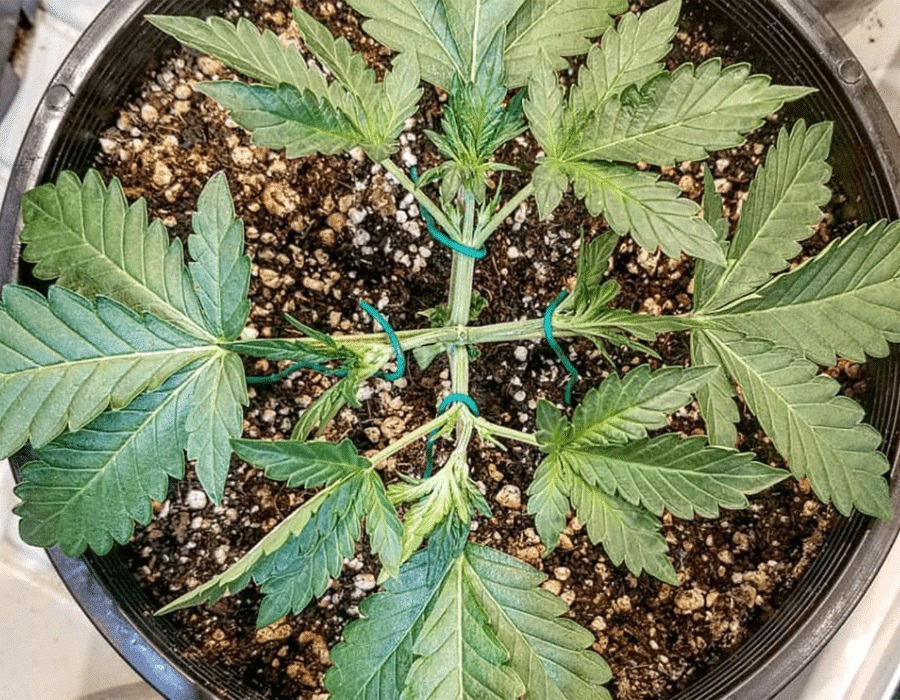
- Supercropping: Slightly damaging branches to promote stronger growth and more bud sites.
4. Flowering Stage
When cannabis plants reach the flowering stage, buds are produced. The light cycle is changed to 12 hours of continuous light and 12 hours of continuous darkness to start this stage.
Key Requirements:
- Light: Use High-Pressure Sodium (HPS) or full-spectrum LED grow lights to promote bud development.
- Temperature: Maintain temperatures between 65-80°F (18-26°C) during the day and slightly cooler at night.
- Humidity: Lower humidity to 40-50% to prevent mold and mildew on the buds.
- Watering: Water thoroughly but less frequently than in the vegetative stage. In between waterings, make sure the medium dries out a little.
- Nutrients: Transition to a bloom nutrient formula higher in phosphorus and potassium, with reduced nitrogen levels.
Monitoring:
- Trichome Development: Monitor trichomes on the buds for ripeness. Milky white trichomes indicate peak THC levels, while amber trichomes suggest a more sedative effect.
- Pest and Disease Control: Regularly inspect plants for signs of pests, mold, and nutrient deficiencies. Address any issues promptly.
5. Harvesting
Harvesting is the final stage, where mature buds are collected. Timing is crucial to maximize potency and yield.
Steps for Harvesting:
- Flushing: Stop feeding nutrients and flush the growing medium with water for 1-2 weeks before harvest to remove residual chemicals and improve taste.
- Cutting: Use sharp, clean scissors to cut branches with mature buds. Handle plants gently to avoid damaging trichomes.
- Drying: Hang branches upside down in a dark, well-ventilated room with a humidity level of 45-55% and a temperature of 60-70°F (15-21°C). Drying takes 7-14 days, depending on environmental conditions.
- Trimming: Once dried, trim away excess leaves and stems to enhance bud appearance and potency.
- Curing: Place trimmed buds in airtight containers, opening them daily to release moisture and allow for slow curing. This process can take several weeks and improves flavor and potency.
Supercropping Technique: A Detailed Guide
What is Supercropping?
Supercropping, also known as high-stress training (HST), is a cultivation technique used to manipulate the shape and growth of cannabis plants to enhance yield and potency. It involves intentionally damaging the plant’s branches by bending and slightly crushing them, which encourages the plant to grow stronger and produce more buds.
Benefits of Supercropping
- Increased Yields: Supercropping can increase the number of bud sites, leading to higher overall yields.
- Stronger Plants: The stress from supercropping stimulates the plant to grow thicker, more resilient branches.
- Improved Light Penetration: By bending the branches, supercropping helps create a more even canopy, allowing light to reach lower buds.
- Enhanced Potency: The stress can lead to increased resin production, resulting in more potent buds.
When to Supercrop
Supercropping should be done during the vegetative stage when the plant is healthy and growing vigorously. This gives the plant enough time to recover and continue growing before the flowering stage.
How to Supercrop Cannabis
1. Preparation
- Ensure your plants are in the vegetative stage.
- Choose healthy, flexible branches to avoid excessive damage.
- Clean your hands or wear gloves to prevent the introduction of pathogens.
2. Technique
- Identify the Branches: Select branches that are tall and overshadowing others.
- Bend the Branch: Using your thumb and forefinger, gently squeeze and roll the branch between your fingers until you feel the inner tissues soften. Be careful not to break the branch completely.
- Bend and Secure: Bend the softened branch at a 90-degree angle and secure it in place using plant ties, soft string, or garden wire. Ensure that the bent branch is supported and won’t fall over or break under its own weight.
3. Post-Supercropping Care
- Support: Provide support to the bent branches using stakes, trellises, or plant ties to prevent them from breaking under the weight of the buds as they grow.
- Monitor: Keep an eye on the supercropped areas for signs of infection, excessive stress, or breakage. If a branch breaks, it can be taped or splinted to encourage healing.
- Recovery: Allow the plant time to recover before performing any additional training techniques. The recovery period can range from a few days to a week, depending on the plant’s health and growing conditions.
Advanced Supercropping Techniques
1. Topping and FIMing
- Topping: Cutting off the top of the main stem to encourage lateral growth and more bud sites. This technique is often used in conjunction with supercropping to create a bushier plant with more colas.
- FIMing: A less precise form of topping where only part of the new growth is removed, resulting in multiple new growth tips.
2. Low-Stress Training (LST)
- Bending and Tying: Gently bending branches and tying them down to create an even canopy without causing significant damage. LST can be used alongside supercropping to maximize light exposure and bud production.
3. Defoliation
- Removing excess leaves to improve light penetration and airflow within the plant canopy. Defoliation should be done carefully to avoid over-stressing the plant.
Common Mistakes and Troubleshooting
1. Over-Stressing the Plant
- Avoid performing supercropping on plants that are already stressed or unhealthy, as this can lead to further damage or reduced growth.
- Do not supercrop during the flowering stage, as this can reduce yields and potency.
2. Incorrect Timing
- Supercropping should be done during the vegetative stage for the best results. Performing this technique too late can hinder the plant’s recovery and growth.
3. Insufficient Support
- Provide adequate support to bent branches to prevent them from snapping under the weight of the buds. Use stakes, trellises, or plant ties to keep branches in place.
4. Inadequate Care Post-Supercropping
- After supercropping, keep a close eye on your plants and give them the attention they need to heal and thrive properly. This includes maintaining optimal light, temperature, humidity, and nutrient levels.
Maximizing Supercropping Benefits
1. Combining Techniques
- Combine supercropping with other training methods like topping, LST, and defoliation for optimal results. This can help create a more uniform canopy and increase the overall yield and potency of the buds.
2. Optimizing Growing Conditions
- Ensure your plants have the right environmental conditions, nutrients, and care to thrive after supercropping. This includes maintaining optimal light, temperature, humidity, and nutrient levels.
3. Regular Monitoring
- Regularly check your plants for signs of stress, disease, or nutrient deficiencies and address them promptly. This can help ensure that your plants recover quickly and continue to grow vigorously after supercropping.
Conclusion
Cannabis cultivation is a multifaceted process that requires a deep understanding of the plant’s growth stages, environmental needs, and advanced techniques to maximize yield and potency. From selecting the right plant types and providing optimal growing conditions to mastering the stages of germination, seedling, vegetative, and flowering growth, each step plays a critical role in achieving a successful harvest.
Supercropping, an advanced training technique, stands out as a powerful method to enhance cannabis growth. By deliberately stressing the plant through bending and slightly damaging its branches, supercropping encourages stronger, more resilient plants that produce higher yields and more potent buds. This technique, when combined with other methods such as topping, low-stress training (LST), and defoliation, can significantly improve light penetration and create a more even canopy, leading to overall better plant health and productivity.
Understanding and managing the key elements of temperature, humidity, light, soil or growing medium, and nutrients are crucial for creating the ideal environment for cannabis cultivation. Regular monitoring and adjustments ensure that plants remain healthy and thrive throughout their growth cycle.
For successful supercropping, timing and careful execution are essential. Performing this technique during the vegetative stage allows plants ample time to recover and continue their vigorous growth into the flowering stage. Providing adequate support and post-supercropping care ensures that the plants can bear the weight of their buds without breaking.
Growing cannabis requires patience, observation, and a willingness to change and adapt. It’s both an art and a science. Growers can maximize their yields of premium cannabis by implementing the ideas and methods covered in this extensive manual to optimize their growing procedures.
Whether you are a novice grower or an experienced cultivator, the insights and strategies provided here can help you achieve your cultivation goals. With careful attention to detail and a commitment to best practices, you can enjoy the rewards of a successful cannabis cultivation endeavor, producing plants that are healthy, potent, and abundant.
