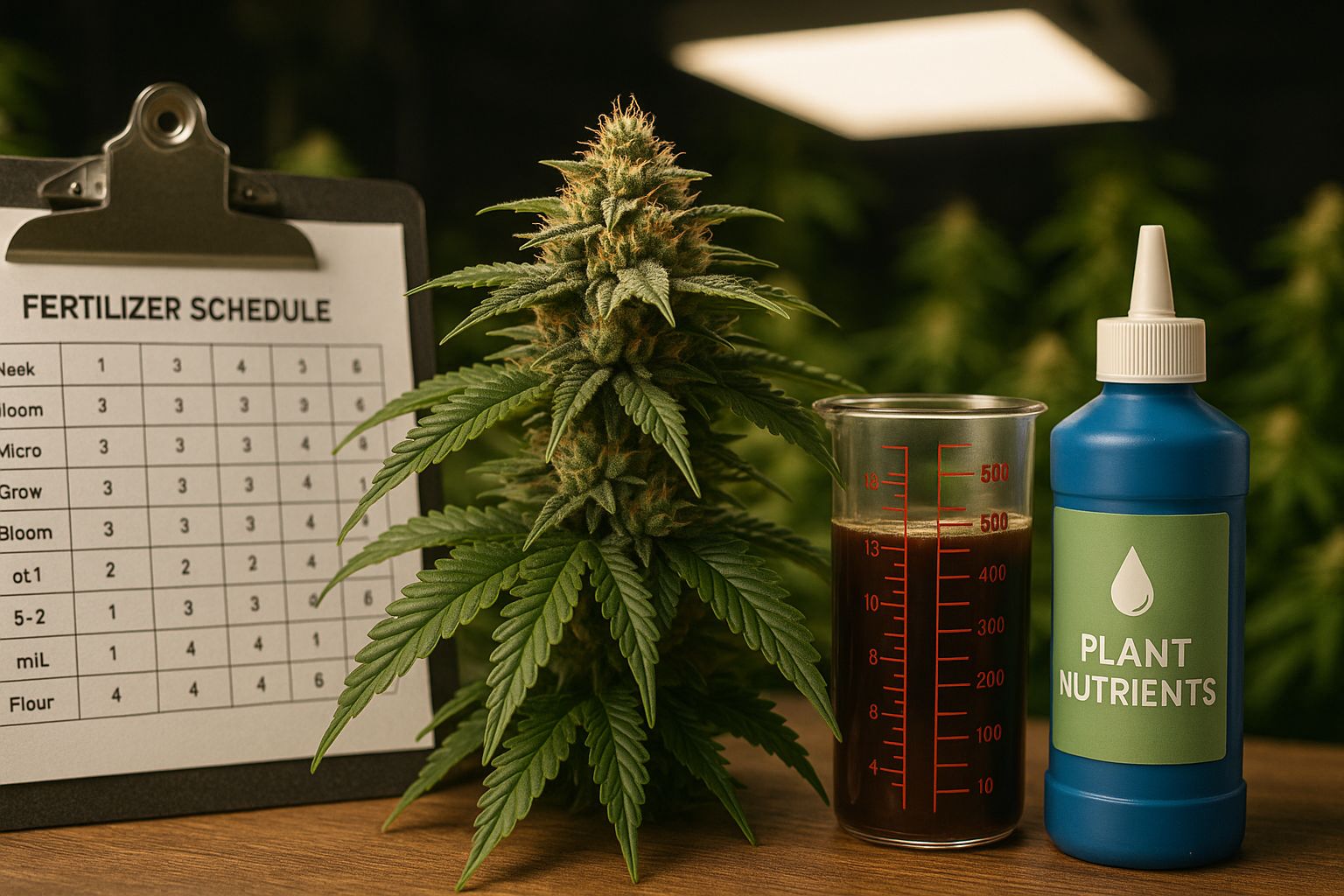
I have learned more about cannabis cultivation and fertilization from grow room mistakes than from any book or forum. Over the last several seasons, I have burned plants with hot feeds, underfed stubborn phenotypes, and chased deficiencies that turned out to be pH issues. This guide is my honest, experience-based breakdown of how I approach cannabis cultivation and fertilization from seed to harvest, with a special focus on lighting, nutrients, and environment.
I will walk through how I select feminized cannabis seeds and autoflower cannabis seeds, how I handle cannabis seed germination, and how I build a realistic cannabis flowering nutrients schedule that actually fits into a busy life. Along the way, I will share the indoor weed growing tips and outdoor marijuana grow guide lessons that I wish I had known on my first run.
Nothing here is medical or legal advice. Always follow your local laws before buying seeds or growing marijuana, and never push your plants harder than you can monitor them.
Planning Your Grow Around Cannabis Cultivation and Fertilization
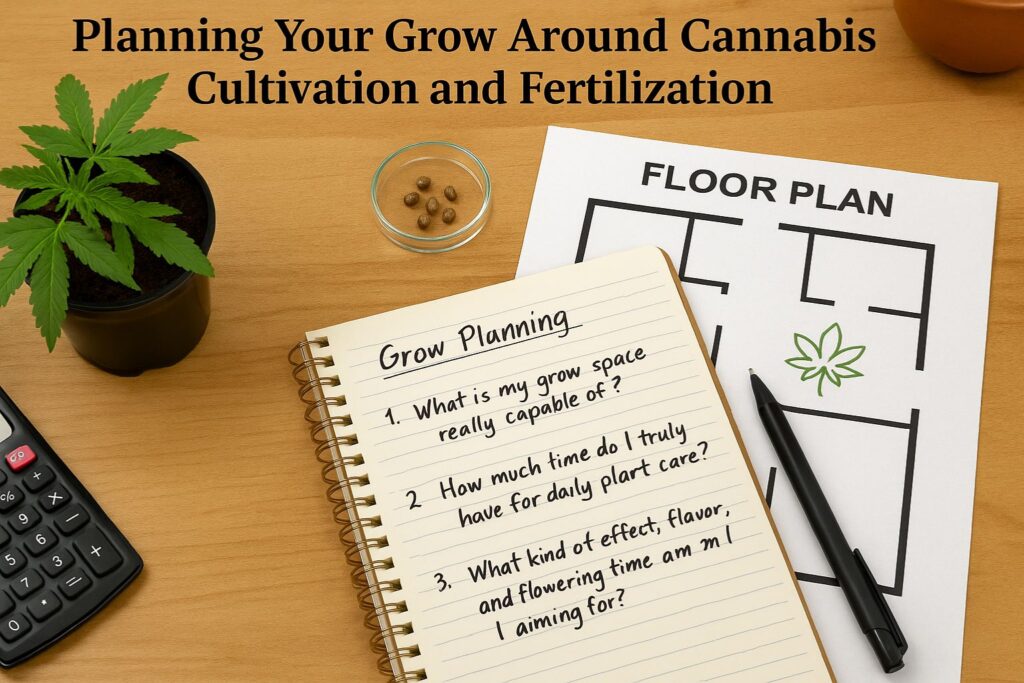
Before I drop a single seed, I plan the entire cycle of cannabis cultivation and fertilization around three questions:
- What is my grow space really capable of?
- How much time do I truly have for daily plant care?
- What kind of effect, flavor, and flowering time am I aiming for?
The answers decide whether I run feminized cannabis seeds or autoflower cannabis seeds, whether I lean toward organic cannabis nutrients or a simple mineral line, and whether I grow in soil, coco, or hydro.
When I first started, I tried to copy a commercial-style cannabis flowering nutrients schedule I found online. It looked great on paper, but it completely ignored my weaker lights, my inconsistent room temperature, and my limited time. The plants told the truth: tip burn, clawing, and stalled growth.
Now, I start by matching the genetics and fertilization strategy to my actual conditions.
Choosing Seeds: Feminized vs Autoflower
For most home grows, feminized cannabis seeds are my default. They remove the extra work of sexing plants and give me consistent, repeatable results. When I want to hunt for a special phenotype, I will pop a pack or two of feminized cannabis seeds from a breeder I trust and note the traits of each plant.
Autoflower cannabis seeds shine when I need speed or discretion. They automatically flower under a fixed light schedule and finish in as little as 9–12 weeks from germination. Autoflower cannabis seeds do not like heavy feeding early on, so I keep their cannabis fertilization milder during the first half of life and focus on smooth, steady nutrition instead of pushing them hard.
When shopping seed banks online, I look for:
- Clear strain descriptions and lab-tested genetics
- Honest flowering times for feminized cannabis seeds and autoflower cannabis seeds
- Transparent shipping policies and a reminder to check regional laws
A reputable seed bank will tell you exactly where they can and cannot ship, and they will stand behind their germination rates.
Cannabis Seed Germination and Early Feeding
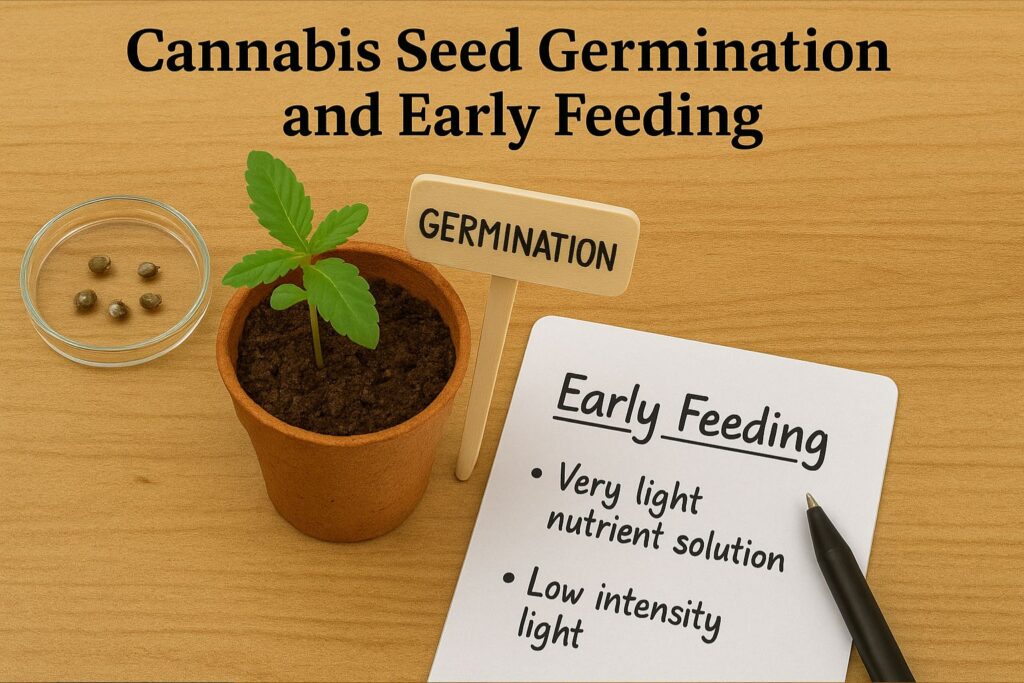
If I mess up cannabis seed germination, nothing else matters. Over the years I have settled on a simple approach that keeps the process clean and consistent.
For cannabis seed germination, I usually:
- Soak seeds in room-temperature water for 12–24 hours.
- Move them into a lightly moistened paper towel inside a plastic bag or lidded container.
- Keep them around 22–25°C (72–77°F) in the dark until taproots appear.
- Transplant gently into a pre-moistened medium with very light nutrition.
The biggest mistake I see is trying to fertilize too early. During cannabis seed germination and the first week of seedling life, the seed contains everything it needs. When I use a pre-fertilized soil, I give no extra nutrients at all. In coco or rockwool, I feed a very diluted solution (around 0.3–0.5 EC) with a gentle starter formula.
Every time I tried to “help” seedlings with stronger nutrients, I ended up with burnt tips and stunted growth.
Instead, I focus on:
- Stable temperature: 22–26°C (72–79°F)
- Moderate humidity: 60–70% RH
- Gentle light: low PPFD for cannabis seedlings, around 150–250 µmol/m²/s
Starting balanced here sets the foundation for everything that follows in cannabis cultivation and fertilization.
Cannabis Soil vs Hydroponics: How I Decide Each Season
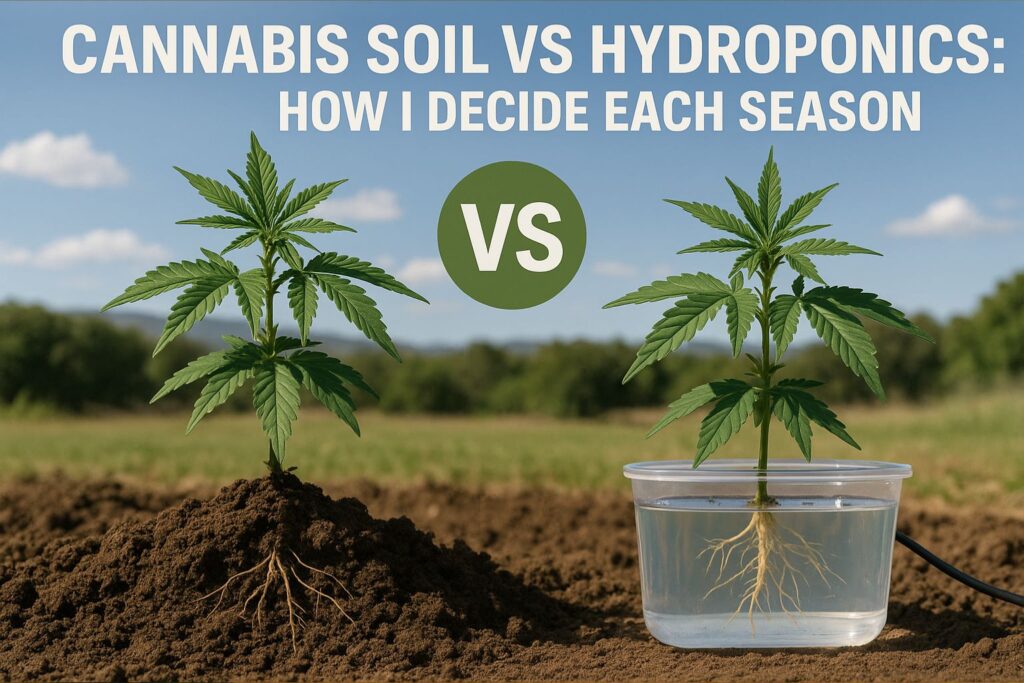
One of the most common questions I get is about cannabis soil vs hydroponics. I have grown in rich organic soil, coco, and recirculating hydro. Each method changes how I handle fertilization.
When I choose cannabis soil vs hydroponics, I ask:
- Do I want maximum quality with a forgiving buffer (soil)?
- Do I want fast growth and tight control (coco/hydro)?
- How often can I realistically mix nutrients and hand-water?
In organic soil mixes, I lean heavily on organic cannabis nutrients like dry amendments (compost, worm castings, kelp, and mineral powders). I top dress every few weeks and water with plain, pH-balanced water. Organic cannabis nutrients release slowly, which fits growers who cannot micromanage feedings. The trade-off is less instant control if something goes wrong.
In coco or hydro, I measure everything. Here, cannabis soil vs hydroponics becomes a question of precision.
In coco, I mix mineral nutrients daily, aiming for:
- Veg EC: roughly 1.0–1.6 (adjusted to the cultivar)
- Early flower EC: 1.6–2.0
- Late flower EC: 1.8–2.2, if the plants can handle it
Whatever I choose, I stick with it for the season. Switching styles mid-run almost always creates nutrient issues that complicate cannabis cultivation and fertilization.
Light, Environment, and PPFD for Cannabis
No nutrient schedule can fix a weak or badly managed light. Dialing in PPFD for cannabis has been one of the biggest upgrades in my grows.
As a rule of thumb, I aim for:
- Seedlings and early veg: 150–300 µmol/m²/s PPFD for cannabis
- Late veg: 400–600 µmol/m²/s PPFD for cannabis
- Flower: 700–900 µmol/m²/s PPFD for cannabis, sometimes up to 1,000 if CO₂ and environment are dialed in
I use an inexpensive PAR meter or a reliable smartphone app to estimate PPFD for cannabis across the canopy, then adjust light height and dimming accordingly. When I ignored PPFD for cannabis and just guessed, I either light-stressed my plants with bleaching tops or underlit them and wasted nutrient potential.
Alongside light, I try to keep:
- Veg temps: 24–28°C (75–82°F) with 55–70% RH
- Flower temps: 22–26°C (72–79°F) with 45–55% RH
For indoor weed growing tips, my best advice is to stabilize environment before chasing advanced nutrient tricks. If temperature and humidity swing wildly, cannabis fertilization becomes harder to predict.
For outdoor growers, my outdoor marijuana grow guide strategy is simpler:
- Choose strains with flowering times that fit your frost dates.
- Plant where they get full sun for most of the day.
- Use mulches and organic cannabis nutrients in soil to buffer hot, dry spells.
Every outdoor marijuana grow guide I write comes back to the basics: sun, airflow, and timing.
Building a Cannabis Fertilization Strategy
Once seeds are up and the environment is stable, I design a cannabis flowering nutrients schedule and veg feeding plan that matches the genetics and medium. A big lesson for me has been learning that more is not better. Consistency wins.
Here is how I break down cannabis cultivation and fertilization by stage.
Vegetative Stage: Gentle Growth and Root Building
In veg, I feed for structure, not yield. The goal is healthy roots, strong stems, and dense branching.
My general approach:
- Keep nitrogen moderate, not extreme.
- Use a root stimulator in early veg, especially with feminized cannabis seeds that will be vegged longer before flipping.
- In coco/hydro, start around 1.0 EC and slowly move toward 1.4–1.6 EC, watching leaf tips.
Indoor weed growing tips for veg:
- Train plants early with low-stress training (LST) and topping.
- Spread the canopy to use your PPFD for cannabis efficiently.
- Keep pots light but not bone dry between waterings.
When I veg autoflower cannabis seeds, I am even more cautious. They have a limited veg window, so I avoid harsh training and keep nutrients modest, especially during weeks 2–4 from cannabis seed germination.
Flowering Stage: Cannabis Flowering Nutrients Schedule in Practice
Most growers want a clear cannabis flowering nutrients schedule, but plants do not always follow the calendar. Still, having a framework helps, as long as I listen to the leaves more than the bottle.
A typical 8–10 week cannabis flowering nutrients schedule for photoperiod plants might look like:
- Week 1–2: Transition feed, slightly higher nitrogen than mid-flower, EC around 1.4–1.6
- Week 3–5: Peak bloom feed, extra phosphorus and potassium, EC 1.6–2.0 if plants are happy
- Week 6–8+: Gradual reduction in strength, focusing on ripening and flavor, EC tapering down
I always treat any cannabis flowering nutrients schedule as a starting point, not a law. Different phenotypes, even from the same feminized cannabis seeds, will demand different levels of feeding. Dark, clawed leaves and burnt tips tell me to reduce strength; pale, hungry leaves tell me they need more.
Autoflower cannabis seeds need a shortened version of this cannabis flowering nutrients schedule. They often start flowering by week 3–4 from cannabis seed germination, so I move into bloom nutrients earlier and keep overall EC a bit lower.
Cannabis Pest Control and Plant Health
No discussion of cannabis cultivation and fertilization is complete without plant health. Strong, balanced feeding supports good cannabis pest control, but it does not replace it.
When it comes to cannabis pest control, I use three layers:
- Prevention
- Quarantining new clones
- Keeping the room clean and free of standing water
- Using sticky traps to monitor flying insects
- Early intervention
- Inspecting the undersides of leaves weekly
- Spot-treating issues with gentle, plant-safe sprays
- Adjusting environment to make it less friendly to pests
- Long-term strategy
- Choosing genetics known for hardiness
- Avoiding over-fertilization that leads to soft, weak growth
- Using beneficial insects when necessary
Every time I cut corners on cannabis pest control, I pay for it later. Spider mites and fungus gnats love overwatered pots and nutrient-stressed plants. A strong IPM (integrated pest management) routine protects all the effort I put into cannabis cultivation and fertilization.
For outdoor growers, a solid outdoor marijuana grow guide always includes cannabis pest control basics: mulch for soil health, companion plants to attract beneficial insects, and regular inspections.
Organic Cannabis Nutrients vs Synthetic: What I Actually Use
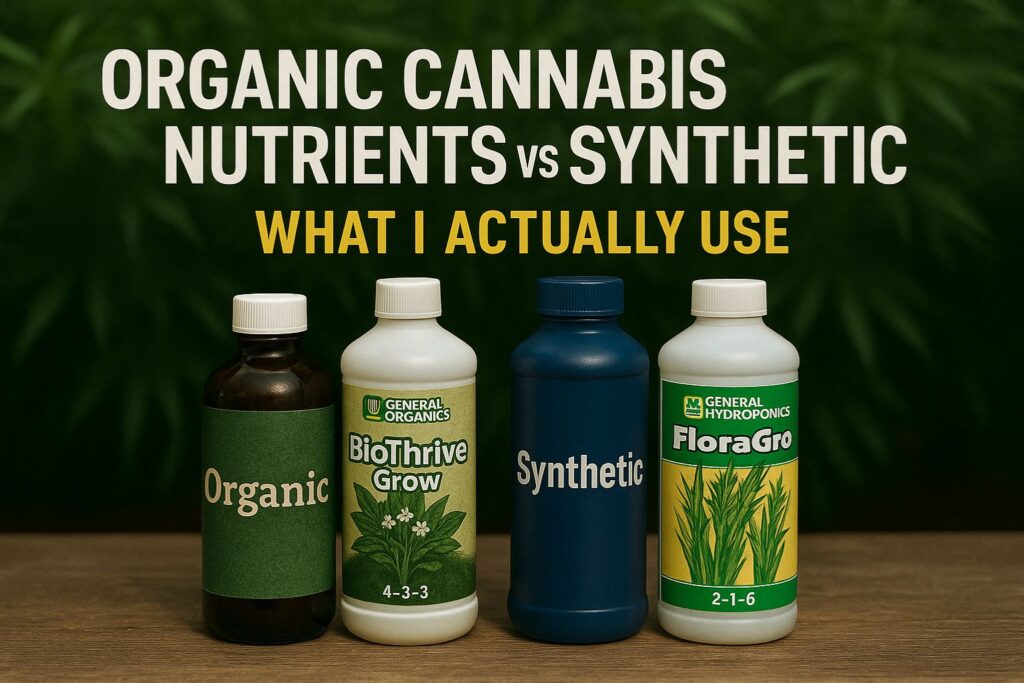
There is constant debate about organic cannabis nutrients vs synthetic mineral feeds. I use both, depending on the run.
When I want simplicity and rich flavor, I mix a living soil based on compost, peat or coco, aeration amendments, and mineral inputs. I top dress with organic cannabis nutrients like kelp meal, alfalfa, and rock dust every few weeks, then water with teas or just plain water. This slower approach fits growers who prefer to “feed the soil” and let the soil feed the weed.
On other runs, especially in coco, I use bottled nutrients for precise control. They are easier to plug into a detailed cannabis flowering nutrients schedule, and they respond quickly to adjustments. The trade-off is that I am married to my meters: I must constantly check pH and EC.
There is no single right choice. The key is understanding how your chosen system affects cannabis cultivation and fertilization across the whole cycle, from cannabis seed germination to harvest.
Indoor Weed Growing Tips vs Outdoor Marijuana Grow Guide
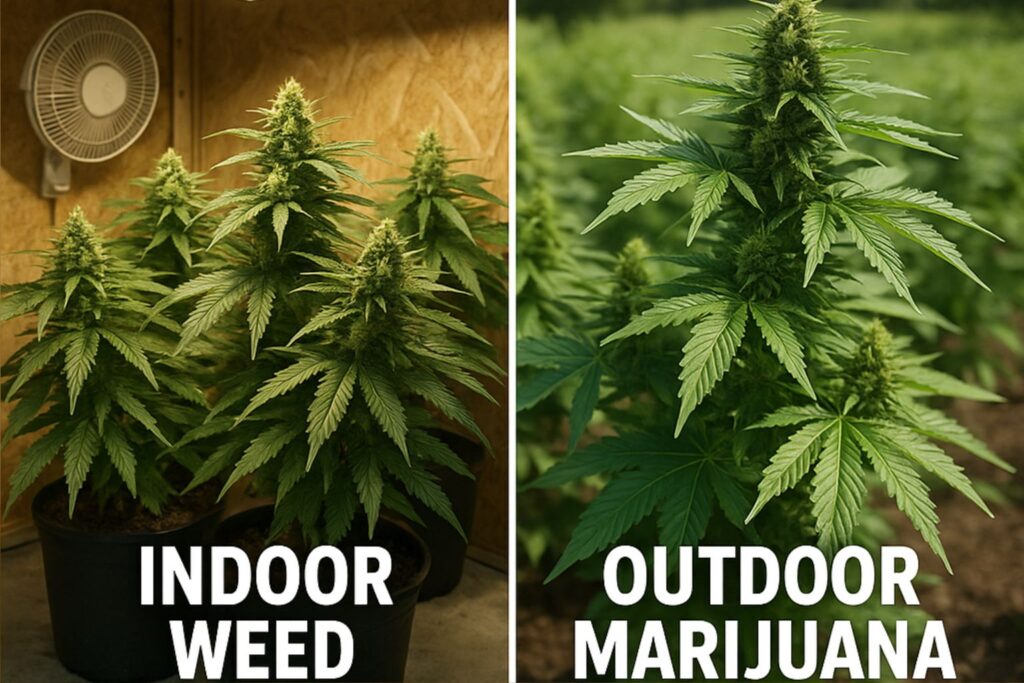
Indoor and outdoor cultivation require slightly different mindsets, especially when it comes to cannabis fertilization.
Some of my favorite indoor weed growing tips:
- Do not chase the bottle’s “maximum strength” feed chart. Your plants rarely need that much.
- Match your cannabis flowering nutrients schedule to your PPFD for cannabis. Dim lights usually mean lighter feeding.
- Use oscillating fans to keep leaves gently moving, reducing mold and supporting cannabis pest control.
For outdoor growers, I always return to outdoor marijuana grow guide fundamentals:
- Build or buy rich soil and supplement with organic cannabis nutrients over time.
- Use large containers or raised beds to buffer temperature and moisture swings.
- Time planting and strain selection around your regional climate and grow laws.
A solid outdoor marijuana grow guide will remind you that the sun is free, but the weather is not under your control. Fertilization plans must flex around real-world conditions.
Practical Checklists for Cannabis Cultivation and Fertilization
When I feel overwhelmed, I go back to simple checklists. Here is how I structure them.
Pre-Season Checklist
- Confirm local grow laws and plant limits
- Choose feminized cannabis seeds or autoflower cannabis seeds based on time and space
- Decide on cannabis soil vs hydroponics and gather all medium and containers
- Select nutrient line (organic cannabis nutrients, synthetic, or hybrid)
- Test and clean all equipment: lights, fans, meters, timers
Weekly Veg Checklist
- Check new growth color and leaf tips for early signs of over/underfeeding
- Verify PPFD for cannabis is in the right range for the growth stage
- Adjust training (LST, topping, bending) to create an even canopy
- Inspect plants for pests and take early cannabis pest control actions if needed
Weekly Flower Checklist
- Compare plant appearance to your cannabis flowering nutrients schedule and adjust strength
- Monitor trichomes and pistils instead of relying only on the breeder’s flowering time
- Re-check PPFD for cannabis after any major plant training or stretching
- Keep a grow log: note how feminized cannabis seeds from each strain respond to different feed levels
These checklists keep cannabis cultivation and fertilization manageable, especially when juggling multiple tents or plants at different stages.
Cannabis Cultivation and Fertilization FAQ
How often should I fertilize weed plants in soil?
In a rich, amended soil with organic cannabis nutrients, I often fertilize weed indirectly every few weeks through top dressing. Day to day, I may just water with plain, pH-balanced water. If I use bottled nutrients in soil, I usually feed once or twice a week and give plain water in between. The key is to watch the plant more than the calendar.
What is a good cannabis flowering nutrients schedule for beginners?
For beginners, I recommend a simple cannabis flowering nutrients schedule:
- Start bloom nutrients at a mild strength when you switch lights to 12/12.
- Maintain that level for 2 weeks while you watch how the plant reacts.
- Slowly increase feed over the next 2–3 weeks if leaves stay healthy.
- Reduce strength in the final 2–3 weeks before harvest.
Remember, different phenotypes from the same feminized cannabis seeds may prefer different strength. Use the schedule as a guide, not a rulebook.
Can I grow autoflower cannabis seeds outdoors?
Yes, you can grow autoflower cannabis seeds outdoors, and they are perfect for short seasons or stealthy gardens. Because they do not depend on day length, you can run multiple cycles in one season. Just remember that autoflower cannabis seeds have limited veg time, so avoid heavy training and overfeeding, especially early in life.
Do I need to run organic cannabis nutrients to get good flavor?
Not necessarily. Organic cannabis nutrients can produce wonderful flavor and aroma, especially when combined with living soil, but I have also harvested excellent-tasting flowers from well-flushed mineral feeds. The biggest factors are overall plant health, careful drying and curing, and avoiding nutrient excess late in flower.
What are the most important indoor weed growing tips for beginners?
My top indoor weed growing tips are:
- Control environment first: temperature, humidity, and airflow.
- Match your nutrient strength to your light intensity and medium.
- Start with stable feminized cannabis seeds from a reputable seed bank.
If you follow those basics, cannabis cultivation and fertilization become much easier.
Final Thoughts
Every season teaches me something new about cannabis cultivation and fertilization. Some runs with feminized cannabis seeds reward me with heavy, frosty colas; others with autoflower cannabis seeds remind me to respect their schedule. I refine my cannabis flowering nutrients schedule, tweak PPFD for cannabis, experiment with organic cannabis nutrients, and constantly improve my cannabis pest control strategy.
There will always be new products and flashy techniques, but the core remains the same: healthy roots, balanced nutrition, stable environment, and genetics you enjoy. If you build your grow around those principles and adapt the details to your own space, your cannabis, marijuana, and weed plants will repay you every single harvest.
