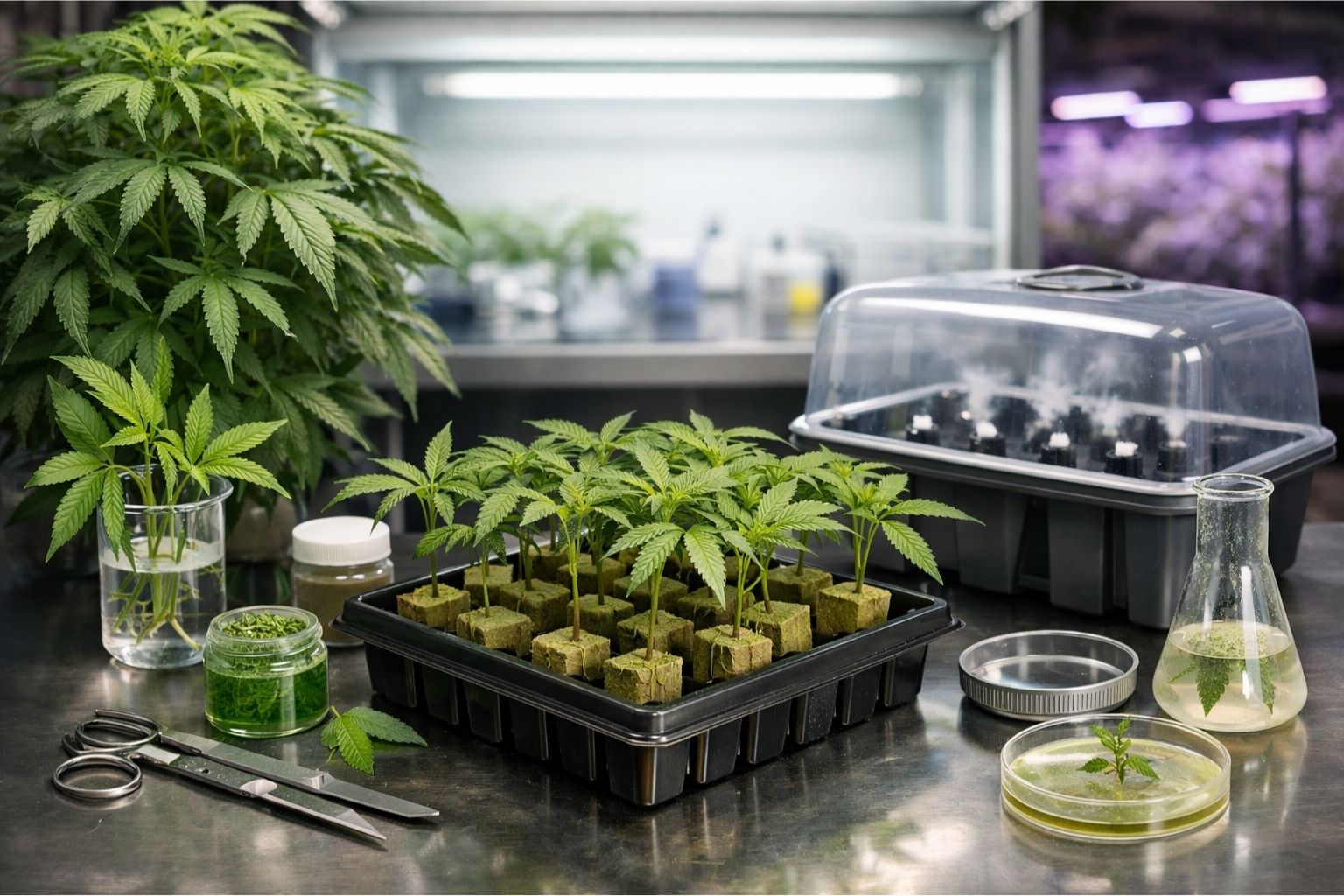
I got serious about cloning after a few seed runs taught me the same lesson: one plant can be a perfect fit, and its “siblings” can be totally different. A clone gives me a repeatable starting point. It also connects me to the cannabis cloning and clones market, where genetics move as living cuttings instead of as seed packs.
This cannabis cloning and clones market guide is written from my grow room perspective. I’ll explain the routine that improved my rooting rate, what I inspect before I buy clones, and how I quarantine so pests and pathogens don’t enter my space. I’ll also mention seed-shopping basics because many growers switch between seeds and clones depending on goals, budget, and local availability. I’ll use cannabis, marijuana, and weed throughout, since that’s how people actually search.
Why the cannabis cloning and clones market keeps growing
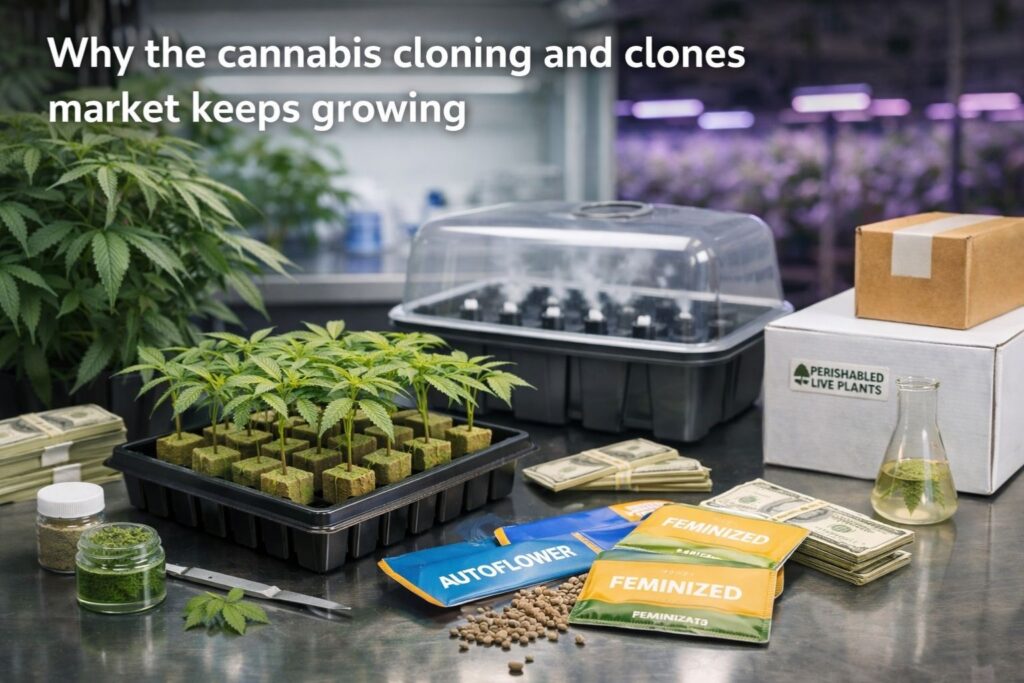
The cannabis cloning and clones market exists because clones solve two problems fast: timeline and variability.
A rooted clone can save weeks compared with germination and early seedling care. More importantly, a clone is the same genetics as the mother plant. If the mother has already proven itself in someone’s room, you’re not starting from zero.
The downside is obvious once you’ve lived it: clones can bring living problems. That’s why I treat every new plant like it’s “guilty until proven clean,” especially when it comes from the broader cannabis cloning and clones market.
Clones vs seeds: how I choose per run
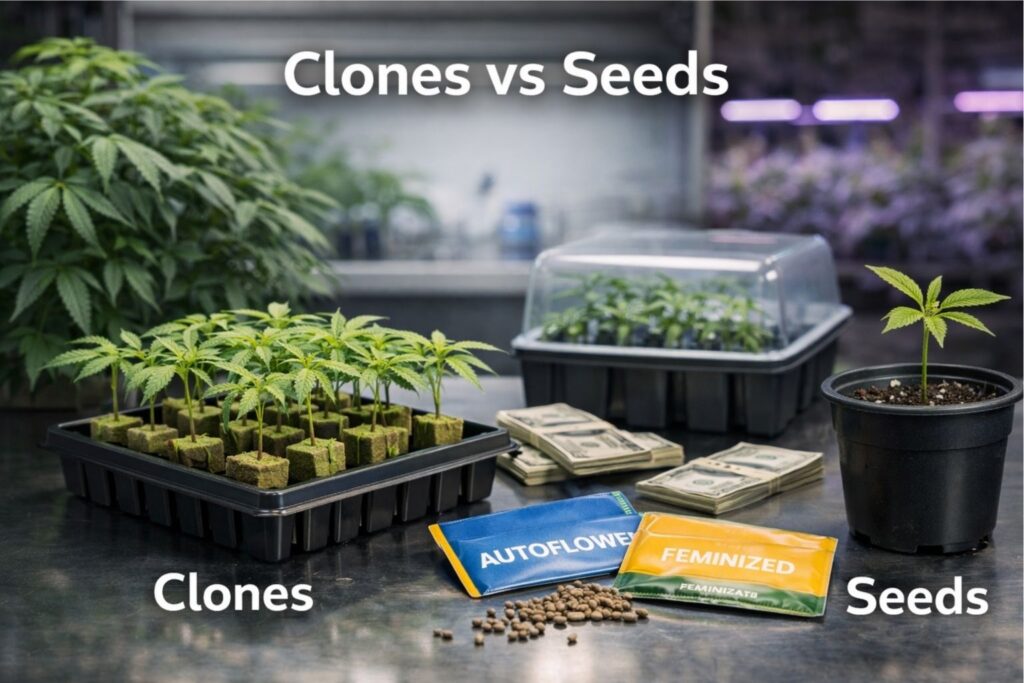
I choose clones when I want predictable structure and timing. I choose seeds when I want new traits or a fresh hunt.
Clones make sense when:
- I need an even canopy under fixed LED height
- I want to repeat a known flavor or effect profile
- I need plants that finish together
Seeds make sense when:
- I’m chasing new aromas or plant architecture
- I want to build my own mother stock
- clones aren’t legally available or reliably clean in my area
On the seed side, I see three common decisions:
- Feminized seeds: convenient for small spaces because you avoid culling males.
- Autoflowers: great for quick cycles, but they don’t fit cloning because the flowering clock keeps ticking.
- Photoperiods: flexible, and ideal if you want mothers and long-term cloning.
Always follow regional grow laws where you live. Rules vary widely.
The environment that made my cloning consistent

Cloning got easier when I stopped improvising conditions.
Targets I aim for:
- Temperature: 23–25°C lights on, 21–23°C lights off
- Humidity: 80–90% for the first 48 hours, then taper toward 70–75%
- Light: mild LEDs, roughly 50–150 PPFD for fresh cuttings
- Airflow: gentle, indirect, to prevent stagnant humidity without drying leaves
Stability matters more than perfection. A few hot hours under a dome can wreck a tray.
Building a sterile cloning workstation setup
A sterile cloning workstation setup doesn’t need to be expensive. It needs to be consistent. My sterile cloning workstation setup is a clean table and a clean sequence that I don’t break.
My sterile cloning workstation setup includes:
- fresh razor blades or a scalpel
- gloves and paper towels
- a cup of clean water to hold fresh cuttings
- cleaned trays and labels
- disinfectant for tools and surfaces
I keep the sterile cloning workstation setup separate from soil mixing, trimming, and anything dusty. When I tightened my sterile cloning workstation setup habits, my failure rate dropped.
Taking cuttings: what I actually do
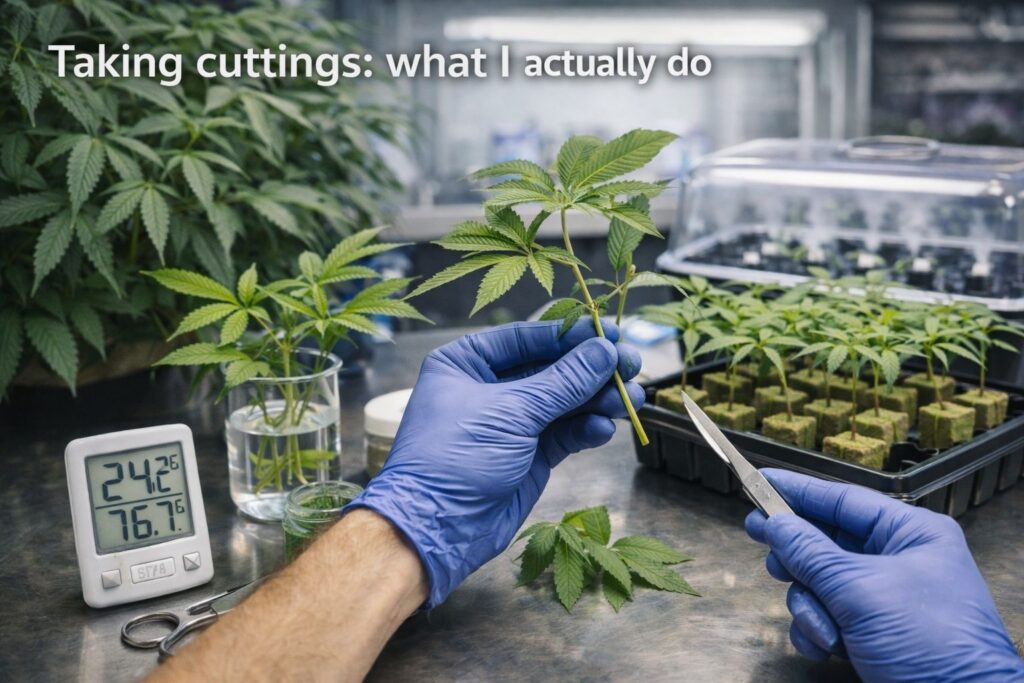
I aim for cuttings that are vigorous, flexible, and not woody.
My steps:
- pick a shoot with 2–4 nodes and healthy new growth
- cut at a 45-degree angle just below a node
- place the cutting in clean water immediately
- remove lower leaves and reduce large fan leaves if needed
- apply rooting product and insert into your medium
A dull blade bruises stems. Bruised stems root slower.
Rooting gel vs rooting powder comparison
My rooting gel vs rooting powder comparison is simple: both can work, but gel reduces my mistakes because it coats the stem evenly. Powder works too, but I’m careful not to contaminate the container.
In my rooting gel vs rooting powder comparison notes, the biggest driver of success wasn’t the product. It was cleanliness and environment. Still, choosing one approach and sticking with it improves consistency, which is why I keep a running rooting gel vs rooting powder comparison in my grow log.
Rooting methods: cubes, plugs, and cloners
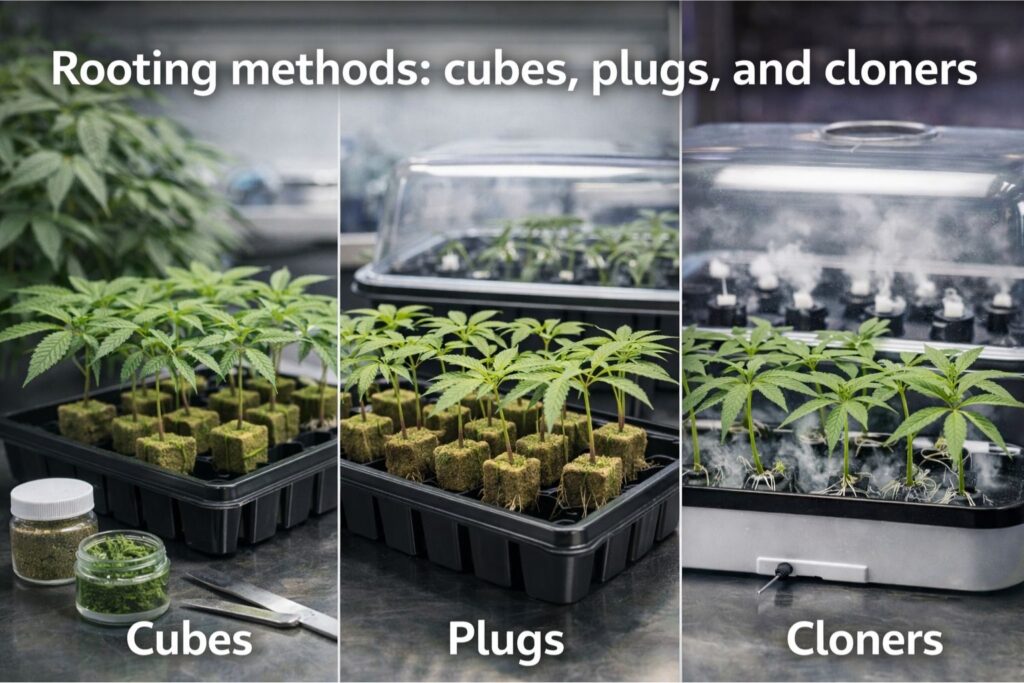
I use basic media most of the time because it’s simple and easy to inspect.
For cubes or plugs:
- pre-moisten so the media is damp, not soaked
- keep humidity high early, then taper
- avoid heavy feeding until roots appear
For aeroponic cloners:
- keep water around 20–22°C
- keep sprayers clean and unclogged
- clean the system regularly so biofilm doesn’t build
A cloner can root fast, but it punishes sloppy maintenance.
Domes and the domeless cloning technique
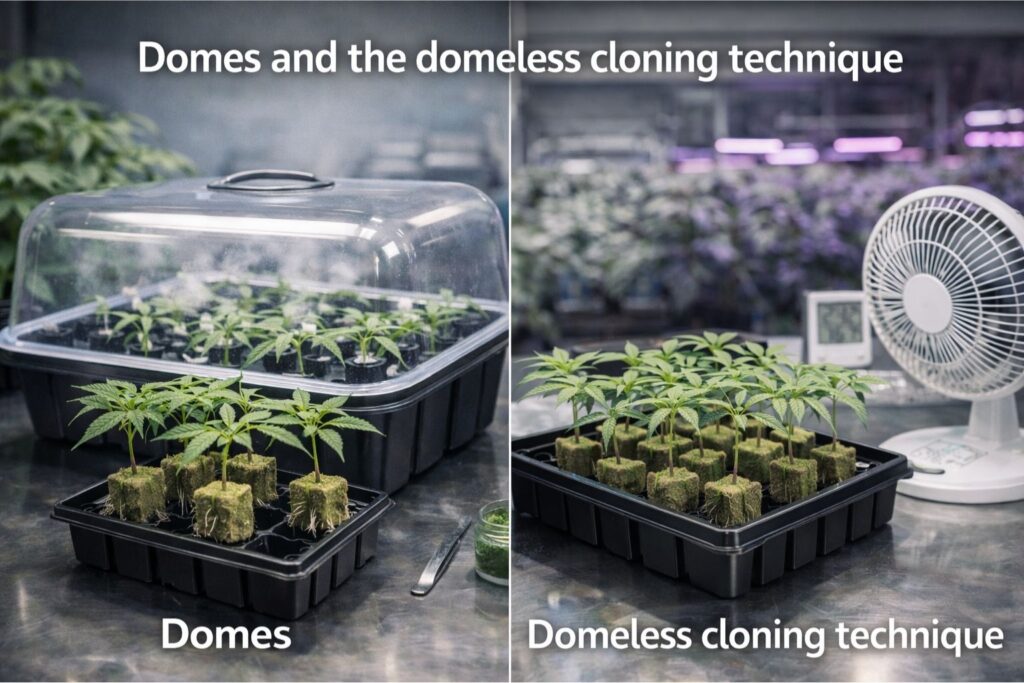
Domes are useful because cuttings have no roots. But domes can also create stagnant air.
With domes, I do this:
- days 1–2: vents mostly closed
- days 3–5: crack vents and open briefly twice a day
- once roots show: vent more, then remove the dome
The domeless cloning technique can work if room humidity is already stable. I’ve used the domeless cloning technique in a veg room that sits around 65–75% RH with gentle airflow. The domeless cloning technique reduces stagnant air, but it demands tighter control of room conditions. If your room is dry, the domeless cloning technique will punish you quickly.
Buying clones: the clone sourcing checklist for home growers
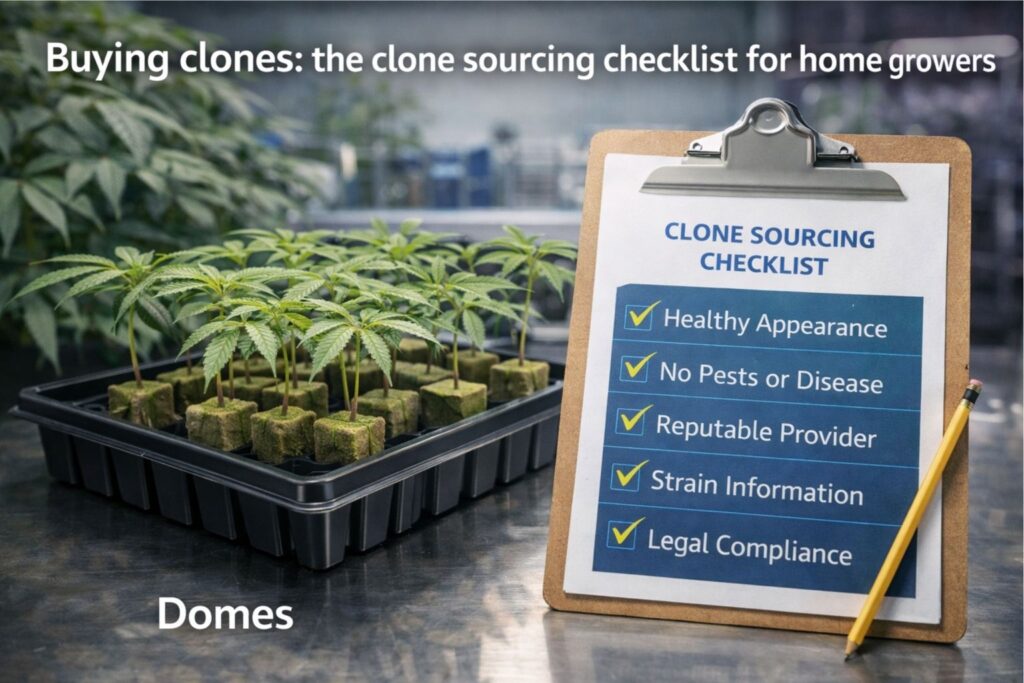
Buying clones is where growers get burned. The fix is a routine you follow even when you’re excited.
My clone sourcing checklist for home growers:
- inspect leaf undersides with a loupe for mites, eggs, or thrips
- check new growth for twisting or weird mottling
- confirm the medium isn’t soggy or slimy
- if rooted, check roots for clean color and smell
- ask how the mother stock is maintained and monitored
I keep the clone sourcing checklist for home growers printed near my quarantine tent. I also repeat the clone sourcing checklist for home growers when I buy from a “trusted” source, because trust doesn’t replace inspection.
Quarantine and integrated pest management for incoming clones
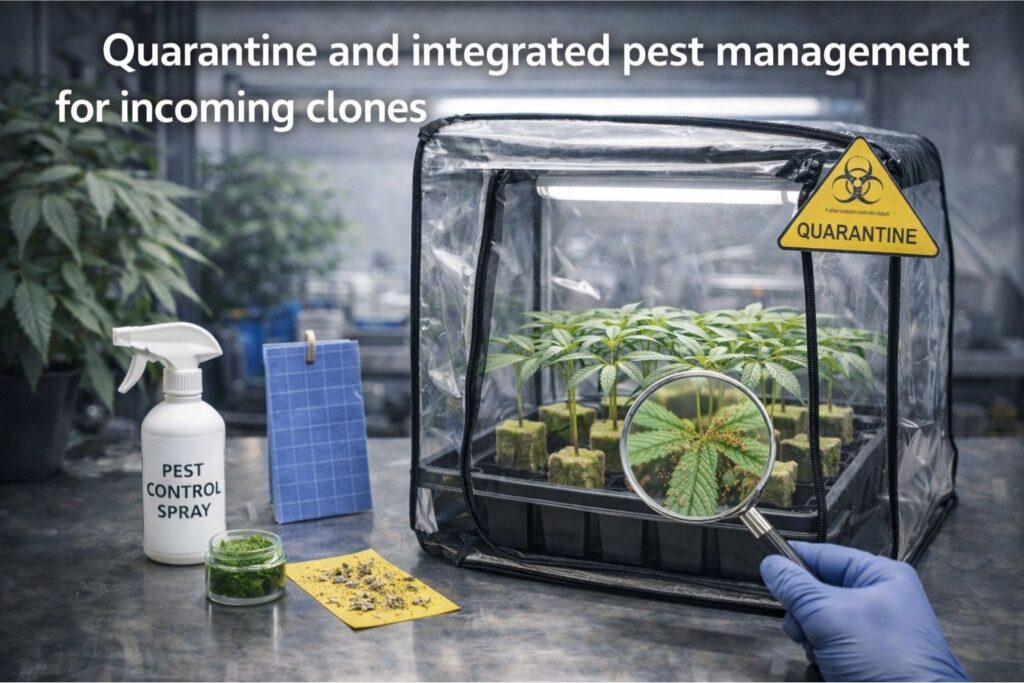
I never bring new clones into my main veg area on day one. My quarantine is its own small tent with its own tools.
My baseline:
- 10–14 days minimum
- daily leaf checks, especially on new growth
- sticky traps to monitor flyers
- steady airflow and careful watering
Integrated pest management for incoming clones starts with monitoring and environment, not aggressive spraying. My integrated pest management for incoming clones routine is:
- keep the quarantine area clean and uncluttered
- remove suspicious plants instead of hoping they improve
- sanitize tools and change gloves before touching other plants
I repeat integrated pest management for incoming clones because prevention is cheaper than cure. If you buy clones often, integrated pest management for incoming clones should be automatic.
Clone pricing and provenance: how I judge value
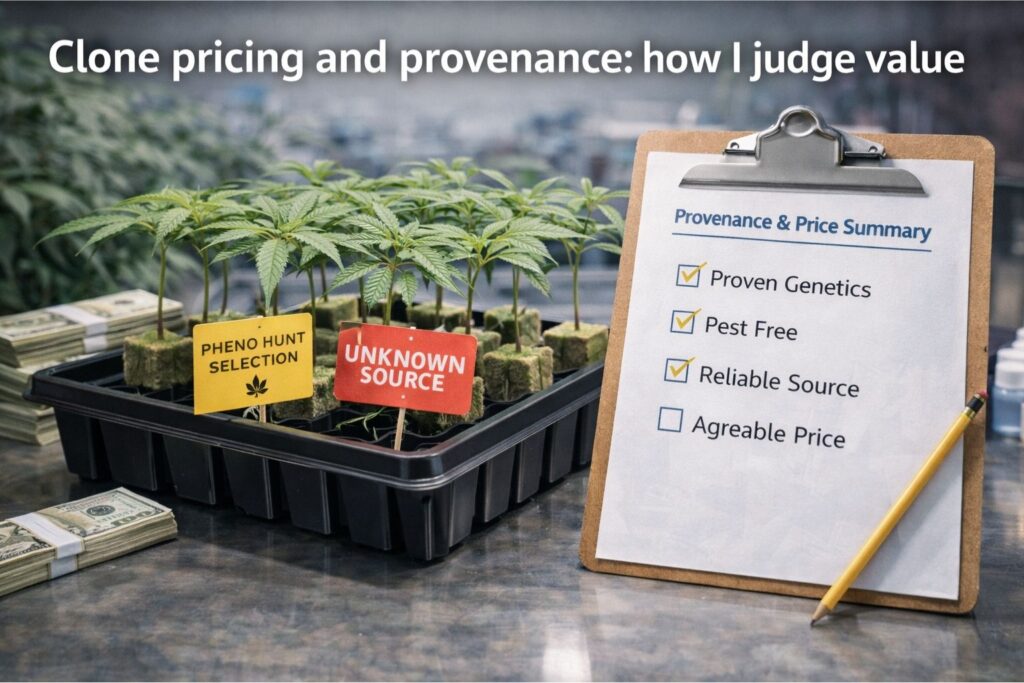
Clone prices can feel random. I try to separate hype from reality with clone pricing and provenance.
Clone pricing and provenance boils down to:
- is the plant’s identity credible?
- is the plant healthy enough to perform without dragging problems into my room?
Good clone pricing and provenance usually looks like clean, labeled plants and sellers who can describe stretch, finish time, and feeding tolerance. Bad clone pricing and provenance looks like vague origins and stressed trays. I take notes on clone pricing and provenance after each run so I learn who to trust.
Buying clones safely in new regions
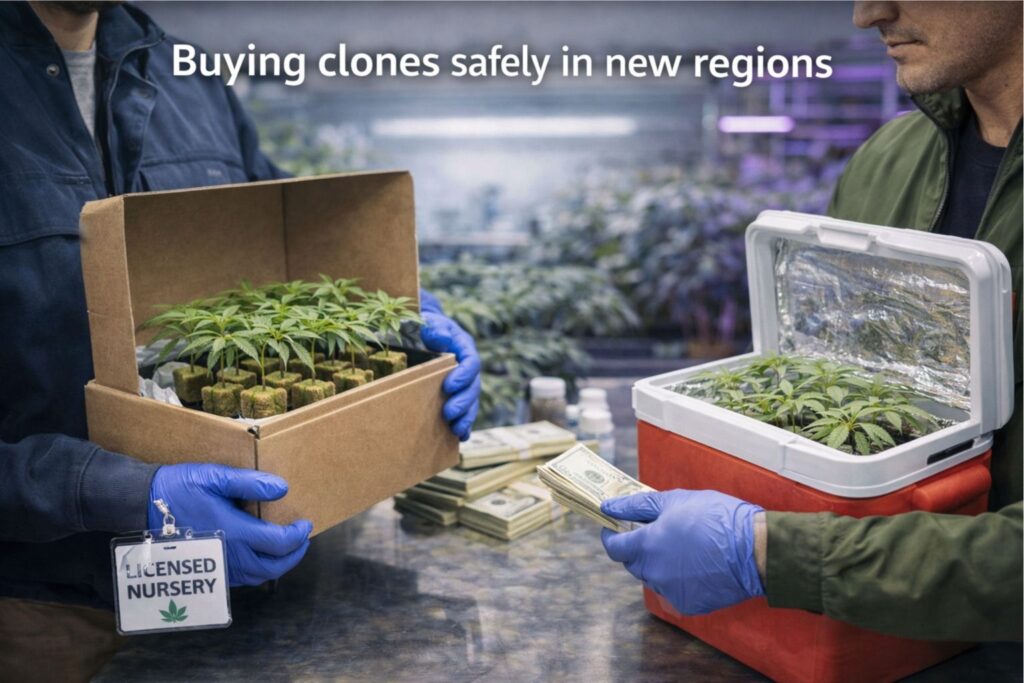
Buying clones safely in new regions is harder because you have fewer trusted sources and you may face different pest pressure.
My rules for buying clones safely in new regions:
- start small so quarantine is manageable
- assume you’ll see at least one unfamiliar issue
- extend quarantine if the clone was shipped or stressed
- don’t mix new-region clones with your main mothers
Buying clones safely in new regions is mostly patience. If you rush, you import problems.
Selecting a keeper phenotype for cloning
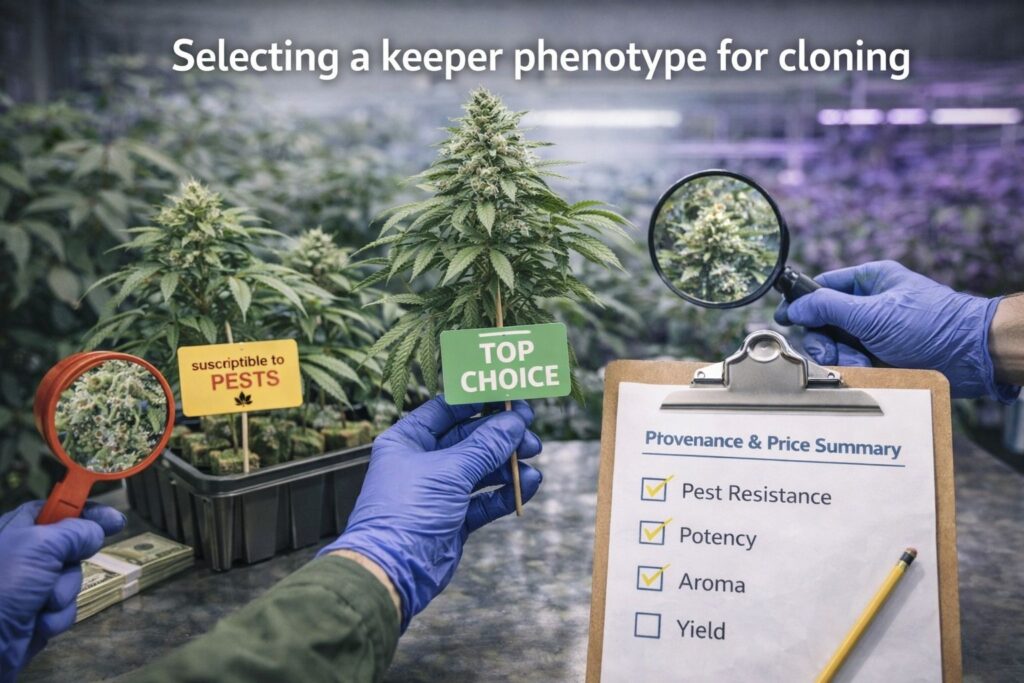
If you start from seed, selecting a keeper phenotype for cloning is the real work. I don’t decide based on early smell or one photo.
My method for selecting a keeper phenotype for cloning:
- track stretch from flip through week three
- note how the plant responds to topping and low-stress training
- record feeding tolerance and any leaf sensitivity
- evaluate structure, yield, and quality after a proper dry and cure
Selecting a keeper phenotype for cloning takes a full cycle, sometimes two. If a plant performs well twice, it earns mother status. Selecting a keeper phenotype for cloning is how I build stability that doesn’t depend on the broader clones market.
Transplanting rooted clones without shock
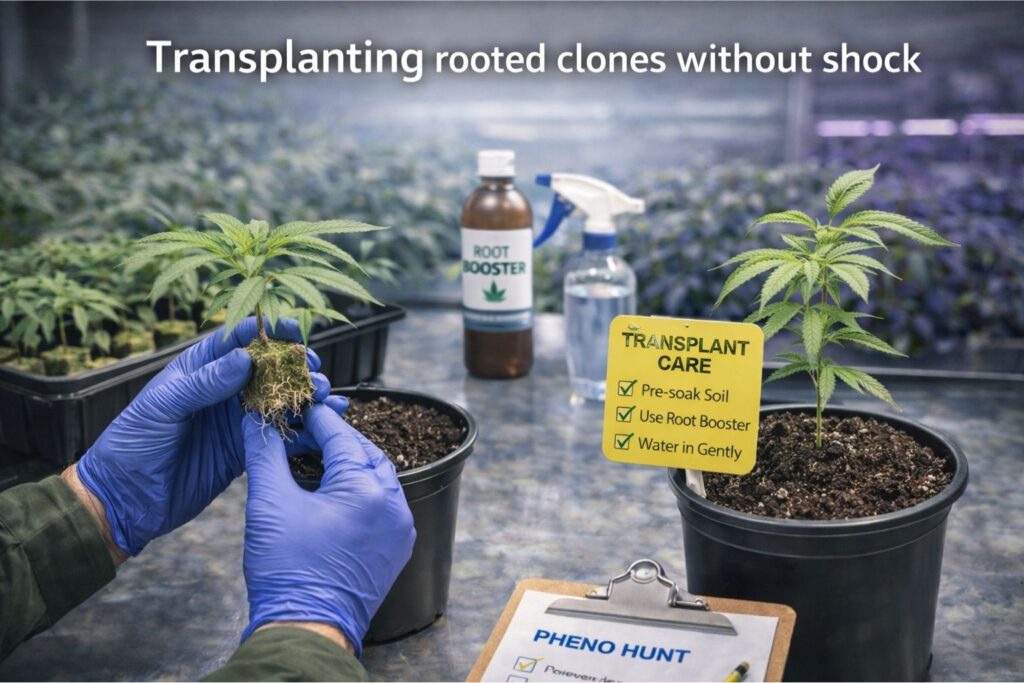
Even a well-rooted clone can stall after transplant. Transplanting rooted clones without shock is mainly about oxygen and temperature in the root zone.
My routine for transplanting rooted clones without shock:
- transplant into lightly moist medium, not soaked pots
- keep the root zone warm (cold floors slow recovery)
- run moderate light for 24–48 hours
- avoid heavy feeding until I see new growth
I learned transplanting rooted clones without shock the hard way: overwatering after transplant is one of the easiest ways to stall a good plant. Keep it simple. Let roots breathe.
Soil vs hydro: a practical view for clones
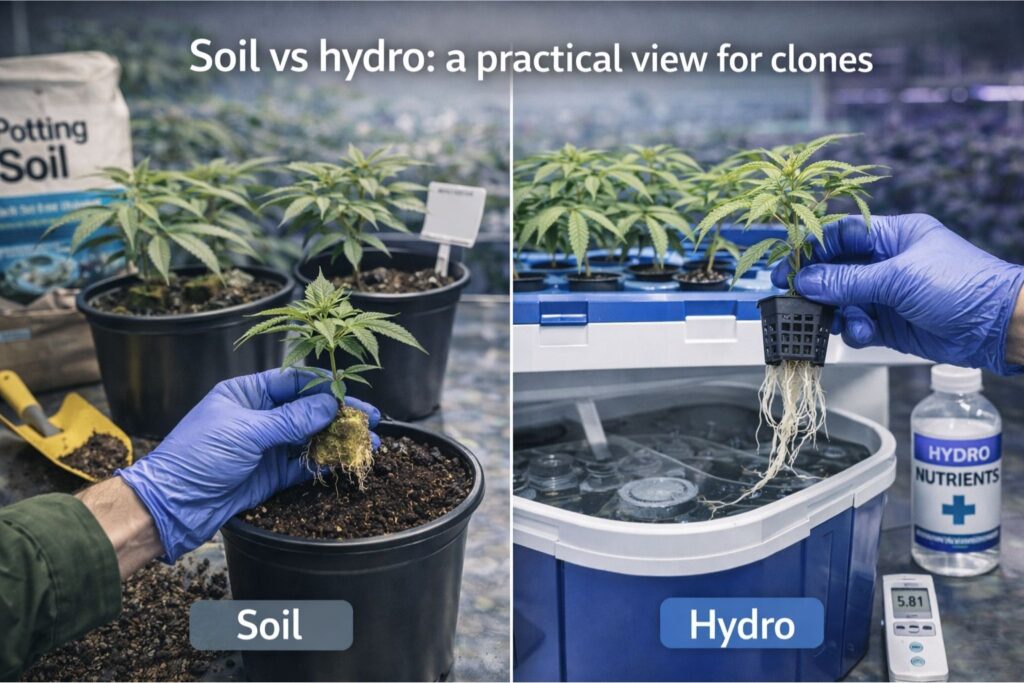
Soil is forgiving and buffers small mistakes. Hydro is fast and precise but less forgiving.
If you’re new, soil often makes transplanting rooted clones without shock easier because moisture swings are slower. In hydro, watch EC and root-zone temperature closely, and keep your system clean.
FAQ: long-tail questions people actually ask
Is the cannabis cloning and clones market safer than starting from seed?
The cannabis cloning and clones market can save time, but it can also import pests. Seeds are slower but often cleaner starting material. If you quarantine well, the cannabis cloning and clones market can be a strong option.
What should I ask before buying a clone?
Use a clone sourcing checklist for home growers, then confirm with your own eyes. Ask about mother-stock monitoring and pest history.
Do I need a dome to root clones?
No. The domeless cloning technique can work in a stable, humid room with gentle airflow. If your room is dry, a dome is more forgiving.
Is tissue culture worth thinking about?
Tissue culture vs traditional cloning matters because tissue culture can produce cleaner starting material when done correctly. For most home growers, tissue culture vs traditional cloning comes down to access and budget. I still rely on sanitation and quarantine, but I watch how tissue culture vs traditional cloning influences the market.
Why do clone prices vary so much?
Clone pricing and provenance. Verified, healthy plants cost more. Unknown origin should cost less, but hype can distort prices.
Where I see the market going: tissue culture vs traditional cloning
More growers are discussing tissue culture as a way to reduce pathogen load. Tissue culture vs traditional cloning is becoming a real split inside the cannabis cloning and clones market: some buyers want simple local cuttings, while others pay for documented cleanliness.
I’m realistic about my scale. I focus on a sterile cloning workstation setup, careful buying, and disciplined quarantine. If tissue culture becomes accessible locally, I’ll consider it, but I won’t pretend it replaces good habits.
My wall checklist for every cycle
- keep a sterile cloning workstation setup and don’t break the sequence
- keep a short rooting gel vs rooting powder comparison note so you stay consistent
- decide if a dome or the domeless cloning technique fits your environment
- follow a clone sourcing checklist for home growers before buying
- run integrated pest management for incoming clones in quarantine
- track clone pricing and provenance so you learn which sources stay clean
- take extra care buying clones safely in new regions
- be patient selecting a keeper phenotype for cloning
- focus on transplanting rooted clones without shock after roots show
When I treat cloning like a system, the cannabis cloning and clones market becomes a tool instead of a gamble. I still run seeds for discovery, but cloning is what gives me consistency when I want predictable cannabis, marijuana, and weed harvests.
