Table of Contents
Introduction to Cannabis Cloning
Cloning is just one method within a broader approach to growing cannabis, and understanding where propagation fits into the full cultivation journey helps clarify when and why this technique is used.
What is Cloning?
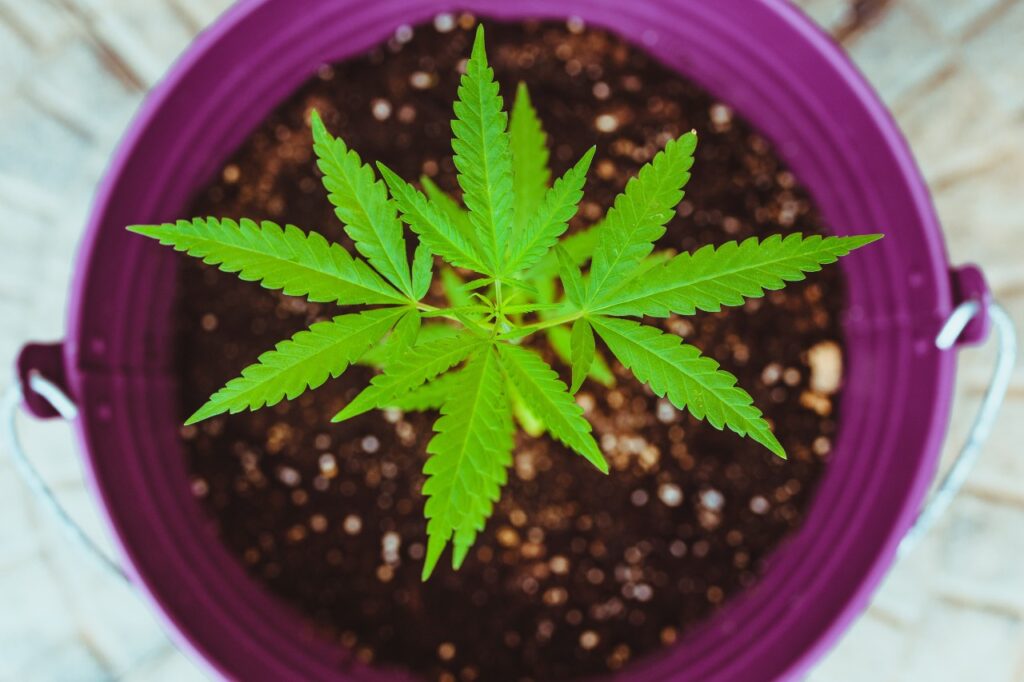
In cannabis cultivation, cloning involves taking a small cutting—usually a branch or a stem—from a chosen mother plant and enabling it to root and grow independently. This new plant retains the genetic makeup of its parent, ensuring that its buds will have identical characteristics. Cuttings are generally taken from robust, healthy plants that exhibit desirable traits such as disease resistance, specific cannabinoid profiles, high yields, and particular terpene flavors and aromas.
Why Use Cloning in Cannabis Cultivation?
Cloning is primarily used to achieve genetic uniformity across multiple harvests. When cultivators find a plant with beneficial traits, cloning allows them to reproduce these traits consistently in future generations. This consistency is especially vital in the medicinal cannabis market, where patients depend on precise cannabinoid and terpene profiles for therapeutic benefits.
Moreover, cloning accelerates the growing process as it bypasses the need to germinate seeds and wait for seedlings to emerge, which can be a slow and less reliable process. Cloning also proves to be cost-effective; once a grower possesses a high-quality mother plant, numerous clones can be produced without additional costs for seeds.
Why Clone Your Cannabis Plants?
Many growers start their cannabis plants from seedlings, but others opt for cloning as it ensures the growth of plants with desired characteristics like potency, flavor, and specific strain qualities without any compromise.
Cloning also comes with additional advantages, which include the following.
- Rapid Growth: Cloning bypasses the germination stage, saving you weeks of waiting for seeds to sprout. You can select clones that are already as mature as the mother plant, which allows them to grow more quickly than seedlings, particularly in the initial weeks.
- Premium Quality: Growing from seeds can be unpredictable. A seed may not develop as expected, resulting in a plant that hardly resembles cannabis at all. Even with seeds from the same strain, variations in phenotypes can lead to differences in flavor and quality. Purchasing from reputable seedbanks can mitigate some of these issues, but variations can still occur. Cloning, on the other hand, is a more reliable method if you aim to closely replicate the mother plant. A clone will almost exactly mirror the mother plant in terms of quality, health, potency, and flavor. It’s important to note, however, that “almost” is key—absolute consistency is never guaranteed in plant cultivation.
- Affordability: Cloning is an extremely affordable option for beginner growers looking to avoid hefty investments. With just one mother plant—or clones from a friend’s garden—you can generate hundreds of plants!
- Repeated Harvests: With cloned cannabis plants, you can achieve multiple harvests each year. Clones grow faster, allowing you to fit in an extra harvest before winter for outdoor plants, and maintain a continuous cycle of harvests with indoor clones.
- Consistency: Growing from seeds can be challenging for beginners unfamiliar with the intricacies of cannabis cultivation. Cloning isn’t exactly simple either—it requires some practice to master. Each seed can produce plants that vary slightly, each with its own unique needs, which can be difficult to manage. Alternatively, cloned plants offer a more familiar and predictable growth pattern, allowing beginners to refine their cultivation techniques before advancing to more complex methods.
- Gender Assurance: With cloned plants, the gender is always known since they are exact copies of the mother plant. This eliminates the need to purchase regular seeds and hope for female plants, saving you money. As a precaution, avoid cloning hermaphrodite plants, as their clones will inherit the same traits.
How to Clone Cannabis Plants?
Cloning cannabis is straightforward, yet it requires attention to detail to promote the healthy development of the clones. Here’s the correct way to clone cannabis.
Step 1: Selecting the Mother Plant
The initial step involves selecting an appropriate mother plant. It’s crucial not to opt for a plant that is unhealthy or defective, as clones will inherit the same issues due to their shared genetic makeup with the parent plant.

A mother plant capable of producing over 50 clones weekly must satisfy specific requirements to be considered an ideal candidate for cloning, such as:
- The mother plant should be robust and clean, free from any signs of stress, buds, nutrient deficiencies, and so forth.
- It should be in the vegetative phase, a period when the plant grows taller and bushier. Clones taken from a flowering plant might struggle with rooting and are more prone to developing into hermaphrodites.
- Ideally, select a mother plant that is less than two months old for the best outcomes.
- The plant should not display any stigma or pistils — the reproductive structures of the female plant. If pistils are visible, it is too late for cloning.
- Avoid fertilizing the mother plant before taking cuttings; this helps flush out excess nitrogen, encouraging the plant to focus on rooting rather than vegetative growth.
- Lastly, ensure the mother plant exhibits the qualities you desire — such as flavor, potency, aroma, strain characteristics — otherwise, cloning it would be pointless.
Step 2: Preparing Your Materials
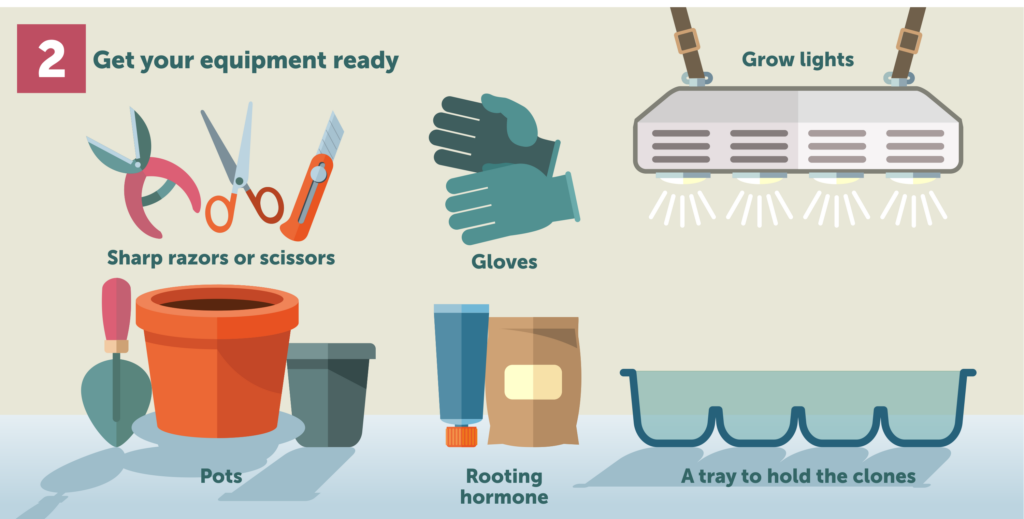
After selecting your mother plant, the next step involves gathering the necessary tools for cloning. Here’s what you’ll need:
- Sharp razors or spring-loaded scissors to ensure clean cuts; avoid blunt scissors as they can harm the clones.
- Gloves to maintain the sterility and cleanliness of the clones.
- A rooting medium of your choice (more details below) and a tray to hold it.
- Rooting hormone to encourage root growth in the new clones.
- Grow lights with a gentle intensity, ideally specific to cloning, for optimal results.
- A humidity dome to keep the relative humidity suitable for clone growth (this is optional).
Step 3: Cutting the Clone Branches
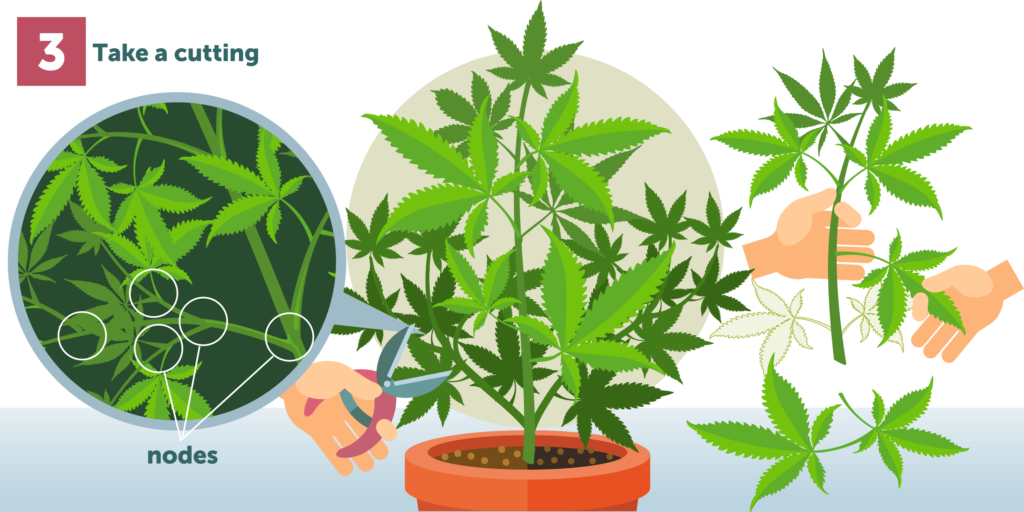
Now, it’s time to remove the clone branches from the mother plant. Use the following guidelines to select the appropriate branches:
- Opt for branches located on the lower parts of the plant as they tend to contain higher levels of rooting hormones, which can accelerate growth.
- Choose branches that are robust, healthy, and free from any signs of stress.
- Identify branches with at least two nodes, as the cut for the clone should be made just below a node. Nodes are the joints on stems where buds and leaves are attached.
- Make the cut at a 45-degree angle using a sharp razor or scissors to maximize the rooting area. The clone should be at least five inches long.
Immediately after cutting, place the clone in water to prevent air from entering the stems, which can hinder capillary functions. Store the clone in a dark location to promote root development.
Additionally, consider trimming larger fan leaves to reduce the clone’s photosynthesis, prompting it to concentrate on root growth. Keep the cut area submerged in water during this process to prevent air from entering.
Step 4: Establishing the Clone’s Roots
First, remove the clone from the water and immediately coat it with a rooting hormone, either in powder or gel form (which we’ll discuss in detail later). Apply the rooting hormone exclusively to the cut end to enhance root development and prevent air exposure.
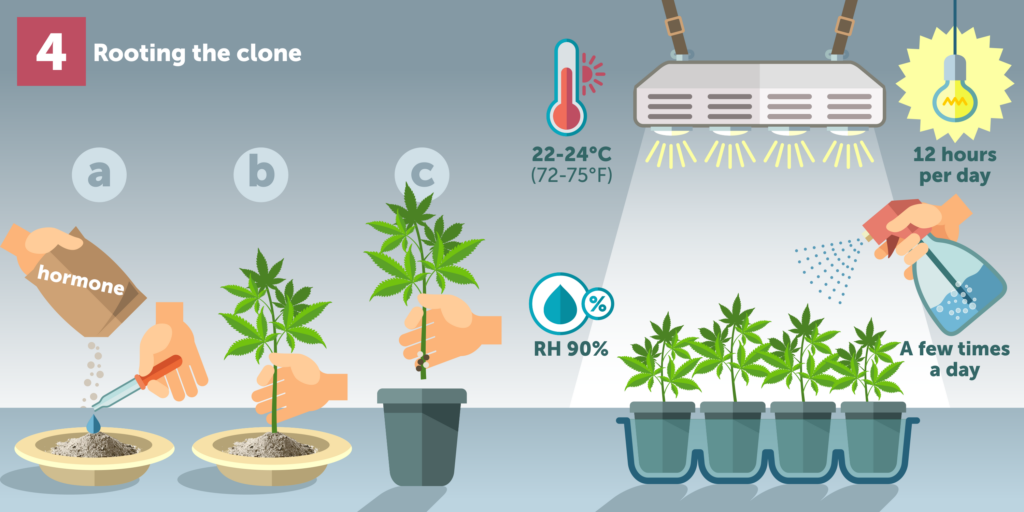
Ensure the rooting hormone is sterile to avoid introducing any contaminants that could inhibit the clone’s growth.
Next, insert the clone into your chosen rooting medium. This medium should allow for passive aeration, crucial in the early stages when clones lack a developed root system and struggle with proper respiration.
Clones thrive in warm, moist conditions. Maintain temperatures between 72°F – 75°F (22°C – 24°C) and humidity around 90% RH.
Regardless of whether you’re using Rockwool cubes, peat, soil, or water, place the clone and medium under a plastic dome. This setup helps reduce water loss through transpiration and keeps the clone hydrated.
Keep the rooting medium and the clone moist by misting them with water (lightly enhanced with nutrients) several times a day. Provide the clones with mild light for at least 12 hours daily.
Fluorescent or CFL lights are ideal as they provide sufficient illumination without being too intense. Since the clone lacks roots for water uptake, mist the plants directly. The clone will absorb what it needs through its leaves.
At the end of the process, you will notice a substantial ball of roots forming beneath the clones, indicating they are ready to be transplanted.
Step 5: Transferring the Clones
It’s essential to monitor the clones daily to ensure they are developing correctly. If you observe any clones perishing, promptly remove them to avoid risking a mold outbreak among the healthy ones.
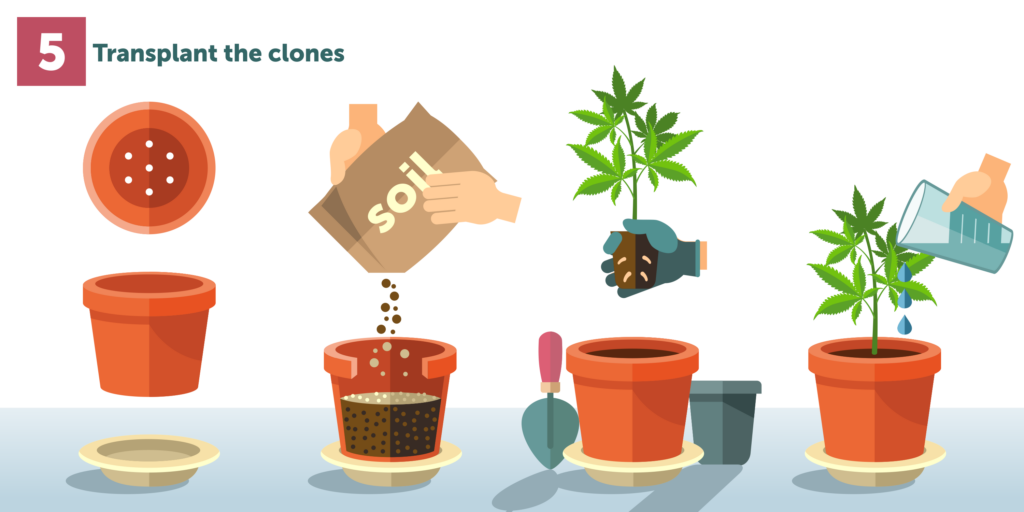
Typically, clones are ready for transplantation in a few weeks, though this timeframe can vary based on the strain and environmental conditions. A clone is ready for transplant when it has developed a substantial root ball or roots several inches long.
Begin by preparing your chosen growing medium and moistening it to ensure it holds in place. Allow any excess water to drain, then dig a hole deep enough to accommodate the roots. For outdoor growth, a hole about 1×1 feet should suffice; for indoor plants, a hole 1 to 2 inches deep is adequate.
Put on gloves for the transplant to minimize transplant shock, which can impede the growth of the clones during subsequent stages. It’s also crucial to minimize the roots’ exposure to air since they are still fragile.
Carefully insert the clone roots into the medium and cover them with more of the medium. The clones should begin to thrive and are expected to start flourishing within 2 to 3 months.
What Are the Best Rooting Mediums for Cannabis Cloning?
There are several rooting mediums available for cloning cannabis, depending on your preferences. Here are some of the most effective and widely used rooting mediums and methods that are sure to yield good results.
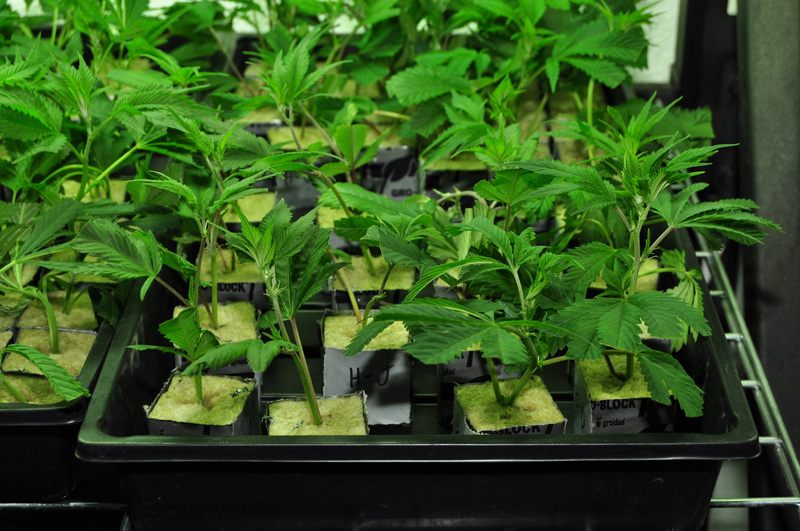
- Rockwool Cubes: Rockwool is an excellent non-soil alternative for rooting cannabis clones. As demonstrated by the grower JR1992, Rockwool cubes are placed within a humidity box to support clone development. These cubes are crafted from molten volcanic rocks that are spun into fibers and shaped into cubes, offering superb retention of air and moisture, which is ideal for root formation. Although Rockwool is pH neutral, it’s prudent to adjust the pH for optimal results. Pre-soak the cubes in water with a pH of 5.5 for a few hours before introducing the clones. This adjustment caters to cannabis’s preference for slightly acidic environments. After the cubes are pre-soaked, dip the clones in rooting hormone and insert them into the cubes. Position these cubes in a grow tray and cover with a plastic dome to create the perfect conditions for root growth. In Rockwool cubes, roots typically develop within a couple of weeks. Once established, the clones are ready to be transplanted directly into your chosen growing medium.
- Water: If Rockwool cubes seem like too much work for your first cloning attempt, consider using a simple glass of water instead. This method is the most affordable and straightforward way to encourage root growth in your fresh clones. Fill a 16-ounce bottle, which has a narrow neck to support the plant effectively, with water and a mild nutrient solution. Ensure the mixture is pH-balanced to 5.8. Then, place the clone into the bottle and let it root from there. Keep the bottle in a dark location away from direct sunlight to prevent algae growth, which can block the clone’s capillaries and impede root development. It’s advisable to change the water every few days to maintain its freshness and prevent algae buildup. If you notice algae, replace the water immediately. After a couple of weeks, you’ll notice a root ball forming — this signals that your clone is ready to be transplanted.
- Soil: The third method for rooting your clones involves using soil—a traditional and straightforward technique that has been effective for generations. Start with pH-balanced gardening soil. Moisten the soil to ensure it’s compact enough to support the plant, and allow any excess water to drain. Next, cut the clone, dip it into rooting hormone, and insert it into the soil. Firmly pack the soil around the clone to help it stand upright. Illuminate the clone with CFL lights to provide adequate light for photosynthesis. Water the clone with plain water as needed to maintain hydration. Additionally, feed the plants with a diluted nutrient solution at least once a week, but be cautious not to overdo it to avoid complications. After a couple of weeks, the clones should be ready to be transplanted into a more permanent growing medium or soil.
- Automatic Cloner: If you’re willing to invest a bit and prefer a more hands-off approach, consider purchasing an automatic cloner. It’s a worthwhile investment, especially if you plan to clone large numbers of cannabis plants. An automatic cloner operates on the principle of aeroponics, misting the cuttings with water and nutrients at pre-set intervals to encourage root development. Simply secure the clones in the device, and the auto cloner handles the rest, streamlining the cloning process.
What is the Most Effective Rooting Hormone?
Rooting hormones stimulate root growth at the cut sites of clones, but what exactly are they? They are composed of essential vitamins and enzymes, with the most effective ones having an optimal auxins to cytokinins ratio.
These hormones accelerate root development by facilitating the transition from stem-cell to root-cell production at the cut. This is why cloners often call rooting hormones “root juice.”
There are various types of rooting hormones available, allowing you to choose based on your preferences, such as the following:
- Powdered Rooting Hormone: If you’re cloning several plants, powdered rooting hormone is an excellent choice. It has a long shelf life, and a small pinch is sufficient to stimulate root growth for each clone. To apply this type of hormone, slightly moisten the powder, dip the cutting into it, and then insert it into your chosen rooting medium. Popular brands like Clonex and Hormex are widely available at most gardening supply stores.
- Liquid Rooting Hormone: Alternatively, if you require flexibility in application, liquid rooting hormone is a viable option. This form allows for adjustments and customization to suit your needs. Many growers favor liquid rooting hormone because it is readily absorbed by the plant’s capillaries, ensuring more comprehensive coverage. There are two ways to use cloning liquid: First, you can dilute a few milliliters of the hormone in water with a pH of 6.0, immerse the clone in this solution, and then place it into your chosen rooting medium. Second, simply submerge the clone directly into the liquid rooting hormone for a few seconds before planting it in the rooting medium.
- Rooting Gel: Lastly, if you are growing just a few clones, rooting gel is an excellent choice, especially for beginners. It adheres well to the cuttings, offering a cleaner application than liquid and avoiding the potential mess of powdered hormones. Simply dip the cannabis cutting directly into the rooting gel and then insert the clone into your chosen rooting medium.
- Organic Rooting Hormones: You can also opt for natural rooting hormones, which many growers believe to be safer for plants. These alternatives are not only easy to use but also nearly cost-free. Top natural rooting hormones include cinnamon, honey, and willow water. Whatever type of rooting hormone you decide on, it’s best to select ones specifically formulated for cannabis. These are free from unnecessary chemicals that might be found in generic, off-the-shelf rooting hormones.
Should You Clean Newly Cut Cannabis Clones?
If you’ve brought fresh clones home, it’s crucial to take certain precautions to keep them healthy and prevent contamination of your other plants.
We advise cleaning the fresh clones using an Integrated Pest Management (IPM) solution of your choice prior to transplanting them into their rooting medium and grow room. Essentially, treat the clones with a safe pesticide. After cleaning, quarantine the clones for a week before integrating them into your grow area.
This approach ensures that if the clones are affected by any disease or pest infestation, your other plants will remain protected.
How to Handle Viral Infections After Cloning?
Sometimes, clones may experience viral infections after the cloning process. This vulnerability arises as they adjust to a new environment, despite their inherent ability to fight off infections.
The likelihood of viral infections can increase with each new generation of clones. To mitigate this, you can either assess the health of the original mother plant or implement a cycling strategy. Cycling involves growing new clones and then replacing the original mother plant with one of its mature clones.
How Can One Sustain Cloning Operations?
If you’re interested in continuing with cloning in the future, there are a couple of strategies you can employ.
Firstly, you could maintain a perpetual mother plant. Keep this mother plant in the vegetative stage, typically under an 18/6 light cycle, to prevent it from budding.
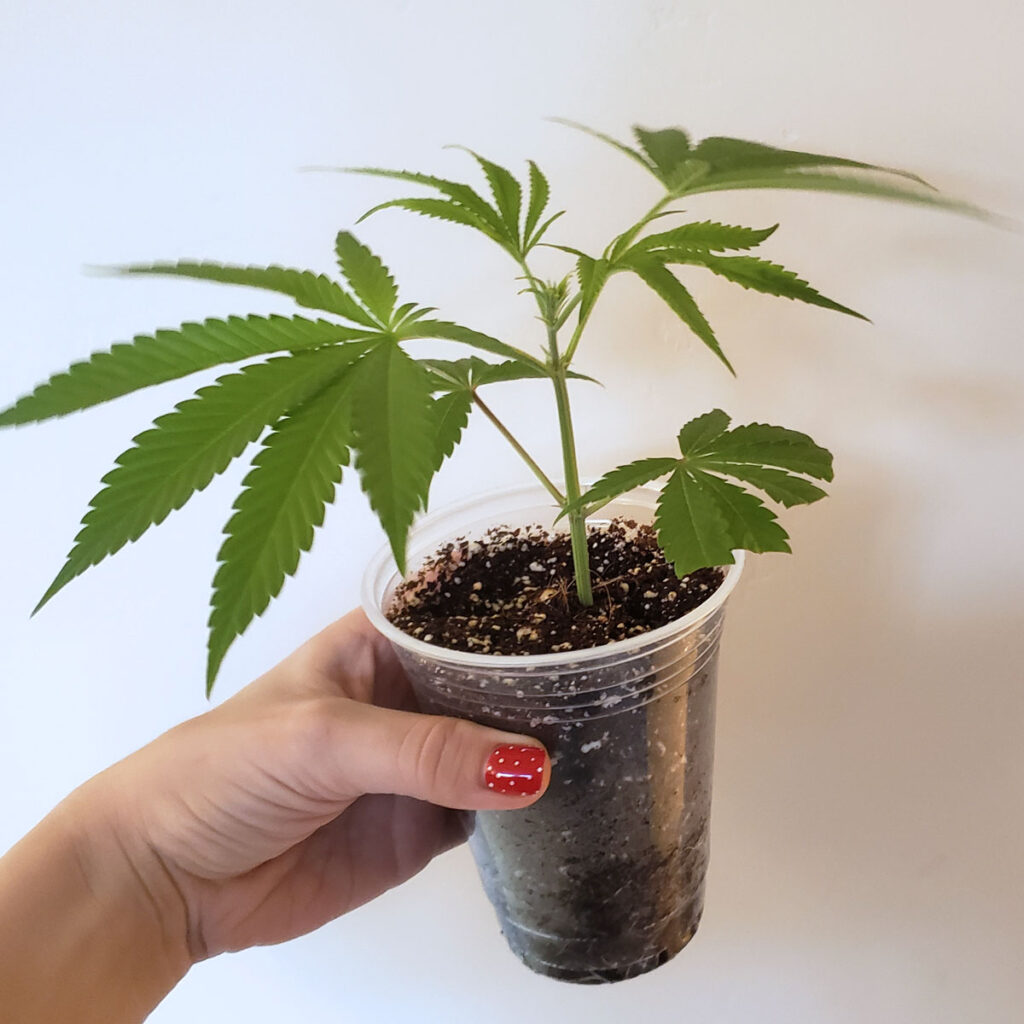
Alternatively, as previously discussed, you can cycle your clones. This involves switching the mother plant to the flowering stage and substituting it with a new clone, which will serve as the next mother plant. Continue this cycle as necessary.
The first method is popular among many growers but requires considerable time, space, and energy. If this method doesn’t suit your needs, the second strategy might be preferable.
If you prefer to avoid these efforts, consider engaging with your local cloning community. Many growers sell or trade clones, providing an opportunity to acquire new clones without the upkeep. Additionally, this interaction can enhance your cloning knowledge and introduce you to various strains.
Conclusion
Cannabis cloning is a sophisticated yet rewarding practice that offers numerous benefits for growers, ranging from genetic consistency and cost savings to simplified cultivation cycles. This guide has explored various aspects of the cloning process, from selecting the right mother plant and preparing your cloning materials to the actual cloning steps and subsequent care of the clones.
We’ve discussed the advantages of different rooting mediums, such as Rockwool, water, and soil, and delved into the effectiveness of various types of rooting hormones, including powdered, liquid, gel, and natural options. The guide also provided important insights on maintaining cleanliness and addressing potential viral infections in clones, ensuring that your cloning efforts lead to healthy, robust plants.
Finally, sustaining cloning operations through methods like maintaining a perpetual mother plant or cycling clones offers flexibility and longevity in cannabis cultivation. Whether you are a novice or an experienced grower, understanding and applying these cloning techniques can significantly enhance your gardening success, allowing you to consistently produce high-quality cannabis with desirable traits.
By adopting the practices outlined in this guide, you can maximize the potential of your cannabis cultivation endeavors, ensuring a fruitful and efficient growing experience.
