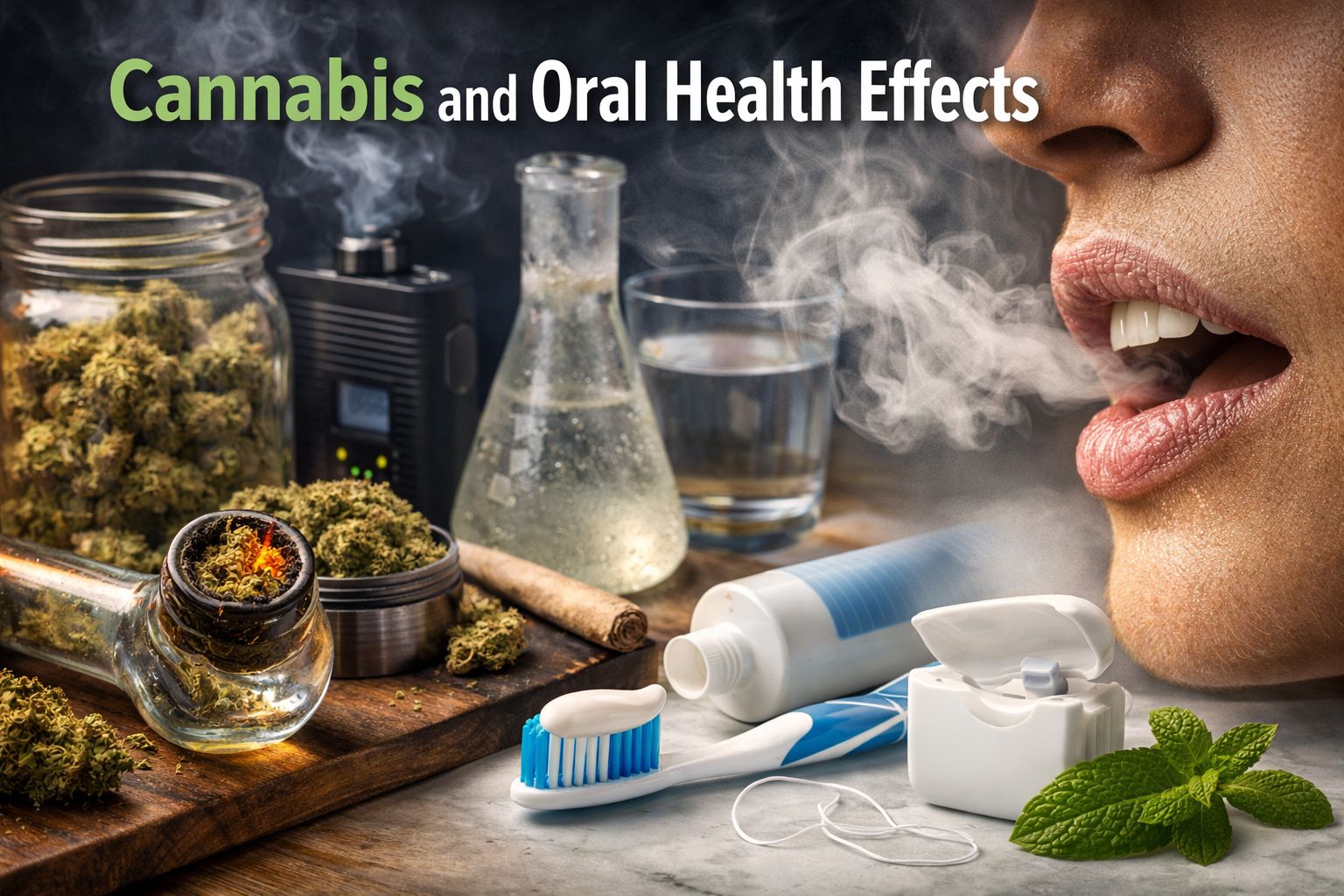
I grow and I consume, and that combination has made me more honest about what cannabis does to my daily routines. When I was new, I only cared about yield, smell, and potency. Over time I began noticing something less glamorous: how my mouth felt after a session, how my gums looked during brush time, and how often I reached for sugary snacks when I was high. That’s why I’m writing about cannabis and oral health effects from a cultivator’s point of view.
This is not medical advice. I’m sharing what I’ve personally observed and what I changed in my grow room and my habits. If you have ongoing pain, bleeding gums, loose teeth, mouth sores, or severe dryness, the responsible move is to talk to a dental professional.
What I mean when I say cannabis and oral health effects
When growers talk about “smoothness,” we usually mean throat comfort. But the mouth gets hit first. In my experience, cannabis and oral health effects show up in three practical ways:
- Dry mouth, especially after repeated sessions
- More plaque risk because of snacking and skipped hygiene steps
- Irritation from hot smoke, harsh vapor, or poorly finished flower
I’ve also seen that the same plant can feel totally different depending on how it was grown and cured. That’s the part cultivators can control.
Dry mouth: the common starting point
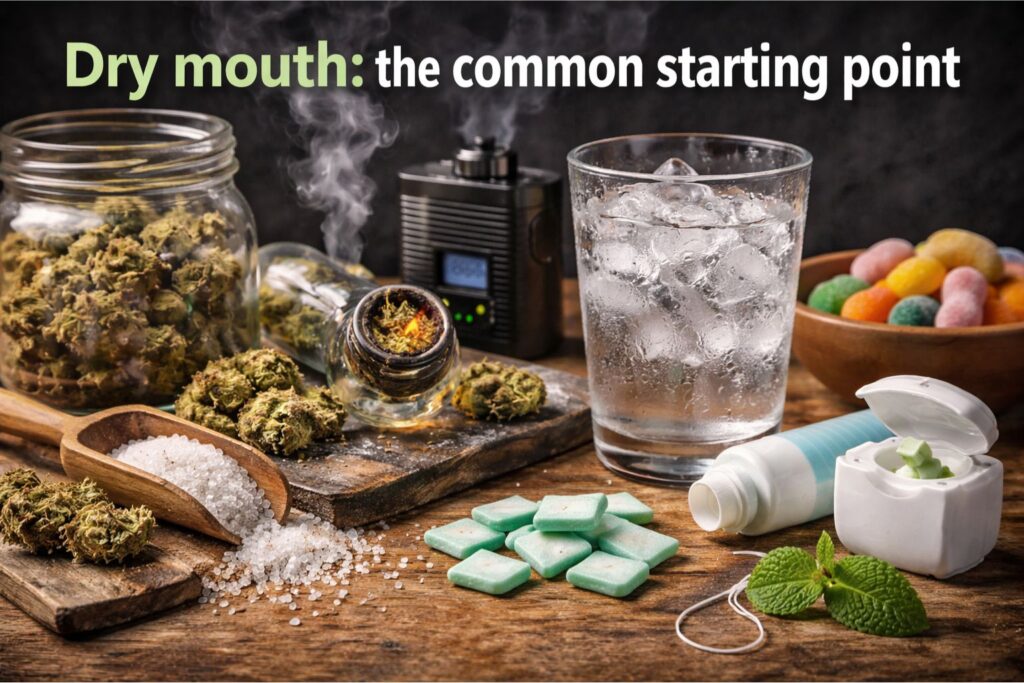
Marijuana and dry mouth go together for a lot of people. When my mouth is dry, my tongue feels coated, my breath gets worse, and I’m more likely to chew candy or drink soda, which is the opposite of what teeth want. If I’m honest, the biggest driver of weed-related mouth trouble is not the plant by itself, but the chain reaction: dryness leads to snacking, snacking leads to plaque, and plaque leads to irritated gums.
The simplest fix I’ve found is an oral hydration routine for weed users. I used to “drink water sometime.” Now I treat hydration like part of the session.
Here is the oral hydration routine for weed users I follow most days:
1) Drink a full glass of water before I use cannabis.
2) Keep water at room temperature nearby and sip between hits.
3) After the session, rinse with water for 20–30 seconds.
4) If I’m still dry, I chew sugar-free gum for 10 minutes.
That oral hydration routine for weed users has done more for my comfort than switching strains every month.
Smoke versus vapor versus edibles: how the mouth experience changes
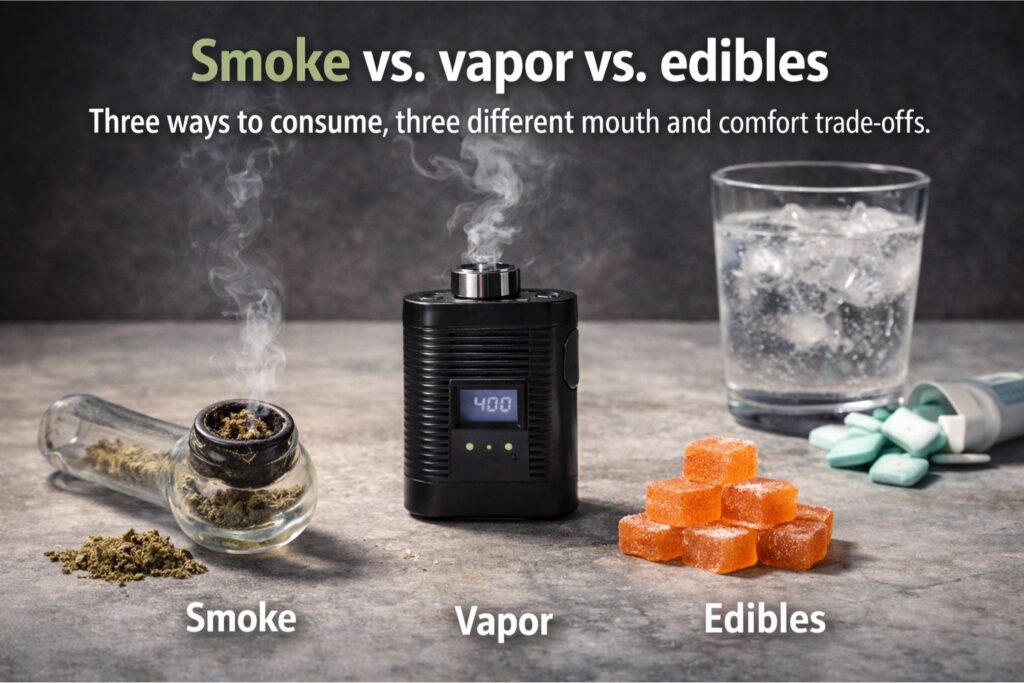
Smoking flower: hottest and driest
Combustion is heat plus residue. Even great flower is still smoke. When I smoke weed multiple times in a day, I notice more gum tenderness and more “fuzzy teeth” feeling at night. For anyone paying attention to cannabis and oral health effects, smoking is the method that demands the most discipline with water and brushing.
What helps me most:
- Smaller sessions instead of constant puffing
- Clean glass, because dirty resin tastes harsh and feels harsh
- A water rinse after the last hit, especially before bed
Vaping: often gentler, but dryness still happens
Vapor can feel smoother, but it can still dry my mouth out. The big variable is temperature. High heat makes vapor feel sharper and leaves my mouth feeling tacky. This is where I rely on low-heat cannabis vaping tips, because they’re simple and they work.
My low-heat cannabis vaping tips:
- Start low, increase only if flavor drops
- Take slower pulls with longer breaks
- Keep the mouthpiece clean and don’t share it
- Pair the session with the oral hydration routine for weed users
If you want a cleaner mouth feel, low-heat cannabis vaping tips matter more than buying a new device.
Edibles and oils: no heat, but habits still matter
Edibles remove smoke, but they can stretch out the “snacking window.” If I take an edible and graze for two hours, my mouth is exposed to carbs for two hours. That is an easy way to turn cannabis and oral health effects into a daily problem.
My rule is plain: after I’m done eating, I treat it like a meal and I brush or at least rinse.
The grow-room side: why cure and dry change how your mouth feels
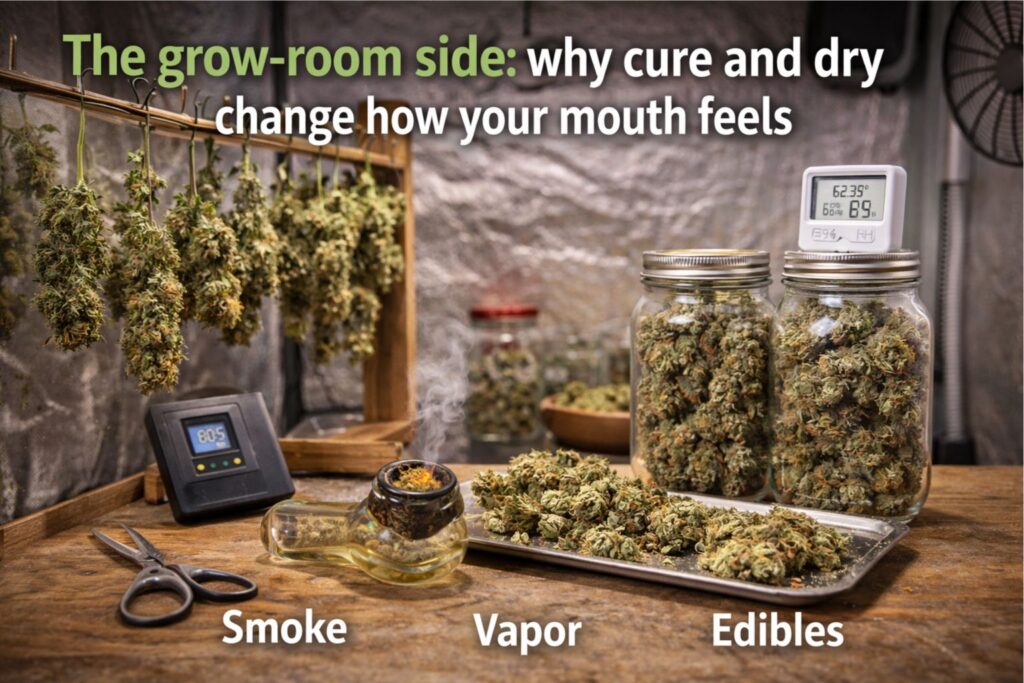
I used to think curing was about smell. Now I think curing is about comfort.
Drying pace: the foundation of comfort
If a harvest dries too fast, I get that sharp “green edge” and the smoke feels scratchy. If it dries too slow, I worry about mold and musty flavors. My sweet spot is humidity controlled cannabis drying with gentle air movement.
My humidity controlled cannabis drying targets for most home grows:
- Temperature: 18–20°C
- Relative humidity: 55–60%
- Air movement: light circulation, no fan blast on buds
- Dry time: usually 10–14 days, adjusted for flower density
Humidity controlled cannabis drying is not glamorous, but it is a major factor in how clean the flower tastes and how my mouth feels afterward. I track it because I want consistent results.
Curing: where “smooth” gets built
I chase smooth smoke from proper curing, not by guessing, but by being patient. I cure in airtight containers and aim for stable jar conditions. Early on I open containers more often, then I taper off as the moisture evens out.
When I get smooth smoke from proper curing, I notice:
- Less tongue coating
- Less urge for sugary drinks
- Cleaner aftertaste
- Less irritation during longer sessions
Smooth smoke from proper curing is a real outcome, not marketing language. It’s also one of the few quality factors I can improve without buying anything new.
Feeding and finishing: keep it balanced late in flower
In hydro I watch EC/PPM carefully. In soil I avoid heavy late feeding that the plant can’t finish. My goal is a clean burn and stable flavor, not maximum weight at all costs. When I overdo nutrients late, the smoke can feel dirtier and the mouth experience gets worse.
Practical indoor parameters I actually use
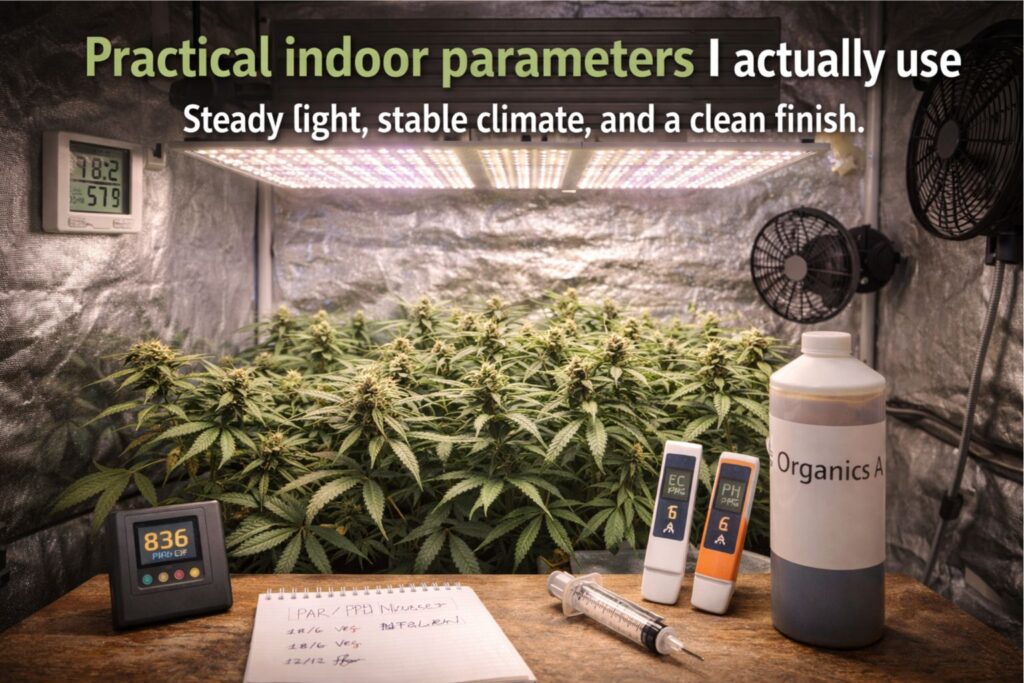
I’m not claiming one “perfect” recipe. But for readers who want real numbers, here are ranges I use as a baseline:
Light and photoperiod
- Vegetative photoperiod: 18/6
- Flowering photoperiod: 12/12
- Typical flowering intensity: 700–900 PPFD, adjusted to cultivar response and canopy health
Temperature, humidity, and VPD
- Lights on: 24–27°C
- Lights off: 19–22°C
- Late flower humidity: often 45–55% depending on temperature and flower density
- I use VPD as a guide, not a religion. If leaves look stressed, I adjust.
Training and airflow
- I prefer low-stress training, light defoliation, and steady airflow
- I avoid over-defoliating late because it can stress plants and slow finish
Healthy plants finish cleaner. Clean finishing supports mouth-friendly cannabis consumption habits because the product is simply easier to use without irritation.
Mouth-friendly cannabis consumption habits that actually stick
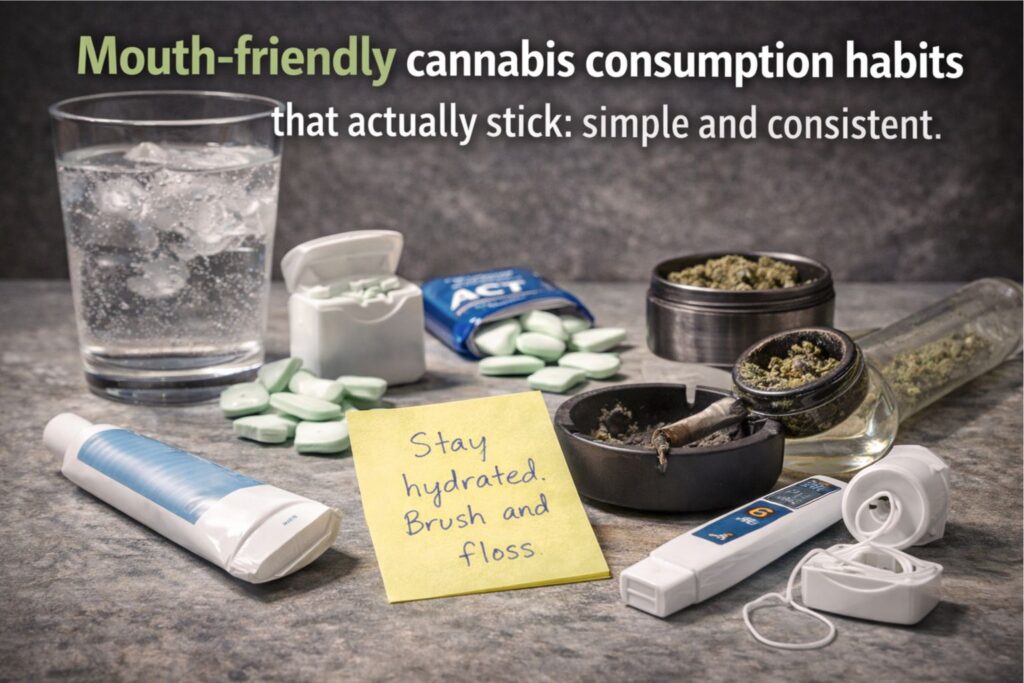
When people ask me for mouth tips, I give the habits I can keep year-round. I call these mouth-friendly cannabis consumption habits because they’re about behavior, not gadgets.
My mouth-friendly cannabis consumption habits:
- Water before, during, and after every session
- Brush teeth before bed no matter what, even if it’s just two minutes
- Floss earlier in the evening, before I’m too relaxed
- Keep snacks less sticky when possible
- Avoid sharing mouthpieces
Mouth-friendly cannabis consumption habits work best when they’re automatic. I set up my space so water is always available, and floss is visible, not hidden.
Choosing genetics with “comfort” in mind
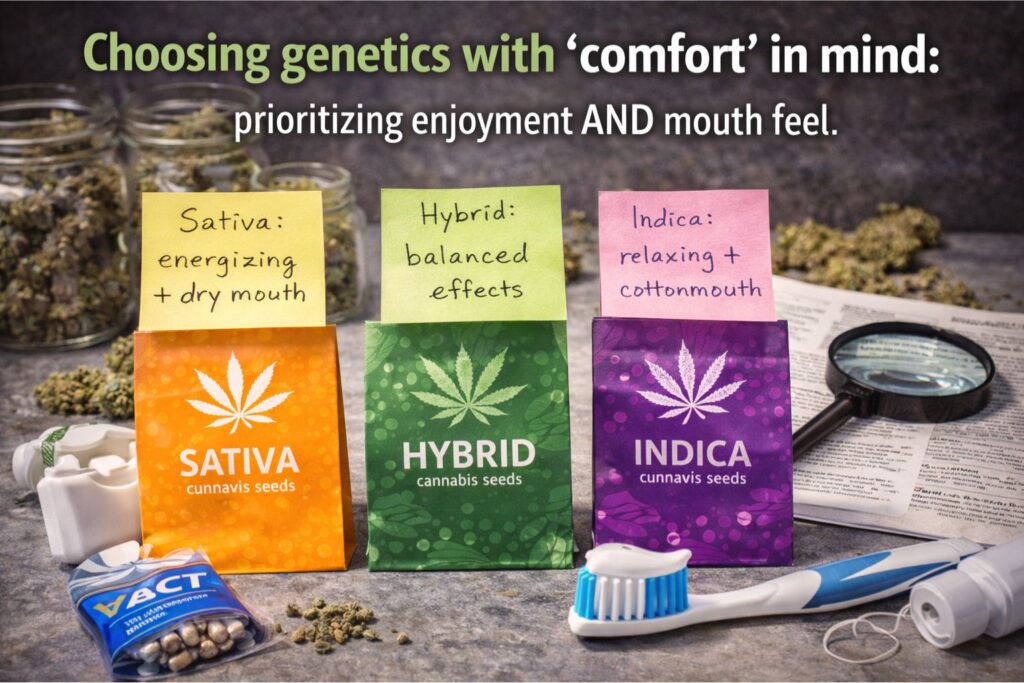
I used to chase potency only. Now I focus on choosing genetics for smoother flower. Some cultivars are naturally sharper on the palate, and some are rounder. I don’t name specific strains because the same strain name can behave differently in different gardens, but I do track what I feel.
What I look for when choosing genetics for smoother flower:
- Flavor stays clean through the whole session
- No chemical bite on the tongue
- No harsh spike at the end of the draw
- The aroma matches the flavor after cure
Choosing genetics for smoother flower also helps new growers because “easy to enjoy” often overlaps with “easy to grow.”
Indica, sativa, and hybrid: how I use those labels
I still use indica, sativa, and hybrid as shorthand, but I don’t treat them as guarantees. Effects are influenced by cannabinoid balance, terpene profile, dose, and personal tolerance. For cultivation planning, I care more about flowering time, stretch, and feeding sensitivity than the label.
Seeds, seed buying, and staying practical

Even in a mouth-focused article, seed buying matters because good genetics and good planning lead to better finished flower.
Feminized seeds: selection criteria that keep my runs predictable
I like feminized seeds for predictable canopy planning. I use feminized seed selection criteria so I’m not guessing.
My feminized seed selection criteria:
- Breeder track record and stability notes
- Expected flowering time and stretch
- Mold resistance for my region
- Sensitivity to nutrients (light feeder vs heavy feeder)
- Reports of consistent phenotypes
I’m repeating feminized seed selection criteria here because it’s easy to forget. Feminized seed selection criteria save time and reduce mistakes, especially for indoor growers.
Autos: a beginner setup that avoids stress
A beginner autoflower indoor schedule is all about consistency. Autos can be forgiving if you keep the basics steady.
My beginner autoflower indoor schedule:
- Light: 18/6 the whole run for simplicity
- Moderate PPFD and stable distance to avoid light stress
- Gentle feeding, especially early
- Minimal transplant shock (start in the final container if possible)
I’ve seen a beginner autoflower indoor schedule produce clean-tasting weed when the grower doesn’t overcomplicate it. A beginner autoflower indoor schedule also helps people who want quick cycles without massive plants.
Ordering seeds: the questions I always ask
I keep a seed ordering safety checklist because shipping problems are expensive and frustrating.
My seed ordering safety checklist:
- Do they provide tracking?
- What is the typical delivery window to my region?
- How are seeds packaged to protect them from crushing and temperature swings?
- What is the policy if seeds arrive damaged or don’t germinate?
- What payment options and privacy protections are available?
Seed ordering safety checklist habits don’t make you paranoid. They make you prepared. I also keep seed ordering safety checklist notes for each vendor so I don’t rely on memory next season.
Know your region: do a quick rules check before you start
I don’t give legal advice. I just plan responsibly. A local cannabis cultivation rules check is part of the process because laws vary by region, and they change.
What I do for a local cannabis cultivation rules check:
- Verify whether home cultivation is allowed where I live
- Check plant count limits, visibility rules, and odor complaints policies
- Understand seed import rules if ordering across borders
- Confirm whether medical or adult-use frameworks apply locally
I do a local cannabis cultivation rules check before ordering and again before the first germination. A local cannabis cultivation rules check is simple, and it prevents dumb mistakes.
Quick checklists I use to keep the experience cleaner
Session checklist
- Water ready (oral hydration routine for weed users)
- Clean mouthpiece or clean glass
- Small snack plan that’s not sticky sugar
- Brush and floss plan for later
Post-harvest checklist
- Humidity controlled cannabis drying targets set
- Gentle airflow established
- Daily checks for smell changes and moisture balance
- Cure schedule planned for at least 3–4 weeks for best results
I’m repeating humidity controlled cannabis drying and smooth smoke from proper curing because these steps are where I see the biggest difference in comfort.
FAQ
Do cannabis and oral health effects happen to everyone?
No. People vary a lot. But from what I’ve seen, cannabis and oral health effects are more likely when use is frequent, hydration is low, and hygiene steps get skipped.
Is smoking worse than vaping for the mouth?
For me, smoking is harsher because of heat and residue. Vaping can still cause dryness, so I use low-heat cannabis vaping tips and the oral hydration routine for weed users either way.
What’s the biggest grower-controlled factor for comfort?
Smooth smoke from proper curing. If I had to pick one thing that changes mouth feel the most, it’s the cure. Smooth smoke from proper curing reduces sharpness and residue in my experience.
Does better drying really change the mouth experience?
Yes. Humidity controlled cannabis drying prevents the “crispy outside, wet inside” problem that often leads to harsh smoke. Humidity controlled cannabis drying is a quality control step, not just a storage step.
Any final habit that helps most?
Mouth-friendly cannabis consumption habits that are consistent. Water, rinse, brush, and floss earlier in the evening. Mouth-friendly cannabis consumption habits are boring, and that’s why they work.
If you take only one thing from this, let it be this: cannabis and oral health effects are not only about the plant. They’re about the whole loop—how you grow, how you finish, how you consume, and how you care for your mouth afterward.
