Can You Clone Autoflower Cannabis Plants?
Cloning cannabis plants is a popular technique among cultivators for maintaining desirable traits and ensuring consistency in their crops. The practice involves taking a cutting from a mother plant and encouraging it to grow roots and develop into a new, genetically identical plant. While this method is well established and commonly used with photoperiod cannabis plants, autoflowering cannabis presents unique challenges. This comprehensive guide delves into the intricacies of cloning autoflowering cannabis plants, exploring the biology, feasibility, methods, benefits, and drawbacks of this approach.
Understanding Autoflowering Cannabis
Due to their special qualities and simplicity of production, autoflowering cannabis plants have become very popular among cultivators. Autoflowering cannabis plants do not wait for variations in the light cycle to trigger flowering, in contrast to their photoperiod cousins. Instead, they automatically switch from the vegetative stage to the flowering stage based on age. This guide delves into the biology, genetics, advantages, and cultivation techniques of autoflowering cannabis, providing a comprehensive understanding of this fascinating category of cannabis plants.
Biology and Genetics of Autoflowering Cannabis
Origins and Evolution
Autoflowering cannabis plants trace their origins to Cannabis ruderalis, a subspecies of cannabis that evolved in the harsh climates of Central and Eastern Europe, particularly in regions with short growing seasons and less daylight. This evolutionary background endowed autoflowers with a unique ability to flower independently of light cycles, allowing them to complete their life cycle quickly and efficiently.
Genetic Characteristics
Autoflowering cannabis plants are typically hybrids, incorporating genetics from Cannabis ruderalis along with Cannabis sativa and/or Cannabis indica. The key genetic trait of autoflowers is their ability to flower automatically after a certain period, usually around 2-4 weeks from germination. This trait is governed by the presence of specific genes inherited from the ruderalis lineage, which trigger the flowering process based on the plant’s age rather than environmental cues.
Advantages of Autoflowering Cannabis
Autoflowering cannabis plants offer several distinct advantages that make them appealing to both novice and experienced growers:
Rapid Growth and Harvest
One of the most significant benefits of autoflowering cannabis is their short life cycle. These plants typically complete their entire growth cycle from seed to harvest in about 8-12 weeks. This rapid turnaround allows for multiple harvests within a single growing season, making autoflowers an attractive option for those seeking quick results.
Resilience and Hardiness
Cannabis plants that blossom automatically are renowned for their adaptability and capacity to flourish in a variety of environmental settings. Their ruderalis heritage imparts a robust nature, enabling them to withstand pests, diseases, and adverse weather conditions better than some photoperiod strains. This hardiness makes them suitable for outdoor cultivation, even in regions with shorter growing seasons or unpredictable climates.
Compact Size
When comparing autoflowering cannabis plants to many photoperiod strains, they are typically more compact and smaller. This compact size makes them ideal for indoor cultivation, as they require less vertical space and can be grown discreetly in small grow rooms or tents. Additionally, their size makes them easier to manage, especially for growers with limited space.
Simplified Light Requirements
Unlike photoperiod cannabis plants, which require specific light cycles to trigger flowering, autoflowers do not depend on changes in light duration. They can be grown under a consistent light schedule, typically 18-24 hours of light per day, throughout their entire life cycle. This simplifies the cultivation process and allows growers to maximize light exposure for increased yields.
Biology of Cloning
Cloning involves creating a genetically identical copy of a parent plant through vegetative propagation. This process relies on the plant’s ability to regenerate from a cutting—a small section of the stem, typically including a few leaves and nodes, placed in a conducive environment to develop roots. For photoperiod plants, this method is straightforward due to their extended vegetative phase, during which cuttings can develop roots and grow into mature plants before the flowering phase is triggered by a change in light cycles.
Challenges of Cloning Autoflowering Cannabis
The primary challenge in cloning autoflowering cannabis lies in their fixed life cycle. Since autoflowers begin to flower based on age, a cutting taken from an autoflowering plant is already on the same biological clock as the mother plant. This means that the clone will flower at the same time as the mother, regardless of whether it has had sufficient time to establish a root system and vegetative growth.
Limited Vegetative Phase
Autoflowering plants have a very short vegetative phase, often just a few weeks. During this period, the plant focuses on developing its structure, leaves, and root system. For a clone to be successful, it needs time to establish roots and grow before transitioning to the flowering stage. However, due to the fixed lifecycle of autoflowers, clones may not have enough time to develop fully before flowering begins.
Reduced Yield and Vigour
Because the clone’s flowering schedule is tied to the age of the mother plant, the clone will typically be smaller and less vigorous than the original plant. This reduced growth period results in smaller plants with lower yields, as the clone has less time to develop a robust structure and foliage necessary for supporting larger buds.
Methods of Cloning Autoflowering Cannabis
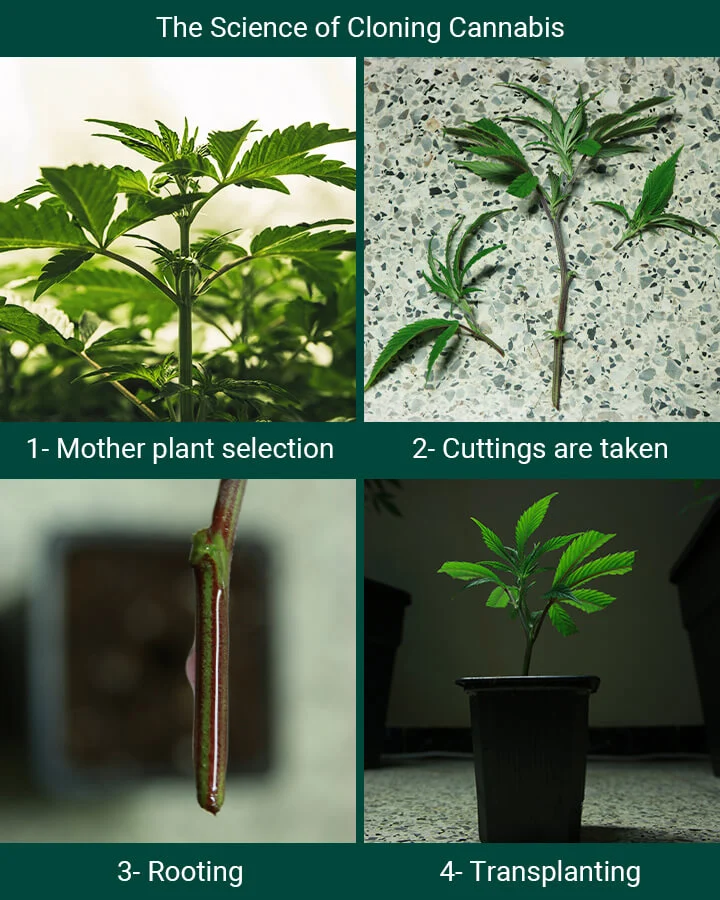
Cloning autoflowering cannabis presents unique challenges compared to photoperiod cannabis due to the fixed life cycle of autoflowers. However, it is possible to clone these plants with careful attention to timing, environmental conditions, and techniques that optimize the chances of success. Here, we explore the various methods of cloning autoflowering cannabis, detailing the steps and considerations for each approach.
Traditional Cutting Method
The traditional cutting method, or vegetative propagation, is the most commonly used technique for cloning cannabis plants. While more challenging with autoflowers, it can be successful if done correctly.
Steps:
- Selection of Cuttings:
- Choose a healthy, vigorous mother plant in the early vegetative stage.
- Select cuttings from the lower branches, which tend to root more easily.
- Preparation of Cuttings:
- Cut a 4-6 inch section from the chosen branch just below a node.
- Remove the lower leaves to reduce water loss and improve rooting.
- Rooting Hormone Application:
- Dip the cut end of the cutting into a rooting hormone to stimulate root development.
- Planting:
- Insert the cutting into a moist, well-aerated growing medium such as rock wool, peat pellets, or a soil mix.
- Ensure the medium is pre-soaked and has a slightly acidic pH (5.5-6.5).
- Environmental Control:
- Place the cuttings under a humidity dome to maintain high humidity (80-90%).
- Provide moderate light intensity using fluorescent or LED lights with a light schedule of 18-24 hours of light per day.
- Maintain a temperature range of 72-77°F (22-25°C).
- Monitoring and Care:
- Regularly check for root development and signs of stress.
- Mist the cuttings daily to maintain humidity.
- Once roots develop, gradually acclimate the clones to the external environment before transplanting them to their final growing containers.
Tissue Culture (Micropropagation)
Tissue culture, or micropropagation, is an advanced cloning technique that can be used to produce large numbers of identical plants from a small tissue sample. This method is more complex but offers higher success rates and is ideal for commercial operations.
Steps:
- Explants Selection:
- Choose a small piece of plant tissue, such as a leaf, stem, or bud, from a healthy mother plant.
- Sterilization:
- Sterilize the explants to eliminate any contaminants. An alcohol or bleach solution can be used for this, and then the area should be rinsed with sterile water.
- Culture Medium:
- Place the explants in a sterile culture medium containing a balanced mixture of nutrients, hormones, and vitamins to support growth.
- Callus Induction:
- The explants will develop callus tissue in response to the culture medium and hormonal signals.
- Organogenesis or Somatic Embryogenesis:
- Depending on the desired outcome, the callus tissue is induced to form either shoot and root organs (organogenesis) or somatic embryos (somatic embryogenesis).
- Acclimatization:
- Once the plantlets have developed sufficient roots and shoots, they are gradually acclimatized to external conditions before being transplanted to soil or another growing medium.
Air Layering
Air layering is a less common but effective method for cloning cannabis plants. This technique involves rooting a section of the plant while it is still attached to the parent plant.
Steps:
- Selection of Branch:
- Choose a healthy branch on the parent plant that can be bent down to the ground or placed in a suitable container.
- Girdling:
- Make a small girdle around the selected branch by removing a ring of bark. This encourages the formation of roots at the girdling site.
- Rooting Medium:
- Apply a rooting hormone to the girdled area and wrap it with moist sphagnum moss or another suitable rooting medium.
- Wrapping:
- Cover the rooting medium with plastic wrap to maintain moisture and secure it with ties.
- Monitoring and Root Development:
- Keep the rooting medium moist and check for root development periodically.
- Once roots have formed, the branch can be cut below the girdled area and transplanted.
Key Considerations for Cloning Autoflowering Cannabis

Timing
Timing is crucial when cloning autoflowering cannabis. The cuttings should be taken as early as possible during the vegetative stage to maximize the time available for root development before the flowering phase begins. Ideally, cuttings should be taken within the first two weeks of growth.
Environmental Conditions
Maintaining optimal environmental conditions is essential for successful cloning. High humidity, moderate light intensity, and stable temperatures promote root development and minimize stress on the cuttings.
Nutrient Management
Autoflowering cannabis plants have different nutrient requirements compared to photoperiod strains. Cuttings should be provided with a balanced nutrient solution that supports root development without causing nutrient burn.
Monitoring and Care
Regular monitoring and care are vital for ensuring the success of clones. This includes checking for root development, maintaining appropriate humidity levels, and gradually acclimating the clones to the external environment.
Benefits of Cloning Autoflowering Cannabis
Despite the inherent challenges, there are potential benefits to cloning autoflowering cannabis plants. These benefits can make the effort worthwhile for some growers, especially those with specific goals or needs.
Preservation of Genetics
Cloning allows for the preservation of specific genetic traits found in a particular autoflowering plant. If a grower finds an autoflower with exceptional characteristics, such as high potency, unique flavor, or strong resistance to pests and diseases, cloning can help maintain and propagate these desirable traits without the variability of growing from seed.
Rapid Propagation
For commercial growers or those looking to maintain a continuous supply of cannabis, cloning offers a way to rapidly propagate plants without the need to germinate new seeds. This can save time and resources, allowing for a more consistent and predictable cultivation process.
Experimentation and Learning
Cloning autoflowering cannabis can be a valuable learning experience for growers. It offers an opportunity to experiment with different techniques and conditions, improving overall cultivation skills and knowledge. Even if the results are not as impressive as with photoperiod clones, the insights gained can be beneficial for future growing endeavors.
Drawbacks of Cloning Autoflowering Cannabis
The drawbacks of cloning autoflowering cannabis often outweigh the benefits for many growers. Understanding these challenges can help growers make informed decisions about whether cloning is the right approach for their cultivation goals.
Lower Yields
As previously mentioned, clones of autoflowering plants tend to produce lower yields due to the limited time available for vegetative growth. This can be a significant disadvantage for growers aiming to maximize their harvests, as the effort and resources invested in cloning may not provide a worthwhile return.
Inconsistent Results
Cloning autoflowering plants often results in inconsistent outcomes. Due to the fixed flowering timeline, some clones may not develop properly, leading to variability in plant size, bud quality, and overall yield. This inconsistency can be frustrating for growers seeking reliable and predictable results.
Resource Intensive
Cloning autoflowers requires a controlled environment with specific conditions to promote rooting and growth. This can involve additional equipment, such as cloning chambers, humidity domes, and specialized lighting. The time and effort required to manage and monitor the clones can also be resource-intensive, making it less practical for casual or small-scale growers.
Alternative Approaches
Given the challenges associated with cloning autoflowering cannabis, growers may consider alternative approaches to achieve their cultivation goals. These methods can provide more reliable and productive outcomes without the complexities of cloning.
Growing from Seeds
Growing autoflowering cannabis from seeds remains the most straightforward and effective method. High-quality seeds from reputable breeders offer genetic consistency and predictable growth patterns. Autoflowering seeds are readily available and can be germinated quickly, allowing for successive harvests throughout the year.
Selective Breeding
For those interested in preserving specific genetic traits, selective breeding can be a viable alternative to cloning. By cross-pollinating autoflowering plants with desirable characteristics, growers can develop their own stable strains over several generations. While this requires more time and effort than cloning, it can result in a customized and resilient genetic line.
Tissue Culture
Tissue culture, also known as micropropagation, is an advanced technique used to produce large numbers of identical plants from a small tissue sample. This method can be used to propagate autoflowering cannabis, offering a more controlled and scalable approach to cloning. Tissue culture is more suited for commercial operations or research, albeit it does require specific tools and knowledge.
Conclusion
Cloning autoflowering cannabis presents unique challenges due to the fixed life cycle of these plants, which differs significantly from photoperiod cannabis. However, with careful attention to timing, environmental conditions, and cloning techniques, it is possible to successfully clone autoflowers and preserve their desirable traits.
Understanding the biology of cloning is fundamental to achieving success. Cloning relies on the principles of totipotency and cellular differentiation, where plant cells can revert to an undifferentiated state and then develop into a new plant. Key mechanisms such as dedifferentiation, callus formation, root induction, and shoot development are harnessed in the cloning process.
Several methods are used to clone autoflowering cannabis, each with its own set of steps and considerations:
- Traditional Cutting Method: This common technique involves taking a cutting from a healthy mother plant, applying rooting hormone, and planting it in a moist growing medium. Maintaining high humidity, moderate light, and stable temperatures is crucial for promoting root development and minimizing stress on the cuttings.
- Tissue Culture (Micropropagation): An advanced method that uses small tissue samples from a parent plant to produce large numbers of identical plants in a sterile culture medium. This method, while more complex, offers higher success rates and is ideal for commercial operations.
- Air Layering: This less common technique involves rooting a section of the plant while it is still attached to the parent plant. The girdled section is treated with rooting hormone and wrapped with a moist medium until roots develop, at which point it can be transplanted.
Key considerations for cloning autoflowering cannabis include timing the cuttings early in the vegetative stage to maximize root development time, maintaining optimal environmental conditions, providing appropriate nutrient management, and regular monitoring and care.
Despite the challenges, cloning autoflowering cannabis offers several benefits. It ensures genetic consistency, allowing growers to preserve and propagate desirable traits such as potency, flavor, aroma, and pest resistance. Cloning also allows for rapid propagation, reducing the time and resources needed to germinate seeds. For commercial growers, cloning can be a cost-effective method of producing large quantities of uniform plants.
However, growers must weigh these benefits against the potential drawbacks, such as lower yields and the need for careful management of the clones. For many, alternative approaches like growing from seeds or selective breeding may offer more reliable and productive results.
Ultimately, the decision to clone autoflowering cannabis depends on individual goals, resources, and willingness to experiment. As cannabis cultivation techniques continue to evolve, the potential for successful cloning of autoflowers may improve, providing growers with more options to optimize their crops and achieve consistent, high-quality harvests.
