Table of Contents
Can You Breed Your Own Cannabis Seeds at Home?
Breeding your own cannabis seeds at home is not only possible but also a rewarding process for growers who want to explore plant genetics, preserve desirable traits, and maintain a level of control over their cannabis crops. With the right knowledge, planning, and environment, home seed breeding can be done legally in many places where cultivation is permitted.
Breeding cannabis at home builds on a broader understanding of how plants are grown, flowered, and selected over time, which is explored in our cannabis cultivation and genetics overview.
Understanding Cannabis Breeding Basics
Usually, cannabis plants are dioecious, which means that the male and female flowers develop on different plants. Males produce pollen, while females produce the buds used for consumption. To produce seeds, male pollen must fertilize the female plant’s flowers. Once fertilized, the female will redirect energy from bud production to seed development.
The process of cannabis breeding involves the controlled pollination of selected male and female plants with desirable traits to produce seeds that express those traits in future generations.
Why Breed Cannabis at Home?
1. Customization of Traits
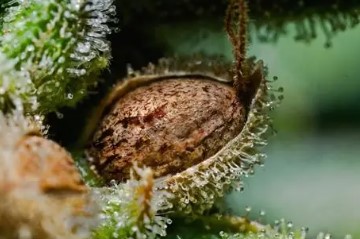
By selecting parent plants for characteristics such as flavor, potency, yield, flowering time, and disease resistance, home breeders can tailor cannabis strains to their preferences.
2. Seed Sustainability
Instead of purchasing seeds every season, growers can produce their own reliable seed stock, saving money and ensuring a consistent phenotype if stabilized properly.
3. Genetic Preservation
Cannabis genetics can be preserved for personal use, especially heirloom or landrace strains that may become rare or extinct over time.
4. Educational and Hobbyist Satisfaction
Learning about plant genetics and observing the results of your own hybrid crosses can be highly fulfilling for hobbyist growers and enthusiasts.
Key Breeding Concepts
1. Phenotype vs. Genotype

- Genotype refers to the genetic code of a plant.
- Phenotype is the physical expression of that code (e.g., aroma, height, color), influenced by both genetics and environment.
2. Stabilization
When breeding, offspring may express a range of phenotypes. Stabilization through multiple generations (typically F2 to F5) helps ensure uniformity in traits.
3. Dominant and Recessive Traits
Certain traits (like plant height or leaf shape) may be dominant and show up more often in offspring, while recessive traits may require more generations to appear.
Choosing Breeding Goals
Before starting, determine what you’re trying to achieve. Examples include:
- Higher THC or CBD content
- Better terpene profile (flavor/aroma)
- Mold or pest resistance
- Faster flowering time
- Better performance in specific climates (e.g., humidity, dry heat)
Each goal influences your choice of parent plants and breeding method.
Types of Breeding
1. Open Pollination
Allowing male and female plants to pollinate freely. This method is common for preserving landrace genetics but offers less control over traits.
2. Selective Breeding
Manually selecting and pairing male and female plants with desired traits. This method is the most precise and common among home breeders.
3. Backcrossing (BX)
Crossing an offspring with one of its parents to reinforce specific traits. Repeating this process (BX1, BX2, etc.) helps stabilize those traits.
4. Inbreeding and Line Breeding
Used to create stable inbred lines (IBLs), where traits are highly predictable. However, inbreeding depression (loss of vigor) may occur if genetic diversity is too low.
Breeding Methods Step-by-Step
Step 1: Legal Considerations
Before beginning any breeding project, ensure cannabis cultivation and seed production is legal in your jurisdiction. Some places allow home grows but restrict seed production.
Step 2: Selecting Parent Plants
Choose healthy, vigorous plants. It’s important to grow out and observe multiple plants (from seed or clone) to identify ones with your target traits.
Step 3: Isolating Male and Female Plants
- Males must be separated early to prevent accidental pollination.
- Keep males in a separate area or use grow tents with filters to avoid cross-pollination.
Step 4: Collecting Pollen
When male flowers open (typically 3-6 weeks into flowering), they release pollen. Collect it by:
- Placing a plastic bag around the pollen sacs and gently shaking
- Using a small paintbrush to transfer pollen directly
Dry the pollen for 48 hours and store it in a sealed container in the freezer with a desiccant (like silica gel).
Step 5: Pollinating the Female Plant
- Wait until the female plant is 2-4 weeks into flowering when pistils are white and receptive.
- Use a paintbrush or Q-tip to apply pollen to a few buds.
- Isolate pollinated plants or cover buds with a bag to prevent accidental spread.
Seeds will take about 4–6 weeks to mature. Once ready, they’ll be dark brown or striped and easily dislodge from the calyx.
Step 6: Harvesting and Storing Seeds
- Cut down the pollinated plant and allow it to dry.
- Gently remove seeds by hand or over a screen.
- Store seeds in a cool, dark, and dry place in labeled, airtight containers.
Stabilizing Your Seeds
The first generation (F1) from a cross may show varied traits. To create a stable line:
- Grow out multiple F1 plants
- Select the best ones
- Breed selected siblings (F1 x F1 = F2) and continue to select
- Repeat through F3, F4, and F5 generations
By F5, the strain should show consistent traits and can be called stable.
Feminized Seeds: Is It Possible at Home?
Yes, creating feminized seeds at home is possible using a process that induces female plants to produce pollen:

- Colloidal Silver: Spray on a female plant’s flowering sites daily for 2–3 weeks before flowering. This inhibits ethylene, forcing the plant to produce male pollen sacs.
- Silver Thiosulfate (STS): A more advanced and often more effective method, but requires chemical mixing and caution.
Pollen from these reversed females is used to pollinate other females, producing feminized seeds (all XX chromosomes).
Potential Challenges
1. Unintended Crosses
Pollen can travel far, especially outdoors. Use barriers or pollinate indoors to prevent accidental pollination.
2. Hermaphroditism
Some plants may produce both male and female organs under stress or from genetic predisposition. Avoid breeding with hermaphrodites to prevent unstable offspring.
3. Seed Viability
Seeds need proper maturity and curing to germinate reliably. Immature seeds are typically white or green and soft.
Tips for Success
- Label everything carefully (strain name, generation, date).
- Maintain detailed grow logs for traits observed.
- Work with clones to preserve genetics of exceptional females.
- Grow out large populations (50–100+ plants if space allows) to better identify superior phenotypes.
- Use microscopes or magnifiers to check pollen and trichome development during seed production.
Conclusion
Yes, you absolutely can breed your own cannabis seeds at home, and doing so offers a unique opportunity to explore the fascinating world of plant genetics and cultivation. While it requires planning, patience, and attention to detail, the process is accessible to most growers with basic knowledge and equipment. Breeding allows for creative expression and deeper engagement with cannabis cultivation, whether you aim to preserve rare genetics, create something new, or simply learn more about the plants you love. Just make sure to stay within legal guidelines and always keep records of your work. The next great cannabis strain might just start in your home grow room.
