Table of Contents
Can second hand marijuana smoke cause a positive test
The idea that second-hand marijuana smoke (also known as environmental cannabis smoke or passive exposure) could cause someone to fail a drug test has generated considerable debate. This is an especially relevant concern in shared living spaces, workplaces, or social situations where cannabis is consumed. Understanding whether passive exposure to marijuana can result in detectable levels of cannabinoids, particularly tetrahydrocannabinol (THC), in non-smokers requires examining pharmacological, toxicological, environmental, and testing factors.
1. THC and Drug Testing Basics
Tetrahydrocannabinol (THC), the psychoactive compound in cannabis, is the primary target in most drug screening tests. When smoked or vaped, THC is absorbed into the bloodstream, where it is metabolized into compounds such as 11-nor-9-carboxy-THC (THC-COOH). Drug tests especially urine tests primarily look for THC-COOH, a non-psychoactive metabolite that lingers in the body longer than THC itself.
Urine tests are most common in workplace settings and typically have thresholds usually 50 ng/mL or 20 ng/mL depending on the sensitivity of the test. Other testing methods like blood or saliva may have different cutoffs and timeframes of detection.
2. Second-Hand Exposure: Mechanisms and Environments
Second-hand exposure to marijuana smoke occurs when a non-user inhales the smoke exhaled by someone actively consuming cannabis. For THC to be absorbed in significant amounts by a bystander, the environmental conditions must support:
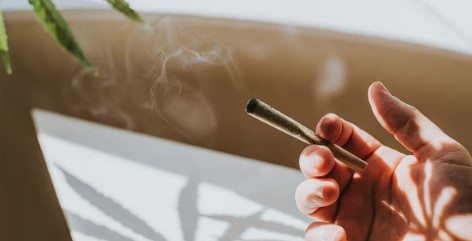
- High airborne concentration of THC (e.g., heavy use in a confined, poorly ventilated space)
- Prolonged exposure duration (e.g., sitting with smokers for hours)
- Multiple active smokers or high-potency cannabis use
When cannabis is smoked, the primary exposure route for non-users is through respiratory inhalation. However, due to THC’s high lipophilicity, it tends to adhere to surfaces and particles in the air, limiting its free dispersion unless in very enclosed areas. The effectiveness of ventilation plays a critical role in reducing exposure. Outdoors or in well-ventilated rooms, THC dissipates rapidly, making passive absorption less likely.
3. Scientific Evidence and Controlled Studies
Several controlled studies have tested whether second-hand exposure can result in a positive drug test. These studies typically involve placing non-users in confined environments with cannabis smokers and then measuring THC and its metabolites in biological samples afterward.
a. High-Exposure Settings
In experiments where non-smokers were placed in sealed, unventilated rooms with multiple individuals smoking high-potency cannabis, measurable THC levels were detected in blood and urine samples. In rare cases, some participants exceeded the 50 ng/mL urine cutoff within a few hours post-exposure. These results, however, were obtained under extreme and artificial conditions unlikely to be replicated in daily life.
b. Realistic Settings
In settings mimicking typical social environments (e.g., a ventilated room with moderate smoking), passive THC absorption was minimal. In such cases, although trace THC could be detected in sensitive tests shortly after exposure (within 1–4 hours), levels typically remained well below the standard detection thresholds. No positive tests were observed after 24 hours.
c. Variables Affecting Outcome
- Room size and ventilation: Poor ventilation increases the risk.
- Cannabis potency: Higher THC content increases airborne concentration.
- Duration of exposure: Longer exposure elevates potential absorption.
- Proximity to smokers: Sitting next to a smoker or in direct line of exhaled smoke increases inhalation of particulates.
4. Biological Plausibility of a Positive Test
Although THC can be absorbed through mucous membranes and the lungs even in small doses, a detectable amount that crosses the threshold for a positive test requires higher systemic levels than usually achieved through passive exposure.
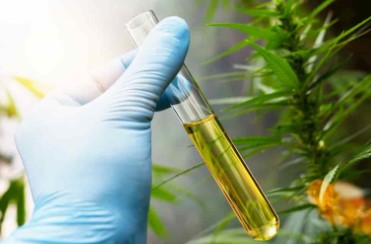
To trigger a positive urine test, the body must metabolize sufficient THC to produce detectable quantities of THC-COOH. Passive inhalation rarely delivers that dose unless under extreme conditions. Blood and saliva tests are even less likely to yield positives from passive exposure due to their narrow detection windows and higher specificity for recent active use.
5. Type of Drug Test and Detection Window
- Urine Tests: Detect THC-COOH. Most likely to show a false positive under extreme passive exposure, but only within 2–24 hours.
- Blood Tests: Detect THC and THC-COOH. Passive exposure is extremely unlikely to cause a positive due to rapid clearance and low bioavailability.
- Saliva Tests: Detect parent THC compound. Very short detection window (minutes to a few hours). Only direct exposure to THC-laden air (e.g., smoke blown in face) might produce a short-term positive.
- Hair Tests: Test for long-term usage. Second-hand smoke rarely deposits enough THC on hair shafts to trigger a positive, and modern methods can distinguish external contamination from systemic exposure.
6. Legal and Forensic Implications
In legal and employment settings, drug testing policies usually assume active use when a test is positive. Arguing that second-hand smoke caused a failed test is often difficult, though not impossible. Some courts or employers may accept passive exposure as a defense only if:
- The person can demonstrate they were in a situation involving heavy marijuana use in a confined space
- The test used was highly sensitive
- The timeline of the exposure and test aligns precisely
However, most workplace testing thresholds are set high enough to avoid capturing environmental exposure. Legal thresholds for impairment (especially for driving) are different and may consider even small amounts of THC, especially in blood.
7. Special Populations and Considerations
- Children and Infants: Passive exposure can be more concerning in children due to lower body weight and developmental vulnerabilities. While unlikely to test positive under standard conditions, repeated exposure in enclosed homes has raised concerns about long-term health and behavioral outcomes.
- Pregnant Individuals: Even low-level THC exposure could affect fetal development, though more research is needed. Testing in this context focuses more on health implications than test positivity.
- Athletes and Professionals Subject to Random Testing: Individuals in zero-tolerance environments (e.g., military, sports leagues) may face stricter scrutiny. Although still unlikely, such individuals are advised to avoid any situation where passive exposure might occur.
8. Prevention and Risk Reduction
To avoid unintended exposure and potential drug testing complications:
- Stay in well-ventilated areas if around cannabis users
- Avoid confined or sealed spaces during active marijuana use
- Politely decline to be present when cannabis is being used if you’re subject to testing
- Wash clothes and ventilate hair if exposed to heavy smoke, to minimize potential contamination in hair testing
Employers and public health bodies are increasingly aware of these risks, and guidance often emphasizes context when interpreting low-level positives.
9. Conclusion
In most realistic scenarios, second-hand marijuana smoke is not sufficient to cause a positive drug test result. While it is biologically plausible under extreme conditions such as prolonged exposure in unventilated rooms filled with smoke these circumstances do not reflect normal social or environmental exposure. Standard workplace drug testing thresholds are calibrated to avoid such false positives.
Nonetheless, individuals subject to frequent or random drug testing especially in legal, athletic, or safety-critical professions should be cautious. While the risk is low, it is not zero, and avoiding environments with heavy cannabis use is the best preventative measure. Understanding the interplay of exposure, drug test sensitivity, environmental variables, and testing type is key to accurately assessing this risk.
