Table of Contents
Can a female plant be producing seeds without male
1. Understanding Cannabis Reproduction
Cannabis is a dioecious plant species, meaning male and female reproductive organs are typically found on separate plants. Normally:
- Males produce pollen that fertilizes female flowers.
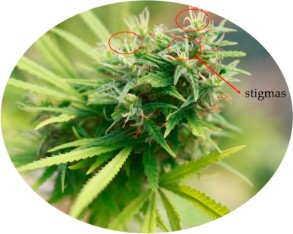
- Females produce buds that can develop seeds if pollinated by males.
2. Female Plants Producing Seeds Without Males
A. Hermaphroditism (Self-Pollination)
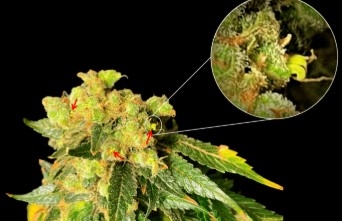
- What happens: Under stress (light leaks, irregular photoperiods, over-pruning, nutrient deficiencies, or genetic instability), a female cannabis plant may develop male pollen sacs—a condition called hermaphroditism.
- These “nanners” (banana-shaped pollen sacs) can release pollen onto the plant’s own female flowers, resulting in self-pollination.
- Result: The plant produces seeds that are often feminized, but they may carry the hermaphroditic trait, making them less stable.
B. Parthenocarpy (Rare and Often Sterile)
- Parthenocarpy refers to seed development without fertilization. In cannabis, this is extremely rare and typically results in non-viable (sterile) seeds.
- This is not a reliable method of seed production for growers.
3. Feminized Seed Production (Controlled Hermaphroditism)
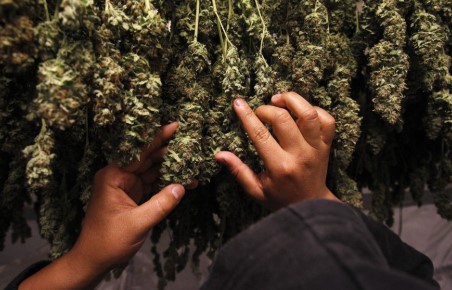
- Breeders intentionally induce hermaphroditism using colloidal silver, STS (silver thiosulfate), or gibberellic acid.
- A female plant is treated to produce male pollen sacs, which are then used to pollinate another female plant.
- Because no male genes are involved, the resulting seeds are feminized, producing only female plants (about 99% of the time).
- This is a controlled and stable form of self-reproduction used in commercial seed production.
4. Key Points
| Mechanism | Description | Outcome |
|---|---|---|
| Hermaphroditism | Stress-induced male traits on a female plant | Viable seeds, but with hermaphroditic risk |
| Feminized breeding | Chemically-induced male flowers on female plants | Feminized, stable seeds |
| Parthenocarpy (rare) | Seed development without fertilization | Often sterile seeds |
5. Implications for Growers
- Unintended hermaphroditism can spoil sinsemilla crops (seedless buds), reducing potency and yield.
- Controlled selfing (for feminized seed production) is a useful breeding technique.
- Monitoring for stressors and light leaks helps prevent unintentional seed formation.
