Table of Contents
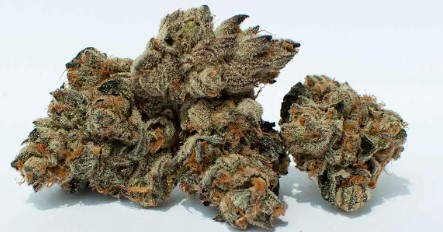
California Love is a hybrid cannabis strain known for its balanced blend of effects, combining both sativa and indica genetics. This strain provides an initial cerebral stimulation that enhances creativity, energy, and mood while gradually transitioning into a physically relaxing state. The interplay between cannabinoids and terpenes in California Love contributes to its psychoactive, therapeutic, and recreational appeal.
Cannabinoid and Terpene Profile
California Love contains a moderate to high THC concentration, typically ranging between 19-23%, making it a potent strain for experienced consumers. The presence of other cannabinoids, such as CBG and CBC, may contribute to its anti-inflammatory and neuroprotective effects. However, CBD levels in this strain are generally low, often below 1%, meaning its THC and terpenes are the main components responsible for the effects.
The dominant terpenes in California Love include:
- Limonene: Known for its citrusy aroma, this terpene has mood-enhancing and anti-stress properties. It interacts with serotonin receptors, potentially alleviating symptoms of depression and anxiety.
- Myrcene: This terpene has a musky, earthy scent and is associated with sedative and muscle-relaxing effects, helping transition the high from energetic to calming.
- Caryophyllene: A terpene with anti-inflammatory properties that also interacts with cannabinoid receptors, offering potential pain relief.
- Pinene: Contributes to increased alertness and may counteract some of the sedative effects of myrcene.
This terpene combination enhances the strain’s ability to provide both mental clarity and body relaxation, making it suitable for various uses.
Pharmacological Effects and Mechanisms
Upon consumption, THC rapidly binds to CB1 receptors in the brain, stimulating dopamine release. This interaction leads to an initial burst of euphoria, mental clarity, and heightened sensory perception. The presence of limonene further amplifies mood-enhancing effects by modulating serotonin activity.
As the high progresses, the body-focused effects become more pronounced due to the influence of myrcene and caryophyllene. These terpenes contribute to muscle relaxation and pain relief, engaging CB2 receptors to regulate inflammation. The balance between stimulating and calming effects makes California Love a versatile strain for different activities and therapeutic applications.
Medical Applications
California Love is valued for its ability to address various medical conditions. The strain’s diverse chemical profile makes it beneficial for:
- Depression and Mood Disorders: The uplifting effects, combined with limonene’s ability to enhance serotonin signaling, may aid in elevating mood and reducing depressive symptoms.
- Chronic Fatigue: The initial energetic boost can counteract sluggishness and mental fog, making it useful for individuals struggling with fatigue.
- Pain Management: The analgesic properties of THC, along with caryophyllene’s anti-inflammatory effects, make this strain suitable for chronic pain conditions such as migraines, arthritis, and neuropathic pain.
- Stress and Anxiety: The combination of mental stimulation followed by relaxation can help manage stress and anxiety, although individuals sensitive to THC should start with lower doses to prevent overstimulation.
- Appetite Stimulation: Like many THC-rich strains, California Love may help stimulate appetite, making it useful for those experiencing appetite loss due to medical treatments or conditions.
Recreational Experience and Uses
Recreational users appreciate California Love for its dynamic effects. It is commonly used in social settings due to its ability to enhance mood and conversation. Artists and creative professionals find it beneficial for brainstorming and generating ideas, thanks to its cerebral stimulation. As the effects settle, the body relaxation makes it a suitable strain for winding down, making it versatile for both daytime and evening use.
The sensory profile of California Love is also appealing, offering a sweet and sour tropical fruity taste with citrus and pineapple undertones. The exhale leaves a woody, piney undertone that complements its overall taste.

Cannabis consumption methods significantly influence the bioavailability, onset, intensity, and duration of effects of a strain like California Love. Factors such as metabolism, individual tolerance, and cannabinoid/terpene composition also play a role in how the strain California Love interacts with the endocannabinoid system (ECS).
Methods of Ingestion
The route of administration determines how cannabinoids are absorbed, distributed, metabolized, and excreted in the body. The most common methods of ingesting California Love include inhalation, oral consumption, and sublingual application.

a. Inhalation (Smoking & Vaporization)
Mechanism of Absorption:
- Inhaled cannabinoids enter the alveoli of the lungs, where they are absorbed into the pulmonary capillaries.
- THC is quickly transported through the bloodstream and crosses the blood-brain barrier within seconds to minutes.
Bioavailability:
- Smoking: 20-37%
- Vaporization: 40-60% (higher than smoking due to less degradation of cannabinoids from combustion)
Onset of Effects:
- 1-5 minutes (due to direct pulmonary absorption)
Peak Effects:
- 15-30 minutes after inhalation
Duration of Effects:
- 2-4 hours, depending on dose and individual metabolism
Advantages:
- Rapid onset allows for better dose control
- Higher bioavailability via vaporization
Disadvantages:
- Smoking produces carcinogenic byproducts (benzene, tar)
- May cause lung irritation and oxidative stress
- Effects last less time than with edibles.
b. Oral Ingestion (Edibles & Capsules)
Mechanism of Absorption:
- THC is metabolized in the liver (first-pass metabolism) into 11-hydroxy-THC, a more psychoactive and potent metabolite.
- Slower but longer-lasting effects compared to inhalation.
Bioavailability:
- 4-20% (high variability due to digestion and metabolism differences)
Onset of Effects:
- 30-120 minutes, as cannabinoids must first be digested and absorbed through the intestines.
Peak Effects:
- 2-4 hours post-consumption
Duration of Effects:
- 6-12 hours, with some residual effects lasting up to 24 hours.
Advantages:
- Longer-lasting effects (ideal for chronic pain, sleep disorders)
- No lung damage (compared to smoking)
Disadvantages:
- Inadvertent overconsumption may result from delayed commencement.
- Variable absorption rates based on metabolism and food intake
c. Sublingual Administration (Tinctures, Sprays)
Mechanism of Absorption:
- Capillaries beneath the tongue allow cannabinoids to enter the bloodstream immediately.
- Bypasses first-pass metabolism, leading to a faster onset than edibles but slower than inhalation.
Bioavailability:
- 10-30%, depending on carrier oil and absorption efficiency
Onset of Effects:
- 15-45 minutes
Peak Effects:
- 1-2 hours post-administration
Duration of Effects:
- 4-6 hours
Advantages:
- Faster onset than edibles
- More precise dosing than smoking
- Avoids lung irritation
Disadvantages:
- May cause mild throat irritation
- Shorter-lasting than edibles
d. Topical and Transdermal Application
Mechanism of Absorption:
- Cannabinoids interact with CB2 receptors in the skin and peripheral tissues, but do not enter the bloodstream unless in transdermal patches.
Bioavailability:
- Localized effects only, unless using transdermal patches.
Onset of Effects:
- 10-60 minutes, depending on formulation and skin absorption rate.
Peak Effects:
- 1-2 hours, depending on fat solubility and skin penetration.
Duration of Effects:
- 4-12 hours, depending on formulation.
Advantages:
- No psychoactive effects when applied topically (useful for pain, inflammation)
- Localized relief (arthritis, muscle pain)
Disadvantages:
- Limited absorption into the bloodstream
- Less effective for systemic conditions
Onset, Peak, and Duration of Effects Across Methods
| Method | Onset | Peak Effects | Duration | Bioavailability |
|---|---|---|---|---|
| Smoking | 1-5 min | 15-30 min | 2-4 hours | 20-37% |
| Vaping | 1-5 min | 15-30 min | 2-4 hours | 40-60% |
| Edibles | 30-120 min | 2-4 hours | 6-12 hours | 4-20% |
| Sublingual | 15-45 min | 1-2 hours | 4-6 hours | 10-30% |
| Topicals | 10-60 min | 1-2 hours | 4-12 hours | Localized |
Factors Affecting Absorption, Duration, and Onset
The pharmacokinetics of California Love depend on several biological and external factors:
a. Individual Metabolism
- Faster metabolism → quicker onset, shorter duration.
- Slower metabolism → delayed onset, prolonged effects.
- Liver enzyme activity (CYP2C9, CYP3A4, CYP2C19) affects THC metabolism.
b. Cannabinoid and Terpene Interactions
- Myrcene: Enhances THC absorption, increasing sedative effects.
- Limonene: Speeds up onset by increasing membrane permeability.
- Caryophyllene: Binds to CB2 receptors, prolonging anti-inflammatory effects.
c. Tolerance and Frequency of Use
- Frequent users develop CB1 receptor downregulation, leading to diminished effects over time.
- Tolerance breaks (T-breaks) help reset receptor sensitivity.
d. Food Intake
- Edibles taken on an empty stomach → faster onset but less stable effects.
- High-fat meals enhance THC absorption by up to 2-3 times due to its lipophilic nature.
e. Hydration and pH Levels
- Dehydration can prolong effects due to slower metabolic clearance.
- Alkaline conditions (pH > 7) may slow THC breakdown, extending duration.
Optimal Methods Based on Use Case
| Use Case | Recommended Method | Reasoning |
|---|---|---|
| Fast relief (Pain, Anxiety, Nausea) | Vaporization | Immediate effects, high bioavailability |
| Long-lasting relief (Chronic pain, Insomnia) | Edibles | Extended duration, deeper systemic relief |
| Precise dosing (Medical, Microdosing) | Sublingual tinctures | Better dose control, moderate onset |
| Localized pain/inflammation | Topical application | Targets affected area without psychoactivity |
Potential Side Effects and Considerations
While California Love offers a well-balanced high, some users may experience side effects, particularly at higher doses:
- Dry Mouth and Dry Eyes: Common cannabis-induced side effects that can be mitigated with hydration.
- Dizziness: California Love cerebral stimulation may cause lightheadedness, especially in those sensitive to THC.
- Anxiety or Paranoia: Higher doses may induce anxiety in THC-sensitive individuals; starting with a lower amount is recommended.
- Sedation: While initially energizing, the eventual relaxing effects may lead to drowsiness, especially when consumed in larger quantities.
Cultivation and Growing Characteristics
Cultivating the California Love cannabis strain requires a scientific approach to maximize its yield, potency, and terpene profile. Factors such as genetics, environmental conditions, nutrient management, and advanced cultivation techniques play a crucial role in optimizing plant health and chemical composition.
Genetic Considerations and Seed Selection
It is essential to choose high-quality genetics before beginning production. California Love is a hybrid strain, meaning it has both sativa and indica traits, requiring an environment that balances energy production for growth and stress reduction for resin development.
- Feminized Seeds vs. Clones:
- Feminized seeds ensure all plants are female, reducing the chances of male plants that do not produce usable flowers.
- Clones offer genetic consistency, reducing variability in cannabinoid and terpene profiles.
- Phenotype Selection:
- Since hybrids display variation, selecting stable phenotypes through propagation helps maintain uniformity in plant structure and chemical composition.
Environmental Control and Optimization
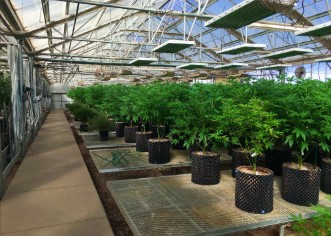
California Love thrives in controlled environments where factors such as light, temperature, humidity, and CO₂ levels are carefully regulated.
a. Light Requirements
- Indoor Cultivation:
- Ideal PPFD (Photosynthetic Photon Flux Density) range: 600-900 µmol/m²/s during the vegetative stage and 900-1200 µmol/m²/s during the flowering stage.
- Light Spectrum: Blue light (400-500 nm) promotes vegetative growth, while red light (600-700 nm) enhances flowering.
- Light Schedule: 18/6 (18 hours of light, 6 hours of darkness) for the vegetative stage, switching to 12/12 for flowering.
- Outdoor Cultivation:
- Requires a Mediterranean climate with 10-12 hours of direct sunlight.
- Photoperiod-dependent; best planted in late spring for an early-to-mid-autumn harvest.
b. Temperature & Humidity Control
- Vegetative Stage:
- Temperature: 22-28°C (72-82°F)
- Humidity: 50-70% for optimal transpiration and nutrient uptake.
- Flowering Stage:
- Temperature: 20-26°C (68-78°F)
- Humidity: 40-50% to prevent mold and maximize resin production.
- CO₂ Enrichment:
- Maintaining 1000-1500 ppm CO₂ enhances photosynthesis efficiency, leading to faster growth and higher cannabinoid yields.
Soil vs. Hydroponic Cultivation
California Love can be grown in soil for a more complex terpene profile or in hydroponic systems for increased growth rates.
a. Soil-Based Cultivation
- Soil Composition:
- Loamy soil with a mix of perlite, coco coir, and compost ensures good aeration and drainage.
- pH Level: 6.0-6.8
- Organic amendments such as worm castings, bat guano, and mycorrhizal fungi enhance microbial life and nutrient absorption.
b. Hydroponic Cultivation
- Nutrient Film Technique (NFT) or Deep Water Culture (DWC) can be used.
- pH Level: Maintained at 5.5-6.5 to optimize nutrient uptake.
- EC (Electrical Conductivity): Maintained at 1.2-2.0 mS/cm based on plant growth phase.
Nutrient Management
California Love requires a precise balance of macronutrients (N-P-K) and micronutrients (Ca, Mg, Fe, Zn, B, Cu, Mn, Mo) to ensure optimal growth.
a. Vegetative Stage (Weeks 1-6)
- High Nitrogen (N) for leaf and stem development.
- N-P-K Ratio: 3-1-2
- Supplement Calcium (Ca) and Magnesium (Mg) to strengthen cell walls.
b. Flowering Stage (Weeks 7-12)
- Increase Phosphorus (P) and Potassium (K) for bud formation and resin production.
- N-P-K Ratio: 1-3-3
- Add silica supplements to improve resistance against pests and environmental stress.
c. Flushing (Week 13-14)
- Stop feeding nutrients 7-10 days before harvest and use pure water (pH 6.5) to remove excess salts and improve flavor.
Training Techniques to Maximize Yield
California Love responds well to Low-Stress Training (LST) and High-Stress Training (HST) techniques to optimize light penetration and airflow.
- Topping & FIMing: Cutting the main cola promotes multiple bud sites.
- LST (Low-Stress Training): Bending branches to create an even canopy.
- SCROG (Screen of Green): Using a net to spread the plant for better light exposure.
- Defoliation: Removing unnecessary leaves to improve airflow and light penetration.
Pest and Disease Management
To protect California Love plants from threats such as mold, mildew, and pests, integrated pest management (IPM) strategies are essential.
a. Common Threats
- Powdery Mildew: Prevented by keeping humidity below 50% and using silica supplements.
- Spider Mites & Aphids: Controlled using Neem oil, predatory insects (ladybugs), or insecticidal soaps.
- Root Rot: Make sure drainage is adequate and refrain from overwatering.
b. Organic Pest Control
- Companion planting with basil, marigold, and clover repels pests.
- Diatomaceous earth sprinkled around the soil prevents fungus gnats.
Harvesting and Post-Harvest Processing
California Love’s flowering phase typically lasts 8-10 weeks, and precise harvesting techniques ensure maximum potency.
a. Harvest Timing
- Trichome Observation:
- Clear trichomes = too early.
- Milky trichomes = peak THC.
- Amber trichomes = increased CBN (relaxing effect).
b. Drying and Curing
- Drying:
- Temperature: 18-22°C (65-72°F)
- Humidity: 50-60%
- Drying Time: 7-14 days in a dark, ventilated room.
- Curing:
- Place dried buds in airtight glass jars, opening them for burping daily to release moisture.
- Curing Duration: 2-8 weeks to enhance terpene expression and smoothness.
Scientific Enhancements for Higher Potency
Advanced cultivation techniques can boost cannabinoid and terpene production.
Living Soil Microbiology: Introducing beneficial bacteria and fungi (e.g., Trichoderma, Mycorrhizae) improves nutrient uptake.
UV-B Light Exposure: Increases THC and trichome density.
Cold Shock Method: Exposing plants to low temperatures (15°C or 59°F) during the final flowering weeks enhances purple hues and terpene richness.
Scientific Insights and Future Research Directions
Although strain-specific scientific studies on California Love are limited, existing cannabis research provides insight into its potential therapeutic applications. Studies suggest that:
- THC may exhibit neuroprotective properties, making it beneficial for conditions such as multiple sclerosis and neurodegenerative diseases.
- Limonene and caryophyllene play a role in reducing stress and inflammation, with potential applications in treating anxiety and chronic pain.
- Myrcene contributes to muscle relaxation and sedation, which could be beneficial for sleep disorders.
As cannabis research advances, future studies may further explore how the specific chemical composition of California Love interacts with the endocannabinoid system, potentially leading to more targeted medical applications.
Conclusion
California Love is a well-balanced hybrid that offers both mental stimulation and physical relaxation. Its unique blend of cannabinoids and terpenes makes it an excellent option for recreational and medicinal use. With its ability to enhance mood, relieve pain, reduce stress, and stimulate creativity, it is a flexible strain that may be used by a variety of users. Understanding its chemical composition and effects allows users to maximize its benefits while minimizing potential adverse reactions.
For a complete directory of cultivars, visit our Cannabis Strain Reviews.
