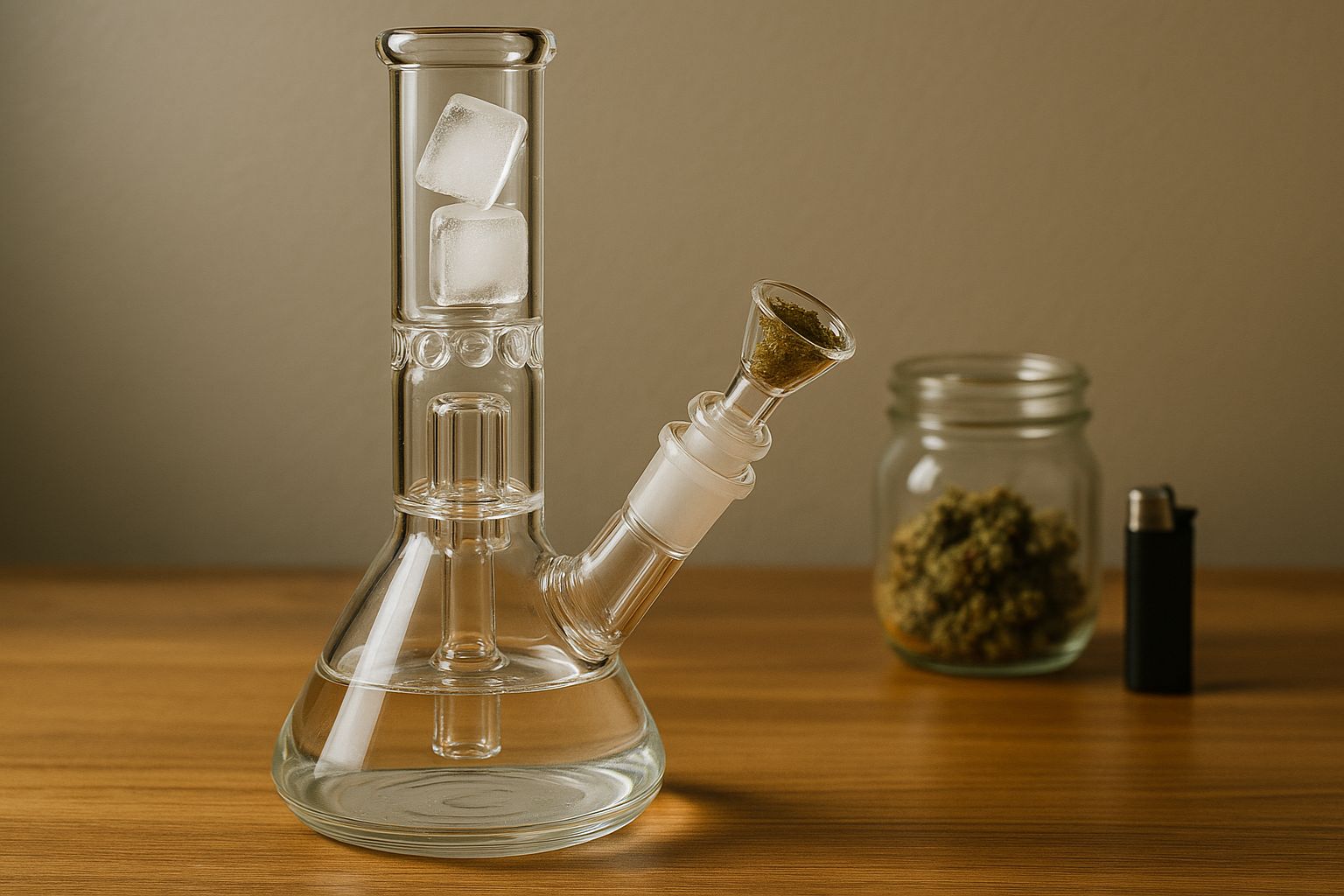
Why I care about water pipes after harvest
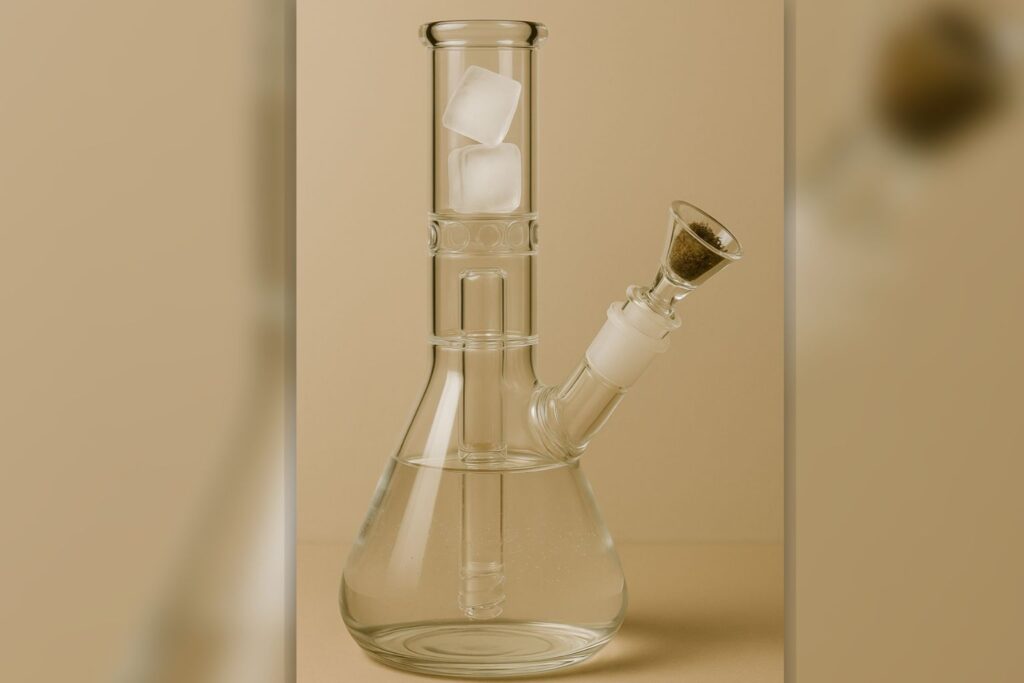
I spend most of my time in the grow space, not behind a counter. When I talk about glass, it’s because I’ve learned (sometimes the hard way) that the way a water pipe is built and maintained can make the same dried flower taste either clean and expressive or flat and harsh.
This article is an educational discussion for adults in places where cannabis, marijuana, and weed are legal. I’m not giving legal advice, and I’m not encouraging anyone to break local rules. I am sharing what has worked for me when selecting and caring for glass, and how I think about it as a cultivator who obsesses over flavor, smoothness, and consistency.
In my own routine, Bongs and Water Pipes Usage is less about “bigger is better” and more about repeatable results: stable airflow, easy cleaning, and a setup that doesn’t wreck terpene-driven flavor.
How bongs and water pipes actually work
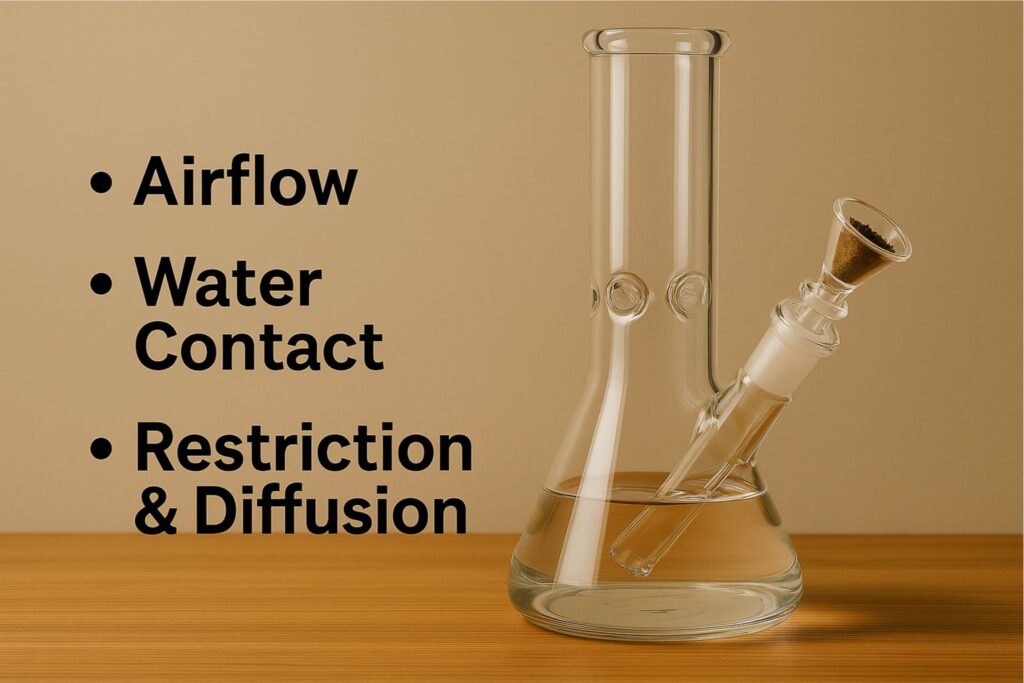
A bong or water pipe is basically a controlled air-path with three jobs:
- Move air through a fixed channel without leaks.
- Add moisture and cooling through water contact.
- Reduce harshness by balancing restriction (how much pull you need) and diffusion (how many bubbles you make).
In practice, your real “filter” is the combination of water contact time, bubble surface area, and the cleanliness of the glass. That’s why glass water pipe maintenance matters so much: dirty resin changes taste, raises resistance, and makes it harder to keep a consistent draw.
The parts I pay attention to first
- Bowl and joint area: This decides joint size compatibility and whether your pieces fit without wobble.
- Downstem or fixed stem: This is where downstem length measurement saves you from constant splash-back.
- Base volume: Big bases can be forgiving, but they also trap odor if you skip cleaning.
- Diffuser/percolator: The shape controls percolator diffusion patterns and how restricted the pull feels.
- Mouthpiece and neck: Tall necks add cooling but can reduce “snap” if airflow is too open.
My selection checklist for first-time buyers
If you asked me what to buy for dependable Bongs and Water Pipes Usage, I’d start with fit and reliability, not fancy features.
1) Choose a size that fits your space
A tall piece can cool smoke well, but it can also be awkward on a small desk or in a tight room. When I’m in a limited area, I often reach for a bubbler for small spaces instead of a towering beaker. A bubbler for small spaces is also easier to rinse daily, which supports glass water pipe maintenance.
2) Get the joint right before anything else
Joint size compatibility is the most common avoidable mistake I see. If your bowl, adapter, and stem don’t match, you’ll end up with loose seals, weird angles, and broken glass.
What I look for:
- The joint size and the joint angle listed clearly by the maker.
- A stable fit with no rocking.
- Enough clearance so the bowl can be removed without scraping the neck.
I treat joint size compatibility as step zero because everything else depends on it.
3) Prioritize borosilicate over mystery glass
Borosilicate glass thickness isn’t just marketing. In day-to-day use, thicker borosilicate handles temperature swings and small bumps better, which matters when you’re rinsing with warm water or tapping out a bowl. I don’t chase “thickest possible,” but I do look for consistent borosilicate glass thickness and clean welds.
4) Decide how much diffusion you actually want
More diffusion usually means a smoother hit, but it can also mean harder cleaning and more drag.
I’ve owned pieces where percolator diffusion patterns were so fine that they clogged fast.
That’s why I treat percolator diffusion patterns as a trade-off:
- Big, simple slits are easier to keep clean.
- Complex trees or multi-chambers can be very smooth, but maintenance is real.
Water level tuning: what I do every time
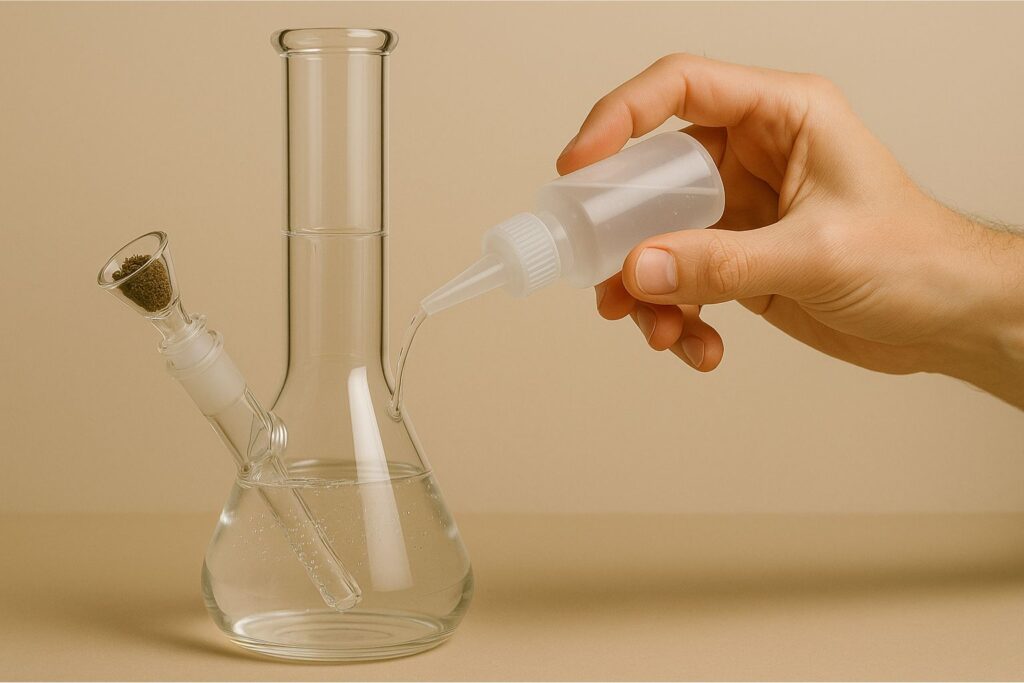
If I had to pick one habit that improves Bongs and Water Pipes Usage overnight, it’s water level tuning.
Here’s my simple method:
- Add water until the stem slits are just submerged.
- Take a dry pull (no heat) to check resistance and splash.
- Add small amounts until bubbles stack without flooding the neck.
- Mark the “sweet spot” mentally so you can repeat it.
Water level tuning changes everything: too low and it’s harsh; too high and you’re fighting the pull.
Ice catcher cooling: useful, but not mandatory
Ice catcher cooling can make a session feel smoother, but it can also mute flavor if you over-chill. For my own taste testing of cultivars, I use ice catcher cooling only when flower is already on the dry side. If a batch is perfectly cured, I often skip ice catcher cooling to keep aroma more vivid.
Downstem length measurement without breaking glass
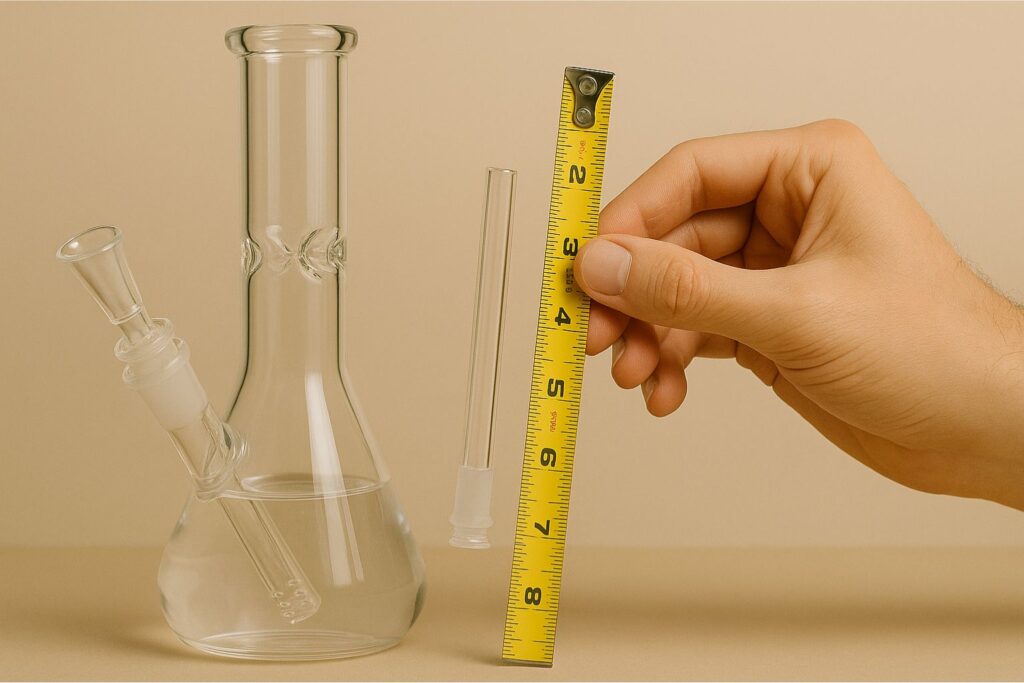
Downstem length measurement sounds technical, but it’s just avoiding the “too long” splash or “too short” weak diffusion problem.
My approach:
- Measure from the bottom of the joint to the inside-bottom of the base.
- Subtract a little so the stem doesn’t touch the glass base.
- Aim for the diffuser section to sit comfortably in the water at your chosen water level tuning point.
When downstem length measurement is correct, the piece feels “balanced” and doesn’t gurgle unless you overfill.
Cleaning that doesn’t ruin flavor
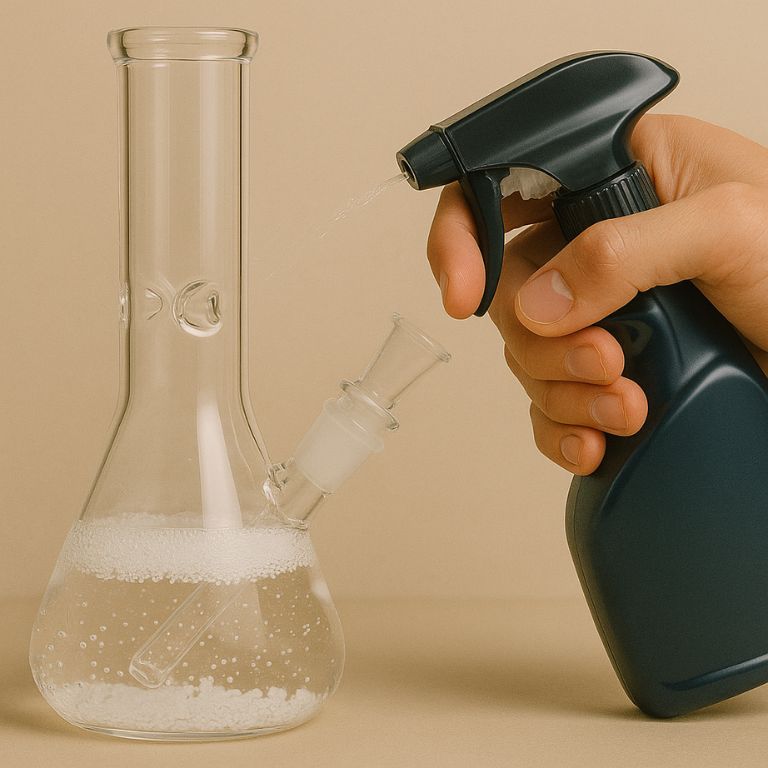
Dirty glass makes every cultivar taste the same. I’m picky about glass water pipe maintenance because I want the terpenes I grew to show up honestly.
A routine that’s worked for me
Daily:
- Rinse with hot tap water.
- Shake out water and let it air-dry.
Weekly (or more often if you notice flavor drift):
- Use safe cleaning with isopropyl and salt as a scrub method.
- Plug openings, shake, and rinse thoroughly with warm water.
- Finish with a plain-water rinse until there’s no alcohol smell.
Safe cleaning with isopropyl and salt works well because salt provides abrasion and alcohol dissolves residue. The “safe” part is the rinse: take the time to remove all solvent.
I don’t recommend mixing random chemicals, and I never use abrasive powders that can scratch the glass and trap odor later.
Carbon filter mouthpiece: when it helps
A carbon filter mouthpiece can reduce harshness and keep the neck cleaner, especially if you’re sharing. I don’t use a carbon filter mouthpiece all the time because it can slightly flatten flavor. But for guests or for older flower that burns rough, a carbon filter mouthpiece is a practical option.
Flavor notes from a cultivator’s perspective

This is where my grower brain takes over. When flower is dialed in, glass becomes a measuring tool: it reveals what the plant actually produced.
Here are the cultivation factors that show up clearly in the pipe:
Drying and curing (where smoothness is made)
If you want smoothness, the real work happens after the chop.
In my room, I aim for a slow dry rather than a fast one. When the environment is too hot or too dry, the outer material crisps while the inside stays wet, and the smoke stays sharp. When I keep conditions steadier, I get a softer burn that needs less “compensation” from water filtration.
I’m careful not to present a one-size-fits-all recipe, but I will say this: consistent temperature and humidity control beats any “magic” accessory.
Genetics, phenotypes, and burn behavior
Two plants can look identical and still smoke differently. I’ve seen phenotypes that produce dense, oily resin and others that produce a brighter, more volatile profile. Water pipes can highlight both.
- Dense, resinous flower can benefit from slightly higher diffusion and good glass water pipe maintenance, because residue builds faster.
- Bright, aromatic flower often tastes best with simpler percolator diffusion patterns and careful water level tuning so you don’t over-restrict the draw.
Nutrients and the final ash test
I won’t pretend a water pipe can fix a rushed finish. In my experience, a clean burn tends to show up when the plant had a sane feeding program and the post-harvest was patient.
If you grow legally, take notes across runs: when you change nutrition strength or timing, see how it affects harshness and residue in the stem.
From grow room to glass: the cultivation details that change the smoke
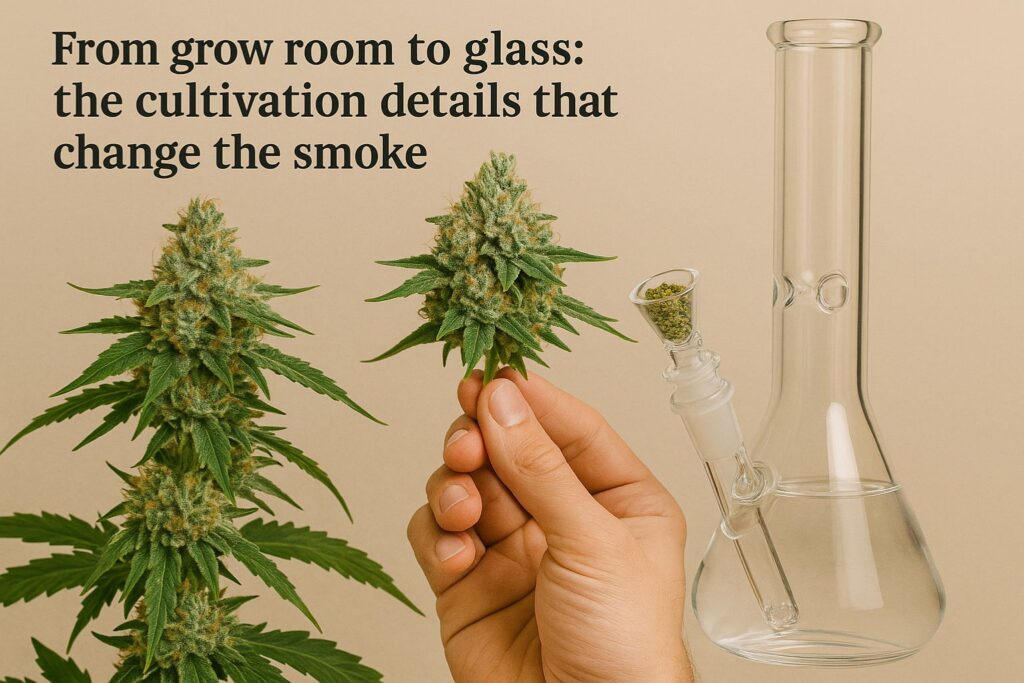
I keep my “glass talk” grounded in cultivation because Bongs and Water Pipes Usage is where I notice mistakes fast. If a batch is rough, the pipe doesn’t hide it for long.
Environment: temperature, humidity, and VPD as a flavor lever
When I’m dialing in cannabis, marijuana, or weed for taste, I watch not just temperature and humidity, but how they interact as vapor pressure deficit (VPD). In plain terms, VPD helps me keep plants transpiring steadily instead of swinging between “too wet” and “too dry.”
What I aim for most of the time:
- Vegetative stage: moderate airflow, steady leaf temperature, and a mid-range VPD that keeps growth even.
- Flowering: slightly drier air than veg to discourage mold, without pushing plants into stress that can dull aroma.
When I ignore those basics, I usually pay for it later in the pipe: harsher burn, flatter flavor, and residue that builds quickly even with glass water pipe maintenance.
Lighting: PPFD, photoperiod, and why I avoid extremes
I measure light, not guess. PPFD gives me a reality check on whether the canopy is under-lit or blasted.
Typical ranges I’ve run successfully (not a promise, just my notes):
- Veg: roughly 300–600 PPFD at canopy level
- Flower: roughly 600–900 PPFD at canopy level, adjusted to cultivar tolerance
For photoperiod varieties, my routine is simple: longer days for veg and a strict 12 hours on / 12 hours off for flower. I keep that schedule consistent because stress and light leaks can show up as uneven ripening and a rougher smoke, no matter how perfect your water level tuning is.
Medium choice: soil, coco, or hydro and how it affects “clean burn”
I’ve grown in living soil, coco, and recirculating hydro. Each can produce excellent cannabis, marijuana, or weed, but each one punishes sloppy management differently.
- Living soil rewards patience and stable watering habits.
- Coco asks for consistency in irrigation frequency and nutrient strength.
- Hydro demands clean reservoirs and tight monitoring to avoid swings.
I’m cautious about giving “recipes,” but I will share the principle I follow: avoid sudden spikes. When the plant experiences hard swings, I often see it later as harsher smoke and faster gunking in the stem, which forces more safe cleaning with isopropyl and salt.
Nutrients: EC/PPM as guardrails, not a competition
I track nutrient strength with EC or PPM depending on the meter. The point isn’t to chase the highest number; it’s to stay in a sensible band for the cultivar and growth stage.
My practical habit:
- Watch leaf color and tip burn as early warning
- Log inputs and runoff trends
- Adjust gradually, not dramatically
When nutrition is steady, my cured flower tends to burn cleaner and I can taste differences between phenotypes more clearly, even with simpler percolator diffusion patterns.
Pest control: keep it preventative, and respect the finish
My rule is boring but effective: prevent early, minimize late.
I focus on clean intake air, sticky traps, scouting, and gentle controls early in the cycle. Late in flower, I avoid anything that can leave a lingering smell or residue. If I ever shortcut this, the first place I notice is in the glass: the neck smells “off,” and even a carbon filter mouthpiece can’t rescue the flavor.
Training and structure: airflow in the tent becomes airflow in the pipe
I use training to build an even canopy and improve airflow through the plant. Whether that’s topping, gentle bending, or selective leaf removal, the goal is consistent light penetration and reduced humidity pockets.
When structure is good, flowers finish more evenly, dry more predictably, and smoke smoother. That’s when Bongs and Water Pipes Usage feels effortless: less coughing, less residue, better taste.
What to look for when shopping online

I’m not going to tell you where to buy. But I can tell you how I evaluate a listing so I don’t waste money.
- Clear specs: joint size compatibility, height, base width, and whether it uses a removable stem.
- Photographs of welds: sloppy welds can crack.
- Material callout: consistent borosilicate glass thickness should be described, not implied.
- Replacement parts: being able to replace a stem matters.
- Shipping protection: I only order from sellers who show double-boxing or foam protection.
If you’re also shopping for genetics, check local rules first. In many places, seeds are treated differently than flower, but the details matter and change.
Common mistakes I see (and how I avoid them)
- Over-diffusion: choosing percolator diffusion patterns so fine they clog constantly.
- Wrong fit: ignoring joint size compatibility and forcing adapters.
- Overfilling: skipping water level tuning and ending up with wet pulls.
- Neglecting care: treating glass water pipe maintenance as optional.
- Chasing cold: using ice catcher cooling to mask rough flower instead of improving drying and curing.
Bongs and Water Pipes Usage: my quick setup checklist
Before I light anything, I check:
- Is the piece clean and odor-free?
- Did I do water level tuning to my usual mark?
- Does the bowl fit firmly for joint size compatibility?
- Is the stem correct based on downstem length measurement?
- Do I want ice catcher cooling today, or do I want full flavor?
- If sharing, do I want a carbon filter mouthpiece?
This checklist keeps my Bongs and Water Pipes Usage consistent across different pieces and batches.
FAQ
What’s the difference between a bong and a water pipe?
In everyday use, people use the terms interchangeably. I use “water pipe” as the broad category and “bong” as a specific style. The important part is how the air path is built and how easy it is to maintain with glass water pipe maintenance.
How do I stop my water pipe from tasting stale?
Clean it. I rely on safe cleaning with isopropyl and salt and then a thorough rinse. If taste still seems dull, check that your water level tuning isn’t too high (too much restriction can flatten flavor).
Does adding more percolators always make it smoother?
Not always. Some percolator diffusion patterns add smoothness, but they also add drag and can be harder to clean. I prefer simple diffusion that I can keep spotless.
What joint size should I buy?
Buy the size that matches the accessories you actually want to use, and stay consistent. Joint size compatibility prevents wobbles, leaks, and accidental breaks.
Is a bubbler worth it if I don’t have much room?
Yes. A bubbler for small spaces is a practical daily driver because it’s easy to rinse, quick to set up, and less likely to tip. If you’re trying to stay disciplined with glass water pipe maintenance, a smaller piece can actually help.
How does all this connect to cultivation?
As a grower, I treat Bongs and Water Pipes Usage as the “final tasting room.” If the flower is properly dried and cured, clean glass with the right water level tuning will let you taste what the plant produced. If something is off, the pipe usually reveals it quickly.
