
Why Some Plants Turn Blue
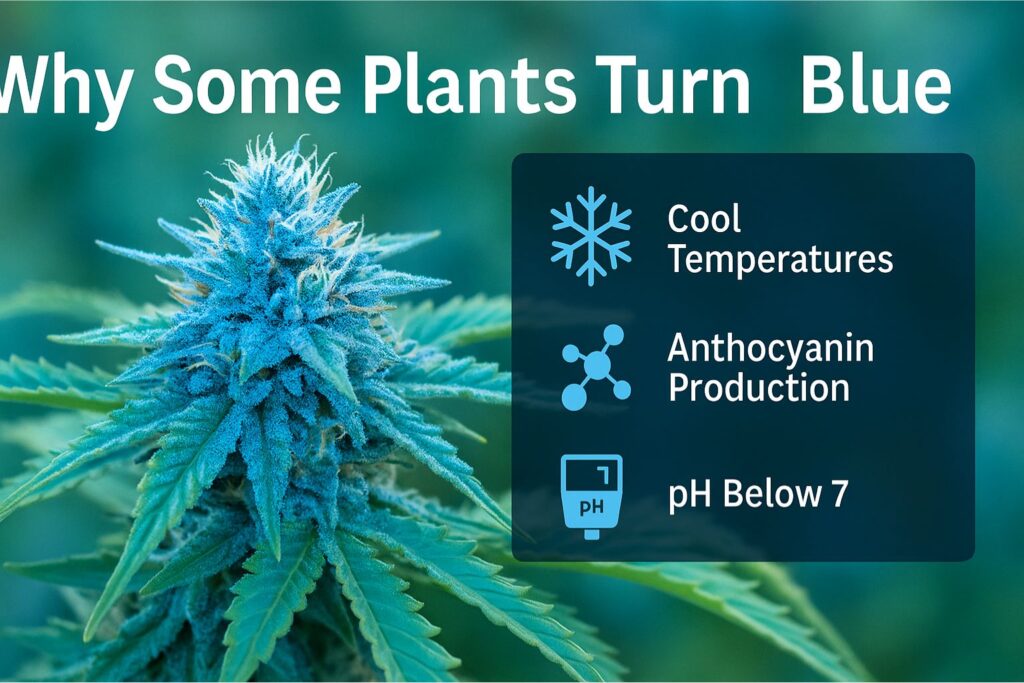
Color in cannabis is chemistry plus environment. Blue tinted phenos happen when genetics with strong anthocyanin expression are steered by temperature, light, pH, and maturation timing. Anthocyanins are pigments that can appear red, purple, or blue depending on cell pH and co-pigments. In my rooms, the same cut can swing from purple to blue depending on finish temps and how gently I manage harvest and curing.
Key points from my runs:
- Genetics set the ceiling. Without inherent anthocyanin expression, you can’t force true blue. That’s why seed selection matters and why I vet seed banks for transparent lineage and photo documentation of colored phenotypes.
- Temperature shapes the hue. Cool nights late in bloom encourage blue tones. Too cold, and you stall metabolism or invite mold; too warm, and blue cannabis strains stay green.
- pH and maturation timing nudge the final shade. Overly high EC or sloppy nutrient management will mute color, while a clean taper allows pigments to settle visibly in bracts and sugar leaves.
- Light spectrum and intensity affect how the eye perceives color. Balanced full-spectrum LEDs render blues more accurately and avoid bleaching delicate tissues.
If you’re running feminized seeds or autoflower seeds and aiming for blue tinted phenos, start with genetics known for color, then steer calmly.
Environment Targets That Consistently Showed Blue For Me
I treat colored runs like flavor runs: protect terpenes, lower stress. Whether I’m in soil vs hydro, the environmental framework stays the same.
Temperature, Humidity, VPD
- Veg: 24–27°C, 60–70% RH, VPD 0.8–1.1 kPa
- Early bloom (weeks 1–3): 24–26°C, 55–60% RH, VPD 1.1–1.3 kPa
- Mid bloom (weeks 4–7): 23–25°C, 50–55% RH
- Color push (final 10–14 days): day 22–24°C, night 18–20°C, 45–50% RH
That final controlled drop has been the single most reliable move for blue tinted phenos. I never free-fall temps. A 2–3°C nightly step-down over several days protects resin and avoids the leaf canoeing I’ve seen in touchy indica sativa hybrid lines.
For indoor tent growing, I pre-cool the lung room an hour before lights off. In a room, I stage thermostats and avoid rapid swings that stress stomata. Consistency beats extremes.
Lighting And PPFD
Full-spectrum LEDs with even distribution keep color honest:
- Veg: 300–500 µmol/m²/s
- Early bloom: 600–700 µmol/m²/s
- Peak bloom: 750–900 µmol/m²/s if the canopy is praying and runoff is stable
In my experience, blasting above 900 µmol/m²/s at the end can wash out blue tinted phenos or make them look gray under harsh highlights. If the goal is showpiece blue cannabis strains, I’ll hold 800–850 µmol/m²/s the last 10 days.
Mediums: Soil vs Hydro
I’ve pulled vivid color from both soil vs hydro. The difference is steering:
- Soil vs hydro trade-off: Soil buffers and forgives; hydro responds fast. When hunting blue tinted phenos, soil’s buffer has saved more runs for me than it’s cost.
In coco/hydro I target:
- Veg EC: 1.2–1.6 (500-scale 600–800 ppm)
- Early bloom EC: 1.6–1.8 (800–900 ppm)
- Peak bloom EC: 1.8–2.0 (900–1000 ppm)
- Finish EC: taper to 1.0–1.2
In living soil I top-dress lightly mid bloom and avoid heavy nitrogen late; strong anthocyanin expression shows better with a clean fade.
Across both systems, clean runoff and stable root-zone pH (5.8–6.0 coco; 6.3–6.5 soil) help pigments read blue instead of muddy purple.
Nutrient Management For Color Without Crash
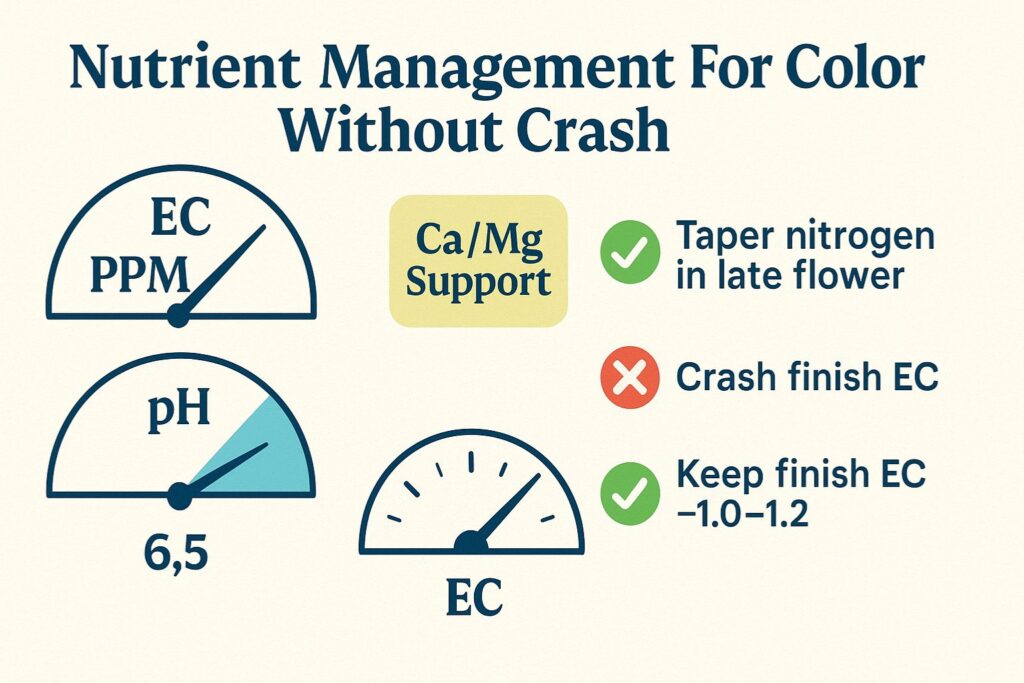
Nutrient management makes or breaks the finish. I’ve learned the hard way that chasing color with drastic cuts leads to stalled flowers and muted terpenes.
My nutrient management rules for blue tinted phenos:
- Keep nitrogen moderate after week 5 to encourage a natural fade without starving the plant.
- Maintain calcium and magnesium; starved cell walls bruise and brown, killing the blue.
- Use phosphorus and potassium sensibly—no late “mystery boosters.” Over-salting can distort anthocyanin expression and wreck harvest and curing.
- Monitor runoff EC and pH twice weekly in coco, weekly in soil. If runoff EC climbs while input stays the same, irrigation frequency not concentration is usually the fix.
Good nutrient management works the same in feminized seeds and autoflower seeds; autos just give you less time to correct. On autos, I start gentle and rarely exceed 1.7–1.8 EC.
Genetics And Seed Selection: Stacking The Deck For Blue
I handle colored hunts like a small R&D project. When I’m scanning seed banks for blue cannabis strains, I look for:
- Consistent photo evidence of anthocyanin expression across multiple growers
- Clear lineage notes; colored grandparents often predict colored grandchildren
- Options in both feminized seeds and autoflower seeds to match the calendar
- Descriptions that mention cool-night response rather than stress-induced color
- Indications of indica sativa hybrid structure so I can match plant height to space
I’ll pop 6–10 seeds, label A–J, and run them side-by-side in the same environment. Blue-tinted phenos often reveal themselves by week 6 of bloom with a shadow of dusk on the bracts even before the planned temperature drop.
Seed banks vary. I favor seed banks that disclose storage conditions, germ rates, and realistic ship times. If a listing promises “guaranteed blue” without discussing anthocyanin expression, I skip it.
My Step-By-Step Playbook To Unlock Blue-Tinted Phenos
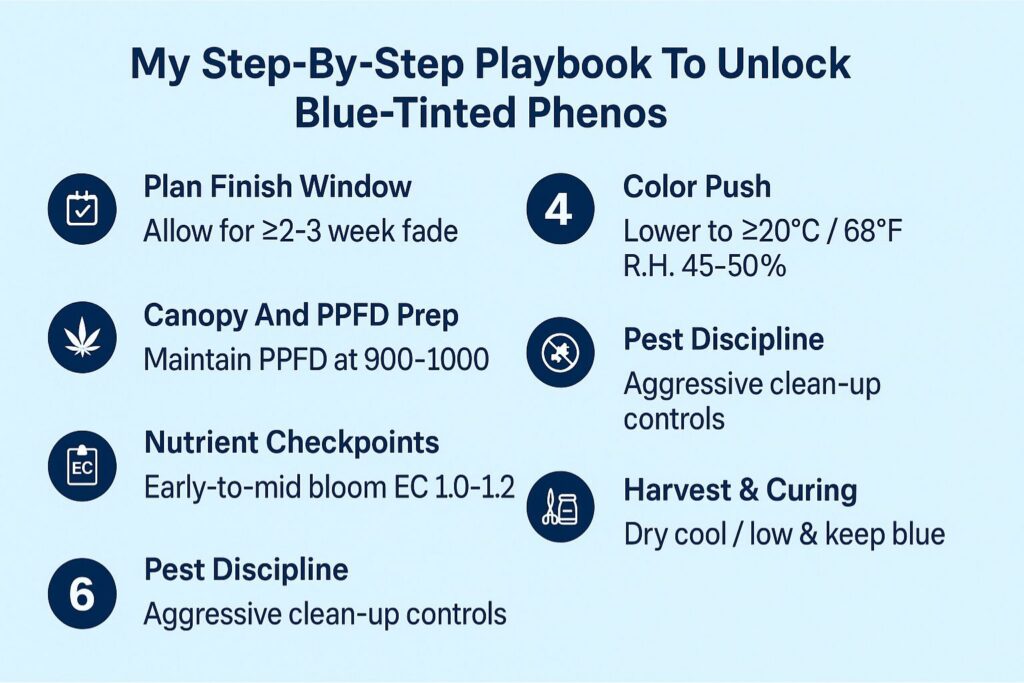
This is the repeatable sequence I follow in indoor tent growing and rooms. It works in both soil vs hydro if you scale irrigation.
- Plan the finish window
- Choose a two-week period when you can control nights.
- Confirm dehumidification capacity; blue-tinted phenos need dry air to avoid botrytis.
- Canopy and PPFD prep
- Top above the 4th–5th node, LST outward.
- Light defoliation pre-flip and day 21 for airflow.
- Nutrient management checkpoints
- Week 4: tissue looks lush, EC normalized.
- Week 6: begin nitrogen taper; maintain Ca/Mg.
- Week 7–8+: reduce EC slowly; never starve.
- Color push
- Drop night temps to 18–20°C over 3–4 days.
- Hold day 22–24°C; keep VPD ~1.3–1.5 kPa.
- Maintain PPFD 800–850 µmol/m²/s.
- Pest discipline
- No foliar past day 14 of bloom except emergency IPM.
- Sticky cards and weekly scouting; colored bracts hide pests.
- Harvest and curing
- Harvest with trichomes at your preferred maturity; don’t wait for color alone.
- Dry 18–20°C, 55–60% RH, 10–14 days.
- Trim and jar at 58–62% RH; burp daily for two weeks.
- Gentle light on drying racks so blues don’t oxidize to brown.
That last stage—harvest and curing—determines whether blue-tinted phenos look vivid or dull. The same plant can photograph differently if you overdry, overdampen, or expose it to heat.
Seed Types And Timelines: Feminized Seeds Vs Autoflower Seeds
Color timing differs by plant type.
Feminized seeds
- Best for phenohunts and cloning the bluest keeper.
- Flexible veg allows you to shape indica sativa hybrid canopies to your space.
- Easy to schedule the two-week color push and dial nutrient management precisely.
Autoflower seeds
- Great when you need a quick run or a side-by-side in the veg room.
- Less training time; stick to LST.
- Color often shows a bit earlier relative to overall life cycle; schedule harvest and curing carefully because autos can ripen fast after color appears.
I keep both on hand. When seed banks release a promising auto with proven anthocyanin expression, I’ll run it at 20 hours of light, moderate EC, and the same controlled finish temps.
Case Notes: What Actually Turned Blue For Me
Without naming specific product SKUs, here’s how my blue-tinted phenos typically behaved across categories you’ll see at seed banks. This helps when filtering listings for blue cannabis strains.
Indica-leaning berry lines (blueberry-type)
- Early hints of color by week 6; full blue at week 8–9 with gentle night drops.
- Shorter plants fit indoor tent growing; easy to manage in soil vs hydro.
- Nutrient management: keep nitrogen modest; watch for Ca/Mg hunger.
Hybrid dessert lines (cookie/cake x berry)
- Color shows on sugar leaves first; bracts follow if EC is clean.
- PPFD sweet spot 750–850 µmol/m²/s; higher bleaches tips.
- Harvest and curing bring out navy tones that photograph well.
Purple-to-blue hazes
- Taller; plan a wide net.
- Anthocyanin expression more variable—phenotype selection matters.
- Best jars came when I resisted the urge to over-cool; blues looked electric at 19–20°C nights.
Across all of these, blue-tinted phenos benefited from clean irrigation schedules, restrained feeding, and that consistent two-week finish routine. If a plant refuses to color, I don’t torture it; I select for blue where it naturally belongs and keep non-blue keepers for flavor.
Troubleshooting: When The Blues Don’t Show
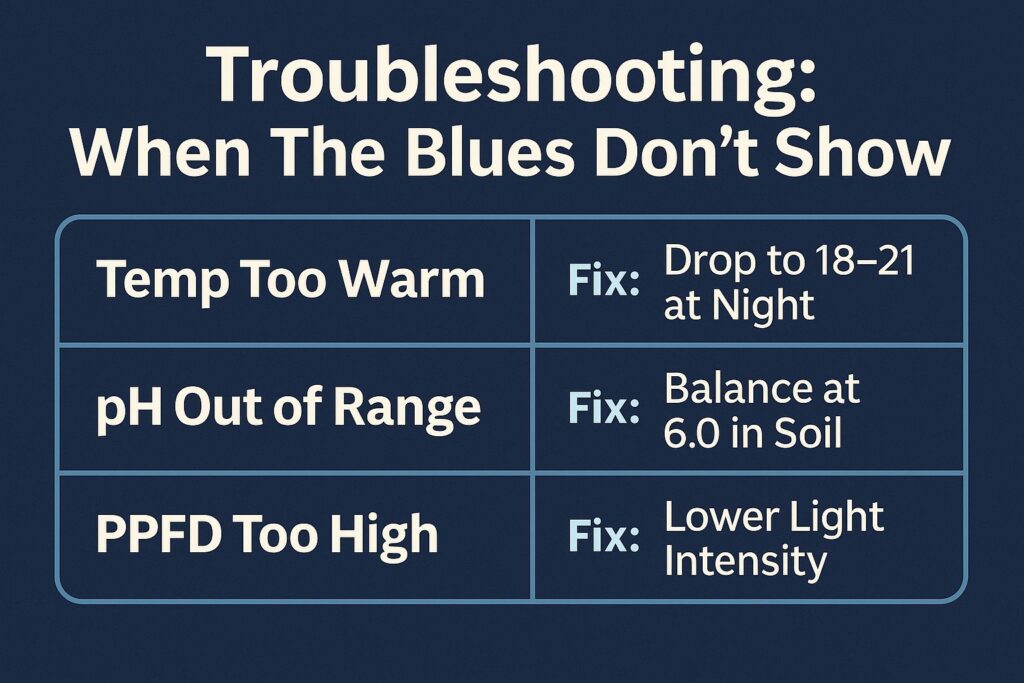
Common reasons I’ve missed blue-tinted phenos and how I corrected them:
Nights never truly cooled
- Fix: Stage thermostats and pre-cool the lung room. Don’t rely on the tent AC alone in indoor tent growing.
EC stayed high through finish
- Fix: Reduce concentration, increase frequency. Good nutrient management is about stability, not starvation.
Over-defoliation late bloom
- Fix: Keep leaf mass that supports pigment development. Defoliate earlier, not during the color push.
Spectrum mismatch
- Fix: Re-aim bars for even coverage. Under harsh spots, bracts look gray instead of blue.
Overly humid dry space
- Fix: Dehumidify and space branches. Poor harvest and curing erase color faster than any grow mistake.
Buying Tips: Getting What You Expect From Seed Banks
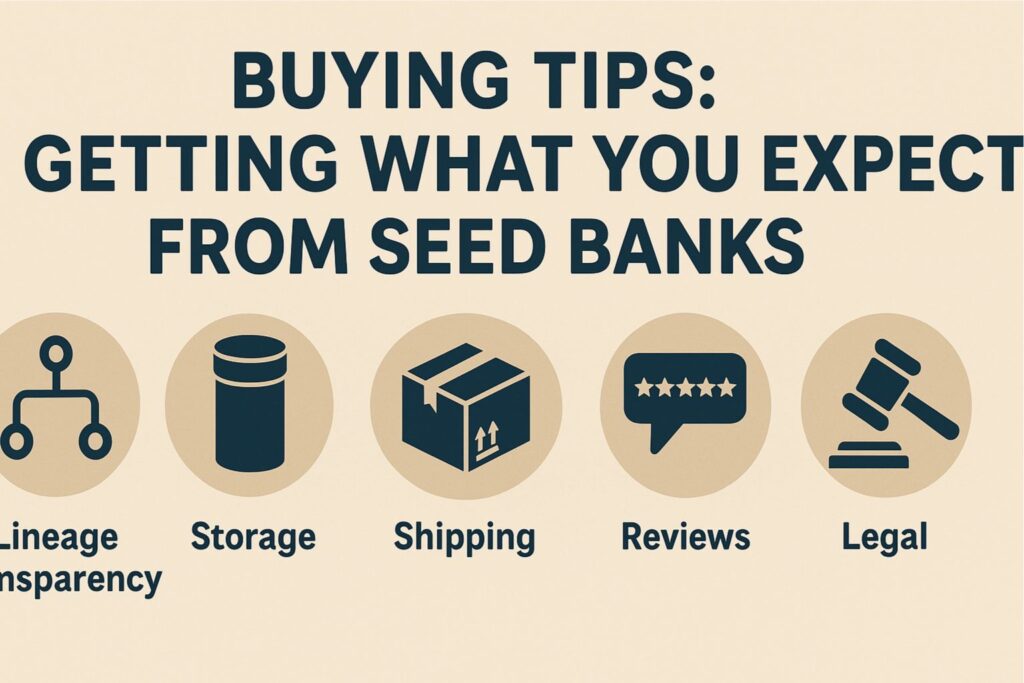
When I shop seed banks for blue cannabis strains, I filter by:
- Proven anthocyanin expression in multiple photos, not just one hero shot
- Honest flowering times; rushed harvests often skip the color window
- Availability in both feminized seeds and autoflower seeds to match my schedule
- Reviews that mention cool-night color rather than “it turned purple under stress”
- Clear germination replacement policies and realistic shipping
A quick word on ethics: if your region restricts cultivation, understand the rules before you buy. Most places treat seeds differently from cultivation. Know the line so the focus stays on craft.
Quick Checklists
Blue-Tinted Phenos Environment Checklist
- Day 22–24°C; Night 18–20°C final two weeks
- RH 45–50% at finish; VPD ~1.3–1.5 kPa
- PPFD 800–850 µmol/m²/s, even canopy
- Stable pH: coco 5.8–6.0; soil 6.3–6.5
- EC taper to 1.0–1.2 before chop
- No late foliar sprays; clean airflow
Seed Selection Checklist For Color
- Listing mentions anthocyanin expression
- Photo proof of blue across grows
- Both feminized seeds and autoflower seeds available
- Plant structure fits indoor tent growing
- Seed banks disclose storage and germ policies
Harvest And Curing Checklist
- 18–20°C, 55–60% RH, 10–14 day dry
- Gentle trim; avoid heat and harsh lights
- Jar at 58–62% RH; burp daily for two weeks
- Photograph under neutral light; blues skew under warm bulbs
FAQs: Blue-Tinted Phenos
Do I need cold nights to see blue-tinted phenos?
Usually yes, but not extreme cold. I plan a steady drop to 18–20°C at night for the last 10–14 days. That small change unlocks anthocyanin expression in blue cannabis strains without shocking the plant.
Are feminized seeds better than regular for colored hunts?
For production gardens, feminized seeds save time and space because every plant is a candidate. If you’re breeding, regulars matter. I run feminized seeds for phenohunts and keep a blue keeper as a mother.
Can autos turn blue reliably?
Yes. Many modern autoflower seeds carry strong anthocyanin expression. Because autos move fast, schedule the color push earlier and keep nutrient management tight. I still dry and cure slowly to lock the hue.
What medium is best for blue color: soil vs hydro?
Both work. Soil vs hydro is a steering question. Soil gives you buffer and forgiving nutrient management; hydro gives you speed and precision. I pick based on calendar and how many variables I can manage.
Should I harvest later to get more blue?
Color should never force you past your ideal maturity. I let trichomes guide harvest and use harvest and curing to showcase color. Overripe flowers can brown out blues.
Which seed banks are most reliable for colored genetics?
Look for seed banks with transparent lineage, multiple grower photos, realistic timelines, and clear replacement policies. If a listing hides details or shows only one staged photo, I pass.
Final Take
Blue-tinted phenos aren’t magic—they’re method. Start with genetics that advertise anthocyanin expression, plan a calm finish, and protect the dry. Whether you prefer berry-leaning indicas or energetic indica sativa hybrid lines, you can grow blue cannabis strains that look as vivid in the jar as they do on the plant. In my garden, the runs that really sing aren’t the ones with the most gear; they’re the ones with consistent environment, disciplined nutrient management, and a patient harvest and curing routine. Do that five cycles in a row, and those midnight blues will stop feeling rare—and start feeling earned.
