Table of Contents
The Blue Lyly cannabis strain is an indica-dominant hybrid, known for its potent therapeutic effects and balanced recreational high. It is the offspring of Blue OG and Lyly Sour, two well-regarded strains that contribute to its unique cannabinoid and terpene profile. This guide explores its chemical composition, pharmacological effects, medical benefits, cultivation science, and potential therapeutic applications.
Genetic Lineage and Composition
Blue Lyly is an 80% indica, 20% sativa hybrid. It inherits sedative and pain-relieving effects from its indica lineage while incorporating a mild cerebral uplift from its sativa components.
Cannabinoid Profile
- THC Content: Ranges between 17-23%, depending on cultivation and curing processes.
- CBD Content: Less than 0.5%, indicating minimal non-psychoactive properties.
- CBG Content: Found in trace amounts (~1%), potentially enhancing anti-inflammatory benefits.
Terpene Profile
Terpenes contribute to the Blue Lyly’s aroma, flavor, and therapeutic properties. The primary terpenes in Blue Lyly include:
- Myrcene (dominant) – Sedative, analgesic, enhances THC bioavailability.
- Limonene – Uplifting, stress-relieving, anti-anxiety.
- Caryophyllene – Anti-inflammatory, interacts with CB2 receptors.
- Pinene – Improves cognitive function and counteracts THC-induced memory impairment.
Pharmacology and Mechanisms of Action
The interaction of THC, CBD, and terpenes in Blue Lyly affects various neurological and physiological pathways, making Blue Lyly an effective strain for both recreational and medical use.
THC Interaction with the Endocannabinoid System
- THC binds to CB1 receptors in the central nervous system, leading to euphoria, relaxation, and altered perception.
- At higher doses, THC also interacts with CB2 receptors, which contribute to pain relief and immune system modulation.
CBD’s Synergistic Effects
Although CBD levels are low, its presence modulates the psychoactive effects of THC by:
- Reducing paranoia and anxiety.
- Enhancing analgesic properties via serotonin receptor activation.
- Regulating dopamine release to create a balanced high.
Terpenes and the Entourage Effect
- Myrcene contributes to the “couch-lock” effect, making Blue Lyly an effective strain for pain management and sleep disorders.
- Limonene counteracts depressive effects, providing an uplifting mood boost.
- Caryophyllene interacts with CB2 receptors, making it beneficial for inflammation-related conditions such as arthritis and muscle spasms.
The method of cannabis consumption significantly impacts onset time, bioavailability, peak effects, and duration. Blue Lyly, an indica-dominant hybrid, exhibits variable pharmacokinetics based on the route of administration. Below is a detailed breakdown of different ingestion methods, how they affect absorption, metabolism, and effects.
Methods of Ingestion
A. Inhalation (Smoking & Vaping)
Mechanism:
- THC and other cannabinoids enter the alveoli in the lungs, where they are rapidly absorbed into the bloodstream.
- Direct access to the brain via the pulmonary circulation leads to fast onset and high bioavailability.
Onset & Duration:
- Onset: 1-5 minutes
- Peak effects: 10-30 minutes
- Total duration: 2-4 hours
Bioavailability:
- Smoking: 20-37% THC absorption
- Vaping: 40-60% THC absorption (higher efficiency due to controlled heating)
Advantages:
- Rapid onset makes it suitable for immediate pain relief or anxiety management
- Higher bioavailability than oral consumption
- Easy to control dosage through inhalation depth and frequency
Disadvantages:
- Irritation of the respiratory tract due to combustion byproducts
- Effects last less time than with edibles.
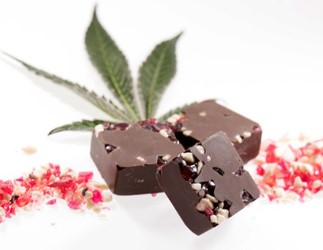
B. Oral Consumption (Edibles & Capsules)
Mechanism:
- THC is metabolized in the liver (first-pass metabolism), where it is converted into 11-hydroxy-THC, a more potent and longer-lasting compound.
- Slow absorption through the digestive system, leading to delayed onset but prolonged effects.
Onset & Duration:
- Onset: 30-90 minutes (depends on metabolism and stomach contents)
- Peak effects: 2-3 hours after ingestion
- Total duration: 6-8 hours (up to 12 hours in high doses)
Bioavailability:
- Edibles: 4-12% THC absorption (low due to first-pass metabolism)
- Capsules: 6-20% THC absorption (varies based on formulation and dietary fat intake)
Advantages:
- Long-lasting effects, making it ideal for chronic pain, insomnia, and appetite stimulation
- No lung irritation as combustion is avoided
Disadvantages:
- Delayed onset can lead to accidental overconsumption
- Difficult to titrate dose due to slow absorption
C. Sublingual Administration (Tinctures & Oral Sprays)
Mechanism:
- THC and cannabinoids are absorbed directly through the mucous membranes under the tongue into the bloodstream, bypassing first-pass metabolism.
- This results in a faster onset than edibles but longer-lasting effects than inhalation.
Onset & Duration:
- Onset: 15-45 minutes
- Peak effects: 1-2 hours
- Total duration: 4-6 hours
Bioavailability:
- 12-35% THC absorption (higher than edibles but lower than vaping)
Advantages:
- Faster onset than edibles, but longer-lasting than smoking
- More precise dosing than edibles or inhalation
- No lung irritation
Disadvantages:
- Effects can still be slightly delayed, leading to dosing miscalculations
- Not as fast-acting as smoking or vaping
D. Topical Application (Creams, Lotions, Patches)
Mechanism:
- THC and CBD penetrate the skin to interact with CB2 receptors in the peripheral nervous system, providing localized relief without psychoactive effects.
- Transdermal patches allow systemic absorption, leading to longer-lasting and controlled-release effects.
Onset & Duration:
- Onset: 20-60 minutes (depends on formulation)
- Peak effects: 1-2 hours
- Total duration: 6-12 hours (transdermal patches can last up to 24 hours)
Bioavailability:
- Creams and lotions: Localized absorption with negligible systemic THC levels
- Transdermal patches: 30-50% THC absorption (provides systemic effects)
Advantages:
- Ideal for localized pain relief, arthritis, and inflammation
- No psychoactive effects with standard topical application
- Long-lasting controlled release with transdermal patches
Disadvantages:
- Limited to localized treatment unless using a transdermal patch
- Not effective for mental health conditions or systemic pain relief
Factors Affecting Onset and Duration
A. Metabolism and Body Composition
- Individuals with faster metabolic rates experience quicker onset and shorter duration.
- Higher body fat can increase THC storage, leading to prolonged but milder effects.
B. Tolerance and Dosage
- Higher dosages can be needed for the same effects by frequent users.
- Lower doses lead to a shorter duration, while higher doses extend the high but may cause undesirable effects.
C. Food Intake and Digestive Efficiency
- Consuming edibles on an empty stomach results in faster onset but stronger effects.
- High-fat meals enhance THC absorption, increasing potency and duration.
D. Cannabinoid and Terpene Interaction (Entourage Effect)
- Myrcene, a dominant terpene in Blue Lyly, enhances THC’s sedative effects, making Blue Lyly more relaxing and sleep-inducing.
- Limonene and pinene can modulate the high, providing a more alert and focused experience.
Comparison of Onset, Peak Effects, and Duration by Ingestion Method
| Method | Onset Time | Peak Effects | Total Duration | Bioavailability |
|---|---|---|---|---|
| Smoking/Vaping | 1-5 min | 10-30 min | 2-4 hours | 20-60% |
| Edibles | 30-90 min | 2-3 hours | 6-12 hours | 4-20% |
| Sublingual (Tinctures) | 15-45 min | 1-2 hours | 4-6 hours | 12-35% |
| Topical (Creams, Lotions) | 20-60 min | 1-2 hours | 6-12 hours | Localized effects |
| Transdermal Patches | 30-60 min | 2-3 hours | 12-24 hours | 30-50% |
Medical Applications and Therapeutic Benefits
Blue Lyly’s chemical composition makes it effective for treating various medical conditions, particularly those involving chronic pain, inflammation, and mood disorders.

Neurological and Psychological Applications
- Anxiety & Depression – The limonene-myrcene balance offers both relaxation and mood elevation, making it beneficial for generalized anxiety disorder (GAD) and major depressive disorder (MDD).
- PTSD & Stress Management – The high THC content helps in suppressing intrusive thoughts and hyperarousal symptoms.
- Insomnia – Myrcene’s sedative effects assist in inducing and maintaining sleep, making it suitable for chronic insomnia.
- ADHD/Focus Issues – While indica-dominant, its pinene content prevents excessive drowsiness, allowing enhanced focus without overstimulation.
Pain & Inflammation Management
- Chronic Pain – Effective for neuropathic pain, migraines, and post-surgical recovery due to THC’s analgesic properties.
- Arthritis & Muscle Spasms – Caryophyllene’s interaction with CB2 receptors reduces joint inflammation and muscle tension.
- Menstrual Pain & Endometriosis – The combination of THC and caryophyllene provides muscle relaxation and cramp relief.
Gastrointestinal and Appetite Regulation
- Nausea & Vomiting – Suitable for chemotherapy-induced nausea due to THC’s anti-emetic properties.
- Appetite Stimulation – Beneficial for patients undergoing cancer treatments or suffering from eating disorders.
Recreational Use and Psychoactive Effects
Blue Lyly’s balanced cannabinoid-terpene synergy creates a multi-stage high, making it suitable for both daytime and evening use.
Onset & Duration
- Onset: 5-10 minutes (smoking/vaping), 30-60 minutes (edibles).
- Peak Effects: 1-2 hours.
- Total Duration: 3-5 hours, depending on dosage and individual metabolism.
Sensory and Cognitive Effects
- Initial Euphoria – Users experience heightened mood, enhanced creativity, and social engagement.
- Mild Cerebral Uplift – Cognitive function remains sharp with no overwhelming psychoactive effects.
- Gradual Body Relaxation – As the high progresses, a wave of physical relaxation sets in, leading to muscle relief and deep relaxation.
Potential Side Effects
- Dry mouth & dry eyes – Due to THC’s inhibition of salivary gland function.
- Mild dizziness – More common in low-tolerance users.
- Sedation – Higher doses may lead to couch-lock and excessive drowsiness.
Cultivation Science & Growth Characteristics
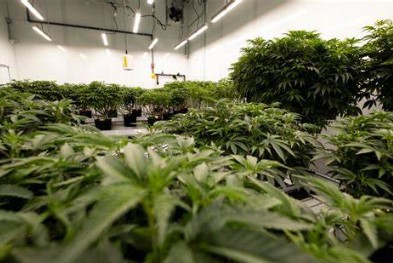
Cultivating Blue Lyly effectively requires a deep understanding of plant physiology, environmental control, nutrient optimization, and training techniques. Below, we explore scientific methods for maximizing yield, cannabinoid production, and terpene expression in both indoor and outdoor environments.
Optimal Growth Environment & Climate Control
Since Blue Lyly is an indica-dominant hybrid, it thrives best in warm, semi-humid climates with stable temperatures.
Temperature and Humidity Management
- Vegetative Stage:
- Temperature: 22-26°C (72-78°F).
- Humidity: 50-60% to promote optimal stomatal conductance.
- CO₂ Supplementation: Raising CO₂ levels to 1200-1500 ppm accelerates photosynthesis and growth.
- Flowering Stage:
- Temperature: 20-24°C (68-75°F) to enhance trichome production.
- Humidity: 40-50% to prevent mold and botrytis (bud rot).
- UV-B Light Exposure: Introducing UV-B spectrum light in the last 2 weeks of flowering can increase THC and terpene production through stress-induced secondary metabolite synthesis.
Hydroponic vs. Soil Cultivation
Hydroponic Systems for Increased Yield
Using a hydroponic setup provides precise nutrient control, increasing growth rate and cannabinoid production. The most effective systems include:
- Deep Water Culture (DWC)
- Delivers oxygen-rich nutrient solution directly to roots.
- Promotes rapid vegetative growth and stronger root systems.
- Requires constant oxygenation via air pumps.
- Nutrient Film Technique (NFT)
- Roots are exposed to a thin, continuously flowing nutrient solution.
- Reduces water usage and increases nutrient absorption efficiency.
- Best suited for controlled indoor environments.
- Aeroponics (Advanced Cultivation)
- Roots are suspended in air and misted with a highly oxygenated nutrient solution.
- Results in faster growth, improved trichome development, and higher cannabinoid content.
- Requires highly precise pH and EC monitoring.
Soil-Based Cultivation for Enhanced Terpene Profiles
Growing Blue Lyly in organic soil enhances terpene expression due to the microbial interaction in the rhizosphere.
- Best Soil Mix:
- 40% Organic Compost – Rich in micronutrients and beneficial bacteria.
- 30% Coco Coir or Peat Moss – Improves aeration and water retention.
- 30% Perlite or Pumice – Enhances drainage and root oxygenation.
- Microbial Inoculants:
- Mycorrhizal Fungi (Glomus species) – Enhances phosphorus uptake for better flowering of Blue Lyly.
- Trichoderma spp. – Protects against root rot and fungal pathogens.
- Bacillus Subtilis – Promotes soil aeration and disease resistance.
Advanced Nutrient Management
Blue Lyly requires a precise balance of macronutrients and micronutrients for maximum cannabinoid and terpene production.
Macronutrient Ratios (NPK)
| Growth Stage | Nitrogen (N) | Phosphorus (P) | Potassium (K) |
|---|---|---|---|
| Seedling | 2 | 1 | 2 |
| Vegetative | 4 | 2 | 3 |
| Early Flowering | 2 | 4 | 5 |
| Late Flowering | 1 | 5 | 7 |
Micronutrients
- Magnesium (Mg) – Essential for chlorophyll synthesis, improving overall photosynthesis efficiency.
- Calcium (Ca) – Strengthens cell walls, preventing bud rot and stem breakage.
- Sulfur (S) – Crucial for terpene synthesis, enhancing the aromatic profile.
pH and Electrical Conductivity (EC) Optimization
- Optimal pH Range:
- Hydroponics: 5.8 – 6.2
- Soil: 6.2 – 6.8
- Ideal EC Levels (mS/cm):
- Vegetative: 1.2 – 1.8
- Flowering: 1.8 – 2.4
Maintaining proper pH and EC levels in Blue Lyly ensures maximum nutrient absorption, preventing lockouts and deficiencies.
Training Techniques to Maximize Yield
Blue Lyly benefits from plant training methods that enhance light exposure, canopy control, and yield optimization.
Low-Stress Training (LST)
- Bending and tying branches to create a flat canopy, ensuring even light distribution.
- Increases bud sites, leading to higher yield without plant stress.
Screen of Green (ScrOG)
- Mesh screen is used to train Blue Lyly horizontally, increasing flowering nodes.
- Improves light penetration, resulting in denser, more resinous buds.
Super Cropping (HST)
- Intentional stress technique to enhance cannabinoid and terpene production.
- Stem manipulation triggers natural defense mechanisms, leading to higher THC content.
Defoliation for Airflow & Light Penetration
- Removing large fan leaves increases air circulation, preventing mold and pest infestations.
- Improves light exposure to lower bud sites, maximizing yield.
Light Spectrum & Photoperiod Control
Lighting plays a critical role in optimizing cannabinoid synthesis.
Best Light Spectrum for Different Growth Phases
| Growth Stage | Preferred Spectrum | Benefits |
|---|---|---|
| Vegetative | Blue (400-500 nm) | Promotes leaf growth and chlorophyll production |
| Flowering | Red (620-700 nm) | Increases bud formation and trichome density |
| Late Flowering | UV-B (280-320 nm) | Boosts THC and terpene production |
Light Cycle for Maximum Yield
- Vegetative Stage: 18/6 (light/dark) photoperiod to encourage vigorous growth.
- Flowering Stage: 12/12 light cycle triggers bud production by simulating natural seasonal changes.
For outdoor cultivation, planting Blue Lyly in late spring ensures optimal flowering by late September – early October.
Pest and Disease Prevention
Since Blue Lyly has dense buds, it is susceptible to mold, mildew, and pest infestations. Strategies for Integrated Pest Management (IPM) consist of:
Biological Controls
- Ladybugs & Lacewings – Control aphids and spider mites on Blue Lyly naturally.
- Beauveria Bassiana – Fungal bio-agent effective against thrips and whiteflies.
Fungal & Bacterial Disease Prevention
- Neem Oil & Potassium Bicarbonate – Prevent powdery mildew.
- Bacillus Thuringiensis (BT) – Kills caterpillars and fungus gnats.
Companion Planting
Planting marigolds and basil nearby repels pests, reducing the need for pesticides.
Scientific Research & Future Applications
While no strain-specific studies exist for Blue Lyly, research on its parent strains and terpene composition suggests therapeutic potential for:
- Cannabinoid-Dependent Pain Relief – Studies show THC modulates nociceptive pathways, making it effective for neuropathic and inflammatory pain.
- Anti-Anxiety Effects of Terpenes – Limonene and myrcene contribute to serotonergic modulation, reducing cortisol levels.
- Neuroprotective Properties – THC & CBD interactions with CB1 receptors may slow neurodegenerative diseases like Alzheimer’s and Parkinson’s.
- Gastrointestinal Benefits – Cannabis-derived cannabinoids regulate gut motility, potentially treating IBS and Crohn’s disease.
Conclusion
Blue Lyly is a well-balanced indica-dominant hybrid with potent pain-relief, anti-inflammatory, and anxiolytic properties. It offers a gradual high, making it suitable for both medical and recreational use. With a robust terpene profile and efficient cultivation characteristics, Blue Lyly is a scientifically backed strain ideal for pain management, anxiety relief, and moderate euphoria.
For a complete directory of cultivars, visit our Cannabis Strain Reviews.
