
Why I’m writing about Betel Nut and Areca Nut
I spend most of my time thinking like a cultivator: how plants grow, how people use them, and how small choices in handling and storage change the final experience. That mindset is why Betel Nut and Areca Nut caught my attention. I first ran into areca nuts in a market stall while traveling, then again later in conversations with growers who are curious about traditional stimulants. The pattern was consistent: people knew it as “betel nut,” but few could clearly explain what they were actually chewing, what makes it feel stimulating, and what practical trade-offs come with it.
This article is not a recommendation to start using any stimulant. It is an experience-driven overview from the standpoint of someone who pays close attention to plant material quality, preparation habits, and realistic effects. I’ll cover what Betel Nut and Areca Nut are, how betel quid is typically assembled, what I noticed when I tried it in a traditional setting, and the practical cautions that matter most. Along the way, I’ll also connect the discussion to cannabis, marijuana, and weed culture, because readers who grow one psychoactive plant often want to understand how other plant traditions work.
What Betel Nut and Areca Nut actually are
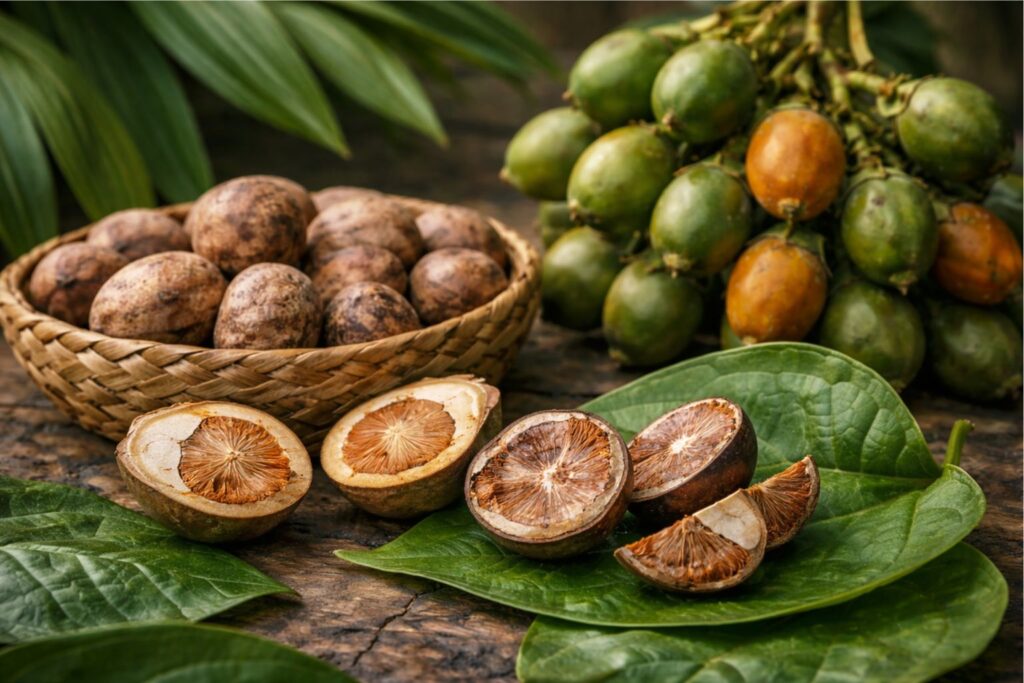
Despite the common name, betel nut is usually the areca nut: the seed of the areca palm. In many places the nut is chewed on its own, but more often it shows up as a mixture called betel quid. The “betel” part refers to a leaf from a different plant that acts as a wrapper and flavor layer. That basic distinction matters, because people talk about “betel nut” as if it’s one thing, when it’s really a set of ingredients, habits, and regional variations.
From a plant-handling perspective, I think of areca nut chewing as a spectrum of processed seed products. Fresh, tender nuts are juicy and fibrous. Drier nuts are tougher and more astringent. Some are roasted, some are sweetened, and some are flavored in ways that can mask age or low quality. If you come from cannabis or marijuana cultivation, you already know how processing changes a plant product: curing, drying, and storage can either preserve the character or flatten it into something harsh.
How betel quid is commonly prepared in real life
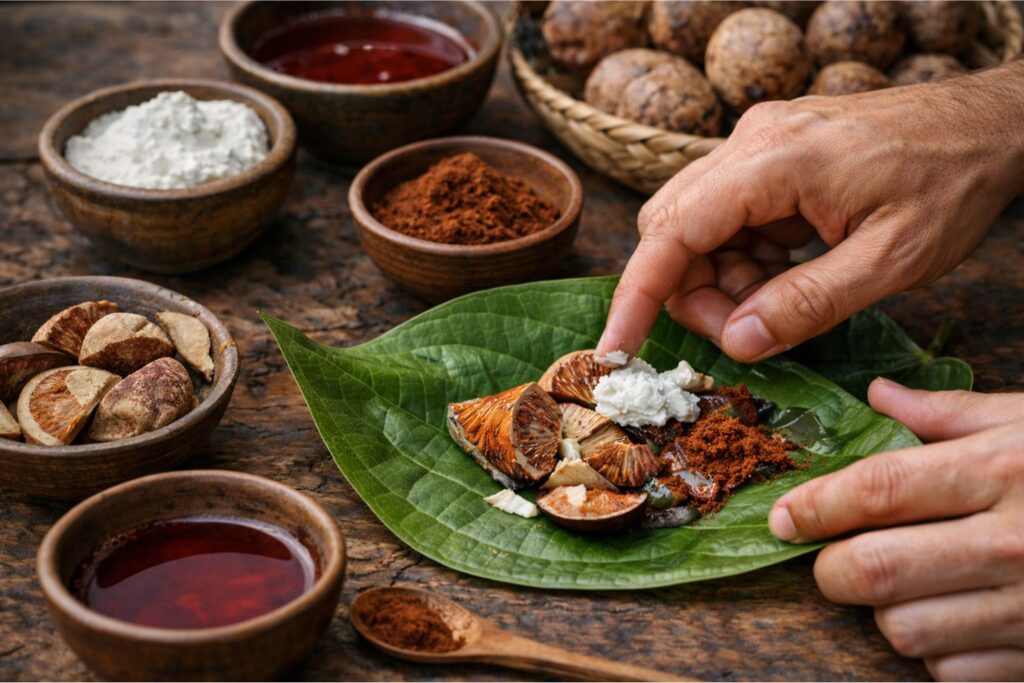
When I watched betel quid being made in a traditional setting, it looked less like a “drug ritual” and more like the way gardeners talk about making a good compost tea: everyone has a preferred method, but the fundamentals repeat.
A typical betel quid build has:
- A piece of betel leaf as the wrap
- Sliced areca nut as the main chew
- A small smear of slaked lime as the alkalizing agent
- Optional spices, sweeteners, or catechu depending on the region
Slaked lime is the part that surprised many of my friends, including experienced weed growers. It is not lime fruit; it is an alkaline paste that changes mouthfeel and can change how strong the chew feels. In my notes, the biggest variable wasn’t the nut itself; it was how much slaked lime got added. A light touch felt sharper but manageable. Too much slaked lime turned the experience abrasive and, frankly, unpleasant.
If you are used to cannabis edibles, you already understand the idea that small dosing changes can flip a pleasant effect into an uncomfortable one. Betel quid is similar in that sense, but the delivery is through chewing and saliva rather than digestion.
The effects I noticed: stimulation, focus, and the edges of it
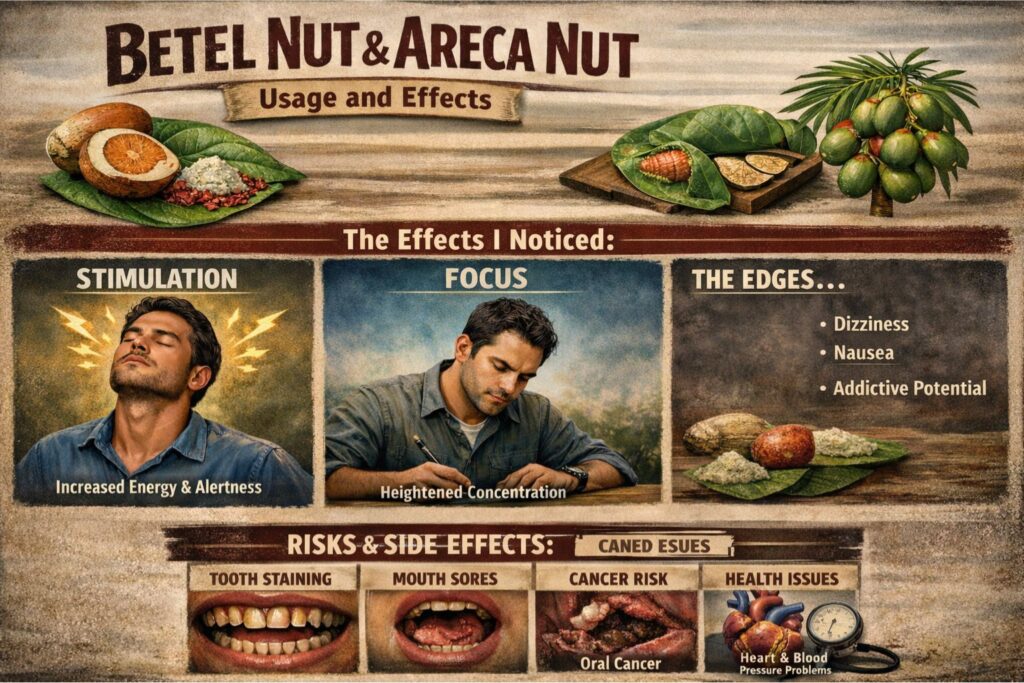
People often ask me about the “high,” so I’ll answer plainly. For me, the arecoline effects showed up as a quick, buzzy stimulation and an alert, talkative mood. It felt closer to a strong coffee than to weed, and very different from the relaxed body feel I associate with many marijuana varieties.
Here’s what I personally noticed within the first 15–30 minutes of areca nut chewing:
- Increased saliva and a warm mouth sensation
- A light-headed, energetic lift
- Slight tightening in the jaw from constant chewing
- A tendency to keep chewing longer than planned
The arecoline effects also came with downsides. If I chewed too quickly or on an empty stomach, I felt mild nausea and a sweaty, edgy feeling. That is one reason I’m careful about psychoactive plant harm reduction in general: when a product is culturally normalized, people underestimate how personal tolerance can be.
Mouth staining and why it matters
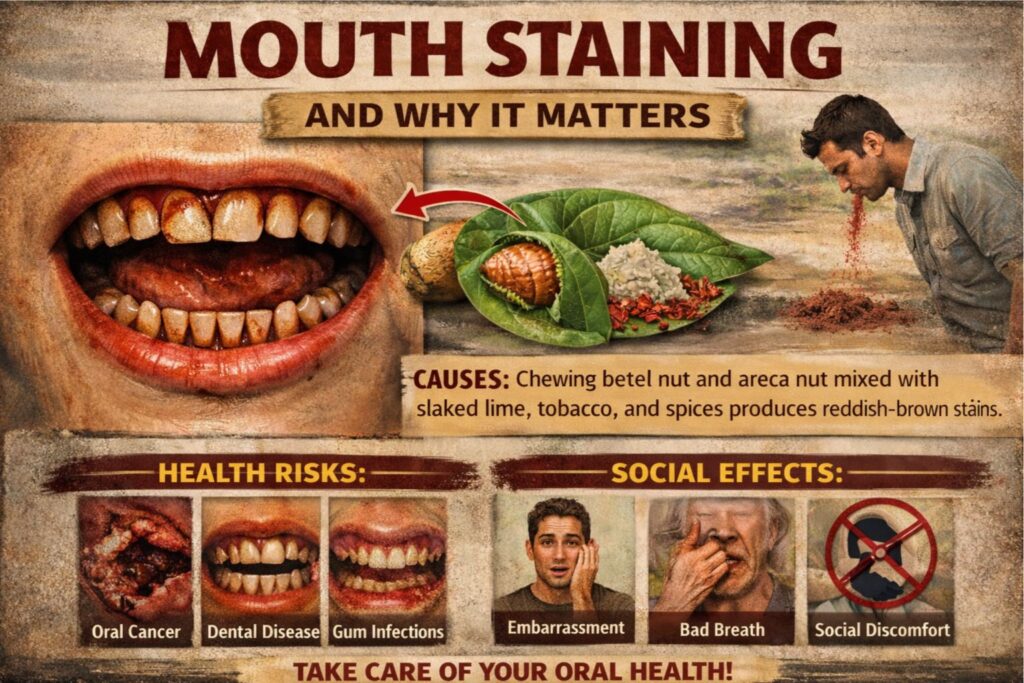
If you’ve seen photos of betel chewers, you’ve probably noticed the red spit and the darkened teeth. Mouth staining is real, and it can happen quickly. In the setting where I tried it, the color shift was obvious by the end of the chew. It wasn’t just cosmetic; it was also a signal that the mixture is reactive, and that it interacts with soft tissue.
From a cultivator’s perspective, staining is evidence of strong plant pigments and chemical reactions. From a practical-life perspective, mouth staining is a daily-living issue: it affects teeth, lips, and sometimes clothing. If you work in a job where appearance matters, mouth staining is not a trivial side effect.
I’ll repeat mouth staining here because it is one of the most predictable outcomes: mouth staining is common, mouth staining is persistent with frequent use, and mouth staining is hard to fully reverse without dental care.
Practical cautions without hype
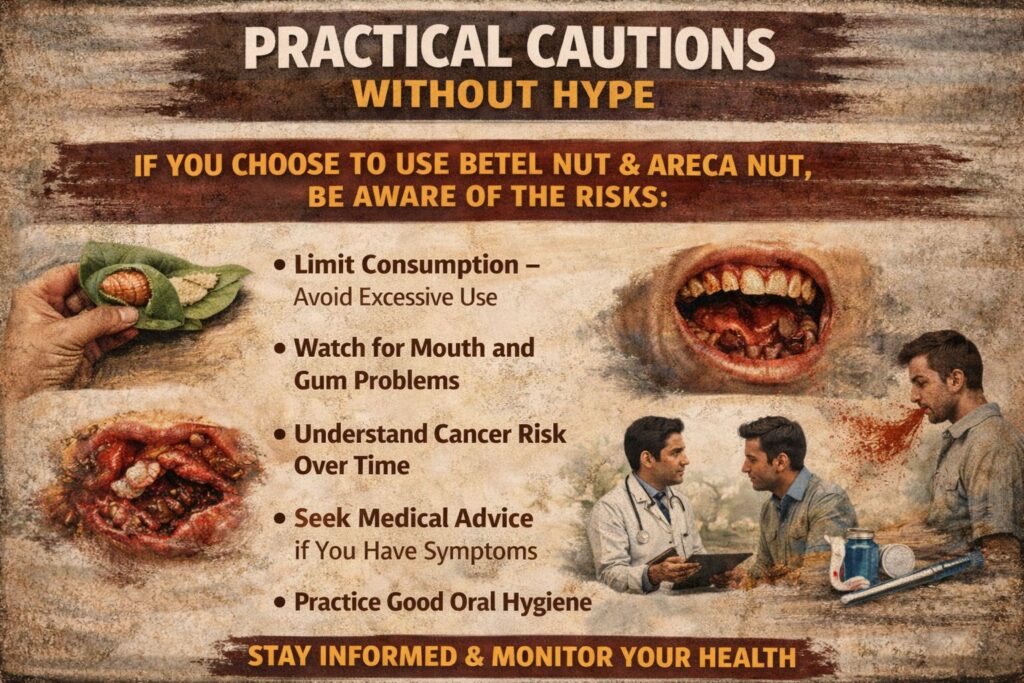
I’m not going to make medical claims. I will say what most responsible users already know: frequent chewing can be rough on the mouth, and many public health sources have raised concerns about long-term oral outcomes in heavy-use regions. If you are considering trying it, the honest approach is to treat it as a stimulant with real trade-offs.
My personal boundaries look like this:
- I don’t combine areca nut chewing with alcohol.
- I don’t chew it as a daily habit.
- I pay attention to gum sensitivity and stop if irritation starts.
These are basic psychoactive plant harm reduction habits: set limits, avoid mixing, and respect early warning signs. Psychoactive plant harm reduction is not about being scared; it is about staying honest about how plants can affect the body.
An oral care routine that fits real life
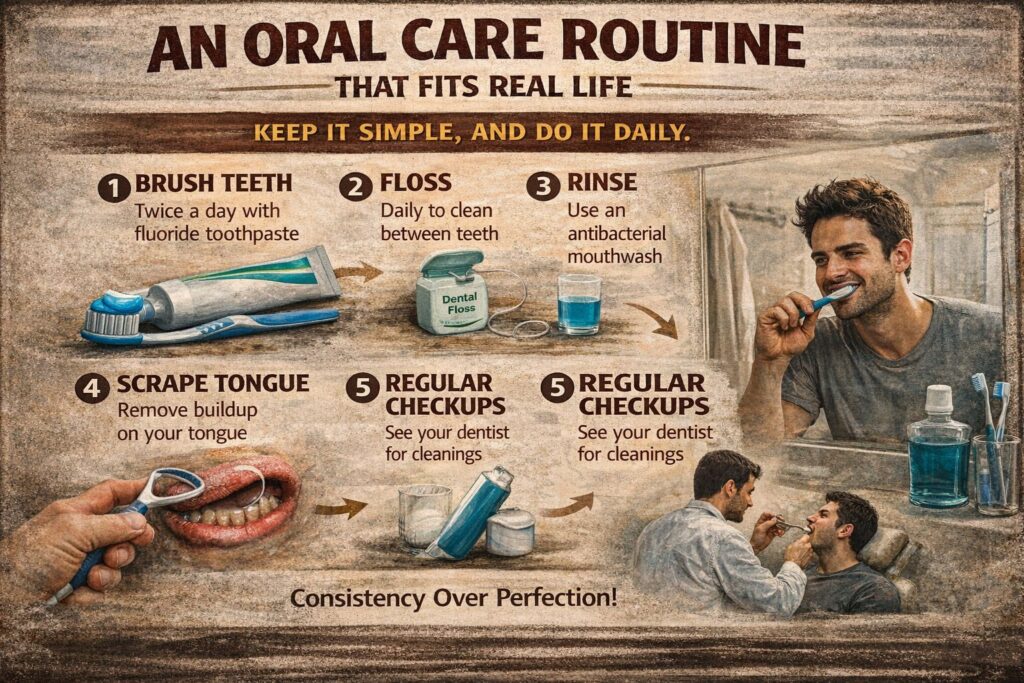
If you take anything practical from this post, let it be this: keep an oral care routine that matches what you put in your mouth. For people who chew betel quid, a consistent oral care routine is not optional; it is maintenance.
A simple oral care routine that many users follow includes:
- Rinsing with clean water soon after chewing
- Brushing gently after the mouth has calmed down
- Flossing daily to reduce buildup
- Regular dental checkups when accessible
I’m repeating oral care routine a few times on purpose because it is the part people skip. A better oral care routine is the difference between “once in a while curiosity” and “a habit that slowly damages tissue.” If you choose to chew, make oral care routine part of the decision, not an afterthought.
Quality, storage, and seed sourcing transparency
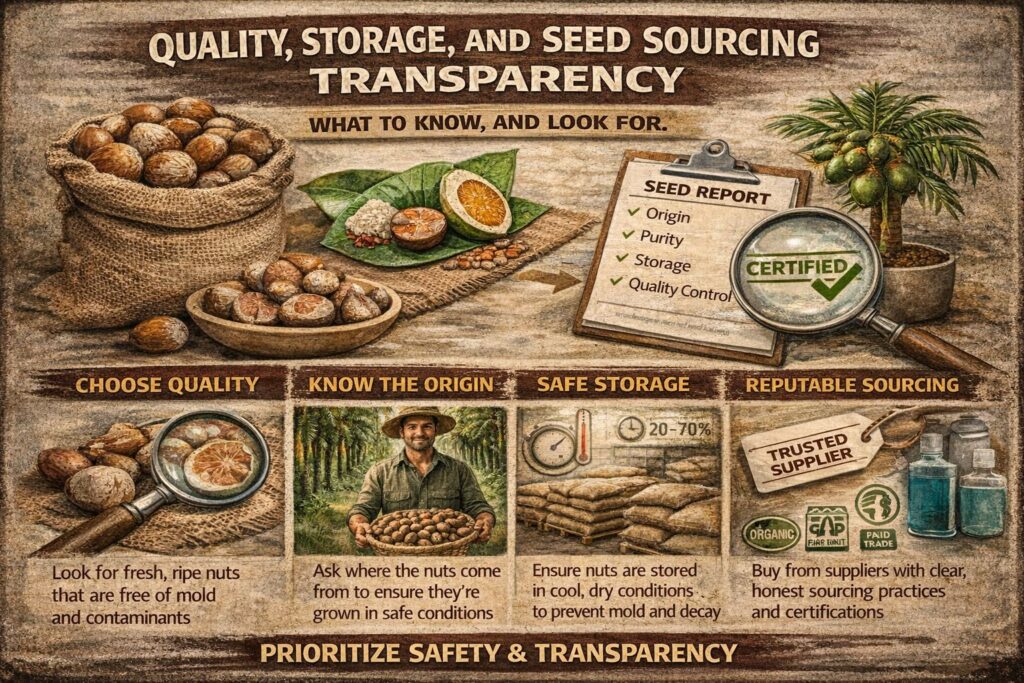
As a grower, I judge plant products first by how they were handled. Seed sourcing transparency matters in cannabis genetics, and it matters here too. If you don’t know how old a nut is, how it was dried, or whether additives were used, you’re buying blind.
When I evaluate areca products, I look for:
- Clean, consistent color without obvious mold
- A smell that is earthy and nutty, not chemical
- Packaging that lists additives clearly
- Storage that avoids heat and humidity
This is the same logic I use when I buy marijuana genetics or weed seed lines: seed sourcing transparency is how you avoid disappointment and reduce risk. Seed sourcing transparency also helps you compare like with like. Without it, you can’t tell whether “strong” means fresh material or simply heavy flavoring.
Areca palm cultivation: what the plant wants
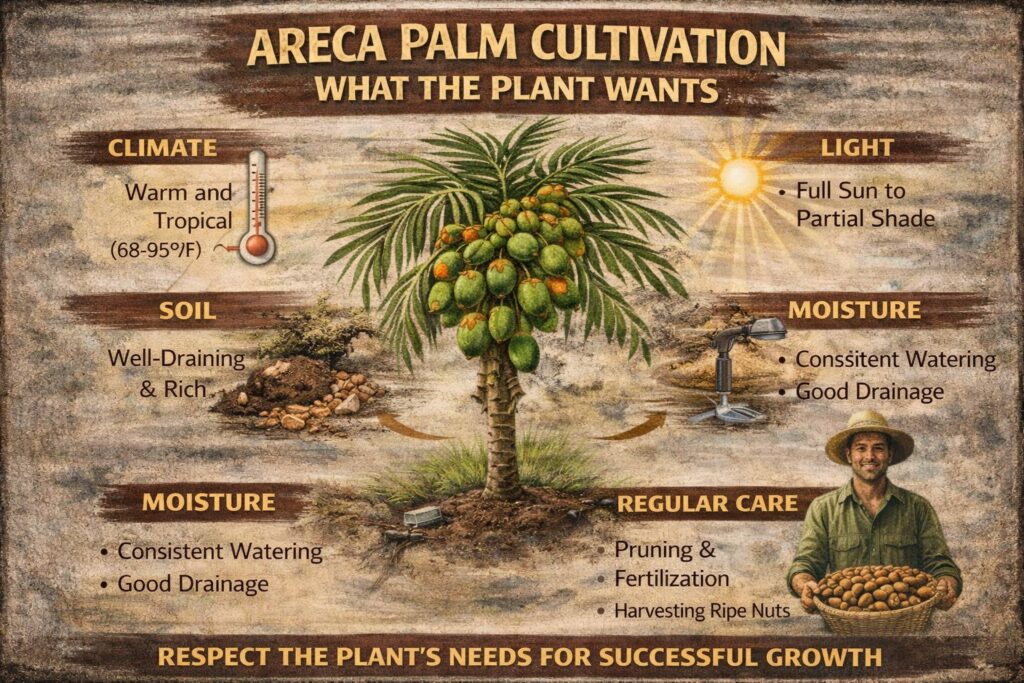
I’m including a section on areca palm cultivation because it helps explain why the nut varies so much. The areca palm thrives in warm, humid conditions and is typically grown in tropical and subtropical regions. In cultivation terms, it is a long-cycle crop. The best nuts come from trees that are cared for over years, not rushed in a season.
If you’re interested in areca palm cultivation as a horticultural project, think about:
- Temperature stability and protection from cold snaps
- High humidity and consistent moisture
- Deep, well-draining soil with steady nutrition
- Managing fungal pressure in wet climates
Areca palm cultivation is not similar to indoor cannabis in time scale, but the mindset overlaps: control stress, keep roots healthy, and avoid swings. In areca palm cultivation, pests can include boring insects and fungal issues; sanitation and airflow still matter, just on a different scale.
What cannabis growers can learn from Betel Nut and Areca Nut culture

This might feel like a strange crossover, but I see a real connection. In cannabis and marijuana circles, people constantly swap notes: phenotype variation, terpene intensity, drying speed, and how different consumption methods change effects. Betel Nut and Areca Nut have that same culture of practical knowledge, just in a different plant tradition.
Here are a few lessons I’ve taken back into my weed cultivation mindset:
- Respect processing
Drying and storage change everything. That is true for cured cannabis flowers and it is true for areca products used in betel quid. - Don’t ignore delivery method
Chewing is a different delivery path than smoking or vaporizing weed. In marijuana, that difference is why tinctures and edibles feel distinct. With areca nut chewing, the mouth is the delivery environment, which is why oral care routine matters so much. - Look for consistency, not hype
If you buy cannabis genetics online, you learn quickly that stable lines matter. For areca nut chewing, consistent product quality matters for the same reason: unpredictability increases discomfort.
Buying plant genetics online: what I prioritize as a cultivator

Many readers come to this site because they shop for cannabis genetics online. Even though Betel Nut and Areca Nut are a different category, the same buyer skills apply. When choosing cannabis, marijuana, or weed seed lines, I look at the full chain: origin, storage, and realistic expectations.
A checklist I use before I place an order:
- Clear breeder information and lineage notes
- Germination guidance that matches the seed type
- Policies for replacement when seeds fail to sprout
- Packaging that protects seeds from moisture and crushing
- Customer service that answers technical questions
I also do regional legality checks before ordering.
When I say “cannabis genetics online,” I’m including the whole spectrum: feminized seeds for growers who want to reduce surprises, auto-flowering varieties for quick cycles, and classic photoperiod plants for people who like training and longer veg times. I also take the indica/sativa/hybrid labels as a rough shorthand, not a promise. In my grows, the real story is phenotype expression under your specific environment.
I’m also careful about matching the seed type to the system. Soil vs hydro is not just a preference; it changes how quickly issues show up and how much room you have to correct them. In soil, you can sometimes buffer mistakes with a healthy root zone and a steady dry-back rhythm. In hydro, you get faster feedback, which is great when you’re dialed in and unforgiving when you’re not. No matter which route you choose, seed sourcing transparency helps you avoid wasted time and makes troubleshooting cleaner when something goes sideways.
A quick note about seed banks and shipping: I prefer sellers who explain how they package for temperature swings and crushing, and who are clear about tracking options. If a shop can’t answer basic questions about shipping, returns, or germination support, I treat it as a red flag, the same way I’d treat mystery additives in a betel quid mix.
Cultivation snapshot: environment targets that stay consistent
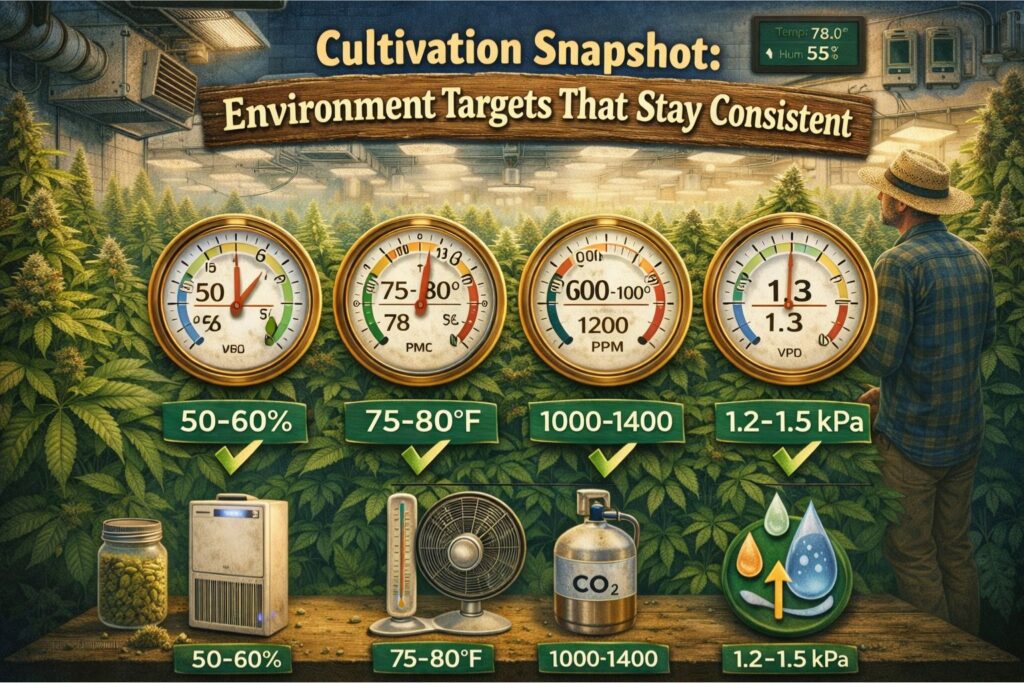
To keep this post useful for growers, here are environment targets I’ve seen work consistently in indoor cannabis cultivation. Use them as a starting range, not a guarantee.
Vegetative stage:
- Photoperiod: 18/6
- PPFD: 300–500 at canopy
- Temperature: 24–28°C lights on
- Relative humidity: 55–70%
- VPD: roughly 0.8–1.2 kPa
Flowering stage:
- Photoperiod: 12/12
- PPFD: 600–900 at canopy (with CO2 adjustments if used)
- Temperature: 22–27°C lights on
- Relative humidity: 40–55%
- VPD: roughly 1.2–1.6 kPa
I’m including this because many people compare stimulants and relaxants without understanding how much the plant’s grown environment shapes the final effect. Better cultivation reduces harshness. Better post-harvest handling reduces throat irritation. Those are practical outcomes whether you’re talking about weed or any other plant product.
Regional legality checks and cultural context
Betel products and cannabis products sit in very different legal and cultural categories, but both require situational awareness. I can’t give legal advice, and laws change.
What I can say is that regional legality checks should include:
- Whether possession is regulated
- Whether import or mail delivery is restricted
- Whether additives change legal status
- Whether local workplace policies apply even when legal
I’ll repeat it: regional legality checks save you problems. Regional legality checks are part of responsible buying, just like seed sourcing transparency is part of responsible growing.
FAQ
Is betel nut the same as areca nut?
In everyday speech, yes. Many people use “betel nut” to mean the areca nut. In practice, betel quid often includes areca nut plus a betel leaf wrap and slaked lime, so it helps to ask what is actually in the chew.
What does areca nut chewing feel like compared to cannabis or marijuana?
For me, areca nut chewing felt stimulating and chatty, more like caffeine. Weed tends to feel more relaxing and sensory, though that varies with genetics and dose. The arecoline effects also felt more likely to tip into nausea if I pushed it.
Why does betel quid stain teeth?
Mouth staining comes from pigments and chemical reactions in the mixture. Mouth staining can build up with frequent use. If you care about teeth appearance, mouth staining is a real downside.
Can I reduce the downsides if I try it?
The most practical step is an oral care routine. Rinse, brush gently, and pay attention to irritation. Psychoactive plant harm reduction also means not mixing substances, not using daily, and stopping if your body signals trouble.
How do I evaluate product quality when buying plant material online?
I look for seed sourcing transparency, clear ingredient lists, and storage that avoids heat and humidity. The same buyer skills help whether you’re evaluating areca products or cannabis genetics online.
What should I check before ordering cannabis genetics to my region?
Do regional legality checks first, then confirm the seller’s shipping and replacement policies. If a shop won’t answer basic questions, I move on.
Are feminized seeds and auto-flowering varieties worth it for beginners?
For beginners, feminized seeds can reduce the chance of ending up with unwanted male plants, which simplifies the first run. Auto-flowering varieties can be forgiving on timing because they don’t rely on a strict photoperiod change, but they also have less room for recovery if you stunt them early. If you’re deciding between them, match the choice to your schedule and your system (soil vs hydro), not to internet hype.
Do indica/sativa/hybrid labels help with grow planning?
They can help as a broad category, but I don’t treat them as a guarantee. In cannabis and marijuana cultivation, phenotype variation is real, and the same strain name can produce different expressions depending on the line and your environment. If you want predictability, prioritize seed sourcing transparency and consistent breeder notes.
Closing thought
Betel Nut and Areca Nut sit in a complicated place: traditional, widespread, and normalized in many communities, yet easy to underestimate if you approach it casually. From a cultivator’s view, the theme is familiar. Plants are powerful, processing matters, and responsible use starts with honest trade-offs. If you’re the kind of grower who keeps notes on PPFD, EC, and drying time, treat any chew the same way: observe, keep it moderate, and put your long-term health above the novelty.
