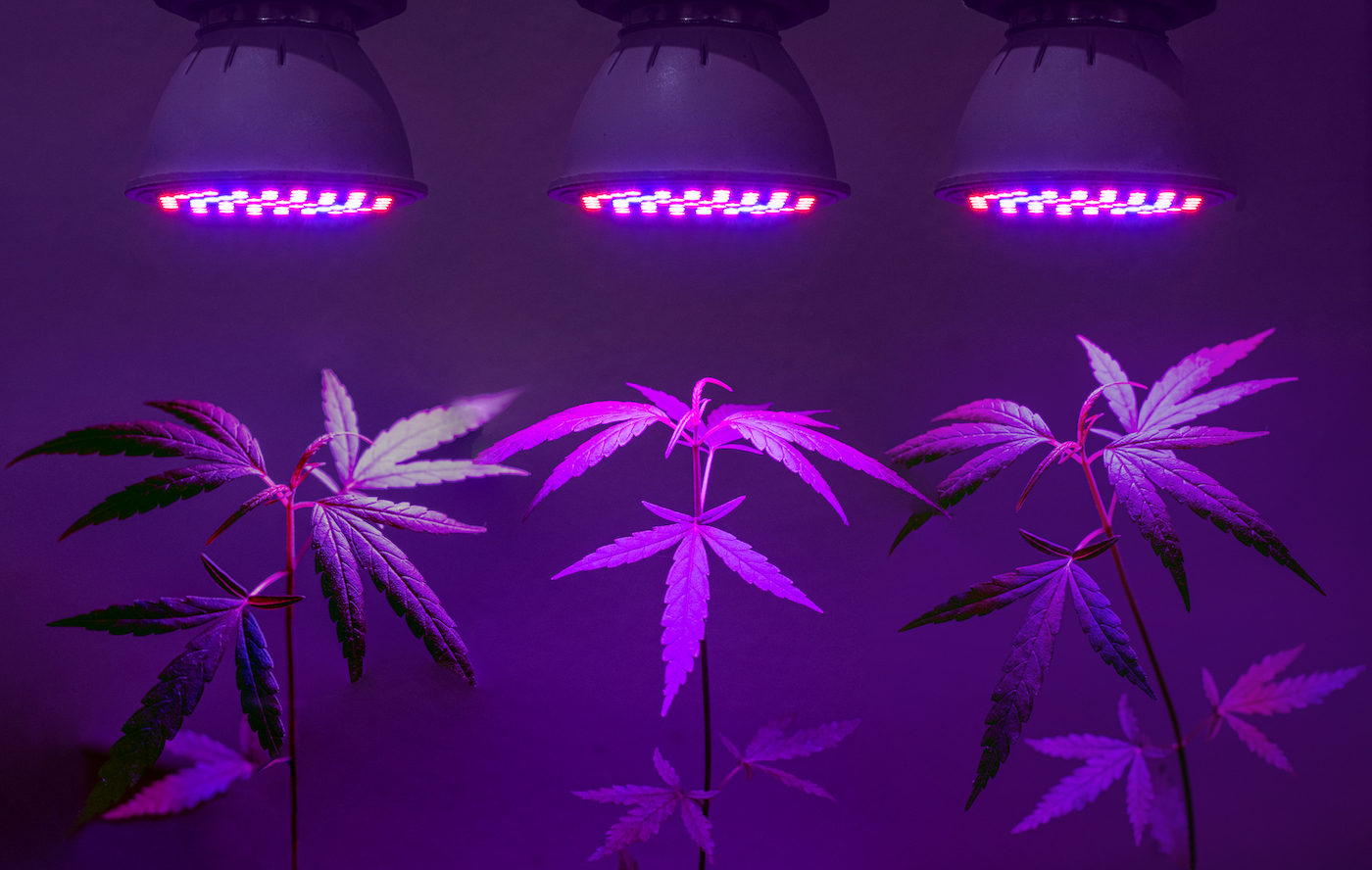
Choosing the right grow lights for cannabis plants is crucial for maximizing yield and ensuring healthy growth. Here are the main types of grow lights, along with their pros and cons:
Fluorescent Grow Lights: Types, Pros, and Cons in Detail
Fluorescent grow lights are popular among home growers and those with small to medium-sized indoor gardens. They come in various forms, each with specific advantages and disadvantages. Here’s a detailed look at the types, pros, and cons of fluorescent grow lights:
Types of Fluorescent Grow Lights
- CFL (Compact Fluorescent Lights):
- Description: CFLs are spiral-shaped bulbs that are commonly used in household lighting but also available in versions suitable for plant growth.
- Wattage: Typically range from 13W to 105W for grow lights.
- Spectrum: Available in full-spectrum (6500K for vegetative growth and 2700K for flowering).
- T5 Fluorescent Lights:
- Description: T5 lights are straight tube lights housed in a reflective fixture. They are more efficient than traditional T12 and T8 fluorescents.
- Wattage: Usually 54W per tube, with fixtures holding multiple tubes.
- Spectrum: Available in full-spectrum, with specific bulbs for vegetative (6500K) and flowering (2700K) stages.
Pros of Fluorescent Grow Lights
1. Affordability:
- Fluorescent lights, especially CFLs, are generally inexpensive and widely available.
- T5 fixtures and bulbs are also reasonably priced, making them accessible for beginners.
2. Energy Efficiency:
- Fluorescent lights consume less power compared to traditional HID lights.
- This leads to lower electricity bills and less heat output, reducing cooling requirements.
3. Low Heat Output:
- Fluorescent lights generate minimal heat, reducing the risk of burning plants.
- This makes them suitable for small grow spaces and for placing lights close to the plant canopy.
4. Good for Seedlings and Clones:
- The lower intensity and broad light spectrum are ideal for young plants, seedlings, and clones.
- Fluorescent lights promote steady growth without causing stress.
5. Ease of Use:
- Simple to set up and use, with no need for additional equipment like ballasts.
- CFLs can fit into standard light sockets, and T5 fixtures are straightforward to install.
Cons of Fluorescent Grow Lights
1. Lower Light Intensity:
- Fluorescent lights provide less light intensity compared to HID and LED lights.
- This can limit their effectiveness for mature plants and during the flowering stage.
2. Limited Light Penetration:
- The light from fluorescents doesn’t penetrate deep into the plant canopy.
- This can result in lower yields and less dense buds compared to more intense light sources.
3. Shorter Lifespan:
- Fluorescent bulbs typically have a shorter lifespan than LEDs, meaning more frequent replacements.
- The expense of changing bulbs can mount up over time.
4. Spectrum Limitations:
- While full-spectrum fluorescent bulbs are available, they are not as customizable as LEDs.
- Growers might need to switch bulbs between vegetative and flowering stages.
Best Practices for Using Fluorescent Grow Lights
- Positioning:
- Place CFLs 2-6 inches from the plant canopy to ensure adequate light exposure.
- T5 lights should be positioned 6-12 inches above the plants, adjusting as they grow.
- Coverage:
- Ensure the lights cover the entire grow area. For larger spaces, use multiple fixtures.
- Reflective surfaces around the grow space can help maximize light distribution.
- Stage-Specific Lighting:
- Use 6500K bulbs for the vegetative stage and 2700K bulbs for the flowering stage.
- Consider combining different types of fluorescents for a balanced light spectrum.
- Maintenance:
- To provide the best possible light output, clean the bulbs and fittings on a regular basis.
- Replace bulbs as needed to maintain optimal growth conditions.
HID (High-Intensity Discharge) Grow Lights: Types, Pros, and Cons in Detail
HID grow lights are widely used in commercial and large-scale indoor growing operations due to their high light intensity and effectiveness across all growth stages. Here’s an in-depth look at the types, pros, and cons of HID grow lights:
Types of HID Grow Lights
- MH (Metal Halide):
- Description: MH bulbs produce a light spectrum that is rich in blue wavelengths, which is ideal for the vegetative growth phase.
- Wattage: Common wattages include 250W, 400W, 600W, and 1000W.
- HPS (High-Pressure Sodium):
- Description: HPS bulbs emit a spectrum rich in red and orange wavelengths, making them excellent for the flowering stage.
- Wattage: Similar to MH bulbs, common wattages are 250W, 400W, 600W, and 1000W.
- CMH (Ceramic Metal Halide) or LEC (Light Emitting Ceramic):
- Description: CMH bulbs combine the qualities of both MH and HPS, providing a broad spectrum that can be used for both vegetative and flowering stages.
- Wattage: Typically available in 315W and 630W.
Pros of HID Grow Lights
1. High Light Intensity:
- HID lights produce very high light intensity, which is essential for robust plant growth and high yields.
- This intensity is particularly beneficial during the flowering stage to maximize bud production.
2. Proven Effectiveness:
- HID lights have been a standard in indoor gardening for decades, with a proven track record of success.
- Many professional growers rely on HID lights for their reliability and results.
3. Full Spectrum Options:
- With MH for vegetative growth and HPS for flowering, HID systems can provide the right light spectrum for each growth stage.
- CMH lights offer a full spectrum suitable for all growth stages, simplifying the lighting setup.
4. Cost-Effective:
- While HID lights require a higher initial investment compared to fluorescents, they are more affordable than high-quality LEDs.
- Their ability to produce high yields can offset the initial cost over time.
Cons of HID Grow Lights
1. High Heat Output:
- HID lights generate a significant amount of heat, which can raise the temperature in the grow space.
- In order to preserve ideal growing conditions and shield plants from heat stress, adequate ventilation and cooling systems are required.
2. Higher Energy Consumption:
- HID lights consume more electricity compared to fluorescents and LEDs, leading to higher operating costs.
- This can be a concern for growers with large-scale operations or those looking to minimize energy usage.
3. Shorter Lifespan:
- HID bulbs have a shorter lifespan compared to LEDs, requiring more frequent replacements.
- Over time, the cost of replacing bulbs can add up.
4. Ballast Requirement:
- HID lights require external ballasts to operate, adding to the complexity and initial cost of the setup.
- Magnetic ballasts are less expensive but less efficient, while digital ballasts are more efficient but costlier.
Best Practices for Using HID Grow Lights
- Stage-Specific Lighting:
- Use MH bulbs during the vegetative stage to promote leafy growth and healthy plant structure.
- Switch to HPS bulbs during the flowering stage to enhance bud development and yield.
- Ventilation and Cooling:
- Install adequate ventilation and cooling systems to manage the heat produced by HID lights.
- Use air-cooled reflectors or vented hoods to reduce heat buildup around the plants.
- Light Positioning:
- Maintain the appropriate distance between the lights and the plant canopy to avoid light burn while ensuring adequate light coverage.
- Adjust the height of the lights as the plants grow to maintain optimal light intensity.
- Regular Maintenance:
- Clean reflectors and bulbs regularly to ensure maximum light output.
- Replace bulbs according to the manufacturer’s recommendations to maintain light quality and intensity.
LED (Light Emitting Diode) Grow Lights: Types, Pros, and Cons in Detail
Growing in popularity in recent years are LED grow lights because of their efficiency, longevity, and adaptability. Both large commercial businesses and small-scale home growers can benefit from them. Here’s an in-depth look at the types, pros, and cons of LED grow lights:
Types of LED Grow Lights
- Standard LEDs:
- Description: These LEDs emit light in specific wavelengths and are often arranged in panels or arrays.
- Spectrum: Can be targeted to specific wavelengths or full-spectrum to cover all stages of growth.
- COB (Chip on Board) LEDs:
- Description: COB LEDs have multiple LED chips packed together, creating a single, intense light source.
- Spectrum: Typically full-spectrum, offering broad coverage suitable for all growth stages.
- Quantum Board LEDs:
- Description: Quantum boards consist of multiple high-intensity LEDs mounted on a flat board, providing even light distribution.
- Spectrum: Often full-spectrum, suitable for both vegetative and flowering stages.
- Bar/Strip LEDs:
- Description: These LEDs are arranged in long, narrow bars or strips, ideal for vertical farming or supplementing existing lighting.
- Spectrum: Available in various spectrums, including full-spectrum.
Pros of LED Grow Lights
1. Energy Efficiency:
- LEDs consume significantly less power compared to HID and fluorescent lights, leading to lower electricity bills.
- Their high efficiency results in more light per watt consumed.
2. Low Heat Output:
- LEDs produce minimal heat, reducing the need for extensive cooling and ventilation systems.
- This minimizes the risk of heat stress and allows lights to be placed closer to plants.
3. Long Lifespan:
- LED bulbs have a much longer lifespan than HID and fluorescent bulbs, often lasting 50,000 hours or more.
- This reduces the frequency and cost of replacements over time.
4. Full Spectrum Availability:
- Many LEDs are designed to provide a full spectrum of light, suitable for all growth stages from seedling to flowering.
- Some models allow for spectrum adjustment to optimize light for different stages.
5. Versatility and Customization:
- LEDs are available in various forms and sizes, making them adaptable to different grow setups.
- Some advanced LED systems offer programmable features, such as dimming and spectrum control.
Cons of LED Grow Lights
1. Higher Initial Cost:
- Quality LED grow lights require a higher upfront investment compared to HID and fluorescent lights.
- However, this cost can be offset by energy savings and longer lifespan.
2. Quality Variability:
- The market for LED grow lights is vast, with varying levels of quality and performance.
- Choosing a reputable brand and model is crucial to ensure good results.
3. Light Penetration:
- Some LED lights may have less deep penetration compared to HID lights, affecting the growth of lower canopy plants.
- This can be mitigated by using high-quality LEDs or arranging lights to ensure even coverage.
4. Learning Curve:
- Switching to LEDs from other lighting systems may require some adjustment and learning to optimize their use.
- Understanding how to adjust light intensity and spectrum for different growth stages can be challenging for beginners.
Best Practices for Using LED Grow Lights
- Choose the Right Spectrum:
- Select full-spectrum LEDs for versatility, ensuring they cover both vegetative and flowering stages.
- Consider LEDs with adjustable spectrum for more control over the growing environment.
- Positioning:
- Place LEDs at an appropriate distance from the plant canopy to avoid light burn while providing sufficient light intensity.
- As plants grow, adjust the height to retain the ideal amount of light exposure.
- Supplementation:
- For larger grow spaces or specific growth stages, supplementing with additional LEDs or other light types can enhance overall light coverage.
- Use reflective surfaces or grow tents to maximize light utilization.
- Monitor Heat and Ventilation:
- Even though LEDs produce less heat, ensure proper ventilation to maintain an optimal growing environment.
- Use fans or exhaust systems if necessary to keep air circulating.
- Quality and Brand:
- Invest in high-quality LED grow lights from reputable manufacturers to ensure reliability and performance.
- Look for lights with good reviews and proven track records in the growing community.
LEC (Light Emitting Ceramic) Grow Lights: Types, Pros, and Cons in Detail
LEC grow lights, also known as Ceramic Metal Halide (CMH) or Ceramic Discharge Metal Halide (CDM) lights, combine the benefits of traditional HID lighting with modern technology. They are becoming increasingly popular among indoor growers for their efficiency and full-spectrum light output. Here’s a detailed look at the types, pros, and cons of LEC grow lights:
Types of LEC Grow Lights
- 315W LEC:
- Description: The 315W LEC is the most common type, providing a balance of intensity and energy efficiency.
- Spectrum: Full-spectrum, often with a color temperature around 3100K (ideal for both vegetative and flowering stages) or 4200K (more focused on vegetative growth).
- 630W LEC:
- Description: This type typically combines two 315W bulbs in one fixture, doubling the light output and coverage area.
- Spectrum: Also full-spectrum, with similar color temperature options as the 315W version.
Pros of LEC Grow Lights
1. Full-Spectrum Light:
- LEC grow lights produce a broad spectrum of light that closely mimics natural sunlight, making them suitable for all growth stages.
- They provide a good balance of blue and red wavelengths, supporting both vegetative and flowering phases.
2. High Efficiency:
- LEC lights are more energy-efficient compared to traditional MH and HPS lights, offering better light output per watt.
- This leads to lower electricity bills and reduced operational costs.
3. Lower Heat Output:
- Although they produce more heat than LEDs, LEC lights generate less heat than traditional HID lights.
- This reduces the need for extensive cooling and ventilation systems, making them easier to manage in small grow spaces.
4. Long Lifespan:
- LEC bulbs typically have a longer lifespan than standard HID bulbs, often lasting around 20,000 hours.
- This reduces the frequency and cost of replacements.
5. Improved UV Output:
- LEC lights emit UV-A and UV-B rays, which can enhance the potency and overall quality of cannabis by increasing resin production.
Cons of LEC Grow Lights
1. Higher Initial Cost:
- LEC lights require a higher upfront investment compared to traditional HID lights.
- However, their efficiency and long lifespan can offset the initial cost over time.
2. Bulb Availability and Cost:
- LEC bulbs are less widely available than traditional HID bulbs, and replacements can be more expensive.
- Finding the right bulbs for specific fixtures might require some research.
3. Ballast Requirement:
- LEC lights require specific ballasts to operate, which adds to the initial setup cost and complexity.
- Not all ballasts are compatible with all LEC bulbs, so compatibility must be checked.
4. Moderate Heat Output:
- While LEC lights produce less heat than traditional HID lights, they still generate more heat than LEDs.
- Adequate ventilation and cooling systems are necessary to maintain optimal growing conditions.
Best Practices for Using LEC Grow Lights
- Choosing the Right Spectrum:
- Select the appropriate color temperature for your specific growing needs: 3100K for full-cycle growing or 4200K for vegetative-focused growth.
- Consider using a combination of both if possible, to optimize growth during different stages.
- Positioning:
- Position LEC lights at an appropriate distance from the plant canopy to avoid light burn while providing sufficient light intensity.
- Adjust the height as plants grow to maintain optimal light exposure.
- Ventilation and Cooling:
- Ensure proper ventilation and cooling to manage the moderate heat output of LEC lights.
- Use fans, exhaust systems, or air-cooled reflectors to keep the grow space at the desired temperature.
- Reflective Surfaces:
- Use reflective surfaces or grow tents to maximize light utilization and ensure even light distribution throughout the grow space.
- Regular Maintenance:
- Clean reflectors and bulbs regularly to ensure maximum light output and efficiency.
- Replace bulbs according to the manufacturer’s recommendations to maintain optimal performance.
Choosing the Right Grow Light
Choosing the right grow light for your cannabis plants involves considering several factors to ensure optimal growth, health, and yield. Here are the key considerations and steps to help you select the best grow light for your needs:
Key Considerations
- Grow Space Size:
- Measure the dimensions of your grow area. Larger spaces require more powerful lights or multiple light sources to ensure even coverage.
- Consider the height of your grow space, as different lights have different optimal hanging heights.
- Plant Growth Stage:
- Different growth stages (seedling, vegetative, flowering) have varying light requirements in terms of spectrum and intensity.
- Full-spectrum lights or lights with adjustable spectrums can simplify lighting needs across all stages.
- Light Intensity:
- Light intensity is measured in PPFD (Photosynthetic Photon Flux Density). Higher PPFD values are needed for flowering stages compared to vegetative stages.
- Ensure the light can provide adequate PPFD for your plants’ stage and canopy size.
- Heat Management:
- Different lights produce varying amounts of heat. Consider your ability to manage heat within your grow space.
- Proper ventilation and cooling systems are essential, especially for high-intensity lights like HID.
- Energy Efficiency:
- Consider the energy consumption of the lights and your budget for electricity.
- LEDs are generally the most energy-efficient, followed by LECs, and then HIDs.
- Budget:
- Initial costs for grow lights vary widely. LEDs typically have a higher upfront cost but save money in the long run due to their efficiency and lifespan.
- Balance initial investment against operational costs and expected yields.
- Ease of Use and Maintenance:
- Some lights require additional equipment like ballasts (HID) or have shorter lifespans requiring more frequent replacements.
- LEDs often require less maintenance and have built-in drivers.
Steps to Choose the Right Grow Light
- Determine Your Grow Space Size:
- Measure your grow area and calculate the total square footage.
- Assess Your Budget:
- Consider both the initial investment and long-term operational costs.
- Identify Your Growth Stage Needs:
- Decide if you need lights for a specific stage or full-spectrum lights for all stages.
- Evaluate Light Intensity Requirements:
- Research the PPFD needs of your plants and ensure the light can meet these requirements.
- Consider Heat Management:
- Choose lights that match your ability to manage heat in your grow space.
- Research and Compare Options:
- Look into different brands and models, read reviews, and compare specifications.
- Plan for Ventilation and Cooling:
- Ensure you have adequate ventilation and cooling systems in place, especially for high-heat lights like HID.
- Think About Future Expansion:
- Consider whether you might expand your grow operation in the future and choose lights that can be scaled up.
Recommendations
For a small to medium grow space, LED grow lights are generally the best option due to their efficiency, low heat output, and versatility. For larger operations, HID lights might be more cost-effective and provide the intense light needed for higher yields, with LECs being an excellent alternative if the budget allows.
Example Setup Scenarios
- Small Grow Tent (2×2 feet):
- Recommended Light: 150W-300W LED light.
- Features: Full-spectrum, dimmable, built-in cooling.
- Medium Grow Tent (4×4 feet):
- Recommended Light: 600W LED or 315W LEC.
- Features: Full-spectrum, adjustable spectrum, energy-efficient.
- Large Grow Room (10×10 feet):
- Recommended Light: Multiple 600W or 1000W HID lights or multiple high-output LED panels.
- Features: High-intensity, full coverage, proper cooling and ventilation setup.
Conclusion
Selecting the right grow light involves balancing several factors, including grow space size, plant needs, budget, and heat management. LEDs are a versatile and efficient choice for most growers, while HIDs and LECs offer high intensity and proven effectiveness for larger operations. By carefully considering your specific requirements and researching the options available, you can choose the best grow light to achieve optimal cannabis growth and yield.
