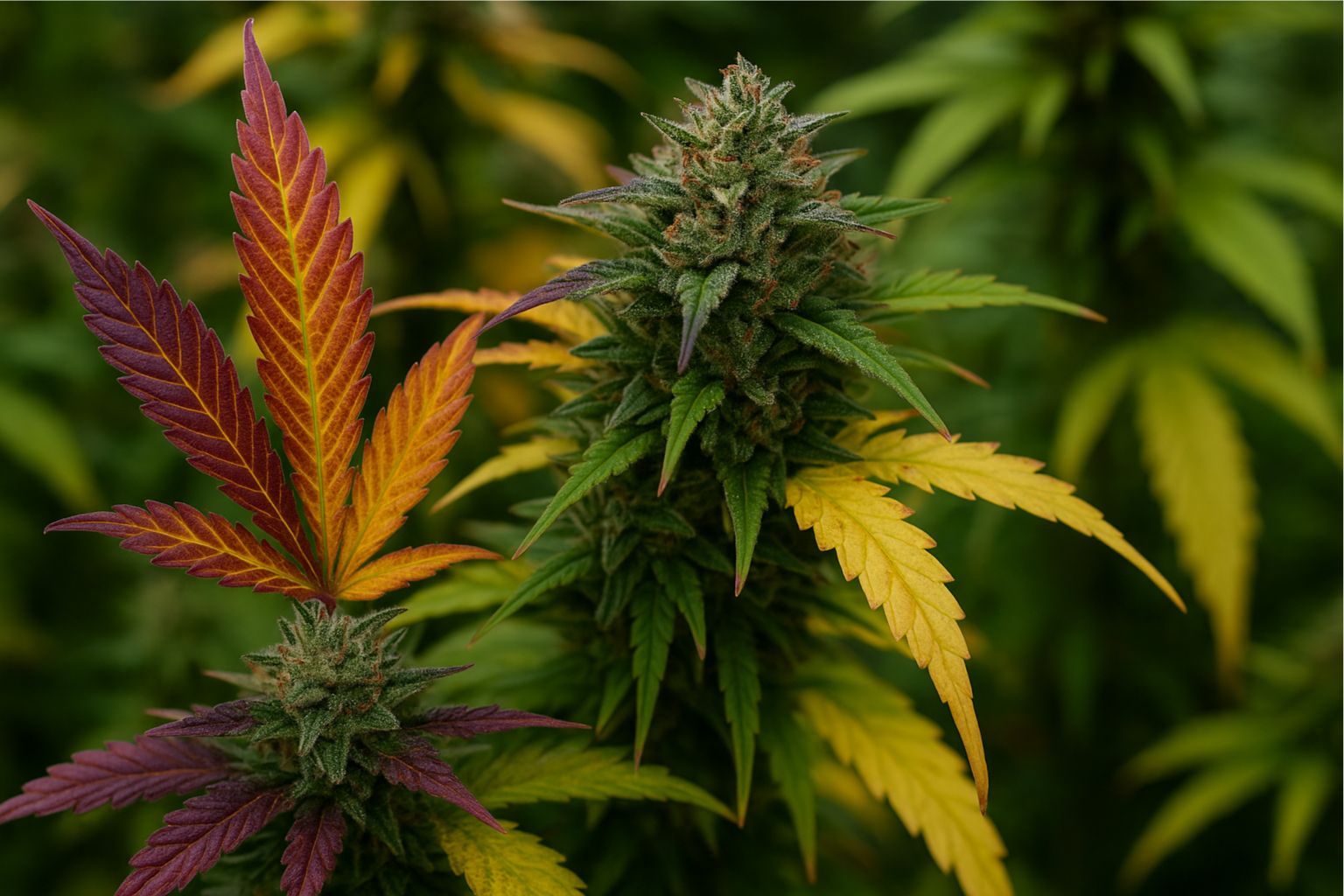
Why Leaves Change Color In My Garden
The first time I saw a tent full of fading leaves, I panicked. Every fan leaf seemed to be turning yellow overnight. My brain jumped straight to emergency: bad nutrients, ruined harvest, total failure.
A more experienced grower came by, looked over the canopy, and said calmly, “This is just cannabis senescence. You are near the end. Relax.”
That moment changed how I see color change and plant yellowing. Not every yellow leaf means disaster. Sometimes it is a sign that the plant is finishing properly and shifting into gorgeous autumn cannabis colors. Other times, the fade is uneven, crispy, or clearly linked to cannabis pH problems or a feeding mistake.
In this article I will walk through how I distinguish normal cannabis senescence from real trouble, how environment affects autumn cannabis colors, and what I do when color change and plant yellowing shows up too early in the cycle.
Natural Aging: Understanding Cannabis Senescence
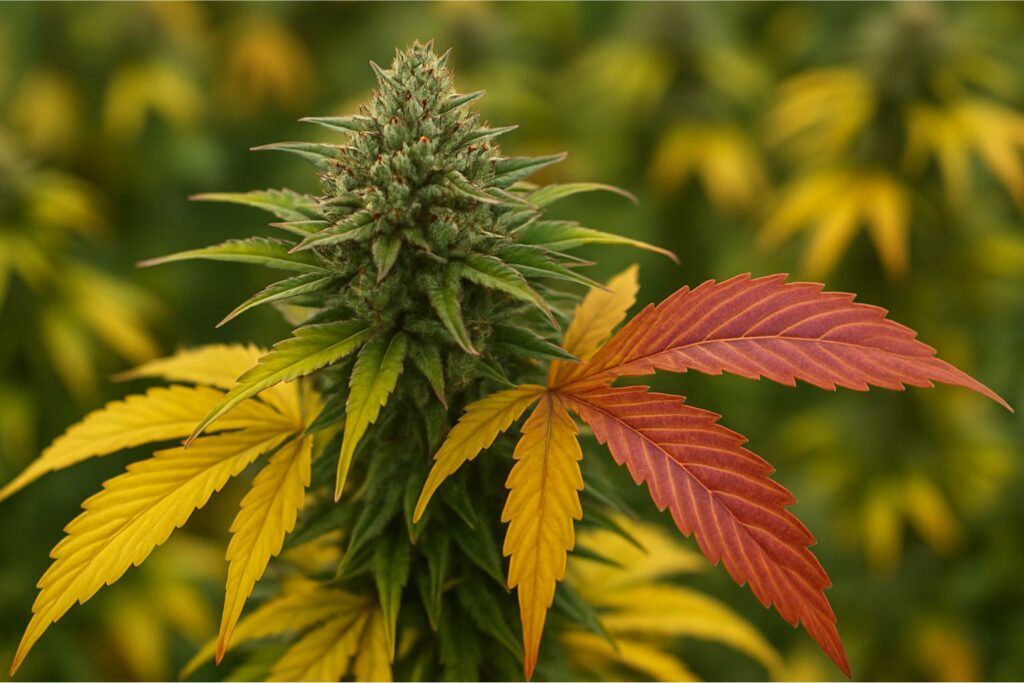
Cannabis senescence is the natural aging process of the plant. As flowers mature, the plant slowly pulls mobile nutrients like nitrogen out of older leaves and shuttles them into developing buds. Those leaves then fade from deep green into lighter green, then soft yellow, sometimes finishing with red or purple autumn cannabis colors.
Typical features of healthy cannabis senescence:
- Yellowing starts on lower, older fan leaves.
- The fade is gradual over one to three weeks.
- New growth and sugar leaves around buds stay mostly healthy until late.
- The plant overall still looks vigorous, with upright stems and normal aromas.
When I see this pattern in late flower, I do not fight it. Proper cannabis senescence, combined with a clean cannabis flush at the end, has given me some of my best-tasting weed. The key is timing: color change and plant yellowing from senescence should appear when trichomes are already mostly cloudy and harvest is close.
If the fade starts in week three or four of flower instead of week seven or eight, it usually is not simple cannabis senescence. That is when I go hunting for problems.
When Yellow Means Trouble: Nutrient And Root Issues
Nitrogen deficiency in cannabis
One of the most common causes of early cannabis color change and plant yellowing is straightforward nitrogen deficiency in cannabis. I see it most often in small containers or in coco grows where plants are drinking hard and feed strength is too low.
Signs that point to nitrogen deficiency in cannabis rather than natural cannabis senescence:
- Yellowing moves quickly up the plant, not just lower leaves.
- Stems become thin, and overall vigor drops.
- Leaves are pale but not burned on the tips.
If nitrogen deficiency in cannabis shows up during early or mid veg, I adjust base nutrients or topdress with a gentle nitrogen source. In late flower, I am more cautious. Overcorrecting nitrogen deficiency in cannabis too close to harvest can stall autumn cannabis colors, delay cannabis senescence, and leave a harsh taste even after a clean cannabis flush.
Cannabis nutrient lockout
Sometimes there is plenty of fertilizer in the medium, but the plant cannot access it. That is cannabis nutrient lockout, and it can mimic deficiencies even when the root zone is saturated with salts.
Red flags for cannabis nutrient lockout:
- Multiple nutrients appear deficient at once.
- Runoff EC or PPM is very high.
- Tips show burn while the rest of the leaf is pale or blotchy.
When cannabis nutrient lockout is the culprit, adding more food makes cannabis leaf yellowing worse. My fix is to flush the medium with pH-balanced water or a very light nutrient solution, then resume feeding at a lower rate. I often schedule a more gradual clean cannabis flush closer to harvest once cannabis nutrient lockout is resolved.
Cannabis pH problems
Both nitrogen deficiency in cannabis and cannabis nutrient lockout are often triggered by cannabis pH problems. Roots can only absorb certain ions in specific pH ranges. If you water coco at 7.5 or soil at 5.0 for long enough, leaves will eventually send you a message in the form of ugly cannabis leaf yellowing.
Typical cannabis pH problems I have run into:
- Using unadjusted tap water with high alkalinity.
- Letting runoff pH drift way outside the 5.8–6.5 window.
- Allowing nutrient solutions to sit uncapped and drift in pH over time.
When I correct cannabis pH problems early, yellowing slows within a week. For chronic cannabis pH problems, the damage does not reverse, but new leaves grow in healthier and autumn cannabis colors near harvest look much more controlled.
Environment And Autumn Cannabis Colors
Temperature and outdoor marijuana growing
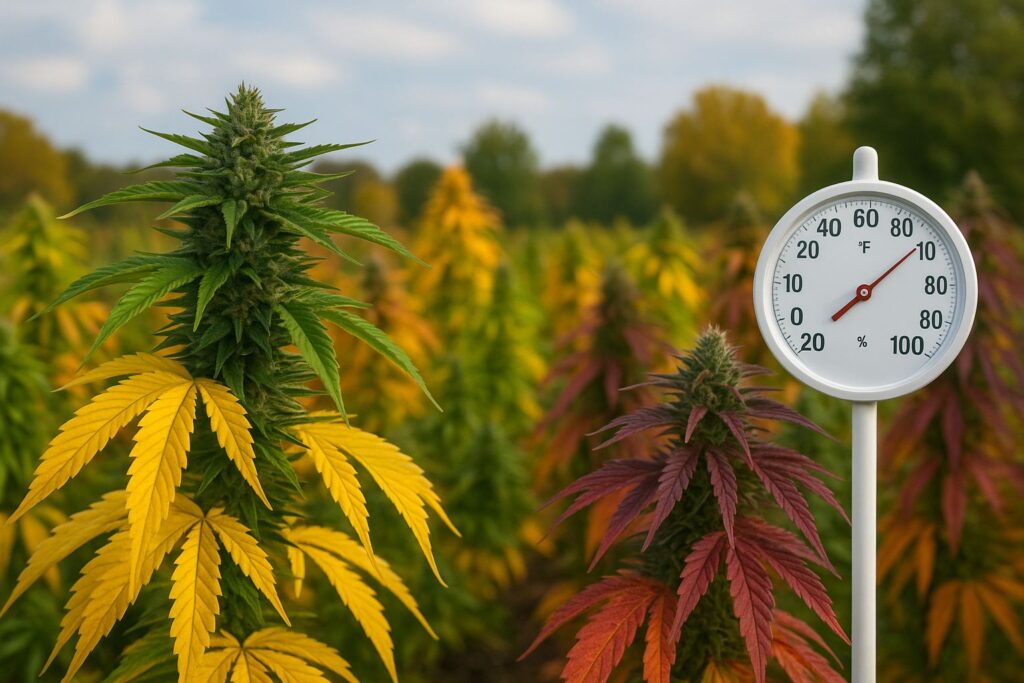
Some of the most dramatic autumn cannabis colors I have seen came from outdoor marijuana growing in climates with cool nights. When temperatures drop into the low teens Celsius (or mid-50s Fahrenheit) during late flower, anthocyanin pigments can wake up and push leaves and buds toward red, pink, or purple.
In my own outdoor marijuana growing, I noticed:
- Plants with genetic potential for color show the strongest autumn cannabis colors after a week or two of cool nights.
- Sudden hard frosts damage cells and ruin trichomes, so I try to harvest before that point.
- Strains selected from purple lines show deeper hues than lime-green sativas.
However, cool temperatures in outdoor marijuana growing can also slow ripening. I watch trichomes closely and balance the desire for autumn cannabis colors with the need for fully mature resin heads.
Indoor cannabis lighting and color expression
Indoors, the story changes. I do not get big swings in temperature, so I lean on indoor cannabis lighting and genetics to bring out color. Spectrum and intensity matter.
From my experiments with indoor cannabis lighting:
- Full-spectrum LED fixtures with strong blue and deep-red content seem to encourage anthocyanin expression more than older HPS lamps.
- Very high intensity can bleach tops if the fixture is too close, giving a fake pale look instead of true autumn cannabis colors.
- Shortening the day length slightly at the very end of flower under indoor cannabis lighting can nudge cannabis senescence without starving the plant.
Good indoor cannabis lighting also keeps plants photosynthesizing efficiently, which reduces stress-related cannabis leaf yellowing earlier in the cycle.
Genetics, Seeds, And Color Potential
Feminized cannabis seeds
Color starts with genetics. I have grown hundreds of plants from feminized cannabis seeds over the years, and patterns are obvious. Some lines stay lime green from seed to harvest no matter what I do. Others show deep autumn cannabis colors almost every run.
When I shop for feminized cannabis seeds with color in mind, I look for:
- Breeder notes that mention purple or red hues.
- Photos from multiple growers, not just marketing images.
- Reports of how strongly strains color up outdoors versus under indoor cannabis lighting.
Feminized cannabis seeds also simplify canopy planning. Knowing every plant is female lets me focus on phenotype selection for color and aroma instead of hunting males. That way, when cannabis senescence kicks in, I can appreciate the autumn cannabis colors rather than wonder whether pollen sacks are hiding behind leaves.
I also keep records: which feminized cannabis seeds colored up reliably, which suffered cannabis nutrient lockout or cannabis pH problems, and which produced the smoothest smoke after a clean cannabis flush.
Autoflower cannabis plants
Autoflower cannabis plants bring their own twist. Because they move from seed to harvest so quickly, they sometimes reach maturity before classic autumn cannabis colors have time to fully develop. That said, I have run autoflower cannabis plants that still faded beautifully during their final two weeks.
Things I notice with autoflower cannabis plants:
- Smaller root zones mean nutrient mistakes show up very quickly as cannabis leaf yellowing.
- It is easier to trigger nitrogen deficiency in cannabis if I assume autos want the same feed strength as big photoperiod plants.
- Cool night temperatures outdoors still encourage color in autoflower cannabis plants, but I need to time sowing so that their final stretch coincides with early fall.
For growers using autoflower cannabis plants as their first step away from unknown street weed, understanding cannabis senescence versus deficiency is especially important. Autos do not give you much time to correct cannabis nutrient lockout or cannabis pH problems once symptoms appear.
Flush, Fade, And Harvest Timing
Clean cannabis flush and taste
Towards the end of flower, I aim for a clean cannabis flush. In soil, that usually means giving only pH-balanced water or very light nutrient solution for the last 7–14 days. In coco or hydro, the window is often shorter, around 5–10 days.
A proper clean cannabis flush has two effects:
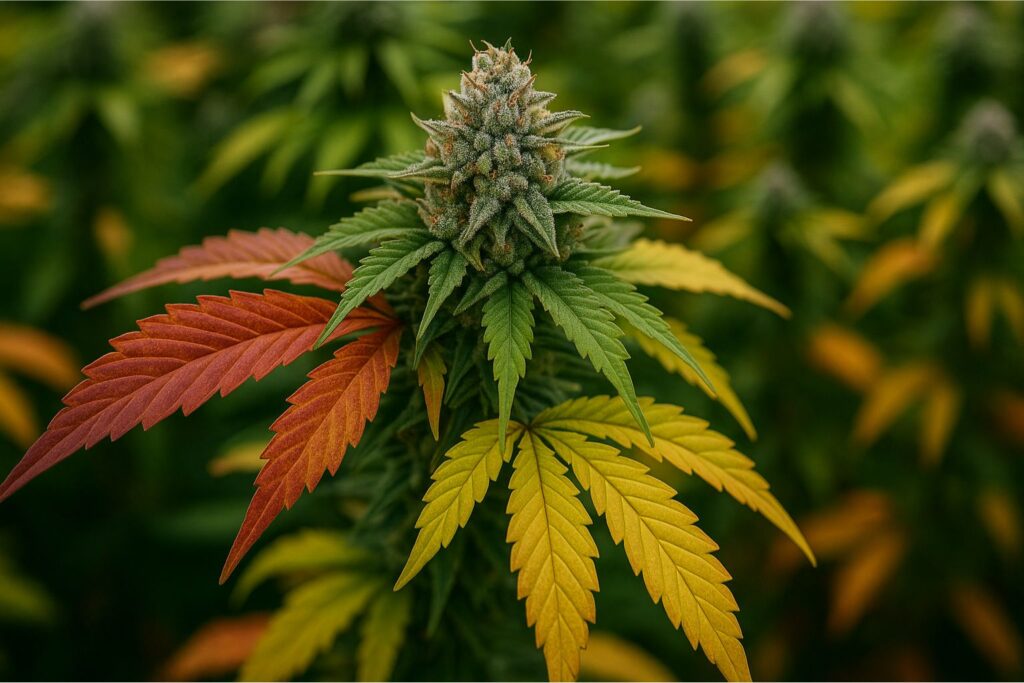
- It encourages the plant to finish cannabis senescence and pull remaining mobile nutrients out of leaves, which deepens autumn cannabis colors.
- It reduces residual salts in the medium, which helps buds burn cleaner and taste better.
I do not treat clean cannabis flush as a magic button. If I have run into severe cannabis nutrient lockout or cannabis pH problems earlier, no amount of flushing will erase all damage. But in otherwise healthy runs, a planned clean cannabis flush pairs nicely with gentle cannabis leaf yellowing and consistent autumn cannabis colors.
Reading trichomes, not just leaves
Even when autumn cannabis colors look perfect, I still harvest based on trichomes. Cannabis senescence can run ahead or behind resin maturity, especially in outdoor marijuana growing where weather changes fast.
My basic rule:
- Mostly clear trichomes: too early, even if cannabis leaf yellowing has started.
- Mostly cloudy with a few amber: ideal for most of my jars.
- Heavy amber: reserved for sleep-focused strains or hash material.
Leaves are part of the story, but resin is the main character.
Practical Checklist When You See Cannabis Leaf Yellowing
When I notice cannabis leaf yellowing, I run through a quick checklist before changing anything.
- Stage of growth
- Veg or early flower: more likely deficiency or root issues.
- Late flower with cloudy trichomes: likely cannabis senescence.
- Color Change and Plant Yellowing
- Lower leaves first, slow progression: natural fade.
- New growth affected, random spots, or crispy tips: possible cannabis pH problems or cannabis nutrient lockout.
- Recent feeding and runoff
- Low EC with pale leaves: true nitrogen deficiency in cannabis is possible.
- High EC with burnt tips: cannabis nutrient lockout is more likely.
- Environment
- Very high or very low temps, especially in outdoor marijuana growing, can stress plants.
- Underpowered indoor cannabis lighting can make foliage pale without true deficiency.
- Genetics and history
- Some feminized cannabis seeds and autoflower cannabis plants always fade early.
- If the same cut has finished well in the past, I am slower to panic.
Only after I answer those questions do I decide whether to feed more, flush, adjust pH, or simply let cannabis senescence carry the plant toward harvest.
FAQs: Autumn Color And Cannabis Leaf Yellowing
Is all cannabis leaf yellowing a bad sign?
No. During healthy cannabis senescence at the end of flower, cannabis leaf yellowing on older fan leaves is expected, especially when paired with autumn cannabis colors and stable trichome development. Problems arise when yellowing starts early, spreads fast, or is linked to cannabis nutrient lockout or severe cannabis pH problems.
Can I force autumn cannabis colors with cold temperatures?
Cool nights can deepen autumn cannabis colors, especially in outdoor marijuana growing or rooms where you can safely lower night temperatures. However, extreme cold can damage buds. I aim for gentle drops of a few degrees rather than sudden frosts, and I always prioritize resin quality over color. Genetics from colored feminized cannabis seeds help more than aggressive chilling.
Do autoflower cannabis plants fade differently?
Autoflower cannabis plants have shorter life cycles, so their window for cannabis senescence and color change is narrower. They are also more sensitive to mistakes like nitrogen deficiency in cannabis or cannabis nutrient lockout. With autoflower cannabis plants, I feed lightly but consistently, monitor cannabis pH problems closely, and still plan a short clean cannabis flush once trichomes are mostly cloudy.
Final Thoughts
These days, when I step into the grow room in late flower and see cannabis leaf yellowing, I do not immediately grab a bottle. I watch, I check runoff, I look at trichomes, and I remember how cannabis senescence is supposed to unfold.
A well-run cycle, built on solid genetics from feminized cannabis seeds or carefully chosen autoflower cannabis plants, supported by stable indoor cannabis lighting or a thoughtful approach to outdoor marijuana growing, will almost always reward you with controlled autumn cannabis colors and a clean cannabis flush at the end.
Understanding the difference between natural aging, nitrogen deficiency in cannabis, cannabis nutrient lockout, and cannabis pH problems is not just about saving yield. It is about trusting what you are about to smoke, share, or turn into concentrates. Once you learn to read each shade of yellow and red in your plants, the changing colors of autumn become less of a scare and more of a celebration that harvest is close.
