Ancient Uses of Cannabis in Medicine: A Comprehensive and Detailed Exploration
Cannabis (Cannabis sativa, Cannabis indica, and Cannabis ruderalis) has a profound history intertwined with ancient medical practices across the world. For millennia, cultures spanning Asia, Africa, and Europe recognized its medicinal properties, and it became a vital part of traditional healing systems. In ancient medicine, cannabis was revered for its wide range of therapeutic uses, including its ability to alleviate pain, reduce inflammation, and treat various ailments, from mental disorders to digestive problems. Unlike the modern era, where cannabis use has become a subject of controversy, it was primarily used for medical purposes in ancient times.
This detailed article examines the ancient medicinal applications of cannabis across various civilizations, from China and India to Egypt, Greece, Rome, Persia, and beyond. Emphasizing the medical context, we exclude any recreational uses and consumption methods, focusing solely on the therapeutic role of cannabis in ancient healing traditions.
The Origins of Medicinal Cannabis Use: Early Human Recognition
The use of cannabis as a medicinal agent dates back at least 12,000 years, making it one of the earliest cultivated plants in human history. Archaeological evidence suggests that ancient humans initially cultivated cannabis for its fibrous qualities, but over time, its medical benefits became widely known. By around 2700 BCE, the plant’s therapeutic properties were systematically documented in ancient texts, signaling the formal integration of cannabis into early medicine.
Earliest Archaeological Evidence of Cannabis in Medicine
Several archaeological findings indicate that ancient cultures in Central Asia and the Eurasian Steppes first recognized the plant’s value for both medical and spiritual purposes. Charred cannabis seeds were discovered in burial mounds in Siberia, dating back to the 3rd millennium BCE. These findings provide a clear link between ancient burial practices and the belief in cannabis as a healing agent that could provide relief in the afterlife.
In addition to its spiritual significance, cannabis was prized for its capacity to alleviate pain, relax the body, and treat physical and psychological disorders. The recognition of its medicinal value would eventually spread to other parts of the world, with ancient cultures developing sophisticated understandings of the plant’s therapeutic applications.
Ancient Chinese Medicine and Cannabis: A Foundation of Herbal Healing
Cannabis in the Pen Ts’ao Ching and the Work of Shen Nung
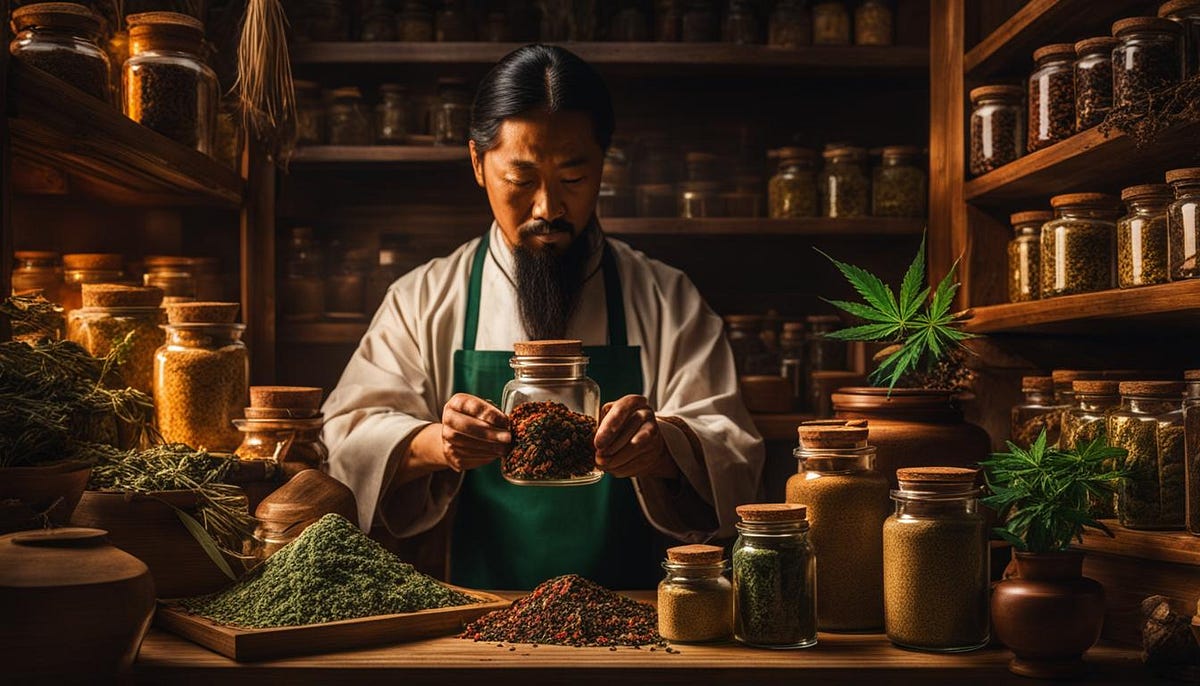
China boasts one of the earliest written records of cannabis use in medicine, dating back to around 2700 BCE. Many people refer to the Pen Ts’ao Ching as the “Herbal Classic,” and it was written by the fabled Chinese Emperor Shen Nung, who is regarded as the founder of Chinese medicine. In this ancient pharmacopoeia, cannabis is classified as one of the “superior” herbs, meaning it was highly valued for its medicinal properties.
Shen Nung’s inclusion of cannabis in the Pen Ts’ao Ching suggests a deep understanding of its uses as a therapeutic agent. In ancient Chinese medicine, cannabis was primarily used for its anti-inflammatory, analgesic, and anti-spasmodic effects. The seeds were especially important, as they were used to treat digestive issues such as constipation and to promote gastrointestinal health.
Cannabis for Pain Relief, Inflammation, and Women’s Health
Pain management was one of the most common medical applications of cannabis in ancient China. Physicians recommended cannabis for individuals suffering from chronic pain, injuries, and illnesses that caused inflammation. Cannabis poultices were applied to broken bones and bruises to reduce pain and accelerate healing. Ancient Chinese healers also used cannabis-infused oils and pastes to treat conditions such as gout and rheumatism, which were characterized by painful, swollen joints.
Another significant application of cannabis in ancient China was in women’s health. Cannabis root preparations were often prescribed to relieve menstrual pain and reduce discomfort during childbirth. Women who experienced excessive menstrual bleeding or complications from labor were given cannabis-based remedies to alleviate symptoms and promote recovery. The plant’s soothing effects on muscle spasms made it particularly useful in treating women’s health issues related to cramping.
Mental Health Applications of Cannabis
Cannabis also played a role in ancient Chinese psychiatry. The plant’s calming and sedative properties were recognized early on, and it was used to treat psychological conditions such as anxiety, depression, and memory problems. Cannabis formulations were believed to promote relaxation and mental clarity, which were important in balancing the body’s qi (vital energy) and ensuring emotional stability.
The Role of Cannabis in Ancient Indian Medicine: Ayurveda’s Sacred Herb
The Sacred Status of Cannabis in the Atharvaveda
In ancient India, cannabis, referred to as Vijaya (meaning “victory”), was not only a medicinal herb but also a sacred plant. The earliest mention of cannabis in India can be found in the Atharvaveda, one of the four sacred Vedic texts, composed around 1500 BCE. Cannabis was revered for its ability to confer protection against evil spirits and was seen as one of the five most sacred plants.
In Ayurvedic medicine, cannabis was used extensively for its therapeutic effects on both physical and mental health. Cannabis was believed to possess cooling, drying, and bitter qualities, making it effective in balancing bodily doshas (energetic forces that govern physiological activity). It was frequently used to bring the Vata dosha, which governs movement and the neurological system, back into equilibrium.
Cannabis as a Remedy for Pain, Epilepsy, and Gastrointestinal Issues
Cannabis was primarily utilized in Ayurveda to manage pain, particularly chronic conditions such as arthritis, joint inflammation, and migraines. In addition to relieving pain, cannabis was prescribed for neurological conditions like epilepsy and convulsions. Ayurvedic practitioners believed that seizures were caused by imbalances in Vata, and cannabis helped stabilize this energy force.
Gastrointestinal issues were another area where cannabis was commonly used. In Ayurvedic texts, cannabis was recommended for treating indigestion, diarrhea, and irritable bowel syndrome (IBS). Its anti-inflammatory and antimicrobial properties helped reduce inflammation in the digestive tract and promote healing.
Cannabis in Mental Health: A Holistic Approach
In Ayurveda, mental health was inseparable from physical health. Cannabis was utilized to treat mental illnesses that were thought to be caused by dosha imbalances. It was prescribed for anxiety, depression, and even schizophrenia, as it was thought to have a harmonizing effect on the mind. Additionally, cannabis was incorporated into spiritual practices, where it was used to quiet the mind during meditation, enhancing the mental clarity required for healing.
Cannabis in Ancient Egypt: A Holistic Healing Agent

The Ebers Papyrus: Documenting Cannabis in Egyptian Medicine
The medicinal use of cannabis in ancient Egypt is well-documented in the Ebers Papyrus, one of the oldest medical texts in the world. Written around 1550 BCE, this extensive medical compendium lists cannabis (shemshemet) as an ingredient in several treatments. Ancient Egyptian physicians valued the plant for its ability to reduce inflammation, alleviate pain, and treat infections.
Cannabis was commonly included in formulations used for gynecological issues. Women suffering from menstrual pain, labor difficulties, or other reproductive health conditions were treated with cannabis-based ointments. Cannabis preparations were also applied topically to wounds, burns, and abscesses to reduce swelling and promote healing.
Cannabis in the Treatment of Eye Diseases
One of the more unique medicinal applications of cannabis in ancient Egypt was its use in treating eye conditions, particularly glaucoma. Cannabis was often used to reduce intraocular pressure, which helped prevent the deterioration of vision in individuals with eye diseases. Egyptian physicians combined cannabis with other herbs and substances to create salves that were applied directly to the eyes to reduce inflammation and promote healing.
Psychological and Psychiatric Applications
The promise of cannabis in treating psychiatric problems was also acknowledged by the ancient Egyptians. Patients were frequently treated with cannabis-based medications for anxiety, depression, or other mood disorders. Egyptian healers felt that by fostering a sense of well-being and soothing the mind, cannabis might help restore emotional equilibrium.
Cannabis in Ancient Greece: A Multifaceted Medicinal Herb

Hippocrates and Early Greek Medicine
Cannabis was known to ancient Greek physicians as early as the 5th century BCE. Hippocrates, often regarded as the “Father of Medicine,” is believed to have been familiar with cannabis, although specific mentions in his works are sparse. However, other Greek physicians wrote extensively about the medicinal applications of cannabis.
Dioscorides’ De Materia Medica
The most comprehensive account of cannabis use in ancient Greece comes from Pedanius Dioscorides, a Greek physician and botanist who lived in the 1st century CE. His work De Materia Medica is one of the most significant ancient texts on herbal medicine, and it includes a detailed description of cannabis as a treatment for inflammation and pain.
Dioscorides recommended cannabis seeds for treating ear pain and believed that the juice of the cannabis plant could reduce inflammation. He also noted the plant’s usefulness in treating bruises, wounds, and burns, where it helped alleviate pain and accelerate healing.
Cannabis as an Analgesic in Ancient Greece
Ancient Greek physicians frequently used cannabis to relieve pain from injuries and surgeries. Wounded soldiers returning from battle would often receive cannabis poultices to ease their pain and inflammation. Additionally, cannabis was prescribed to alleviate joint stiffness, which was a common problem among the elderly and those suffering from rheumatic conditions.
The Roman Empire and Cannabis: Healing Through Natural Remedies
Pliny the Elder and the Roman Approach to Cannabis
In ancient Rome, cannabis, known as Cannabinum, was employed for both medicinal and practical purposes. Pliny the Elder, a Roman naturalist and author, described the medicinal properties of cannabis in his encyclopedia Naturalis Historia. He highlighted its ability to ease joint stiffness and pain, particularly for those with arthritis or inflammatory conditions.
Galen’s Contributions to Cannabis Medicine
Galen, a prominent Roman physician who lived during the 2nd century CE, also documented the use of cannabis in medicine. He recommended cannabis for reducing inflammation and treating ear pain. Galen recognized its analgesic effects but cautioned against its intoxicating properties when used in excess. Despite this, cannabis was a valuable part of Roman pharmacology, particularly for treating injuries and wounds sustained in battle.
Cannabis for Gastrointestinal Issues
Cannabis was also used in ancient Rome to treat digestive problems, such as stomach aches and diarrhea. The plant’s anti-inflammatory and antispasmodic properties made it an effective remedy for soothing the gastrointestinal tract. Roman physicians would often prescribe cannabis-based treatments to patients suffering from colic or other abdominal pain.
Ancient Persia: Cannabis in Avicenna’s Canon of Medicine
Cannabis as a Remedy in Ancient Persia
In ancient Persia, cannabis was considered a powerful medicinal agent. Persian physicians, including the renowned Avicenna (c. 980–1037 CE), frequently recommended cannabis for treating pain, inflammation, and digestive disorders. Avicenna’s Canon of Medicine, one of the most influential medical texts in history, includes references to cannabis as a treatment for headaches, muscle pain, and gastrointestinal issues.
Cannabis in the Treatment of Epilepsy and Seizures
Persian physicians also recognized cannabis’ efficacy in managing neurological conditions, particularly epilepsy. Cannabis was prescribed to reduce the frequency and severity of seizures, making it an important part of the treatment protocol for patients suffering from convulsions.
Use in Mental Health and Nervous System Disorders
Cannabis was used to treat mental health conditions in ancient Persia, including anxiety and depression. Persian healers believed that cannabis had a calming effect on the nervous system, and it was often administered to patients suffering from emotional imbalances or nervous disorders. Cannabis was considered a vital remedy for promoting relaxation and emotional well-being.
The Role of Cannabis in Ancient Assyria and Babylonia: Healing Through Ritual and Medicine
Cannabis as a Medicinal and Ritualistic Plant
In ancient Assyria and Babylonia, cannabis (qunnabu) was used for both medicinal and ritual purposes. Assyrian and Babylonian medical texts describe cannabis as a remedy for pain, inflammation, and gastrointestinal problems. The plant was also used to treat seizures and epilepsy, reflecting an understanding of its antispasmodic properties.
Cannabis was often incorporated into religious healing rituals, where it was believed to have the power to expel evil spirits that caused disease. Physicians would prescribe cannabis-based ointments and poultices to treat physical ailments, while also invoking spiritual protection for their patients.
Conclusion
The ancient use of cannabis in medicine underscores the plant’s significance across various civilizations, where it was widely recognized for its therapeutic properties. From its earliest documented use in ancient China to its integration into the medical systems of India, Egypt, Greece, Rome, and Persia, cannabis was considered an indispensable remedy for numerous ailments. These ancient cultures, devoid of the modern-day controversies surrounding cannabis, approached it with a pragmatic mindset, focusing solely on its medicinal benefits.
One of the most notable aspects of cannabis in ancient medicine was its versatility. The plant was employed to treat a wide range of conditions, from pain and inflammation to digestive and neurological disorders. In China, cannabis was used as early as 2700 BCE, with references in the Pen Ts’ao Ching praising its ability to treat inflammation and relieve pain. The seeds and roots were commonly applied for their therapeutic effects, particularly in gastrointestinal and women’s health treatments.
Similarly, in ancient India, cannabis held a revered position in Ayurvedic medicine, with its first recorded mention in the Atharvaveda around 1500 BCE. Here, it was primarily used for pain relief, the treatment of neurological conditions like epilepsy, and digestive issues. The holistic nature of Ayurveda, where physical and mental health were intertwined, found cannabis particularly useful for its calming effects, helping to manage conditions like anxiety and depression. Its ability to balance bodily energies, or doshas, reflects a deep understanding of its broader medicinal potential.
In Egypt, cannabis was listed in the Ebers Papyrus, one of the oldest medical texts, for its ability to treat inflammation, reduce pain, and even address eye conditions like glaucoma. The Egyptians also valued cannabis for its role in gynecology, using it to ease childbirth and menstrual pain. Meanwhile, in Greece and Rome, cannabis was recognized for its anti-inflammatory and analgesic properties, with Dioscorides and Pliny the Elder both documenting its use in treating wounds, joint pain, and inflammation.
Persian physicians, such as Avicenna, included cannabis in their extensive medical texts, prescribing it for conditions like headaches, epilepsy, and gastrointestinal problems. Cannabis was also utilized to manage psychological conditions, particularly anxiety and depression, reflecting a broader understanding of its effects on both the body and mind.
The widespread use of cannabis in these ancient civilizations highlights its global therapeutic importance. Its applications across such varied medical systems demonstrate the universality of its medicinal properties. Pain relief, inflammation reduction, neurological stability, and mental calm were just some of the plant’s major contributions to ancient health care, long before the advent of modern pharmacology.
As modern medicine rediscovers the benefits of cannabis, it draws upon the rich traditions of these ancient cultures. Today’s scientific advancements in understanding cannabinoids, such as THC and CBD, confirm the efficacy of cannabis in treating many of the same conditions addressed by ancient physicians. The re-emergence of cannabis in contemporary medicine is not a new discovery but a return to the knowledge that ancient civilizations had developed over millennia.
In conclusion, the ancient use of cannabis in medicine provides a critical foundation for its modern applications. By studying its role in ancient health systems, we can better appreciate the plant’s enduring legacy as a versatile and effective therapeutic agent, one that continues to offer significant medicinal value in today’s world.
