Table of Contents
I’ve grown plenty of cannabis varieties that look great in photos but disappoint when you run them from seed to jar. This Americano Strain Review is based on multiple indoor cycles and one outdoor container run, with notes on what worked and what didn’t.
In my room, Americano behaves like a balanced hybrid: it can push vigor in veg, stretch after the flip, and then stack dense flowers if the canopy stays even. The Americano grow diary below is written in plain English, with just enough technical detail to help you dial in results.
Genetics and what “Americano” has meant in my garden
Seed listings sometimes describe Americano as a West Coast–style hybrid, but the exact parents aren’t always disclosed on every pack. When a breeder doesn’t publish a full family tree, I treat it as “hybrid lineage not fully specified” and focus on observed traits instead of repeating rumors.
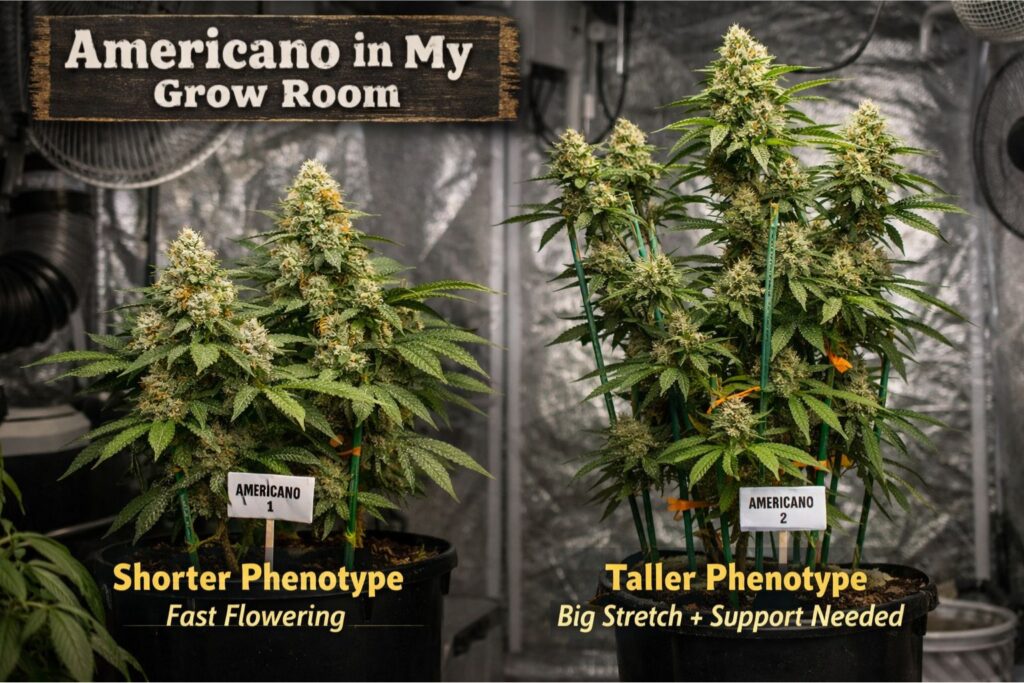
Across my runs, I saw two main phenotypes:
- A shorter plant with tighter node spacing and faster flower set
- A taller plant with longer branching that needed more support late bloom
Both phenotypes expressed similar Americano terpene notes by mid flower, which is usually a good sign of stable selection. If you want to hunt for your favorite keeper, plan for some variation, even with feminized seeds.
Structure, vigor, and the canopy leveling method that worked best
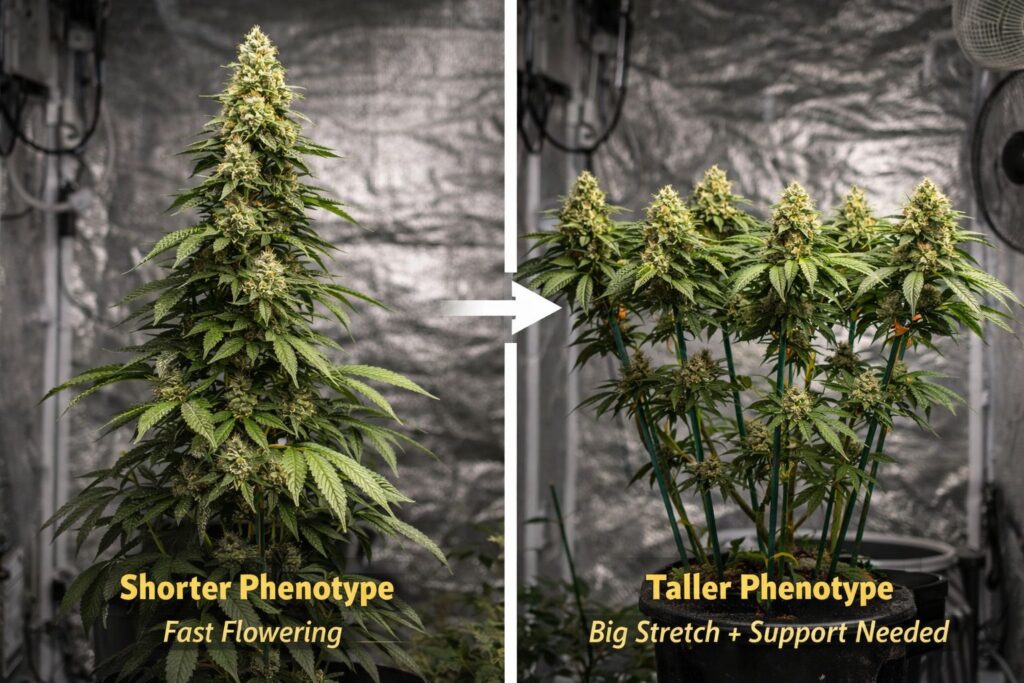
Americano is not a fragile plant, but it does react to inconsistent watering and uneven light. My best results came from an early canopy leveling method. I top once, spread branches early, and keep the canopy flat so every top receives similar intensity.
What I did:
- Topped above the 4th or 5th node.
- Bent and tied branches outward for a wider footprint.
- Cleaned the lower third before the flip.
- Light defoliation to keep airflow moving through the middle.
This canopy leveling method reduced larf and helped me hit similar bud size from corner to corner. It also made my indoor LED PPFD plan easier, because I wasn’t blasting one cola while starving another.
Aroma and taste: what’s actually in the jar
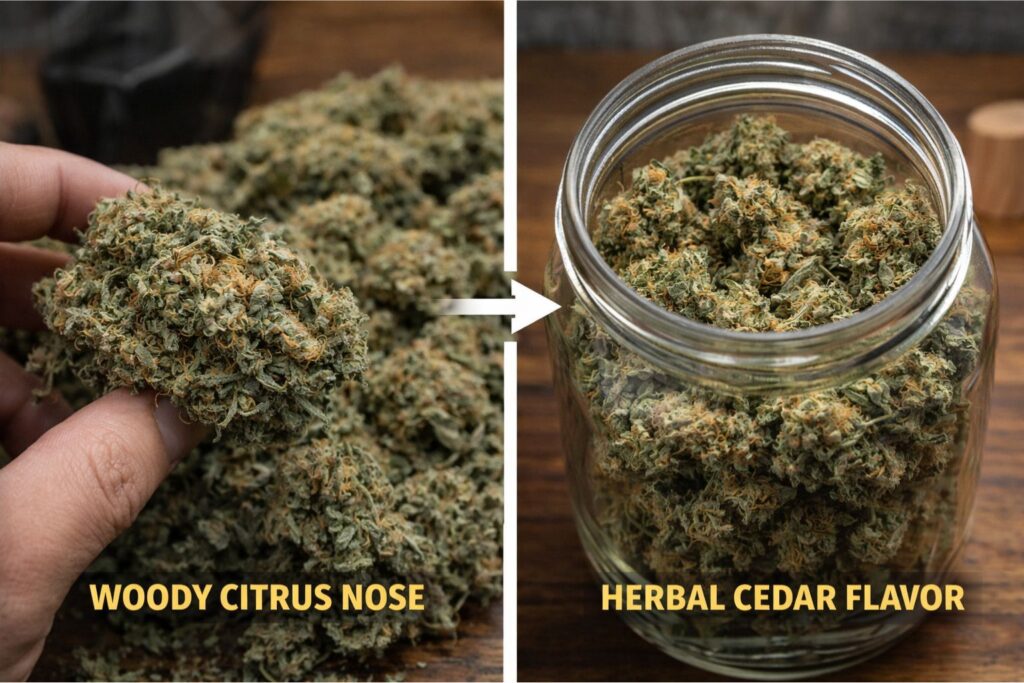
The signature for me is a woody-citrus nose. On the plant, it starts as fresh wood and light herbs, then gains a peel-like edge as flowers swell. When I dried too warm once, the woody-citrus nose flattened and the jar smelled dull. When the dry was slow and controlled, the woody-citrus nose stayed sharp and “clean.”
On smoke and vapor, I get an herbal cedar flavor first, then a mild sweetness on the finish. In a vape, the herbal cedar flavor comes through clearer, and the citrus edge is more noticeable. If you like loud candy profiles, this may feel more grounded. If you like old-school “forest and spice” weed, it can be a great fit.
Here’s how I protected the Americano terpene notes:
- Avoided strong fan airflow directly on hanging branches
- Kept temps steady during drying
- Used a patient jar routine instead of rushing the cure
Effects: realistic expectations, not medical promises
This section is personal experience only. Effects vary by dose, tolerance, and your setting, and marijuana can hit very differently from one person to the next. For me, Americano starts with a clear uplift and then settles into a calm body feel. At a small dose, I can work, clean, or focus on a creative task. If I push the dose, the body heaviness and appetite increase.
What I noticed most often:
- Mood lift early, then a mellow glide
- A “turn up the music” vibe with bigger doses
If you’re sensitive to THC, start low and wait. That applies to any cannabis, marijuana, or weed product.
Grow basics: medium, light, and environment
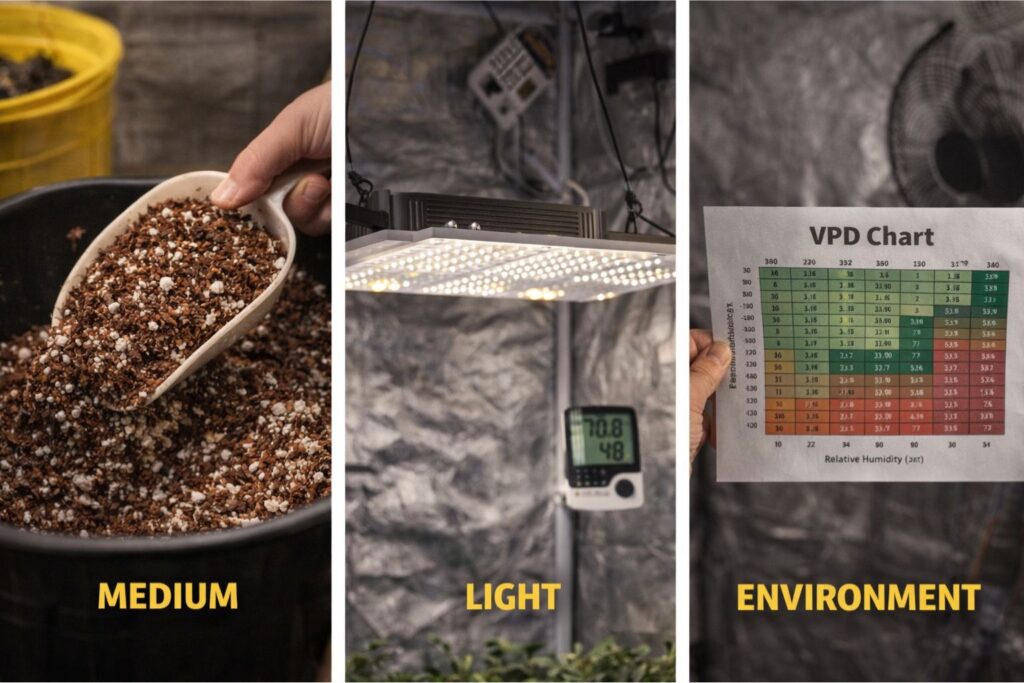
I’ve run Americano in coco coir and in a living-soil style mix. Both can work, but the plant punished sloppy irrigation more in coco. If you’re deciding between soil vs hydro, coco behaves more like hydro because it likes frequent, consistent feed.
Germination and early seedling care
When people ask “how to germinate cannabis seeds,” I tell them to pick one simple method and stop over-handling the seed. I use a damp paper towel in a warm, dark spot, then move the seed into a starter plug once the taproot shows. Keep it warm, not hot. Once sprouted, gentle light and careful watering matter more than nutrients.
I also keep a seed order checklist before I pop anything, because starting without a plan usually costs time later.
My indoor LED PPFD plan
Wattage numbers don’t tell the whole story, so I measure and map. An indoor LED PPFD plan keeps the canopy in a safe range through the whole cycle.
Typical targets I use:
- Seedlings: 150–250 PPFD
- Veg: 350–600 PPFD
- Flower: 700–900 PPFD if the room supports it
If the tops bleach or taco, that’s a light-and-environment problem, not a “more Cal-Mag” mystery. I re-check the indoor LED PPFD plan after training, because branch spread changes the canopy height.
VPD range chart (simple and useful)
I don’t chase perfect numbers, but I do use a VPD range chart to keep conditions consistent. Consistency helps prevent stalled growth, clawing, and late-flower mold risk.
Ranges that worked in my room:
- Veg: 24–28°C and 55–70% RH (about 0.8–1.1 kPa)
- Mid flower: 24–27°C and 45–60% RH (about 1.1–1.3 kPa)
- Late flower: 22–26°C and 40–50% RH (about 1.2–1.5 kPa)
This VPD range chart is a guide, not a law. The goal is steady transpiration and healthy leaves.
Feeding: the coco feed EC guide I follow
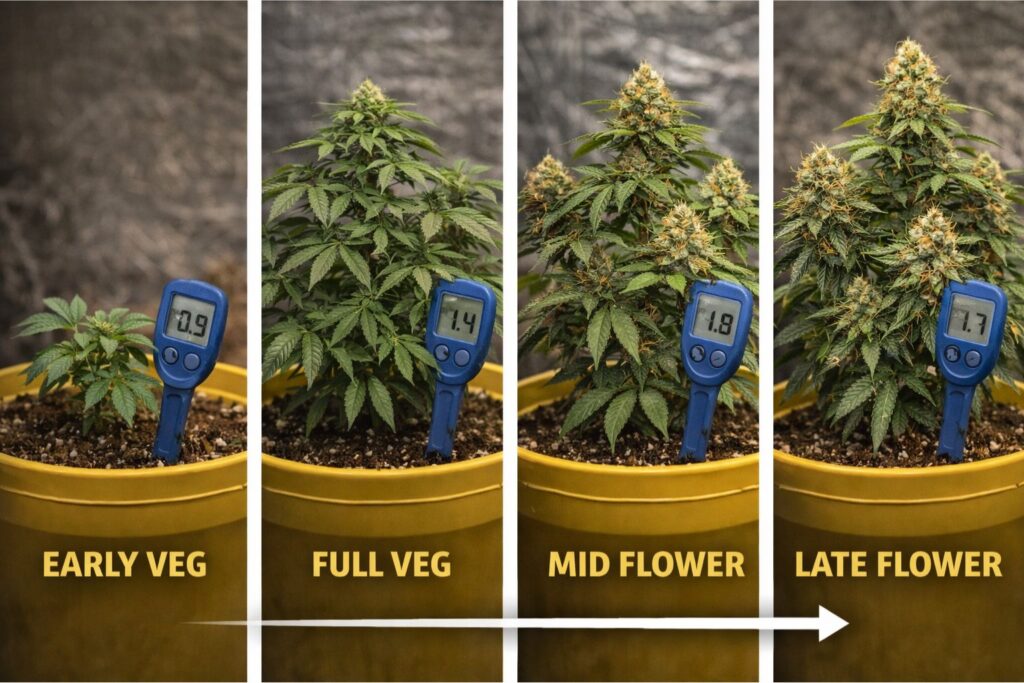
If you grow in coco, a coco feed EC guide prevents most beginner problems. Americano can take food, but it doesn’t reward overfeeding. When I chased heavy EC too early, I got dark leaves and burnt tips.
My coco feed EC guide ranges:
- Early veg: EC 0.8–1.2
- Veg: EC 1.2–1.6
- Mid flower: EC 1.6–1.9 if runoff stays stable
- Late flower: EC often comes down slightly
I keep pH around 5.7–6.1 in coco. In soil, I feed lighter and focus on proper wet-dry cycles. If you see nutrient burn, don’t panic. Back off, confirm your runoff, and let the plant recover.
Watering habits that kept Americano happy
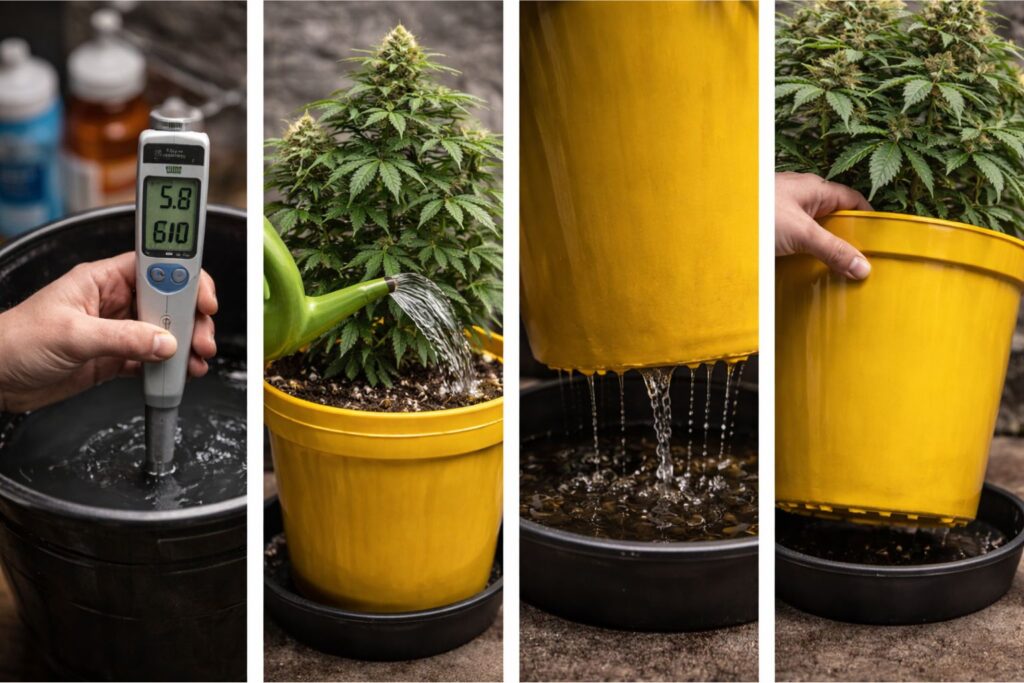
I learned quickly that my Americano grow diary looked best when watering was predictable. In coco, that meant multiple small irrigations and good drainage. In soil, that meant fully saturating and then allowing enough dryback before the next watering.
Quick checks I use:
- Pot weight: light means ready, heavy means wait
- Runoff: in coco, stable runoff EC and pH tells you more than leaf guessing
Integrated pest management and disease risk
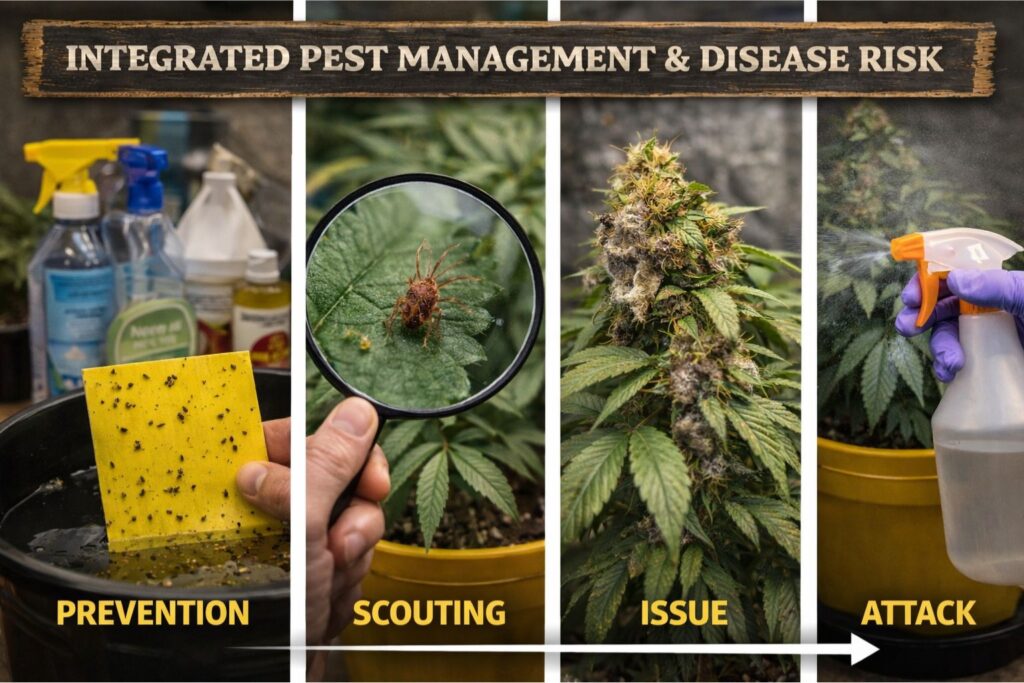
Outdoor plants can attract pests, and indoor rooms can still get problems if you bring in contaminated clones or soil. I run a basic IPM routine early and keep it gentle late in flower.
My baseline:
- Clean room and tools
- Airflow through the canopy, not just above it
- Avoid spraying oils late bloom
The taller phenotype had thicker inner growth, so it benefited from a stronger canopy leveling method and selective leaf removal. That reduced humidity pockets and kept the woody-citrus nose from being ruined by mold.
Flowering timeline and harvest cues
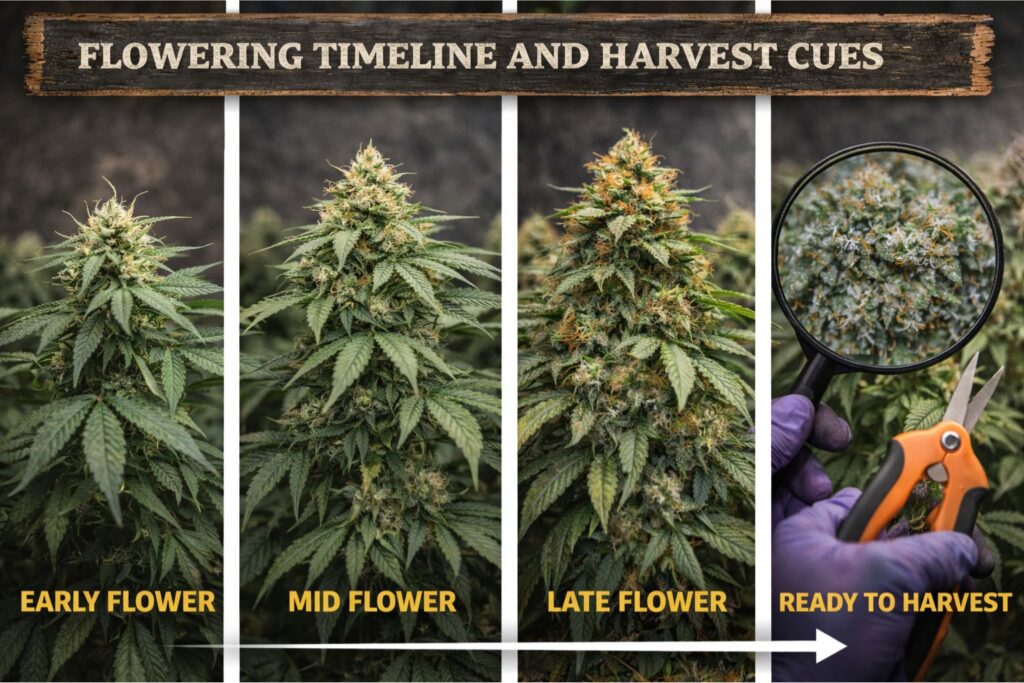
Instead of trusting a calendar, I watch the plant. Harvest timing changes the feel and the flavor, and I want the herbal cedar flavor to stay clean.
I check:
- Trichomes: mostly cloudy with some amber for a balanced effect
- Pistils: mostly darkened and receded
- Bud firmness: swelling slows near the end
- Aroma: Americano terpene notes get loudest right before peak maturity
If you harvest too early, the effects can feel sharper and the yield is lower. Too late, and the profile can dull.
Drying room humidity and the cure that saved my best jars
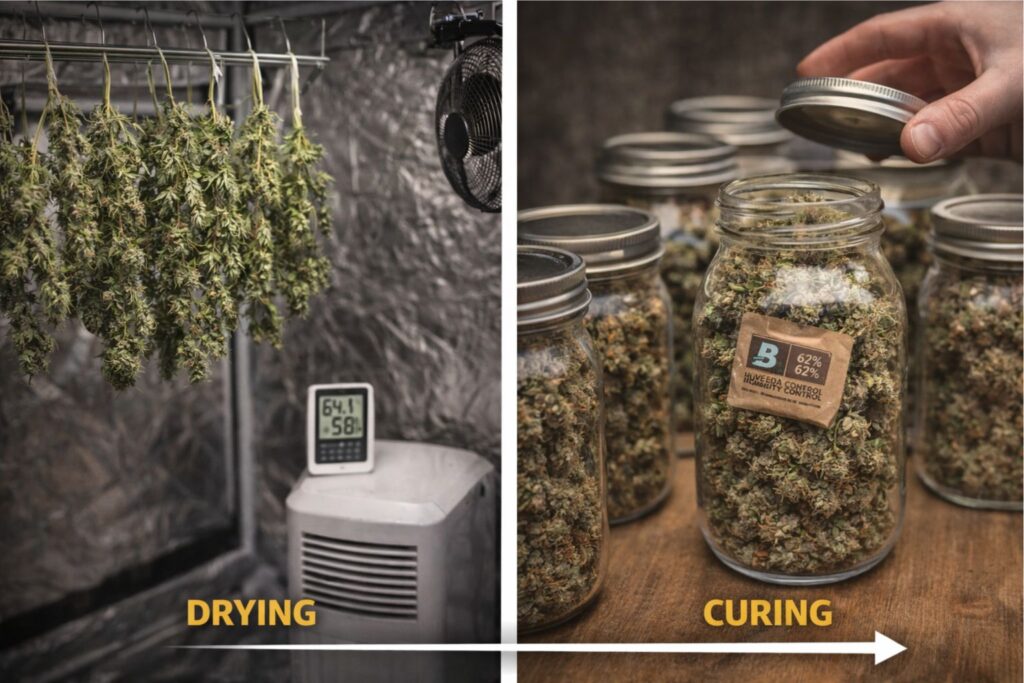
The fastest way to ruin good weed is to rush the dry. I aim for a slow dry with controlled drying room humidity.
My targets:
- 18–20°C
- 50–60% RH
- Gentle airflow that moves air in the room, not directly on buds
That drying room humidity gives me a 10–14 day dry. After that, I jar and manage the cure. For the first two weeks I “burp” briefly once per day, then a few times per week. This dry trim cure approach kept the woody-citrus nose intact and improved the herbal cedar flavor over time.
If the jar smells like hay, it’s usually too wet inside or dried too fast. Adjust the drying room humidity next run and be patient.
Seed buying and planning without the hype
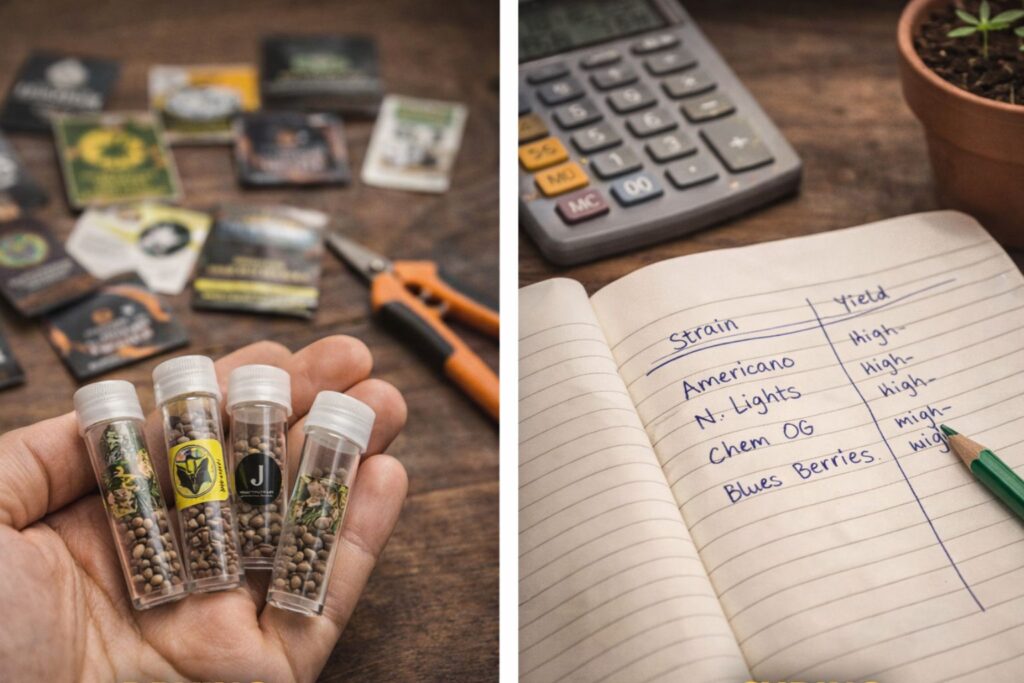
People often search “buy cannabis seeds online” and want a quick answer. I can’t give legal advice, and rules vary by region, so always follow your local regulations. What I can do is share the practical side: choose genetics that match your environment and your skill level.
Here’s my seed order checklist:
- Decide photoperiod vs autoflowering based on your time and space
- Choose feminized seeds if you don’t want to sex plants
- Match plant size to your tent or outdoor season
- Plan nutrients, medium, and drying space before you order
It prevents mistakes.
Quick troubleshooting from my Americano grow diary
Nutrient burn in coco
- Cause: EC too high or not enough runoff
- Fix: follow the coco feed EC guide, increase runoff, and reduce strength
Stretch during the first two weeks of flower
- Cause: not enough light in veg or flip too early
- Fix: tighter indoor LED PPFD plan in veg, stronger canopy leveling method, and support stakes
Soft buds late flower
- Cause: low light at the canopy or unstable environment
- Fix: re-check PPFD mapping and use the VPD range chart for stability
Terpene loss after harvest
- Cause: hot dry or poor drying room humidity
- Fix: slower dry, steady temps, and a patient dry trim cure
FAQ (long-tail queries I see all the time)
What is the best light schedule for photoperiod weed?
Most growers use 18 hours of light in veg and 12 hours in flower. I’ve had the cleanest results sticking to 18/6, then a strict 12/12. A consistent indoor LED PPFD plan matters as much as the schedule.
Can I grow this in a small tent?
Yes, but you’ll want a canopy leveling method early. Top once, spread branches, and keep the plant low. If you let it grow straight up, it can crowd the light.
Coco vs soil for marijuana: which is easier?
Soil can be easier if you tend to overwater or overfeed, because it buffers mistakes. Coco can be faster and more controllable, but you need a coco feed EC guide and consistent irrigation. My Americano grow diary was most consistent in coco once I stopped guessing.
How do I keep flavor strong after curing?
Focus on drying room humidity first. A slow dry protects Americano terpene notes. Then use a patient dry trim cure. If you rush, the herbal cedar flavor won’t fully develop.
Is this indica, sativa, or hybrid?
In my runs, it grew and felt like a hybrid. Phenotypes vary, so your plant may lean one way. That’s normal with cannabis from seed.
Final notes from this Americano Strain Review
If you keep the canopy even, respect the environment, and don’t rush the dry, this cultivar can deliver a clean woody-citrus nose and a smooth herbal profile. This Americano Strain Review reflects exactly that: fundamentals first, consistently. The best jars I’ve produced came from steady conditions, a simple coco feed EC guide, and a dry trim cure that protected the Americano terpene notes. If you want a straightforward project that rewards basic good habits, this is a solid one to run.
For a complete directory of cultivars, visit our Cannabis Strain Reviews.
