Table of Contents
I’ve grown Alpha-Blue indoors in a 1.2 m x 1.2 m tent and once outdoors in a sunny, wind-sheltered spot. This Alpha Blue Strain Review is based on what I actually saw from seed: how the plant stretched, what it smelled like through cure, and what mattered most for getting clean, flavorful flower.
Seed-grown cannabis is never one-size-fits-all. Even from the same pack, phenotype variation can shift structure, finish time, and how “bright” or “heavy” the experience feels. I’ll call out those differences where they showed up for me, and I’ll keep everything in plain English.
Genetics and what the plant grows like
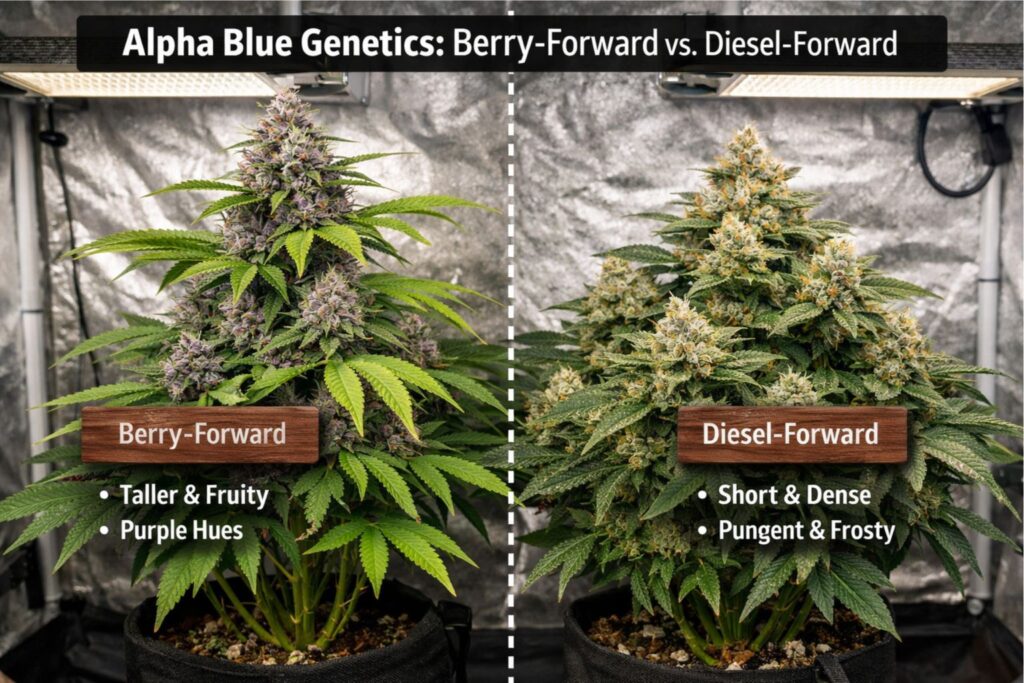
Most lines described as Alpha-Blue come from a “blue” berry-leaning parent crossed with a diesel-leaning parent. In practice, I’d describe it as a hybrid that can stretch like a sativa-leaning plant, but still stacks well if your canopy is even and your environment is stable.
Across my runs, the garden split into two broad directions:
- Berry-forward: lighter structure, fruitier nose early, more upbeat finish.
- Diesel-forward: tighter tops, sharper fuel on stem rub, heavier resin on trim.
Think of this as a blueberry diesel cultivar profile with two common personalities rather than a single fixed outcome. That mindset makes selection easier: I keep the plant that cures best, not the one that just looks best at chop.
Aroma and flavor in the jar
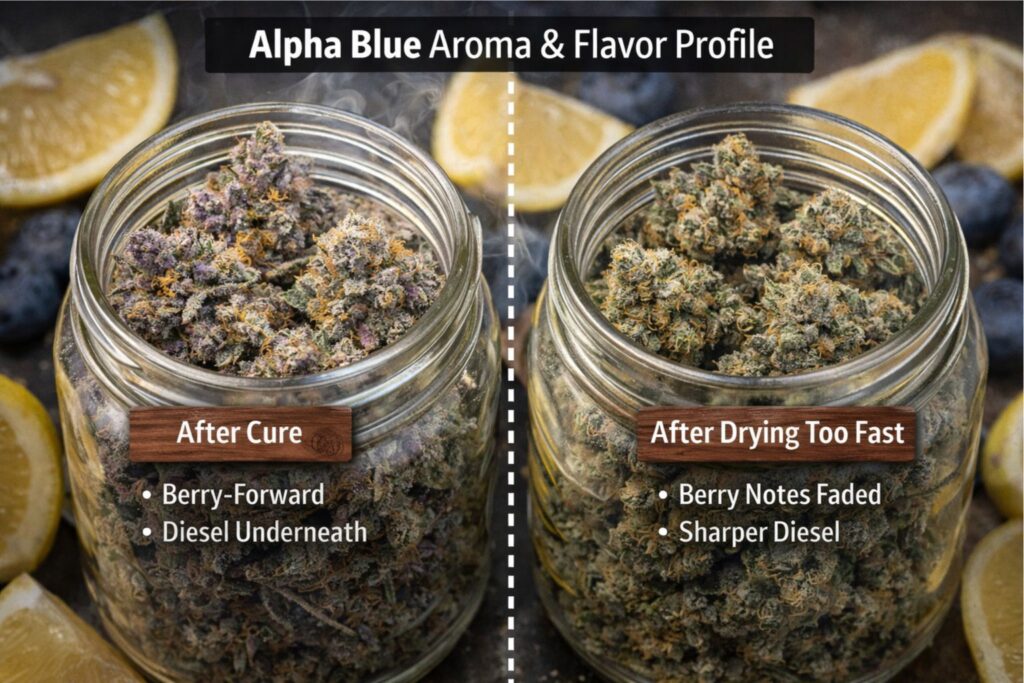
In flower, the loudest notes for me were citrus and pine. After cure, the berries became obvious and the diesel settled underneath. Done right, the aroma reads like fruit first, fuel second.
On smoke and vapor I consistently got diesel berry flavor notes on the first pull, then a cleaner, sweeter finish when the dry was slow. When I rushed drying, the berry faded and the smoke stayed sharper. If you want the “full” version of the profile, the dry and cure are where you earn it.
To keep it simple, here’s how I’d explain the taste to a friend:
- Inhale: berries and lemon
- Exhale: mild fuel and cedar
- Aftertaste: sweet-tart, not sugary
That’s the core blueberry diesel cultivar profile I got when the plants finished healthy and the cure was patient.
Effects: what I notice (no medical claims)
I’m not giving medical advice, but I can describe what I felt. For me, Alpha-Blue lands in the middle: clear enough to stay functional, but relaxing enough to take the edge off the day. In small amounts, it fits a daytime creative weed strain role: music, light work, and anything that benefits from a better mood and a little focus. In larger amounts, or with the diesel-forward phenotype, it can turn heavier and more couch-friendly.
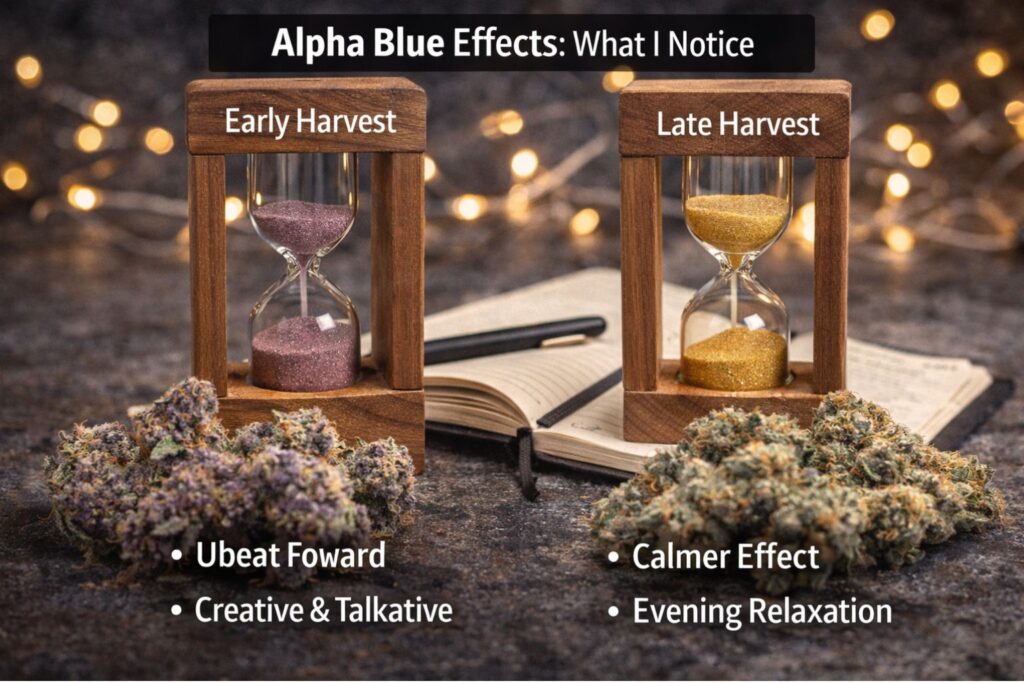
In this Alpha Blue Strain Review, the biggest “effect lever” was harvest timing:
- Earlier harvest leaned more upbeat and talkative.
- Later harvest leaned calmer and more body-forward.
If you’re sensitive to stimulation, start low. If you’re sensitive to heaviness, don’t chase amber trichomes just because someone online says you should.
Grow conditions that worked for me
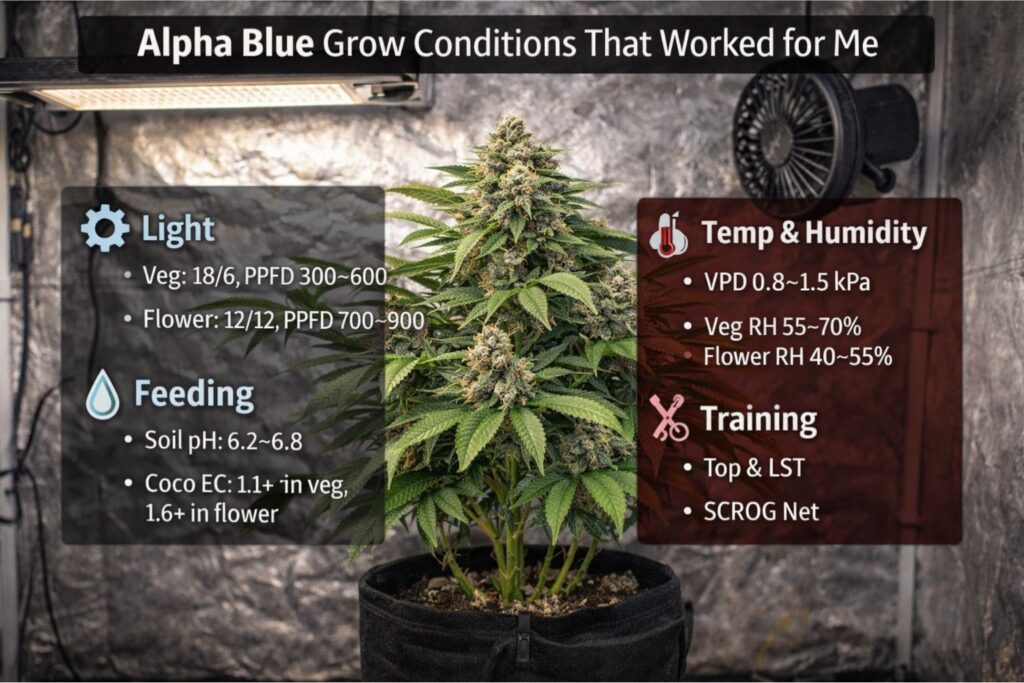
I’m going to focus on the targets that made the biggest difference: light, VPD, feeding strength, and canopy control. My best run came from an indoor LED canopy strategy that prioritized even tops over maximum intensity.
Light schedule and intensity
Vegetative phase:
- Photoperiod: 18/6
- PPFD: 300–600 at canopy
Flowering phase:
- Photoperiod: 12/12
- PPFD: 700–900 at canopy once plants are acclimated
I ramp PPFD slowly. When I pushed too hard too early, I saw pale tops and a harsher finish. A steady indoor LED canopy strategy (flat canopy, consistent distance, no sudden jumps) gave me the cleanest-tasting flower.
Temperature, humidity, and VPD
I keep a VPD chart handy and I adjust by reading the plant and the meter together. These were my practical bands:
- Veg: 24–28°C, 55–70% RH
- Early flower: 23–27°C, 50–60% RH
- Late flower: 21–26°C, 40–55% RH
The phrase I repeat to myself is VPD targets late flower. If VPD is too low, plants drink less and you can misread it as a deficiency. If VPD is too high, they can drink fast and you can chase burn. Keeping VPD targets late flower steady solved more issues than changing nutrient bottles ever did.
Medium choice: soil vs coco vs hydro
I’ve run this cultivar in amended soil and in coco/perlite. Both can produce excellent marijuana flower. The difference is speed of correction:
- Soil: forgiving, but overwatering is the classic beginner mistake.
- Coco: fast and consistent if you’re consistent.
- Hydro: maximum control, but small errors can escalate quickly.
If you choose coco, follow a coco EC schedule week by week and stick to it long enough to learn what “normal” looks like.
Feeding targets (what I actually use)
My baseline ranges:
- Soil pH: 6.2–6.8
- Coco/hydro pH: 5.8–6.2
For coco, I keep it simple with a coco EC schedule week by week:
- Early veg EC: 1.1–1.4
- Late veg EC: 1.4–1.7
- Flower EC: 1.6–2.0 depending on phenotype and environment
If I see tip burn, I back off and confirm VPD targets late flower before I call it a nutrient issue. If I see pale tops under LED, I check light intensity and pH before I “add more.” Most problems in weed grows are two problems at once: environment plus feeding.
Training: keeping the stretch under control
Alpha-Blue can stretch, so I train early and keep the canopy flat. My go-to is SCROG training for stretchy hybrids, because it turns a mixed phenotype tent into an even canopy.
My steps:
- Top once above the 4th–5th node.
- Start LST early to spread branches outward.
- Add a net before flip, then tuck through stretch.
- Clean the lower third after stretch for airflow.
A consistent indoor LED canopy strategy plus SCROG training for stretchy hybrids is what kept my corners productive instead of popcorn.
If you want a simple timeline, plan a seed-to-harvest timeline in a tent before you germinate. That way your training, flip date, and drying window all make sense together.
Pest prevention and plant health basics
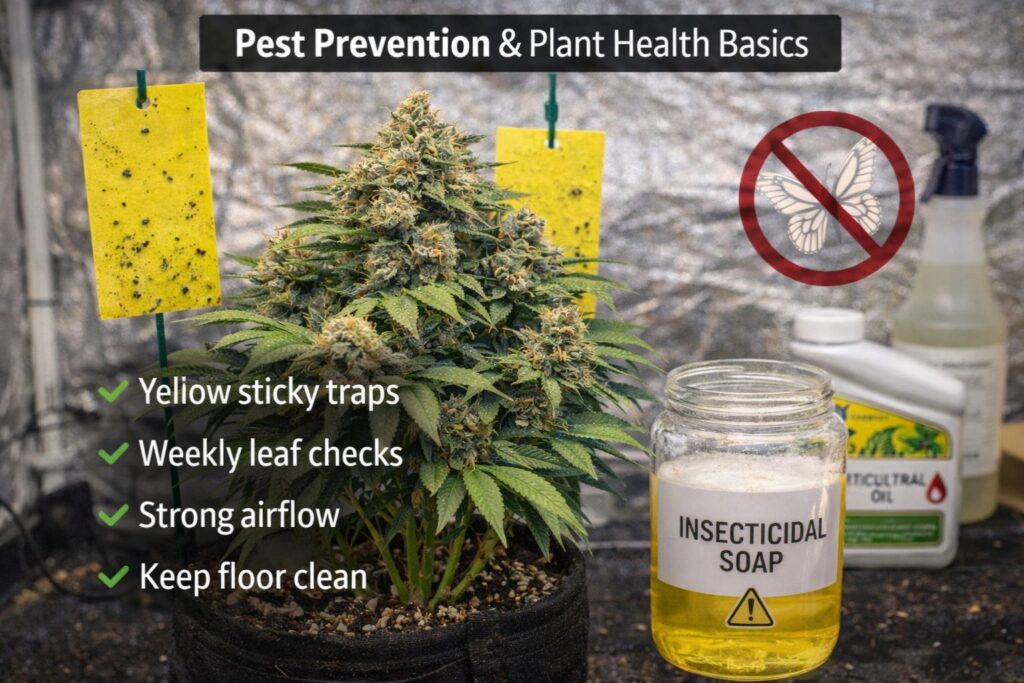
I keep IPM boring and consistent:
- Sticky traps from day one
- Weekly leaf checks under the canopy
- Strong airflow and a clean floor
- No foliar sprays in flower
Late flower risks are usually mold or mites indoors, and caterpillars or humidity spikes outdoors. If your climate is humid, dry room humidity control becomes part of the plan before you even chop.
Harvest, drying, and curing
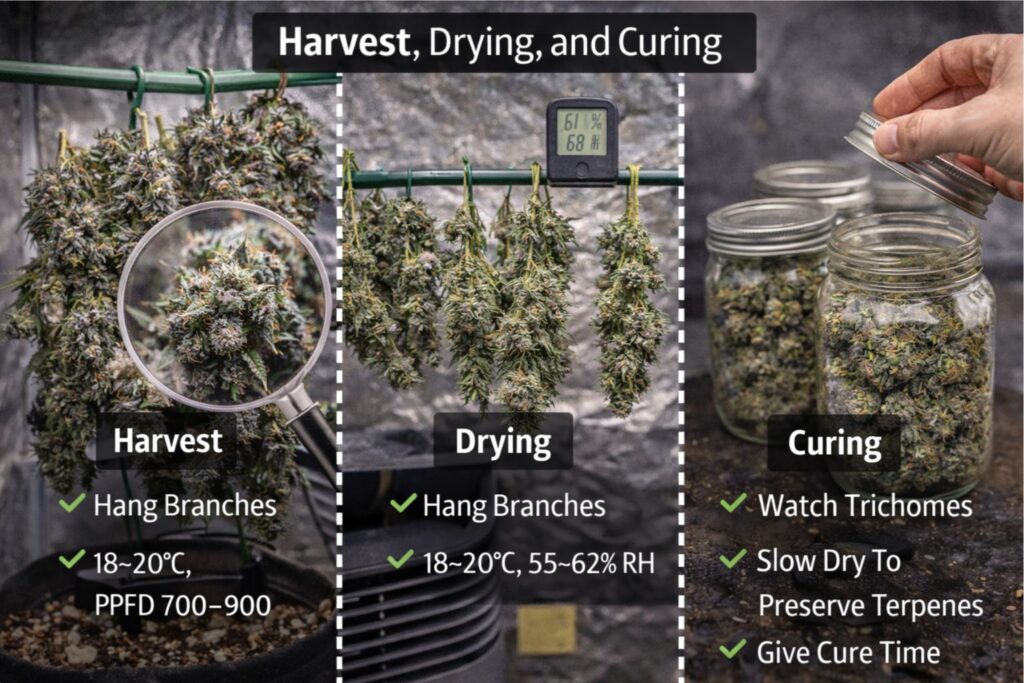
My plants finished around 9–10 weeks from the flip, with some phenotypes wanting a little longer. I harvest based on trichomes, but I also watch overall plant fade and how the calyxes look. I’d rather harvest a healthy, properly matured plant than “wait for amber” while problems creep in.
Dry room targets
For dry, I aim for:
- 18–20°C
- 55–62% RH
- Gentle airflow in the room, not blasting the buds
This is where dry room humidity control matters. Too dry and you trap harshness. Too wet and you invite mold.
Terpene-preserving cure routine
Here’s the terpene-preserving cure routine that kept the smell and taste for me:
- Dry until small stems snap.
- Trim and jar with headspace.
- Burp daily for the first week.
- Then burp every few days for the next two weeks.
- Cure at least 14 days; 21–30 days is where the berry and fuel balance settles.
A terpene-preserving cure routine is the best “quality upgrade” I know that doesn’t cost anything.
Seed buying questions growers actually ask
People shopping cannabis genetics usually want clear answers, so here are mine in a non-legal-advice tone:
- Feminized or regular? Feminized seeds reduce the chance of dealing with males. Regular seeds can be great if you plan to breed.
- Autoflowering or photoperiod? Autoflowering plants can be convenient, but photoperiod gives you more control over training and recovery.
- Indica, sativa, or hybrid? Treat those labels as rough guidance. Phenotypes matter more than the label.
If you’re comparing seed banks, look for transparent breeder info, realistic flowering times, and shipping policies that match your region. Always check grow laws by region yourself and follow your local rules.
To stay organized, I decide based on the seed-to-harvest timeline in a tent: how much time I have, how much space I have, and whether I can dry properly when harvest lands.
Quick checklists I use
I keep these checklists taped to the tent door. They help me catch small issues before they cost quality, and they keep the indoor LED canopy strategy consistent during checks.
Pre-flip checklist (last week of veg)
- Decide your final plant count and commit to it. Crowding makes humidity swings worse.
- Level the canopy. If one top is tall, tuck or tie it down before 12/12.
- Confirm airflow: one fan below canopy, one above, and a clean intake.
- Set your irrigation routine. In coco, consistency beats “perfect” numbers.
- Start your flower transition feed gradually rather than all at once.
Mid-flower checklist (weeks 3–6)
- Re-check VPD targets late flower early, before you drop humidity too fast.
- Look for early signs of nutrient burn: shiny dark leaves, clawing, crispy tips.
- Look for deficiency patterns: pale new growth, interveinal yellowing, slow drinking.
- Keep the net tidy. SCROG training for stretchy hybrids works best when you keep tucking until stretch ends.
- Smell the plants. If the room suddenly smells dull, look for stress or heat spikes.
Pre-harvest checklist (final 10–14 days)
- Plan your dry room humidity control ahead of time: dehumidifier drained, hygrometers calibrated, hang space ready.
- Ease off feeding if you see late tip burn. Don’t “fix” late flower by adding more.
- Watch trichomes, but also watch the plant. A healthy finish cures better than a stressed finish.
- Make a schedule for the terpene-preserving cure routine so you don’t forget burps in the first week.
FAQ
How long does it take from seed to harvest indoors?
My seed-to-harvest timeline in a tent is usually 12–16 weeks depending on veg time and phenotype. Plan your seed-to-harvest timeline in a tent around your drying space, not just your tent space.
What’s the best training method in a small tent?
SCROG training for stretchy hybrids is my pick. SCROG training for stretchy hybrids keeps the canopy flat and makes an indoor LED canopy strategy easier to execute.
Why do my buds smell weaker after harvest?
Most often it’s the dry. Use dry room humidity control and slow the process down. Then follow a terpene-preserving cure routine for at least two weeks. That’s how I kept the blueberry diesel cultivar profile and the diesel berry flavor notes in the jar.
Is this better as a day or night smoke?
In this Alpha Blue Strain Review experience, it’s flexible. In lower amounts it behaves like a daytime creative weed strain. With a later harvest or higher dose, it leans more relaxing.
What are the most common grow mistakes with this cultivar?
The top three I see are uneven canopy, swinging humidity, and overfeeding late. A steady indoor LED canopy strategy, consistent VPD targets late flower, and a calm coco EC schedule week by week (if you’re in coco) will prevent most headaches.
My bottom line
This Alpha Blue Strain Review comes down to fundamentals: stable environment, even canopy, and patience after harvest. If you want the best version of the blueberry diesel cultivar profile, keep VPD targets late flower steady, follow a coco EC schedule week by week when applicable, commit to SCROG training for stretchy hybrids, and don’t skip dry room humidity control plus a terpene-preserving cure routine. Do that, and the diesel berry flavor notes stay vivid, the blueberry diesel cultivar profile stays recognizable, and the daytime creative weed strain character feels consistent from jar to jar.
For a complete directory of cultivars, visit our Cannabis Strain Reviews.
