Table of Contents
I’ve run this cultivar indoors, and this Alien Rock Candy Strain Review is based on those runs. Here is what I saw in growth, aroma, and finish, plus what I’d change next time.
Consistency mattered most overall. When the room stayed stable, the candy citrus terp mix held through the slow-dry cure routine and hybrid garden performance stayed predictable. When I pushed too hard, the diesel-leaning aroma dulled.
Genetics and what I look for in selection
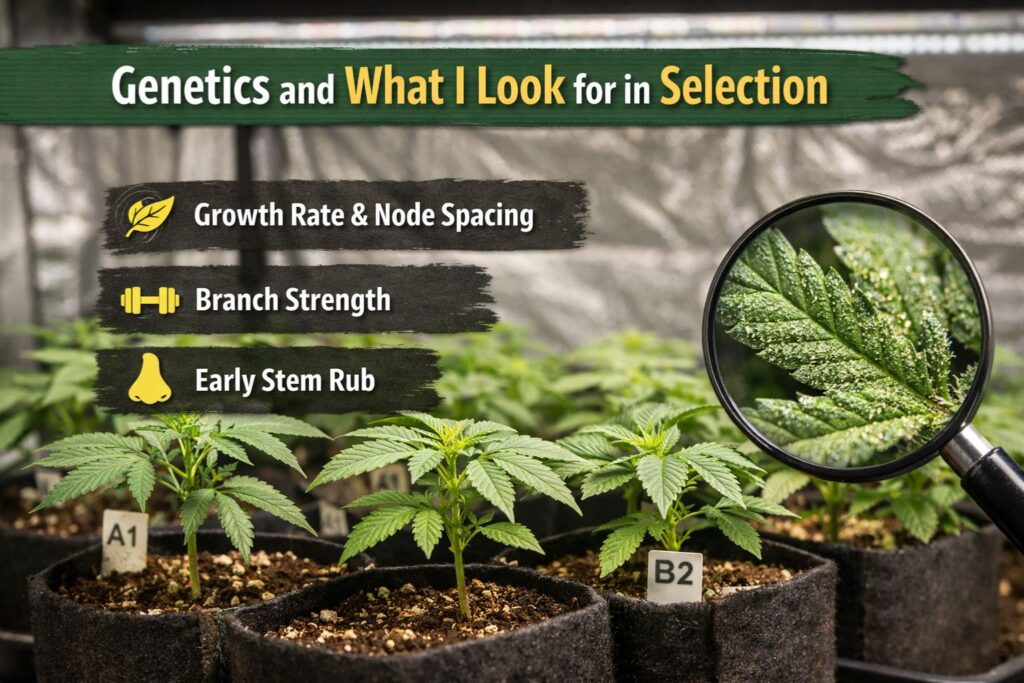
This line comes from two very recognizable families: one that leans sour and “diesel” with a sweet edge, and another that leans chem and earthy with a heavier backbone. I avoid over-promising on exact outcomes because phenotype variation is real. Two plants can share the same label and still behave differently.
When I pop a small batch, I label each plant and pay attention to three things early:
- Growth rate and node spacing (tight vs open)
- Branch strength (will it hold weight without help)
- Early stem rub (does it start sweet or sharp)
If you are choosing seeds for a personal grow, plan for that variation. For me, the best keepers hit a balance: steady structure with a noticeable candy citrus terp mix already showing in late veg.
What the buds look and smell like in my room
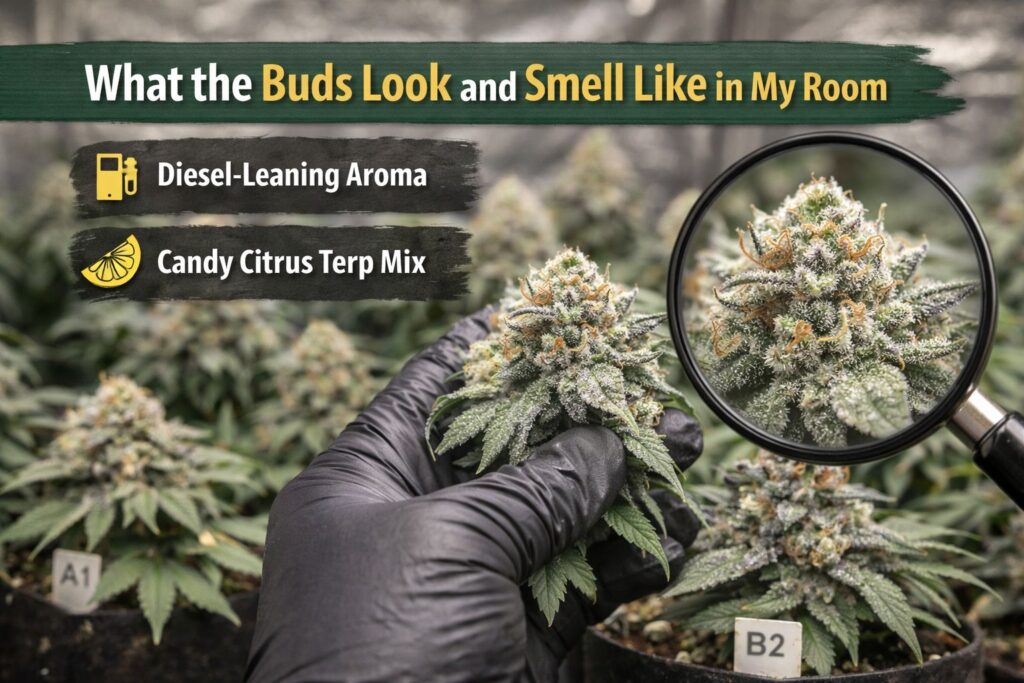
In a clean room with good airflow, the flowers finish with a frosty look and a sticky feel. Color can swing from bright green to deeper tones depending on temperature swings late in flower.
The smell is where it gets interesting. In my tents, the first big wave is a diesel-leaning aroma that rides on a sweet base. By mid flower, the candy citrus terp mix becomes more obvious, and I start to get a “candy peel” note that sticks to gloves.
If you want that profile to stay in the jar, the slow-dry cure routine matters as much as the grow. Fast drying made the nose thinner for me, even when the plant looked great at harvest.
Effects: how it tends to land

Effects depend on tolerance, dose, and timing, and marijuana can feel different from person to person. With this plant, my notes are consistent across multiple runs:
- The start feels upbeat and clear, with a social, talkative edge.
- The middle feels calm, with body relaxation that does not usually knock me out.
- If I harvest later, the finish is heavier and more couch-friendly.
I will not make medical claims. If you are sensitive to stimulatory weed, start low and do not stack new products on top of each other. My personal sweet spot is a balanced harvest and a cure that keeps the candy citrus terp mix present.
Grow overview: what makes it easy, what can trip you up
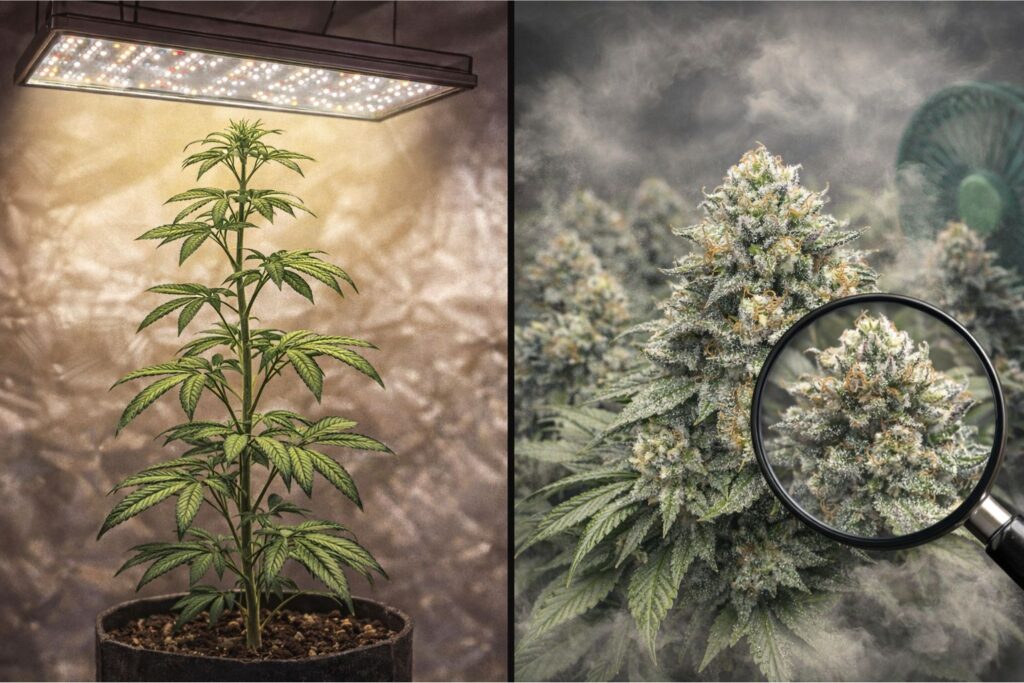
Overall, the hybrid garden performance is medium-easy if you can control climate and keep a consistent routine. The two common problem areas I see are:
1) Stretch in the first half of flower if you flip from a small plant to a strong light.
2) Late flower moisture risk if airflow is weak and flowers stack tightly.
This is where LED intensity targets and a stable flower-room VPD range help more than any single nutrient product.
My indoor climate targets
These are the bands I actually aim for, not theory:
- Veg lights on: 24–28 C
- Veg lights off: 20–23 C
- Early flower humidity: 45–55 percent
- Late flower humidity: 35–45 percent
For the flower-room VPD range, I generally stay around 1.2 to 1.5 kPa in mid to late flower. When I let humidity climb, I saw leaf issues and weaker aroma. When I kept the flower-room VPD range steady, the hybrid garden performance improved and the finishing weeks were less stressful.
Light and LED intensity targets
I grow under LEDs most of the time, and I focus on stability instead of chasing extreme numbers. My LED intensity targets are a guide:
- Early veg: 250–400 PPFD
- Late veg: 450–650 PPFD
- Early flower: 650–800 PPFD
- Mid flower: 800–950 PPFD
If you push above that without dialed-in CO2 and climate, you can force stress that shows up later as reduced aroma. When I stayed close to those LED intensity targets, the diesel-leaning aroma stayed sharp and the candy citrus terp mix stayed sweet.
Medium choices: soil or coco, with real feeding ranges
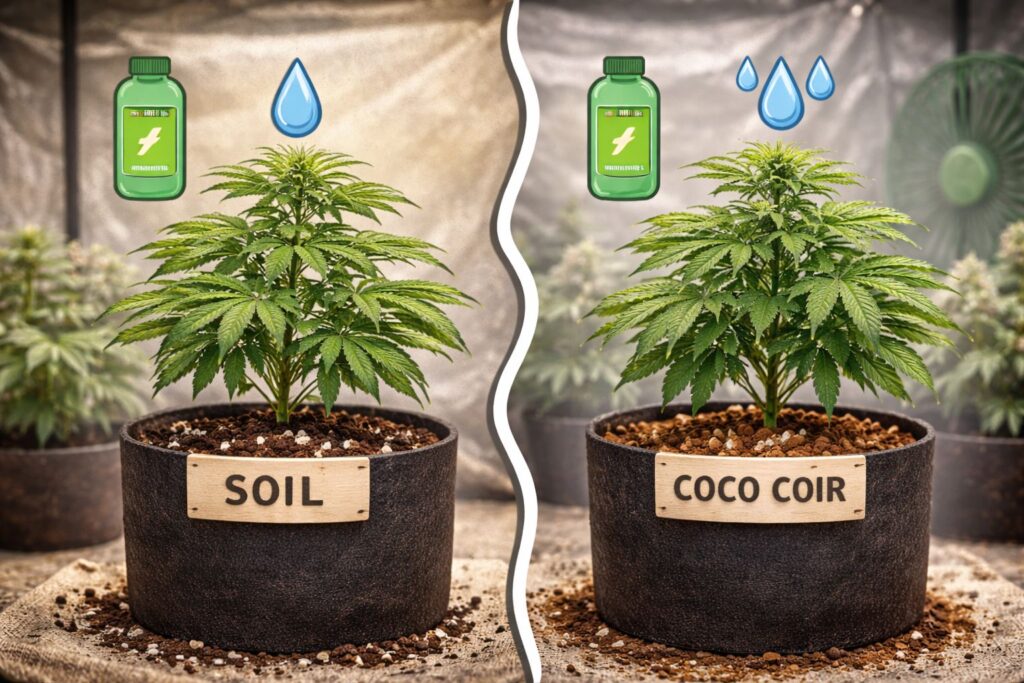
I run two main approaches depending on the goal.
The soil-first grow method
When I want the simplest day-to-day management, I use the soil-first grow method. That means a light, airy base, gentle amendments, and watering only when the container truly cycles. The soil-first grow method is forgiving if your environment is decent, and it can preserve aroma without needing high EC.
In soil, I watch the plant for hunger rather than forcing a schedule. If lower leaves fade too early, I top-dress lightly and keep watering consistent. If tips burn, I back off and let the container flush naturally over a few irrigations.
Coco with a mid-bloom EC window
When I want fast growth and tight control, I use coco. In coco, I treat the root zone like a precision system. The mid-bloom EC window I use is usually 1.8 to 2.2, depending on cultivar response and room conditions.
Here is the key: do not swing hard day to day. I adjust slowly and use runoff trends as a clue, not a scoreboard. When I stayed inside the mid-bloom EC window, the plant kept pace without losing terpenes. When I overshot the mid-bloom EC window, the leaf tips browned and the diesel-leaning aroma dulled.
If you are moving from soil to coco, do not assume your old habits will work. The soil-first grow method is about patience and moisture cycling, while coco rewards frequent, consistent feeding.
Training: how I manage structure and yield
This cultivar responds well to training, but it can punish heavy stress at the wrong time. My default plan is simple: one top in veg, gentle bending, and then support in early flower.
I rely on trellis canopy management for two reasons: it spreads tops evenly under the light, and it keeps airflow moving through the canopy. Trellis canopy management also makes defoliation easier, because you can see what is shading what.
My basic approach:
- Top once after the plant has 5–6 healthy nodes.
- Bend and tie branches outward for an even canopy.
- Add a net before the stretch peaks.
- Clean lower growth that will never reach strong light.
When I kept trellis canopy management gentle and steady, the hybrid garden performance stayed consistent and I avoided late flower humidity pockets.
Pest and mold prevention: the unglamorous part that matters
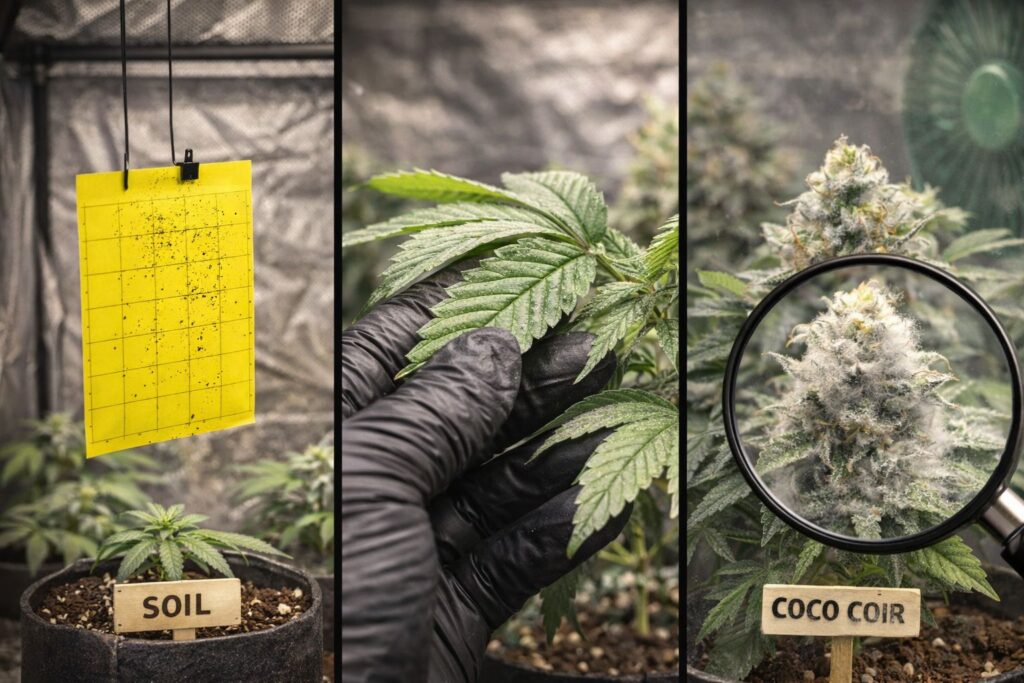
I assume pests can show up in any room. I keep a simple routine:
- Sticky cards for monitoring
- Weekly leaf checks under the canopy
- Clean floors and no standing runoff
If you grow weed in a tight space, airflow is your best friend. In late flower, I run enough circulation to keep leaves lightly moving. That helps protect aroma and reduces moisture risk.
Harvest timing and a seed-to-jar timeline
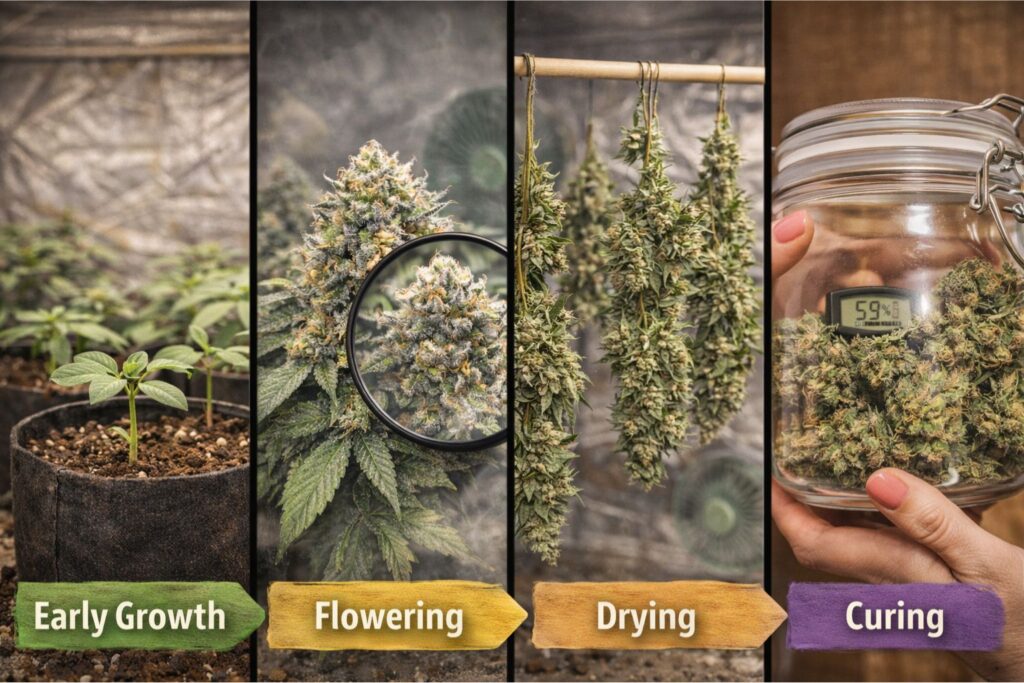
Every run has a slightly different finish, but my seed-to-jar timeline is a useful expectation:
- Early growth: 1–2 weeks from sprout to a stable seedling
- Vegetative growth: 3–6 weeks depending on size goals
- Flowering: commonly 8–10 weeks
- Drying and curing: 3–6 weeks for best flavor
That seed-to-jar timeline gets longer if you want the candy citrus terp mix to fully develop. I do not rush it anymore.
Instead of chasing a specific calendar day, I watch the plant’s maturity: swollen calyxes, slowed water uptake, and resin that looks ready. If you harvest too early, the effects can feel thin. If you harvest too late, the finish can be heavier and less bright.
Drying and curing: how I keep flavor intact
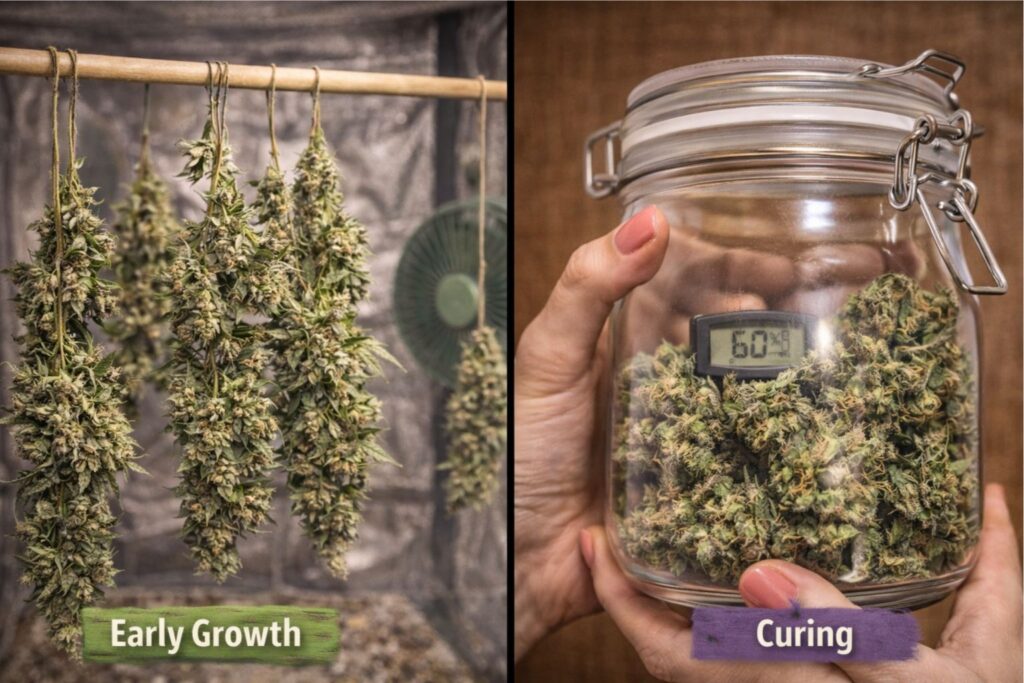
My best jars came from a slow-dry cure routine. I aim for a gentle dry in the dark with steady airflow, not direct fan blast.
My slow-dry cure routine looks like this:
- Hang whole branches when possible.
- Keep temperatures moderate and avoid big swings.
- Trim after the outside feels dry but the stems still have some bend.
- Jar only when moisture is stable, then burp lightly.
When I followed the slow-dry cure routine, the diesel-leaning aroma stayed present and the candy citrus terp mix stayed sweet for weeks.
Buying seeds and planning a grow

If you are shopping, decide what you want first: speed, yield, or a specific flavor. Many growers look for feminized options to avoid males, while others prefer regular seeds for breeding projects. Autoflower choices can be convenient, but photoperiod plants give you more control over size and training.
People also ask about shipping and local rules. I cannot give legal advice. Laws and policies vary by region, so check your local regulations before you order or grow cannabis.
Quick checklist: what I would do if I started today
- Set LED intensity targets before plants get large.
- Hold a stable flower-room VPD range in mid and late flower.
- Choose either the soil-first grow method or coco, then stay consistent.
- Keep the mid-bloom EC window steady if you run coco.
- Use trellis canopy management early, not as an emergency fix.
- Commit to a slow-dry cure routine to protect aroma.
- Plan a realistic seed-to-jar timeline so you do not rush the finish.
FAQ
How do I start seeds without stressing them?
Keep it simple: warm, moist, and clean. I avoid overhandling. Once the taproot shows, I plant carefully into a pre-moistened medium and keep light gentle. The seed-to-jar timeline starts with a calm first week.
Is this better in soil or coco?
Both can work. If you want lower daily maintenance, the soil-first grow method is easier. If you want faster growth and precision, coco can shine, but you must respect the mid-bloom EC window and avoid big swings.
What light levels should I run in flower?
I set my LED intensity targets based on plant response and climate. If leaves taco or fade too fast, intensity may be too high for your room. A stable flower-room VPD range makes those LED intensity targets safer.
Do I need a trellis?
If you want an even canopy, yes. Trellis canopy management keeps tops in the same zone, reduces shading, and improves airflow. I have had better hybrid garden performance in every run where I used trellis canopy management.
How do I keep the smell and taste strong?
Protect the candy citrus terp mix by avoiding heat spikes and overfeeding late. Then follow a slow-dry cure routine. the slow-dry cure routine mattered more than any additive.
What should I expect from the effects?
In my Alien Rock Candy Strain Review notes, the experience is usually upbeat early and calmer later. Marijuana affects people differently, so start low, especially if you are new to weed.
How long until it is ready to enjoy?
My seed-to-jar timeline includes a cure window because terpenes stabilize with time. If you want the candy citrus terp mix to stay bright, give it a few weeks in glass.
For a complete directory of cultivars, visit our Cannabis Strain Reviews.
