Table of Contents
I’m writing this Alchemy Strain Review from the grow room, not from a brochure. I’ve run Alchemy indoors and also tested it outdoors in a protected corner. The big takeaway is that it rewards consistency: steady light, airflow, and feeding.
A quick note on naming: “Alchemy” is not always a single, universal line. Different breeders can use the name for different crosses, so I treat every pack like a new project. That’s why I document structure, smell, and finish before I call anything “dialed in.” This Alchemy Strain Review is based on what I observed and what you can control as a home cultivator.
Effects I noticed and how I approach them responsibly

Effects depend on your personal tolerance, harvest timing, and storage. For me, Alchemy leaned toward an upbeat start that softened into a calm body feel later. It felt functional at lower intake and more couch-friendly if I pushed it. I’m not making medical claims here. This is what I felt from my own cannabis, and your marijuana experience may be different.
Two practical levers matter most:
- Harvest maturity: earlier harvests felt brighter; later harvests felt heavier.
- Dose and pacing: starting small helps you find a comfortable spot without overdoing it.
Aroma and the Alchemy strain terpene profile
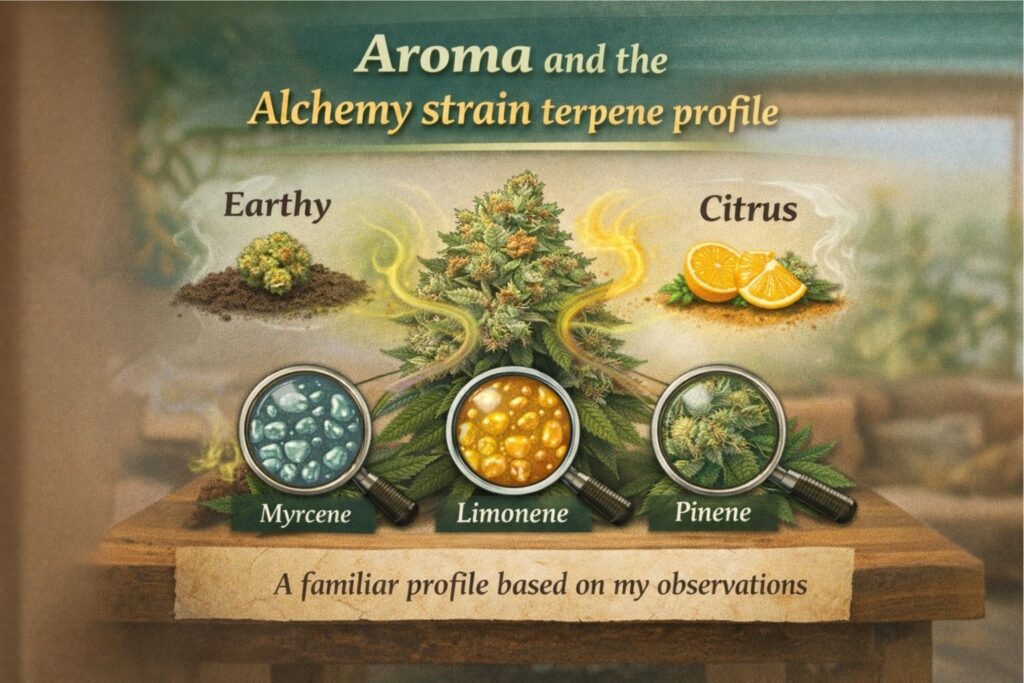
The Alchemy strain terpene profile I chased had a grounded, earthy base with a bright top note. In flower, I got soil-and-herb first, then citrus peel, and finally a resinous evergreen note when I rubbed a sugar leaf. In a well-cured jar, the Alchemy strain terpene profile read cleaner and more layered, especially after two to three weeks of steady curing.
What helped preserve the Alchemy strain terpene profile:
- Good but not harsh air exchange so the canopy never felt “stuffy”
- Night temperatures that did not swing wildly
- A slower dry so aromatics stayed in the flower instead of flashing off
Flavor: what I mean by Alchemy strain flavor notes
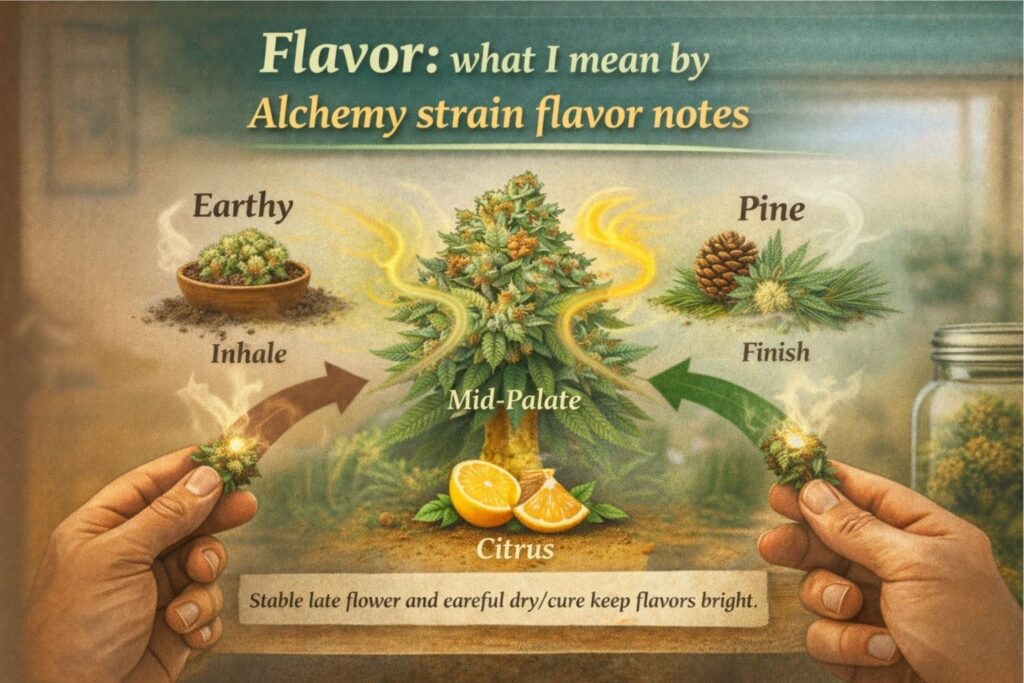
When people ask me about taste, I separate fresh-plant smell from finished flavor. My best runs delivered Alchemy strain flavor notes that matched the aroma: earthy inhale, citrus mid-palate, and a piney finish. When my dry was too fast, the Alchemy strain flavor notes turned flat and green. When humidity stayed too high late in flower, the Alchemy strain flavor notes picked up a dull, slightly musty edge, which is a sign to tighten your environment and sanitation.
To get the Alchemy strain flavor notes I like, I keep the last two weeks focused on stable moisture and gentle feeding, not heavy forcing.
A realistic view of Alchemy strain genetics

Because Alchemy strain genetics can vary by breeder, I focus on traits, not mythology. In my tent, the plants expressed hybrid structure: medium internodes, decent lateral branching, and a flower set that liked support. I saw some variation in leaf shape and stretch, which tells me the Alchemy strain genetics in my pack were not perfectly uniform.
If you want to assess Alchemy strain genetics at home, track:
- Stretch in the first two weeks after the flip
- Flower firmness and calyx stacking by mid-flower
- How the scent develops from week to week
These notes help you pick a keeper mother if you’re running regular seeds, or select the best individual if you’re running feminized.
How to grow Alchemy strain indoors, the way I run it
Here is my baseline for how to grow Alchemy strain indoors. I’m writing this from hands-on practice, and I’ll give ranges rather than magic numbers because every room is different.
Medium choices: soil, coco, or hydro
I’ve grown this weed in soil and coco. Soil was forgiving and produced rich aroma, but it was slower to correct mistakes. Coco was faster and more responsive, but it demanded more discipline with runoff and EC.
If you’re new, start with a simple, airy soil mix and learn plant signals. If you already track EC and pH well, coco can be very efficient for how to grow Alchemy strain with fast growth and clean feeding.
Lighting targets and canopy management
For LED grows, I aim for a steady light ramp:
- Early veg: 250–400 PPFD
- Late veg: 400–600 PPFD
- Mid flower: 650–900 PPFD if the plant is healthy and CO2 is normal room air
I keep the canopy even with training so every top sees similar intensity. This is a major driver of uniform buds and a predictable finish.
Temperature, humidity, and VPD ranges I actually use
My comfortable bands:
- Veg: 24–27°C with 60–70% RH
- Flower: 22–26°C with 45–55% RH
- Late flower: 20–24°C with 40–50% RH
I don’t obsess over VPD charts, but I watch leaf posture. If leaves taco or claw, something is off. Tight control here reduces pest pressure and protects your flowers from mold.
Feeding: best nutrients for Alchemy strain in plain English

People want a brand name, but the plant wants balance. The best nutrients for Alchemy strain are the ones you can measure, repeat, and adjust calmly. In coco, I typically start veg around EC 1.0–1.3 and climb toward EC 1.6–2.0 as the plant demands. In soil, I feed lighter and rely more on the medium.
How I judge the best nutrients for Alchemy strain in practice:
- No burnt tips creeping upward week after week
- Healthy green that is not overly dark and shiny
- Runoff EC that does not climb out of control in coco
If I see early burn, I back off and increase irrigation frequency rather than pushing more salts. If I see pale growth, I check pH and root health before I add more feed.
Structure and Alchemy strain training techniques
Alchemy strain training techniques matter because this plant can stack well when you spread the canopy. I’ve had good results with:
- Early topping once the plant is established
- Low-stress tie-down to open the center
- Light defoliation to improve airflow, not to strip the plant
My rule is simple: remove what blocks airflow and light, but keep enough leaf to power the plant. Used correctly, Alchemy strain training techniques help even out bud size and reduce larf.
I also support branches in flower. A net or stakes keep tops from leaning and shading each other, which improves finish.
Alchemy strain flowering time and what “done” looks like
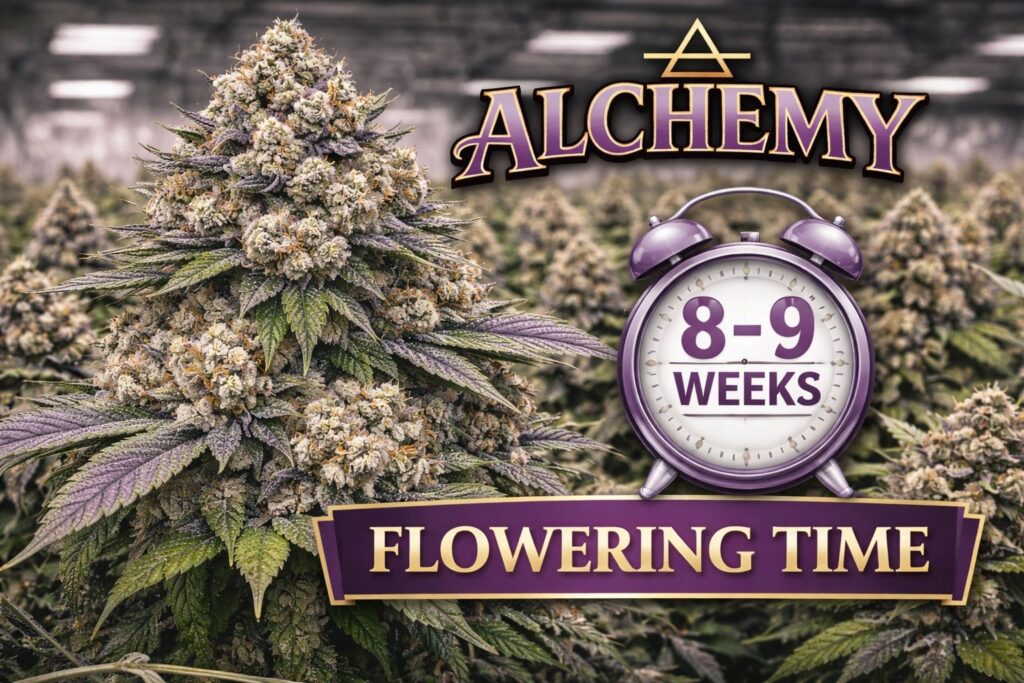
Alchemy strain flowering time depends on phenotype and environment. In my runs, most plants wanted roughly eight to ten weeks of real flowering to hit their stride. I don’t rely on a calendar alone. I watch trichomes and the way the plant drinks.
Signals I use near the end of Alchemy strain flowering time:
- The plant’s water uptake slows slightly
- Pistils darken and retract on mature tops
- Trichomes move from clear toward cloudy, with some amber depending on the effect you want
If you harvest too early, you can lose depth and aroma. If you wait too long in a humid room, you risk quality.
Alchemy strain yield indoors: what I consider achievable

Alchemy strain yield indoors is not a fixed number, but I can share realistic ranges. In a well-run home setup, it can be a solid producer because it responds to training and builds dense tops when light is even.
For Alchemy strain yield indoors, the biggest drivers are:
- An even canopy with enough light in mid flower
- Stable root zone and not overfeeding
- Controlling humidity so flowers stay healthy
If you are chasing weight, don’t sacrifice airflow. Quality problems erase yield fast.
Alchemy strain harvest window and how I choose it

The Alchemy strain harvest window is where you shape the final experience. I decide based on the effect I want and what the plant is telling me. If I want a brighter feel, I harvest when trichomes are mostly cloudy with minimal amber. If I want heavier relaxation, I let a bit more amber show, but I do not let the plant degrade.
To hit the Alchemy strain harvest window cleanly:
- Inspect tops and lowers separately; they can finish at different speeds
- Avoid heavy late feeding that keeps the plant too green
- Keep late-flower RH low enough to protect the buds
Drying and curing for better flavor

Dry and cure are where great cannabis becomes average, or average becomes great. My best results come from a slow dry:
- 15–20°C
- 50–60% RH
- Gentle airflow, never blasting the buds
I trim after the outer leaf feels crisp but stems still have a little bend. Then I jar and cure, burping daily at first and less often later. This is how I keep Alchemy strain flavor notes intact and maintain the Alchemy strain terpene profile I worked for.
Buying seeds: how I evaluate buy Alchemy feminized seeds listings

If you want to buy Alchemy feminized seeds, I recommend looking for clear breeder info, recent testing notes, and shipping details that match your region. I avoid hype words and focus on specifics: flowering range, structure, and whether the line was selected for indoor rooms.
Questions I ask before I buy Alchemy feminized seeds:
- Is it a photoperiod or an auto?
- What is the expected stretch and Alchemy strain flowering time?
- Are there notes about phenotype variation and Alchemy strain genetics?
If the listing is vague, I treat it as a gamble and buy fewer seeds first.
Common problems I’ve seen and how I prevent them
Nutrient burn and lockout
Most issues came from pushing feed too hard in coco. If tips burn early, reduce EC and check runoff. Remember: the best nutrients for Alchemy strain are not “more,” they are “right.”
Powdery mildew and botrytis risk
Late flower humidity is the danger zone. Keep airflow strong, keep leaves dry, and don’t pack plants too tight. Good training helps here, which is why I rely on Alchemy strain training techniques to open the plant.
Pests and IPM basics
I inspect weekly with a simple routine: check leaf undersides, sticky traps, and keep the floor clean. Prevention beats reaction.
FAQ
Is Alchemy better as cannabis, marijuana, or weed for daytime use?
For me, it depends on harvest and dose. Earlier harvests felt more active, later harvests felt more calming. Start low and see how your body responds.
How do I know if my Alchemy strain genetics match what people describe online?
You won’t know from a name alone. Grow it, take notes, and compare traits like stretch, aroma, and finish. That’s the most honest way to judge Alchemy strain genetics.
What is a safe starting point for how to grow Alchemy strain in a small tent?
Keep it simple: stable temps, moderate light, and gentle feeding. Focus on canopy shape and airflow.
What should I prioritize for Alchemy strain yield indoors without losing quality?
Even canopy, stable environment, and controlled humidity. Alchemy strain yield indoors improves when buds stay healthy from mid-flower to the Alchemy strain harvest window.
Any final tip from this Alchemy Strain Review?
Treat consistency like a nutrient. Dial in the room first, then dial in the plant. That’s how this Alchemy Strain Review stays practical instead of theoretical.
For a complete directory of cultivars, visit our Cannabis Strain Reviews.
