I’m writing this Agent Tangie Strain Review like I write my own grow log: what I ran, what I measured, and what I’d repeat. I’ve grown plenty of citrus-leaning cannabis, and the biggest difference with Agent Tangie is how well the orange character can survive into cure when the environment is steady. If you rush the finish, you still get weed, but you lose what makes this one worth growing.
This Agent Tangie Strain Review is not hype. It’s a plain-English guide for growers and shoppers who want effects, flavor, genetics context, and real garden targets. Genetics aren’t a guarantee, so expect phenotype variation (stretch, stacking, finish time). The notes below are from my most recent run and what I’ve seen across multiple plants.
Genetics and what that means in the grow
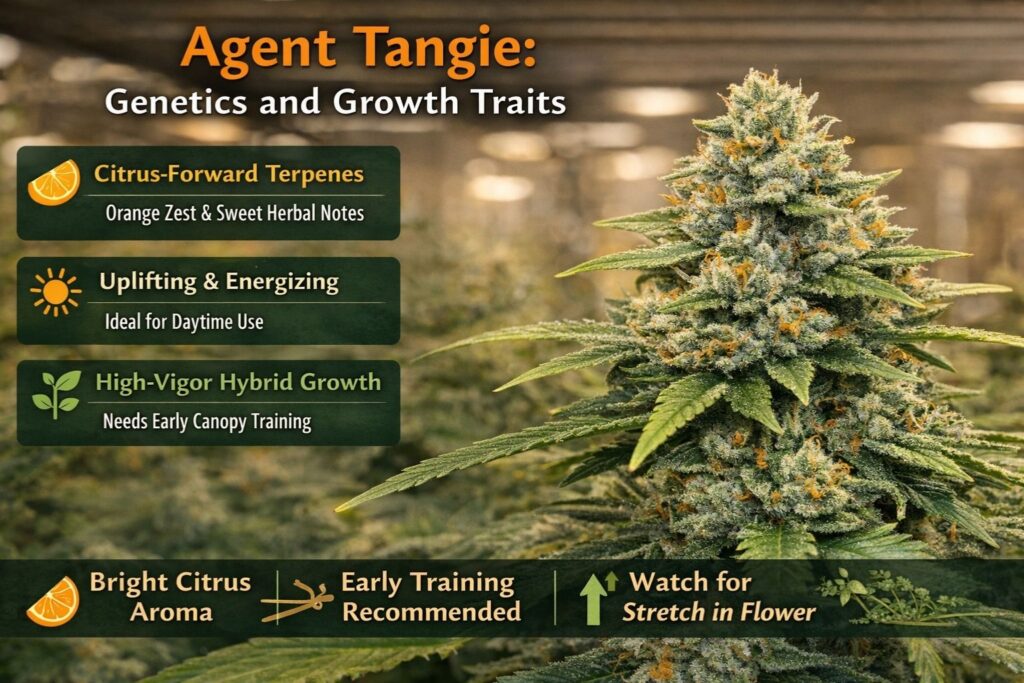
Agent Tangie is commonly presented as a cross built around Agent Orange and Tangie heritage. I don’t obsess over the family tree; I watch plant behavior. In my room it grew like a vigorous hybrid that wants training early, with a citrus-forward terpene spectrum that gets louder as flowers mature.
The “genetics” takeaways that mattered:
- Strong citrus-forward terpene spectrum (orange zest, sweet rind, light herbal notes)
- Often an uplifting daytime weed experience at moderate doses
- Plant vigor that benefits from high-vigor hybrid canopy control before the flip
Germination and early growth: what I do before the tent smells like citrus
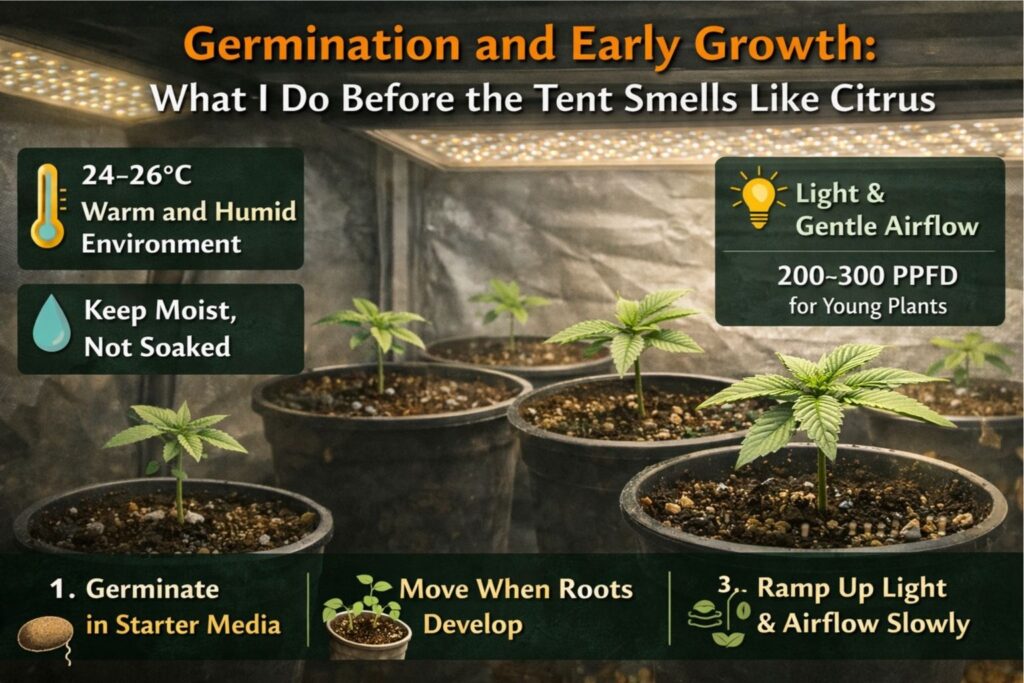
When people ask me how to start weed seeds, my answer is boring on purpose: keep it clean, warm, and not soaked. I germinate in lightly moist starter media at 24–26°C, then move seedlings under gentle light (200–300 PPFD) with steady airflow. Once roots grab, I ramp toward my ppfd map for small tents targets instead of jumping straight to high intensity.
Flavor and aroma: from tent to jar
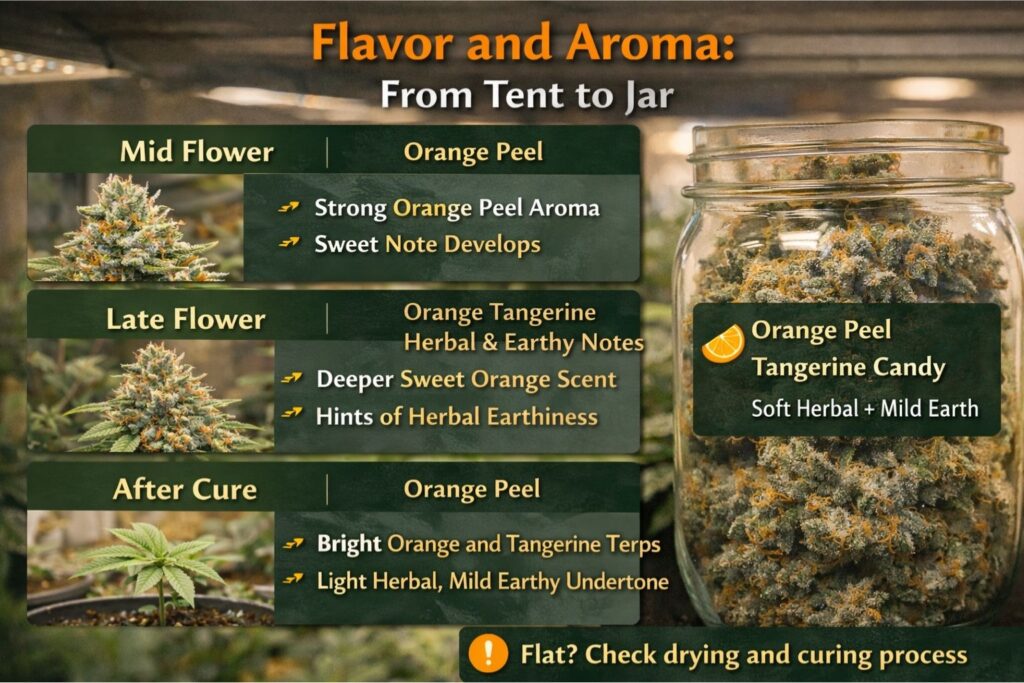
During veg, stem rubs were already citrus. Mid flower is where it turned obvious: bright orange peel aroma in marijuana with a candy edge, especially after lights-on when plants started transpiring. Late flower added a deeper sweet note, but the citrus stayed front and center.
Finished flower (after cure) leaned:
- Orange peel and tangerine candy up top
- Soft herbal/floral in the middle
- Mild earth on the back end
If the jar smells flat, it’s usually not the strain. It’s the dry, the cure, or both. For this cultivar, low-temp dry to protect terpenes plus a consistent jar burping schedule for cure kept the citrus sharp.
Effects: realistic expectations and trade-offs
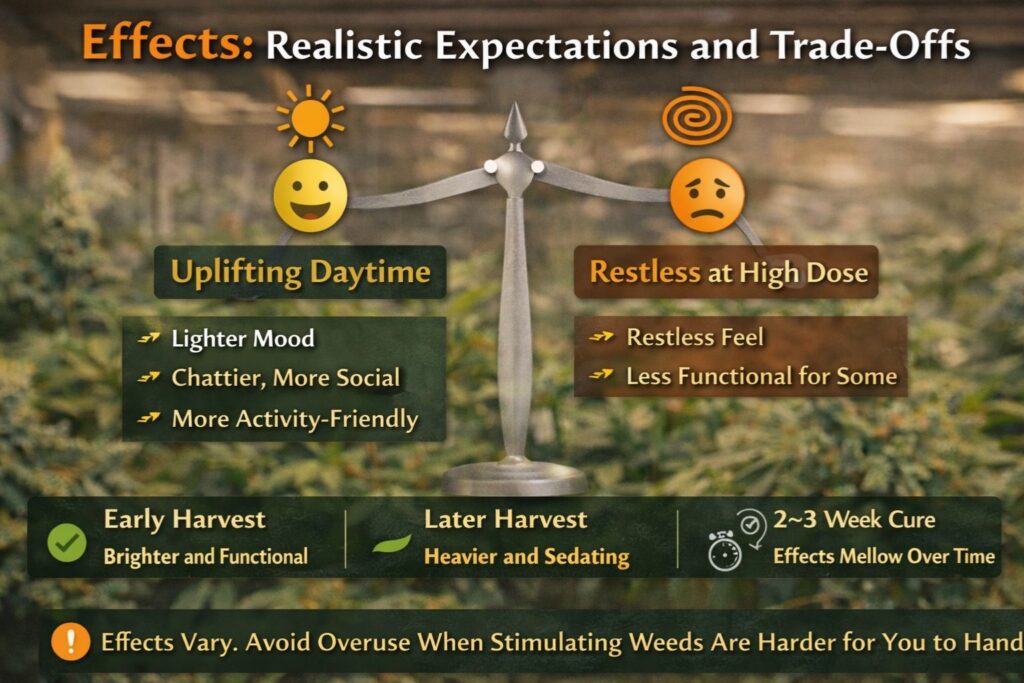
Effects depend on tolerance, harvest timing, and your setting. I’m not making medical claims in this Agent Tangie Strain Review, just describing typical outcomes I noticed.
At lower to moderate intake, it was an uplifting daytime weed experience: lighter mood, more talkative, and easier to stay active. At higher intake, that same uplifting daytime weed experience can tip into restlessness for people sensitive to more stimulating profiles.
What shifted effects most in my run:
- Earlier harvest: brighter and more functional
- Later harvest: heavier and less “sparkly”
- Cure time: after 2–3 weeks, the edges smoothed out
Plant structure and flower traits
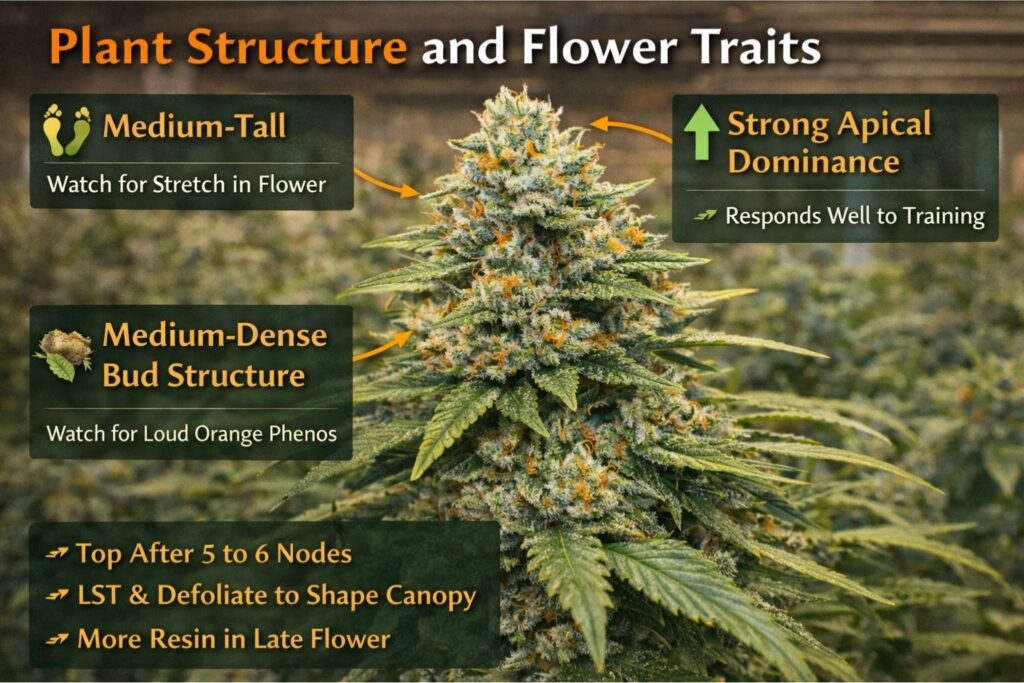
Expect medium-to-tall growth with strong apical dominance if you don’t shape it. Buds were medium-firm rather than rock-hard, with resin that built steadily from mid flower onward. Some phenos stacked better than others, so selection matters if you’re hunting the loudest orange peel aroma in marijuana.
My grow setup: targets that worked
Medium and irrigation
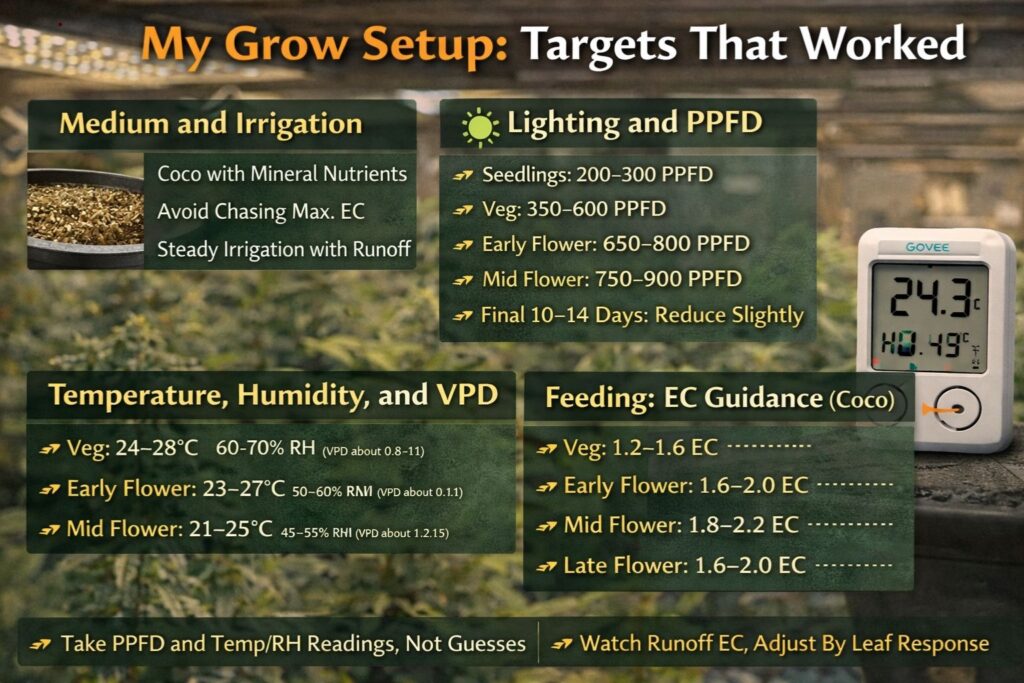
These notes are from coco with mineral nutrients. Coco is forgiving when you keep it consistent, and that’s where coco feed strength targets matter. I prefer frequent irrigation with runoff, stable pH, and not chasing maximum EC.
Lighting and PPFD
In a tent, I treat lighting as a ppfd map for small tents problem. Center PPFD can look perfect while corners lag behind, and uneven light leads to uneven ripening.
Ranges that worked for me (no added CO2):
- Seedlings: 200–300 PPFD
- Veg: 350–600 PPFD
- Early flower: 650–800 PPFD
- Mid flower: 750–900 PPFD
- Final 10–14 days: reduce intensity slightly if plants show stress
If you can, take readings across the canopy and build a simple ppfd map for small tents. Even coverage helped me keep aroma consistent from top to bottom.
Temperature, humidity, and VPD
I got my best terp results when the room was boringly stable. Late flower is where late-flower vpd dialing makes the difference between clean resin and stressed plants.
Practical bands that worked:
- Veg: 24–28°C, 60–70% RH (VPD about 0.8–1.1)
- Early flower: 23–27°C, 50–60% RH (VPD about 1.1–1.3)
- Late flower: 21–25°C, 45–55% RH (VPD about 1.2–1.5)
Late-flower vpd dialing also means airflow. I keep leaf movement gentle but constant to prevent humid pockets inside the canopy.
Feeding: EC guidance (coco)
My baseline coco feed strength targets were:
- Veg: 1.2–1.6 EC
- Early flower: 1.6–2.0 EC
- Mid flower: 1.8–2.2 EC
- Late flower: 1.6–2.0 EC
I adjust based on leaf tips, growth rate, and runoff EC. When the plant asked for less, I backed off instead of forcing it. Keeping coco feed strength targets steady helped preserve the citrus-forward terpene spectrum.
Training and canopy control
This plant responds best when you build the canopy before flower. High-vigor hybrid canopy control was the difference between a messy stretch and an even, productive top layer.
My simple approach:
- Top after 5–6 nodes, then top again once mains establish
- LST to spread branches and keep an even canopy
- Light defoliation before flip and again around day 21 of flower
- Support branches in mid flower if they start to lean
If you’re growing in a small space, high-vigor hybrid canopy control also makes your ppfd map for small tents easier to manage.
Basic IPM
I don’t rely on last-minute sprays to fix problems. My routine:
- Inspect leaves weekly (especially under the canopy)
- Use sticky traps as an early warning system
- Keep intakes and floor clean
- Avoid over-humid nights in flower
Soil, hydro, and outdoor notes (quick, practical)
I ran this cultivar in coco, but the same principles apply in soil or other hydro setups: stable environment, even light, and a finish that protects aroma. In soil, avoid chronic overwatering; in hydro, avoid big EC swings and keep late-flower vpd dialing tight.
Outdoors, give it room and airflow. Hot, dry afternoons can bake terpenes off the plant, so irrigation timing and a bit of shade can help maintain that orange peel aroma in marijuana.
Harvest timing: how I decide
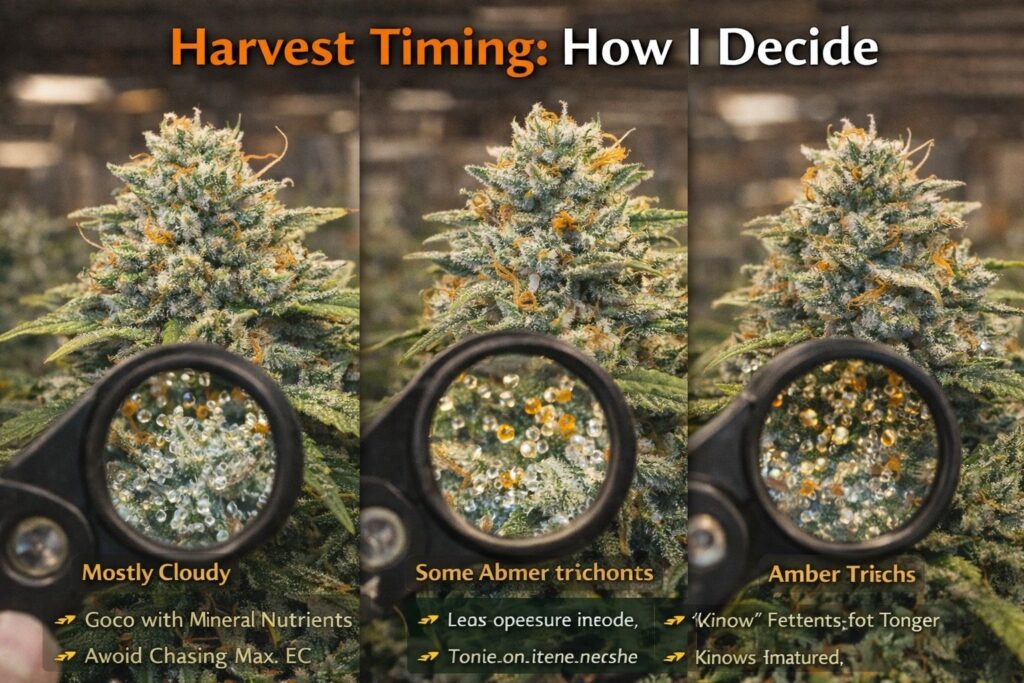
I don’t harvest on calendar days alone. I watch trichomes and I pay attention to smell. When the orange peel aroma in marijuana is at peak intensity and flowers feel sticky, I’m close.
For a more functional, uplifting daytime weed experience, I harvest when trichomes are mostly cloudy with a smaller portion amber. Waiting too long can trade brightness for heaviness.
Drying, trimming, and curing for citrus terps
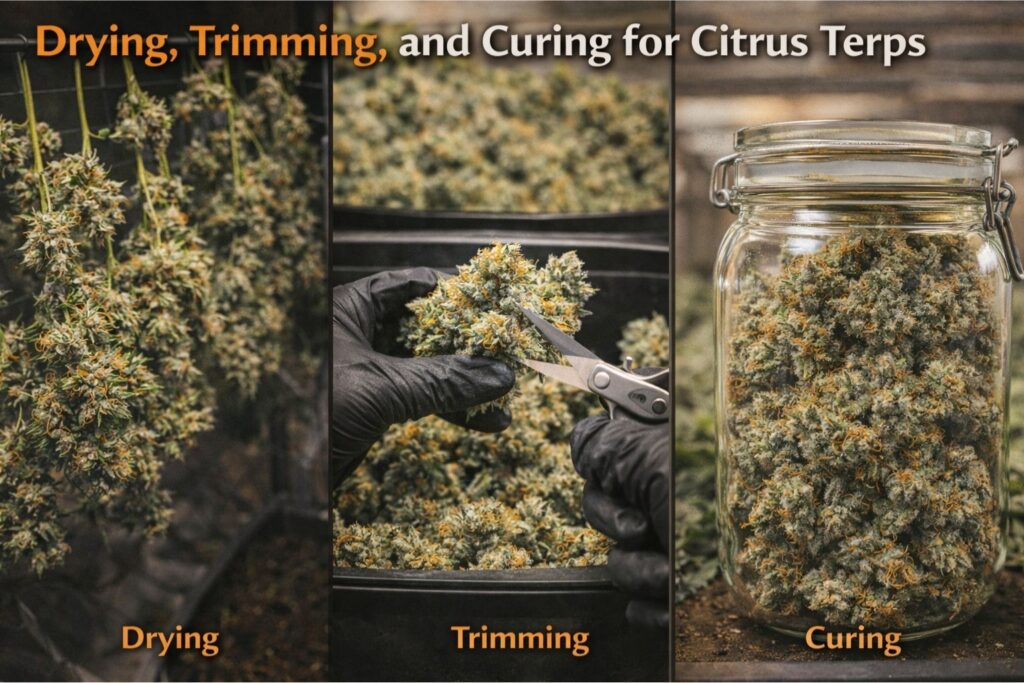
Drying targets
A low-temp dry to protect terpenes is non-negotiable if citrus is your goal.
- 18–20°C
- 55–60% RH
- Air movement around the room, not blowing directly on flowers
- Usually 10–14 days
Trim approach
I think about trimming timing and terpene retention as a drying-speed decision. In dry climates, leaving more leaf and trimming later can slow the dry. In humid spaces, a cleaner early trim can reduce risk, but it can speed drying too much if conditions aren’t controlled.
If you’re testing trimming timing and terpene retention, keep notes. The “best” method is the one that keeps your dry slow and your jar clean.
Cure routine
A jar burping schedule for cure is what kept the citrus-forward terpene spectrum crisp instead of muted.
- Days 1–7: open once daily for 5–10 minutes
- Days 8–21: open every 2–3 days
- After 3–4 weeks: open weekly or as needed
I store jars cool and dark. A consistent jar burping schedule for cure is more important than chasing gadgets.
Seed shopping and grow planning notes
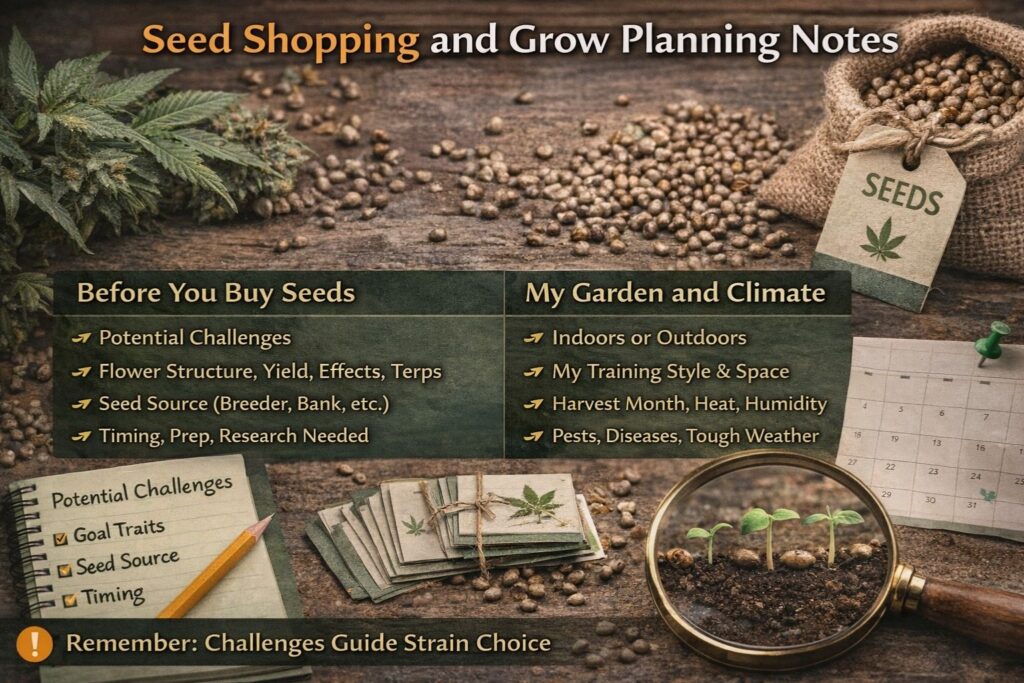
I’m not giving legal advice about regulations. Rules vary by region, and you should verify what applies where you live. From a practical grower angle, here’s what I look for:
- Clear product info and storage guidance
- Reliable germination practices
- Realistic expectations about phenotype variation
- A plan for feminized photoperiod seed shopping if you want predictable flowering and sex expression
If your goal is the loudest citrus-forward terpene spectrum, pop more than one seed (space permitting) and keep the best plant. Feminized photoperiod seed shopping helps when you want to focus your tent on selection instead of removing males.
Quick checklist: what I’d repeat next run
- Start training early for high-vigor hybrid canopy control
- Build a ppfd map for small tents and level the canopy
- Keep coco feed strength targets steady and watch runoff EC
- Prioritize late-flower vpd dialing and airflow
- Commit to a low-temp dry to protect terpenes
- Follow a jar burping schedule for cure and don’t rush the first month
FAQ: quick answers to common searches
How long does Agent Tangie take to finish flowering?
In my room, most phenos finished around 9–10 weeks after the flip. Environment and selection can shift that. I harvest based on trichomes and aroma, not just the calendar.
How do I keep the orange smell strong after harvest?
Low-temp dry to protect terpenes plus a consistent jar burping schedule for cure made the biggest difference. If you dry too fast, the orange peel aroma in marijuana usually fades.
What light level should I aim for in a tent?
Create a ppfd map for small tents and aim for even coverage. I ran 650–900 PPFD in flower without added CO2, adjusting down if plants showed stress.
How do I avoid nutrient problems in coco?
Start moderate and stay consistent. My coco feed strength targets topped out around 2.2 EC, and I adjusted based on plant response and runoff.
Does trim timing change terp results?
It can. Think in terms of trimming timing and terpene retention: choose the method that slows the dry to 10–14 days in your climate.
Bottom line
This Agent Tangie Strain Review comes down to one thing: if you want that citrus-forward terpene spectrum, you have to protect it. With high-vigor hybrid canopy control, steady coco feed strength targets, careful late-flower vpd dialing, and a low-temp dry to protect terpenes, I got flower that stayed bright in the jar. If you rush the finish, you’ll still have marijuana, but you won’t have the orange peel aroma in marijuana that people chase this cultivar for.
For a complete directory of cultivars, visit our Cannabis Strain Reviews.
