Table of Contents
I’m writing this Afpak Strain Review the way I keep my own grow journal: what I did, what I saw, and what I’d change next time. I ran Afpak indoors under LED in both soil and coco, and I finished one plant outdoors in a fabric pot.
This Afpak Strain Review won’t match every garden. Cannabis can show variation by seed lot, phenotype, and environment, so treat this as a practical reference for planning your next marijuana grow.
Quick snapshot before you start
- Growth style: sturdy, branchy, easy to shape into a flat canopy
- Aroma direction: earth, spice, dry wood, pine; one plant leaned brighter
- Bud structure: chunky and tight, not long spears
- Biggest risk: late-flower humidity plus poor airflow can trigger mold
Afpak landrace lineage and what it means in the grow room
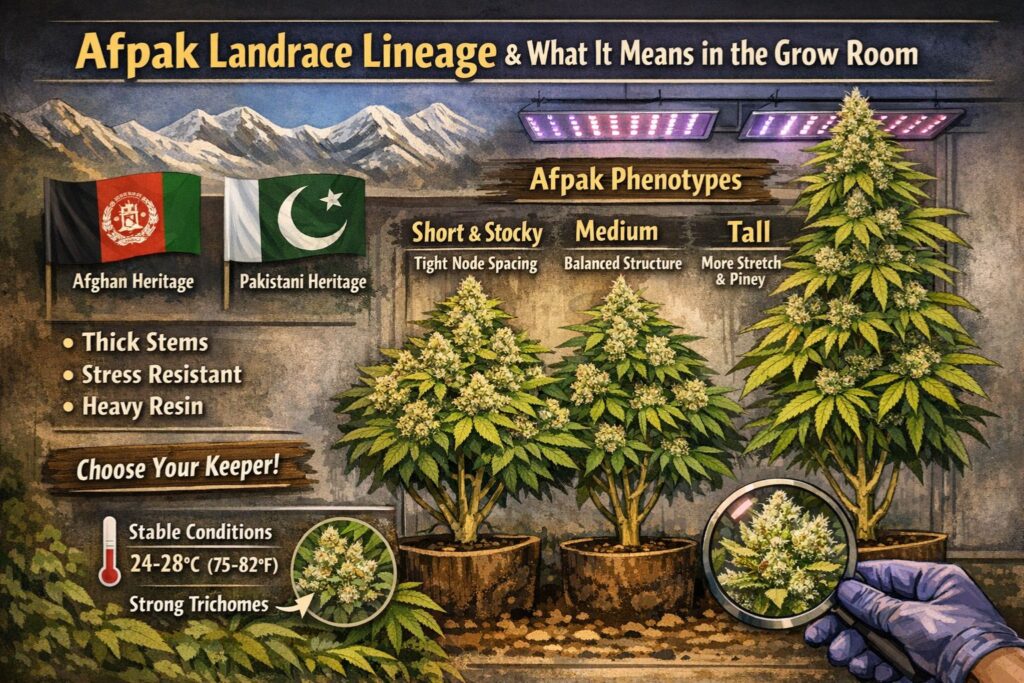
Most growers use “Afpak” for Afghan and Pakistani heritage combined. That Afpak landrace lineage often shows thick stems, good stress tolerance, and strong trichome coverage when conditions stay stable.
In my pack, the Afpak landrace lineage expressed in three clear Afpak phenotypes:
- Short and stocky: tight node spacing, heaviest Afpak resin production, minimal stretch
- Medium: balanced structure, finished quickest, most consistent jars
- Taller: more stretch, sharper pine edge, needed more training
If you want uniformity, pop extra seeds and keep the plant that best fits your goals. If you enjoy selection, Afpak landrace lineage makes it easy to spot a keeper.
Appearance and Afpak resin production in flower
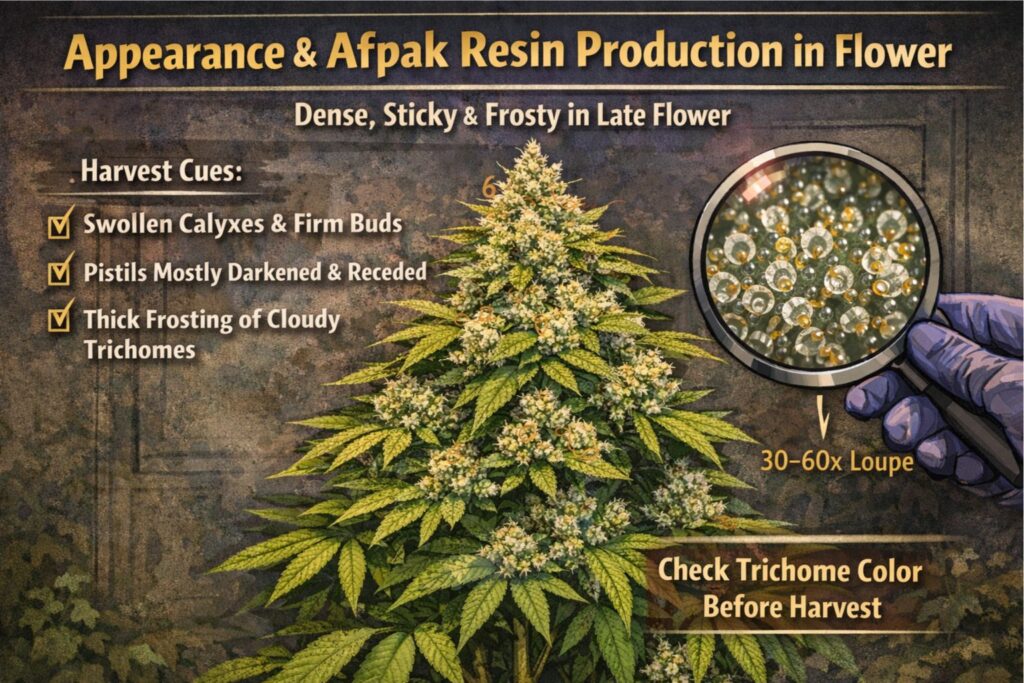
The Afpak resin production really ramped up after mid-bloom. By late flower, sugar leaves were frosty enough that trimming felt sticky even with gloves. Outdoors, Afpak resin production stayed strong, but the smell carried farther, which matters for anyone who needs discretion.
Bud shape was compact and calyx-forward. When I increased intensity too fast, the tallest plant foxtailed slightly, so I learned to step PPFD up gradually.
Harvest cues I rely on:
- Swollen calyxes and firm buds
- Pistils mostly darkened and receded
- Trichomes mostly cloudy with a touch of amber
Afpak terpene breakdown: what my nose and jars told me
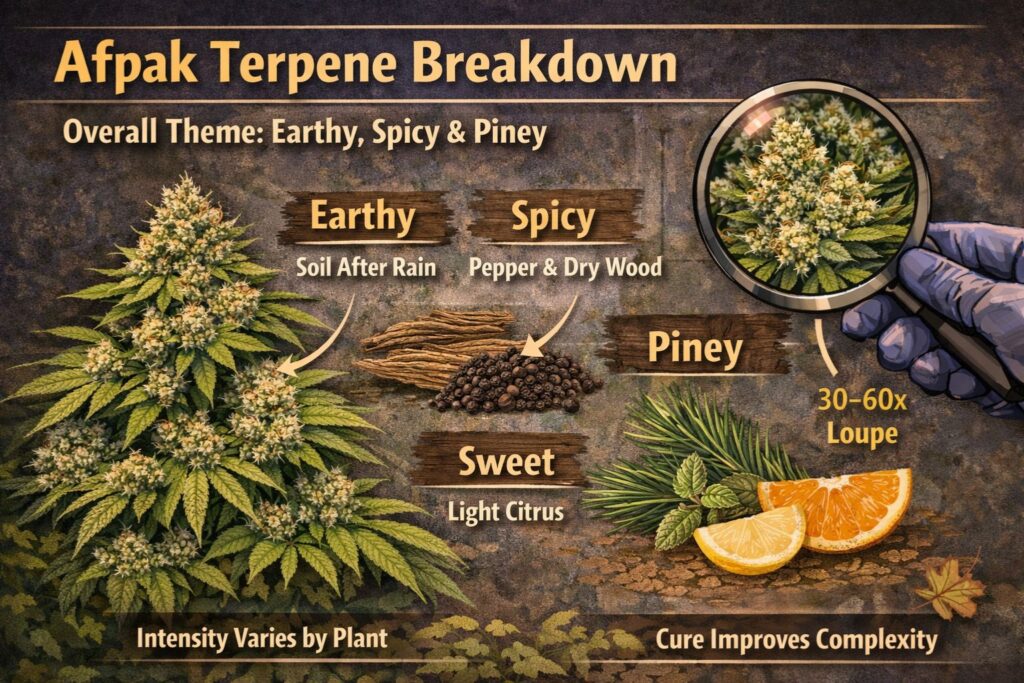
This Afpak terpene breakdown is based on repeated smell checks during flower and after cure (not lab work). Across the run, the Afpak terpene breakdown consistently centered on:
- Earthy base note (soil after rain)
- Spicy warmth (peppery, sometimes clove-like)
- Dry wood
- Pine needle edge (stronger on the taller plant)
- A faint sweet finish after a longer cure
If you’ve grown classic indica-leaning lines, the Afpak terpene breakdown will feel familiar, but it still had enough complexity to keep my jars interesting.
Afpak flavor notes after curing
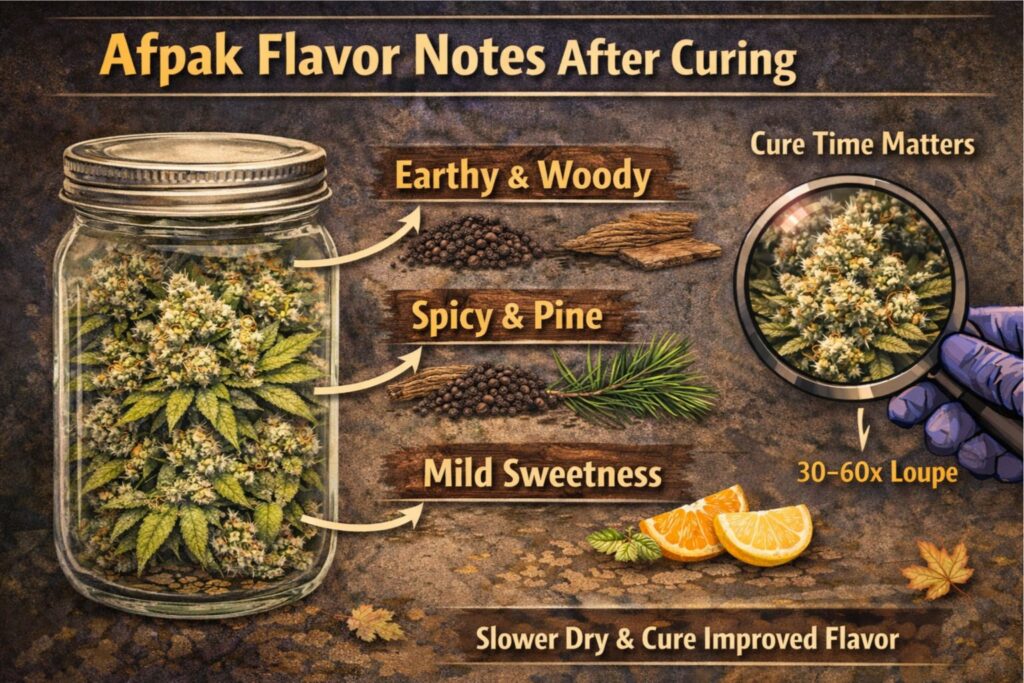
Flavor is where runs either win or lose, because drying can flatten everything. My Afpak flavor notes improved when I slowed the dry and avoided overdrying.
In the best jar, Afpak flavor notes came in layers:
- First: earthy and woody
- Middle: spice and pine
- Finish: mild sweetness on the exhale
A rushed “tester” branch was harsher and less defined. After 3–4 weeks of cure, the Afpak flavor notes were smoother and clearer.
Afpak effects report from my sessions
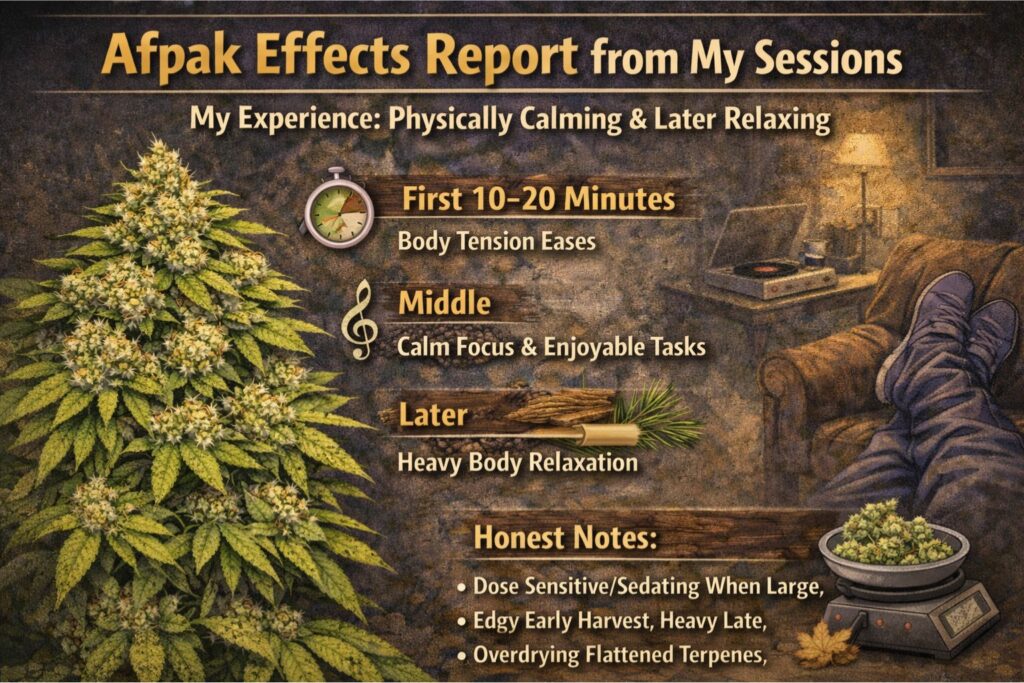
My Afpak effects report comes from low-to-moderate doses, mostly evenings. Effects depend on tolerance, set and setting, and how the weed was harvested.
Typical Afpak effects report for me:
- First 10–20 minutes: body tension eases
- Middle: calm focus; music and simple tasks feel more engaging
- Later: heavier body relaxation and a strong “sit down” pull at higher doses
Earlier harvest felt a bit more alert; later harvest leaned heavier. I’m not making medical claims. If you use marijuana for wellness, consider speaking with a qualified professional.
Afpak indoor climate targets: the ranges that kept it steady
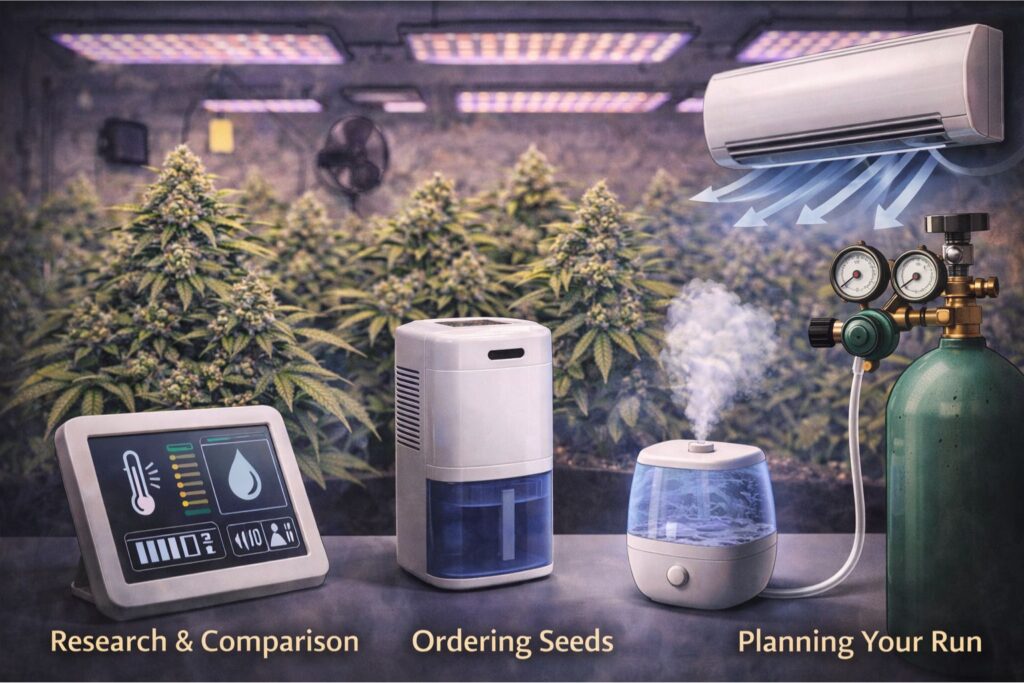
These Afpak indoor climate targets worked for me under LED.
Photoperiod:
- Veg: 18/6
- Flower: 12/12
PPFD at canopy:
- Seedling: 150–250
- Veg: 400–600
- Flower: 700–900
Temperature and humidity:
- Lights on: 24–28°C (75–82°F)
- Lights off: 20–23°C (68–73°F)
- RH veg: 60–70%
- RH mid flower: 45–55%
- RH late flower: 40–50%
VPD guide:
- Veg: about 0.9–1.2 kPa
- Flower: about 1.1–1.5 kPa, trending higher late
Sticking to those Afpak indoor climate targets improved smell, reduced stress, and lowered mold risk.
Afpak canopy training plan that worked in soil and coco
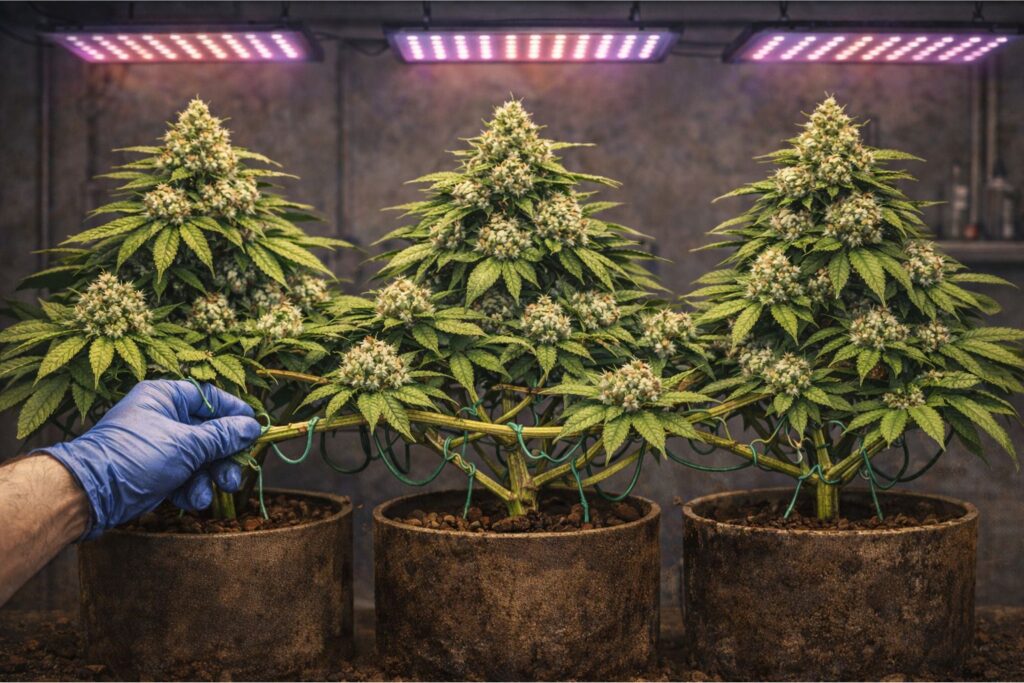
This cultivar rewarded gentle structure work. My Afpak canopy training plan:
- Top once above node 5 or 6
- Start low-stress training a few days later, pulling mains outward
- Remove weak inner shoots that will never reach light
- Light defoliation around week 3 of flower to boost airflow
The taller phenotype needed more early bending to stay controlled. For me, the Afpak canopy training plan improved uniformity and helped tight tops finish evenly.
Feeding: Afpak soil feeding guide and Afpak coco EC range
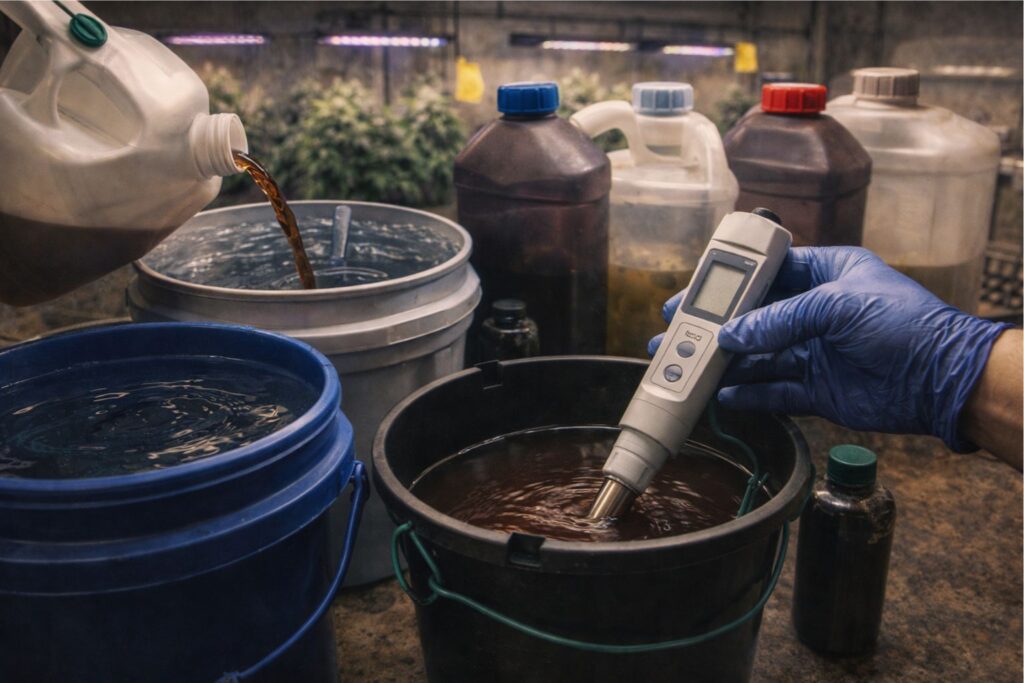
Soil and coco behave differently, so I keep targets separate.
Soil: Afpak soil feeding guide
In soil, I ran moderate inputs and focused on watering technique. My Afpak soil feeding guide:
- Veg: modest nitrogen, avoid dark-green clawing
- Early flower: gradual increase in bloom nutrients
- Mid flower: steady feed, consistent wet/dry rhythm
- Late flower: reduce nitrogen, keep calcium and magnesium steady
The biggest soil mistake is overwatering. If growth slows, check root oxygen before raising feed.
Coco: Afpak coco EC range
In coco, I tracked EC closely. My Afpak coco EC range:
- Early veg: 1.0–1.2 EC
- Late veg: 1.2–1.5 EC
- Early flower: 1.5–1.7 EC
- Mid flower: 1.7–2.0 EC if the plant stays happy
- Late flower: 1.4–1.7 EC
If I saw tip burn, I backed down and increased runoff. Staying inside the Afpak coco EC range kept leaves clean and buds dense.
Troubleshooting and practical notes from the run
Every Afpak grow teaches something. Here are the issues I watched for and the fixes that worked for me, without turning the garden into a science project.
Preventing nutrient burn and keeping leaves clean
If you’re seeing browned tips and a shiny, dark leaf surface, you’re probably overfeeding. In coco, I keep 10–20% runoff and avoid big jumps in EC. In soil, I’d rather underfeed slightly than chase a “perfect” chart, because some Afpak phenotypes stay satisfied on moderate nutrition.
Simple checklist:
- Tip burn starts: drop feed strength 10–15% and confirm your watering rhythm
- Leaf edges curl down (“claw”): back off nitrogen and check that the pot is drying a little between irrigations
- Pale tops in mid flower: confirm pH and make sure calcium and magnesium are steady
pH and root-zone basics
I don’t obsess, but I do stay in a sensible range:
- Soil: pH roughly 6.2–6.8
- Coco/hydro: pH roughly 5.7–6.1
If you’re seeing what looks like a deficiency, verify pH first. Many “deficiencies” are actually lockout from pH drift or inconsistent watering.
Light stress and heat management
Afpak handled strong light, but only when the room was stable. If I saw tacoing leaves or bleached tops, I raised the fixture and reduced PPFD for a few days. I also prefer gradual increases week to week, especially with the taller plant.
My rule: if the canopy is healthy and praying, don’t “fix” it.
Odor control and storage
The Afpak terpene breakdown can be loud late in flower. Indoors, a correctly sized carbon filter and good negative pressure mattered more than any spray. For storage, I keep jars in a cool, dark place and avoid opening them constantly, because repeated air exchange dries out trichomes and dulls Afpak flavor notes.
Afpak flowering window and stretch: what I logged
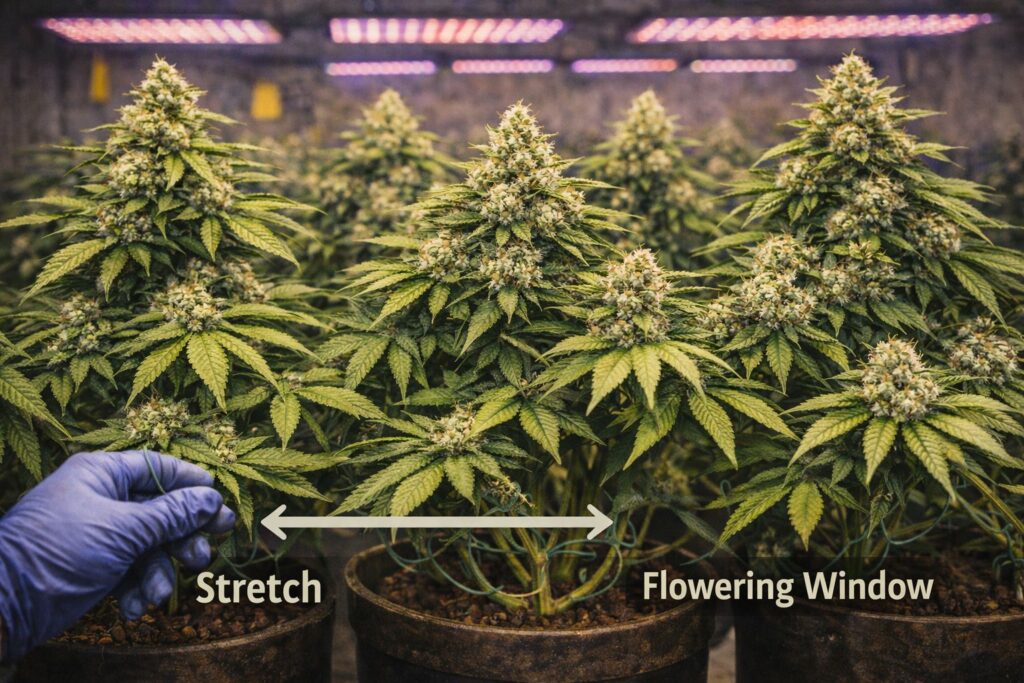
My Afpak flowering window was 8–10 weeks after flipping to 12/12 indoors. The medium plant finished closest to 8–9 weeks; the taller one leaned longer.
Stretch notes:
- Week 1–3: the taller phenotype nearly doubled
- The compact phenotype stretched less and stayed easy to manage
Knowing the Afpak flowering window helped me plan humidity control, because tight tops plus high RH is a bad combo.
Afpak outdoor performance in a fabric pot
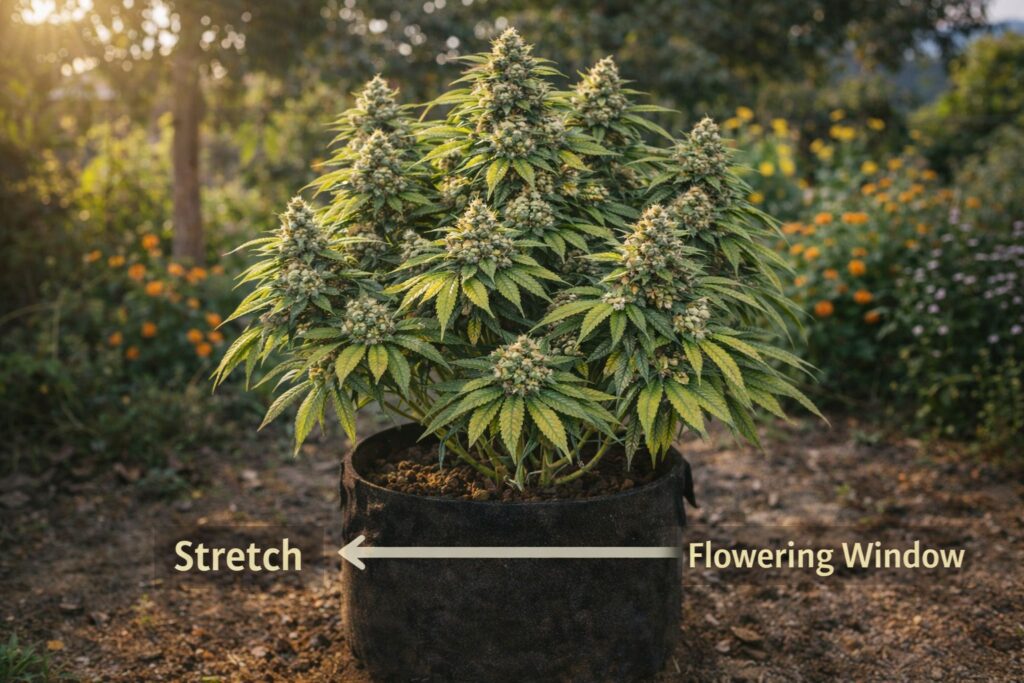
For Afpak outdoor performance, I used a large fabric pot, early morning watering, and weekly inspections. What helped Afpak outdoor performance most:
- Morning sun and steady airflow
- Cleaning up lower growth to reduce pests
- Staking branches early to prevent wind damage
Outdoor weed can finish beautifully, but weather calls the shots, especially in humid falls.
IPM: what I actually do
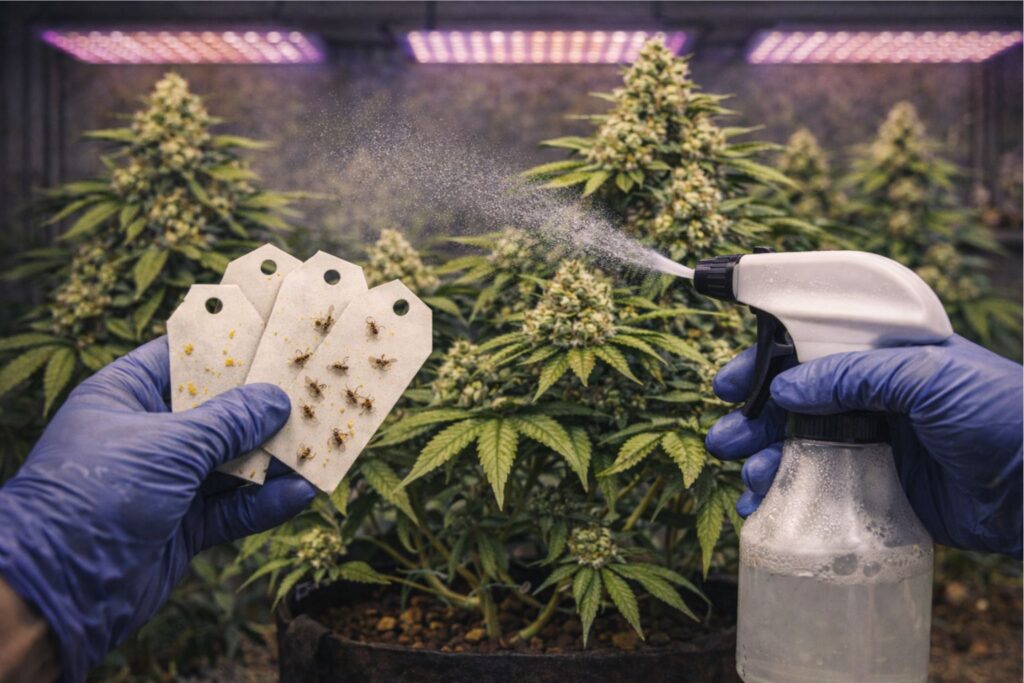
My baseline IPM routine:
- Weekly leaf checks with a flashlight
- Sticky cards near canopy and pots
- Clean floors and remove dead leaves fast
- Avoid bringing outdoor plants into the indoor room
Catching pests early keeps options simple.
Afpak harvest and cure steps that protected quality
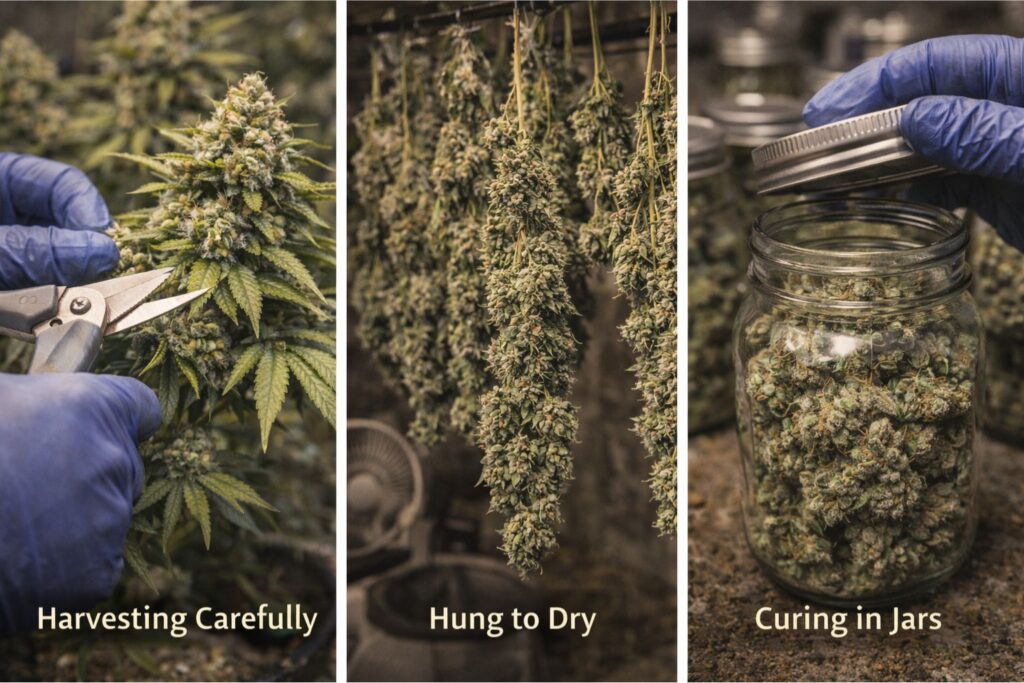
My Afpak harvest and cure steps:
- Cut branches and remove big fan leaves
- Hang at 16–20°C (61–68°F) and 55–60% RH
- Gentle air exchange, no fan blasting buds
- Dry 10–14 days when possible
- Jar when stems snap and buds aren’t brittle
- Burp daily for a week, then every few days
- Cure at least 21 days for best aroma
Those Afpak harvest and cure steps made the Afpak terpene breakdown sharper and the smoke smoother.
Afpak yield expectations: realistic outcomes and what changes them
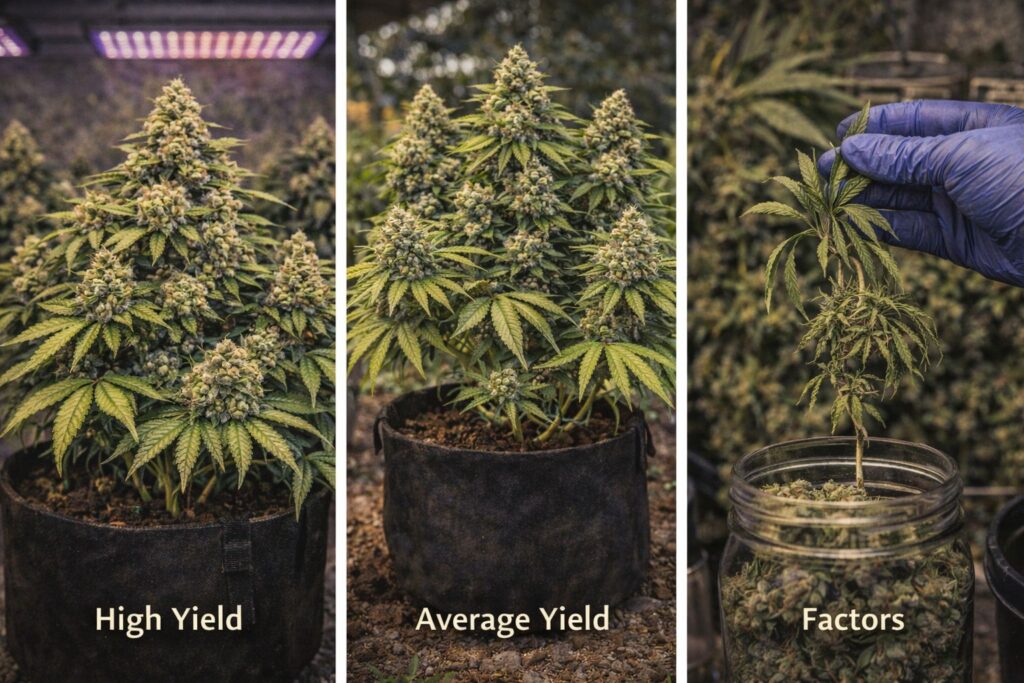
My Afpak yield expectations are solid, not outrageous. The best plant produced trim-friendly buds. The tallest plant could have yielded more if I had leveled the canopy earlier.
What improved Afpak yield expectations for me:
- Even canopy and consistent PPFD
- Stable root zone moisture
- Not chasing high EC when the plant is already healthy
- Strong airflow late in flower
Genetics matter, but Afpak yield expectations rise fastest when environment and training are consistent.
Seed shopping and planning your run
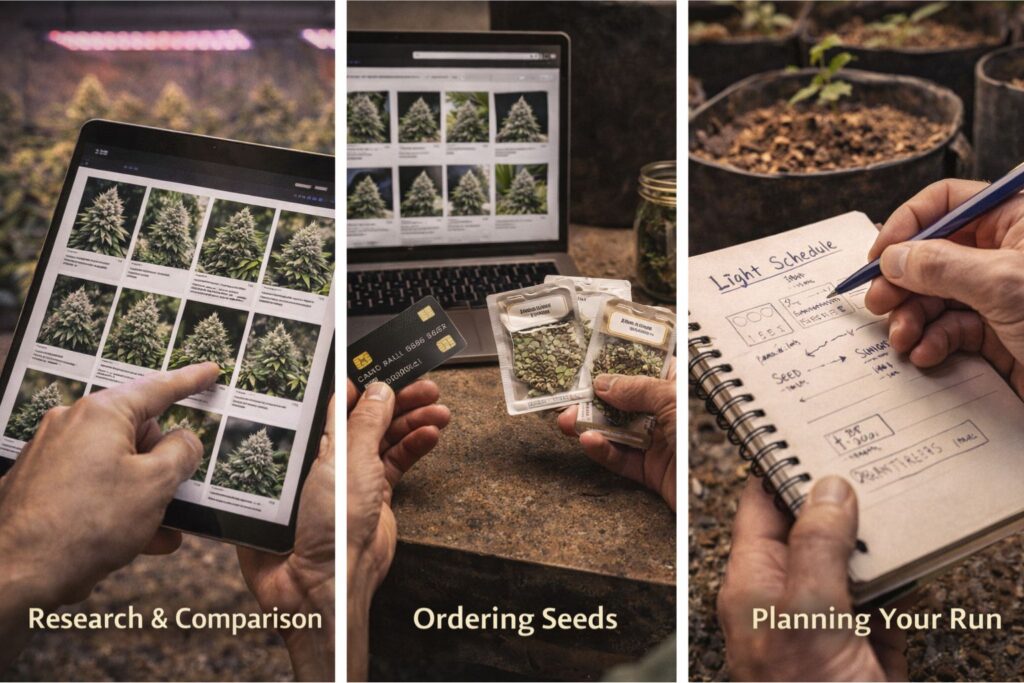
When you buy cannabis seeds online, look for clear lineage notes and realistic finishing times. If you’re comparing feminized seeds, check the breeder’s consistency claims and read grow logs in climates like yours. Many people also ask whether Afpak runs more indica, sativa, or hybrid; in structure it leaned indica for me, but the feel can shift with harvest timing.
When I’m choosing where to order seeds, I also look at practical details: seed delivery times to my region, how packaging is handled, and whether the seller explains storage and handling. If you’re comparing autoflowering versus photoperiod options, remember that photoperiod plants give you control over veg time, which helps when you’re dialing in training or trying to fill a net evenly.
This isn’t legal advice, but always consider grow laws by region before starting a cannabis grow.
FAQ
Is this Afpak Strain Review describing a “heavy” strain?
In this Afpak Strain Review, most sessions leaned physically relaxing, especially later harvest. Start small, because potency and tolerance vary.
What is the Afpak flowering window indoors?
My Afpak flowering window was typically 8–10 weeks after the flip. Different Afpak phenotypes can finish a bit earlier or later.
How do I keep the Afpak terpene breakdown strong?
Slow drying and a patient cure. The Afpak harvest and cure steps matter more than additives if your goal is flavor.
Soil or coco for a first run?
Soil is forgiving if you avoid overwatering. Coco can grow fast, but respect the Afpak coco EC range and water consistently.
Final grower notes
To wrap up this Afpak Strain Review, I’d run it again for the Afpak resin production and the classic profile. Follow the Afpak indoor climate targets, use a simple Afpak canopy training plan, and don’t rush the Afpak harvest and cure steps. If you do that, your Afpak yield expectations should land in a realistic, satisfying place, with clean Afpak flavor notes and a steady Afpak effects report.
For a complete directory of cultivars, visit our Cannabis Strain Reviews.
