Table of Contents
I’m writing this Afgoo Strain Review from the point of view of a cultivator who has taken this cultivar from seedling to cured jars more than once. I’ve run it under modern LEDs, in both soil-based mixes and coco/perlite, and I’ve learned the same lesson each time: the plant is forgiving in veg, but it asks for discipline in flower because the buds can tighten up fast. If you like a calm, resin-forward marijuana experience and you’re willing to manage airflow and humidity, this one can be rewarding.
I’ll separate what I observe (structure, aroma, effects) from what I measure (PPFD, VPD, EC), and I’ll be clear about the trade-offs.
Genetics and what I actually see in the grow
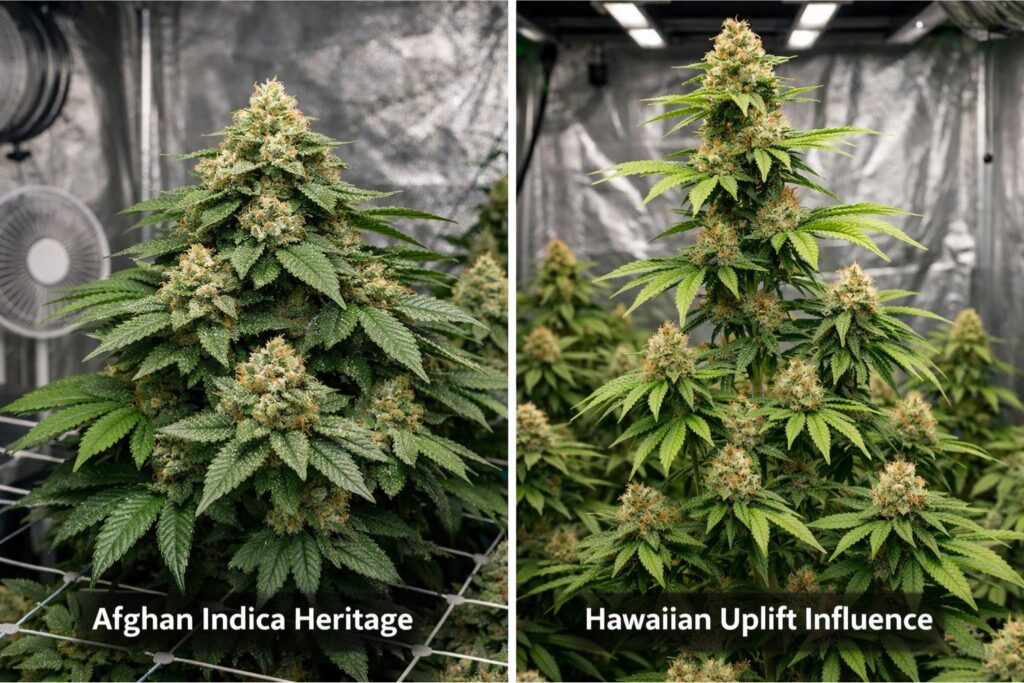
Most growers describe the background as an Afghan-leaning indica crossed with a Hawaiian-leaning sativa. I’m not here to argue pedigrees; I’m here to tell you how those traits show up in the room.
In my runs, the Afghan indica heritage shows up as a compact, sturdy plant that pushes sticky resin late in bloom. The Hawaiian uplift influence shows up as slightly more head lift and a brighter top note on some phenotypes.
Because this is commonly grown from seed, phenotype variation is real. I’ve seen compact plants that stay short, and I’ve seen medium plants that stretch 1.5–2x after the flip. If you can clone, keep a cut of the plant you like. If you can’t, plan your space for variation.
Plant structure, stretch, and “what it looks like” week to week
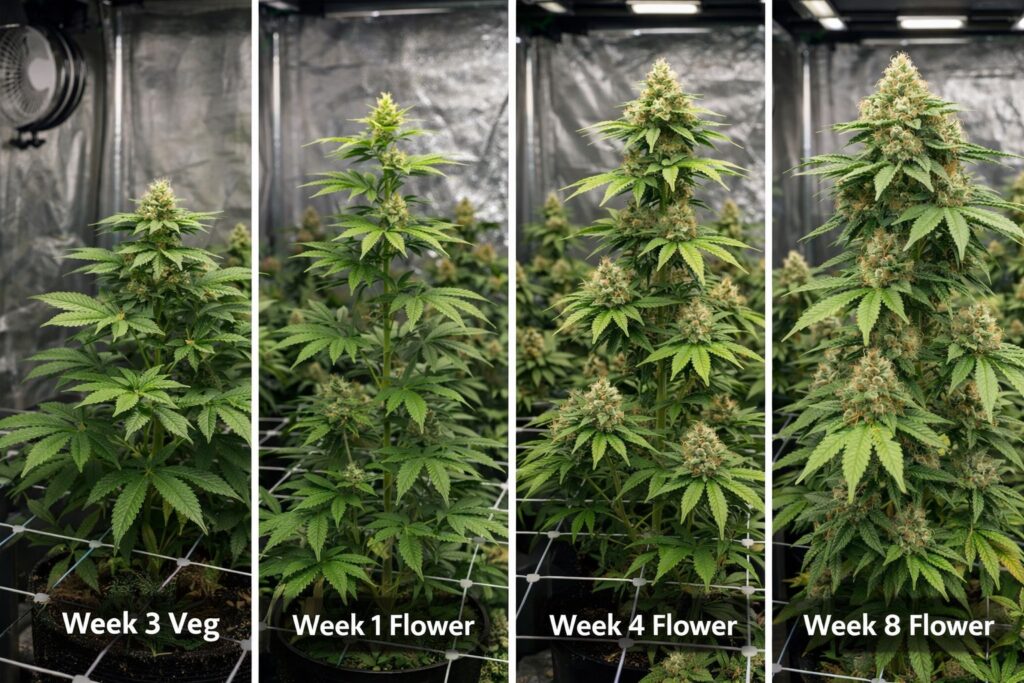
Vegetative growth is straightforward and the plant takes topping well. The key is to open the center early so airflow for tight flowers is never an afterthought.
Indoor environment targets I use
I aim for repeatable, not extreme. When people ask about indoor cannabis light targets, I tell them the same thing: the plant needs light that matches your temperature, humidity, and feeding. If you push light without matching the rest, you’ll chase issues.
Light intensity and schedule
For indoor cannabis light targets under LEDs, these are my typical ranges:
- Seedling: 150–250 PPFD
- Veg: 350–600 PPFD
- Flower (mid-bloom): 700–900 PPFD if leaf health is excellent
- Flower (finish): 650–850 PPFD to reduce stress and foxtailing
Schedule:
- Veg: 18/6
- Flower: 12/12
In small tents, training for low ceilings and a slow ramp after the flip keep stress down.
Temperature, humidity, and VPD
For weed VPD targets, I use simple bands:
- Veg: 24–27°C with 60–70% RH (about 0.9–1.1 kPa)
- Early flower: 24–26°C with 50–55% RH (about 1.1–1.3 kPa)
- Late flower: 22–25°C with 40–45% RH (about 1.3–1.6 kPa)
Those weed VPD targets keep transpiration steady and help prevent moisture pockets inside thick flowers. In late bloom, airflow for tight flowers becomes the priority: oscillating fans for leaf movement, good exhaust, and no stagnant corners.
Feeding and medium choices: soil vs coco
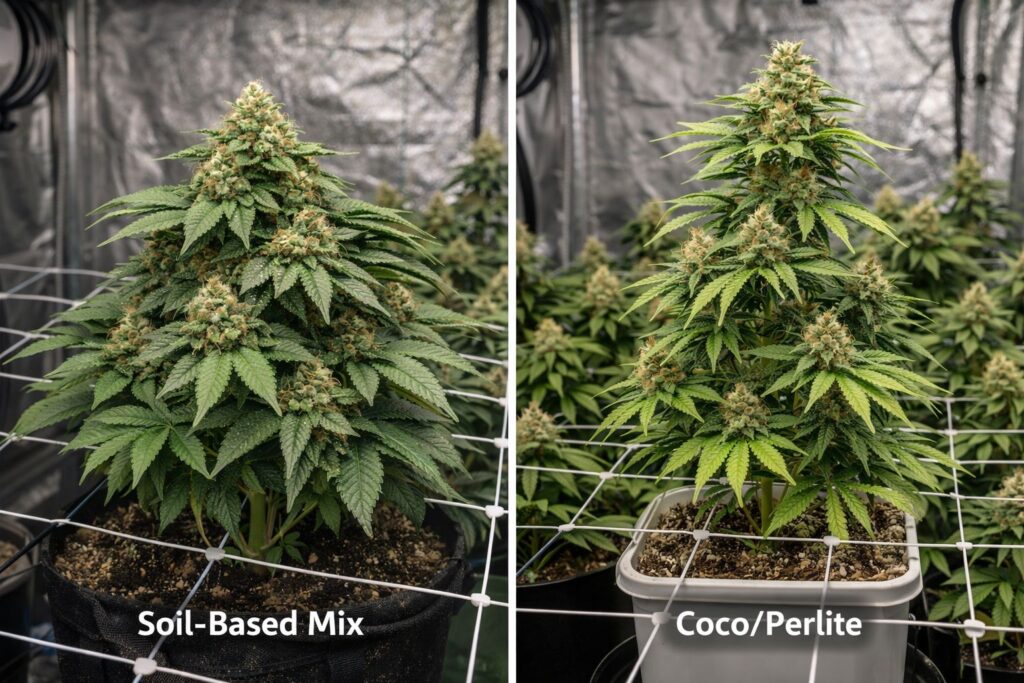
I’ve had success in both, but I treat them differently.
Soil-based mixes
Soil is forgiving if you avoid overwatering. I transplant up once, top-dress before flower and again around week 3–4, and ease off nitrogen late bloom.
Coco/perlite
Coco is more hands-on. I start conservative, then adjust within a sensible flowering EC range based on tip burn and runoff trends.
For the flowering EC range, I start conservative and watch tips, leaf shine, and runoff trends. My usual flowering EC range looks like this:
- Veg: EC 1.4–1.8
- Early flower: EC 1.8–2.1
- Mid flower: EC 2.0–2.3 if the plant is drinking well and leaves stay clean
- Finish: EC 1.6–2.0 depending on how the plant is responding
That flowering EC range is a guide, not a rule. The plant will tell you quickly if you’re pushing it. If tips burn, I lower EC slightly and keep watering frequency steady instead of making big swings.
Training: keeping the canopy even in tight spaces
This cultivar is friendly to training for low ceilings. I top once, tie branches outward to open the center, and support colas with a net or stakes.
Aroma and flavor notes from my jars
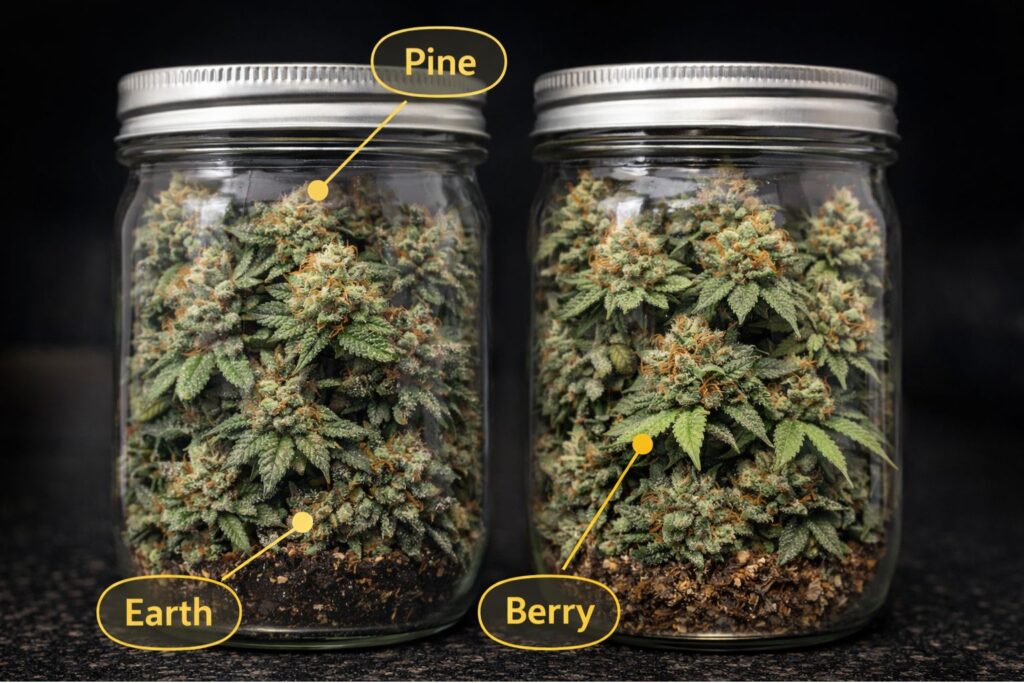
I’m cautious with tasting language because cannabis is subjective, and drying changes the profile drastically. Still, I consistently find a pine earth berry aroma when the plant is finished properly and cured patiently.
What I notice through the cycle:
- Mid flower: earthy base starts to show, with a sharp green edge if the room is humid
- Late flower: pine pushes forward, with a sweeter hint underneath on some phenos
- After cure: the pine earth berry aroma becomes smoother and more layered
On the palate, I get a resinous wood note and a gentle sweetness that reminds me of berries, especially after the slow dry and cure method is done correctly. If you rush the dry, you’ll mute those notes and end up with a flatter, harsher smoke.
Effects: my personal timeline and what I’d expect
This is not medical advice. Effects depend on dose, tolerance, and your setting.
For me, the experience usually comes in phases:
- 0–20 minutes: a soft mental lift, calm mood, and a gentle “unclenching” feeling
- 20–90 minutes: body relaxation builds; I’m less motivated for complex tasks
- 90+ minutes: the heavier side can show up, especially if I used more than a small amount
On the right phenotype, the Hawaiian uplift influence adds a cleaner mental edge, but higher doses still lean sedating for me.
Common downsides I’ve seen with this weed:
- dry mouth and dry eyes
- if you overdo it, some people feel heavy or uneasy
Risk management: airflow, pests, and mold
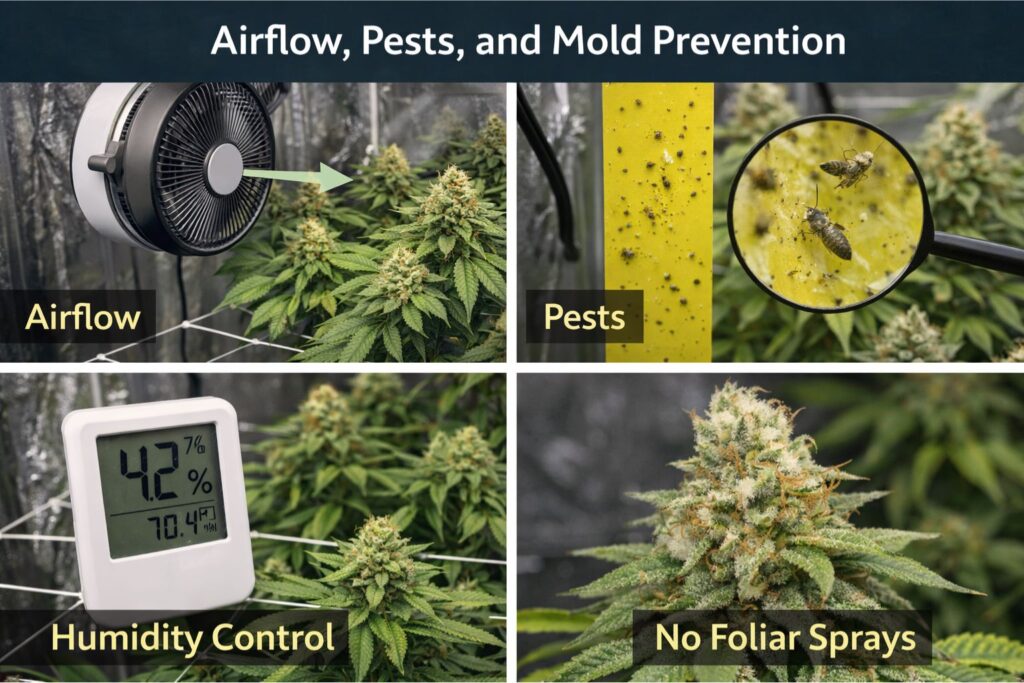
This cultivar’s structure makes airflow for tight flowers non-negotiable. My rule is simple: if the center feels still, fix it now, not later.
My checklist is simple: steady exhaust, gentle oscillation through the canopy, late-flower RH aligned with weed VPD targets, and no wetting buds once flowers form.
If you want an IPM routine, I stick to prevention in veg: cleanliness, inspection, and sticky traps. Once buds set, I rely on environment and early detection, not reactive spraying.
Harvest timing and how I decide
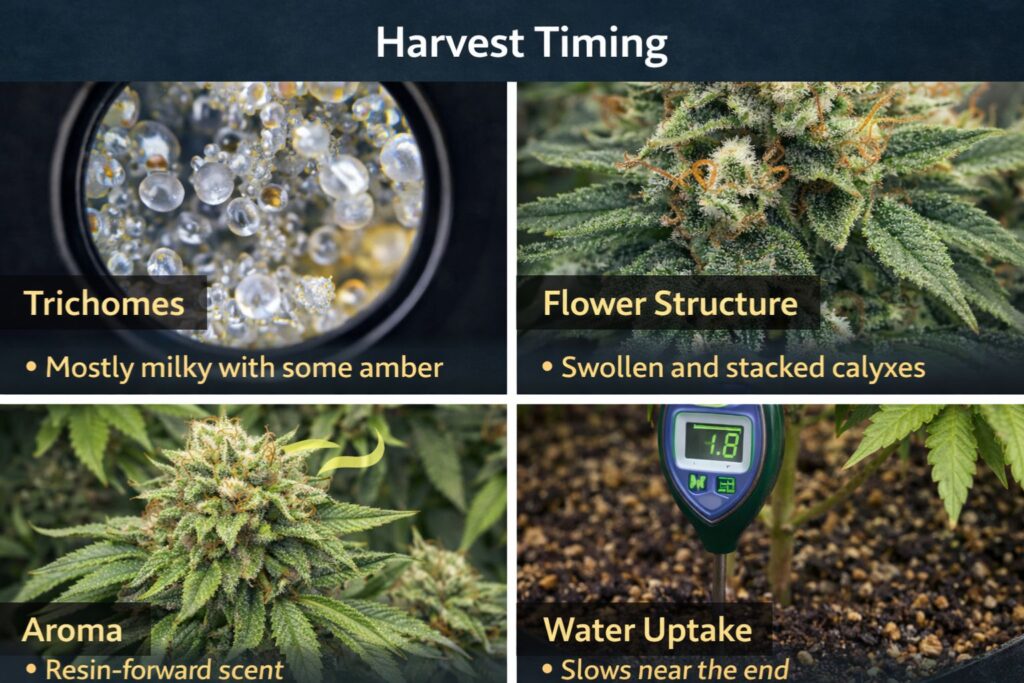
I don’t harvest by calendar alone. I harvest by ripeness.
What I look for:
- trichomes mostly milky with some amber starting
- calyxes swollen and stacked rather than thin and spiky
- aroma shifts from “green” to resin-forward
- the plant slows water uptake near the end
If you harvest early, you often miss depth in the pine earth berry aroma and the effect can feel shorter. If you harvest very late, the body side can dominate and the flavor can lose some brightness.
Drying and curing: my repeatable process
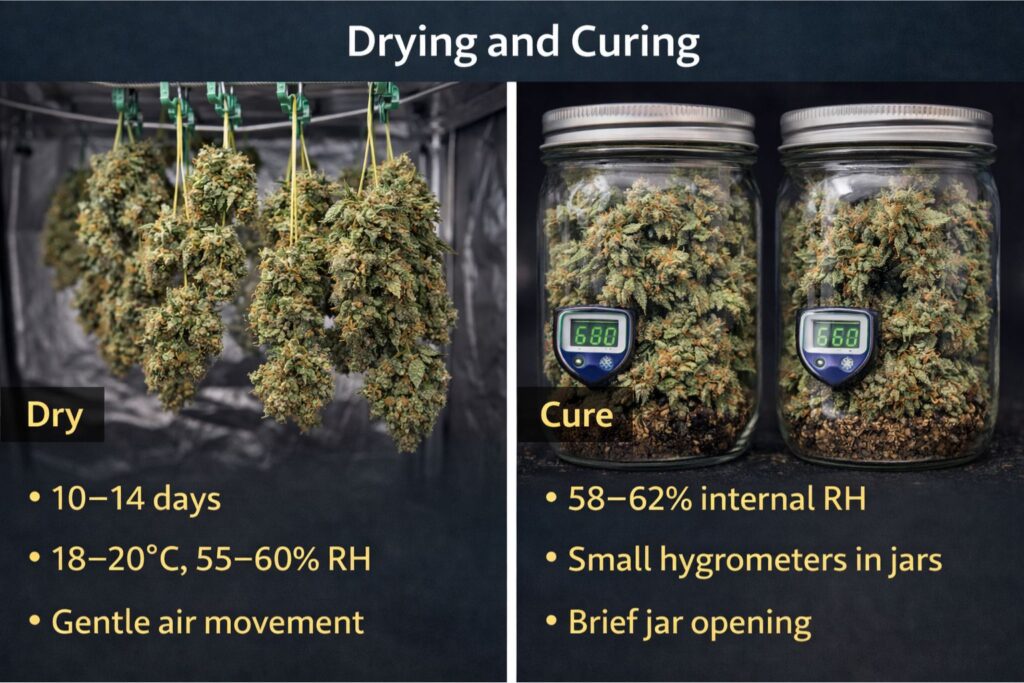
The slow dry and cure method is what protects the taste. Tight flowers hold moisture inside, so fast drying can trap chlorophyll and create a dull, rough smoke.
My dry room targets:
- 18–20°C
- 55–60% RH
- gentle air movement (no fan blasting the buds)
I usually dry 10–14 days depending on density. Then I jar, add a small hygrometer, and “burp” briefly. I aim to keep jars around 58–62% internal humidity. The slow dry and cure method usually pays off after 2–4 weeks, with improvements continuing if storage is cool and dark.
Seed-shopping notes without the hype
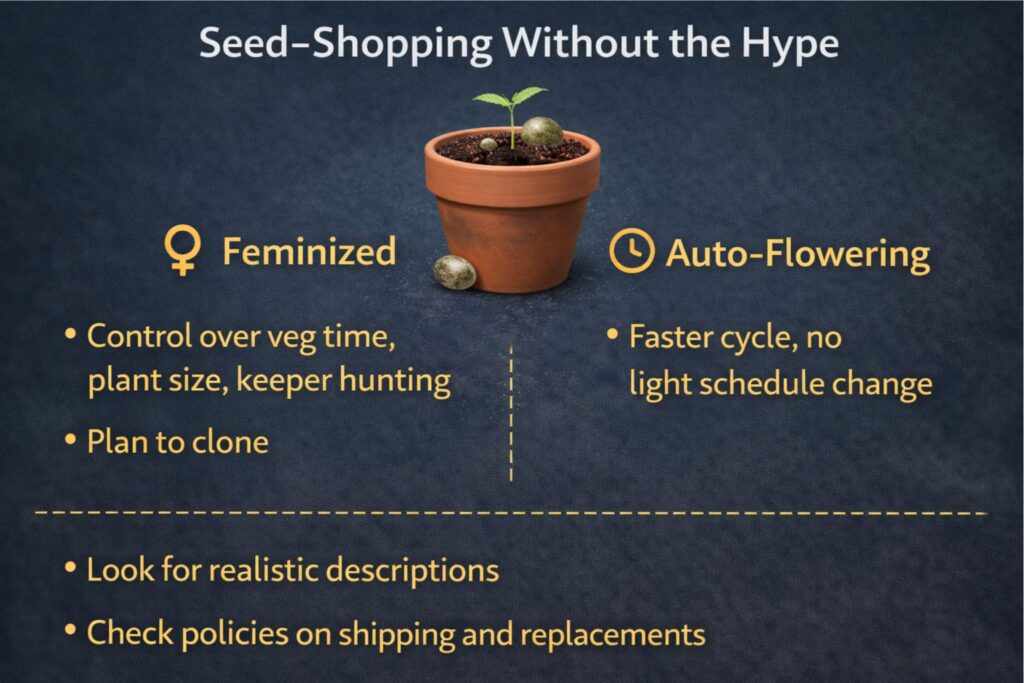
If you’re buying genetics, ask yourself what problem you’re solving: space, speed, or consistency. I’m not giving legal advice, and grow laws vary by region, so check your local rules before you order or cultivate.
Here’s how I think about buying feminized cannabis genetics:
- Feminized is best when you want control over veg time, plant size, and keeper hunting.
- Auto-flowering is best when you want a faster cycle and don’t want to change the light schedule.
Buying feminized cannabis genetics also makes more sense if you plan to clone. If you can’t clone, you can still run seeds, but expect variation. When you shop, look for realistic descriptions, clear policies, and honest information about shipping and replacement practices.
Practical tips that improved my results
These are simple, but they matter:
- Hit your weed VPD targets before you increase light intensity.
- Keep indoor cannabis light targets realistic for your temperature and humidity.
- Respect the flowering EC range; small adjustments beat big swings.
- Prioritize airflow for tight flowers as soon as you see buds firming up.
- Use training for low ceilings to keep a flat canopy and prevent hot spots.
Troubleshooting notes from my last run
When something looks off, I correct the environment before I chase nutrients or additives. It keeps the plant stable and protects the pine earth berry aroma in the jar.
Things I watch for:
- Leaf edges lifting under LEDs: I lower PPFD 10–15% and confirm weed VPD targets are steady.
- Burnt tips early in bloom: I reduce the flowering EC range slightly and keep irrigation consistent.
- Buds that feel too humid inside: I thin a few inner leaves, increase circulation, and treat airflow for tight flowers like a requirement.
- Aroma that stays sharp and green late flower: I check dryback patterns and plan the slow dry and cure method before harvest day.
For phenotype hunting, I label every plant and take a quick weekly photo. It’s the easiest way to connect Afghan indica heritage structure with the Hawaiian uplift influence you notice later.
FAQ
How do I germinate marijuana seeds reliably?
I keep it basic: warm roots, gentle moisture, and patience. I soak 12–18 hours, then move to a moist starter plug. Once the taproot shows, I plant into the medium and keep the root zone warm (around 24–26°C). Most failures I see come from overwatering or cold media.
What light schedule should I use for photoperiod cannabis?
I veg at 18/6 and flower at 12/12. With indoor cannabis light targets, I raise PPFD gradually after the flip. If leaves curl or bleach, I reduce intensity and check temperature and weed VPD targets.
How can I prevent mold in dense flowers?
Control humidity and move air through the canopy. Keep late-flower RH aligned with weed VPD targets, thin the center before flowers harden, and keep airflow for tight flowers constant. Mold is usually an environment problem, not a genetics surprise.
What should I look for at harvest time?
I use magnification and harvest when trichomes are mostly milky with a touch of amber and the calyxes are swollen. I also trust my nose: when the pine earth berry aroma turns deeper and resin-forward, it’s usually close.
Closing notes
If you like an indica-leaning experience with a bit of brightness, this cultivar can fit the bill. The Afghan indica heritage is obvious in the structure and late resin, while the Hawaiian uplift influence can add a cleaner mental edge on the right phenotype. The keys are not secret: hit your indoor cannabis light targets, keep weed VPD targets steady, respect a sensible flowering EC range, and commit to the slow dry and cure method. Do that, and you’ll usually be rewarded with a smooth, resin-heavy profile that holds its character well after curing.
For a complete directory of cultivars, visit our Cannabis Strain Reviews.
