Table of Contents
I’m publishing this Afghani Bullrider Strain Review on January 9, 2026. I’ve run this line from seed in a controlled indoor environment, kept notes on climate and nutrition, and compared phenotypes side by side. Even when a cultivar name stays the same, plants can differ in stretch, leaf shape, and finish. In my experience, the consistent through line here is a classic Afghani-leaning character: sturdy growth, fast resin development, and an aroma that settles into an Afghani hash terpene profile after cure. When harvested fully mature, I’d describe it as a comfortable, end-of-day marijuana option with night-cap indica effects.
Genetics and what the name can (and can’t) guarantee

Many listings describe this cultivar as Afghani-rooted. “Afghani” often signals broadleaf indica traits and a resin-forward finish, but seed-market naming is not always standardized. For this Afghani Bullrider Strain Review, I’m not claiming a single definitive pedigree unless your chosen breeder provides it. What I can report is how the plants behaved in my room and what that suggests for growers.
If you’re comparing feminized seeds versus regular seeds, remember that “feminized” affects sex expression, not phenotype consistency. You can still see variation. If your goal is repeatability, plan to pop multiple seeds and keep detailed notes so you can identify the keeper.
What I observed: structure, vigor, and canopy behavior
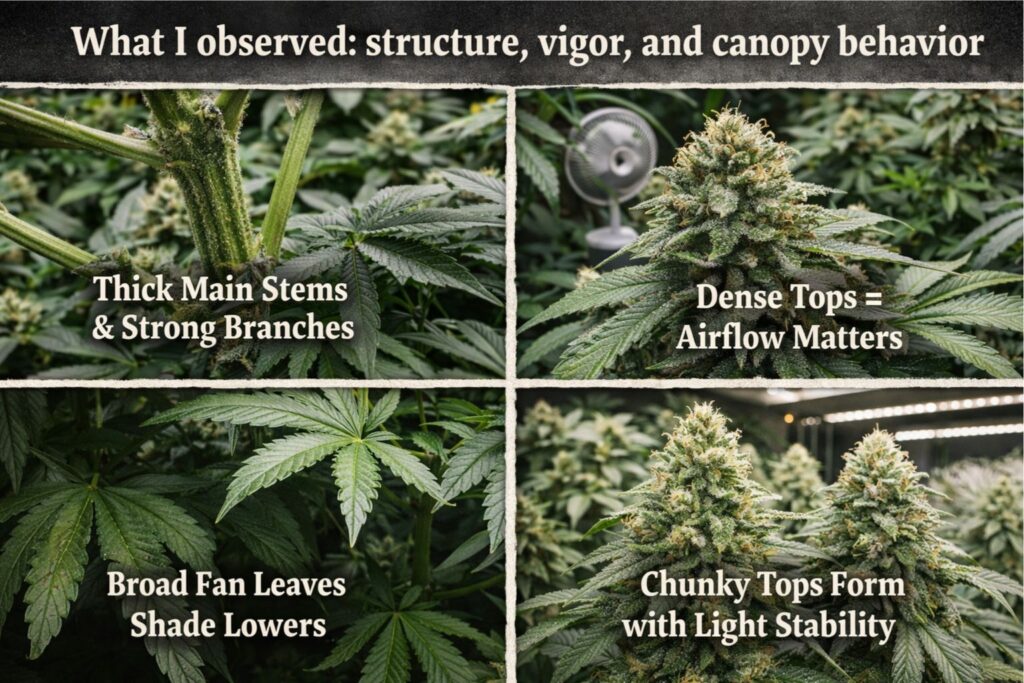
Across my runs, plants stayed medium height with a moderate stretch in early bloom. Node spacing was tighter than many hybrids I’ve grown, making training easier but increasing canopy density overall. That density is why I recommend a tight cola airflow plan early, not as a late fix.
Key growth traits I noted:
- Thick main stems and strong lateral branching
- Broad leaves that can shade lower sites quickly
- Flower sets that stack into chunky tops if light and VPD are stable
- Resin that develops early on sugar leaves, increasing trim time
Because the plant builds mass tightly, I lean on a tight cola airflow plan and sensible pruning to keep humidity pockets from forming inside the canopy.
Aroma and flavor: my jar notes, not marketing copy
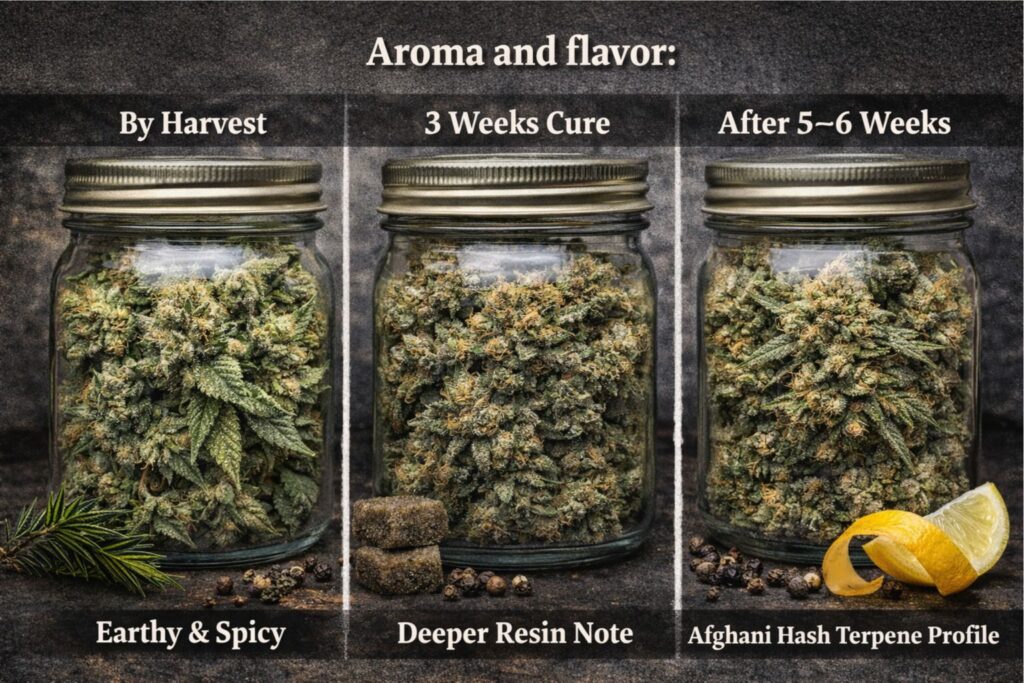
The first thing that stood out during late flower was the base “hashy earth” backbone. After a proper cure, that translated into an Afghani hash terpene profile: earthy resin, pine, and a dry spice note that reminded me of cracked pepper. One phenotype carried a subtle citrus peel edge, but the Afghani hash terpene profile remained dominant.
How it came across for me:
- Aroma at harvest: damp earth, pine, spice
- Aroma after 3 weeks: deeper resin, less sharpness
- Aroma after 5–6 weeks: the Afghani hash terpene profile is clearer and smoother
Flavor depends heavily on your dry and cure. With a slow dry and cure method, the smoke felt cleaner and the spice note didn’t bite as much on the finish.
Effects: realistic expectations and how harvest timing changes the ride

Everyone responds differently to weed, and dose and setting matter as much as cultivar. In my own sessions, the onset was calm and gently uplifting, followed by a heavier body settle. When I let plants finish fully, the experience leaned toward night-cap indica effects: a relaxed posture, fewer racing thoughts, and a strong “wrap it up” signal for the day.
A few honest notes:
- Earlier harvest (less mature): lighter body load, more functional
- Later harvest (more mature): stronger night-cap indica effects and longer duration
- Higher dose: more sedation and less interest in task switching
I’m not presenting this as medical advice, and I avoid making health claims. Think of these as user-experience notes from my runs.
My indoor grow setup and the targets that worked
I grew this cultivar under LED in a tent environment. If you want to replicate results, focus on measurement and repeatability. I use a meter for light, I log temperature and RH, and I mix feed based on EC.
Light intensity and photoperiod
I ran 18/6 in veg and 12/12 in flower. Rather than guessing, I built my plan around a PPFD range for LED tents and adjusted fixture height and dimming to keep the canopy even.
My practical PPFD range for LED tents:
- Veg: 350–550 PPFD
- Early flower: 600–750 PPFD
- Mid flower: 750–900 PPFD (ambient CO2)
- Late flower: I hold steady and let ripening happen
If you push above this PPFD range for LED tents without excellent climate control, you can drive stress faster than yield.
Temperature, humidity, and VPD
For dense indica-leaning plants, I treat climate as the main yield lever. I set dehumidification around flowering VPD targets instead of chasing a single RH number. In my room, stable nights made a bigger difference than perfect days.
Ranges that stayed productive for me:
- Veg: 24–27°C lights on, 60–70% RH
- Flower: 23–26°C lights on, 45–55% RH
- Late flower: 21–25°C lights on, 40–50% RH
Those ranges align with common flowering VPD targets. When I drifted far outside flowering VPD targets, I saw slower stacking or leaf stress, especially near the tops.
Feeding approach: soil, coco, and simple numbers
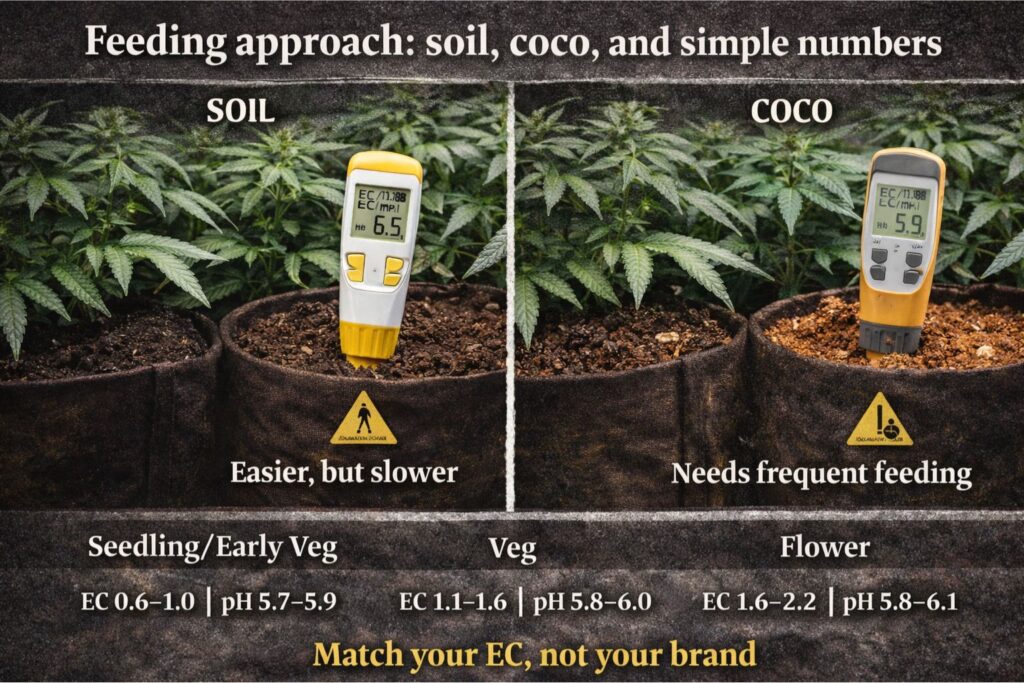
I’ve run this style of plant in soil and in coco. Soil is forgiving and can produce great flavor. Coco is faster but demands consistency, especially with irrigation frequency.
For coco, I lean on coco EC and pH targets and confirm with runoff. Here are the general numbers I used as starting points:
- Seedling/early veg: EC 0.6–1.0, pH 5.7–5.9
- Veg: EC 1.1–1.6, pH 5.8–6.0
- Flower: EC 1.6–2.2, pH 5.8–6.1
The main lesson: coco EC and pH targets matter more than brand choice. If leaves darken too much or tips burn, I reduce EC and check runoff before changing anything else.
If you grow in soil, use lower feed strength and focus on watering rhythm. Overwatering is the fastest way to slow a vigorous plant.
Training and pruning: keeping it open without over-stripping
Because these plants can stay squat, I prefer low-stress training for short plants instead of aggressive topping and heavy pruning. My standard approach is to top once, spread branches, and then remove unproductive lower growth.
My routine:
- Top above node 4 or 5
- Tie down main branches over 7–10 days
- Clean the bottom third before stretch ends
- Light leaf thinning to keep airflow moving
The timing matters. For me, low-stress training for short plants is the easiest way to keep tops even. I use week 3 defoliation timing as my main window to open the plant after stretch slows and bud sites are set. When I followed week 3 defoliation timing, I had fewer humidity issues and more even ripening. If I missed week 3 defoliation timing, I ended up fighting airflow later.
Airflow and IPM: the unglamorous part that saves harvests
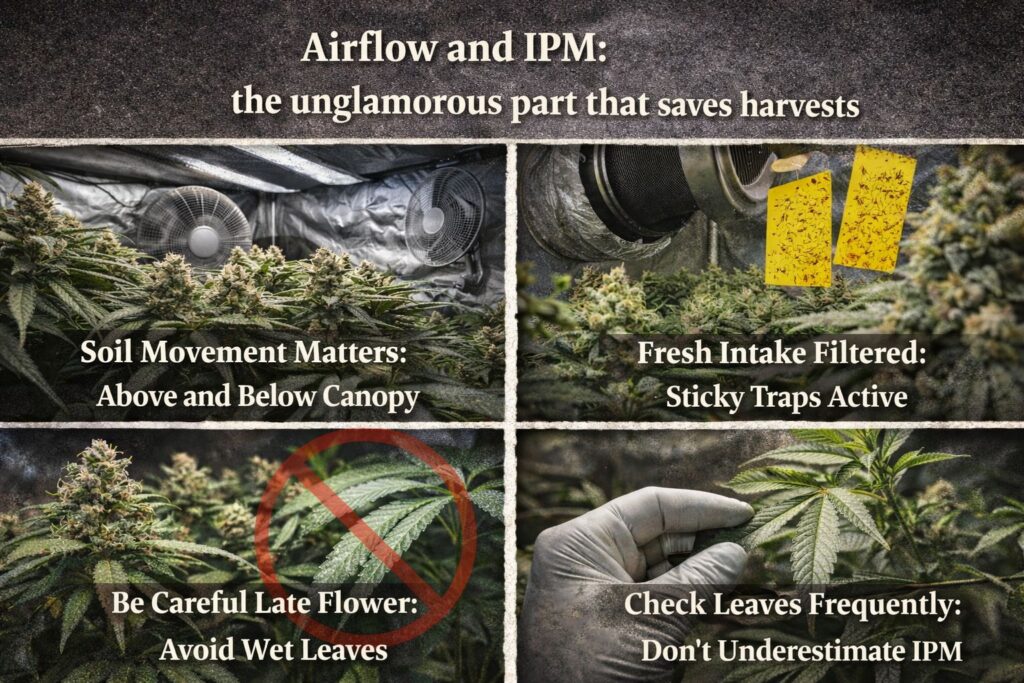
Dense flowers are great until they trap moisture. My tight cola airflow plan is simple: keep air moving above and below canopy, avoid overcrowding, and control humidity at lights-off. I also treat cleanliness as part of integrated pest management.
My checklist:
- Two oscillating fans (one below canopy, one above)
- Fresh intake filtration
- Sticky traps and weekly leaf checks
- No foliar sprays late in flower unless you truly know the inputs
A tight cola airflow plan becomes more important in late flower when buds swell and transpiration changes.
Harvest timing: what I look for before I chop
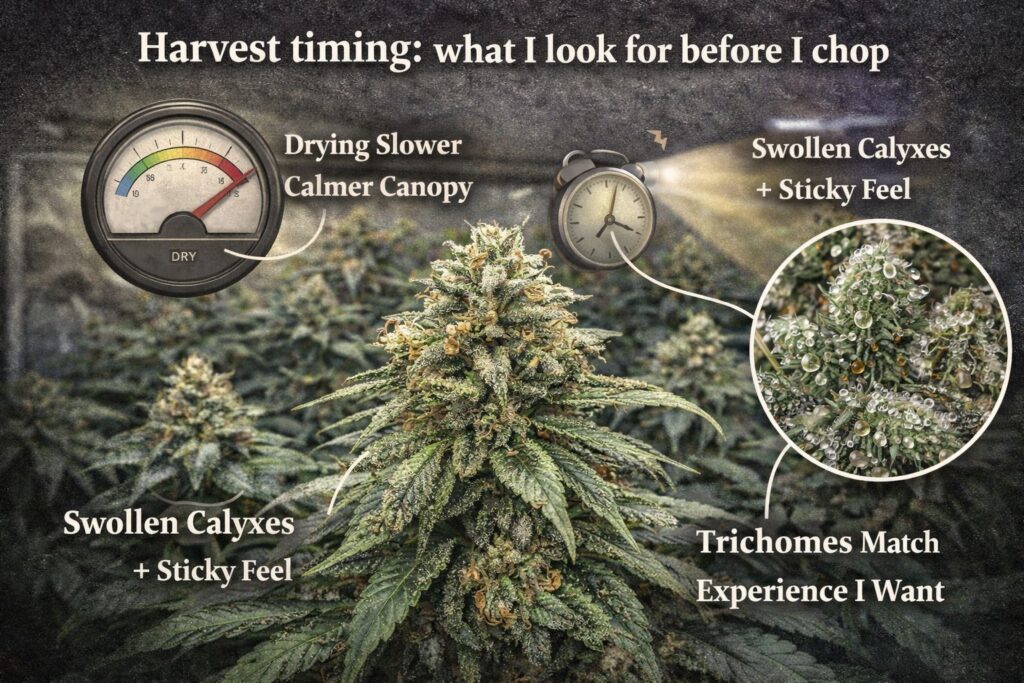
I harvest by plant signals, not a calendar. With this cultivar, the last 7–10 days can decide whether you get lively or heavier night-cap indica effects.
My harvest cues:
- Slower drinking and a calmer canopy
- Stronger aroma, especially after lights-on
- Swollen calyxes and a sticky feel on nearby leaves
- Trichomes that match the experience you want
Drying and curing: where the flavor is won or lost
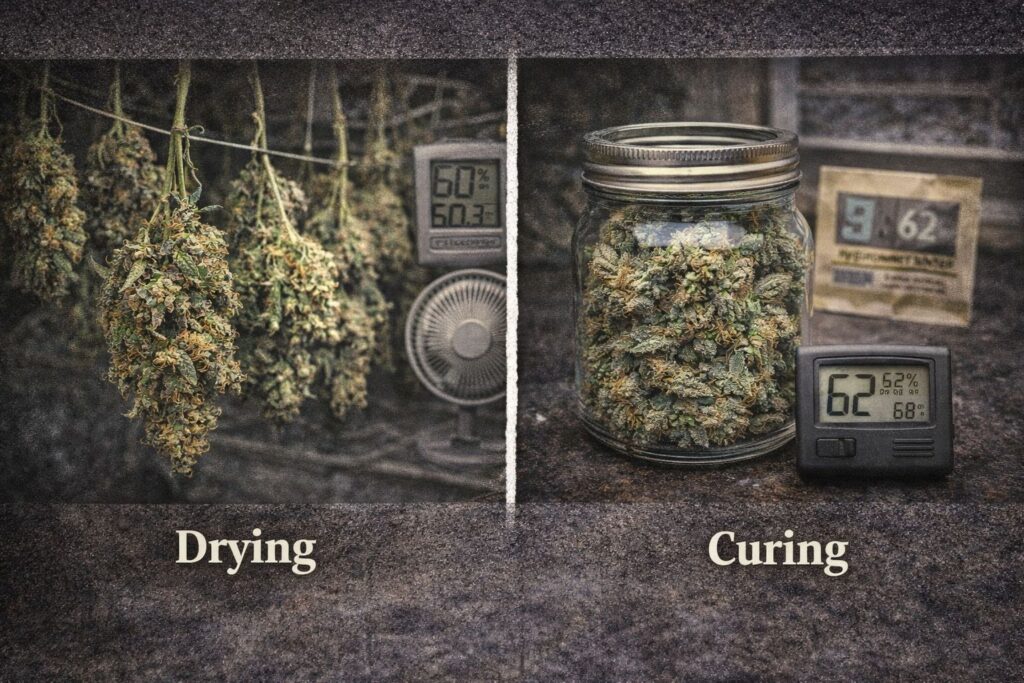
If you want the Afghani hash terpene profile to show up clearly, drying is not the place to rush. I use a slow dry and cure method because it reduces harshness and keeps the spice note clean.
My reliable routine:
- Hang branches in darkness at 18–20°C and 55–60% RH
- Aim for 10–14 days of dry time
- Dry trim once small stems snap instead of bending
- Jar and stabilize moisture gradually over the first week
A slow dry and cure method is also where I notice the biggest improvement in smoothness. By week five in jars, the Afghani hash terpene profile is more defined and less “green.”
Buying seeds and selecting a pack without overthinking it

Many shoppers search phrases like “buy cannabis seeds online” or “best seeds for indoor weed,” but the best approach is to match genetics to your environment and your skill level. I’m not giving legal advice, and grow laws vary by region, so always confirm local rules before ordering or cultivating.
When I’m choosing seed packs online, I check:
- Breeder transparency and consistency
- Storage and shipping practices
- Clear notes on photoperiod vs autoflowering
- Whether the listing aligns with the effects and structure I want
If you’re choosing seed packs online, don’t ignore storage at home. Heat and humidity swings reduce germination rates.
Simple germination checklist I use
- Keep temps around 22–25°C
- Don’t soak too long; avoid stagnant water
- Maintain moisture, not saturation
- Label every pot so phenotype notes stay accurate
FAQ: common questions I see from growers and shoppers
Is this more indica or sativa?
Based on structure and finish, it reads indica-leaning for me. In this Afghani Bullrider Strain Review, the most mature flowers delivered clear night-cap indica effects.
What light intensity should I aim for in a tent?
Start with a PPFD range for LED tents that your climate can support. If you can’t hold temperature and RH steady, lower PPFD first. The PPFD range for LED tents I listed above is a realistic, repeatable baseline.
Can I run it in coco without problems?
Yes, but keep irrigation consistent and follow coco EC and pH targets. When coco EC and pH targets drift, problems can look like deficiencies even when nutrients are present.
When should I defoliate?
I prefer week 3 defoliation timing in flower. Week 3 defoliation timing opens bud sites without stalling late ripening.
How do I keep mold risk low?
Use a tight cola airflow plan, keep humidity stable at night, and avoid overcrowding. A tight cola airflow plan is easier to set up early than to fix late.
How do I preserve flavor?
Commit to a slow dry and cure method. The slow dry and cure method is the difference between flat smoke and a clear Afghani hash terpene profile.
Closing thoughts
If you want a classic, resin-forward cultivar and you can manage canopy density, this is a rewarding plant to grow. I wrote this Afghani Bullrider Strain Review so you can set expectations, dial the environment, and make smarter decisions when choosing seed packs online for your next cannabis run.
For a complete directory of cultivars, visit our Cannabis Strain Reviews.
