Table of Contents
For cannabis and marijuana growers, consistency beats luck, and records turn guesswork into weed harvests.
I wrote this Afghan Skunk Strain Review the same way I keep my grow log: what I did, what I measured, what I’d change next run. I have popped multiple seeds sold under the Afghan Skunk name, and the plants were similar enough to share a backbone, but different enough that Afghan Skunk phenotype variation matters. If you are reading this because you want a cannabis strain review that feels practical, my goal is to give you settings and habits you can actually copy, whether you grow weed in soil, coco, or hydro.
Genetics and what I look for in early growth
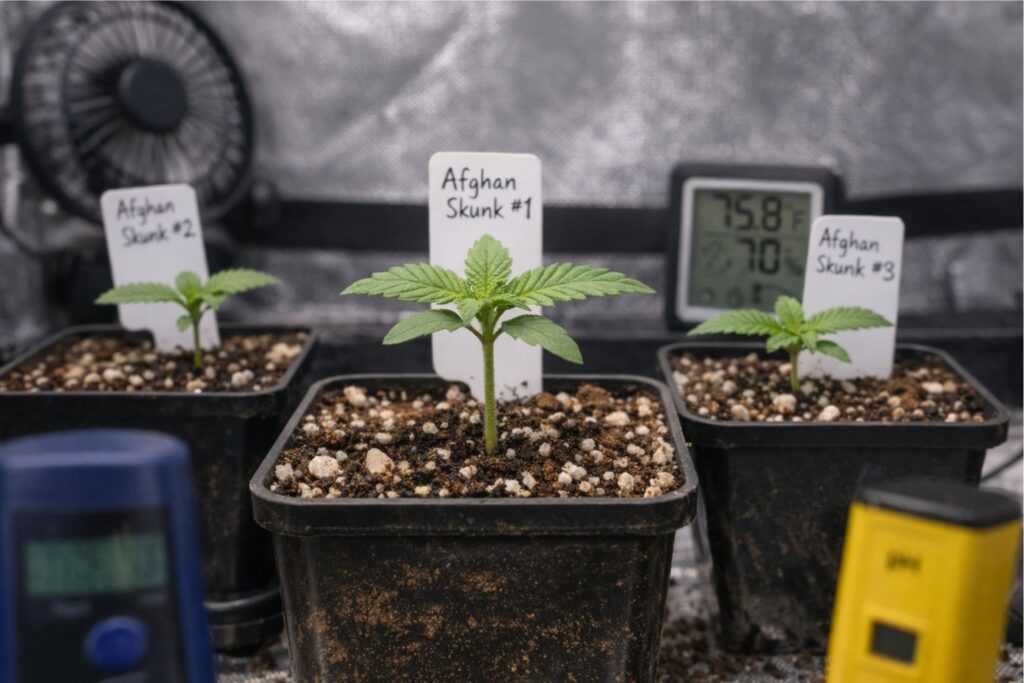
Most Afghan Skunk lines are marketed as an Afghani-leaning hybrid with classic Skunk influence. In my tents, that translated into a tough main stem, broad leaves early, and a steady stretch after the flip. Because breeder sourcing can differ, I treat any “Afghan Skunk” pack as a hunt. I track Afghan Skunk phenotype variation from day one: seedling vigor, node spacing, and how quickly the plant rebounds after training.
My quick seedling checklist:
- Strong upright posture by day 5–7 from sprout
- Even leaf color without clawing
- Roots filling the starter cube before up-potting
Those notes later connect directly to Afghan Skunk yield range and the way the Afghan Skunk terpene profile develops in cure.
Afghan Skunk germination steps I use for high hit rates
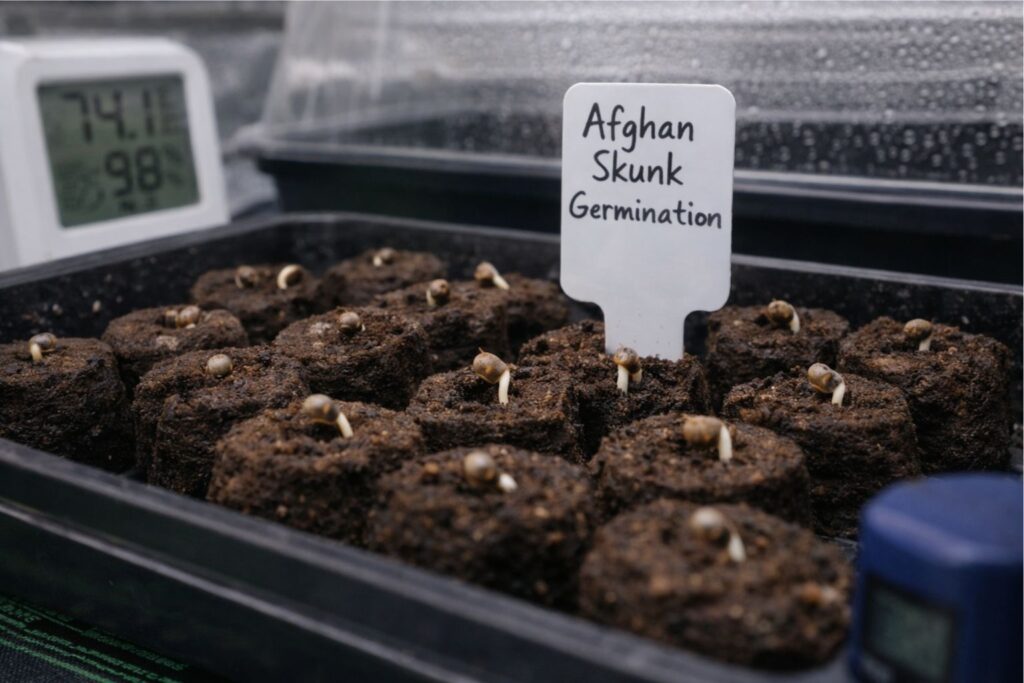
I have tested paper towel, direct-to-soil, and starter plugs. The most repeatable Afghan Skunk germination steps for me are simple starter plugs with gentle warmth and stable moisture.
My Afghan Skunk germination steps:
- Pre-moisten plugs until damp, not dripping
- Seed depth about 0.5–1 cm
- Dome humidity high, but vents cracked after emergence
- 24–26°C with a mild heat mat if the room is cold
- Low light, 18/6 photoperiod, 100–200 PPFD
If the taproot stalls, it is usually too wet or too cold. I would rather keep plugs slightly drier than “swampy,” especially if you are germinating marijuana seeds in winter.
Afghan Skunk indoor grow setup: the environment targets that keep it on rails
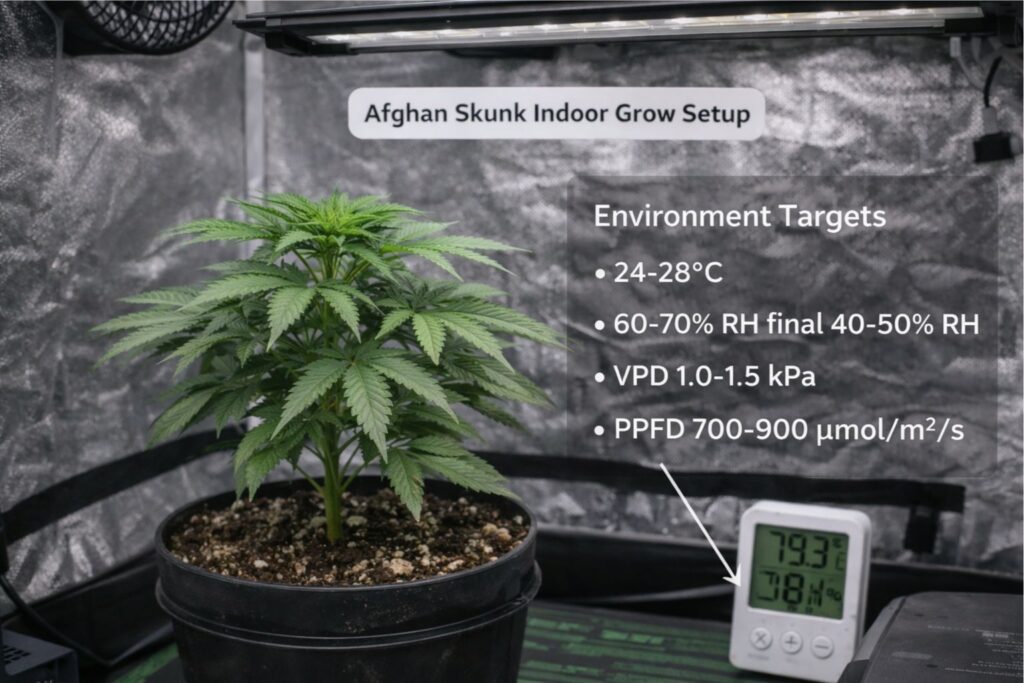
In my Afghan Skunk indoor grow setup, environment beats additives. Under modern LEDs without added CO2, I run these ranges as a baseline:
- Seedling: 22–26°C, 65–75% RH, VPD 0.8–1.0 kPa, 150–300 PPFD
- Veg: 24–28°C, 60–70% RH, VPD 1.0–1.2 kPa, 400–600 PPFD
- Flower: 24–27°C, 45–55% RH, VPD 1.2–1.5 kPa, 700–900 PPFD
- Late flower: 22–26°C, 40–50% RH, steady airflow to avoid mold
That stability makes the Afghan Skunk flowering time more predictable and keeps the Afghan Skunk terpene profile from turning flat. If you only change one thing in your Afghan Skunk indoor grow setup, add dehumidification capacity before the buds thicken.
Afghan Skunk feeding schedule and realistic nutrient targets
I prefer controlled, moderate feeding. When I chased high EC, I got bigger leaves but a harsher finish. A cleaner jar came from steady inputs and fewer swings. Below are my starting Afghan Skunk feeding schedule targets; adjust based on your runoff or reservoir readings, leaf posture, and tip burn.
Coco and hydro starting points:
- Early veg: EC 1.0–1.3, pH 5.8–6.1
- Mid veg: EC 1.3–1.6, pH 5.8–6.1
- Early flower: EC 1.6–1.9, pH 5.8–6.2
- Mid flower: EC 1.8–2.2, pH 5.8–6.2
- Finish: taper nitrogen, keep potassium steady, avoid last-minute “flush drama”
Soil notes:
- I top-dress lightly and watch the plant, not the label
- Over-watering is the most common “deficiency” I see in soil
This Afghan Skunk feeding schedule helped me avoid nutrient burn, keep leaf color stable, and protect the Afghan Skunk terpene profile through the final weeks.
Afghan Skunk training techniques: how I shape the canopy
Afghan Skunk training techniques are where I earn consistency. The plant usually responds well, but it does not like being stripped to sticks. My approach is to open the plant, keep tops in the prime light zone, and reduce humidity pockets.
My Afghan Skunk training techniques, in order:
- Top once above the 5th node after the plant is vigorous
- Low-stress tie-down to widen the plant
- A simple trellis or plant ties in early flower
- Light defoliation to remove blockers, not to “show off stems”
- Clean lower growth before week 3 of flower
I repeat these Afghan Skunk training techniques because they make Afghan Skunk yield range more predictable and help airflow for a cleaner finish.
Afghan Skunk flowering time and what I use to call harvest
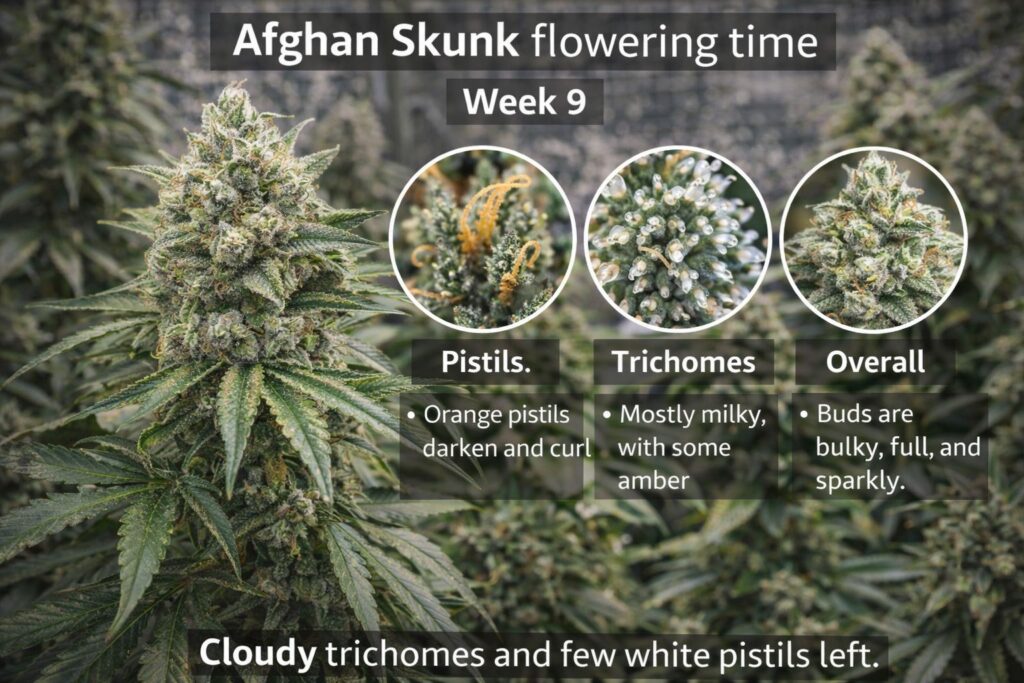
Across different seed lots, Afghan Skunk flowering time has landed in a medium window for me. I do not harvest by the calendar alone. I watch the plant’s pace and verify with trichomes.
What I watch during Afghan Skunk flowering time:
- Stretch slows and pistils begin to stack
- Aroma shifts from “green” to resin-forward
- Buds firm up, and the plant drinks less near the end
- Trichomes move from clear to mostly cloudy with some amber depending on preference
Harvest timing changes the vibe. Earlier harvest can feel more alert for me, while a later harvest leans heavier. That is one reason I keep Afghan Skunk Strain Review notes per run instead of relying on generic descriptions.
Afghan Skunk terpene profile: aroma and flavor from my jars
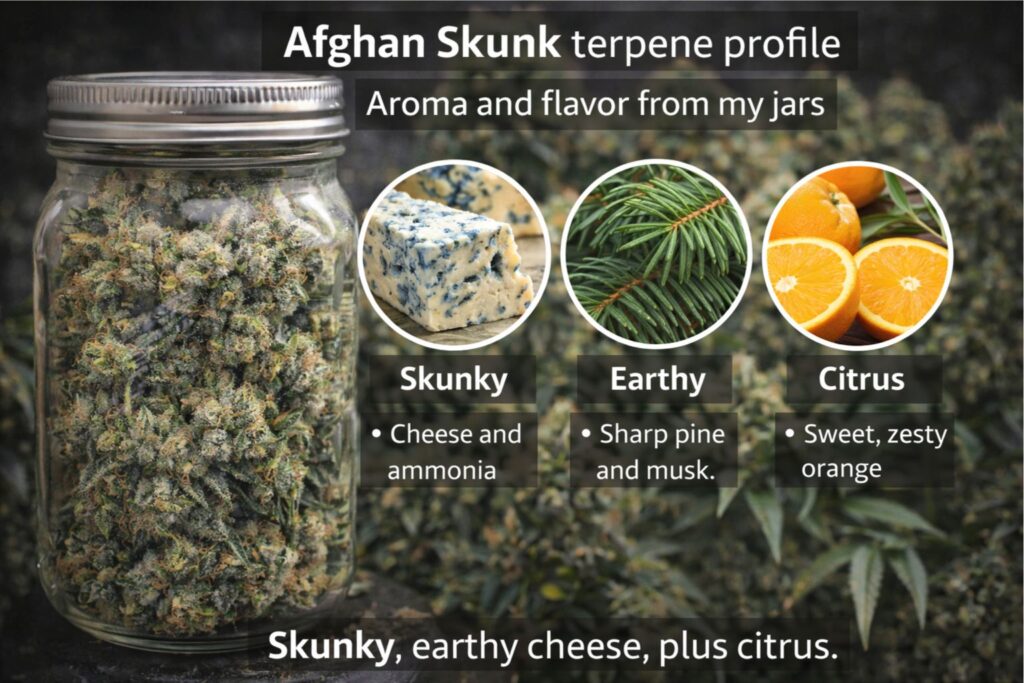
When the grow is steady and the dry is slow, the Afghan Skunk terpene profile I get is earthy resin, piney spice, and a skunky edge that shows up more after cure than on day one. If I let humidity swing late, the Afghan Skunk terpene profile gets muted and the smoke turns sharp.
I notice the Afghan Skunk terpene profile improves when:
- Night temps are a few degrees cooler but not cold
- The root zone has oxygen and does not stay waterlogged
- Feeding stays steady instead of spiking at the end
For a weed grower who cares about flavor, the biggest “terp killer” I have seen is rushing post-harvest.
Afghan Skunk yield range: what I consider realistic
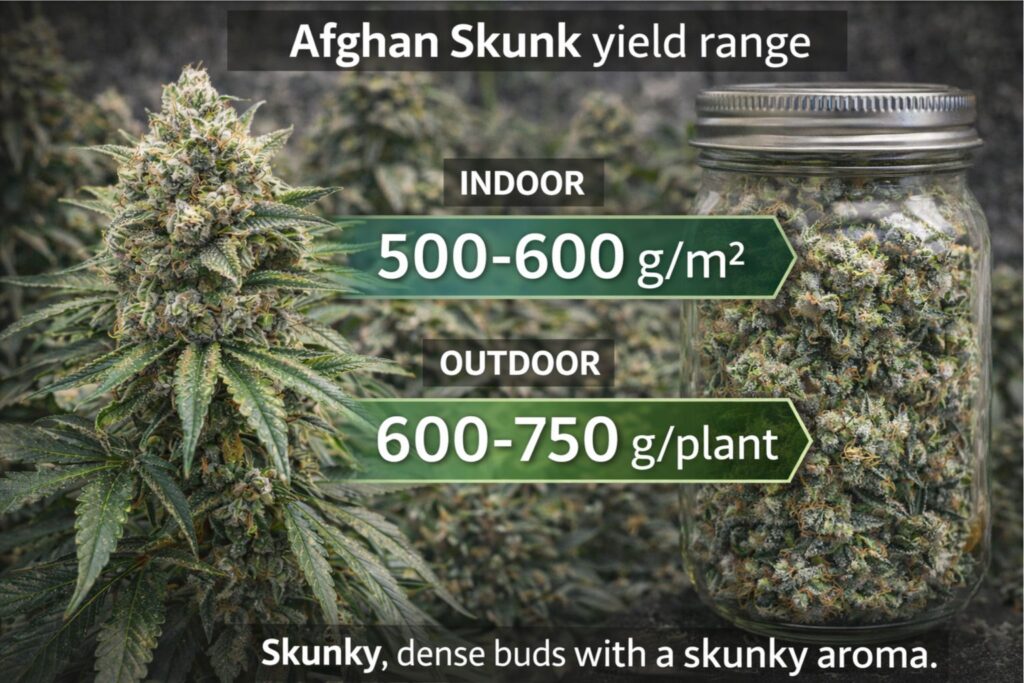
Afghan Skunk yield range depends on plant count, canopy management, and how even your light is. In my room, the best gains came from even PPFD and humidity control, not from pushing EC. If your Afghan Skunk indoor grow setup is dialed, you can expect solid returns, but don’t treat any number as a promise. Phenotype and skill matter.
To push toward the top of Afghan Skunk yield range, I focus on:
- Even canopy height and even light spread
- Healthy roots, especially in coco and hydro
- Stable VPD in late flower
- Enough dry-down between irrigations in soil
Afghan Skunk outdoor harvest window: planning without pretending every region is the same
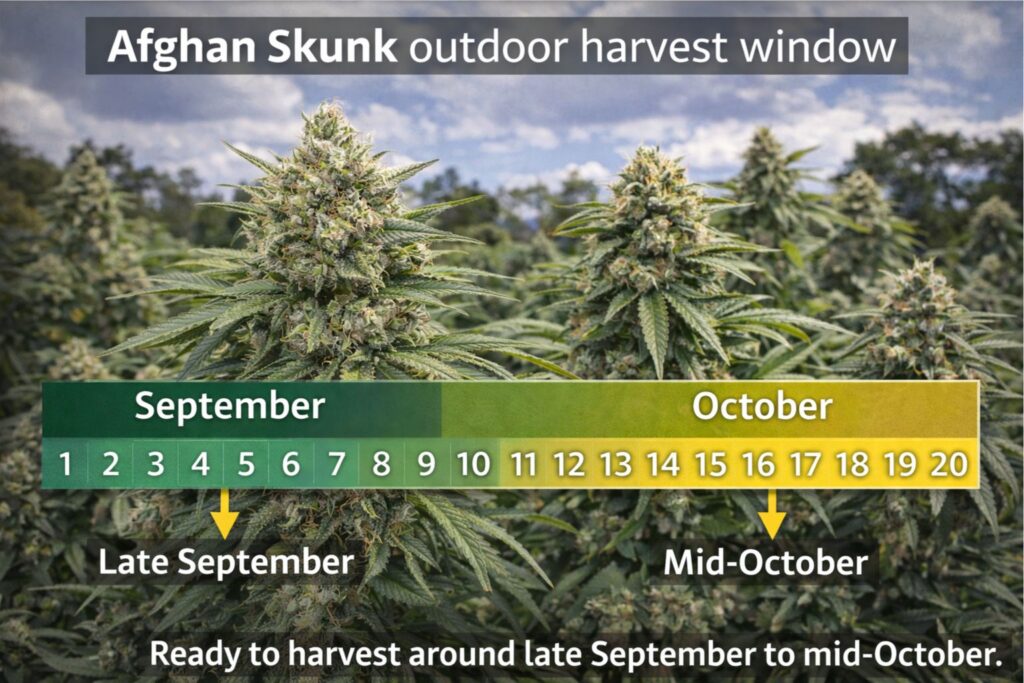
If you grow outdoors, the Afghan Skunk outdoor harvest window will depend on your latitude and fall weather. In dry climates, this type of hybrid can finish cleanly. In humid regions, compact flowers raise mold risk, so spacing and airflow matter.
My Afghan Skunk outdoor harvest window habits:
- Train early to keep the plant open
- Scout weekly for caterpillars, mites, and powdery mildew
- Avoid heavy sprays once flowers form
- Harvest in sections if one cola ripens faster
Grow laws vary by region. This is not legal advice, but if you are planning to buy cannabis seeds online and grow outside, learn your local rules and plan for discretion and odor control.
Integrated pest management and common problems I’ve seen
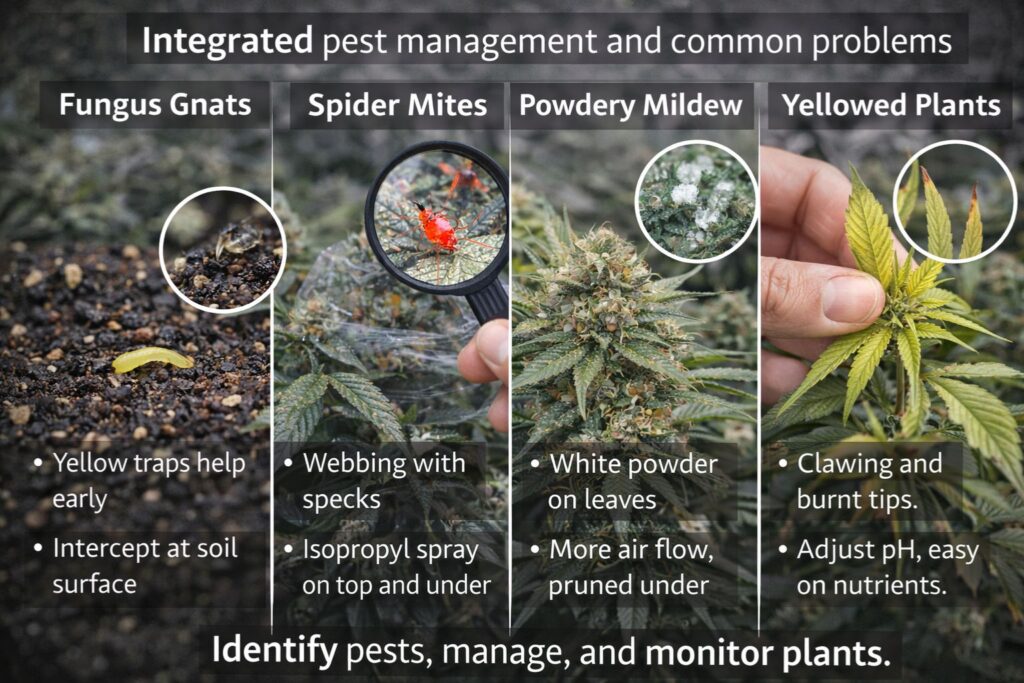
In any Afghan Skunk Strain Review worth trusting, I think you have to talk about pests and prevention. My baseline IPM is simple: keep the room clean, quarantine new plants, and scout the undersides of leaves every watering. I treat a cannabis tent like a small ecosystem, so I don’t wait for an outbreak before acting.
What has shown up in my garden:
- Fungus gnats in over-watered soil
- Spider mites when temps run hot and dry
- Powdery mildew when late-flower RH creeps upward
My controls are mostly mechanical and environmental: sticky traps, stronger airflow, leaf cleanup, and keeping VPD steady. If I need a spray in veg, I stop early and avoid flowers. For anyone growing marijuana at home, the safest habit is routine scouting. With weed plants, problems explode fast when you miss a week.
Afghan Skunk drying and curing method: how I keep it smooth
My Afghan Skunk drying and curing method is where quality becomes obvious. Fast drying gives me grassy notes and rough smoke. Slow drying gives me a cleaner jar and a better Afghan Skunk terpene profile.
My Afghan Skunk drying and curing method:
- Hang branches at 18–20°C and 55–60% RH with gentle airflow
- Dry 7–14 days until small stems snap
- Jar and burp daily for the first week
- Burp less often in week two, then let it ride
- Cure 21–30 days minimum for best flavor
This Afghan Skunk drying and curing method also makes effects feel more “complete” for me, whether I’m using cannabis after work or sharing with friends who prefer a calmer marijuana experience.
Buying seeds and choosing versions: feminized, regular, and autoflowering
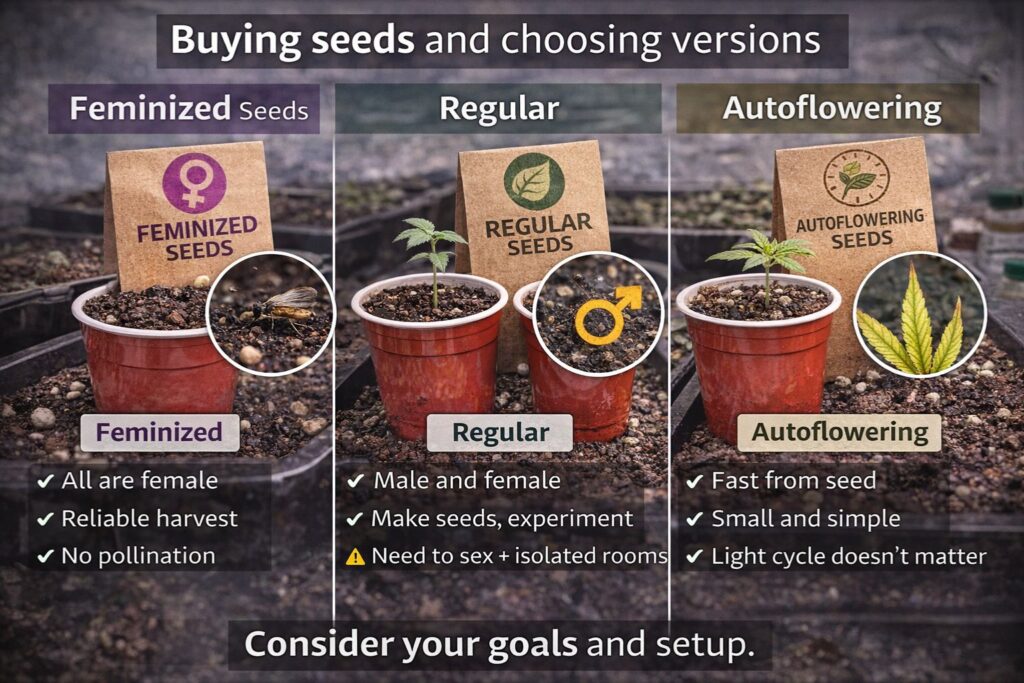
When people ask me how to choose a seed bank, I look for fresh stock, clear breeder info, and realistic shipping policies. If you want predictable plant counts, feminized seeds can simplify the plan. Regular seeds are great if you want to hunt and keep a mother. Autoflowering versions can be convenient, but they demand gentle early handling and consistent light.
Common shopping questions I see:
- “Can I buy cannabis seeds online and still get discreet shipping?”
- “Which is easier for beginners, soil vs hydro?”
- “Do indica, sativa, and hybrid labels match the actual effects?”
My answer is practical: buy from a reputable source, keep Afghan Skunk phenotype variation notes, and let your grow environment do the heavy lifting.
FAQ
Is this Afghan Skunk Strain Review describing a couch-lock strain?
Not always. Afghan Skunk phenotype variation is real. Some plants lean heavier, especially with later harvest, while others feel more balanced.
What light schedule do you use for photoperiod plants?
I run 18/6 in veg and 12/12 in flower. That keeps Afghan Skunk flowering time consistent in my tents.
What are the most common mistakes with this cultivar?
Overfeeding, high humidity late, and rushing the Afghan Skunk drying and curing method. All three can dull the Afghan Skunk terpene profile.
What medium would you recommend to a first-time weed grower?
Soil is forgiving. Coco gives control if you can feed daily. Hydro can work, but it punishes pH and cleanliness mistakes.
Should I top or just do LST?
I usually top once and then use Afghan Skunk training techniques with gentle tie-down. If you are nervous, start with LST and keep notes.
For a complete directory of cultivars, visit our Cannabis Strain Reviews.
