Table of Contents
I’ve tried plenty of modern cannabis that smells like dessert and hits like a sledgehammer, and I’ve also tried plenty that looks great on a menu but falls apart in the jar. When I want something I can compare everything else against, I circle back to Afghan Kush. This Afghan Kush Strain Review is not a hype piece. It’s my practical snapshot of what this lineage usually brings to the table, how I evaluate quality, and how I avoid disappointing purchases.
I use this cannabis-and-weed benchmark to keep expectations realistic across different jars and different growers.
I’m not offering medical advice, and I’m not offering legal advice. Marijuana laws are different from country to country (and sometimes from region to region). If weed isn’t legal where you live, don’t possess, buy, or cultivate it. If it is legal, use responsibly, keep products away from minors, and never drive after consuming.
Afghan Kush genetics in plain language

People often treat “Afghan” and “Kush” like brand names. In reality, the idea is simpler: a cluster of lines tied to rugged mountain regions where survival traits mattered. That’s why I describe it as a mountain-born indica profile. The mountain-born indica profile usually shows up as thicker flowers, a heavier resin layer, and a calmer, slower pace than many airy, fast-onset hybrids.
Not every product carrying the name is the same cut or breeder intent, so I rely on a lineage confidence checklist every time I see a new jar. In this Afghan Kush Strain Review, that checklist matters as much as the label.
What I expect from this lineage, realistically
When the name is used accurately and the handling is good, I tend to see:
- tight bud structure rather than fluffy, fragile flower
- a sticky resin finish that feels oily instead of dusty
- aroma that leans woody and earthy rather than candy-sweet
Those are tendencies, not guarantees. The lineage confidence checklist matters because the market is full of loose naming.
Appearance and structure: what “good” looks like before you buy
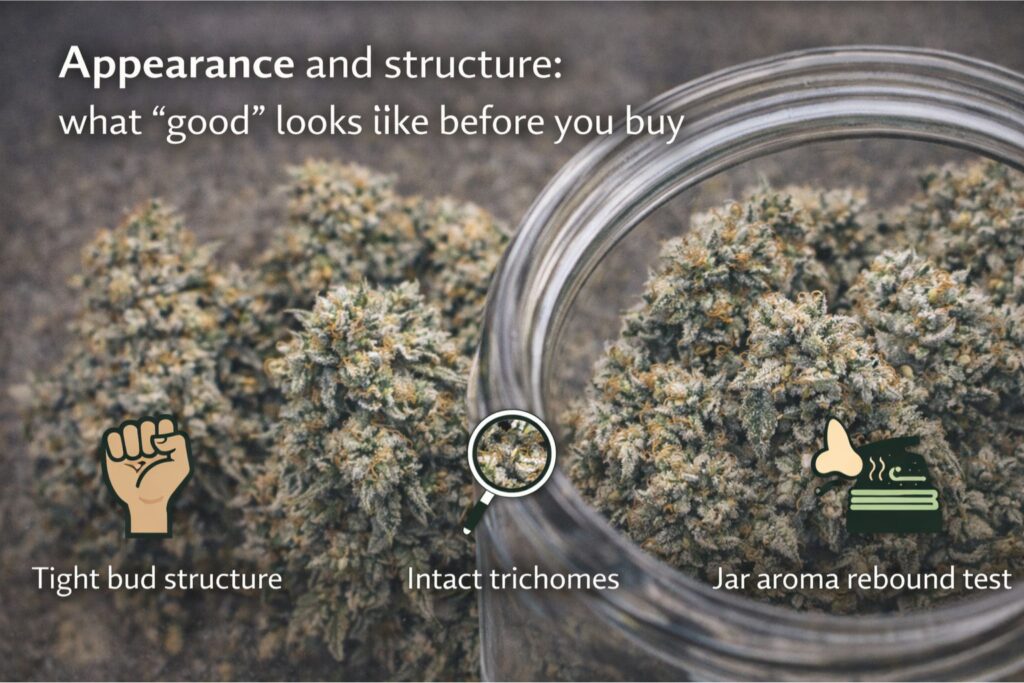
For this Afghan Kush Strain Review, I’m talking about what I can confirm with my eyes and hands in a regulated setting. The first cue is tight bud structure. I want buds that are firm and springy, not hard like a pebble and not so dry they crumble.
My second cue is a trichome intactness check. I’m not chasing “the frostiest photo.” I’m checking whether trichomes look intact across the surface and whether the container is full of shaken-off dust. When flower has been over-handled, the top may still look pretty, but the flavor and texture usually suffer.
The third cue is the jar aroma rebound test: I open the container, smell once, wait a few seconds, then smell again. Fresh flower often blooms on that second smell. Old or rushed product often fades fast.
I run the trichome intactness check and jar aroma rebound test on every batch because the same name can vary wildly.
Aroma and flavor: my sensory notes, not marketing notes
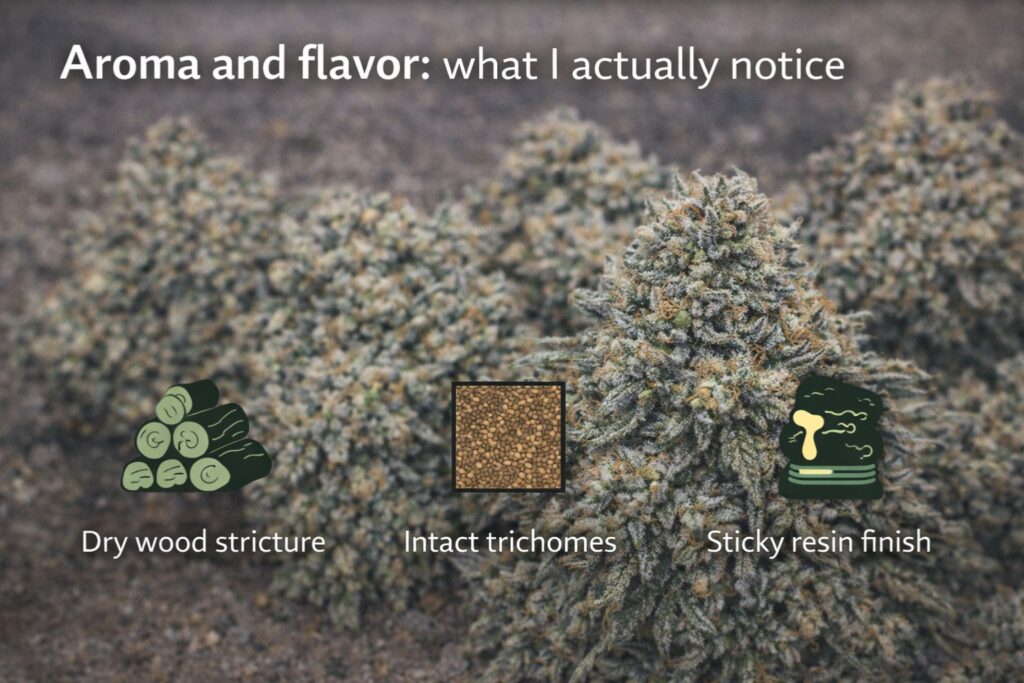
A well-kept Afghan-type jar usually starts with a dry wood spice nose. I’m talking about a woody, earthy base with a warm spice edge that feels closer to cedar and pantry spices than to fruit candy. When I say dry wood spice nose, I mean aroma that holds steady even after the jar sits open briefly.
On the palate, the experience I look for is a hash-forward aftertaste. The first pull can be earthy; the finish is where Afghan Kush tells the truth. If the hash-forward aftertaste shows up cleanly, I usually get a smoother session and fewer harsh notes.
The sticky resin finish ties both together. When resin is intact, the dry wood spice nose lasts longer, and the hash-forward aftertaste feels rounder instead of sharp.
Why the same strain can taste different week to week
Even without changing genetics, the final flavor depends heavily on post-harvest handling and storage. If product dries too fast or sits in warm conditions, the dry wood spice nose becomes flat, and the hash-forward aftertaste can turn papery. That’s why I’m strict about a cool-dark storage routine.
Effects: what I notice, and what can go wrong
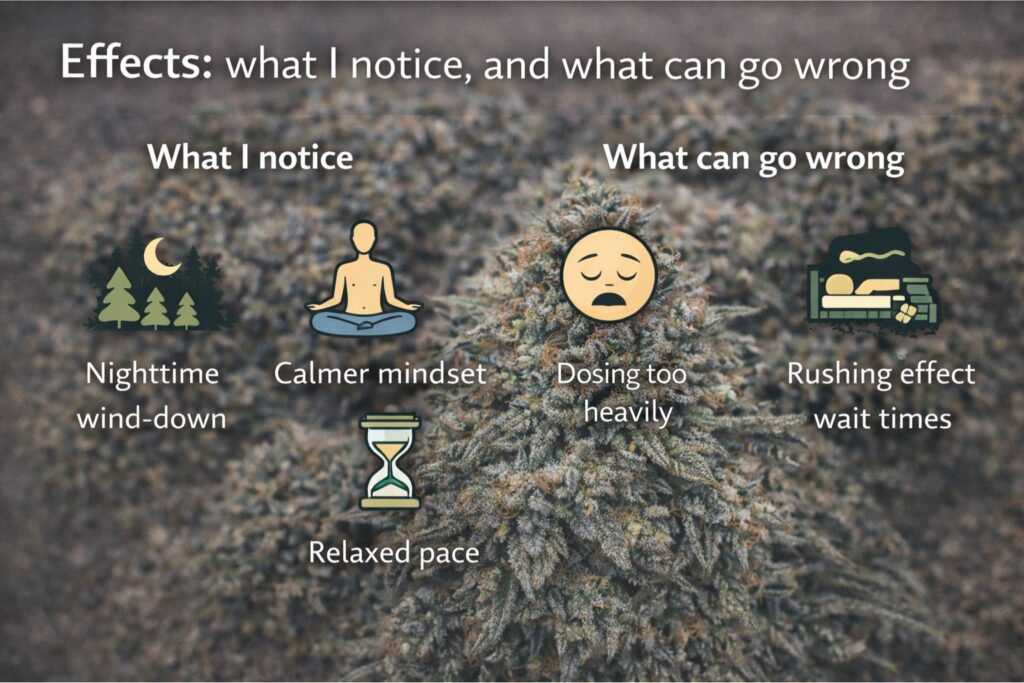
Effects get exaggerated online, so I’ll keep it grounded. In my sessions, the typical arc is a nighttime wind-down feel: an easing of mental noise, followed by a heavier body settle. The nighttime wind-down feel is why I personally save Afghan Kush for evenings or days when I’m done with responsibilities.
The most common mistake I see is stacking too much too quickly. If you keep dosing before you feel the full effect, the experience can swing from calm to uncomfortable. Another issue is using it in the wrong setting. A quiet strain can feel too heavy if you’re already exhausted, dehydrated, or anxious.
I’ll say it plainly: the nighttime wind-down feel is dose-dependent. Start low, wait, and treat each batch as new.
Practical handling: how I judge quality before I consume
This is where experienced users separate themselves from label-chasers. My approach is built around three repeatable checks: smell, texture, and transparency.
The three checks I actually do
1) Jar aroma rebound test
If aroma disappears after the first sniff, I assume terpenes are already damaged or depleted.
2) Tight bud structure
I want a bud that has structure and elasticity. Over-dry flower breaks down too fast and tastes thin.
3) Trichome intactness check
I look for intact sparkle on the bud, not a container full of kief dust. Excess dust often means the flower was knocked around, which can flatten flavor.
If these pass, I then evaluate whether the sticky resin finish is present. The sticky resin finish is often the simplest clue that the flower was handled gently.
Cultivation notes without the how-to
I’m keeping this section high-level on purpose. Detailed instructions for cultivating controlled substances can be illegal in many regions, and laws vary.
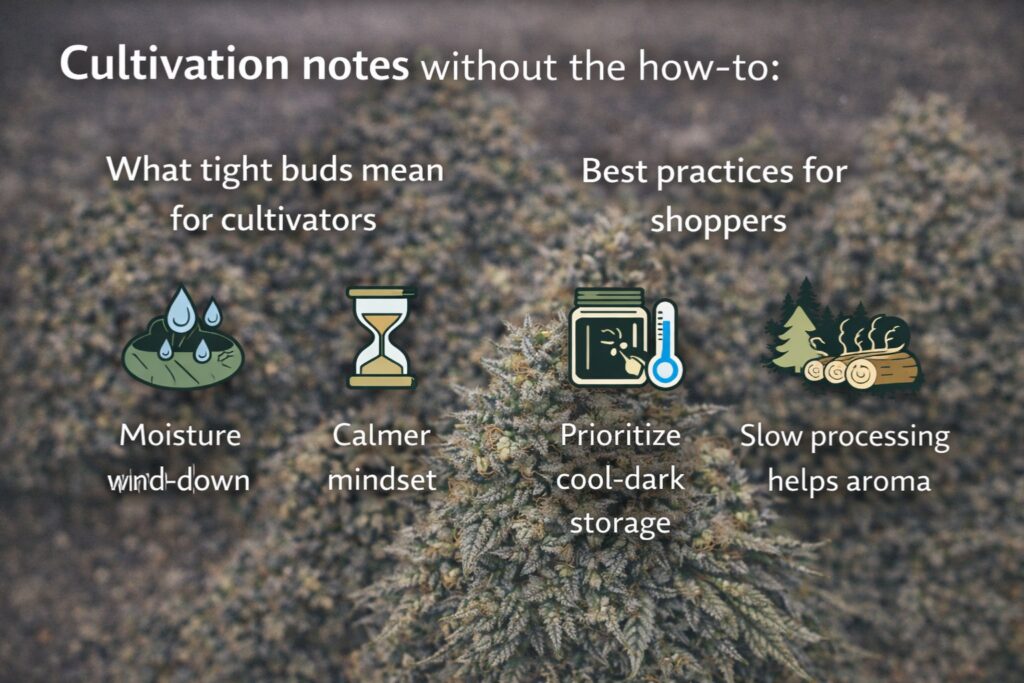
What I can share from a cultivator’s perspective is how the end product behaves and what that implies. Strains with tight bud structure are more vulnerable to moisture issues during production and storage because tight flowers can hold humidity inside. That’s why careful handling and drying matter. When the process is patient, you get a stickier finish, better aroma retention, and a more reliable dry wood spice nose.
From the buyer side, this means you should prioritize freshness and storage over flashy naming. I lean on my cool-dark storage routine once the product is in my hands because heat and light degrade aroma quickly.
Storage and freshness: keeping the profile alive
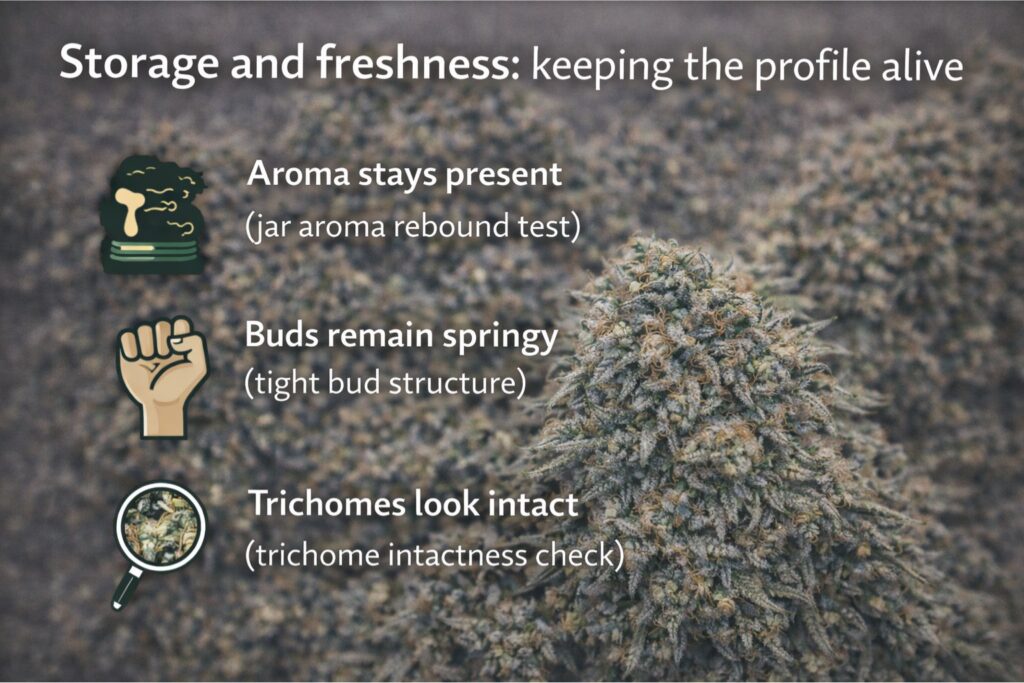
If you want Afghan Kush to taste like itself, storage is not optional. My cool-dark storage routine is simple: stable conditions, minimal air exchange, and no repeated open-and-sniff cycles that dry the jar out.
The cool-dark storage routine also protects the sticky resin finish, which is usually the first casualty of bad storage.
Freshness cues I watch for:
- aroma stays present on the second sniff (jar aroma rebound test)
- buds remain springy (tight bud structure)
- trichomes look intact (trichome intactness check)
Buying decisions: a simple checklist for shoppers
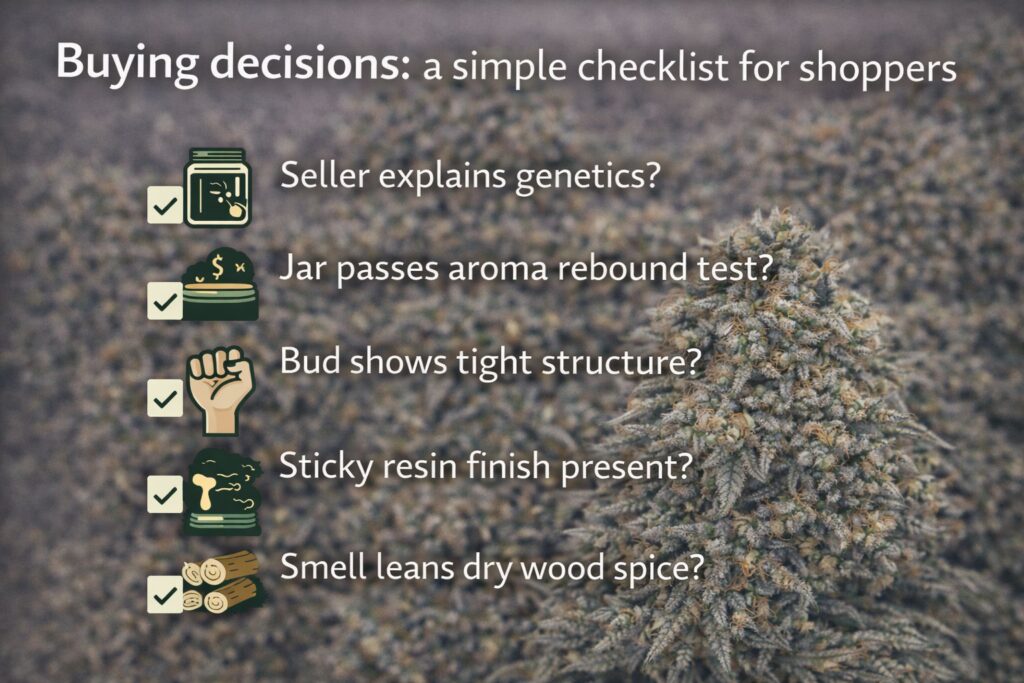
This Afghan Kush Strain Review is written for real shoppers, not collectors.
Here’s the lineage confidence checklist I use:
- Does the seller explain genetics clearly, or is it vague branding?
- Does the container pass the jar aroma rebound test, or does it fade instantly?
- Does the bud show tight bud structure without being brittle?
- Do you feel a sticky resin finish, or is it dry and dusty?
- Does the smell lean toward a dry wood spice nose, or is it mostly generic sweetness?
If I can’t answer these, I don’t buy a large amount. The lineage confidence checklist saves money because the same shelf label can hide wildly different handling.
Pairing and use cases: when I reach for it
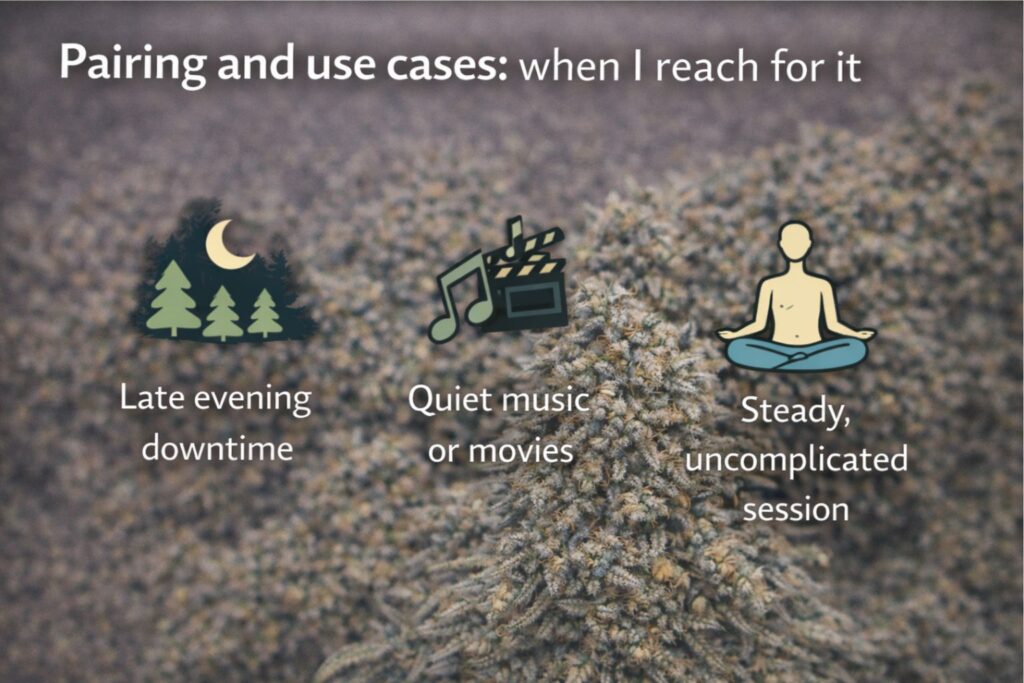
I treat weed like a tool, not a personality. I reach for Afghan Kush when I want a calmer lane:
- late evening downtime where a nighttime wind-down feel fits the plan
- quiet music, movies, or a low-stimulation night at home
- days when I want a steady, uncomplicated session rather than a rollercoaster
If I need to be sharp, social, or physically active, I pick something else. The nighttime wind-down feel is the point, and it can be a drawback at the wrong time.
Common mistakes I see with Afghan Kush in the real world
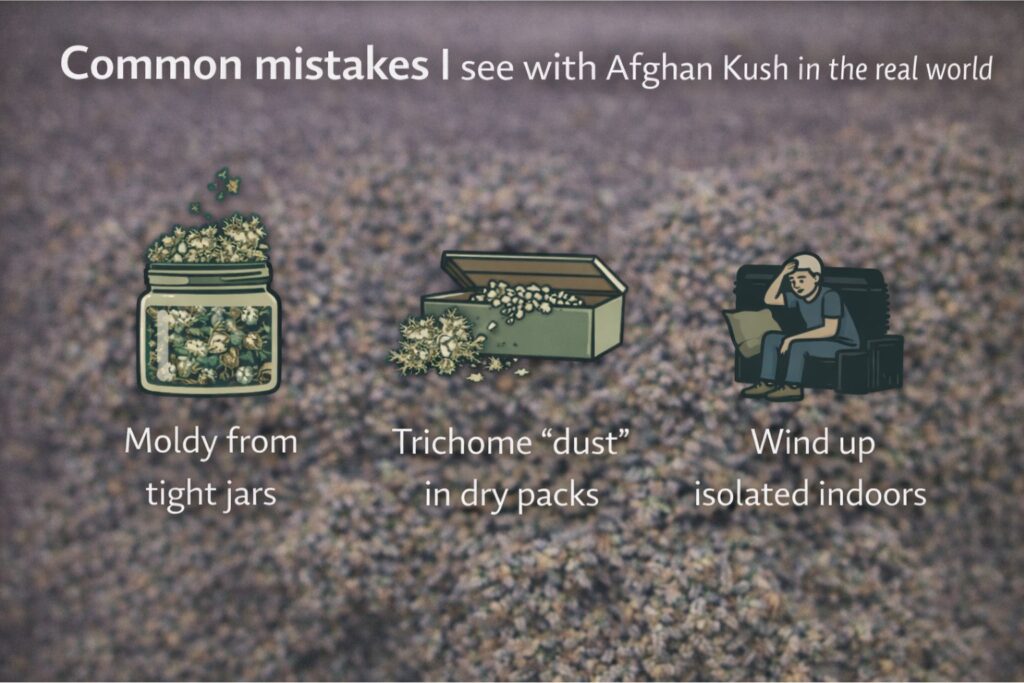
Most disappointment comes from handling, not genetics. The mistakes I see most often:
- buying old product that fails the jar aroma rebound test
- choosing flower that looks frosty but fails a trichome intactness check due to rough handling
- storing it warm, which kills the dry wood spice nose and weakens the sticky resin finish
- consuming too much too fast, then blaming the strain when the nighttime wind-down feel becomes uncomfortable
Fixing these mistakes is easier than “finding the perfect batch.”
FAQ
What should Afghan Kush smell like?
In my experience, the most consistent cue is a dry wood spice nose. If you smell only sweetness or nothing at all, it may be a different selection or it may be old.
What should the flavor finish be like?
The signature for me is a hash-forward aftertaste that lingers cleanly. When the aftertaste is papery or harsh, it often points to poor handling or storage.
Why does the same product name feel different across batches?
Genetics are only half the story. Handling, dryness, storage, and age change the experience. That’s why I repeat the jar aroma rebound test and the trichome intactness check on each batch.
Is Afghan Kush better for daytime or nighttime?
I associate it with a nighttime wind-down feel, but individual response varies. If you’re new, start low and treat each batch cautiously.
Any practical safety habits you recommend?
Yes. These are simple and repeatable:
- start low, wait, and avoid stacking doses
- don’t mix cannabis with alcohol if you’re unsure how you react
- stay hydrated and eat beforehand if you’re prone to dizziness
- don’t drive after using marijuana
Final thoughts
This Afghan Kush Strain Review is my attempt to be honest about what matters. The most reliable markers are not the label or the hype. They’re tight bud structure, a stable dry wood spice nose, a clear hash-forward aftertaste, and a sticky resin finish that tells you the flower was treated well. If you apply a trichome intactness check, run the jar aroma rebound test, and follow a cool-dark storage routine, you’ll get more consistent results. And if you keep a lineage confidence checklist, you’ll avoid most of the frustrating purchases that make people swear off a classic profile.
That’s how I keep a classic marijuana profile enjoyable instead of frustrating, and why Afghan Kush remains on my short list in 2026.
For a complete directory of cultivars, visit our Cannabis Strain Reviews.
