Table of Contents
I’m publishing this Afghan Hawaiian strain review as a practical, experience-driven look at a classic “two worlds” hybrid: old-school Afghan structure and resin potential paired with a brighter, island-leaning personality. Over the years I’ve learned that many modern marijuana hybrids chase extremes. Afghan Hawaiian sits in a more useful middle ground. It can feel composed rather than chaotic, and it tends to deliver a recognizable signature across different batches.
This is not medical advice, and it’s not legal advice. Effects vary by dose, tolerance, and individual sensitivity. If cannabis is not legal where you live, don’t use or possess it. If it is legal, use responsibly and follow local rules.
Afghan Hawaiian genetics in plain language
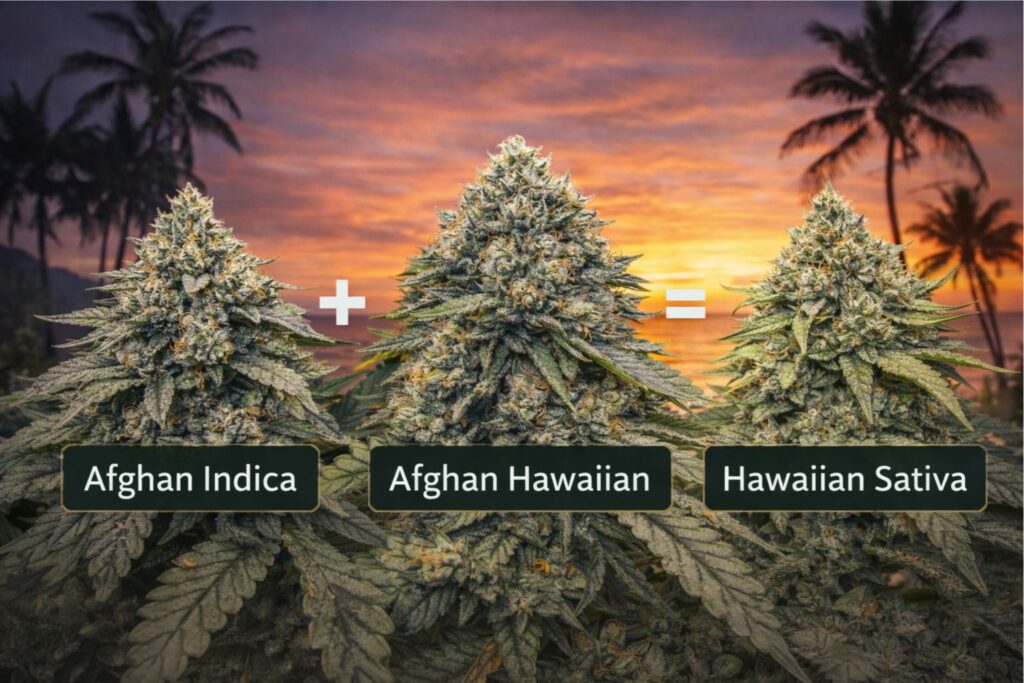
When I talk about Afghan Hawaiian genetics, I’m talking about a pairing of two broad families that have influenced weed breeding for decades.
Strain lineage overview: why breeders paired these parents
Here’s the simplest strain lineage overview I can give without turning it into mythology. Afghan-type lines are generally prized for sturdiness and resin, while classic Hawaiian-style lines are often associated with brighter aromas and a more upbeat, cerebral edge. The goal in combining them is straightforward: retain the calm body foundation while adding a clearer, more social top-end.
That same strain lineage overview helps explain why Afghan Hawaiian keeps showing up in conversations among people who want a hybrid that doesn’t feel one-dimensional.
Afghan indica influence: what it tends to contribute
In my experience, Afghan indica influence usually shows up as a thicker bud build, a heavier finish, and a “grounded” feel in the second half of the session. In jars that lean more toward Afghan indica influence, I also notice a denser texture and a slightly more resin-forward mouthfeel.
Hawaiian sativa influence: what it tends to contribute
Hawaiian sativa influence is where I expect more lift, more brightness, and a more playful mental tone. Lots of strains promise “tropical,” but when Hawaiian sativa influence is present, the fruit notes usually feel integrated instead of artificial.
If you’re comparing versions from different growers or brands, the balance between Afghan indica influence and Hawaiian sativa influence is the main reason the same name can feel a little different.
Appearance and structure: how it looks in the jar
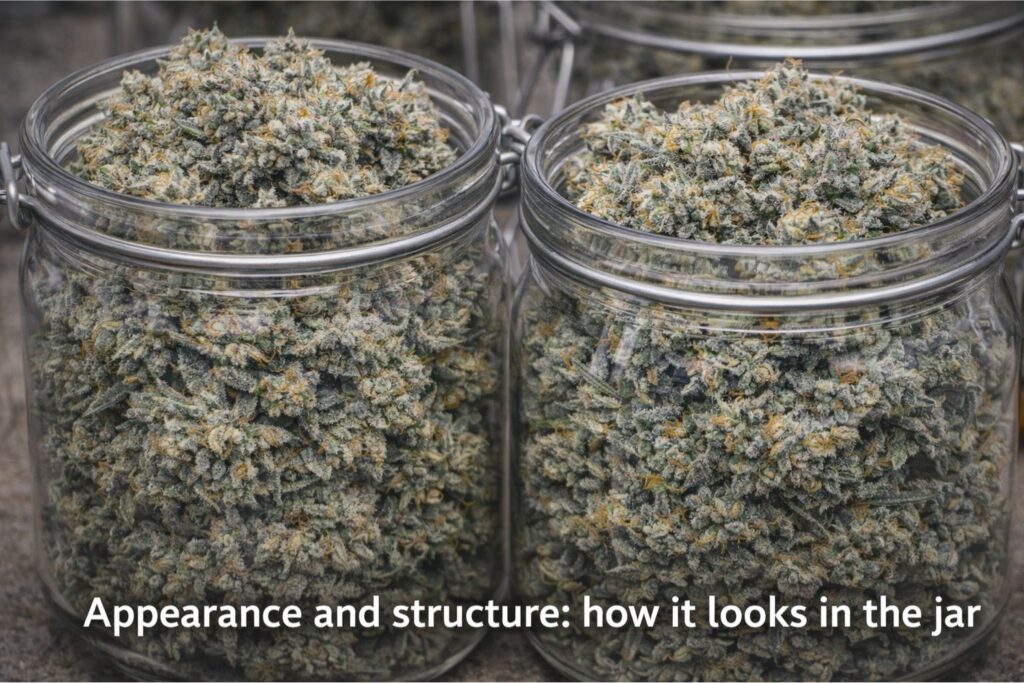
This isn’t a “perfect photo” strain by default, but good examples are easy to spot. The buds are typically dense, with a compact center and a visible trichome layer that can read as resin-heavy buds when the flower was finished well. I also look for clean, intact pistils and a dry-but-not-brittle feel that suggests the flower wasn’t rushed.
When Afghan Hawaiian genetics lean Afghan, the nuggets can be heavier and tighter. When they lean Hawaiian, the structure can open slightly and the aroma often gets louder.
Aroma and flavor: the profile I look for
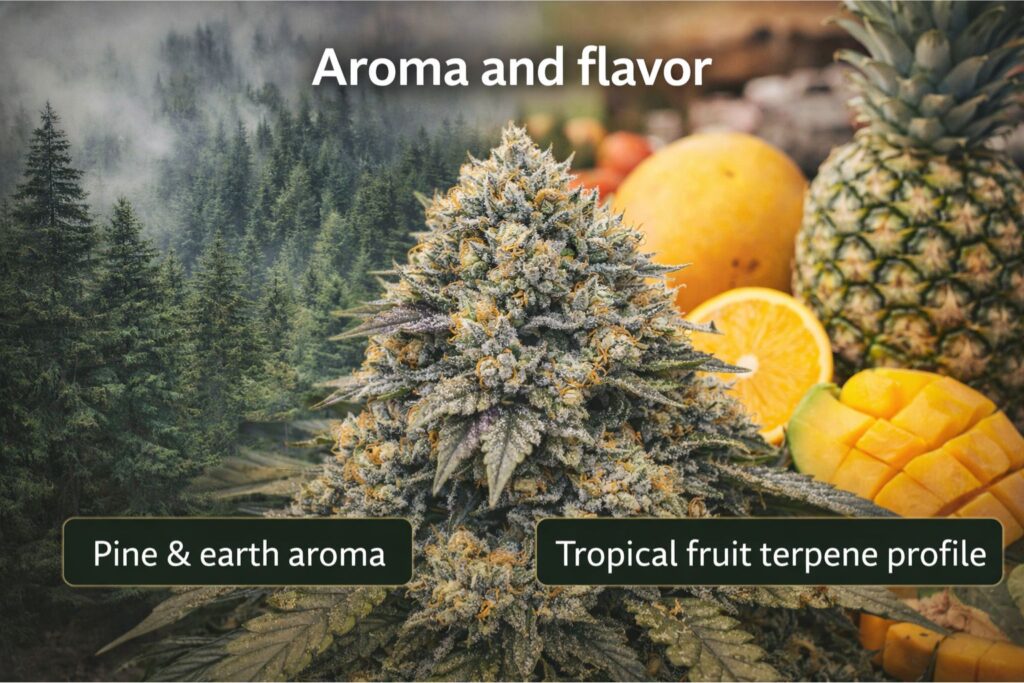
I separate smell and taste because they don’t always match. In this Afghan Hawaiian strain review, I’m describing the most repeatable profile I’ve encountered: a forest-and-fruit blend rather than a single dominant note.
Pine and earth aroma: the base layer
The first thing I expect is a pine and earth aroma. Think damp soil after rain, dry wood, and a sharp evergreen edge. That pine and earth aroma is usually the “anchor” note that tells me the flower wasn’t stripped of character during drying.
When the cure is sloppy, the pine and earth aroma collapses into something flatter and more generic. When it’s dialed, it stays dimensional.
Tropical fruit terpene profile: where the Hawaiian side shows up
The Hawaiian side often reads as a tropical fruit terpene profile. I most often pick up pineapple-like brightness, soft mango sweetness, and a hint of citrus peel. A true tropical fruit terpene profile doesn’t smell like candy; it smells like real fruit with a bit of rind and plant matter behind it.
If you’re a terp chaser, this is the main reason to try the strain: the tropical fruit terpene profile can sit on top of the earthy base without clashing.
Tropical pine flavor: what I get on the exhale
On the smoke or vapor, the flavor I’m hunting is tropical pine flavor. The inhale usually starts earthy, then the mid-note turns brighter, and the exhale lands in a sweet-and-woody finish. When tropical pine flavor is present, it tends to linger on the palate longer than you’d expect from a typical “fruit” strain.
Across different batches, tropical pine flavor is the first thing to disappear when the flower is handled poorly or stored too warm and dry.
Effects: what I notice, and what can go wrong

Every Afghan Hawaiian strain review needs a reality check: effects are not universal. Still, patterns show up often enough to describe responsibly.
Balanced indica sativa effects: the most common arc
In good examples, I experience balanced indica sativa effects. The beginning is usually a clearer, brighter mental shift that can feel social or creative. After 30–60 minutes, the body side arrives with a calmer, heavier tone that encourages slowing down. Balanced indica sativa effects are why I’d call this a “bridge” strain: it can work earlier than a heavy nightcap, but it can also wind down into a mellow evening.
What can go wrong: dose, setting, and sensitivity
The same balanced indica sativa effects can turn uncomfortable if you overdo it. When people have a rough time, it’s usually because of one of these:
- Too much too fast: high-potency cannabis can sneak up, especially with concentrates
- A stimulating start: the Hawaiian side can feel racy for anxiety-prone users
- A heavy finish: the Afghan side can become sedating at higher doses
If you’re new, small inhalations with long pauses are the safest approach. If you’re experienced, the best results still come from matching dose to your day.
Practical handling: how I judge quality before I consume
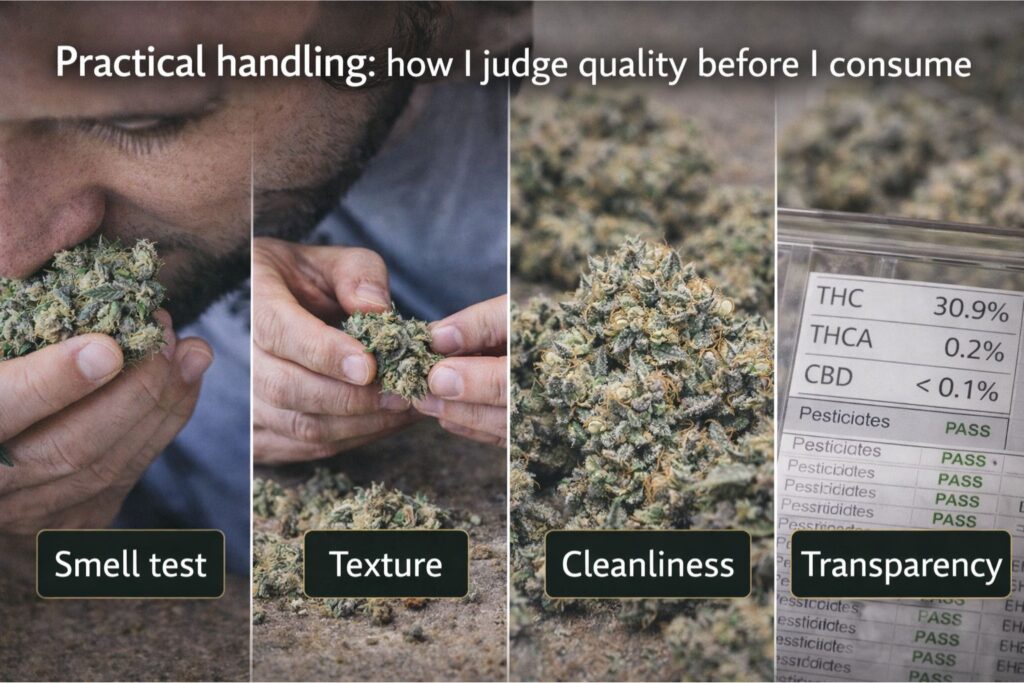
Because marijuana is agricultural, quality varies. These are the checks I use before I keep something in rotation:
- Smell test: the pine and earth aroma should be present, not musty or dull
- Texture: buds should spring slightly, not crumble into dust
- Cleanliness: avoid flower that looks damp, overly brown, or suspiciously perfumed
- Transparency: when available in a legal market, lab results can help confirm it’s been screened for common contaminants
These checks matter more than the label. They also protect the experience of tropical pine flavor and reduce the odds of harsh smoke.
Cultivation notes without the how-to
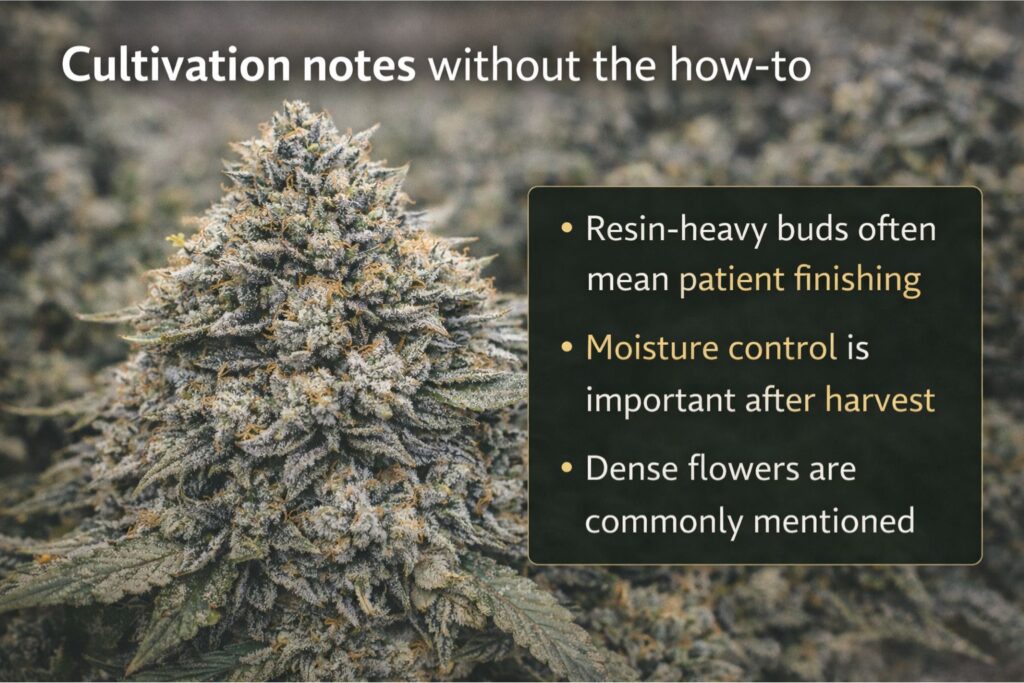
I’m keeping this section high-level on purpose. Detailed instructions for growing cannabis can be illegal in some places, and rules vary widely. What I can share in this Afghan Hawaiian strain review is how the plant is commonly described by legal cultivators and what that means for the end product.
Afghan Hawaiian genetics are often associated with strong resin potential, and resin-heavy buds tend to come from plants that were finished patiently rather than harvested early. The plant is frequently described as moderately stretchy compared with pure Afghan types, which fits the expectation from Hawaiian sativa influence. Dense flowers also mean moisture control matters during production and storage, because tight buds can trap humidity.
If you’re cultivating legally, use reputable local education resources and follow all safety standards. If you’re buying legally, choose regulated sources and pay attention to freshness dates.
Pairing and use cases: when I reach for it

I don’t use the same weed for every day. When Afghan Hawaiian is at its best, I reach for it in situations that benefit from balanced indica sativa effects:
- Light social plans where I want conversation without edge
- Creative tasks where I want a bit of lift but still feel grounded
- Late afternoon or early evening when I don’t want a pure sedative
If you need to be sharp, drive, or operate equipment, don’t use cannabis. Save it for safe downtime.
Buying decisions: a simple checklist for shoppers
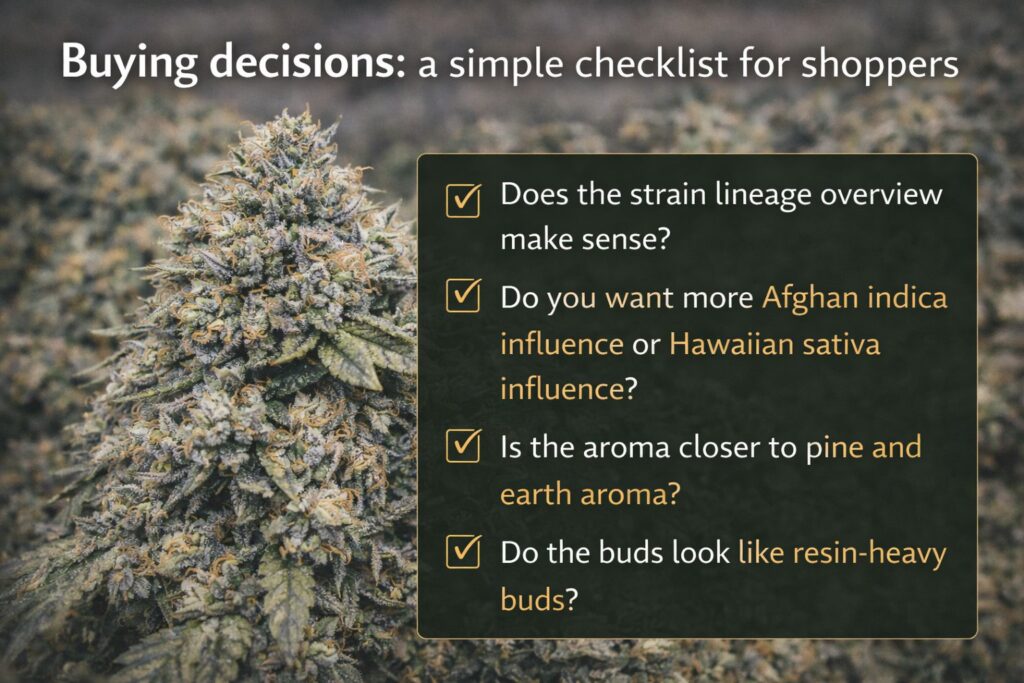
I’m not directing you to purchase anything. I’m sharing a seed selection checklist and flower-shopping checklist mindset so you can evaluate what’s in front of you in a legal market.
Here’s my seed selection checklist approach translated into everyday shopping questions:
- Does the strain lineage overview make sense, or is it vague marketing?
- Do you want more Afghan indica influence (calmer finish) or more Hawaiian sativa influence (brighter start)?
- Is the aroma closer to pine and earth aroma, or is it mostly sweet fruit?
- Do the buds look like resin-heavy buds, or are they airy and dry?
- Does the product deliver tropical pine flavor, or does it taste flat?
I use the same seed selection checklist logic when comparing options: decide what you want first, then match the product to that goal.
FAQ
What does Afghan Hawaiian smell like?
The most consistent profile I find is pine and earth aroma with a tropical fruit terpene profile riding over the top. The cleanest examples keep both notes present, not just sweetness.
What does it taste like?
When it’s handled well, I get tropical pine flavor: earthy on the inhale, brighter fruit in the middle, and a sweet-woody finish. Poor storage makes tropical pine flavor fade fast.
Is it more energizing or more relaxing?
In my experience it leans toward balanced indica sativa effects. The start can feel upbeat from Hawaiian sativa influence, and the finish often settles from Afghan indica influence.
Why does the same strain name feel different across brands?
The biggest reason is how much Afghan indica influence versus Hawaiian sativa influence is present, plus how fresh the flower is. Afghan Hawaiian genetics can express differently across batches.
Any harm-reduction basics you actually follow?
Yes. Responsible cannabis use tips matter more than strain trivia:
- Start low, wait, and avoid stacking doses
- Don’t mix with alcohol if you’re unsure how you react
- Store flower cool, dark, and sealed to protect aroma and reduce degradation
- Skip use if you’re anxious, sleep-deprived, or in an unsafe setting
Those responsible cannabis use tips keep a “good strain” from becoming a bad night.
Final thoughts
If you want a hybrid that blends a grounded base with a brighter top-end, this Afghan Hawaiian strain review is my honest take: it’s worth exploring when you can find a fresh, well-handled batch in a legal market. The best versions showcase Afghan Hawaiian genetics clearly, with pine and earth aroma, a tropical fruit terpene profile, and tropical pine flavor that stays present through the session. When the balance is right, balanced indica sativa effects make it flexible enough for late afternoon or early evening use, especially when you want a calm, workable headspace without feeling glued to the couch.
Keep your expectations realistic, prioritize safety, and let quality and freshness decide whether it earns a spot in your rotation.
For a complete directory of cultivars, visit our Cannabis Strain Reviews.
