Table of Contents
I wrote this Ace of Spades Strain Review after running the cultivar from seed more than once and keeping notes from sprout to jar. I’m not interested in hype; I care about what happens under real LEDs, with real irrigation, and the normal constraints every grower deals with.
Ace of Spades comes from TGA Subcool Seeds, built from Black Cherry Soda and the Jack the Ripper line. In this Ace of Spades Strain Review I’ll cover genetics, sensory results, and the grow details that decide whether the final weed is loud or forgettable.
Genetics, structure, and what I saw in veg
Ace of Spades genetics breakdown
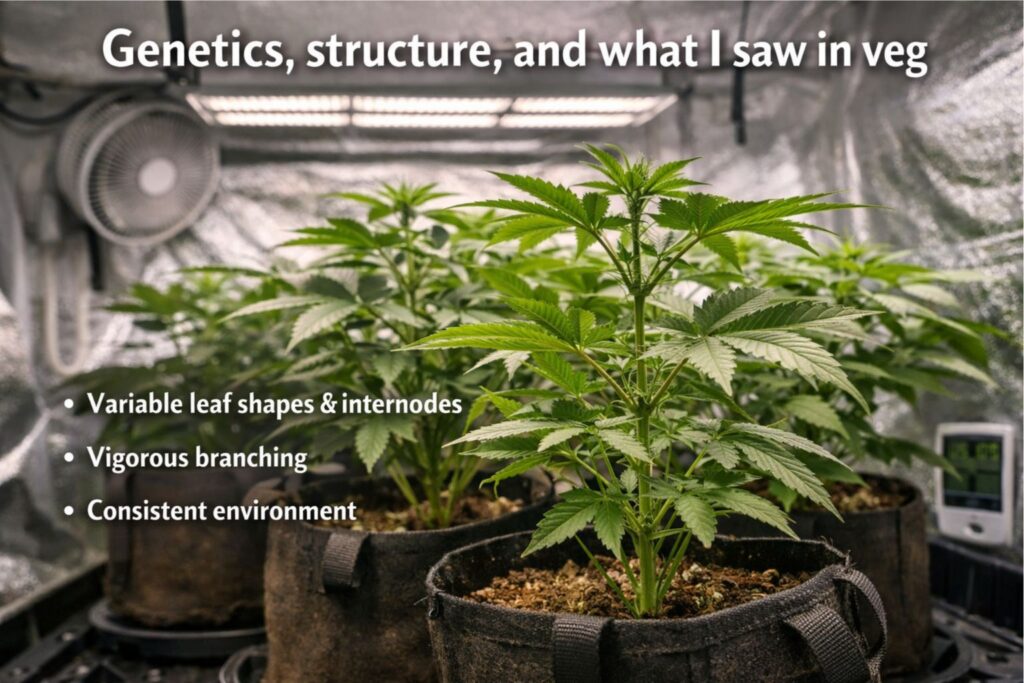
My Ace of Spades genetics breakdown is simple: the fruit side shows up as sweeter aromatics, while the Jack the Ripper side can bring sharper citrus and a more energetic “top note.”
A key part of my Ace of Spades genetics breakdown is variability. Seed runs can produce different leaf shapes, different internode spacing, and slightly different finish times, so keep labels and notes if you plan to select a keeper.
The last part of my Ace of Spades genetics breakdown is stress response: it performs best when temperature and watering stay consistent.
Growth habits
In veg I aim for 24–27°C with 60–70% RH, strong air exchange, and enough root aeration to avoid the wet-pot slump. In soil, I water to modest runoff and let the pot lighten before the next irrigation. In coco, I feed daily once the roots fill the container.
If you’re shopping for feminized seeds versus regular seeds, decide whether you want simple production (feminized seeds) or the option to hunt and keep parents (regular seeds). Either way, buy from a seed bank that stores seed properly.
Environment targets that kept quality high
Light intensity and photoperiod
I run 18/6 in veg and 12/12 in flower. For cannabis under LEDs without added CO2, these PPFD bands are useful starting points:
- Seedlings: 150–300 PPFD
- Veg: 350–550 PPFD
- Flower: 650–900 PPFD at the canopy
When I pushed higher without matching airflow and feeding, I saw faded tops and weaker aroma. Staying steady here gave me better resin and a cleaner finish.
Ace of Spades dry room parameters
Ace of Spades dry room parameters matter more than any “finisher.” My baseline is 18–20°C and 55–60% RH for 10–14 days, with gentle air movement that never blasts the buds.
If I miss Ace of Spades dry room parameters and the room dries too fast, the fruit note fades and the smoke gets sharp. When I hold Ace of Spades dry room parameters stable, the jar stays complex.
VPD and airflow
I use VPD as a simple way to keep plants transpiring consistently:
- Veg: 0.9–1.2 kPa
- Flower: 1.1–1.5 kPa (higher late flower) with strong oscillating airflow
Dense marijuana flowers need air through the canopy. I thin the interior lightly and keep fans moving above and below the net.
Feeding, EC targets, and common mistakes
Ace of Spades nutrient tolerance
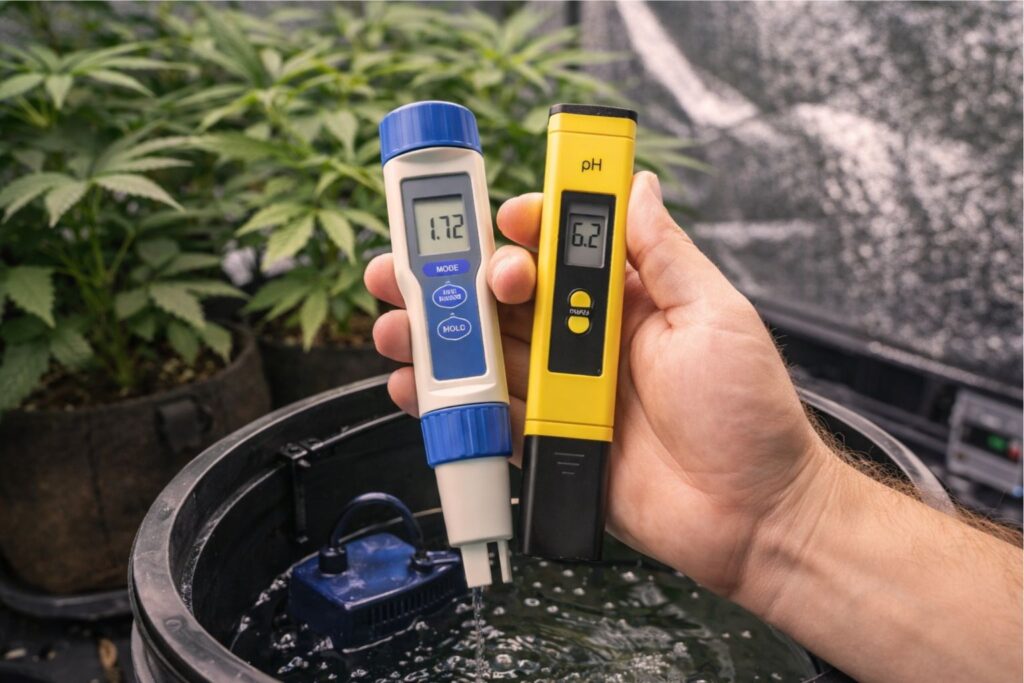
My Ace of Spades nutrient tolerance notes are that it prefers moderate feeding and punishes big jumps. In coco, I target EC 1.2–1.6 in veg and 1.4–1.9 in early flower, only pushing toward 2.0 if growth stays hungry and clean.
The second part of Ace of Spades nutrient tolerance is LED-related Ca/Mg demand. I correct gently rather than stacking salts.
The third part of Ace of Spades nutrient tolerance is irrigation rhythm. Over-drying concentrates salts; in soil, overwatering slows oxygen. Both reduce aroma.
Nutrient burn and deficiency troubleshooting
If you’re searching “nutrient burn vs deficiency,” change one variable at a time. Tip burn plus dark, shiny leaves usually means too much EC or nitrogen. Pale new growth with green veins can point toward uptake issues, especially if pH is drifting.
My seed-to-jar checklist for consistent results
When I run a cultivar for the second or third time, I stop improvising and follow a repeatable checklist. This is the short version I used while writing this Ace of Spades Strain Review.
- Germination: 24–26°C, starter medium damp (not soaked), gentle light at 150–200 PPFD.
- Transplanting: move up pot sizes before roots circle; in coco, start daily fertigation once the pot dries within 24 hours.
- Root-zone targets: pH 6.3–6.8 in soil, pH 5.8–6.2 in coco; aim for 10–20% runoff in coco to limit salt buildup.
- Climate: keep day/night swings small; I like 24–27°C lights on and 20–22°C lights off, with RH stepping down from 65% in veg to 45–50% late flower.
- Canopy: apply Ace of Spades indoor cultivation training early, then stop major work after week two of flower.
- IPM: inspect leaf undersides twice a week; if you see thrips or mites, respond early, before Ace of Spades flower density becomes a liability.
- Finish: don’t chase the last 5% with heavy additives; hit your Ace of Spades harvest window, then protect aroma with Ace of Spades dry room parameters and the Ace of Spades curing timeline.
If you’re comparing this to autoflowering lines, remember that photoperiod plants give you more time to correct mistakes, but they demand consistent light schedules. If your goal is to buy cannabis seeds online for a first run, pick a setup you can manage daily reliably.
Training, canopy management, and yield notes
Ace of Spades indoor cultivation
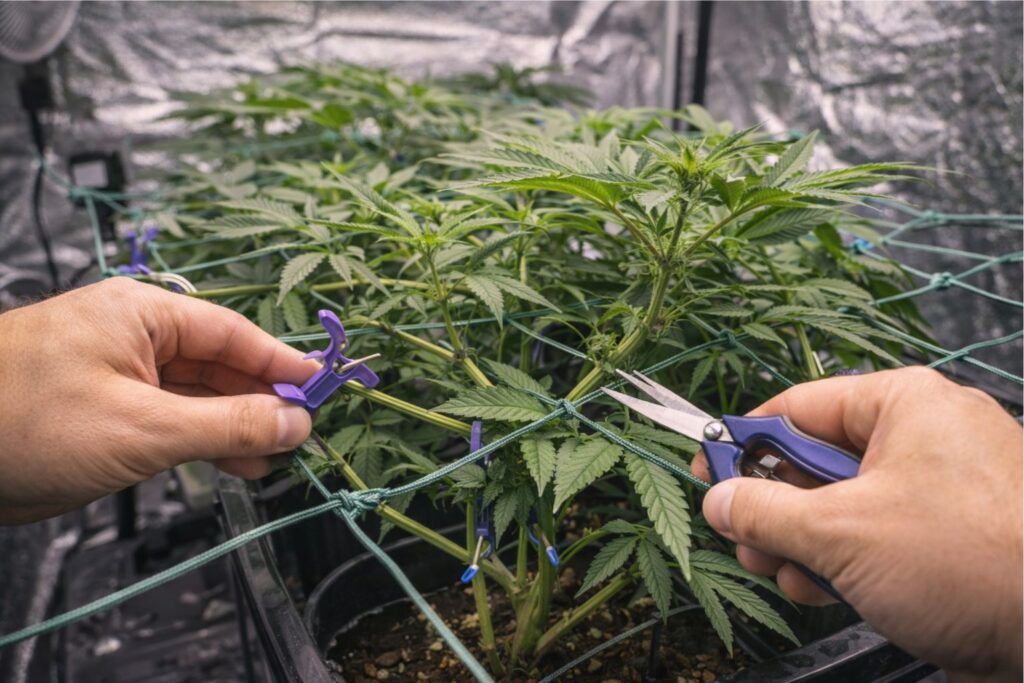
My Ace of Spades indoor cultivation approach is topping once, spreading branches wide, and using a trellis during stretch. I tuck for 10–14 days after the flip and keep the canopy level.
The second tip for Ace of Spades indoor cultivation is to clean the lower third of the plant to improve airflow and reduce pest pressure.
A third point about Ace of Spades indoor cultivation is restraint: heavy defoliation can stall it, so I remove only what blocks obvious bud sites.
Ace of Spades flower density
Ace of Spades flower density can be impressive when the room is steady. I see compact, sticky tops that feel firm in the hand.
The second note on Ace of Spades flower density is mold risk. I keep late-flower RH closer to 45–50% and I avoid dead air in the canopy.
The third note on Ace of Spades flower density is light penetration. If lower sites stay shaded, the bottoms stay airy and the tops do all the work.
Aroma and taste from my jars

Ace of Spades terpene notes
My Ace of Spades terpene notes start with dark berry, then citrus peel, then a light peppery edge. Grinding the flower amplifies the fruit and brings out a mild herbal tone.
The second layer of Ace of Spades terpene notes shows up after cure: sweetness gets clearer and citrus becomes more defined.
The final piece of Ace of Spades terpene notes is phenotype-driven. One expression leans “cherry soda,” another leans brighter and more citrus-forward.
Ace of Spades flavor profile
The Ace of Spades flavor profile on a clean vapor path is fruit-first with a bright citrus lift. On combustion, the Ace of Spades flavor profile shifts slightly earthier, and the pepper note shows up more on the exhale.
I’ve kept the Ace of Spades flavor profile strongest by avoiding heavy late-flower additives and by prioritizing the dry and cure.
Effects and real-world considerations

Ace of Spades effects report
My Ace of Spades effects report is a two-stage ride. The first 30–60 minutes feels mentally bright and social. After that, it settles into a calmer body feel that can turn couchy at higher doses.
The second part of my Ace of Spades effects report is dose sensitivity. A small amount feels upbeat; a larger amount pushes heavier relaxation.
The third point in my Ace of Spades effects report is timing. I like it late afternoon or evening; earlier use can derail productivity.
I’m not making medical claims. Cannabis affects everyone differently, and laws vary by region.
Flowering timeline, harvest window, and finishing
Ace of Spades harvest window
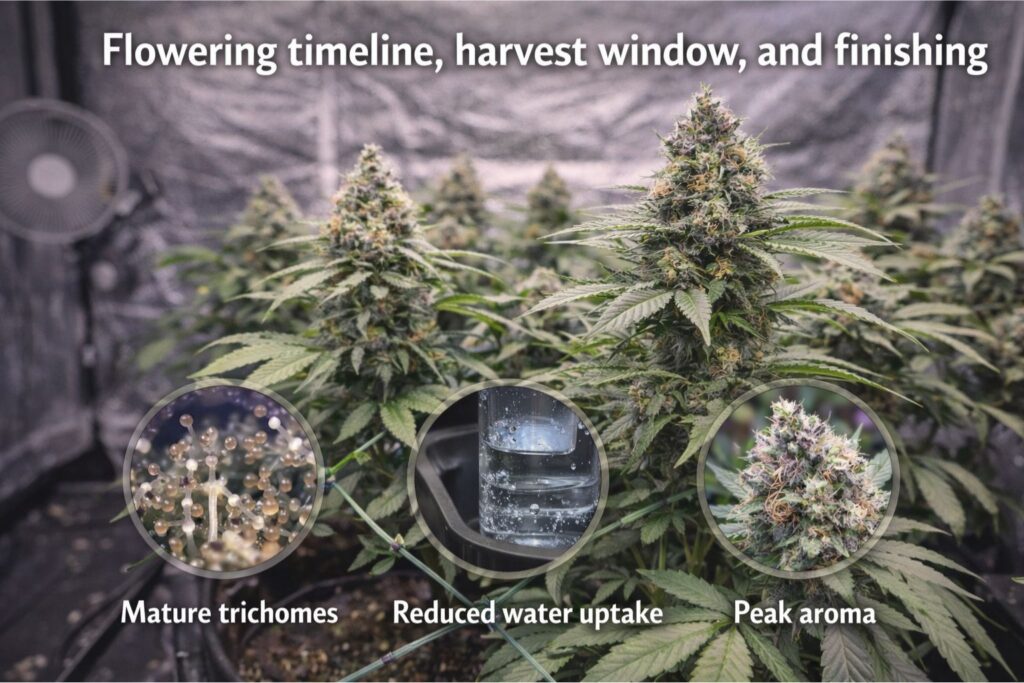
My Ace of Spades harvest window usually falls around week 8 to week 10 after the flip, depending on phenotype and environment. I watch trichomes, but I also watch water uptake and aroma: when drinking slows and the nose peaks, I know I’m close.
The second part of the Ace of Spades harvest window is preference. Earlier harvests feel brighter; later harvests lean heavier. I’ve split harvest to compare.
The third part of the Ace of Spades harvest window is planning your dry space before you chop, because mistakes here cost flavor.
Post-harvest handling
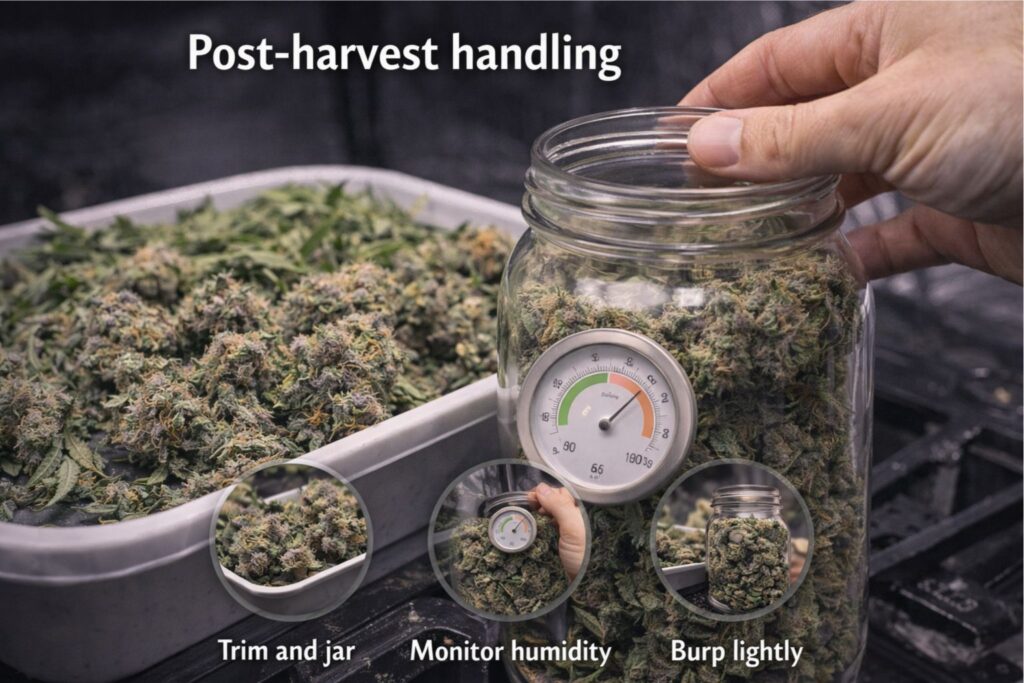
Ace of Spades curing timeline
My Ace of Spades curing timeline is trim after the dry, then jar and burp lightly for the first week. By week two, the edges round off. By week four, the fruit note is clearer and the smoke is smoother.
The second point in my Ace of Spades curing timeline is to use hygrometers. I aim for 58–62% RH in jars.
The third point in my Ace of Spades curing timeline is patience. A rushed cure rarely equals a good cure.
Integrated pest management in a dense cultivar
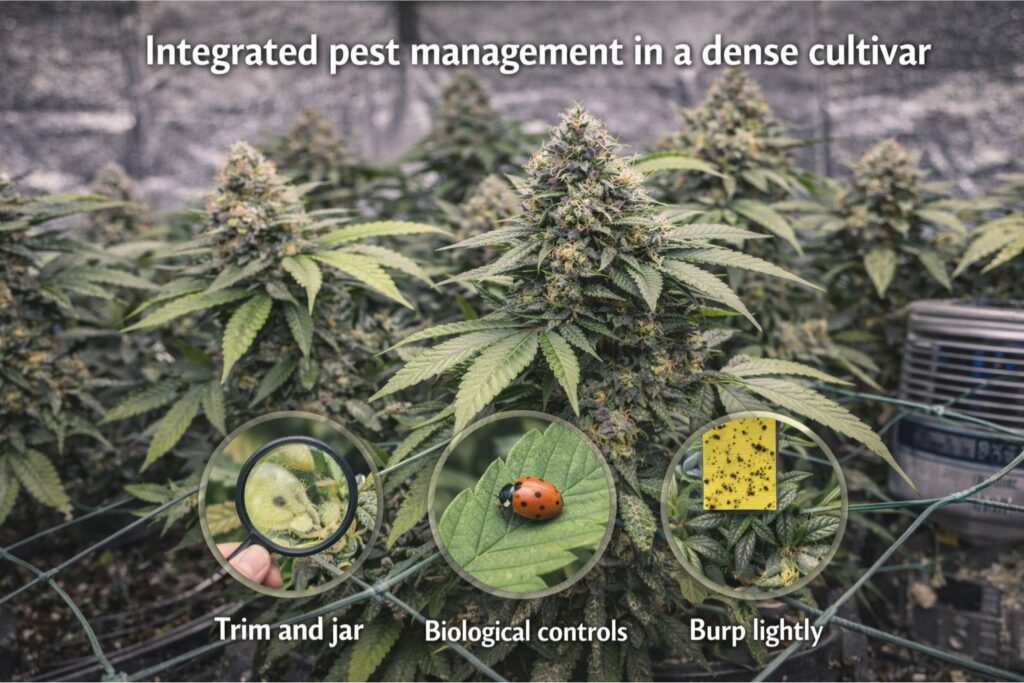
I treat IPM as routine: quarantine new plants, use sticky cards, keep the floor clean, and avoid spraying anything oily in late flower. Dense cannabis buds are not forgiving if mildew establishes.
Buying seeds and planning a run (non-legal advice)
If you’re looking to buy cannabis seeds online, focus on reputable breeders, clear packaging, and support. Always check local rules before ordering or cultivating marijuana; this is not legal advice.
If you’re debating soil vs hydro, Ace of Spades can work in both. Soil can soften feeding mistakes and bring a rounded weed aroma. Coco or hydro can boost control, but only if you can stay consistent.
FAQ
Is this cultivar indica or sativa leaning?
Most people describe it as indica-leaning with an uplifting edge, but the experience shifts with phenotype and harvest timing.
How do I germinate seeds reliably?
Keep it warm, clean, and lightly moist. I use a paper towel or direct sow into a light starter mix, then move seedlings under gentle light.
What lighting schedule should I use?
For photoperiod cannabis, 18/6 in veg and 12/12 in flower is the standard. Keep it consistent to avoid stress.
How do I keep aroma and flavor from fading?
Control heat, follow Ace of Spades dry room parameters, and respect the Ace of Spades curing timeline. Protecting the Ace of Spades flavor profile is mostly environment and patience.
Closing thoughts
This Ace of Spades Strain Review is my real-world take after growing, drying, and curing it more than once. If you want fruit-forward cannabis with a balanced head-and-body feel and you can keep the room steady, it’s a strong candidate. Feed moderately, keep airflow high, and treat the dry like it’s part of the grow. That’s how good genetics become great weed in the jar.
For a complete directory of cultivars, visit our Cannabis Strain Reviews.
