Table of Contents
Why I still make room for this classic
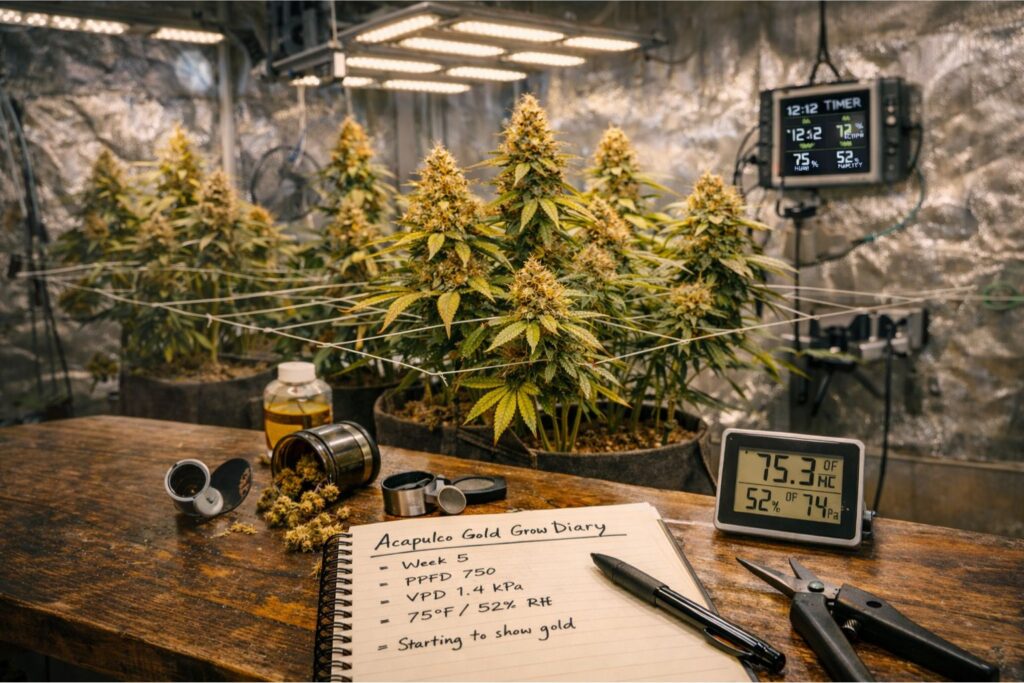
This Acapulco Gold Strain Review is written from the perspective of someone who has actually run the cultivar in a controlled indoor setup and taken notes from start to finish. I’ve grown plenty of modern weed and marijuana hybrids that finish fast and stack hard, but I still like this one when I’m chasing a bright, old-school experience and a plant that rewards careful environmental control.
The biggest reality check: phenotype variation is real. Even when the label says “classic,” the expression can swing from tall and airy to surprisingly chunky. That’s why I treat every run as an Acapulco Gold grow diary, not a guaranteed copy of the stories.
Genetics and what “heirloom” usually means in the grow room
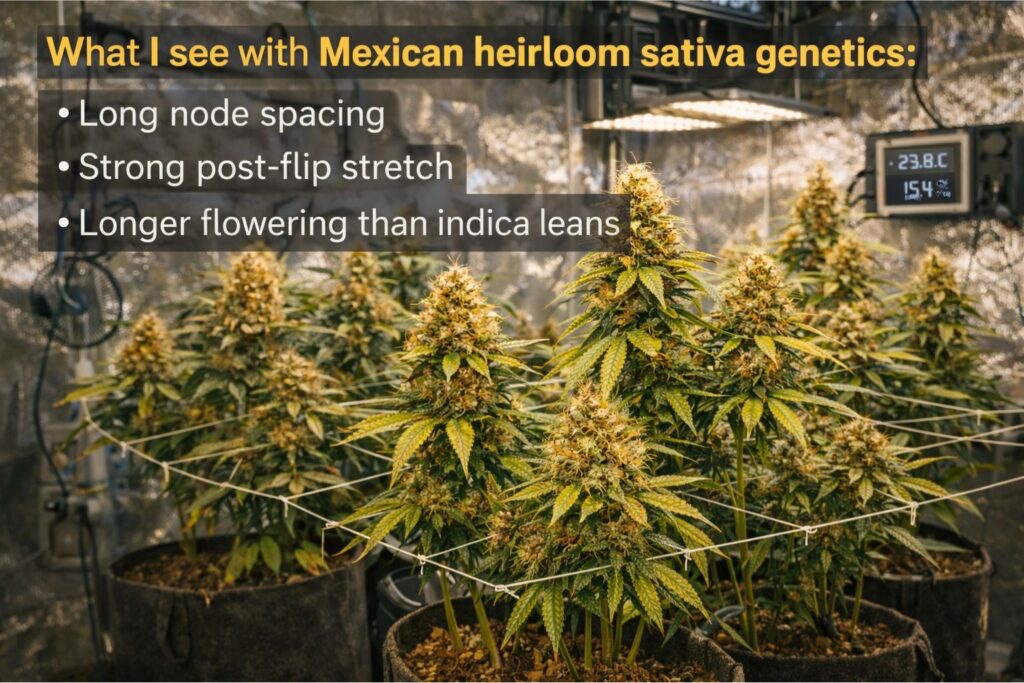
Many sources describe Acapulco Gold as a Mexican heirloom sativa that rose to fame decades ago. In practice, what I see is consistent with Mexican heirloom sativa genetics: longer node spacing, a strong post-flip stretch, and a finish that often runs longer than compact indica-leaning cannabis varieties.
If you’re shopping for genetics, the details matter more than the name:
- Photoperiod vs. auto: photoperiod gives you more control for training and timing.
- Feminized vs. regular: feminized works well for limited space; regular is useful if you want to do your own selection work.
- Breeder notes: look for mentions of selection for structure, finish time, and consistency.
I’m not giving legal advice. Before ordering marijuana genetics, check your local rules and shipping restrictions in your region.
Effects: what I feel and when I reach for it
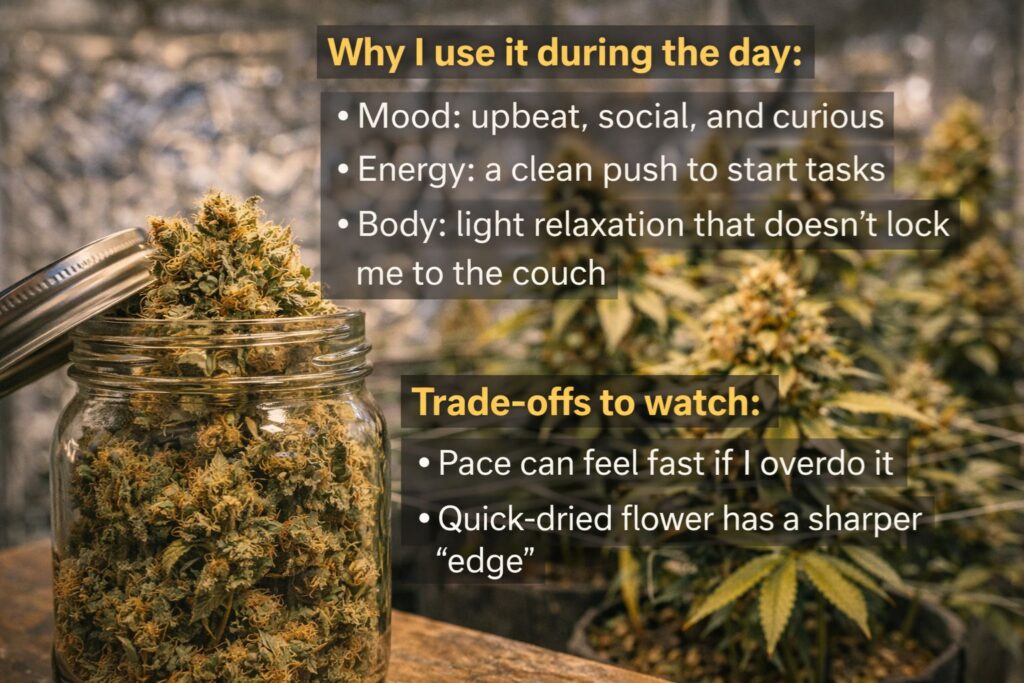
I’ll keep this honest and non-medical. In my sessions, the most consistent theme is lift and clarity rather than sedation. This Acapulco Gold Strain Review lands as a daytime-leaning experience for me, especially at moderate doses.
What I notice most:
- Mood: upbeat, social, and curious.
- Energy: a clean push to start tasks, not a jittery spike.
- Body: light relaxation that doesn’t lock me to the couch.
Trade-offs to be aware of:
- If I overdo it, the mental pace can feel too fast.
- If the flower is harvested early or dried too quickly, the “edge” feels sharper.
Aroma and flavor: what comes through after a slow cure
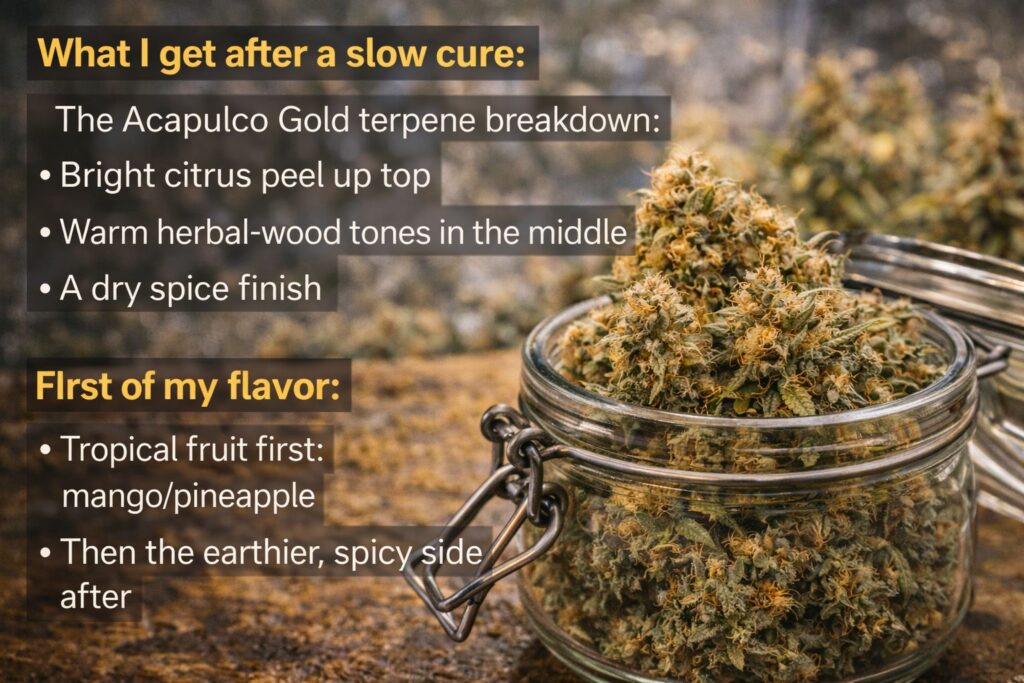
I judge this cultivar more by the jar than the fresh plant. The full profile shows up after a patient cure.
In my notes, the Acapulco Gold terpene breakdown reads as:
- Bright citrus peel up top
- Warm herbal-wood tones in the middle
- A dry spice finish
That Acapulco Gold terpene breakdown is easiest to taste at lower temperatures, where the top notes stay intact. When the cure is rushed, the Acapulco Gold terpene breakdown collapses into something flatter and more generic.
On the palate, I usually get sweet tropical fruit, then earthy and slightly peppery on the exhale. That makes it one of the few cultivars where I can describe flavor without reaching for hype.
The “gold” look: when it shows and why it sometimes doesn’t
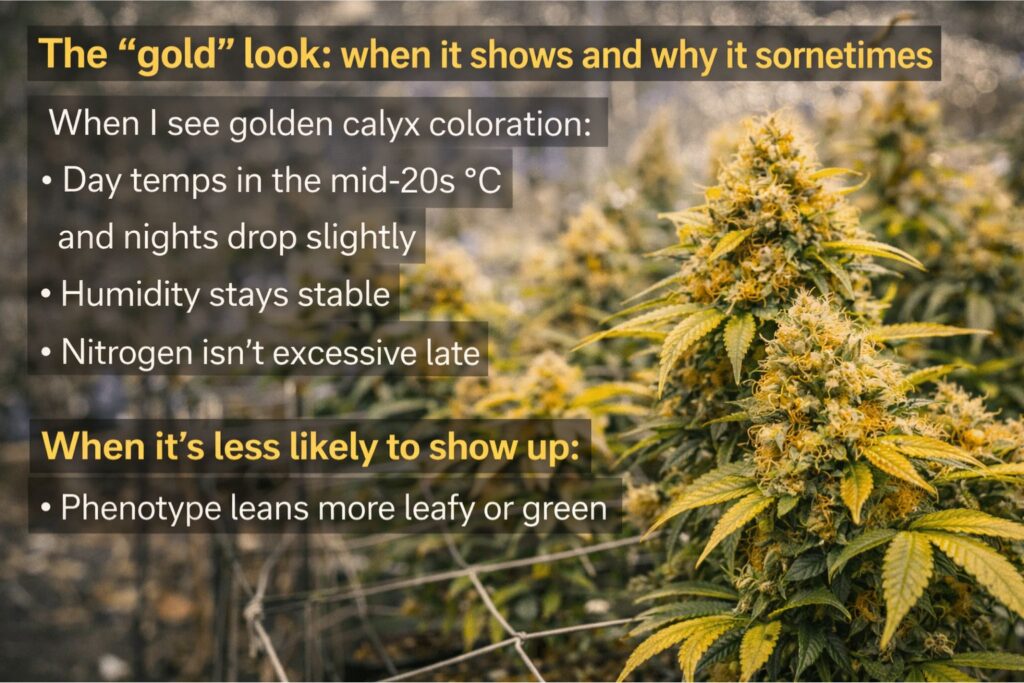
People talk about a golden finish like it’s guaranteed. In my tents, it’s more conditional. I’ve seen golden calyx coloration show up late in flower when the plant finishes calmly, not when it’s pushed hard and stressed.
I’m more likely to see golden calyx coloration when:
- Day temps sit in the mid-20s °C and nights drop a few degrees
- Humidity stays stable and airflow is strong
- Nitrogen isn’t excessive late in flower
Even then, golden calyx coloration can vary by phenotype, so treat it as a bonus, not a promise.
My cultivation targets: light, climate, and nutrition
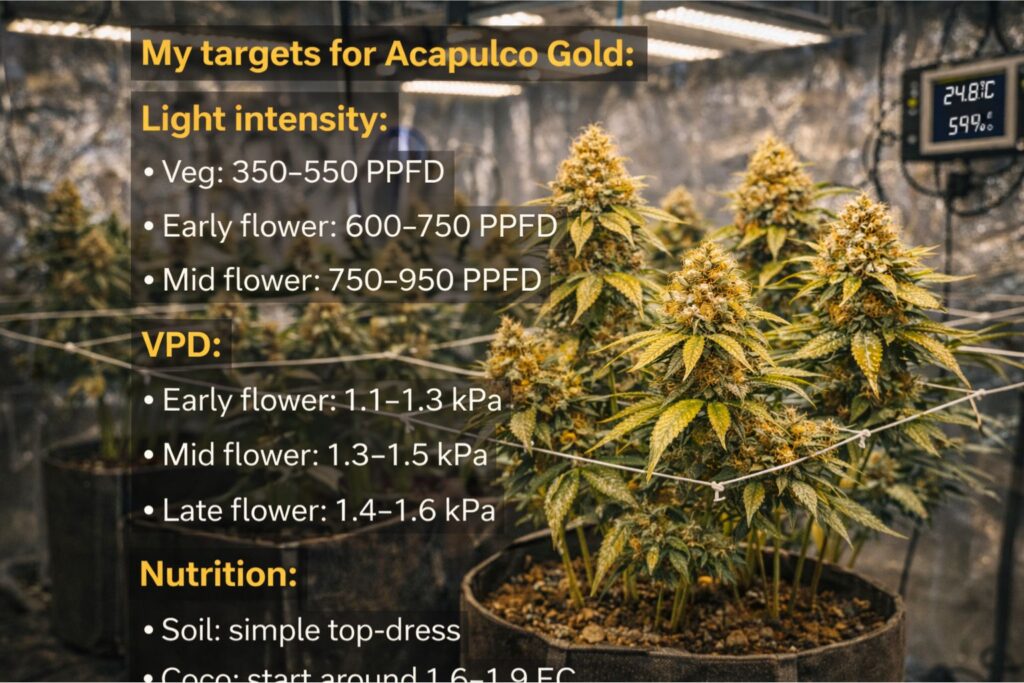
This section is the practical part of the Acapulco Gold Strain Review. If you want repeatable results, the environment has to be consistent.
Light intensity and photoperiod
For photoperiod plants, I run 18/6 in veg and 12/12 in flower. Under LED, I think in PPFD rather than “watts.”
Typical ranges I aim for:
- Veg: 350–550 PPFD
- Early flower: 600–750 PPFD
- Mid flower: 750–950 PPFD if the room is stable
If you don’t have CO2 enrichment, I’d rather stay slightly conservative and keep leaves healthy than force intensity and chase stress.
VPD and airflow
I use a simple VPD chart for flowering cannabis to keep the room predictable. A VPD chart for flowering cannabis helps me decide whether to change dehumidification, temperature, or airflow first.
My practical targets:
- Early flower: ~1.1–1.3 kPa
- Mid flower: ~1.3–1.5 kPa
- Late flower: ~1.4–1.6 kPa
A VPD chart for flowering cannabis is only useful if air is actually moving. I run constant circulation above and below the canopy to prevent humidity pockets.
Feeding in soil and coco
I’ve run this cultivar in living soil and in coco. Soil is more forgiving; coco is more steerable.
In coco, I keep close track of coco EC targets for flowering because the line can burn if you push too hard. As a starting point, my coco EC targets for flowering are:
- Early flower: 1.6–1.9 EC
- Mid flower: 1.8–2.2 EC
- Late flower: taper if the plant is finishing clean
Those coco EC targets for flowering assume good runoff and regular irrigation. If you’re seeing crispy tips or stalled growth, reduce EC first and confirm your climate and watering rhythm.
Training: how I keep the canopy under control
This cultivar can stretch aggressively, so I treat structure as a first-class problem. Sativa stretch management indoors is the difference between a clean canopy and light burn.
My routine for sativa stretch management indoors:
- Top once above the 5th–6th node in veg.
- Start low-stress training early to widen the plant.
- Flip to flower while there’s still headroom.
- Add a trellis in early flower to keep tops even.
- Defoliate lightly for airflow lanes, not for looks.
I repeat this because it’s the core lesson: sativa stretch management indoors has to start before the flip. If you wait until week two of flower, you’re already late.
Pests and problems I watch for
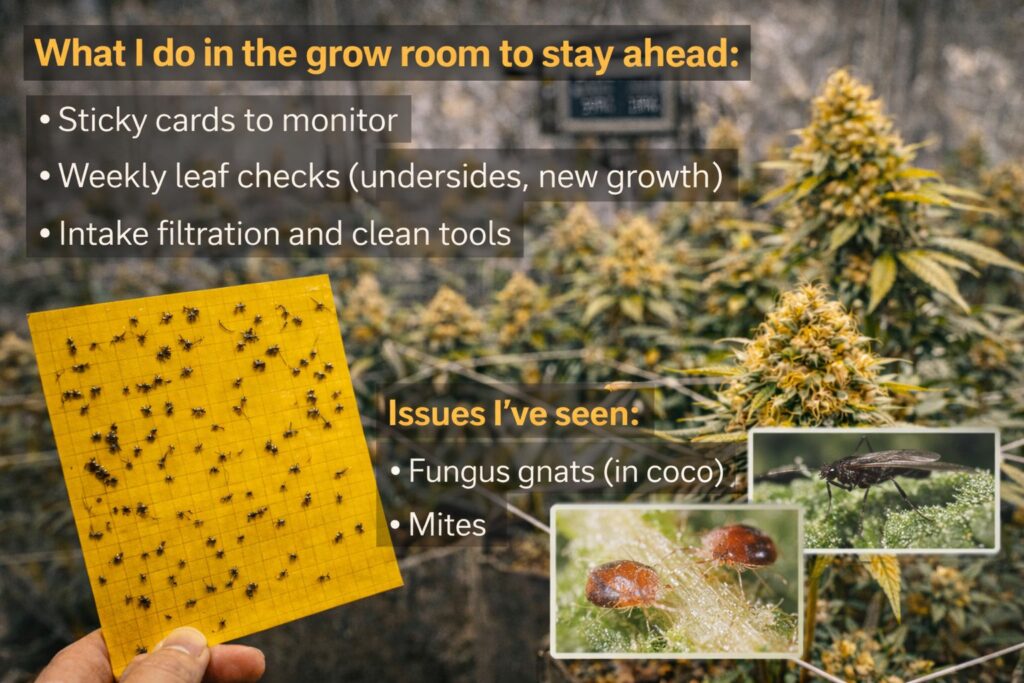
I run basic IPM every cycle because prevention is easier than rescue in any cannabis or marijuana room:
- Sticky cards to monitor
- Weekly leaf checks (especially underside of new growth)
- Intake filtration and clean tools
If I see fungus gnats in coco, I correct moisture and top-dress with a dry barrier. If I see mites, I respond early in veg and avoid spraying anything oily once flowers form.
Flowering time and harvest decisions
Instead of harvesting by calendar, I look for a consistent finish and the right balance of ripeness and brightness.
In my Acapulco Gold grow diary, the finish time has ranged depending on phenotype and environment. I focus on the Acapulco Gold harvest window rather than a fixed date.
How I define the Acapulco Gold harvest window:
- Pistils have mostly darkened and receded
- Trichomes are mostly cloudy, with some amber depending on the effect you want
- Calyxes are swollen and the smell is deeper and less “green”
If you harvest too early, the effects can feel sharper. If you harvest too late, you may lose some of the clear lift that makes this cultivar special. Dialing the Acapulco Gold harvest window is where your notes pay off.
Drying and curing: what makes the final product
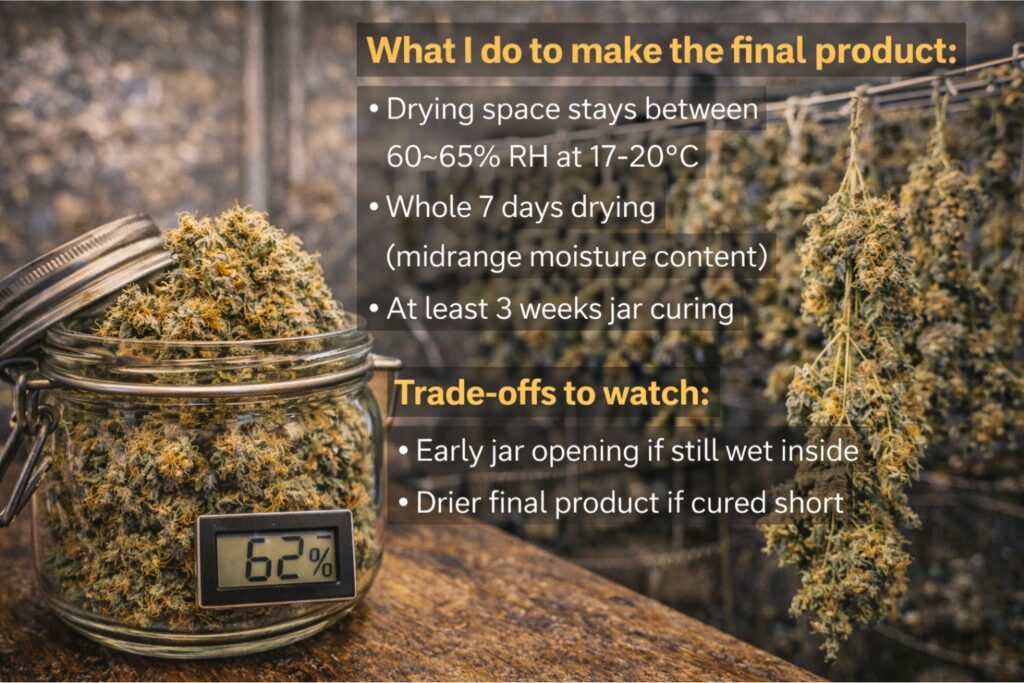
The fastest way to ruin good cannabis or weed is sloppy drying. I treat post-harvest as part of the grow.
My dry room humidity control target is simple: slow enough to preserve aroma, dry enough to avoid mold. For dry room humidity control, I aim for 55–60% RH and 18–20°C with gentle air movement, usually 10–14 days.
After that, I follow a seed-to-jar curing schedule:
- Jar at the point where small stems snap
- Burp daily for the first week
- Then space burps out as moisture stabilizes
- Keep jars in a cool, dark place
That seed-to-jar curing schedule is how I keep the aroma intact and the smoke smooth, and the weed stays aromatic. When I rush it, everything gets harsher and the flavor flattens. When I follow the seed-to-jar curing schedule, the profile stays expressive.
Buying genetics online: how I avoid disappointment
People search for all kinds of terms when they want to buy cannabis genetics online: feminized options, photoperiod, autos, sativa vs. indica, and so on. My best advice is to buy based on transparency, not just a famous name.
I look for:
- Clear descriptions of plant structure and stretch
- Expected flowering duration ranges
- Notes on terpene expression and selection work
- Discreet shipping options and stable packaging
If your goal is the old-school vibe, prioritize Mexican heirloom sativa genetics and grow notes from the breeder. If your goal is easy indoor production, look for lines that have been selected for shorter structure and uniform finish.
FAQ
How do I germinate seeds with the least handling?
I like to start in a lightly moistened starter plug and move to the final medium once roots show. It reduces damage compared to over-handling a taproot. Keep warmth stable and don’t drown the plug.
Soil or coco for a first run?
If you want forgiveness, soil is easier. If you want control and you can commit to consistent irrigation, coco is powerful. If you choose coco, stick to conservative coco EC targets for flowering until you know how the plant responds.
What is the biggest mistake with tall sativa-leaning plants?
Waiting too long to train. Sativa stretch management indoors works best when you top and spread the plant in veg, then flip before it crowds the light.
How do I prevent musty jars and harsh smoke?
Slow the dry and keep the room stable. Dry room humidity control is the foundation, then a steady seed-to-jar curing schedule finishes the job.
How do I keep the flavor bright and not “green”?
Harvest in the right window and avoid overdrying. The Acapulco Gold terpene breakdown shows best when the dry is slow and the cure is consistent.
For a complete directory of cultivars, visit our Cannabis Strain Reviews.
