Table of Contents
I’m writing this A-10 Strain Review the same way I log any new cannabis cultivar in my own room: I run it, I measure it, and I keep the same set of notes from seedling all the way to the first month in the jar. I track what matters for repeatable results—how fast it establishes roots, how it responds to training, how it handles feed strength under a given PPFD, and whether it stays stable when humidity swings. I’m not interested in describing a strain like a menu item. I want the kind of details you can actually use when you’re planning a grow, choosing a medium, or figuring out why one plant finishes cleaner than another.
A-10 gets mentioned a lot in circles that talk cannabis, marijuana, and weed, but the specifics are often vague or inconsistent depending on who grew it and where it came from. So in this review I’m sticking to what I can actually repeat: environment targets that held up in my tent, how the plants behaved during stretch and late flower, what showed up across different phenotypes, and what changed the final aroma and flavor after drying and curing. If something varied from run to run, I’ll say so, because that variability is part of what you need to plan for with A-10.
This A-10 Strain Review is not medical or legal advice. Effects can vary a lot by tolerance, dose, and setting, and cultivation rules depend on your region, so always check your local regulations before growing or buying seeds.
Quick profile from my runs
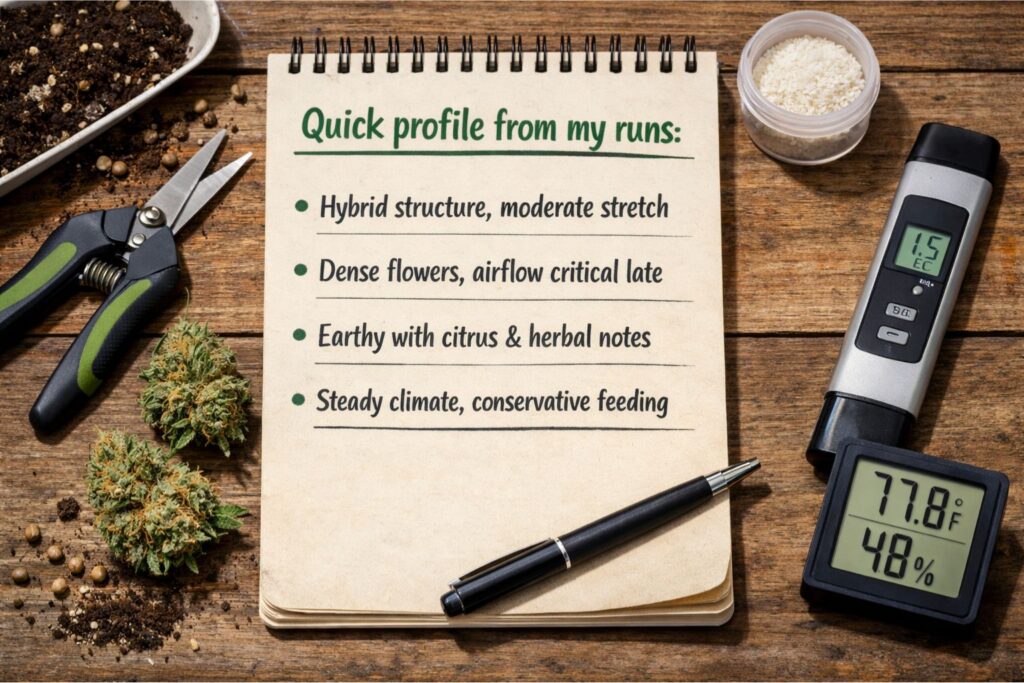
Here’s the short version I wish I had before my first A-10 cycle:
- Growth style: hybrid-leaning structure, moderate stretch, strong top-site stacking when trained
- Flower density: can finish tight, which means humidity and airflow matter late flower
- Aroma direction: earthy base with citrus lift and a herbal edge
- Best results: steady climate, conservative feeding, and patient post-harvest handling
I’ll reference my A-10 grow diary throughout so you can see how I got from inputs to outcomes.
Genetics: what I can and can’t verify
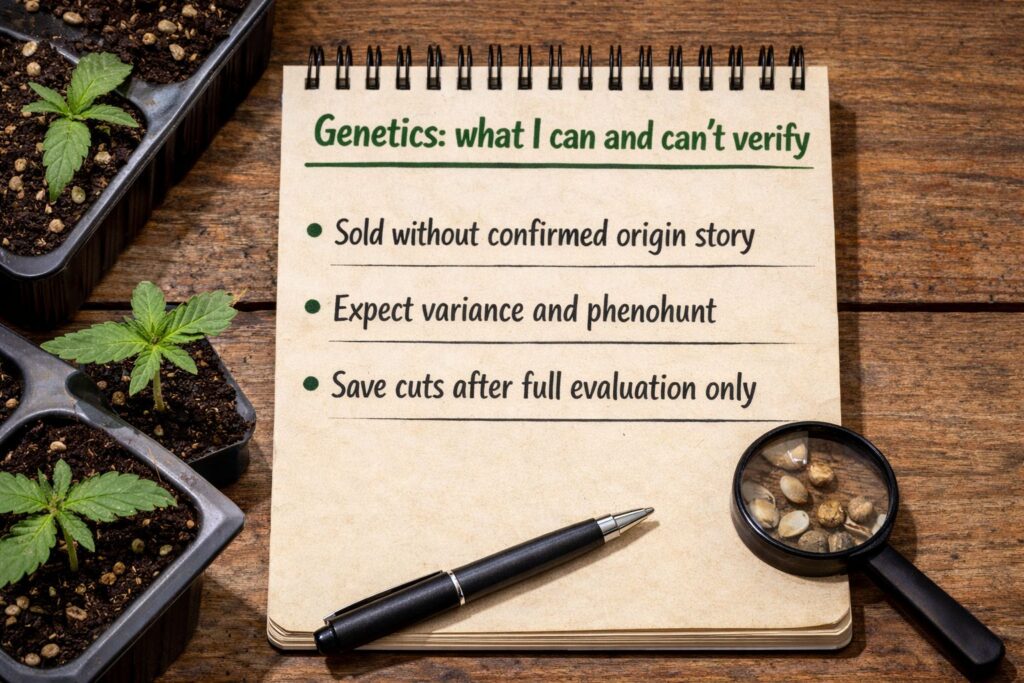
A-10 is often sold without a single, widely documented origin story. In practice, that means you should expect variance. When I popped multiple seeds, my A-10 phenohunt notes showed differences in stretch, leaf shape, and finish time.
If you want consistency, treat A-10 as a small phenohunt project:
- Run at least 3–6 plants if your space allows.
- Keep a simple scorecard for aroma, structure, and ripening speed.
- Save a cut only after you’ve confirmed it keeps the traits you like.
Those A-10 phenohunt notes also help later when you compare your own A-10 terpene map across harvests.
Bud structure and what I look for in week 5–8
In my A-10 grow diary, the best plants built dense tops with a decent calyx-to-leaf ratio. The plants that didn’t get trained early made tall spears, shaded their lowers, and finished uneven.
My A-10 canopy plan is straightforward:
- Top once in veg, then spread the mains with soft ties.
- Keep tops at the same height before the flip.
- Remove only what blocks airflow after stretch, not everything at once.
A clean A-10 canopy plan makes the rest of the cycle easier—more even PPFD, fewer humidity pockets, and a more predictable finish.
Indoor environment targets (PPFD, VPD, temperature, RH)
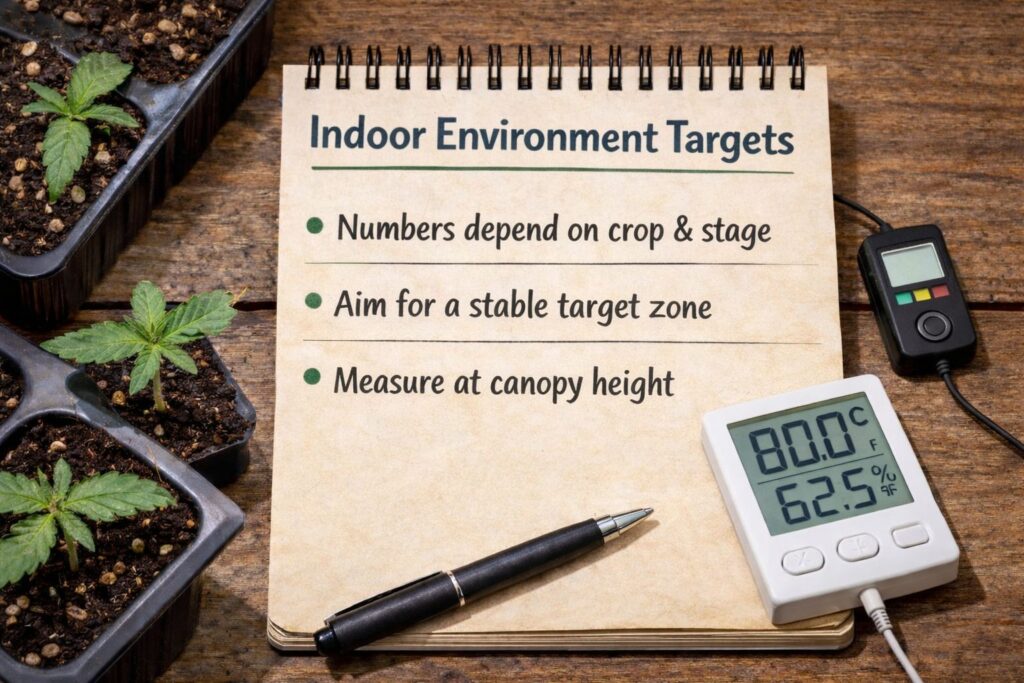
People ask “how do I dial an indoor weed grow without chasing numbers?” I use bands that keep plants calm and let me see real signals.
Lighting targets I’ve used successfully:
- Veg PPFD: 300–500 at canopy
- Early flower PPFD: 600–800
- Mid/late flower PPFD: 800–1,000 if heat and humidity are controlled
Climate bands that kept my cannabis canopy stable:
- Veg: 24–27°C, 60–70% RH
- Flower: 22–26°C, 45–60% RH (lower end late flower if flowers are tight)
VPD is a helpful guide, but my biggest “win” in the A-10 Strain Review came from consistency—no big day/night swings and steady airflow across the canopy.
Feeding: my A-10 feed numbers and how I adjusted
A-10 didn’t reward overfeeding in my room. The cleanest flavor came from moderate inputs and stable root-zone conditions.
For coco/hydro-style runs, these A-10 feed numbers were my working ranges:
- pH: 5.7–6.1
- Veg EC: 1.2–1.8
- Early flower EC: 1.6–2.0
- Mid flower EC: 1.8–2.2, then downshift if tips show stress
For soil, I watched irrigation and plant color more than chasing EC. The main idea is to match intensity: the higher the PPFD, the more carefully you have to manage A-10 feed numbers to avoid tip burn and locked-out roots.
If you’re troubleshooting:
- Burnt tips and clawing: reduce EC, confirm runoff, check root temps
- Pale new growth: verify pH, root health, and balanced nutrition before adding more
I’m including these A-10 feed numbers three times in this A-10 Strain Review because most problems I see are simple overcorrections.
Aroma and my A-10 terpene map
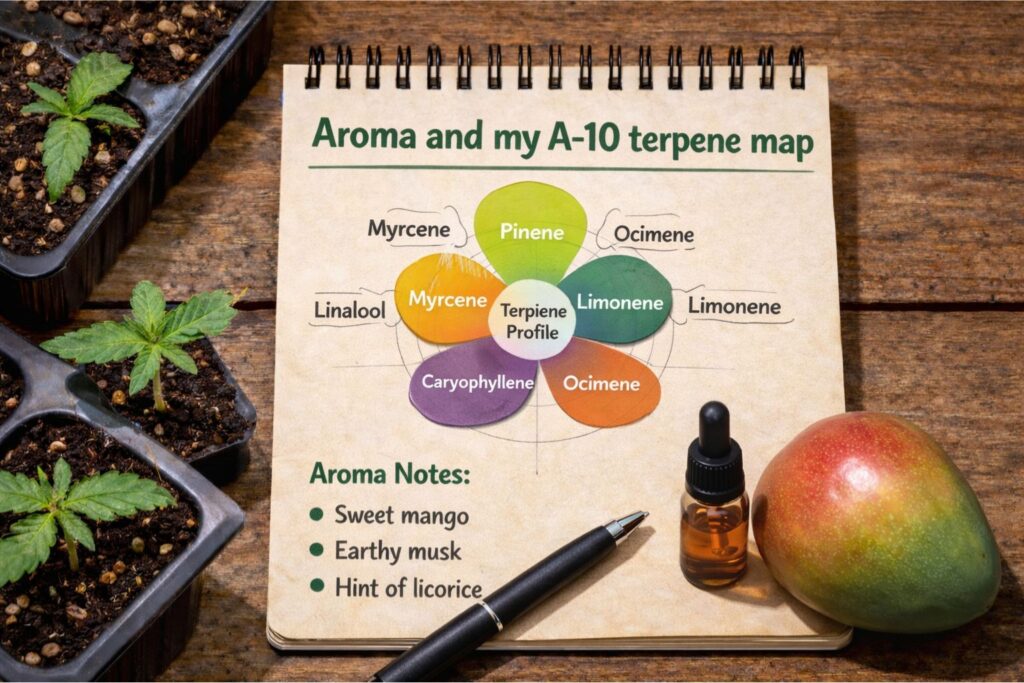
I build a quick A-10 terpene map by smelling at the same points each week and writing down what changes. In mid flower, I got damp earth and wood. By late flower, I picked up citrus peel, then a soft herbal finish after cure.
A practical way to build your own A-10 terpene map:
- Smell at lights-on and again right before lights-off.
- Compare fresh flower aroma vs. dried trim aroma.
- Re-check after 14 days of cure, then again at 30 days.
That last step matters. My first jar check didn’t show the full A-10 terpene map until the cure stabilized.
Taste: A-10 flavor notes in smoke and vapor
In my A-10 Strain Review, A-10 flavor notes tracked the aroma: earthy inhale, citrus mid-palate, herbal exhale. With a vaporizer, A-10 flavor notes were clearer, especially the brighter top notes.
If A-10 flavor notes come out harsh or grassy, I look at two things first:
- Was the dry too fast?
- Did I jar too early?
Fix the process and A-10 flavor notes usually improve even if the genetics are average.
Effects: my A-10 smoke report and a realistic timeline
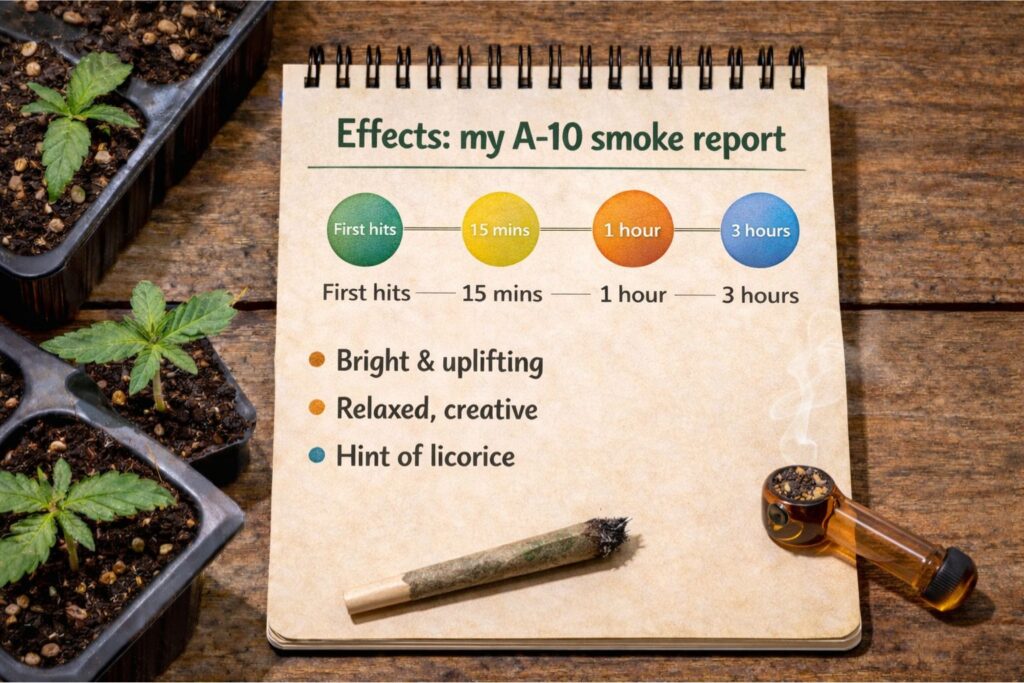
This section is purely observational. My A-10 smoke report is based on small, consistent doses on nights when I didn’t mix strains.
A typical A-10 effects timeline for me:
- 0–20 minutes: calmer headspace, less mental noise
- 20–60 minutes: body relaxation builds; I’m more comfortable sitting still
- 60–120+ minutes: steady plateau and a gradual taper
Harvest timing changed the feel. Earlier harvests felt lighter; later harvests leaned heavier and lasted longer. That’s why I keep an A-10 smoke report for each harvest and tie it to my A-10 finish cues.
Flowering range and my A-10 finish cues
Listings vary, but I saw an 8–10 week range across plants. Instead of chasing a calendar, I used A-10 finish cues:
- Trichomes: mostly cloudy with the amount of amber you prefer
- Aroma: the “green” smell fades and the profile becomes louder and more defined
- Uptake: the plant slows drinking and the pot stays wet longer
Those A-10 finish cues kept my harvest decisions consistent, which is the best way I’ve found to make the A-10 Strain Review repeatable.
Post-harvest: A-10 dry room settings and my A-10 cure schedule
If you want the aroma to survive, don’t rush the dry. My A-10 dry room settings are deliberately boring:
- 18–21°C
- 55–60% RH
- Gentle circulation, no fan blasting buds directly
I keep those A-10 dry room settings stable until small stems snap. Then I move to jars and follow an A-10 cure schedule:
- Days 1–10: burp daily, short openings
- Days 11–21: burp every 2–3 days
- Day 21+: burp weekly as needed, keep jars in a cool, dark place
That A-10 cure schedule is where the profile rounds out. In my experience, the A-10 cure schedule matters more than fancy additives.
Seed shopping notes: my approach to A-10 seed sourcing
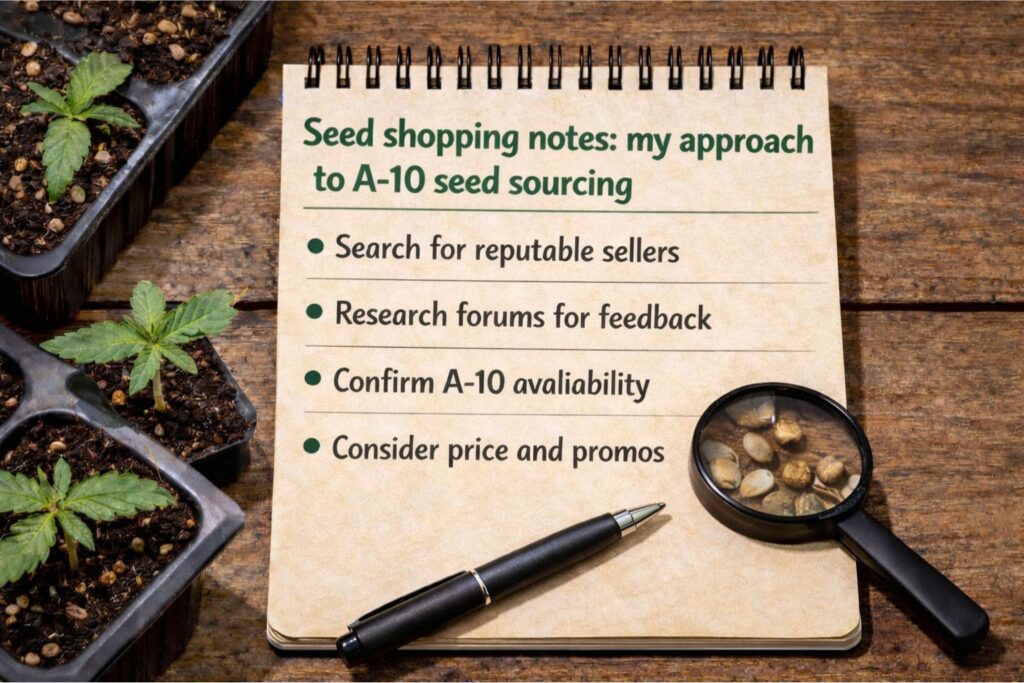
When people ask how to buy cannabis seeds online, the best answer is “buy with documentation.” My A-10 seed sourcing checklist is simple:
- Clear labeling (feminized seeds, regular seeds, or autoflowering)
- Recent grow photos from the seller or community
- Notes about variation, so your expectations match reality
- Packaging and shipping that protect the seed
I’m mentioning A-10 seed sourcing a few times because, with a variable label, A-10 seed sourcing is half the battle. If you want the best shot at a specific expression, good A-10 seed sourcing and good phenohunting go together.
Common issues and what I did about them
From my A-10 grow diary, these were the most common headaches:
- Late-flower humidity spikes: increase airflow and lower RH to protect compact flowers
- Light stress that looked like burn: lower PPFD slightly before changing nutrition
- Uneven ripening: tighten the A-10 canopy plan and avoid shaded lowers
FAQ
What’s the main takeaway from this A-10 Strain Review?
The A-10 Strain Review takeaway is consistency. Keep climate steady, use moderate A-10 feed numbers, and don’t rush the A-10 cure schedule.
How do I build my own A-10 terpene map?
Use the same sniff checkpoints each week and compare jar aroma at day 14 and day 30. A written A-10 terpene map makes it easier to connect grow inputs to results.
What should I expect from the A-10 effects timeline?
My A-10 smoke report shows a gradual onset, steady relaxation, and a long taper. Your A-10 effects timeline can differ based on tolerance, dose, and harvest timing.
How can I improve A-10 flavor notes?
Improve drying and curing first. Stable A-10 dry room settings plus a patient A-10 cure schedule are the quickest way to sharpen A-10 flavor notes.
What’s your approach to A-10 phenohunt notes?
Run multiple plants, label everything, and only keep a cut after you’ve evaluated it through cure. Strong A-10 phenohunt notes turn a confusing label into a repeatable result.
Any tips for A-10 seed sourcing?
Buy from a source that provides clear seed type, recent photos, and realistic expectations about variation. Better A-10 seed sourcing makes the whole A-10 Strain Review process smoother.
For a complete directory of cultivars, visit our Cannabis Strain Reviews.
