Table of Contents
I’ve grown 9-Pound Hammer in coco and in living soil, and I keep notes on structure, aroma, and finish. In this 9 Pound Hammer Strain Review, I’m sharing what stayed consistent, where phenotypes differed, and the targets I use so the jar cures clean.
I’ll cover effects, flavor, and a practical grow plan. Marijuana laws vary; always check your local rules before you germinate anything.
Genetics and what that means in the garden
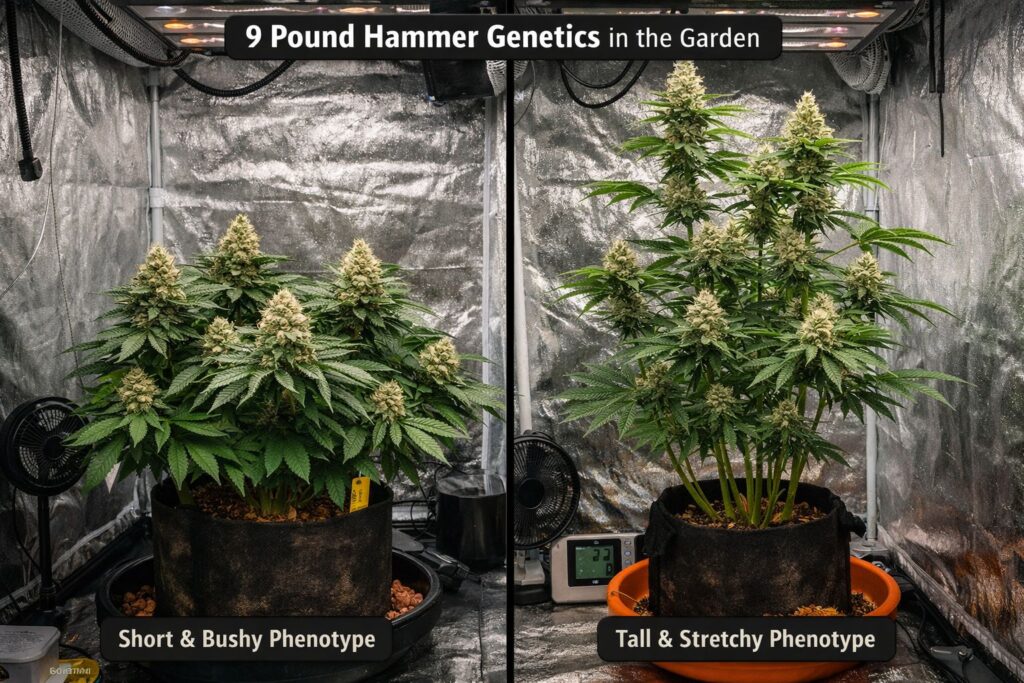
Most people run into 9-Pound Hammer as an indica-leaning hybrid with berry and earthy notes and a finish that can tip into citrus or pine. From a grower’s point of view, expect dense flowers, strong resin, and phenotypes that range from squat to moderately stretchy.
In my tent I see two repeating patterns:
- A shorter plant with thick stems, broad leaves, and tight node spacing that stacks early.
- A slightly taller plant that stretches more in the first two weeks after the flip and holds a brighter top note in the aroma.
Because of that spread, I start every run with the same 9-Pound Hammer grow room checklist and I label plants aggressively. If you want consistent weed, selection and recordkeeping matter as much as nutrients.
9-Pound Hammer terpene snapshot: aroma and flavor
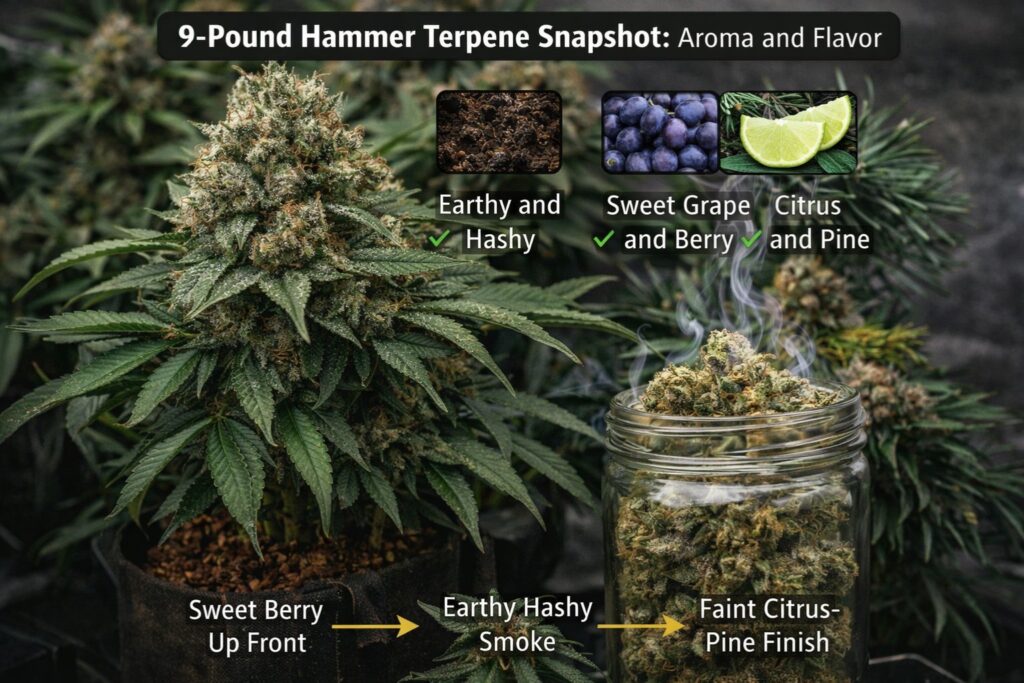
When I say 9-Pound Hammer terpene snapshot, I’m not pretending every jar is identical. Terpenes shift with environment, feeding, and harvest timing. Still, I get a reliable set of impressions when the dry and cure are done right.
Aroma: my breakdown at three stages
Here’s my 9-Pound Hammer terpene snapshot in a practical format:
In late flower, standing in the room:
- Earthy base note, like damp soil after watering
- Sweet fruit skin that reads grape to me
- A sharper edge that can feel like lime zest or pine needles
In the trim bin right after harvest:
- The sweet note pops
In the jar after cure:
- The earth settles into a hash-like depth
- The fruit becomes rounder and less “green”
- The sharp edge shows up as a clean, bright lift instead of harshness
If your cannabis smells flat, I usually blame the finish: either the plant was overfed late, or the drying conditions were too hot or too fast.
Flavor: what I taste and what ruins it
On a good cure, I get sweet berry up front, then earthy smoke, then a light citrus-pine flick on the exhale. That flavor is fragile. It fades when:
- The dry is rushed
- The flowers are jarred too wet
- Nitrogen stays high deep into flower
Your dry room is part of your grow.
Effects and the rhythm of the high
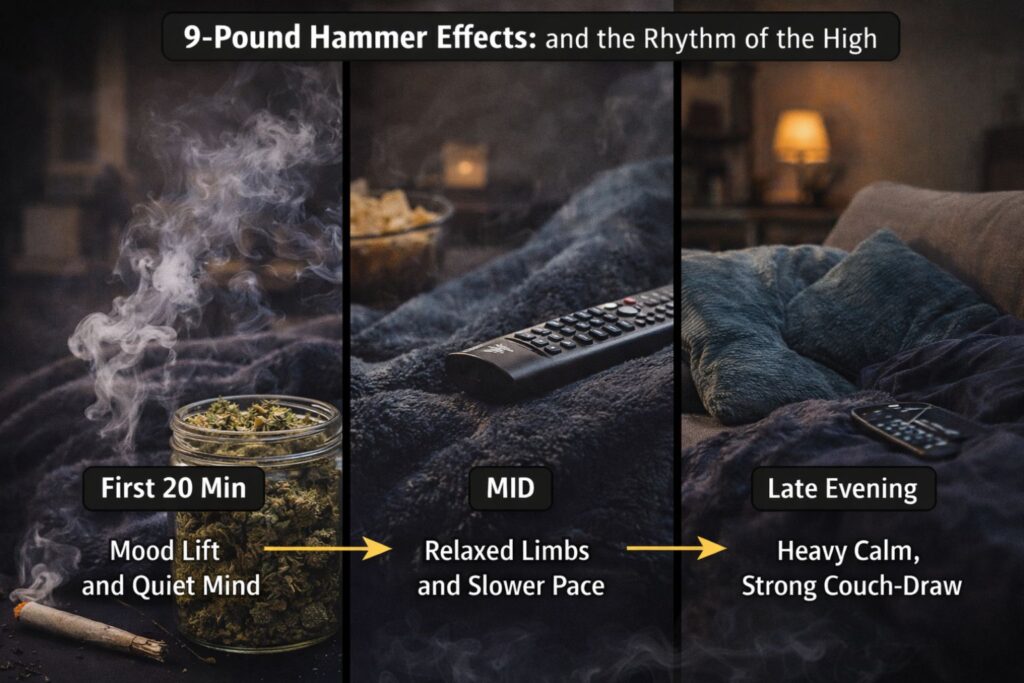
This is the section people hunt for, so I’ll be direct. In my experience, the first 20 minutes are a gentle mental lift, then the body effect builds into a heavier calm. The best phrase I can use is 9-Pound Hammer evening effects: it’s the kind of weed that fits after work, not before a long list of errands.
My typical 9-Pound Hammer evening effects look like:
- Quieter thoughts and less mental noise
- Relaxed shoulders and slower pacing
- A strong pull toward the couch if the dose is heavy
If you’re sensitive, start small and give it time. Tolerance varies by person.
9-Pound Hammer grow room checklist: environment targets I actually use
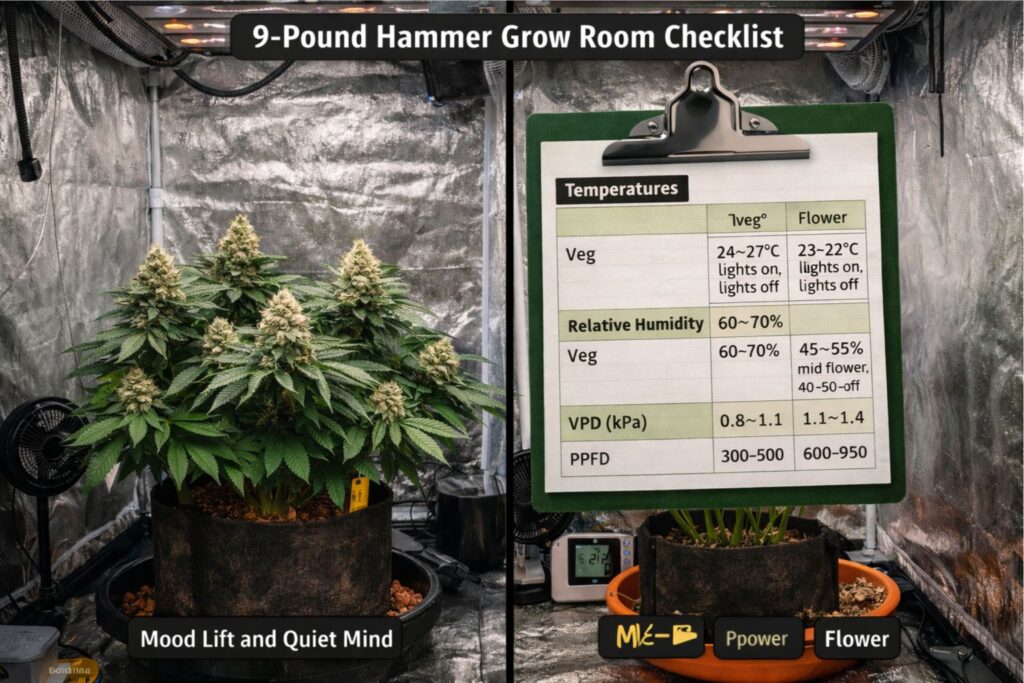
I keep a printed 9-Pound Hammer grow room checklist because it keeps me honest. The plant doesn’t care about opinions; it reacts to airflow, temperature, humidity, and light.
Here are my baseline targets for an indoor photoperiod run:
Vegetative stage:
- Temperature: 24–27°C lights on, 20–22°C lights off
- RH: 60–70%
- VPD: roughly 0.8–1.1 kPa
- PPFD: 300–500 at the canopy
Flower stage:
- Temperature: 23–26°C lights on, 19–21°C lights off
- RH: 45–55% mid flower, 40–50% late flower
- VPD: roughly 1.1–1.4 kPa
- PPFD: 600–950 depending on plant response
Those numbers are guardrails that keep uptake predictable.
9-Pound Hammer VPD targets: the simplest way I think about it
I write 9-Pound Hammer VPD targets next to my humidifier controller because it’s easy to chase humidity without thinking about leaf temperature. For most rooms, I treat VPD as a stability tool:
- In veg, I want the plant to drink and build leaves without clawing.
- In flower, I want steady uptake without inviting mold in dense colas.
If you’re new, pick one set of 9-Pound Hammer VPD targets and hold them for a week before you decide something “isn’t working.” Most mistakes come from changing too many variables too fast.
9-Pound Hammer PPFD ramp: how I raise intensity without bleaching tops
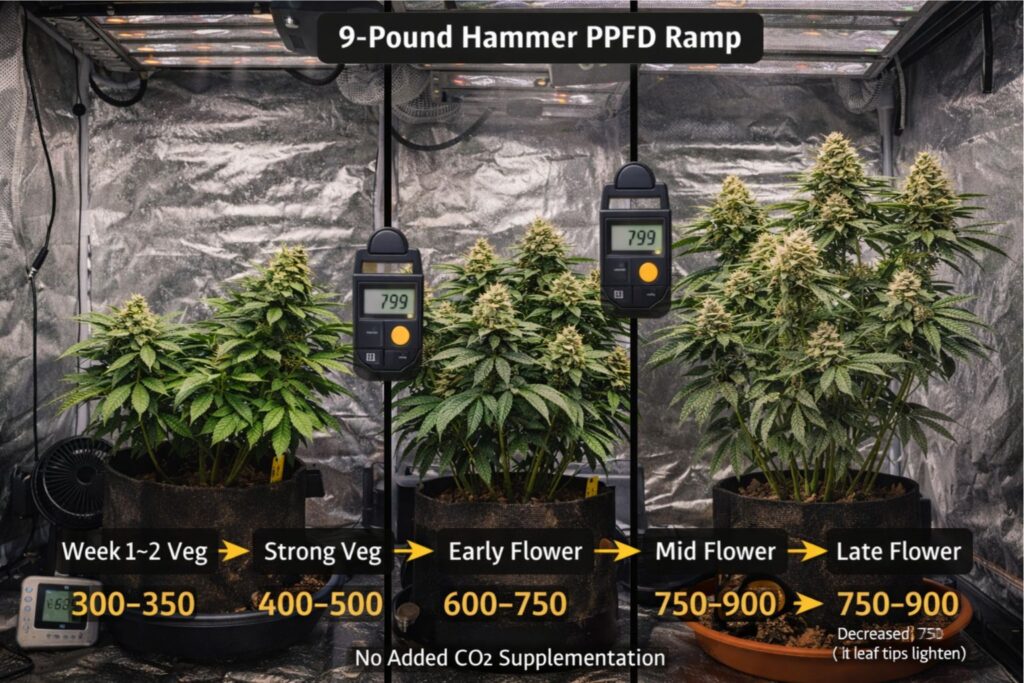
Light drives everything, but jumping too fast causes problems. My 9-Pound Hammer PPFD ramp looks like this:
- Week 1–2 veg: 300–350 PPFD while roots establish
- Strong veg: 400–500 PPFD once growth is steady
- Early flower: 600–750 PPFD as buds set
- Mid flower: 750–900 PPFD if leaves stay flat and healthy
- Late flower: hold or slightly reduce if tops lighten
That 9-Pound Hammer PPFD ramp assumes no added CO2.
Feeding: coco, soil, and how I avoid drama
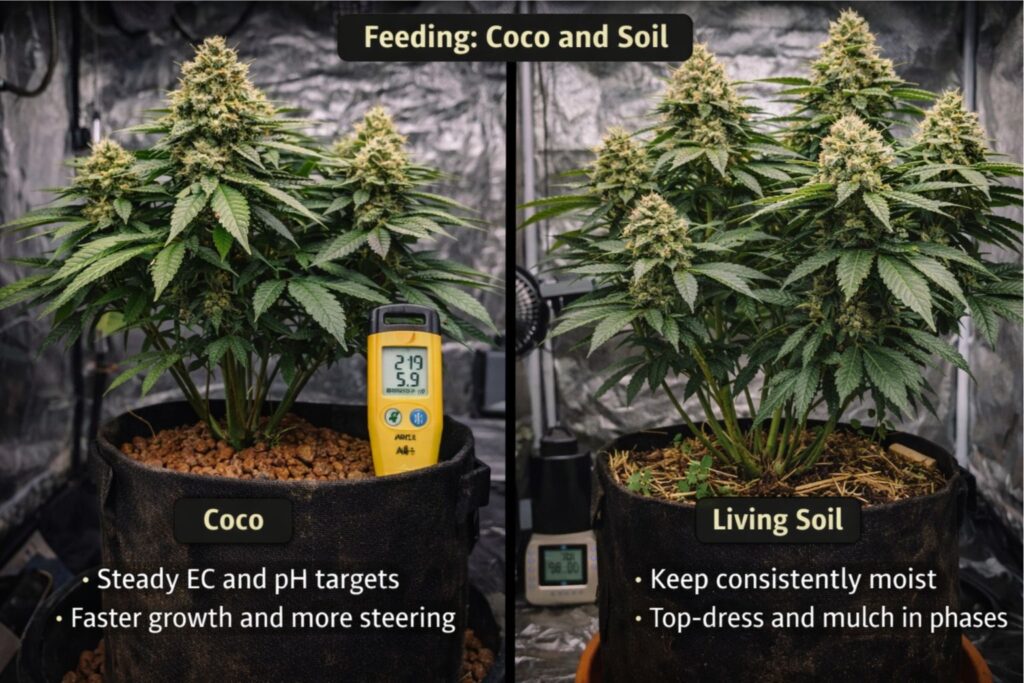
I’ve grown marijuana long enough to know the internet loves complicated feed charts. My results improved when I simplified and focused on root health.
9-Pound Hammer coco feeding range: a practical starting point
In coco, I track EC and runoff because it keeps me from guessing. My 9-Pound Hammer coco feeding range is:
- Veg: 1.2–1.6 EC
- Early flower: 1.6–1.9 EC
- Mid flower: 1.8–2.1 EC if the plant is praying and tips stay clean
- Late flower: ease back if leaf edges burn or the finish smells “sharp-green”
I keep pH around 5.8–6.0 in coco. If you see what looks like a deficiency, check runoff EC and pH before you add bottles.
9-Pound Hammer soil run notes: what I do differently
My 9-Pound Hammer soil run notes are mostly about restraint. In living soil, I rely on:
- A balanced base mix with aeration
- Top-dresses in smaller amounts more often
- Consistent moisture, not soaked swings
- Mulch and worms if the bed is established
In soil, the plant can express terps beautifully, but you still need airflow and a clean canopy. Dense indica flowers don’t forgive stale air.
Training and structure: building a canopy that finishes clean
If you want dense tops instead of a pile of popcorn, training matters. I keep it simple:
- Top once after the 5th or 6th node.
- Tie branches outward for a wider footprint.
- Remove weak inner growth before the flip.
- Light defoliation around day 21 of flower to open airflow.
Those steps reduce microclimates and help the finish stay clean.
Flower timing and harvest choices
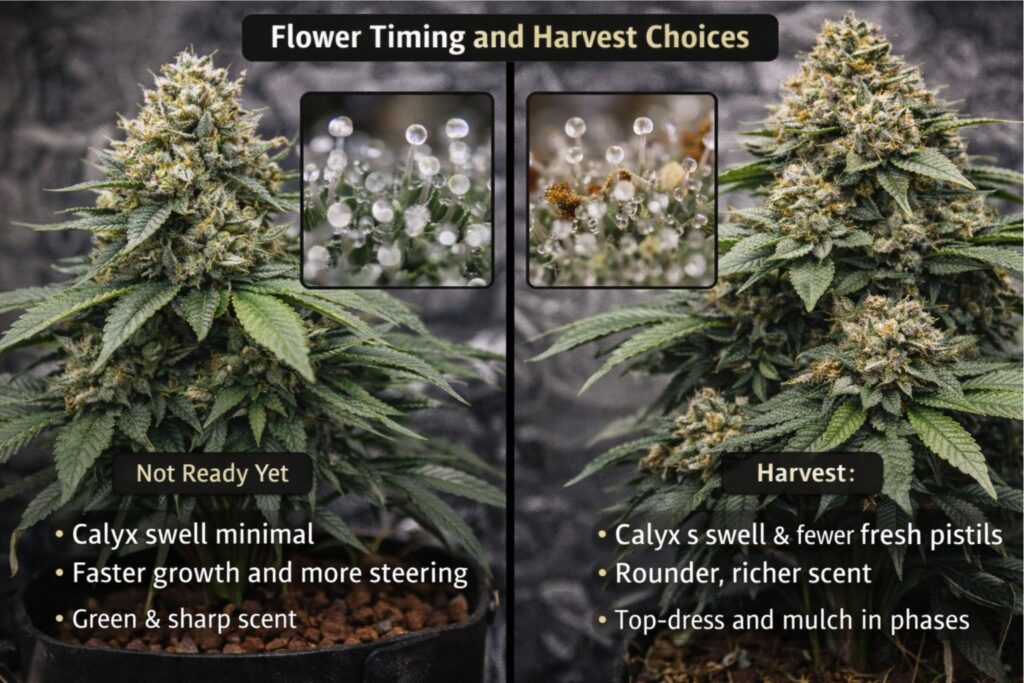
I plan for about 7–9 weeks of flower, but I don’t harvest by the calendar. I harvest by maturity and smell. My rule:
- If the plant still smells “green” and sharp, it’s not done.
- If calyxes swell and the aroma turns round and deep, I’m close.
I also pay attention to how the effect changes. Earlier harvests feel lighter; later harvests lean heavier into 9-Pound Hammer evening effects.
9-Pound Hammer dry room settings: the part that makes or breaks the jar
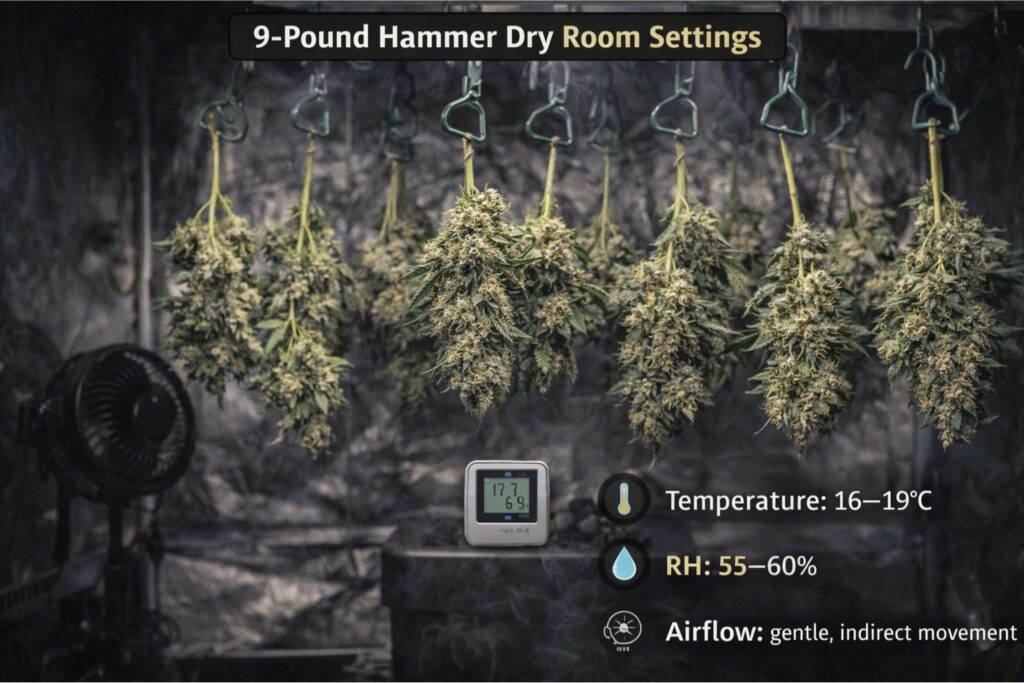
If you only take one thing from this 9 Pound Hammer Strain Review, take this: drying is where good cannabis becomes great cannabis, or becomes bland. My 9-Pound Hammer dry room settings are:
- Temperature: 16–19°C
- RH: 55–60%
- Airflow: gentle, indirect movement
- Darkness: keep light off the flowers
I aim for a 10–14 day dry. Fast drying at warm temps strips aroma and makes the smoke harsher.
9-Pound Hammer cure schedule: how I keep flavor from fading
After the dry, I cure slowly. My 9-Pound Hammer cure schedule is:
- Jar when small stems snap and larger stems bend
- Burp briefly once or twice daily for the first week
- Then burp less often as humidity stabilizes
- Keep jars cool and out of light
- Wait at least 3–4 weeks before judging final flavor
That 9-Pound Hammer cure schedule also helps smooth the smoke. A rushed cure can taste sharp, even if the plant was grown well.
Buying and selection: seed shopping without hype
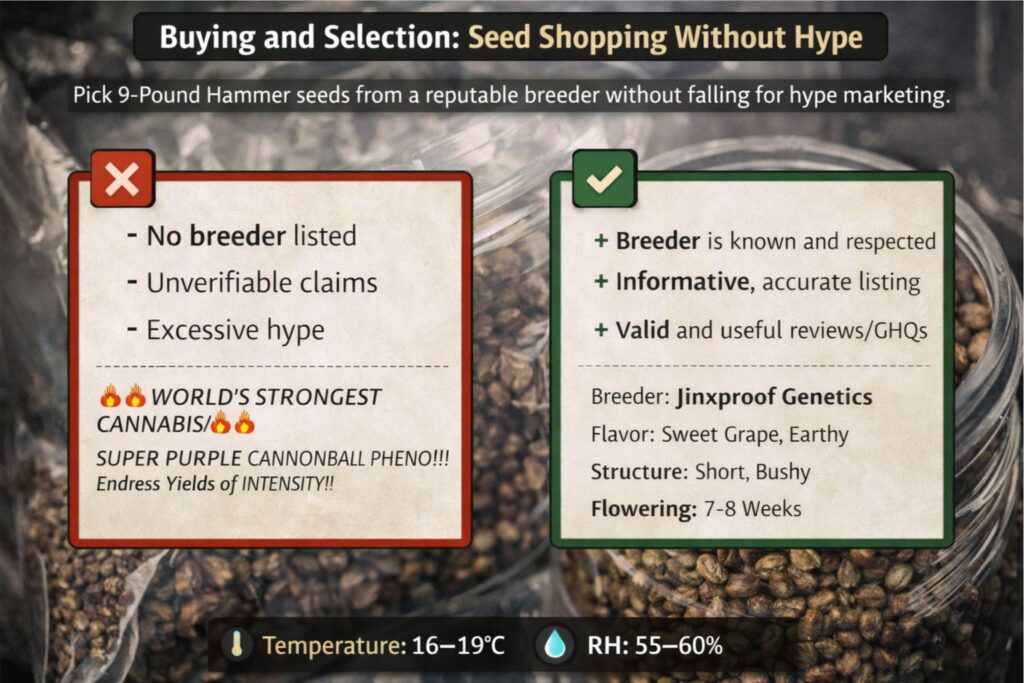
People ask where to get seeds. If it’s legal where you are, choose a reputable seed bank, look for clear breeder info, and avoid miracle claims. Feminized seeds reduce surprises; autoflowering options trade flexibility for speed.
If your goal is specifically this cultivar, I see two common searches:
- buy 9-Pound Hammer feminized seeds
- buy cannabis seeds online with discreet shipping
I can’t give legal advice. Check your local rules before you order or germinate.
Quick checklist: common issues and my fixes
- Tips burning: reduce EC, confirm runoff, and hold the 9-Pound Hammer coco feeding range steady.
- Mold risk late flower: tighten the 9-Pound Hammer VPD targets and increase airflow.
- Bleached tops: slow the 9-Pound Hammer PPFD ramp and raise fixtures.
- Flat aroma: review 9-Pound Hammer dry room settings and extend the 9-Pound Hammer cure schedule.
FAQ
Is 9 Pound Hammer better in soil or coco?
Both work. Coco gives speed and steering; soil can give an expressive nose. I keep 9-Pound Hammer soil run notes so I don’t overcorrect, and I use the 9-Pound Hammer coco feeding range when I want maximum control.
What’s a realistic indoor plan for beginners?
Start with stable environment, moderate light, and simple feeding. Use a 9-Pound Hammer grow room checklist, set your 9-Pound Hammer VPD targets, and follow a slow 9-Pound Hammer PPFD ramp.
How do I keep the flavor strong?
Slow dry, patient cure, and avoid late nitrogen. My 9-Pound Hammer dry room settings and 9-Pound Hammer cure schedule matter more than additives.
What should I expect from the high?
Expect calm first, then heavier relaxation, especially with later harvests. For me it consistently leans into 9-Pound Hammer evening effects, so I use it when I’m done with the day.
Any last buying advice?
If it’s legal where you are, prioritize freshness and transparency. Many people search buy 9-Pound Hammer feminized seeds, but storage matters just as much.
I’ll close this 9 Pound Hammer Strain Review with a simple truth: control the environment and finish strong.
For a complete directory of cultivars, visit our Cannabis Strain Reviews.
