Table of Contents
Why I’m publishing this 707 Headband Strain Review today
I’m writing this 707 Headband Strain Review the way I keep my own grow log: what I actually saw, what I adjusted, and what I’d repeat. I’ve run this cultivar indoors under LED and finished a smaller plant outdoors in a sheltered spot. Different seed lots and cuts can vary, so I treat everything here as practical ranges, not promises.
Genetics and what I watch for in a pheno hunt
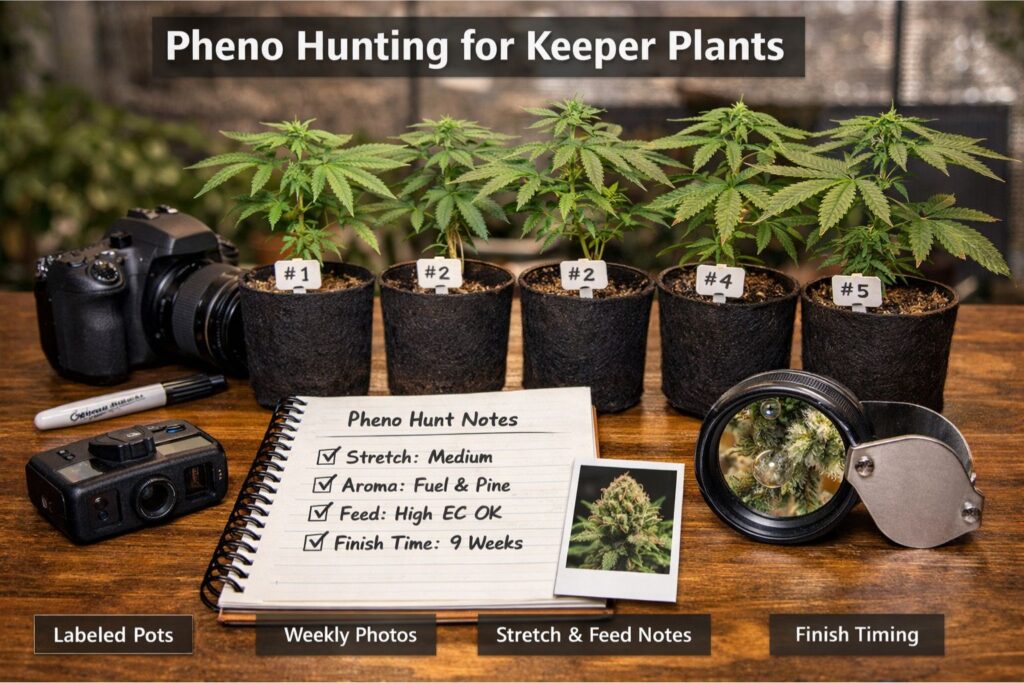
707-Headband is commonly described as a hybrid influenced by Sour Diesel, OG Kush, and Master Kush lines. In real gardens, it can lean more energetic or more grounded depending on the plant. That’s why I do pheno logging for keepers from day one: labeled pots, weekly photos, and a short notes list for stretch, feed tolerance, aroma, and finish. After harvest, pheno logging for keepers helps me connect the final jar back to the exact plant and the exact conditions. If you want a long-term winner, pheno logging for keepers makes it much easier to choose a keeper without relying on memory.
Structure and hybrid stretch management
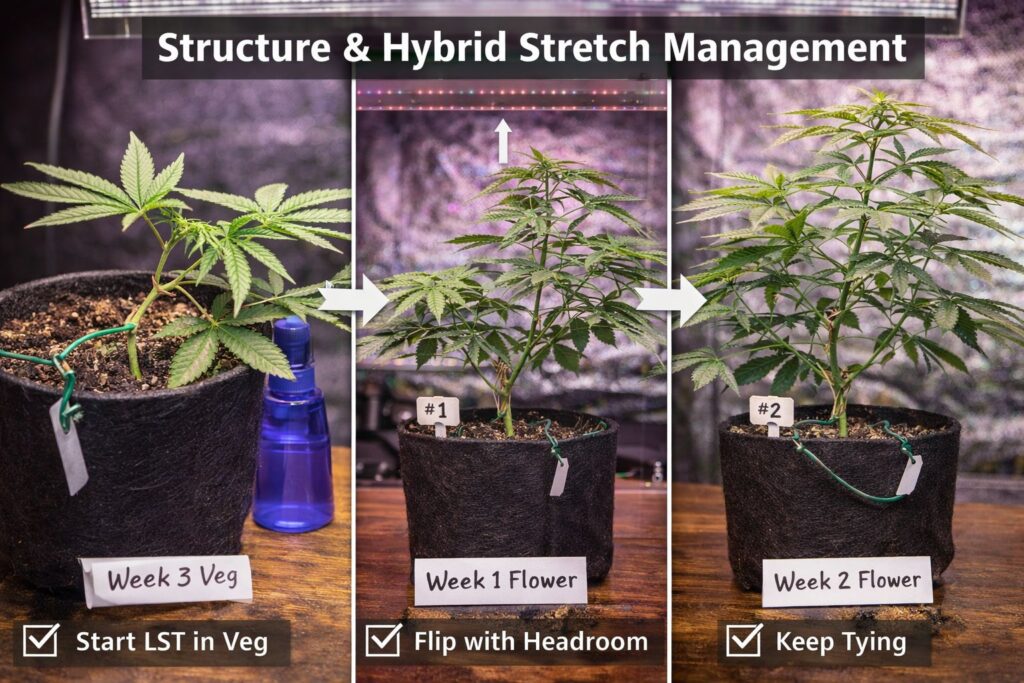
The biggest grow-room surprise is the post-flip stretch. If you veg too long, this plant can outrun your light and airflow. For me, hybrid stretch management starts early:
- Begin bending and tying once the plant has 5–7 nodes.
- Flip to 12/12 while you still have headroom.
- Keep training through day 14 of flower.
When hybrid stretch management is consistent, light stays even and the lower sites develop instead of turning into larf.
Aroma and flavor: my diesel pine aroma notes
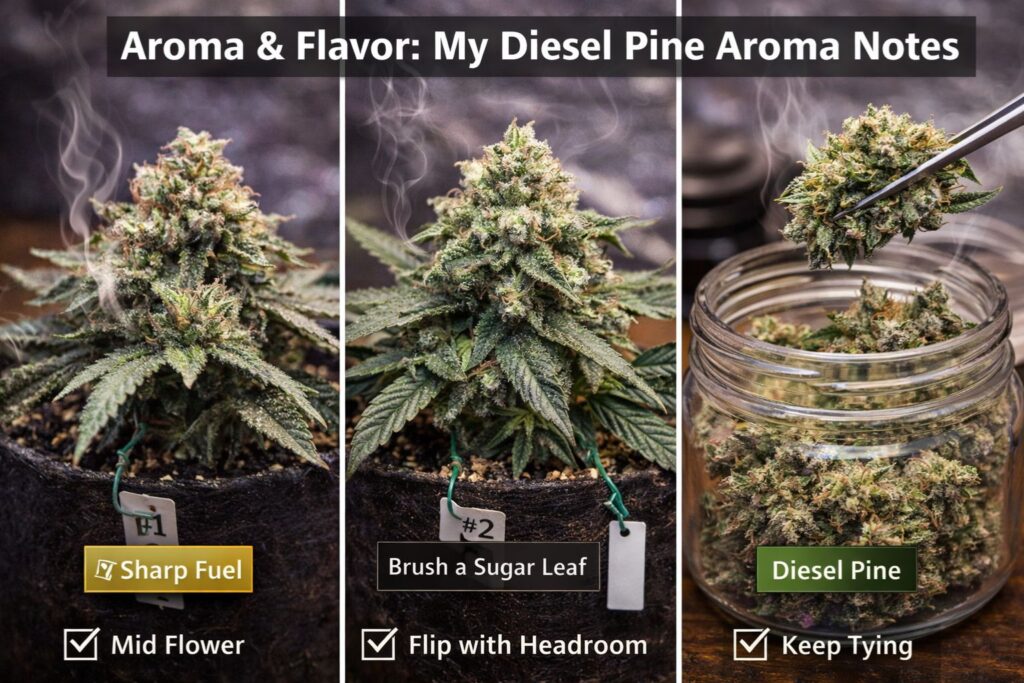
In the best batches, the jar leads with fuel, then opens into evergreen and a darker, earthy base. I summarize it as diesel pine aroma notes with a “forest floor” tail. Those diesel pine aroma notes get louder when the plant finishes without stress and when the dry is controlled. If I rush harvest or dry too warm, the diesel pine aroma notes thin out fast.
What I usually smell across the timeline:
- Mid flower: sharp fuel and clean resin when the lights come on
- Late flower: pine and earthy depth when I brush a sugar leaf
- Cured flower: diesel pine aroma notes that linger longer on a slow cure
Effects: headband pressure effect and overall arc
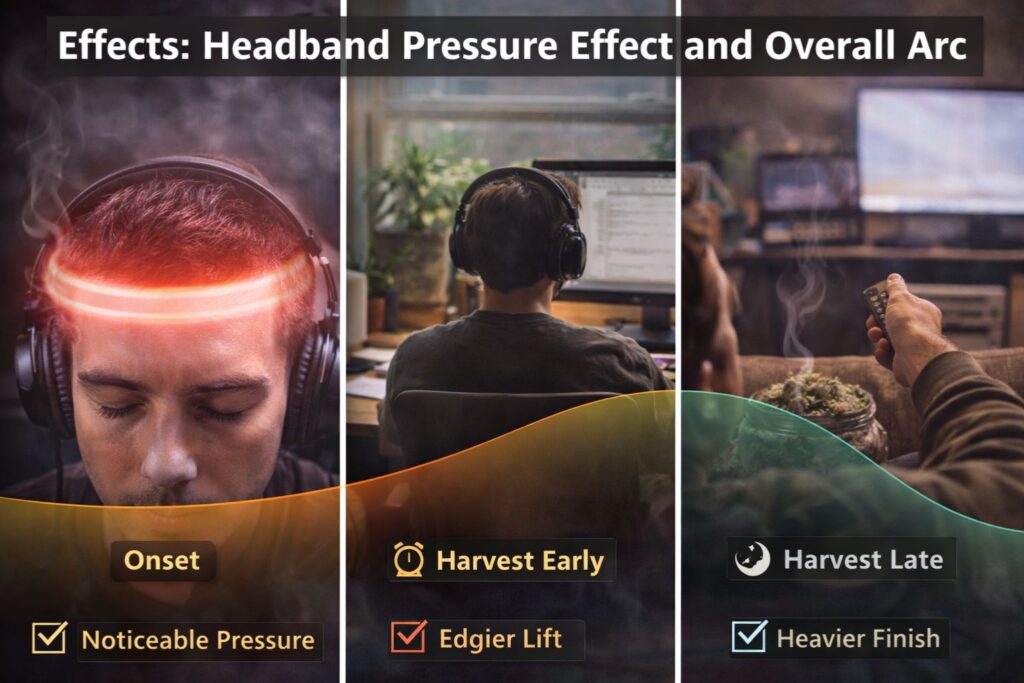
I can’t predict how cannabis, marijuana, or weed will affect you personally, but I can describe the pattern I experience. Many expressions start with a noticeable headband pressure effect: a forehead “wrap” sensation paired with a quick mental lift. For me, the headband pressure effect is often followed by calmer body comfort without immediate couch-lock.
Harvest timing changes the feel:
- Earlier harvest: brighter, sometimes more edgy
- Later harvest: smoother, heavier finish
I always recommend starting low, especially if you’re new to this kind of hybrid.
My indoor numbers and 707-Headband grow room targets
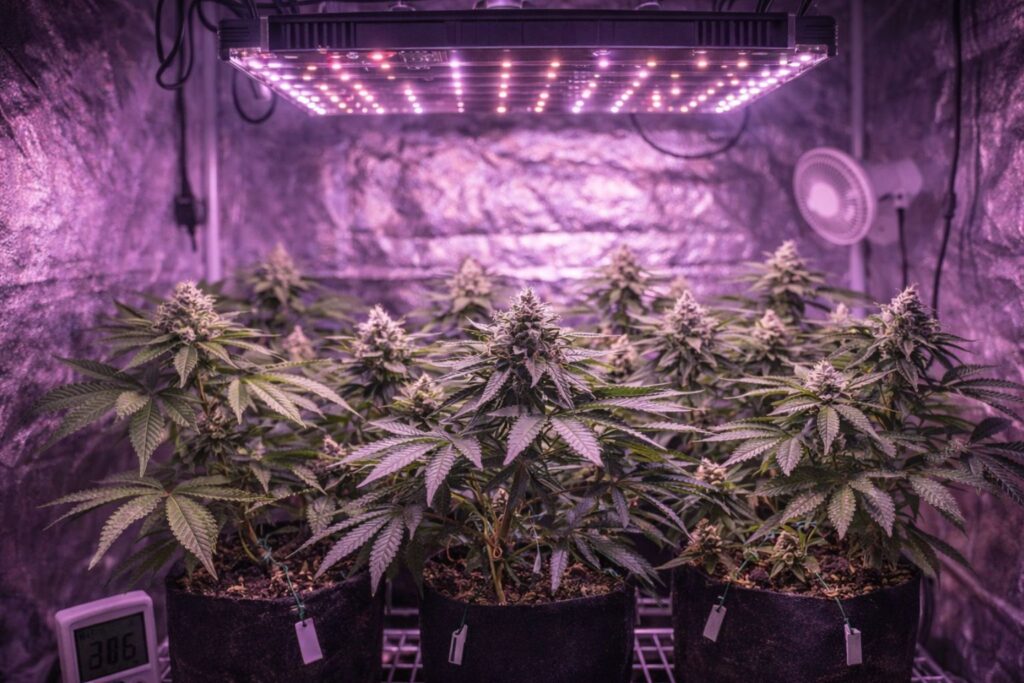
I use 707-Headband grow room targets to keep decisions simple. If the plant is praying, drinking on schedule, and staying clean, I avoid dramatic changes.
Light schedule and ppfd mapping for headband
- Veg: 18/6
- Flower: 12/12
I rely on ppfd mapping for headband rather than guessing intensity. In veg I’m usually around 400–600 PPFD at canopy. In flower I build toward 700–900 PPFD if the canopy is even and the plant is healthy. Ppfd mapping for headband matters because stretched tops can drift into hot spots quickly. When I keep ppfd mapping for headband consistent, the canopy stays uniform and the buds finish more evenly.
Climate and late bloom vpd control
For indoor weed, I manage the room by temperature, RH, and VPD. Late bloom vpd control is my main priority once buds stack.
Ranges that work for me:
- Veg: 24–27°C and 60–70% RH
- Early flower: 24–26°C and 55–60% RH
- Late flower: 22–25°C and 45–55% RH
If humidity rises, I correct it immediately. Late bloom vpd control reduces moisture risks and helps resin hold up. I’ll say it twice because it matters: late bloom vpd control saves finishes.
Airflow and simple IPM
I keep airflow moving through and under the canopy and I scout weekly (leaf undersides, sticky traps, and a quick stem/soil-line check). Once flowers form, I avoid spraying buds. In my experience, clean inputs, good airflow, and late bloom vpd control prevent most headaches.
Feeding in soil, coco, and hydro
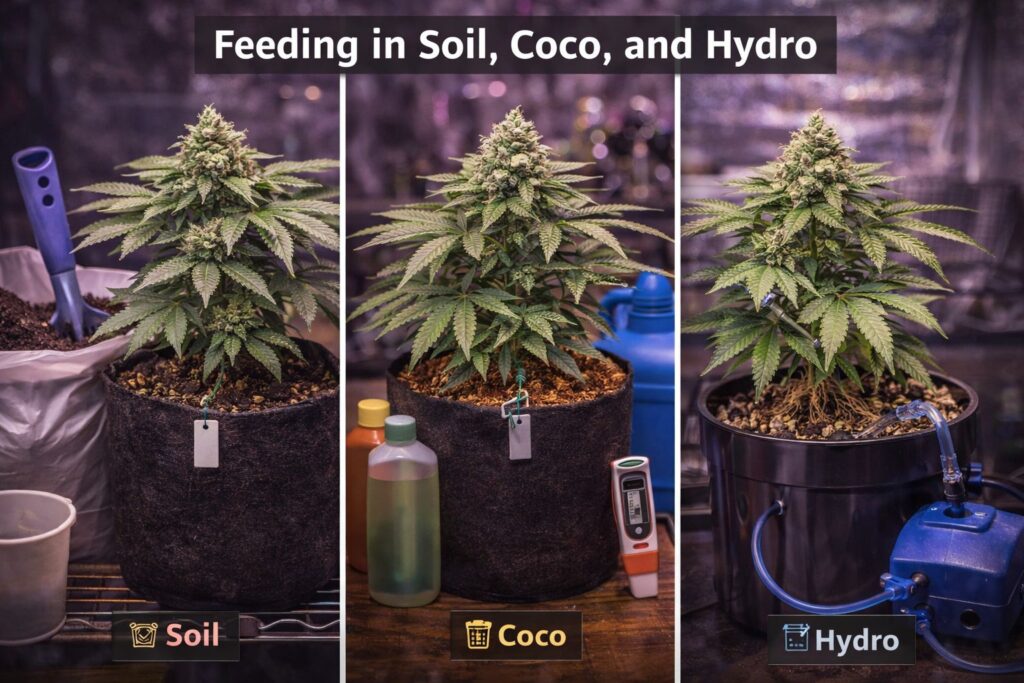
I’ve run this plant in soil and in coco, and I’ve helped troubleshoot it in hydro. All three can work; the difference is how fast mistakes show up.
Soil
Soil gives a buffer. I focus on wet/dry rhythm and avoid “extra” feeding when the plant is already healthy.
Coco and the coco ec ramp schedule
Coco grows fast, but it demands consistency. I use a coco ec ramp schedule instead of big jumps:
- Early veg: 0.8–1.2 EC
- Late veg / early flower: 1.2–1.6 EC
- Mid flower: 1.6–2.2 EC, adjusted to plant response
A coco ec ramp schedule keeps the root zone stable. When I ignore the coco ec ramp schedule, I’m the one creating stress that looks like deficiency or burn. If you’re in coco, commit to the coco ec ramp schedule and keep irrigation consistent.
Hydro
In hydro, stability matters most: reservoir temps, oxygenation, and not swinging EC. Whatever your system, learn nutrient burn versus deficiency before you chase bottle changes.
Flowering, week eight trichome care, and harvest cues
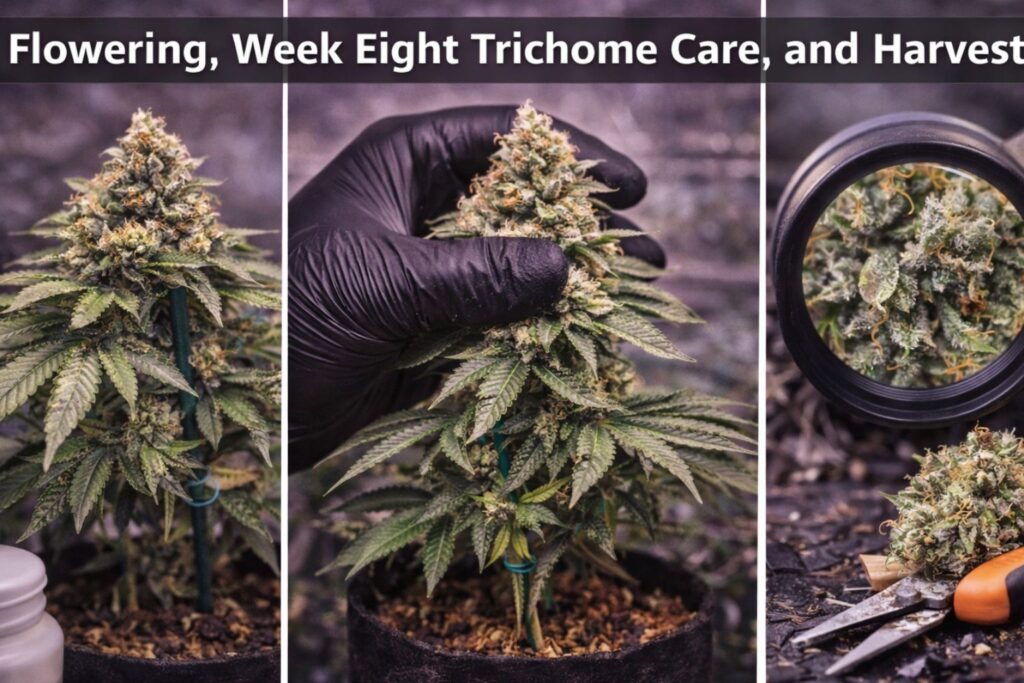
This is the part of the run where I stop “pushing” and start protecting the finish. My week eight trichome care is mostly environment discipline:
- Keep RH steady and on the lower side of your safe band
- Avoid wet buds and avoid rough handling
- Make sure branches are supported before the last two weeks
Week eight trichome care is where I see the biggest difference in final bag appeal and stickiness. If you do nothing else, do week eight trichome care properly.
I harvest based on bud swell and trichome maturity, not just a calendar. Then I note the timing in my pheno logging for keepers so I can repeat (or improve) the result.
Drying and curing: my slow dry cure routine
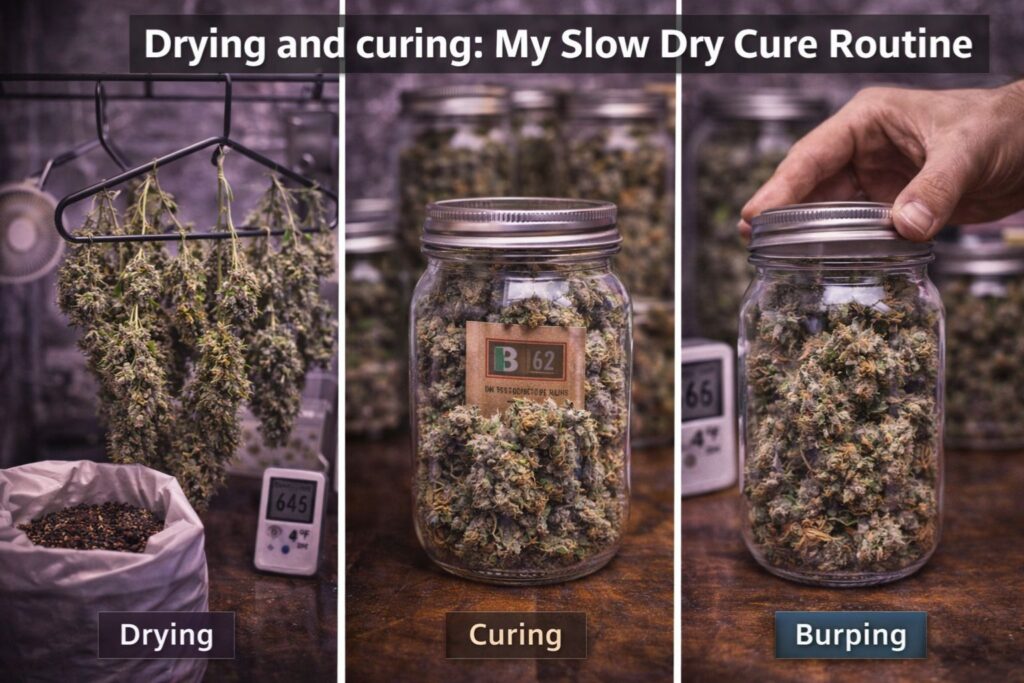
My best jars come from a slow dry cure routine. Fast drying makes fuel notes harsh and short-lived.
My slow dry cure routine:
- Hang branches in dim light with gentle air exchange
- Aim for 18–20°C and about 55–60% RH
- Dry until small stems snap and larger stems crack but still bend
- Jar and burp lightly for the first week, then less often as moisture stabilizes
A slow dry cure routine preserves diesel pine aroma notes better than any additive. If you want the headband pressure effect and flavor to feel “complete,” the slow dry cure routine matters.
Seed shopping and planning your grow
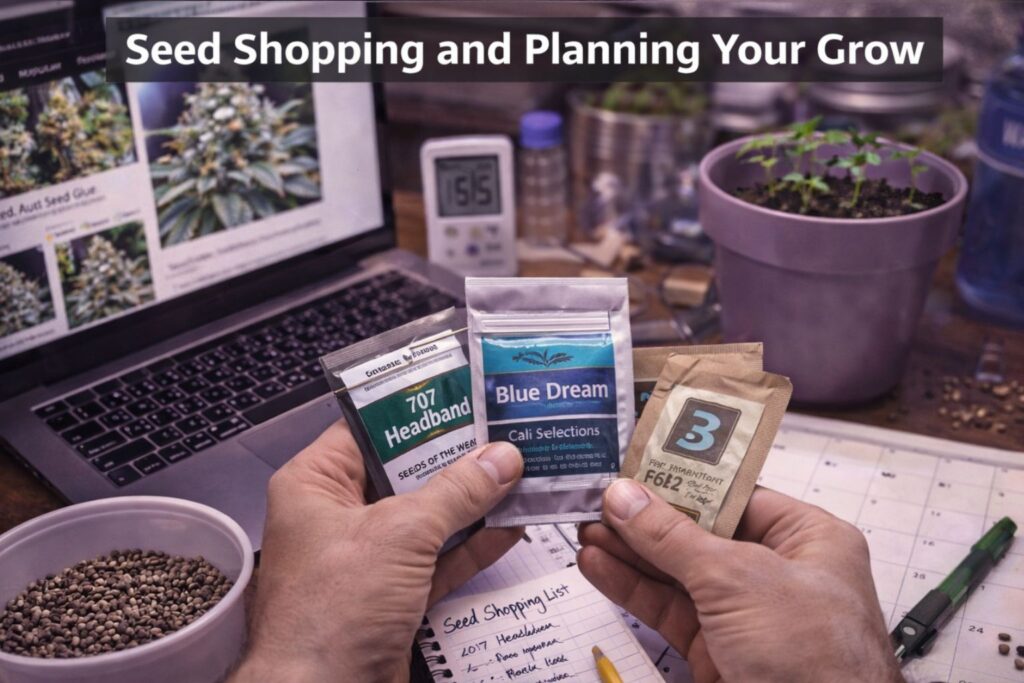
If you’re deciding between regular, feminized seeds, or autoflowering plants, match the choice to your space and schedule. Feminized seeds simplify a tent run if you’re not breeding. Autoflowering can be convenient, but photoperiod plants usually give you more control over training and canopy shape.
Common search questions I hear:
- How to germinate cannabis seeds in paper towel vs direct sow?
- Soil vs hydro for a first-time weed grow?
- Best lighting schedule for flowering marijuana indoors?
- How to spot nutrient burn early in coco?
I can’t give legal advice about grow laws or shipping. Regulations vary by region, so always follow local rules and the seller’s terms if you buy cannabis seeds online.
Quick checklist: the run in one page
In this 707 Headband Strain Review, these are the items I check every day.
- 707-Headband grow room targets: stable temps, controlled humidity, strong airflow
- ppfd mapping for headband: measure multiple canopy points and avoid hot spots
- hybrid stretch management: train early and keep the canopy flat
- coco ec ramp schedule: gradual increases, consistent irrigation
- late bloom vpd control: keep humidity in check as buds stack
- week eight trichome care: protect the finish, minimize handling
- slow dry cure routine: preserve diesel pine aroma notes
- pheno logging for keepers: track the winner, repeat the winner
FAQ
How do I control stretch without stunting the plant?
Hybrid stretch management works best when it’s gentle and consistent. Start early, bend little by little, and keep hybrid stretch management going through the first two weeks of flower.
Does it really feel like a “headband”?
On many expressions I’ve tried, yes. The headband pressure effect is usually most noticeable early, then it mellows. If you’re sensitive, start low and see how you respond.
What PPFD should I run under LED?
I recommend ppfd mapping for headband if you can. It’s easier to dial 700–900 PPFD in flower when ppfd mapping for headband confirms you aren’t cooking the tops.
What’s the late-flower priority in a humid climate?
Late bloom vpd control and airflow. Late bloom vpd control keeps moisture-related problems down and helps resin finish clean.
Any coco-specific pitfalls?
Most problems come from inconsistency. Follow the coco ec ramp schedule, don’t jump EC suddenly, and keep the coco ec ramp schedule aligned with how fast the plant is drinking.
What’s your best advice for keeping the aroma loud?
A slow dry cure routine. If you nail the slow dry cure routine, the diesel pine aroma notes stick around longer.
How do you pick a keeper plant?
Pheno logging for keepers. Keep notes on stretch, aroma, yield, and how the buds dry. Pheno logging for keepers turns one good run into a repeatable run.
Closing note
This 707 Headband Strain Review comes down to a few repeatable habits: solid 707-Headband grow room targets, disciplined hybrid stretch management, steady feeding (especially the coco ec ramp schedule), and finishing strong with late bloom vpd control, week eight trichome care, and a slow dry cure routine. Do that, and the diesel pine aroma notes and headband pressure effect are much more likely to show up the way growers talk about.
For a complete directory of cultivars, visit our Cannabis Strain Reviews.
