Table of Contents
I’m putting this 501St OG Strain Review together the same way I keep my own cultivation log: what I observed, what I measured, and what I would do differently next cycle. I’ve flowered 501St OG twice indoors and once as a small outdoor test plant, and the pattern stayed consistent: when the environment was stable, the aroma stayed crisp and the flowers held density all the way through the cure.
This is not medical or legal advice.
At-a-glance profile from my garden

- Plant type: photoperiod cannabis (not an autoflowering run)
- Growth style: OG-leaning structure with strong tops if you let it ride
- Flowering duration indoors: typically 8–9 weeks in my room, depending on trichome maturity timing
- Best time of day (for me): late afternoon into evening, because effects stack with dose
I’ll repeat trichome maturity timing throughout this 501St OG Strain Review because it’s the biggest lever for dialing the final feel and the harvest date.
Genetics and why it shows up in the tent

I avoid getting too hung up on “paper” lineage, but the commonly cited parentage points to an OG family influence paired with a breeder line known for density and resin. In practice, the plant behaved like a classic OG: it wants a managed canopy, it dislikes big swings in feed, and it can throw very tight flowers that demand airflow.
My biggest takeaway is that genetics are only half the story. Your results in weed cultivation depend on:
- how even your canopy is
- how consistent your root zone stays
- how steady your drying and cure environment is
What the buds look like when things go right

When I kept the room steady, finished flowers were chunky and heavily frosted. Color ranged from green to deeper tones late in flower, but I don’t chase color at the expense of ripening. Tight flowers can be a mold risk in humid late flower, so my priority is always airflow and the right vpd chart for cannabis flower targets.
That vpd chart for cannabis flower is on my wall. I glance at it every day in late bloom.
501st og terpene breakdown: aroma notes I actually get

In my jars, the 501st og terpene breakdown is led by pine and earthy kush, with a sweeter edge that only becomes obvious after cure. I noticed the 501st og terpene breakdown shifts depending on nitrogen late in flower and how fast the dry runs.
Here’s what I smell at different stages:
- Week 4–5 flower: sharp pine, “green” resin, light funk
- Week 7–8 flower: deeper earth, heavier resin, sweeter undertone
- After cure: the pine stays forward, and the sweetness becomes more noticeable
I’m writing 501st og terpene breakdown again because if you’re shopping strains by aroma, this is the part you’re really buying.
Flavor: where drying decisions show up
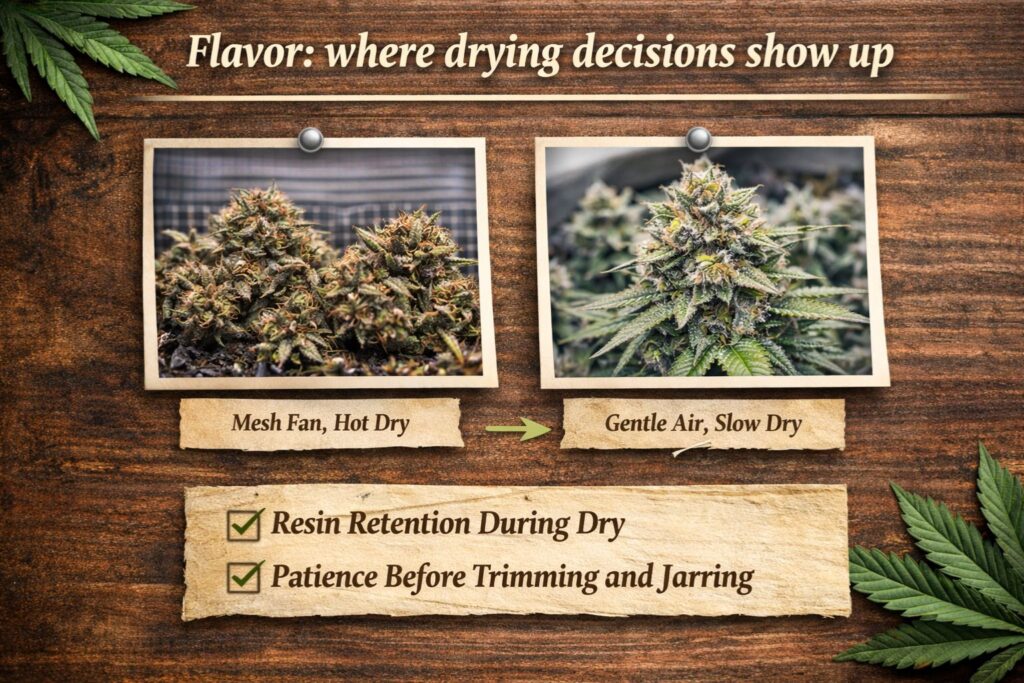
If the dry is rushed, the smoke goes flat. If the dry is slow and controlled, the flavor stays layered. I aim for resin retention during dry, because that’s what keeps the top-end notes from disappearing.
My best-tasting jars came from:
- gentle airflow, not a fan blasting buds
- cooler temps (not cold, just not hot)
- patience before trimming and jarring
That’s resin retention during dry in practice: slow down and protect the volatile compounds that give cannabis its character.
Effects: what I notice by dose and harvest

This 501St OG Strain Review wouldn’t be useful if I pretended effects are identical for everyone. They’re not. What I can say is how it behaves for me when I control variables.
Low dose:
- calmer mood, easier conversation
- mild mental lift without feeling “racy”
Medium dose:
- heavier body feel
- slower pace, more couch time
Higher dose:
- very evening-leaning, eyes heavy
- best reserved for when you’re done driving, working, or making decisions
Harvest timing matters. When trichome maturity timing is earlier (mostly milky trichomes), I get a clearer feel. When trichome maturity timing is later (more amber), the effect leans heavier. That’s the third time I’m emphasizing trichome maturity timing because it’s repeatable and measurable.
Setup notes: what my environment looked like

I ran 501St OG under LEDs in a 4×4 and in a smaller 2×4. In both, results improved when I stopped guessing and started measuring.
Photoperiod basics
- Veg: 18/6
- Flower: 12/12
If you’re new to marijuana growing indoors, the photoperiod is the backbone. Keep it consistent and avoid light leaks.
ppfd mapping for led grows: the measurement that stopped my mistakes
I do ppfd mapping for led grows at least once per cycle: early flower, and again around week 4 when buds stack. A quick grid across the canopy tells you where you’re overdriving tops and underfeeding lowers.
My working PPFD ranges:
- Seedlings: 150–250 PPFD
- Veg: 300–600 PPFD
- Early flower: 600–750 PPFD
- Peak flower: 750–950 PPFD under ambient CO2
When I skipped ppfd mapping for led grows, I bleached tops and dulled aroma. When I did ppfd mapping for led grows, the canopy stayed uniform and the plant finished cleaner.
vpd chart for cannabis flower: targets that kept late bloom safe
I keep temperature and humidity steady, then sanity-check against a vpd chart for cannabis flower. My ranges that worked:
- Veg: 24–28°C, 60–70% RH
- Mid flower: 24–27°C, 45–55% RH
- Late flower: 24–26°C days, 18–21°C nights, 40–50% RH
Late flower is where tight flowers can rot fast. The vpd chart for cannabis flower helps me avoid staying too humid or swinging too dry.
Medium and feeding: soil vs coco in real life

I’ve grown weed in soil and in coco. Both can work. Your choice changes your daily workload and your margin for error.
coco runoff strategy and EC targets
In coco, consistency wins. My coco runoff strategy is frequent irrigation with modest runoff, plus periodic checks to avoid salt buildup.
Typical EC approach:
- Early veg: 1.0–1.2 EC
- Late veg / early flower: 1.4–1.8 EC
- Mid flower: 1.6–2.0 EC if the plant stays hungry
- Late flower: 1.2–1.6 EC with reduced nitrogen
If you’re learning hydro-style cannabis feeding, your coco runoff strategy matters more than chasing “perfect” numbers. I repeat coco runoff strategy because it’s the routine that keeps coco simple.
soil dryback technique and watering rhythm
In soil, my goal is oxygen at the roots. The soil dryback technique I use is:
- water thoroughly
- wait until the pot is noticeably lighter
- avoid constant “sips” that keep the top layer wet
When I stuck to the soil dryback technique, growth stayed vigorous and pests were less of a problem. When I ignored the soil dryback technique, fungus gnats appeared and the plant slowed down.
Training: og cultivar canopy management in practice
This plant rewards structure. My og cultivar canopy management is built around even light and airflow:
- Top once above node 5–6
- LST branches outward to fill the footprint
- Remove weak lower growth before flower
- Light defoliation around day 21 of flower for airflow
- Add support late if tops get heavy
If you’re trying to maximize yield and quality, og cultivar canopy management is the difference between a flat canopy and a jungle. I mention og cultivar canopy management again because it directly affects mold risk and finish quality.
Nutrient issues I’ve seen and how I corrected them
Most “problems” were self-inflicted. Here’s what showed up in my 501St OG Strain Review notes:
- Tip burn in mid flower: I reduced EC slightly and rechecked ppfd mapping for led grows to make sure I wasn’t pushing light too hard.
- Dark clawed leaves: I eased nitrogen and tightened the photoperiod og feeding schedule so inputs stayed steady.
- Pale tops: I lowered peak intensity and spread the canopy using og cultivar canopy management.
That photoperiod og feeding schedule point is important. When I kept a boring, consistent photoperiod og feeding schedule, the plant finished more aromatic and less harsh.
Integrated pest management: what I do before I see bugs

I treat IPM like brushing my teeth. My baseline:
- Sticky traps from day one
- Inspect leaf undersides twice per week
- Keep floor clean and remove dead leaves
- Maintain airflow under the canopy
- Quarantine any new plants
IPM matters more in late flower because you can’t fix issues aggressively without impacting final quality.
Harvest: how I decide it’s time
I don’t harvest based on a calendar alone. I use trichome maturity timing plus plant cues:
- calyx swell
- stronger aroma
- slower water uptake
- pistils darkening and receding
For the effect profile I like, I aim for mostly cloudy trichomes with some amber. Trichome maturity timing is also how I line up the jar feel with my intended use.
Dry and cure: my resin retention during dry checklist
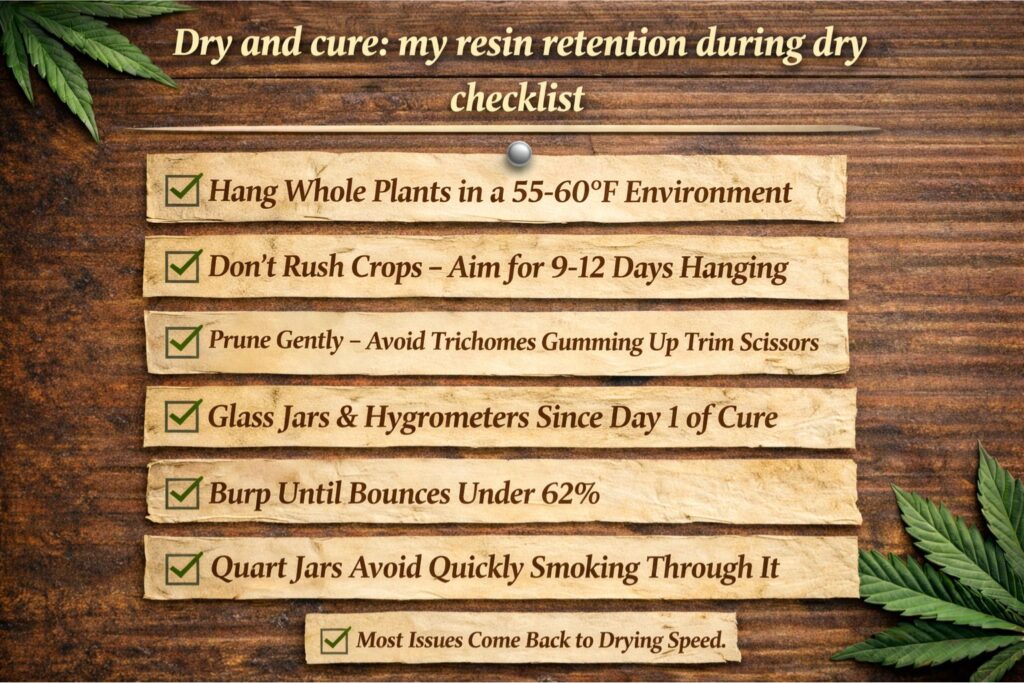
If you want the pine notes to survive, you need resin retention during dry. My checklist:
- Dry at 15–20°C
- Hold 55–60% RH
- Gentle circulation, no direct fan on buds
- Keep flowers on branches to slow the dry
- Target 10–14 days whenever possible
That’s the second time I’ve leaned on resin retention during dry because it’s where most growers lose quality.
Curing routine
I cure in sealed containers aiming for 58–62% RH. My routine:
- Week 1: short burps daily
- Week 2: burp every other day
- Week 3+: burp only if humidity climbs or aroma feels “stale”
The cure is where the 501st og terpene breakdown becomes clearer, and where harshness fades.
Seed shopping: practical notes and a discreet seed shipping guide
People search phrases like “where to get feminized seeds,” “how to store cannabis seeds,” and “what seed bank is reliable.” I’m not giving legal advice; always verify your local rules before you order or grow marijuana.
My discreet seed shipping guide is about reducing mistakes and keeping seeds viable:
- Confirm your address format and delivery options before ordering
- Store seeds cool, dark, and dry as soon as they arrive
- Label packs with arrival date and planned run
- Keep a notebook entry for each pack you pop
That’s discreet seed shipping guide point one. The second discreet seed shipping guide reminder is simple: don’t leave seeds in a hot mailbox or car.
If you want a smoother first run, feminized seeds can simplify canopy planning. If you’re exploring breeding, regular seeds have value. Either way, start with a plan for your medium and your photoperiod og feeding schedule.
FAQ: quick answers to real search questions
What PPFD should I run in flower under LEDs?
Start lower and ramp. I’m most consistent when peak is 750–950 PPFD, confirmed with ppfd mapping for led grows, and when heat and humidity are controlled.
How do I use a VPD chart correctly?
Measure temp and RH at canopy level, then reference a vpd chart for cannabis flower. Adjust in small steps, especially late bloom when buds are dense.
Soil or coco for a first-time home grow?
Soil is forgiving if you stick to a soil dryback technique. Coco is predictable if you commit to a coco runoff strategy and regular monitoring.
How do I avoid nutrient burn in mid flower?
Keep your photoperiod og feeding schedule steady, avoid sudden jumps in EC, and confirm you’re not overdriving the canopy with light.
What’s the best way to keep flavor strong?
Prioritize resin retention during dry and keep the cure slow. Flavor is mostly post-harvest discipline.
How do I know when it’s ready to harvest?
Use trichome maturity timing plus calyx swell and drinking rate. Trichome maturity timing is the part you can standardize.
Closing notes
If you want a practical takeaway from this 501St OG Strain Review, it’s this: measure your light, respect a vpd chart for cannabis flower, keep the photoperiod og feeding schedule stable, and protect resin retention during dry. Do that, and you’ll give 501St OG the best chance to finish dense, aromatic, and true to its OG character.
For a complete directory of cultivars, visit our Cannabis Strain Reviews.
