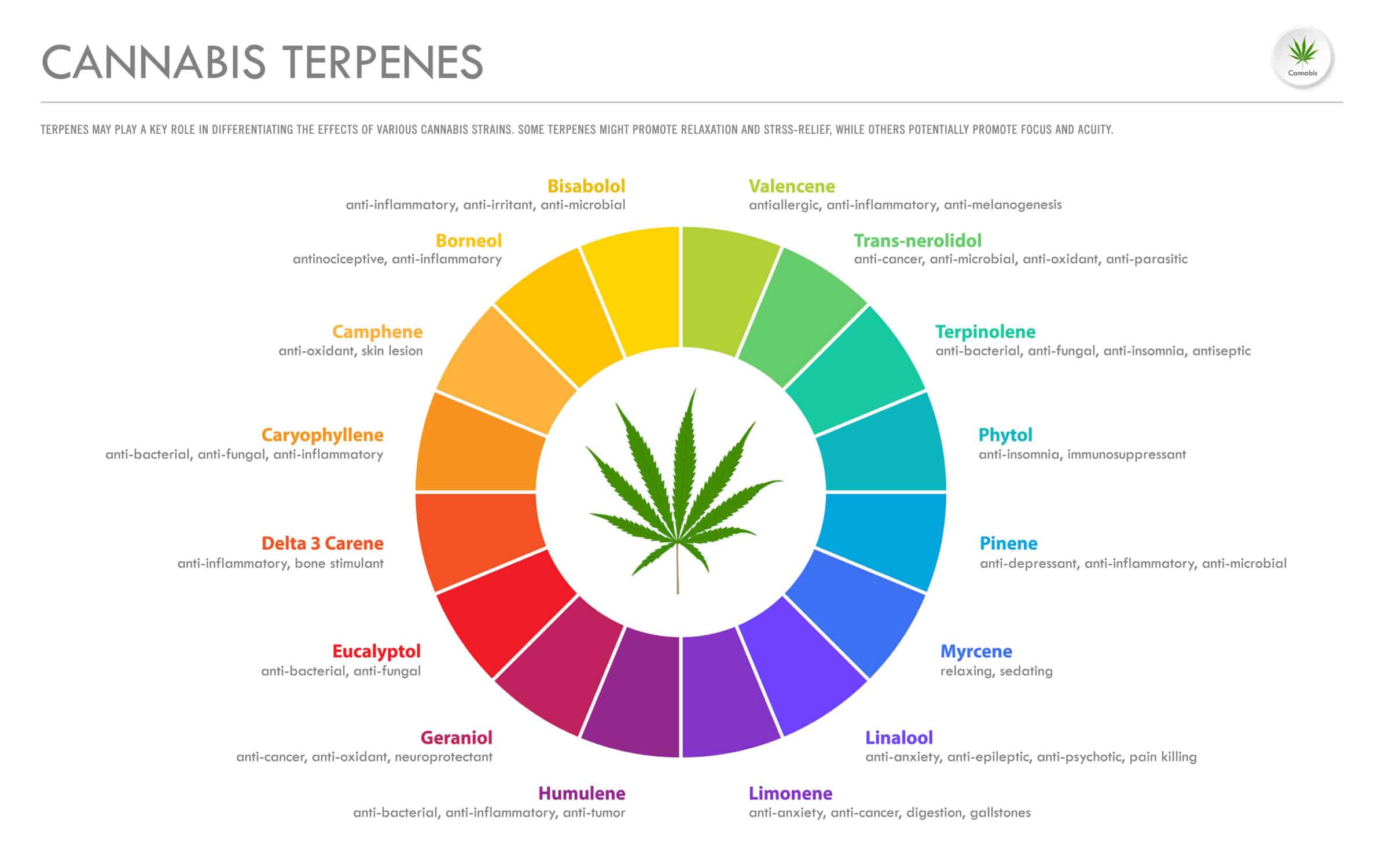
The five most common types of terpenes found in cannabis are:
- Myrcene
- Aroma: Earthy, musky, with hints of cloves.
- Effects: Known for its sedative and relaxing effects. It may also possess anti-inflammatory and analgesic effects.
- Found In: Mangoes, hops, thyme, lemongrass.
- Limonene
- Aroma: Citrus, fruity.
- Effects: Often associated with uplifting and mood-enhancing effects. It may also have anti-anxiety and antidepressant properties.
- Found In: Lemons, oranges, juniper, peppermint.
- Caryophyllene
- Aroma: Spicy, peppery.
- Effects: Known for its potential anti-inflammatory and analgesic effects. It also interacts with the CB2 receptors in the endocannabinoid system.
- Found In: Black pepper, cloves, cinnamon.
- Pinene
- Aroma: Pine, fresh, woody.
- Effects: May help improve focus and energy. It contains anti-inflammatory and bronchodilatory effects.
- Found In: Pine needles, rosemary, basil, and dill.
- Linalool
- Aroma: Floral, lavender.
- Effects: Known for its calming and relaxing effects. It may also have anti-anxiety and analgesic properties.
- Found In: Lavender, mint, cinnamon, coriander.
These terpenes not only contribute to the distinct aroma and flavor profiles of different cannabis strains but also play a role in the overall effects experienced by the user through the entourage effect.
Myrcene is considered one of the most common types of terpenes in weed for several reasons:
- Prevalence in Cannabis Strains: Myrcene is found in high concentrations in many cannabis strains, making it one of the most dominant terpenes in the cannabis plant. Its presence can often exceed 50% of the total terpene profile in some strains.
- Sedative and Relaxing Effects: Myrcene is known for its sedative and muscle-relaxing properties, which contribute to the “couch-lock” effect often associated with certain indica strains. This makes it a desirable component in strains aimed at promoting relaxation and sleep.
- Enhancement of THC Effects: Myrcene is believed to enhance the psychoactive effects of THC, the primary psychoactive compound in cannabis. It is thought to facilitate the crossing of THC across the blood-brain barrier, thereby intensifying its effects.
- Therapeutic Properties: Myrcene has been studied for its potential therapeutic benefits, including anti-inflammatory, analgesic (pain-relieving), and anti-anxiety properties. These attributes make it valuable for medicinal cannabis users seeking relief from various symptoms.
- Natural Abundance: Myrcene is naturally abundant in many plants, not just cannabis. It is found in high concentrations in mangoes, hops, thyme, and lemongrass, among others. Its widespread presence in nature and its compatibility with the cannabis plant contribute to its prevalence.
- Role in Flavor and Aroma: Myrcene contributes to the earthy, musky, and clove-like aroma of many cannabis strains. Its presence in the terpene profile helps define the characteristic scent and flavor of the plant, making it a significant component in the sensory experience of cannabis.
Overall, the combination of its high prevalence in cannabis strains, its enhancing effects on THC, its therapeutic benefits, and its contribution to the plant’s aroma and flavor profile makes myrcene one of the most common and important terpenes in weed.
Limonene is considered one of the most common types of terpenes in weed for several reasons:
- Wide Presence in Cannabis Strains: Limonene is found in many different cannabis strains, often in significant concentrations. While it may not be the dominant terpene in all strains, it is frequently present, contributing to the overall terpene profile of the plant.
- Citrus Aroma and Flavor: Limonene is characterized by its strong citrus scent, reminiscent of lemons and oranges. This makes it a desirable terpene for strains that aim to have a refreshing, uplifting aroma and flavor. The pleasant citrus notes are appealing to many consumers.
- Mood-Enhancing Effects: Limonene is known for its uplifting and mood-enhancing properties. It is often associated with feelings of euphoria and well-being, making it popular in strains used for stress relief and to combat anxiety and depression.
- Therapeutic Benefits: In addition to its mood-enhancing effects, limonene has been studied for various therapeutic benefits. It has potential anti-anxiety, anti-depressant, anti-inflammatory, and anti-fungal properties. These therapeutic benefits make it a valuable component in medicinal cannabis formulations.
- Entourage Effect: Like other terpenes, limonene works synergistically with cannabinoids and other terpenes to create the entourage effect. This means that its presence can enhance the overall effects of the cannabis strain, contributing to a more balanced and effective experience for the user.
- Natural Abundance in Nature: Limonene is one of the most abundant terpenes in nature, found in the rinds of citrus fruits like lemons, oranges, and limes. Its widespread availability and natural occurrence make it a common and familiar component in many plants, including cannabis.
- Versatility in Cannabis Breeding: Due to its desirable properties, limonene is often selected in breeding programs to create new cannabis strains with specific aromatic and therapeutic profiles. Its versatility and broad appeal make it a popular choice among cultivators and consumers alike.
Overall, the combination of its prevalence in cannabis strains, its distinctive citrus aroma and flavor, its uplifting and therapeutic effects, and its role in the entourage effect make limonene one of the most common and significant terpenes in weed.
Caryophyllene is considered one of the most common types of terpenes in weed for several reasons:
- Abundance in Many Strains: Caryophyllene is present in a wide variety of cannabis strains. It is often found in significant concentrations, contributing to the overall terpene profile of many popular strains.
- Distinctive Aroma and Flavor: Caryophyllene is known for its spicy, peppery aroma, which can also have hints of wood and cloves. This distinctive scent adds complexity to the aroma and flavor profile of cannabis, making it a desirable terpene for many consumers.
- Unique Interaction with the Endocannabinoid System: Caryophyllene is unique among terpenes because it can interact with the endocannabinoid system, specifically binding to CB2 receptors. This interaction is typically associated with cannabinoids, making caryophyllene notable for its potential therapeutic effects.
- Therapeutic Properties: Caryophyllene has been studied for various therapeutic benefits. It is known for its potential anti-inflammatory, analgesic (pain-relieving), and anti-anxiety properties. Its ability to bind to CB2 receptors suggests it may help in managing pain and inflammation without producing psychoactive effects, making it particularly valuable for medicinal cannabis users.
- Contribution to the Entourage Effect: Caryophyllene contributes to the entourage effect, in which many cannabis components work synergistically to increase the overall effects. Its presence can assist regulate the effects of cannabis, resulting in a more balanced and productive experience. Its presence can help modulate the effects of cannabinoids, providing a more balanced and effective experience.
- Natural Occurrence in Other Plants: Caryophyllene is also found in many other plants, including black pepper, cloves, and cinnamon. Its widespread natural occurrence makes it a common and familiar component in various herbs and spices, which can influence its prevalence in cannabis through selective breeding and natural biosynthesis.
- Versatility in Breeding and Cultivation: The desirable properties of caryophyllene make it a target for cannabis breeding programs. Cultivators often select strains with high caryophyllene content to enhance specific aromatic and therapeutic profiles, contributing to its common presence in cannabis.
Overall, the combination of its abundance in many cannabis strains, distinctive spicy aroma, unique interaction with the endocannabinoid system, therapeutic benefits, and role in the entourage effect makes caryophyllene one of the most common and significant terpenes in weed.
Pinene is considered one of the most common types of terpenes in weed for several reasons:
- Prevalence in Many Strains: Pinene is found in a wide variety of cannabis strains. It is one of the most frequently occurring terpenes in the cannabis plant, contributing to its widespread presence.
- Distinctive Aroma and Flavor: Pinene is characterized by its fresh, pine-like aroma, which is reminiscent of pine trees and other coniferous plants. This crisp, woody scent is appealing to many consumers and adds a recognizable and pleasant note to the overall aroma and flavor profile of cannabis.
- Therapeutic Properties: Pinene has been studied for its potential therapeutic benefits, which include anti-inflammatory, bronchodilator (helps to open airways), and memory-enhancing effects. These properties make it valuable for medicinal cannabis users seeking relief from conditions such as asthma, inflammation, and memory-related issues.
- Contribution to the Entourage Effect: Pinene, like other terpenes, plays a role in the entourage effect, where various cannabis compounds work together to enhance the overall effects. Its presence can modulate the impact of cannabinoids and other terpenes, contributing to a more balanced and effective experience.
- Natural Abundance in Nature: Pinene is one of the most abundant terpenes in nature, not just in cannabis. It is found in high concentrations in pine needles, rosemary, basil, dill, and parsley. Its widespread natural occurrence makes it a common component in many plants, including cannabis.
- Versatility in Breeding and Cultivation: Due to its desirable properties and distinct aroma, pinene is often selected in breeding programs to create new cannabis strains with specific aromatic and therapeutic profiles. This selective breeding enhances the prevalence of pinene in cannabis.
- Uplifting Effects: Pinene is known for its potential uplifting and energizing effects. It may help improve focus and alertness, making it a popular choice for consumers looking for strains that provide a clear-headed and invigorating experience.
Overall, the combination of its prevalence in many cannabis strains, distinctive pine-like aroma, therapeutic benefits, contribution to the entourage effect, natural abundance, and versatility in breeding and cultivation makes pinene one of the most common and significant terpenes in weed.
Linalool is considered one of the most common types of terpenes in weed for several reasons:
- Prevalence in Many Strains: Linalool is found in a wide variety of cannabis strains. While it may not always be the dominant terpene, its presence in numerous strains contributes to its commonality in the cannabis plant.
- Distinctive Aroma and Flavor: Linalool is characterized by its floral, lavender-like aroma, which can also have hints of citrus and spice. This pleasant and calming scent makes it a desirable terpene for many consumers, adding a soothing note to the overall aroma and flavor profile of cannabis.
- Therapeutic Properties: Linalool has been extensively studied for its potential therapeutic benefits. It is known for its calming and sedative effects, which can help reduce anxiety and stress. Additionally, linalool has potential analgesic (pain-relieving) and anti-inflammatory properties, making it valuable for medicinal cannabis users seeking relief from various symptoms.
- Role in the Entourage Effect: Like other terpenes, linalool contributes to the entourage effect, where different cannabis compounds work together synergistically to enhance the overall effects. Its presence can help modulate the effects of cannabinoids, providing a more balanced and effective experience for the user.
- Natural Occurrence in Other Plants: Linalool is found in many other plants and herbs, including lavender, mint, coriander, and cinnamon. Its widespread natural occurrence makes it a familiar and common component in various plants, including cannabis.
- Versatility in Breeding and Cultivation: The desirable properties of linalool, such as its calming effects and pleasant aroma, make it a target for cannabis breeding programs. Cultivators often select strains with higher linalool content to enhance specific aromatic and therapeutic profiles, contributing to its common presence in cannabis.
- Historical and Cultural Usage: Linalool has a long history of use in traditional medicine and aromatherapy for its relaxing and soothing effects. This historical and cultural significance adds to its value and prevalence in cannabis, as consumers seek out strains with familiar and beneficial properties.
Overall, the combination of its prevalence in many cannabis strains, distinctive floral aroma, therapeutic benefits, contribution to the entourage effect, natural abundance, versatility in breeding and cultivation, and historical usage makes linalool one of the most common and significant terpenes in weed.
Conclusion
In conclusion, the five most common terpenes in weed—myrcene, limonene, caryophyllene, pinene, and linalool—each play a crucial role in defining the aroma, flavor, and effects of cannabis strains.
- Myrcene stands out for its earthy, musky scent and sedative properties, making it a key component in strains promoting relaxation and sleep.
- Limonene is valued for its uplifting citrus aroma and mood-enhancing effects, often found in strains aimed at stress relief.
- Caryophyllene is unique for its spicy, peppery scent and ability to interact with the endocannabinoid system, providing anti-inflammatory and analgesic benefits.
- Pinene offers a fresh, pine-like aroma and is known for its potential to improve focus and alertness, alongside its anti-inflammatory properties.
- Linalool contributes a soothing, floral lavender scent and is prized for its calming, anti-anxiety, and pain-relieving effects.
These terpenes not only enhance the sensory experience of cannabis but also contribute to the therapeutic benefits through the entourage effect. Their natural abundance in other plants and herbs further underscores their widespread presence in cannabis, making them essential components of the plant’s overall profile.
